

Edited by Anna Popper
The Embassy of Peru in Hungary, in close collaboration with the National Széchényi Library, paid tribute to the legendary Peruvian writer and Nobel Laureate in Literature Mario Vargas Llosa on the first anniversary of his death on 13 April 2026, and the 90th anniversary of his birth on 28 March 1936.
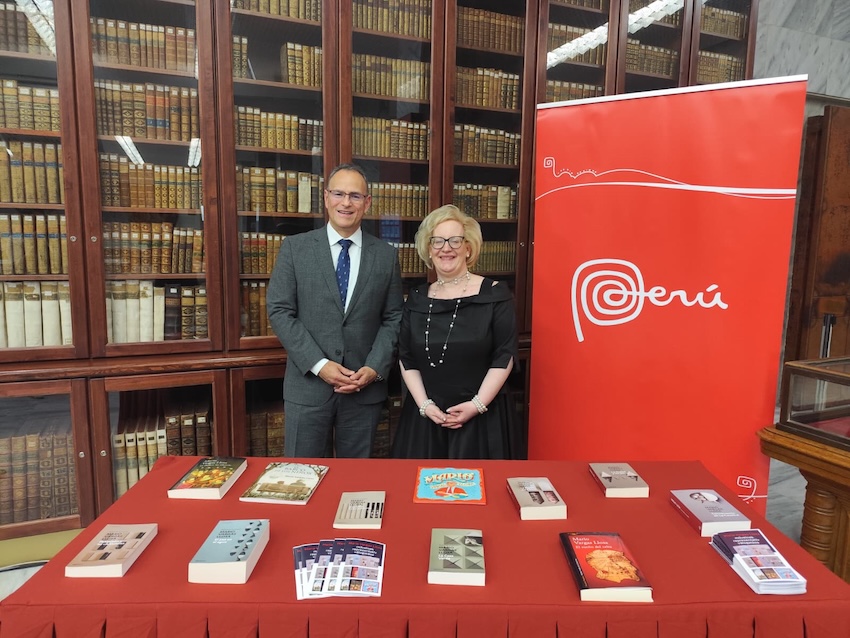
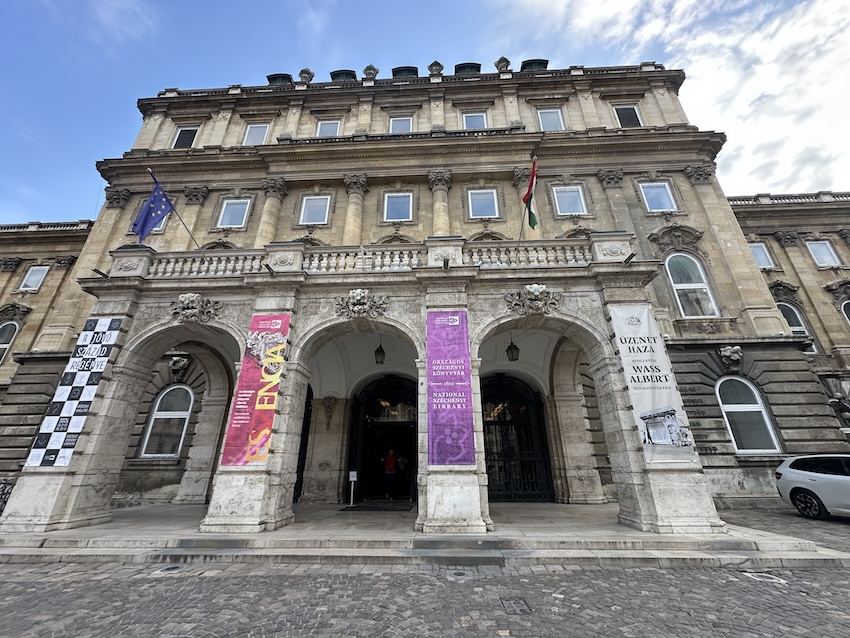
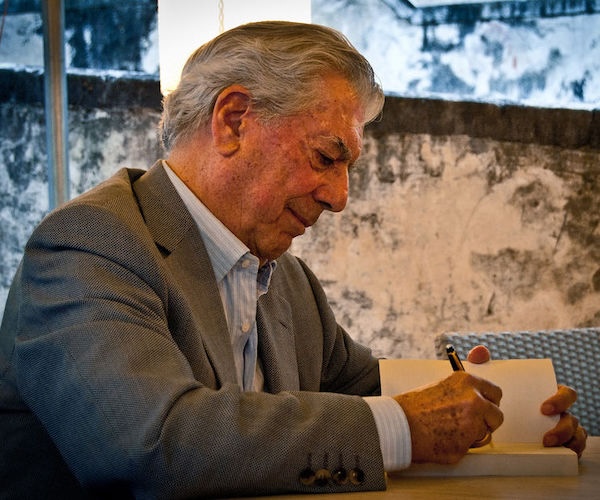
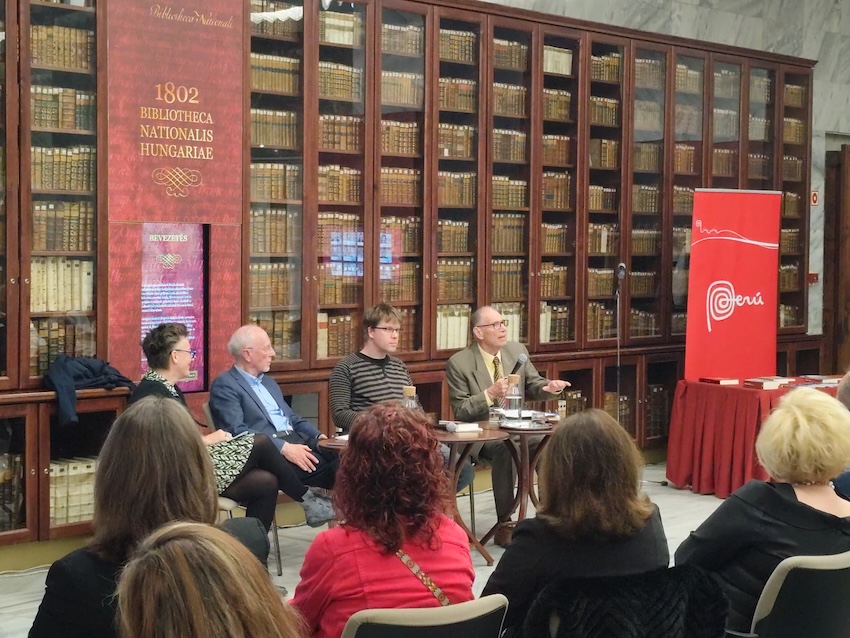
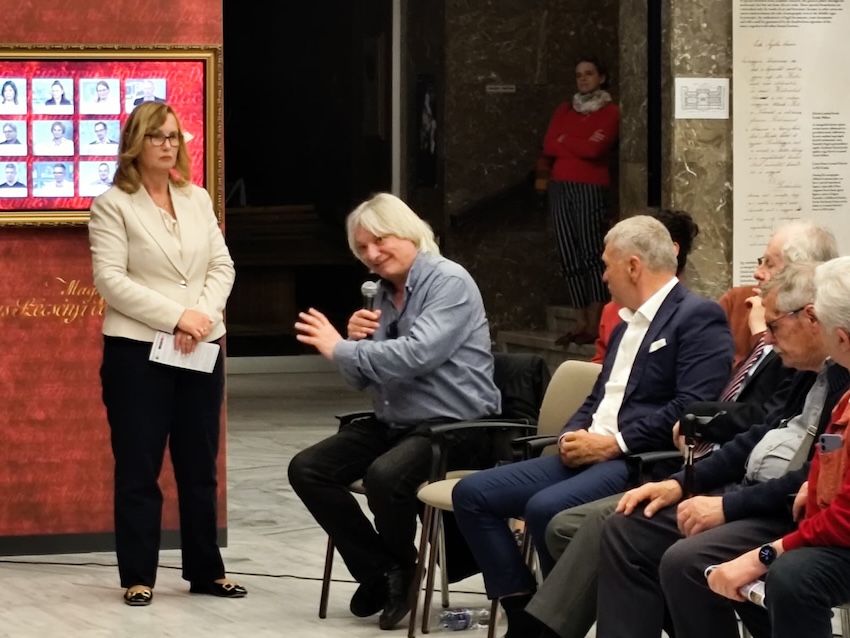
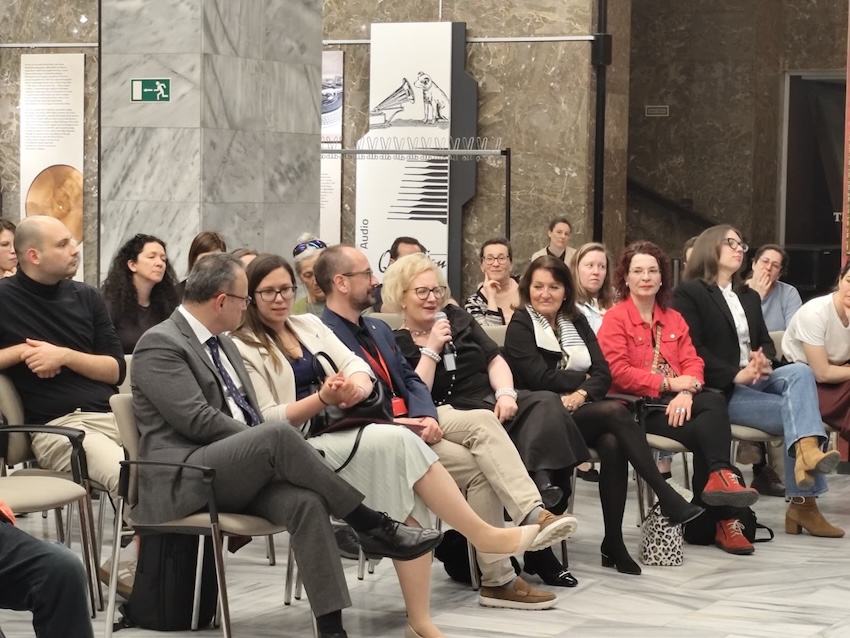
The commemoration took place in the library’s grand hall on 15 April, and attracted a large audience interested in Latin American literature and culture, including local authorities, representatives of publishing houses, figures from Hungary’s literary community and members of the local media.
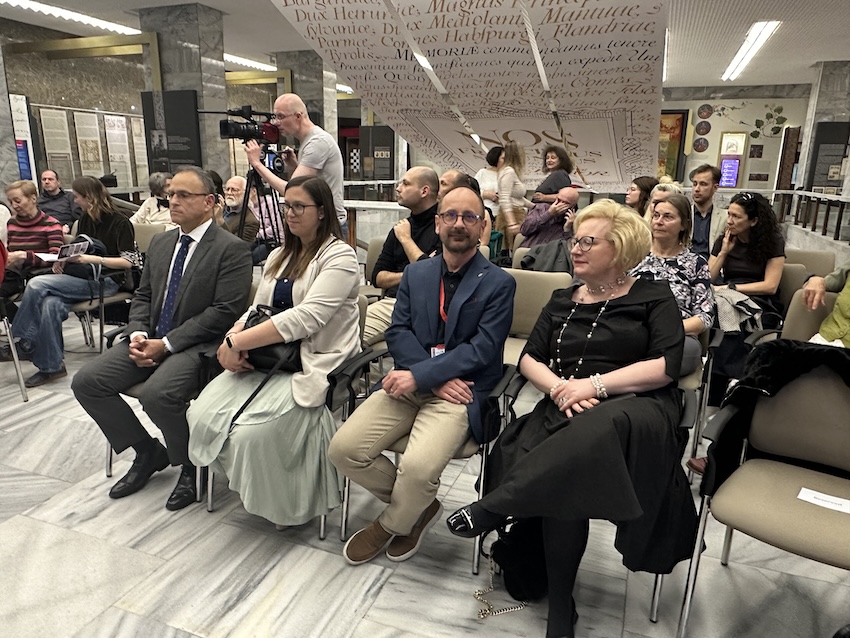
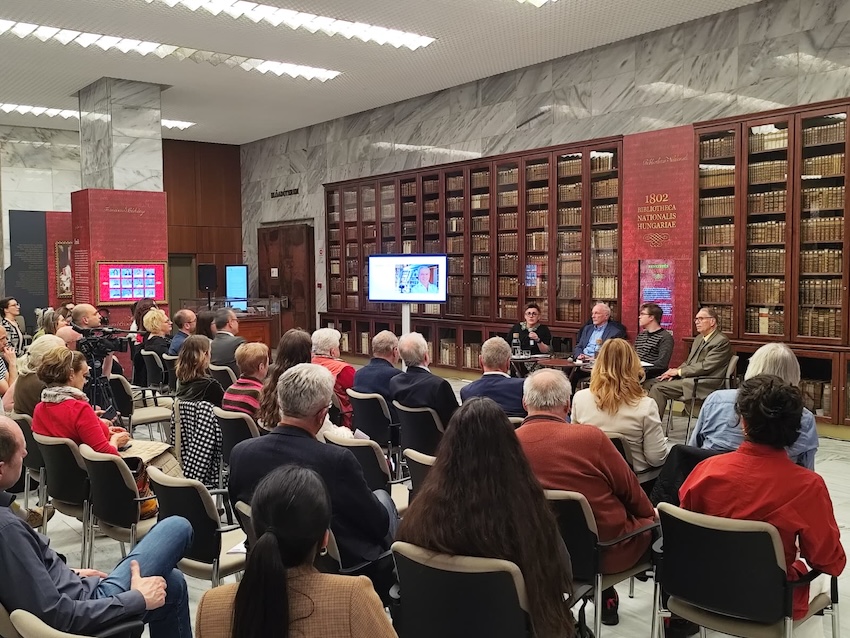
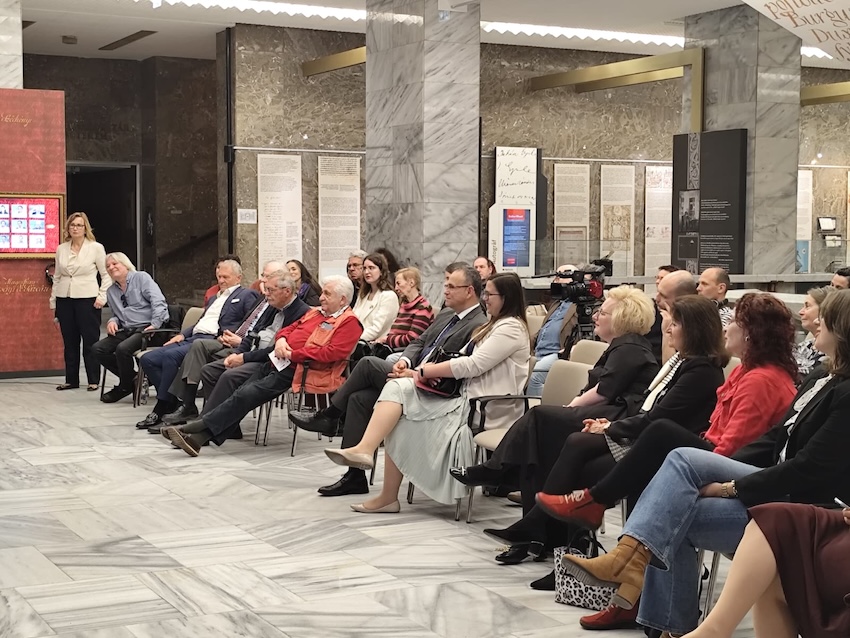
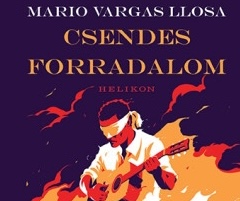
The event was dedicated to the presentation of the Hungarian edition of Mario Vargas Llosa’s final novel, Le dedico mi silencio (in Hungarian: Csendes forradalom), introducing the final work of one of the most outstanding authors in world literature to the Hungarian public. A panel discussion was also held with renowned Hungarian specialists in Latin American literature and individuals who had known the Peruvian writer, reflecting on the life and literary, intellectual, and cultural legacy of the Peruvian Nobel laureate.
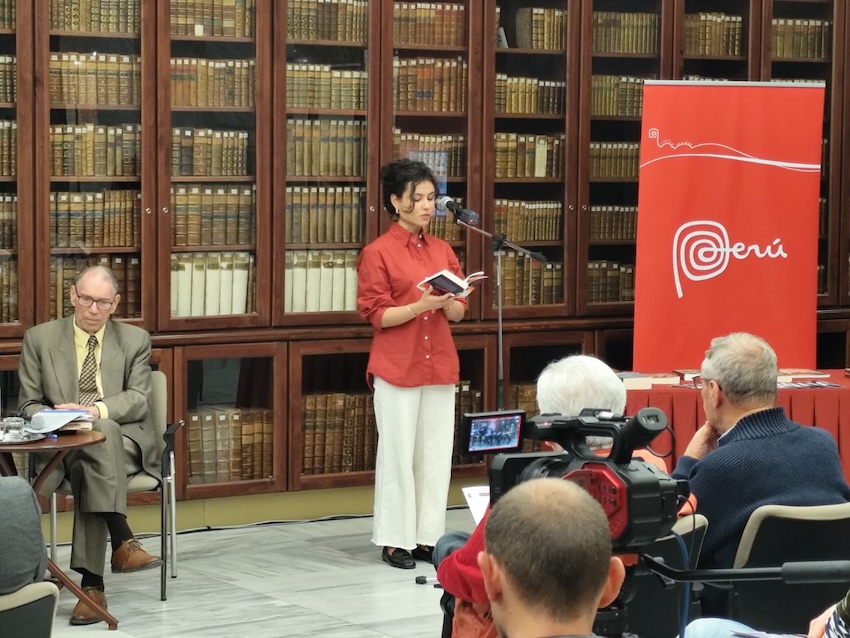
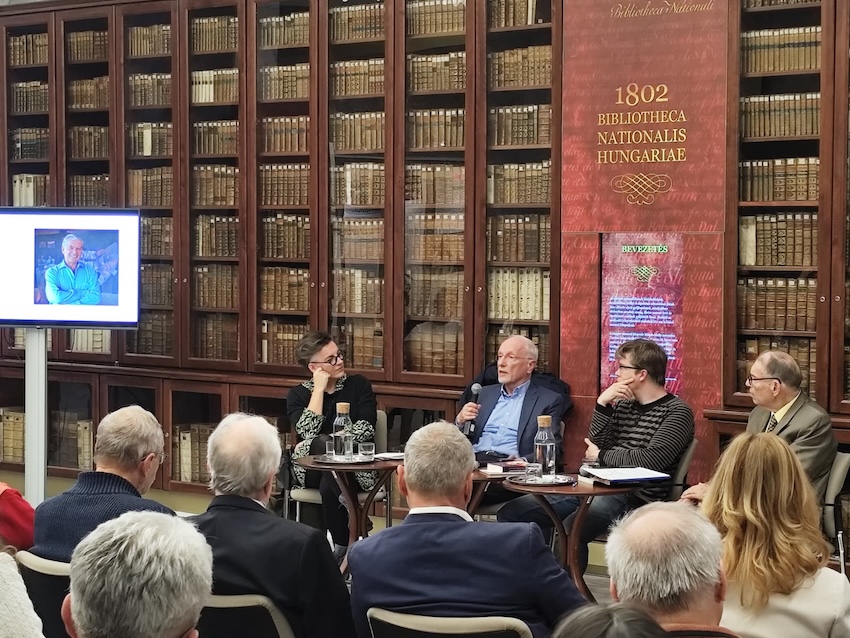
During the event, the photo series My Work with Mario: Photographs by Fiorella Battistini was screened for the audience, offering an intimate and human glimpse into the writer’s creative process.
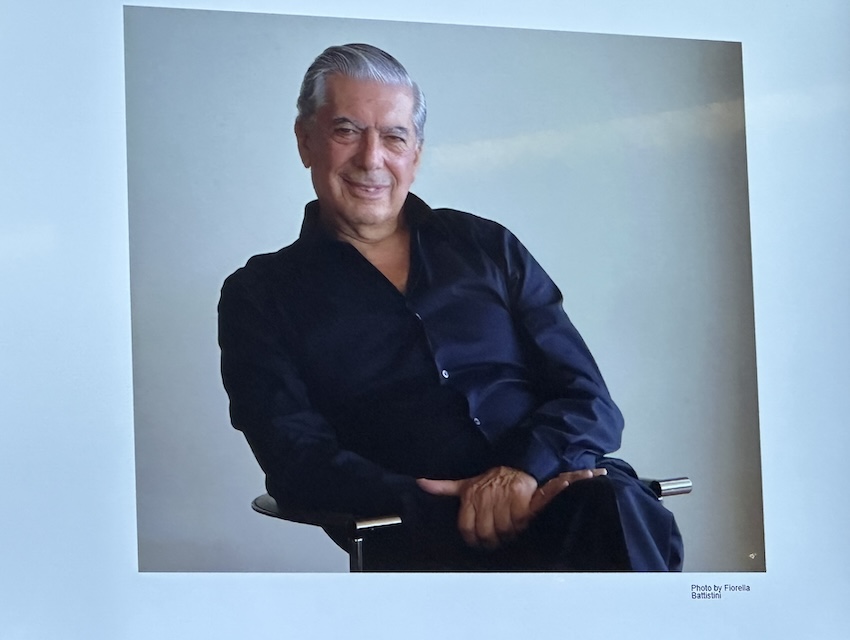
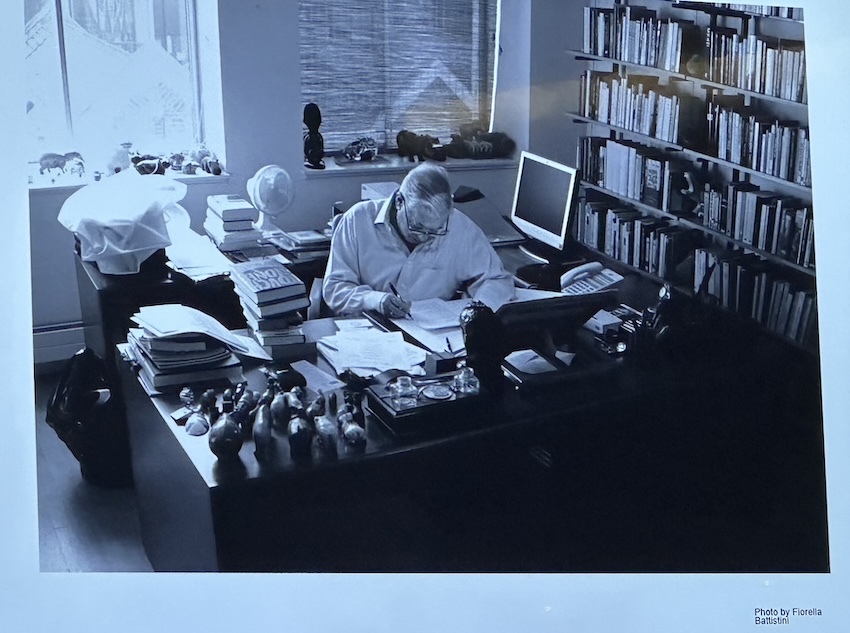
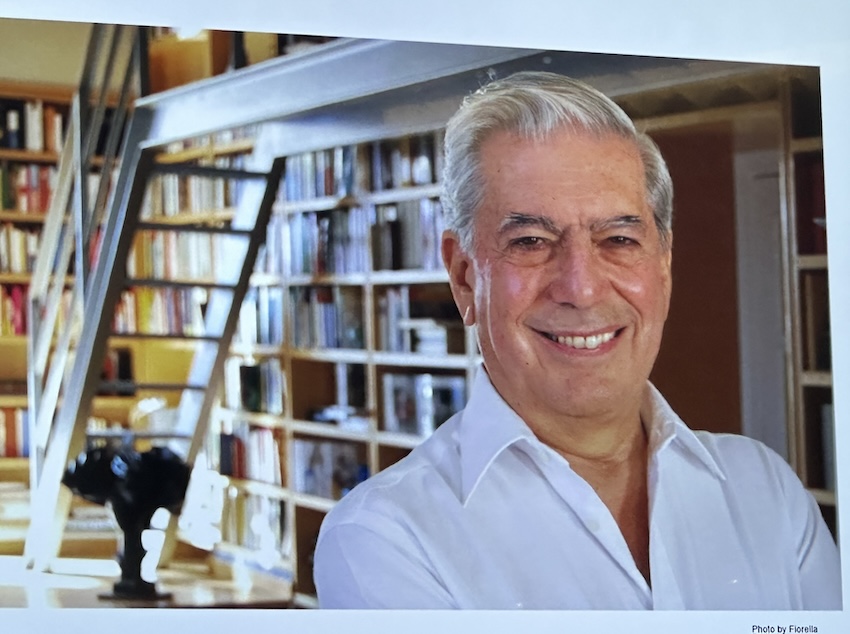
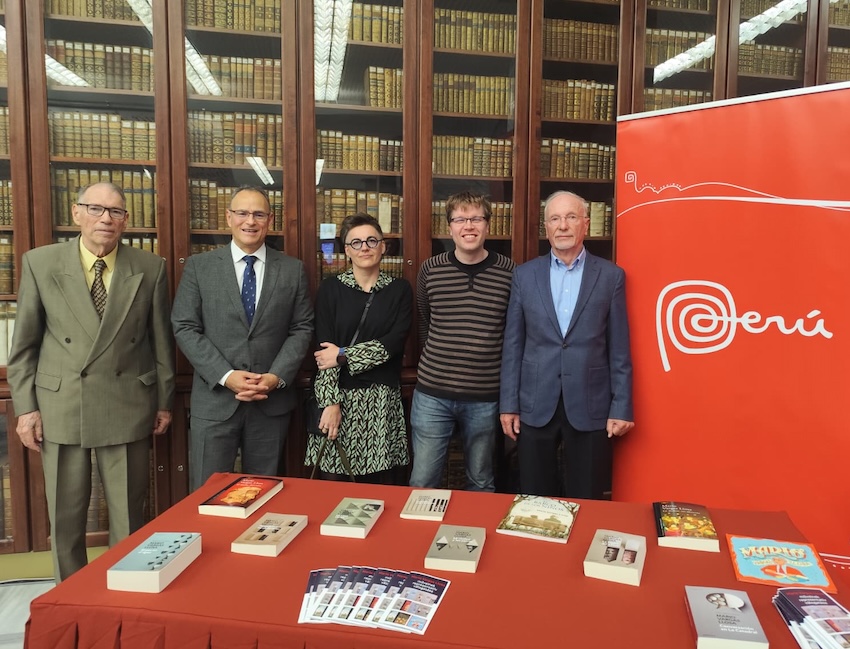
An exhibition featuring a representative selection of Mario Vargas Llosa’s major works – drawn from his remarkable literary legacy – was also presented, sparking considerable interest among participants and fostering a deeper understanding of his literary contribution.
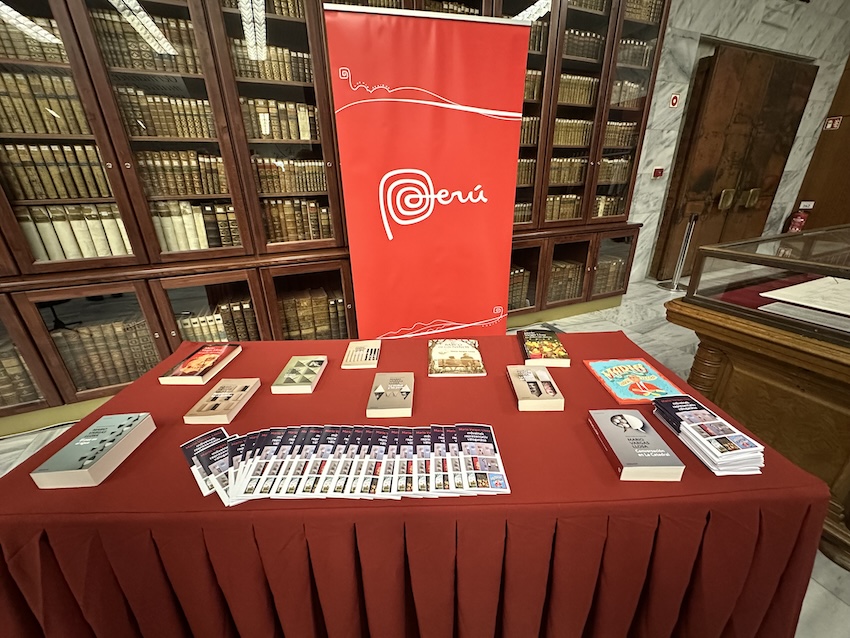
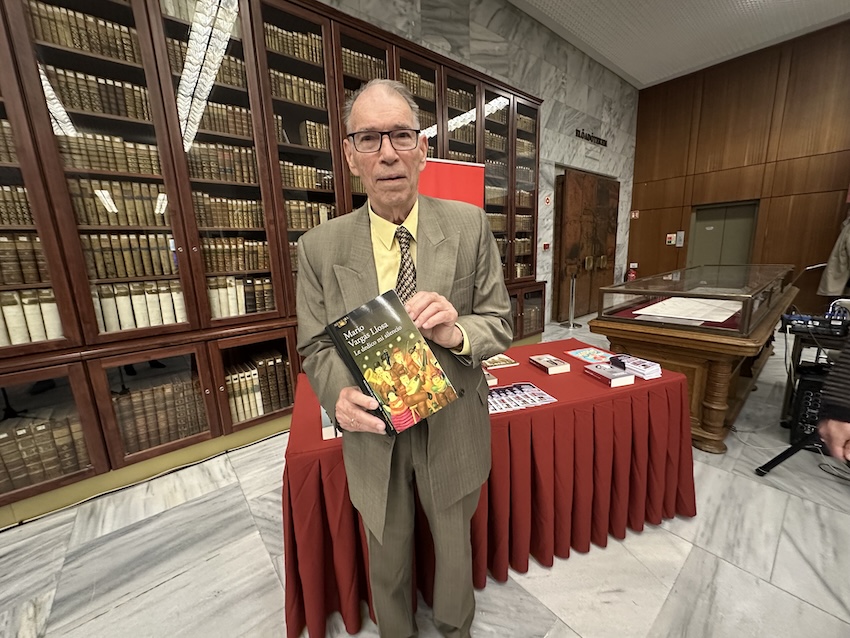
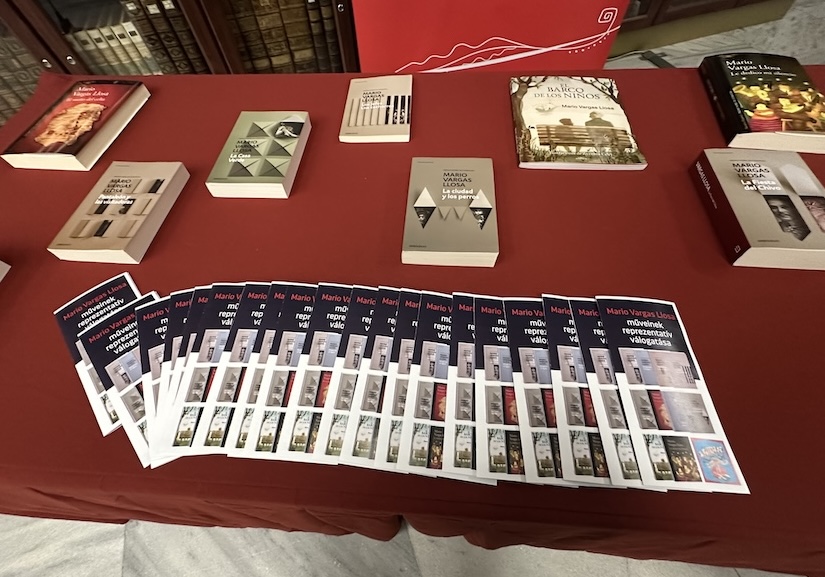
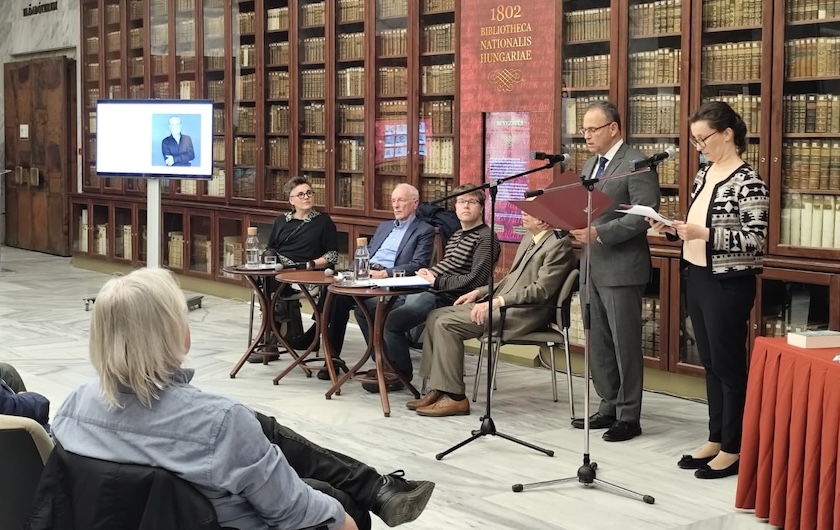
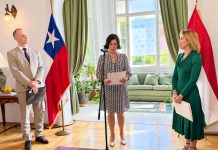
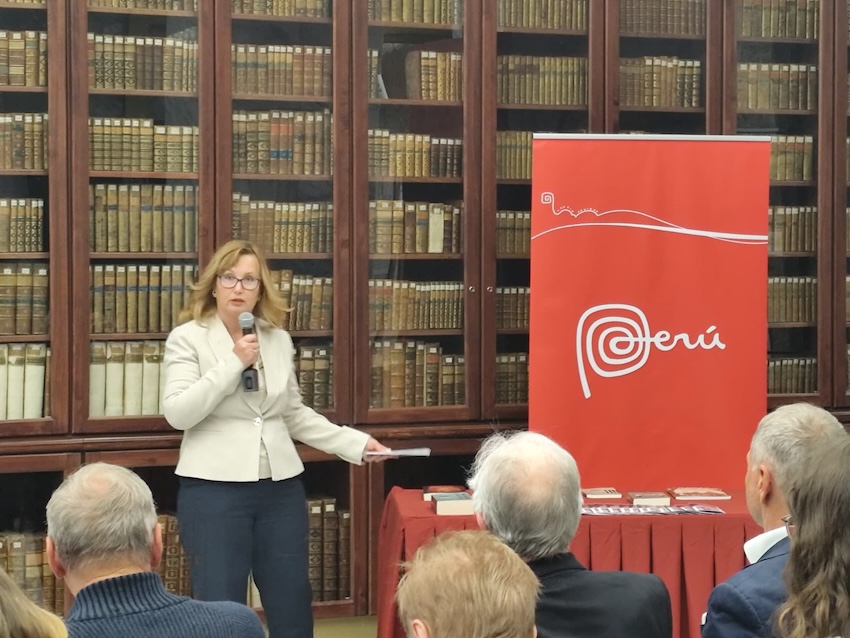
In his opening address, His Excellency Edgard Pérez Alván, Ambassador of Peru to Hungary, highlighted Mario Vargas Llosa’s extraordinary journey and the universal value of his work as a bridge for understanding between cultures:
“Mr. Dávid Rózsa, Director General of the National Széchényi Library, Distinguished Speakers, Ladies and Gentlemen,
It is a great honour for me to welcome you to this event today, where we pay tribute to one of the greatest writers of Spanish-language and world literature, Mario Vargas Llosa. Today’s occasion – one year after his death on 13 April 2025 – honours his life, his work, and the profound legacy he left to Hispanic American and global culture.
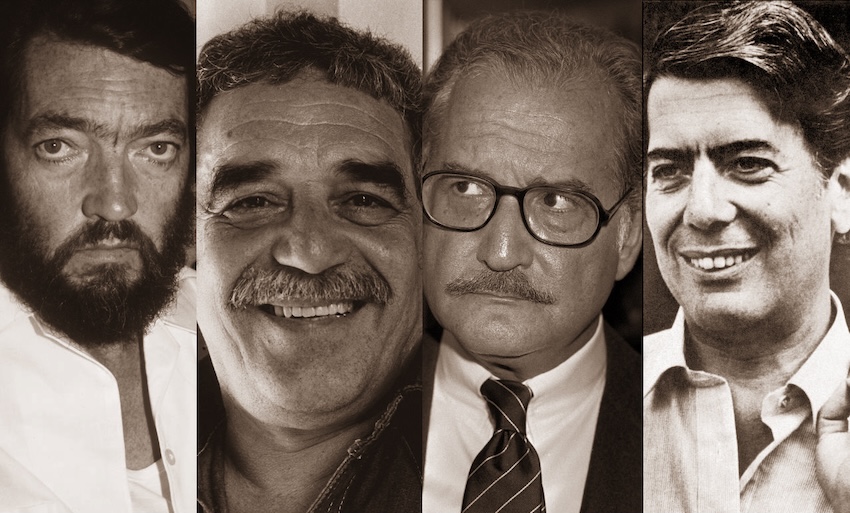
Mario Vargas Llosa was undoubtedly a central figure of the Latin American “Boom”, the literary movement that reshaped Spanish-language narrative in the second half of the twentieth century.
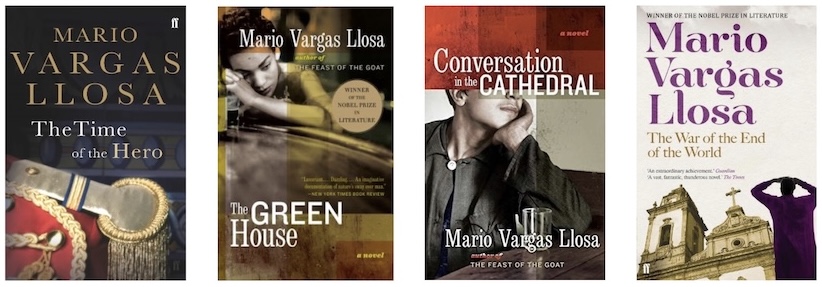
From the publication of his breakthrough novel The Time of the Hero (La ciudad y los perros) in 1963, and throughout over six decades of literary creation, his work boldly explored the dilemmas of freedom, power, and the human condition. With novels such as The Green House (La casa verde), Conversation in The Cathedral (Conversación en La Catedral), and The War of the End of the World (La guerra del fin del mundo), he created a unique, demanding, and vibrant literary universe, deeply committed to the reader.
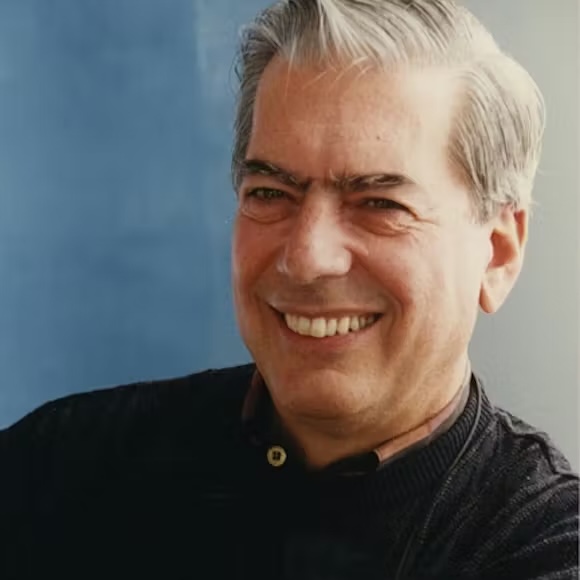
Beyond his extraordinary literary achievements, Vargas Llosa was also widely recognized for his essays and journalism. He consistently defended democracy and civil liberties in Peru and was an insightful observer of international politics, particularly in Latin America.
For decades, he wrote regularly for the Spanish newspaper El País, reflecting on literature, politics, society, and contemporary culture. His journalistic work amplified his public influence and made his voice a point of reference in democratic debates across the Spanish-speaking world.
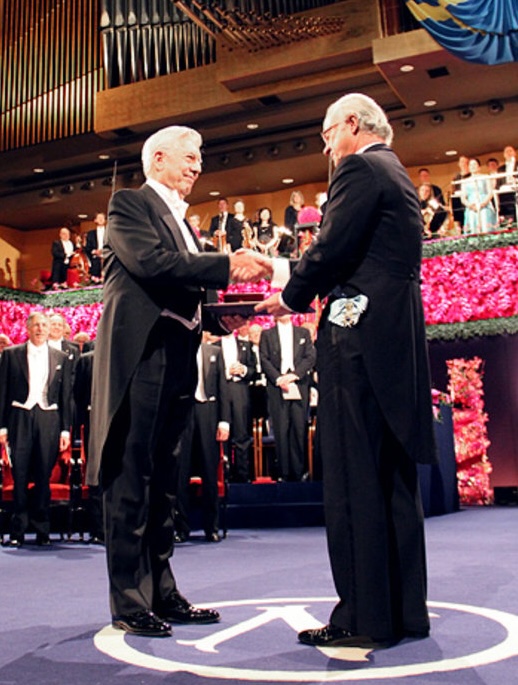
In 2010, the world celebrated his career with the awarding of the Nobel Prize in Literature, granted to him “for his cartography of structures of power and his trenchant images of the individual’s resistance, revolt, and defeat”. His clear and critical voice always transcended national boundaries.
His achievements, however, extend far beyond the Nobel Prize. Vargas Llosa was also a member of some of the most prestigious cultural institutions. He was a full member of the Royal Spanish Academy, where he held seat “L” from 1996 until his passing in 2025. He was also elected to the Académie française in November 2021, becoming the first writer whose native language is Spanish to join this distinguished institution in full recognition of his Spanish-language body of work. These honours reflect the truly universal nature of his literature and its undeniable influence on contemporary thought.
Today we present the Hungarian translation of Vargas Llosa’s last novel, originally published in Spanish in 2023, Le dedico mi silencio (English title: I Give You My Silence, in Hungarian: Csendes forradalom). This work is deeply connected to Peru’s cultural identity. The author pays tribute to Creole music, a genre recognized as a fundamental element of Peruvian national identity. The novel interweaves fiction and cultural memory to explore how music – born from Peru’s cultural diversity and nurtured across generations – can become a foundation for social harmony.
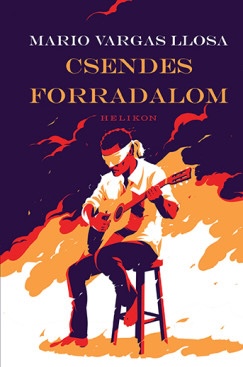
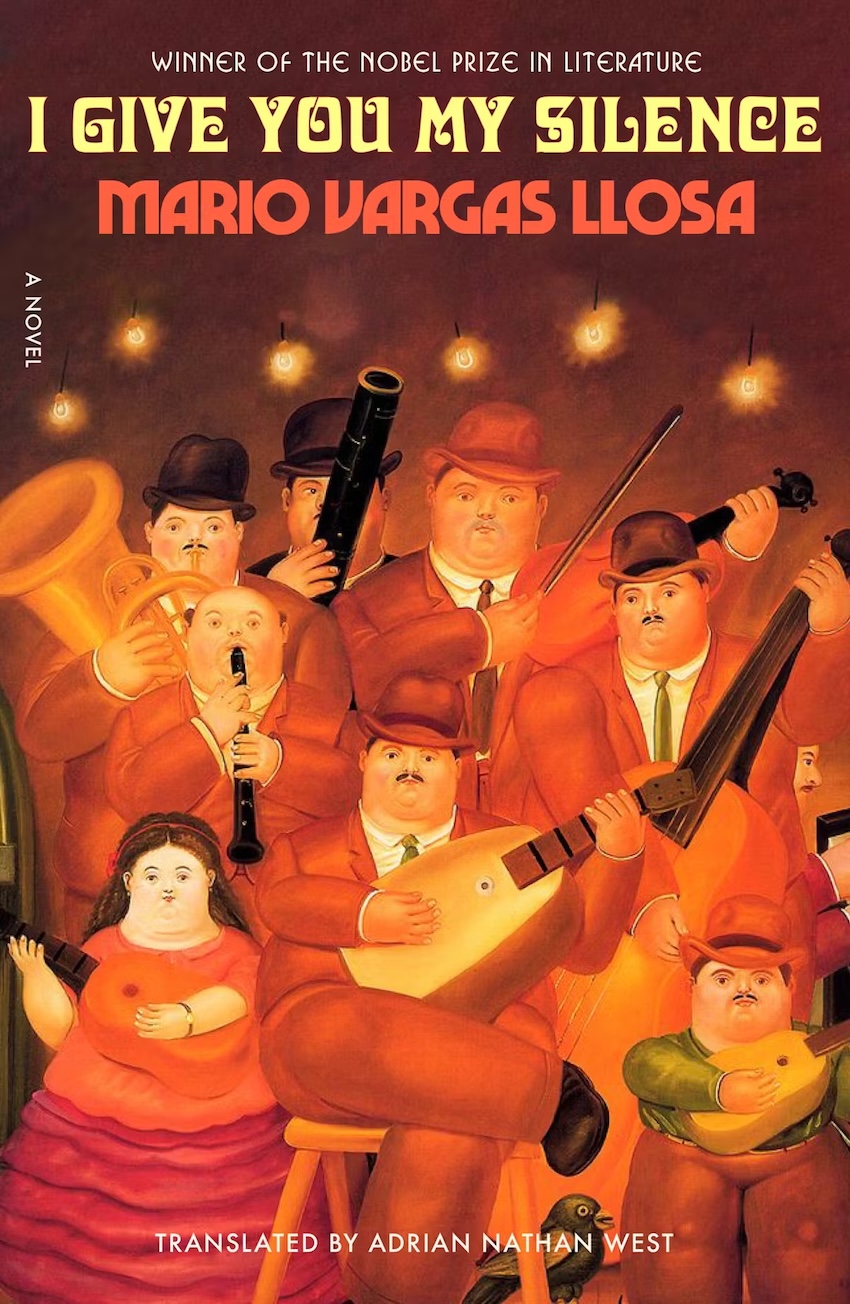
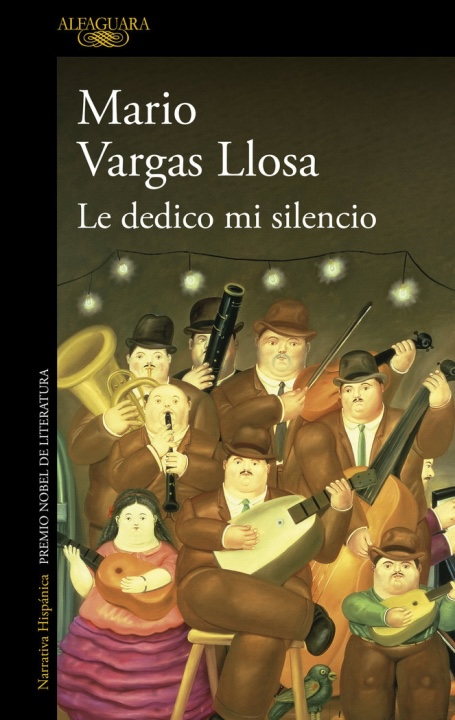
It is not merely a story about a country, but a reflection on the power of art to connect people and reveal the best within a community. As the last literary work published during his lifetime, I Give You My Silence becomes a kind of artistic testament, reaffirming Vargas Llosa’s bond with Peru and celebrating the musical tradition that pulses through the country’s collective memory.
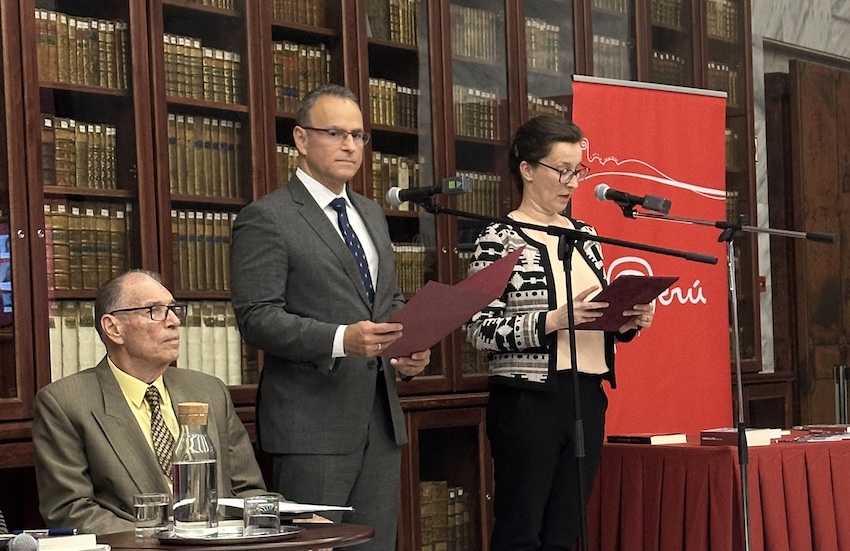
Allow me to extend my sincere thanks to the team of the National Széchényi Library, whose professionalism, enthusiasm, and dedication made today’s event possible. We also express our gratitude to the distinguished speakers present here today for joining us with such intellectual generosity on this occasion of remembrance. And of course, we thank you all for being here with us.
May today’s event be more than just a commemoration. Let it be a call to reread Vargas Llosa, to engage with his work, to celebrate him, and to keep his legacy alive – for he undoubtedly remains one of the greatest storytellers of our time. Thank you very much.”
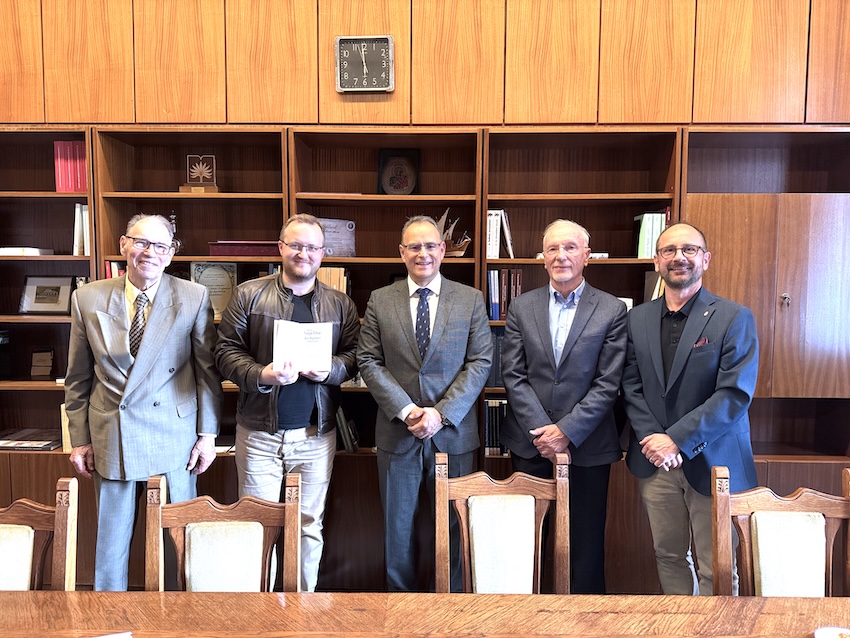
Prior to the event, Ambassador Pérez Alván met with Mr. Dávid Rózsa, Director General of the National Széchényi Library, in his office, where he proudly showed the ambassador a signed Hungarian-language edition of The Notebooks of Don Rigoberto (Don Rigoberto feljegyzései) by Mario Vargas Llosa from his personal collection, while also expressing his deep admiration for the literary legacy of the Peruvian Nobel laureate.
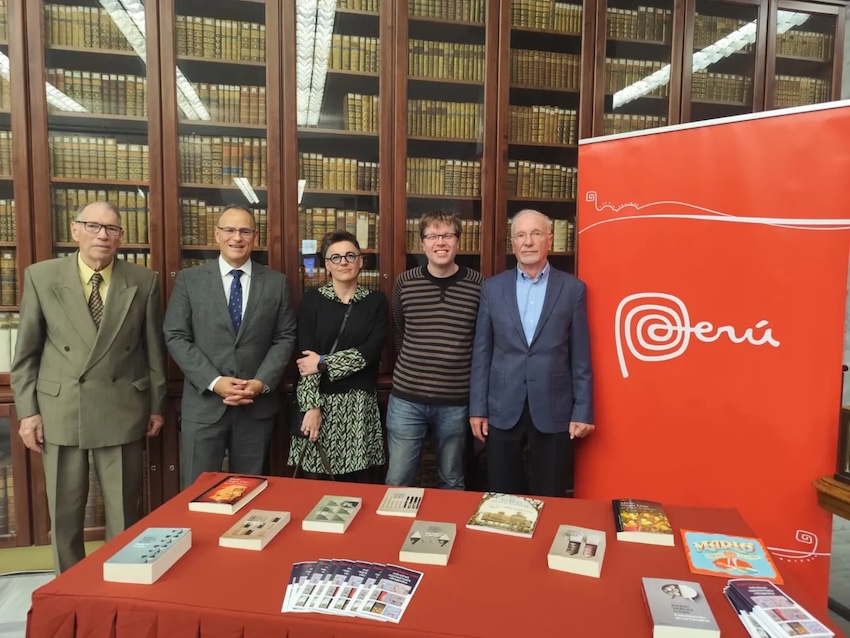
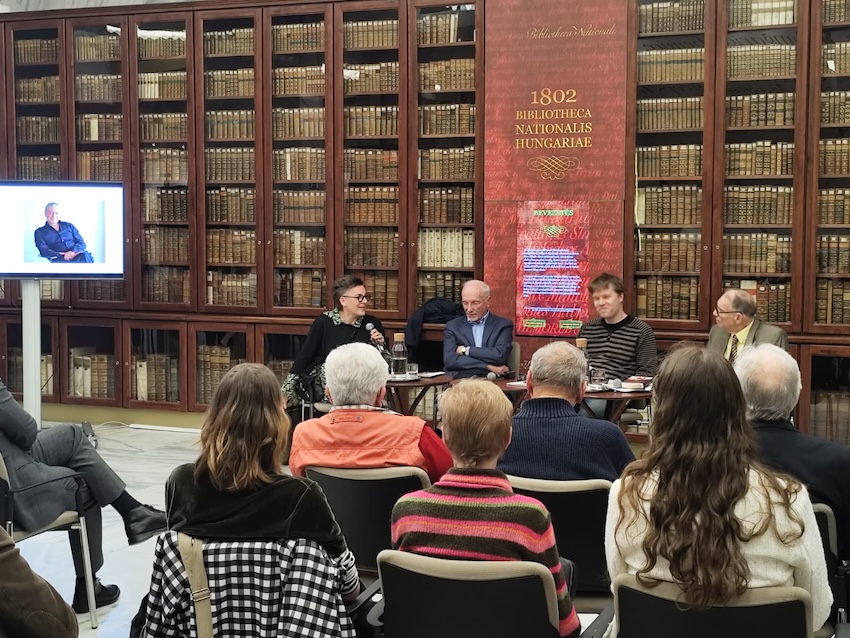
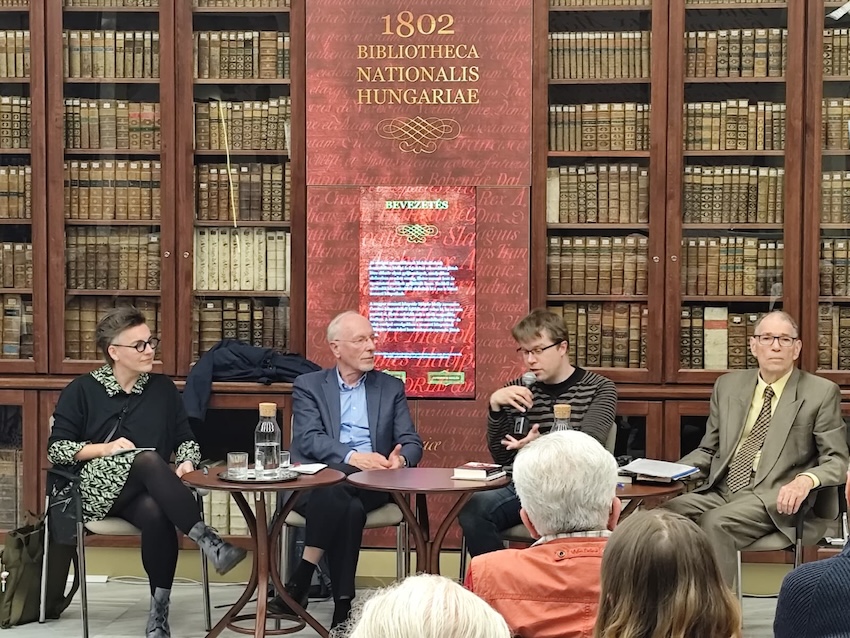
The panel discussion featured distinguished academics and experts in Latin American literature, among them Mr. András Gulyás, ambassador, expert in Latin American literature, and translator of Vargas Llosa’s works; Dr. Prof. László Scholz, hispanist and translator of Vargas Llosa; Mr. Dávid Zelei, hispanist and editor at Helikon Publishing House; and Ms. Mercédesz Kutasy, hispanist and translator, who served as moderator.
During the discussion, the panellists explored a wide range of topics, including the Nobel laureate’s final work and enduring legacy, his place in world literature, and the defining features of his writing – such as its complex structure, multiple themes, and references to both world and Latin American literature – as well as the challenges and rewards of translating his works. They also shared their favourite books by Mario Vargas Llosa, unique personal memories and encounters with him, and reflections on his final novel, Le dedico mi silencio (I Give You My Silence / Csendes forradalom), particularly its Peruvian context and cultural references. Special attention was given to the concept ofhuachafería – a distinctly Peruvian cultural trait linked to criollo music and national identity, often associated with kitsch, pretentiousness, and exaggerated sentimentality – which posed particular challenges for Hungarian translation. The discussion also examined the impact of Vargas Llosa’s literature in Hungary and ways of making his work more appealing to younger generations.
This cultural event forms part of the efforts of Peru’s Ministry of Foreign Affairs to promote Peruvian culture abroad and to disseminate the legacy of Mario Vargas Llosa as one of the fundamental figures of Spanish-language literature, reaffirming Peru’s presence in key international cultural spaces.
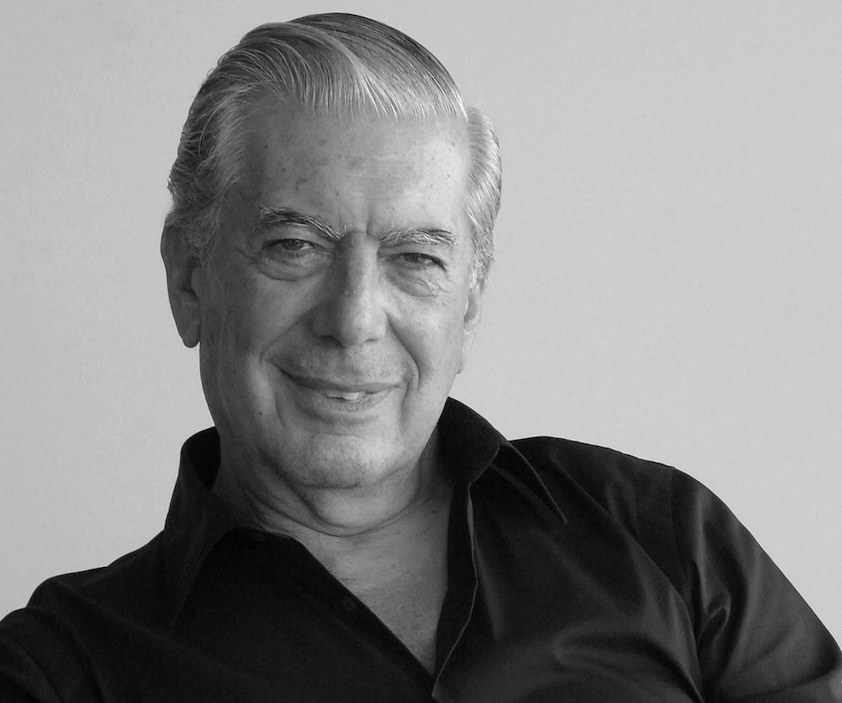
Mario Vargas Llosa and Hungary: A Literary Connection
Although Mario Vargas Llosa’s works primarily reflected Peruvian and broader Latin American realities, he was known and admired not only in the Spanish-speaking world but also by readers across the globe. Between 1976 and 1979, he served as President of PEN International. Many of his novels have been translated into Hungarian, reflecting his enduring popularity among Hungarian readers.
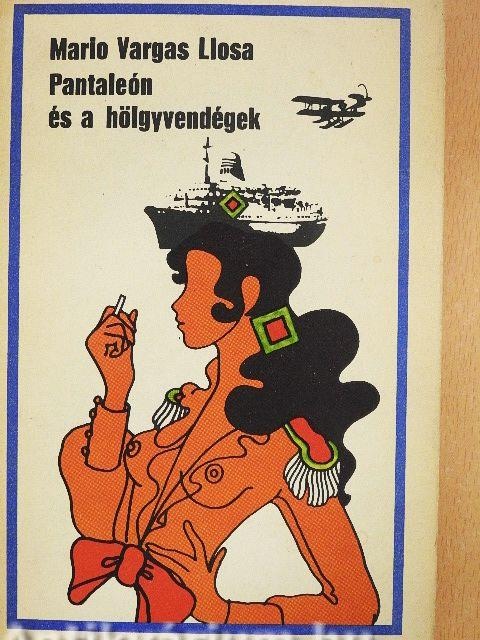
In 1989, the renowned theatre in Budapest Vígszínház successfully staged a musical adaptation of his satirical novel Pantaleon y las visitadoras (Captain Pantoja and the Special Service / Pantaleón és a hölgyvendégek) from 1973, which had already appeared in Hungarian translation in 1977.
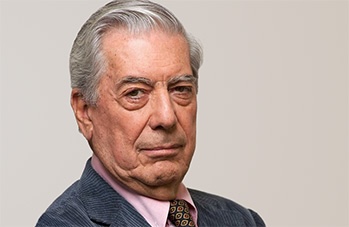
Vargas Llosa visited Hungary several times. His first visit took place in 1998 as a guest of Európa Publishing House on the occasion of the Hungarian edition of The Notebooks of Don Rigoberto. In 2003, he returned as the Guest of Honour of the Budapest International Book Festival, where he was awarded the Budapest Grand Prize.
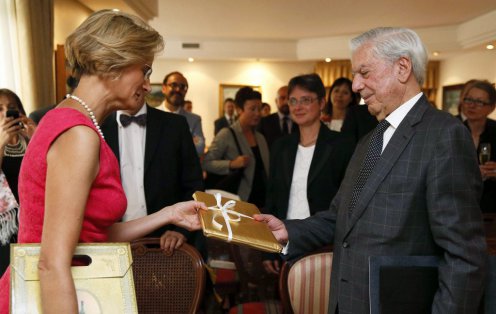
In 2015, Mario Vargas Llosa received an honorary doctorate in literary studies from Eötvös Loránd University (ELTE). The distinction was presented to the world-renowned writer by a university delegation, on 17 June, during a special ceremony at the Hungarian Embassy in Madrid, hosted by H.E. Enikő Győri, Ambassador of Hungary to Spain. The ambassador also conveyed to the author the enthusiasm and admiration that his works enjoy in Hungary. This was followed by readings from several of his novels, as well as messages from ELTE students, who shared how Mario Vargas Llosa’s books had influenced and inspired them.
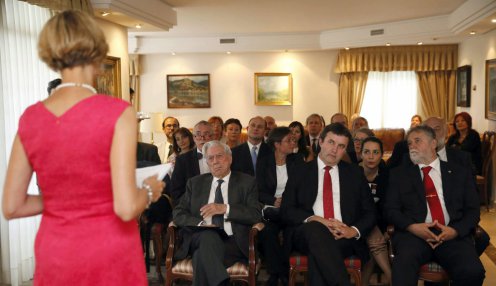
The final visit of Mario Vargas Llosa came in 2017, when he participated in an international conference Academic Freedom // The Global Challenge, organised by Central European University (CEU) in Budapest.
Perhaps no words better capture Mario Vargas Llosa’s lifelong devotion to writing than his own: “I write because I’m unhappy. I write because it’s a way of fighting unhappiness.” – Mario Vargas Llosa
Source: Embassy of Peru in Budapest
Photos from the Embassy of Peru in Budapest, and Diplomatic Press Agency