
EU Council Presidency, 50 Years of Diplomatic Relations, and a Millennium of MagyÍr Friendship
Edited by Anna Popper
On 8 July 2026 the Embassy of Ireland in Hungary celebrated a remarkable triple occasion with an unforgettable evening at the prestigious Hungarian Academy of Sciences, marking the opening of Ireland’s Presidency of the Council of the European Union, the 50th anniversary of diplomatic relations between Ireland and Hungary, and celebrating a millennium of MagyÍr friendship.


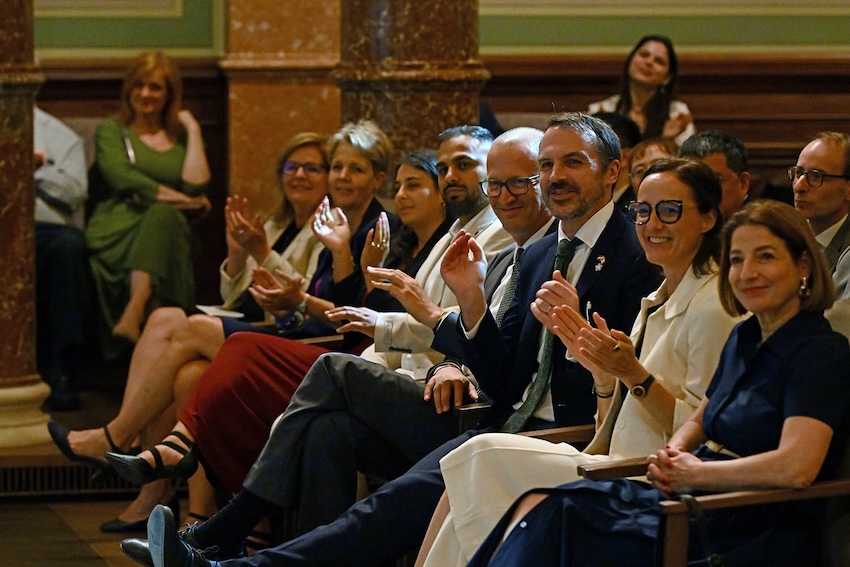
More than 250 distinguished guests attended the event, including Hungary’s Minister for Social Relations and Culture Zoltán Tarr; Deputy Speaker of the Hungarian National Assembly Krisztián Kőszegi; State Secretary at the Ministry of Foreign Affairs Klára Breuer; Chair of the Parliamentary Committee on EU Affairs Dr. Ildikó Éva Sopov; Members of Parliament, ambassadors, representatives of the diplomatic corps, academia, business, and culture, as well as numerous members of the Irish community and friends of Ireland.
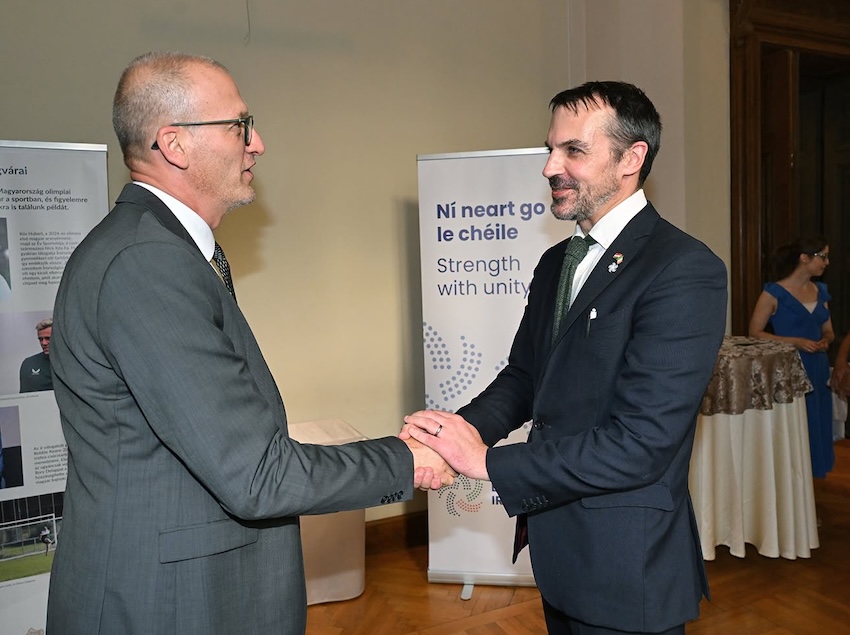
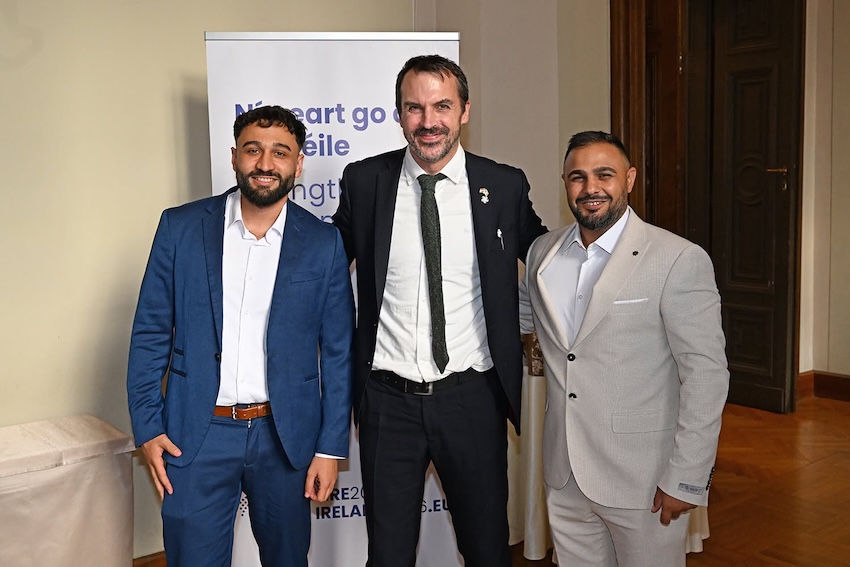
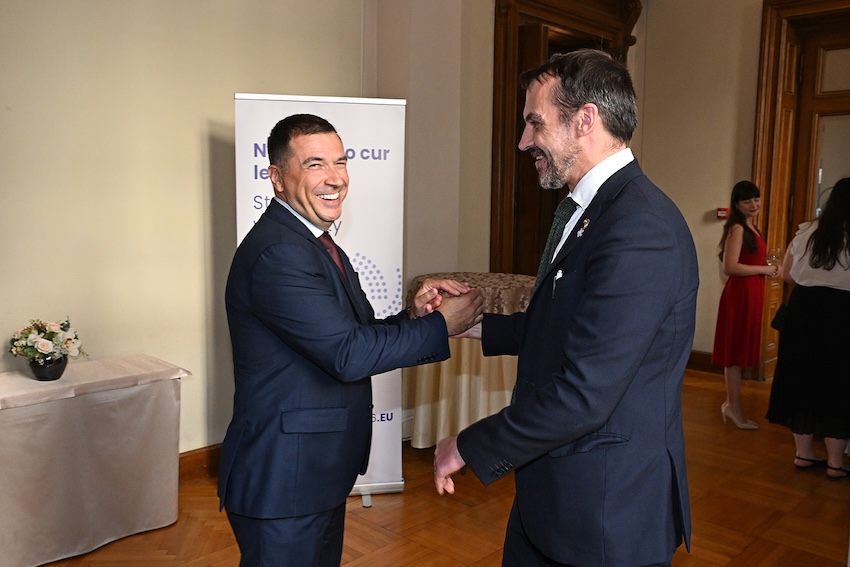
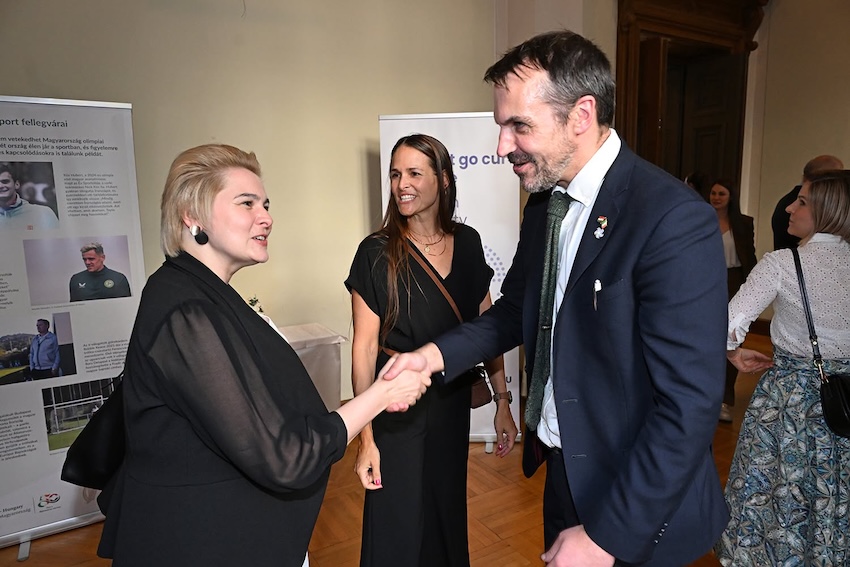
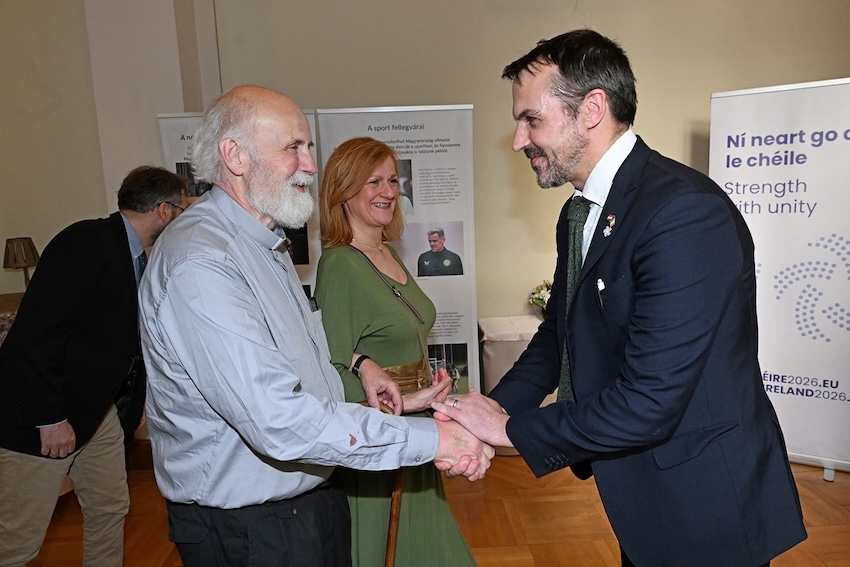
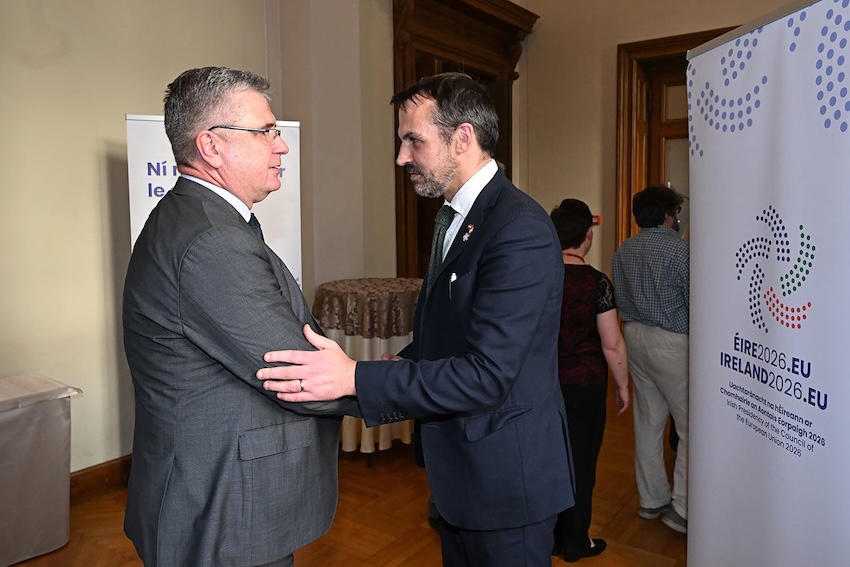
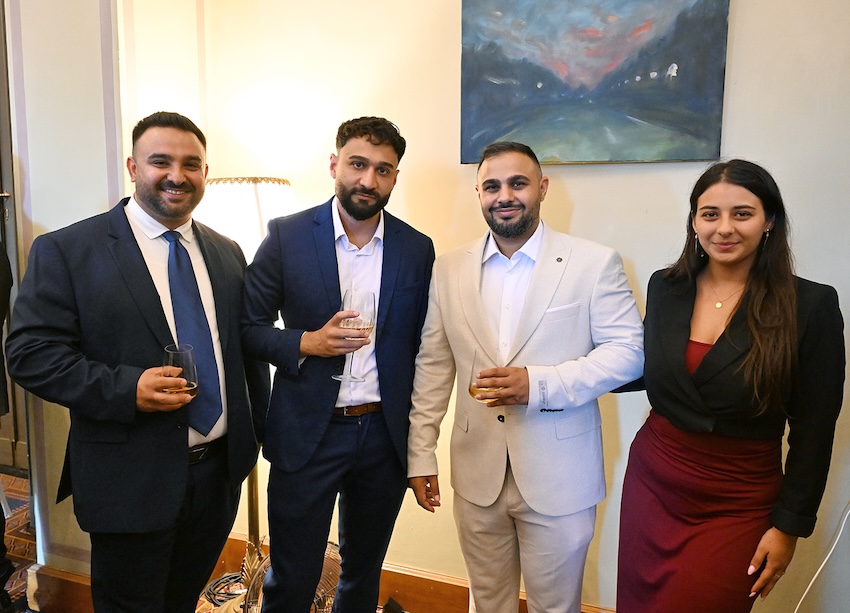
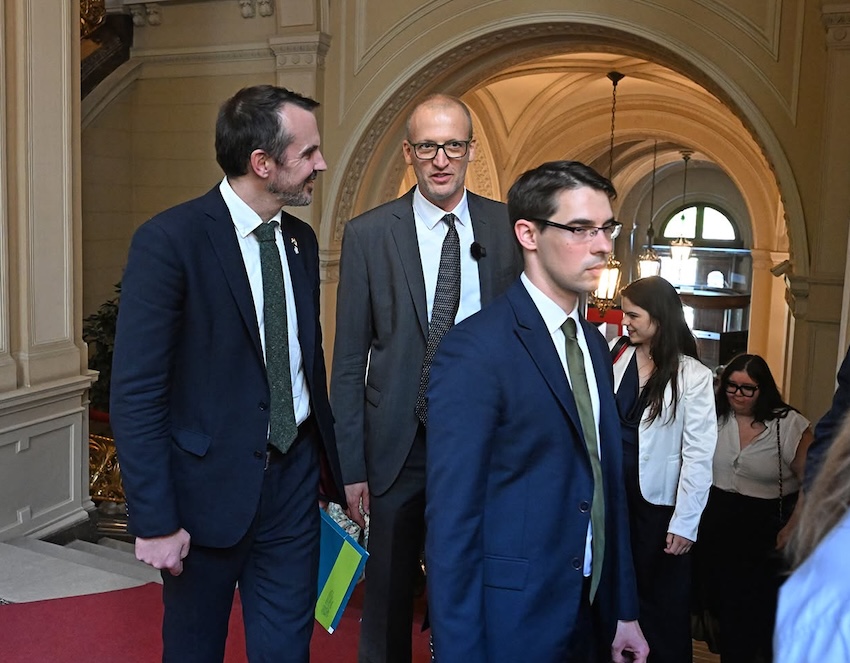
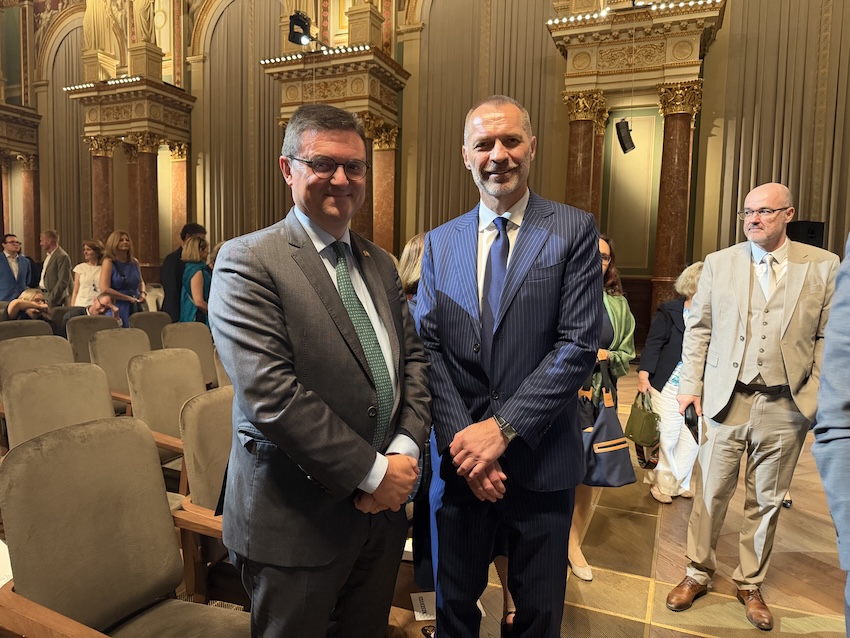
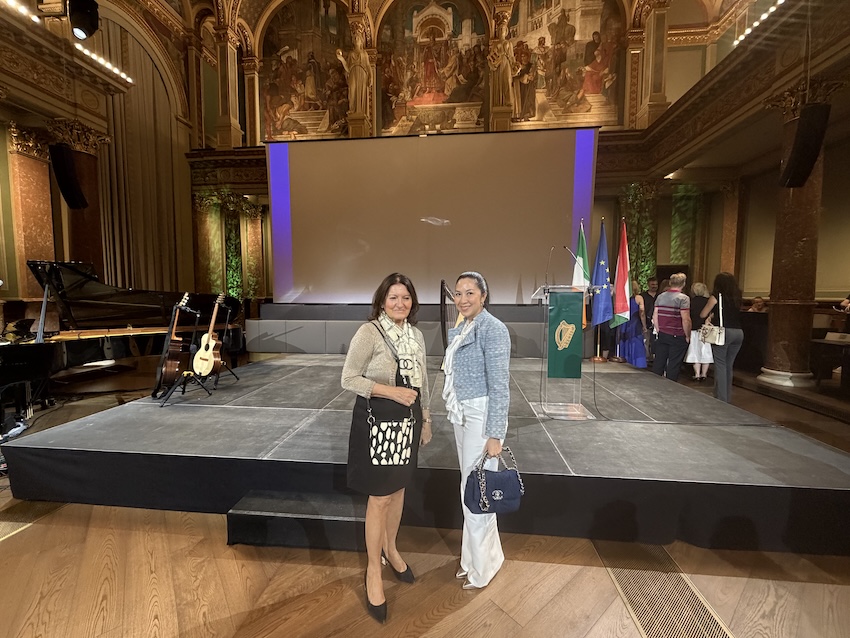
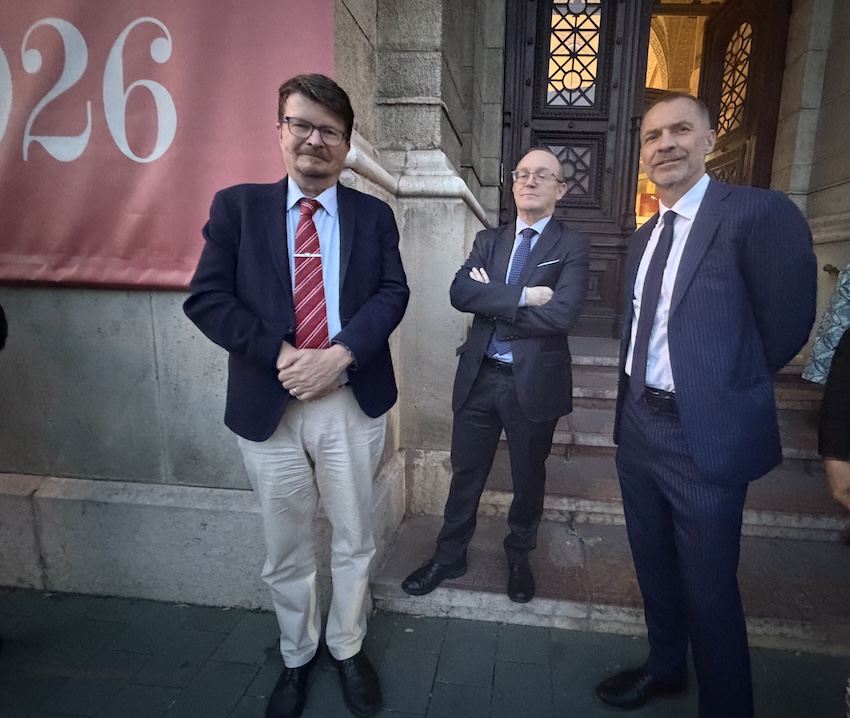
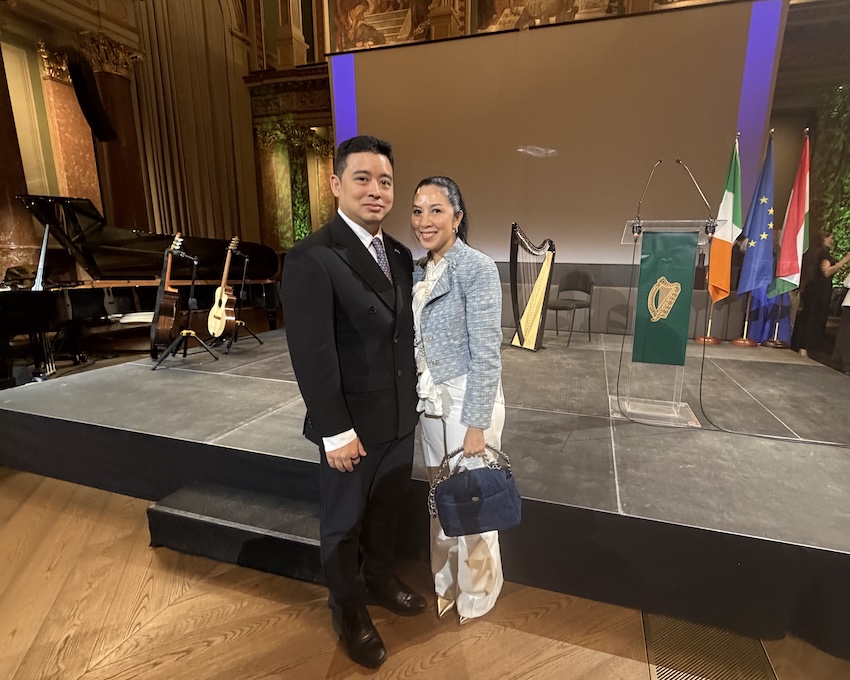
The evening combined diplomacy, history, music, culture and genuine friendship, reflecting the exceptionally warm relationship between the Irish and Hungarian peoples.
Reception in the Vörösmarty Hall
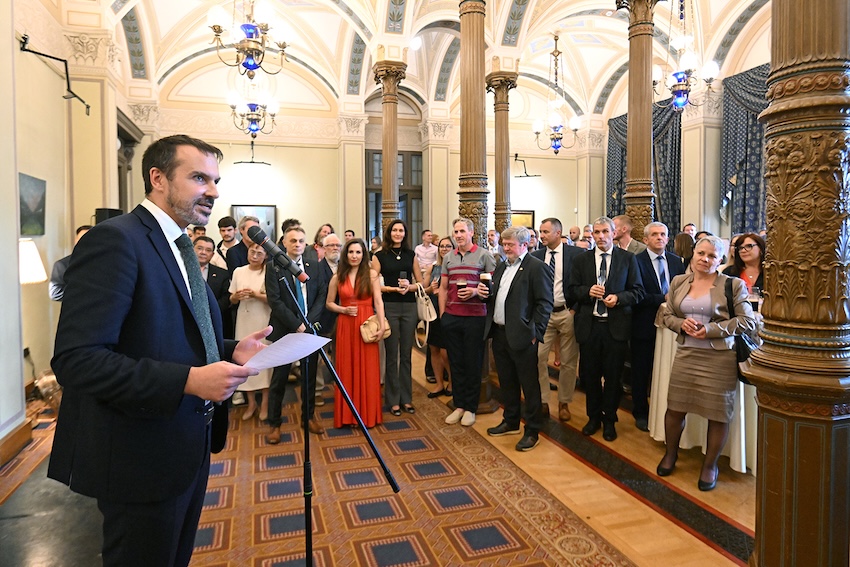
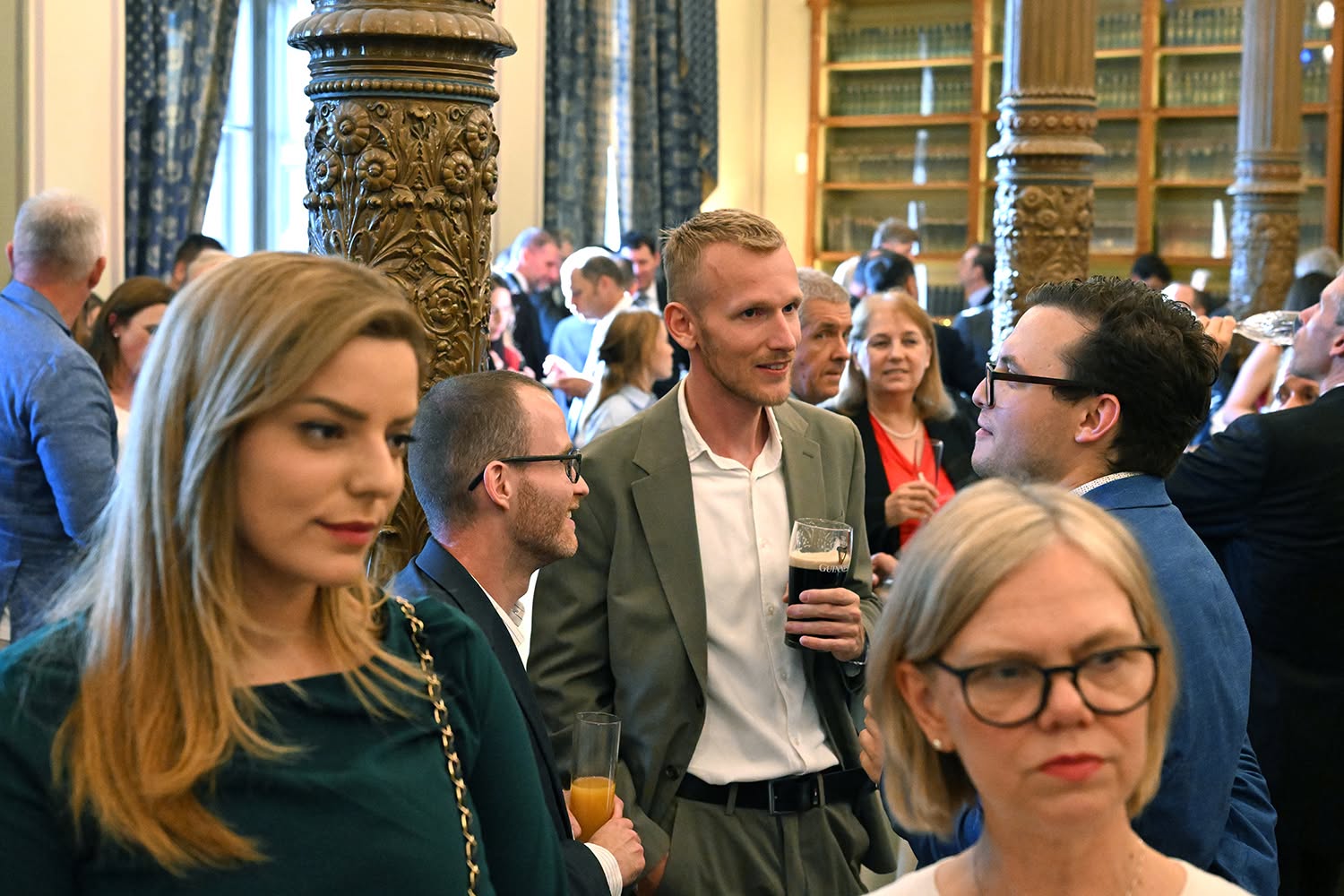
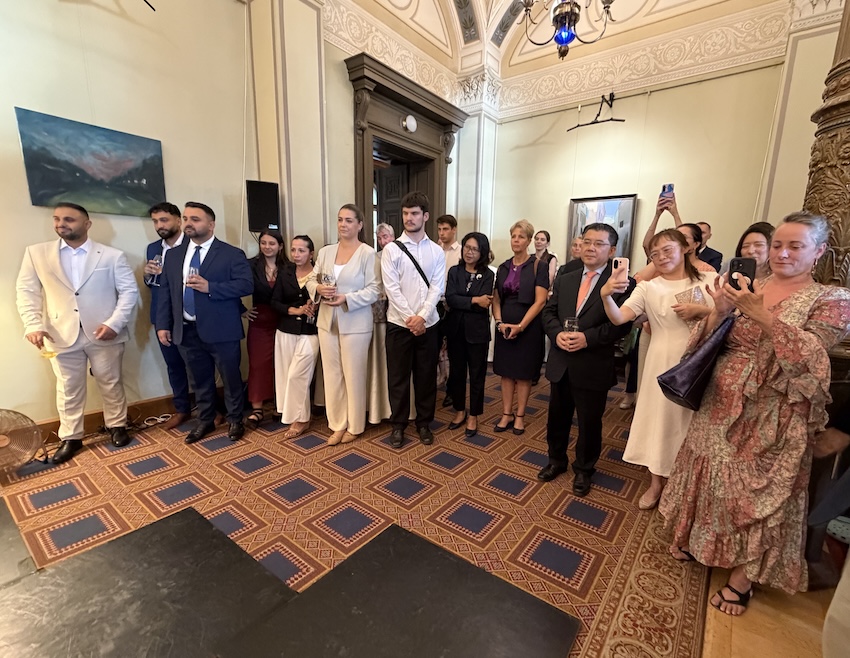
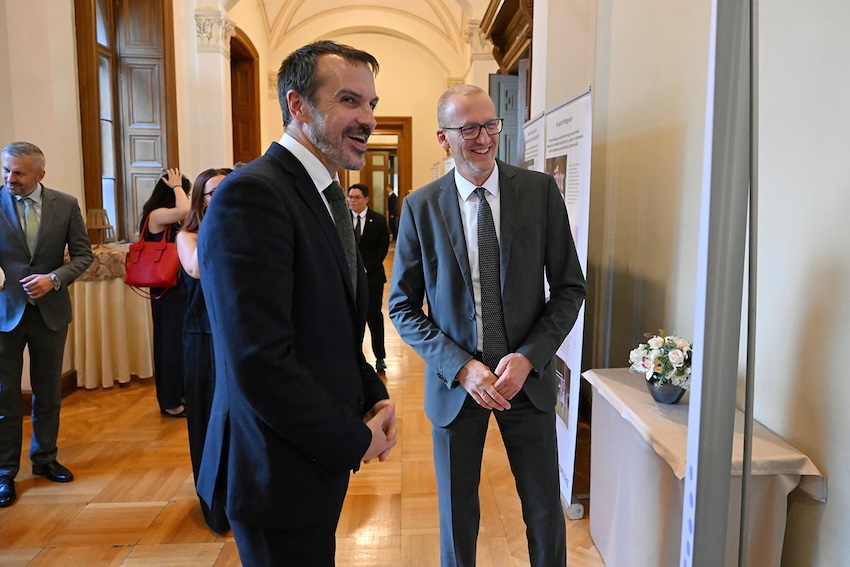
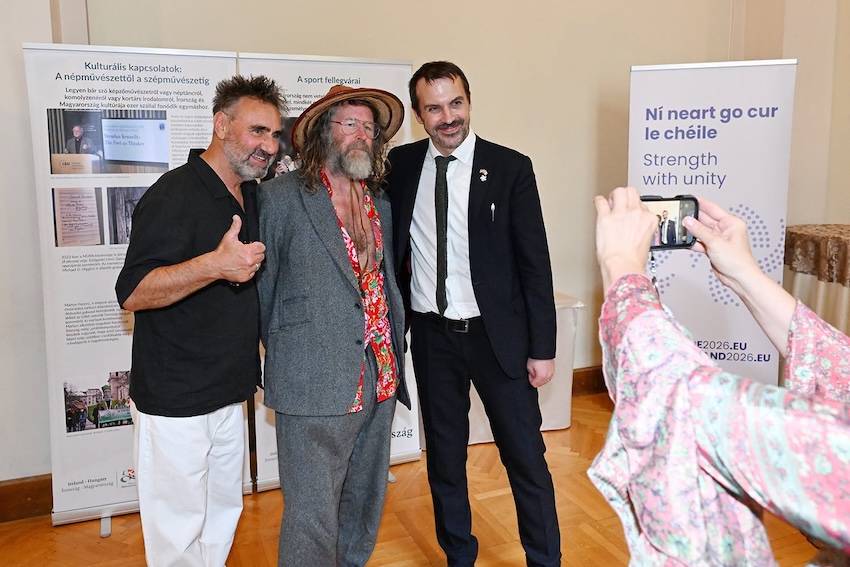
The celebration began in the elegant Vörösmarty Hall on the ground floor of the Hungarian Academy of Sciences, where guests were welcomed by Ambassador Ragnar Almqvist.
Opening the reception with a smile, the Ambassador quoted a Hungarian proverb: “Sok jó ember kis helyen is elfér” – Many good people fit in a small place. “What is true of Irish pubs,” he remarked, “is equally true of our receptions.”
Referring to the Hungarian tradition of using family names before given names, he humorously noted that the programme – much like the Academy’s tribute to the Hungarian poet Vörösmarty Mihály – was “a little back to front”: beginning with the reception before moving upstairs to the Grand Hall for the formal ceremony and concert.
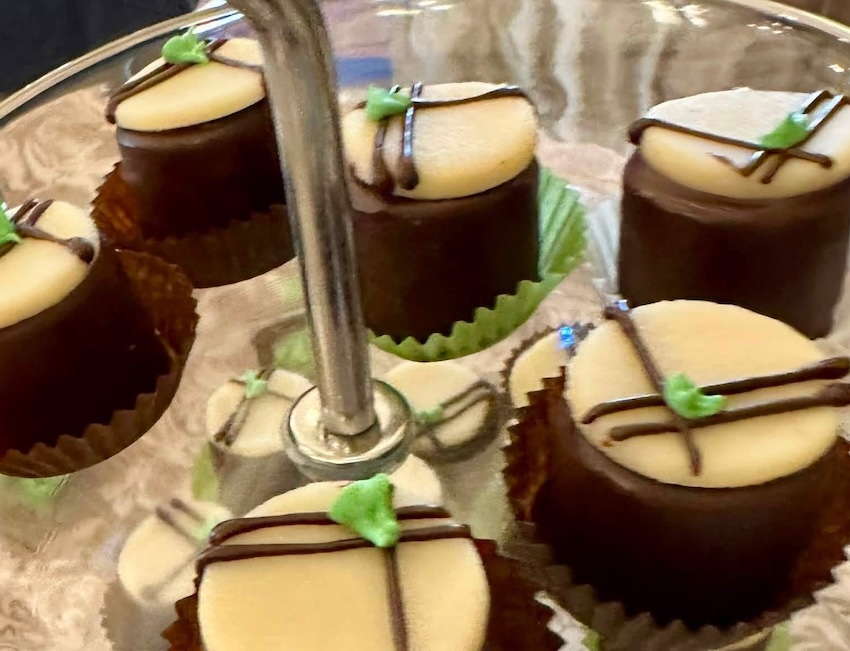
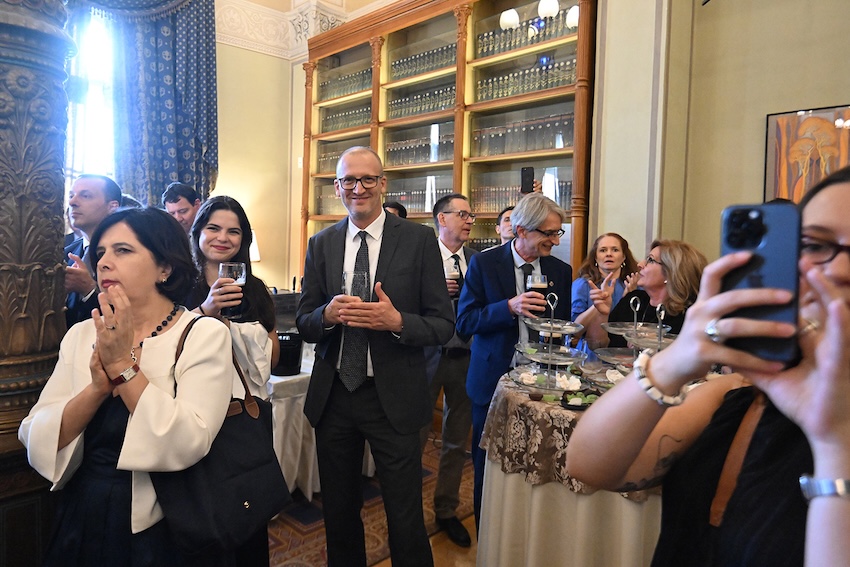
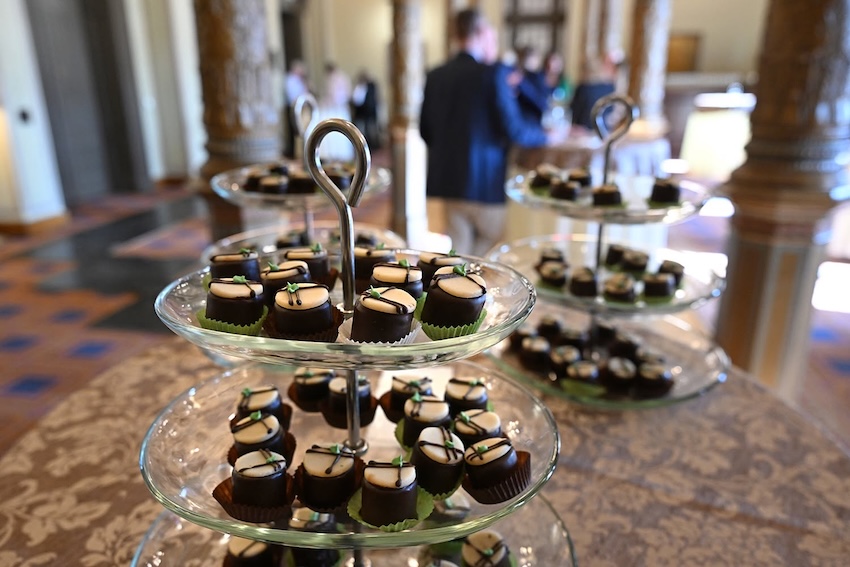
Guests enjoyed authentic Irish hospitality with Guinness, Jameson, and the famous Mary Cake, whose remarkable Hungarian-Irish story Ambassador Almqvist later recounted in his address.
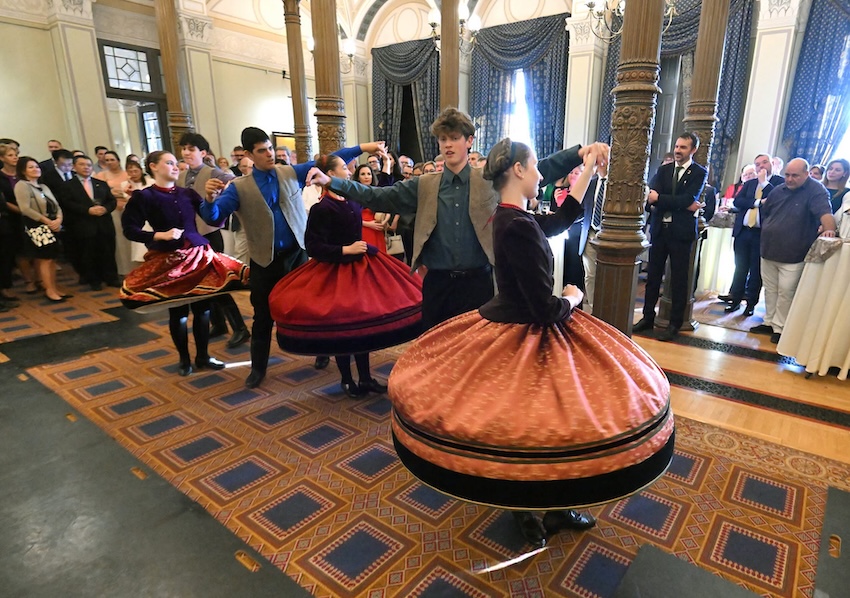
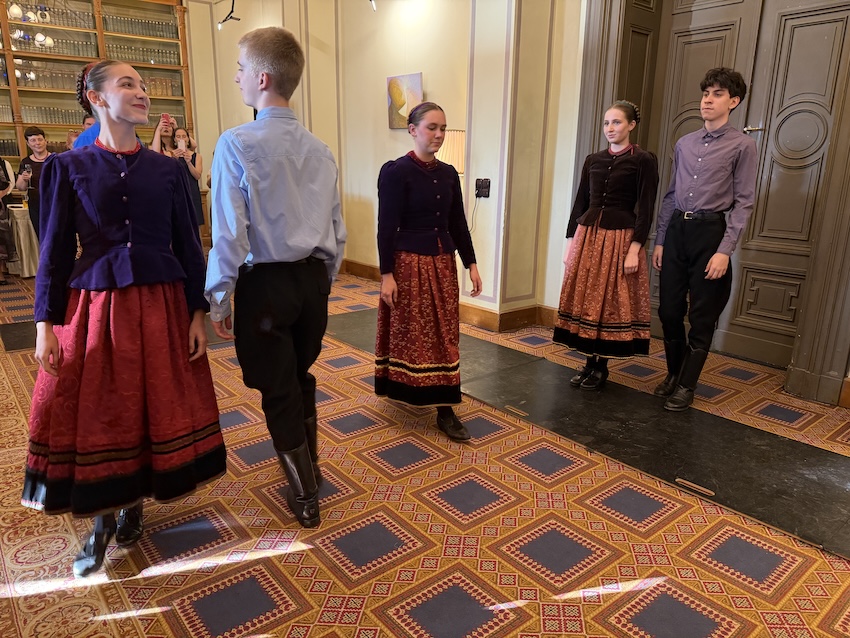
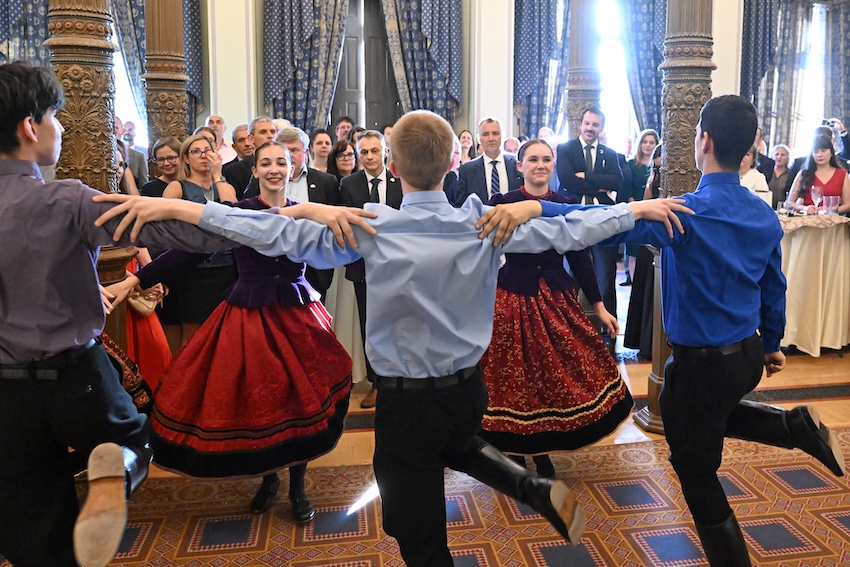
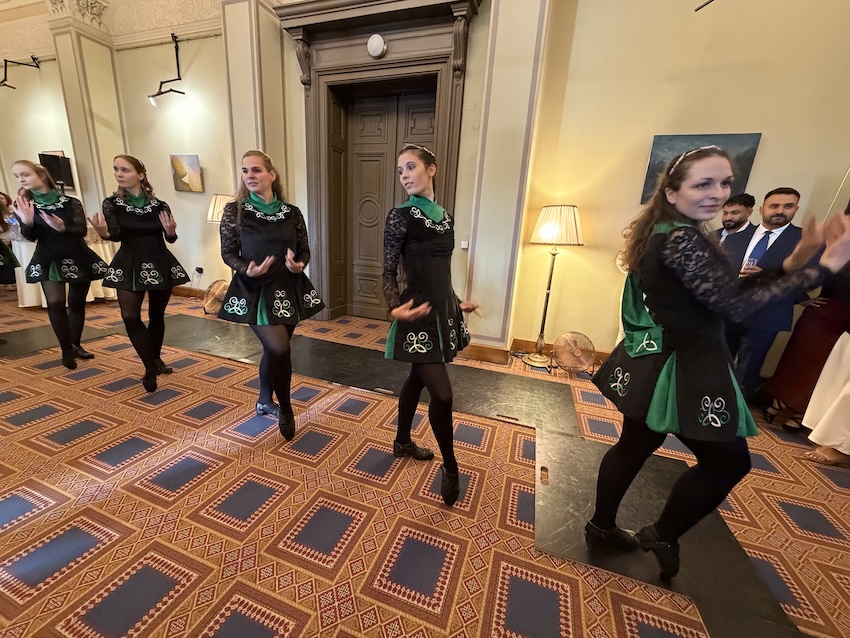
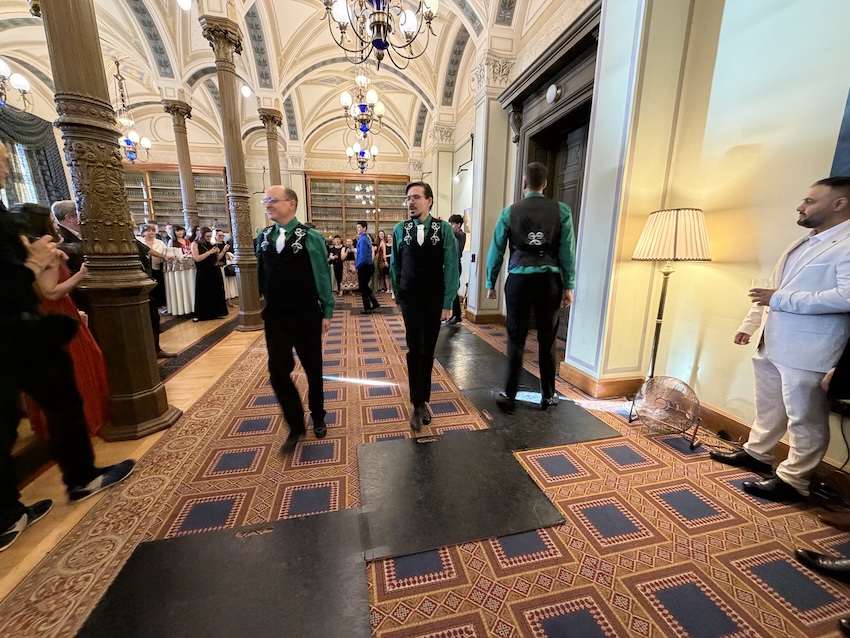
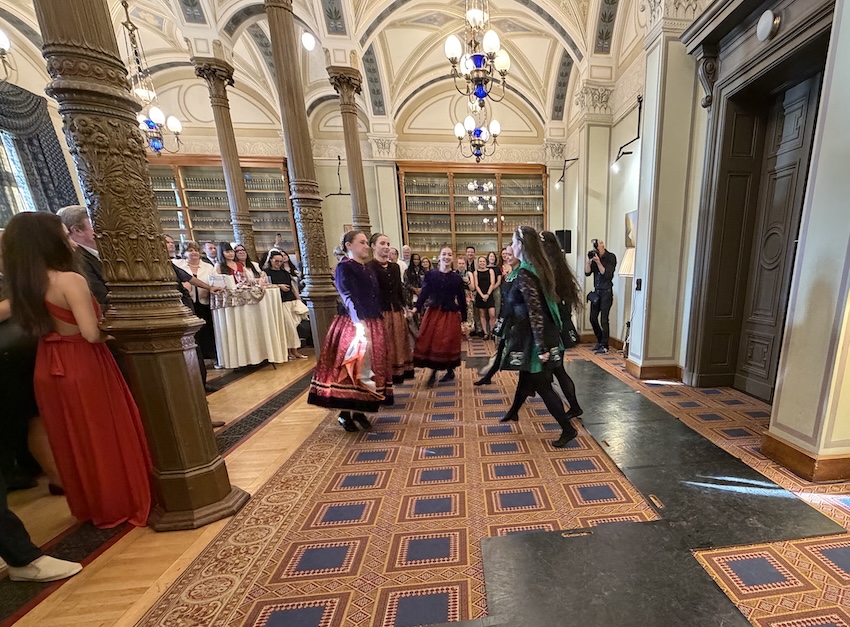
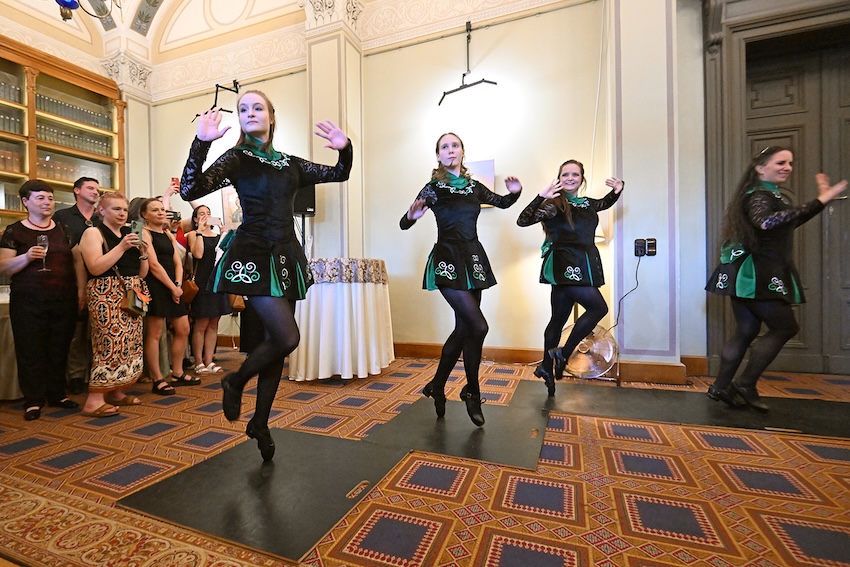
Before the formal programme, guests were entertained with a unique cultural performance specially commissioned for the occasion. The Erin Folk Dance Group and the Bihari János Folk Dance Group, choreographed by Gábor Zimboran, performed the Dance of the Danube, a beautiful artistic collaboration celebrating the shared cultural heritage of the great European river and the friendship linking Ireland and Hungary.
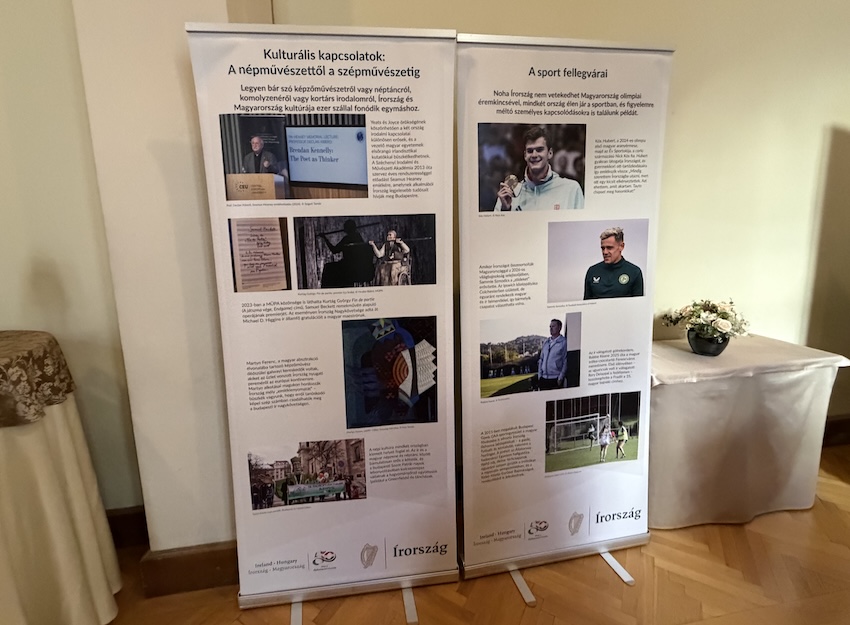
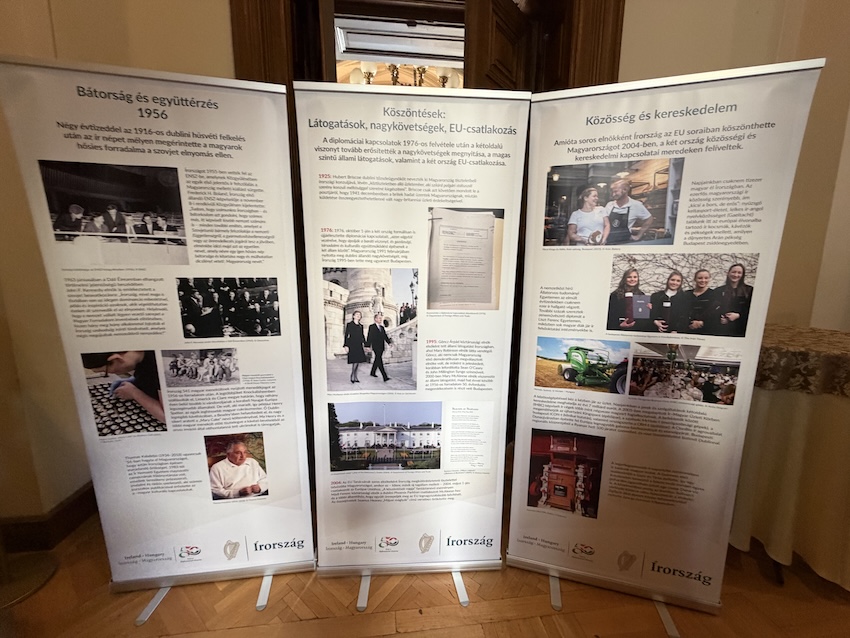
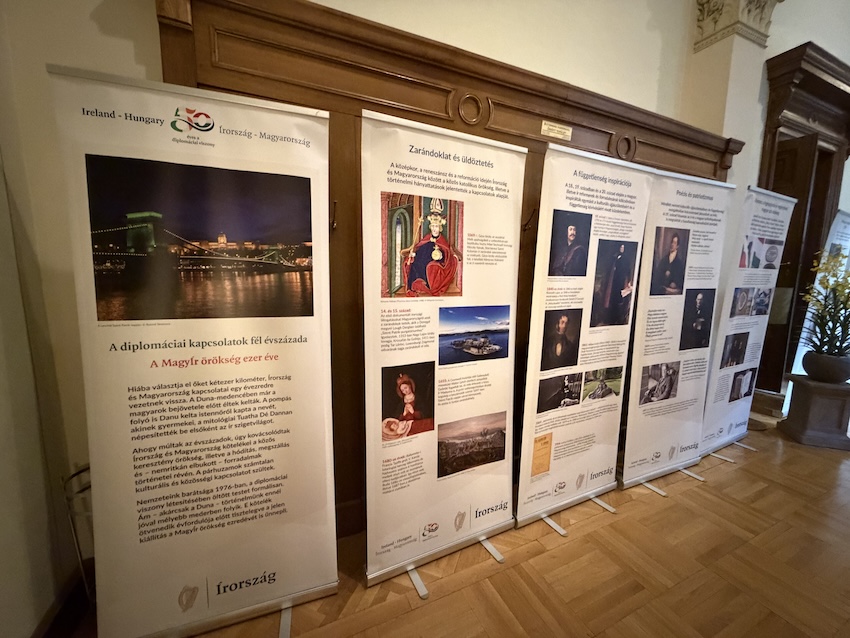
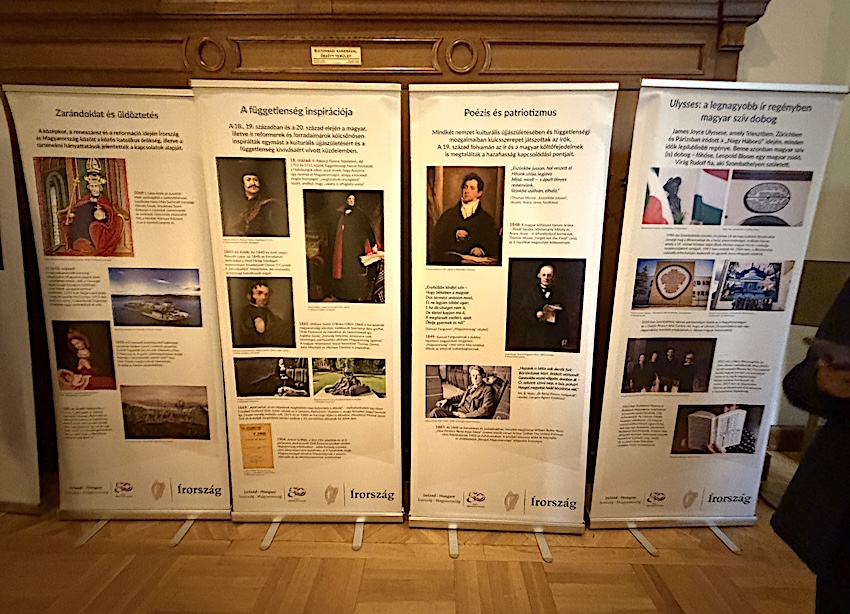
As part of the celebrations, invitees viewed an exhibition on Irish–Hungarian relations presented on informative display panels.
Ceremony in the Historic Grand Hall
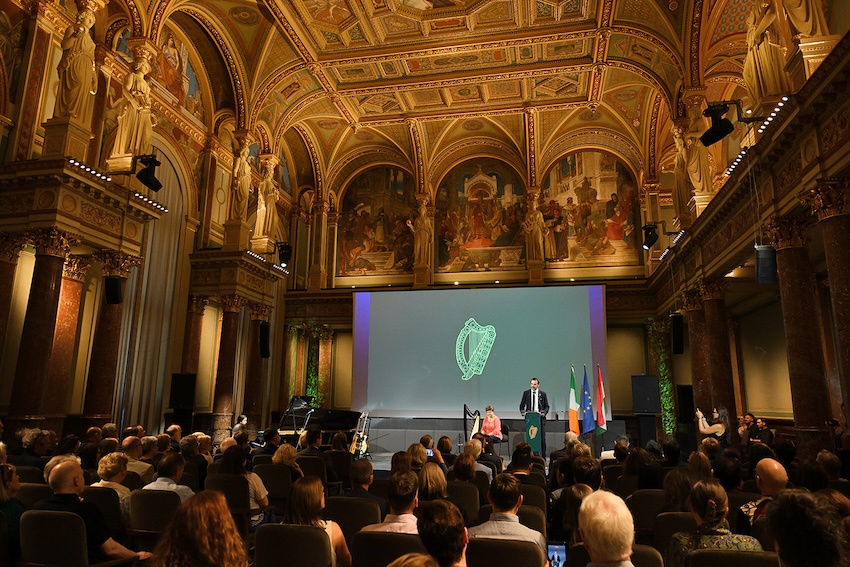
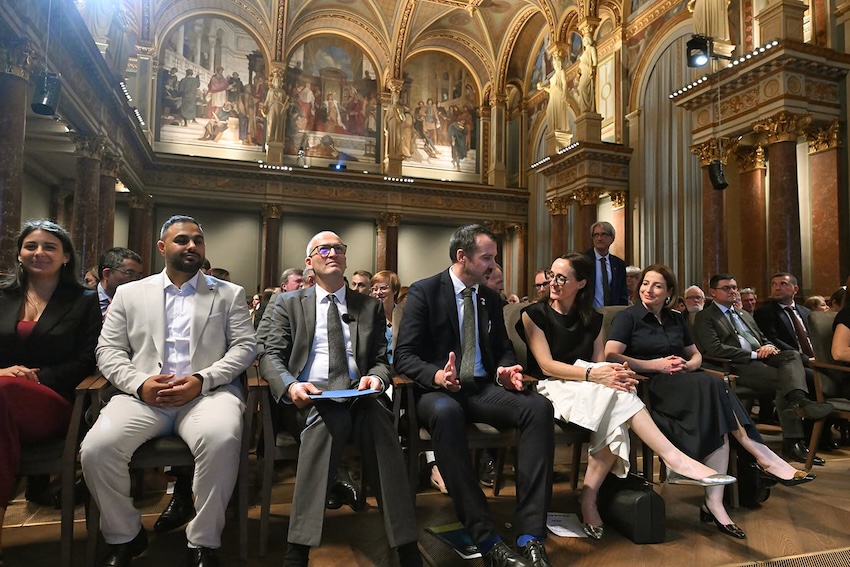
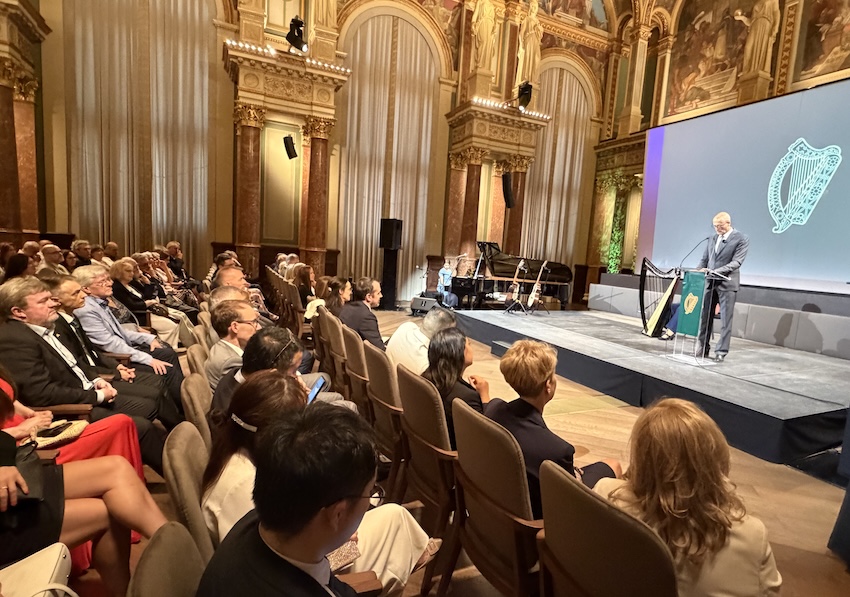
The guests were ushered into the magnificent Ceremonial Hall of the Hungarian Academy of Sciences,
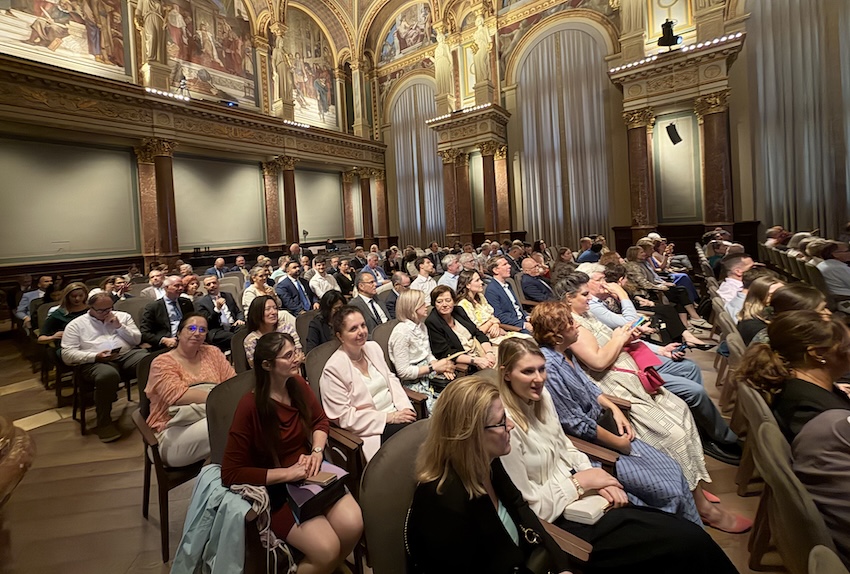
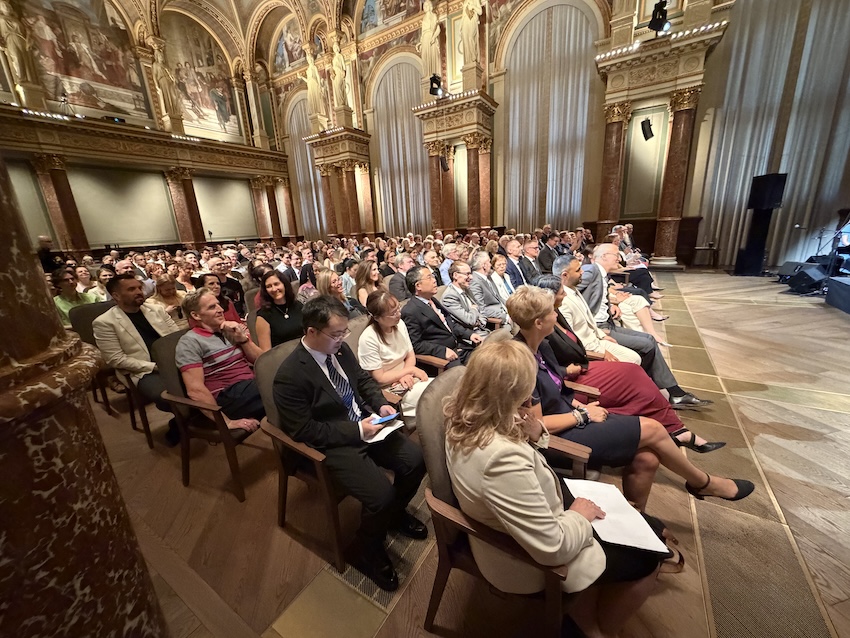
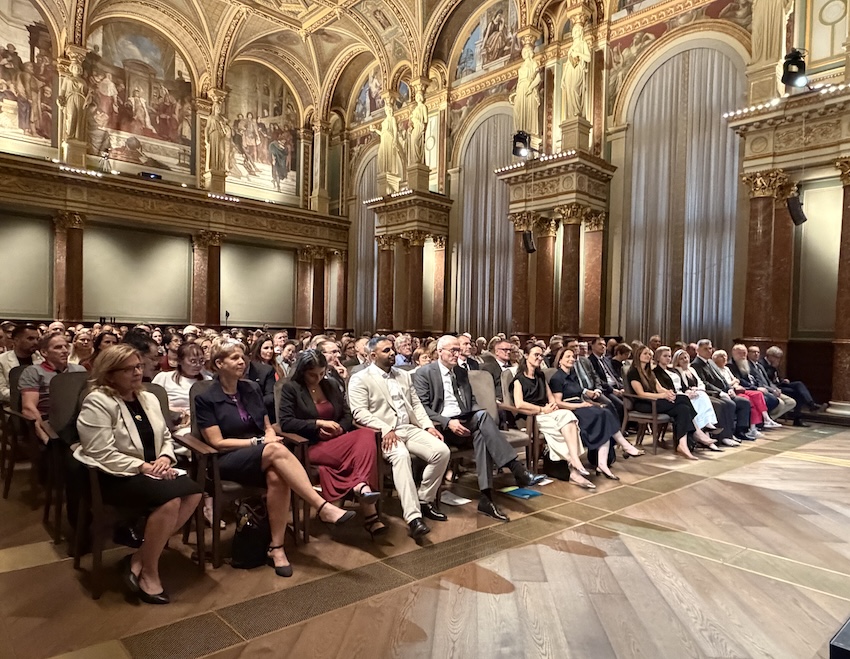
where the official programme began with the welcome words of Marianna Joó, Attaché at the Embassy of Ireland.
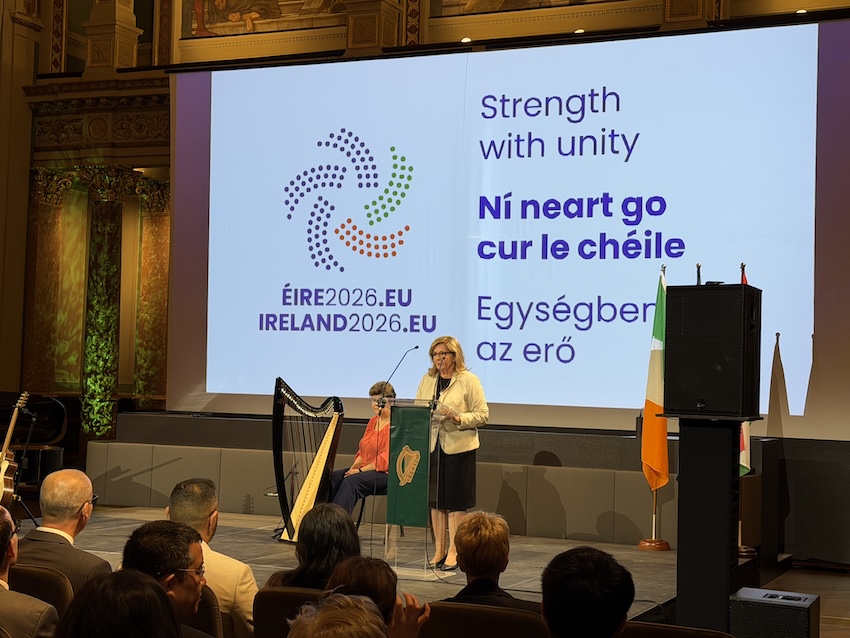
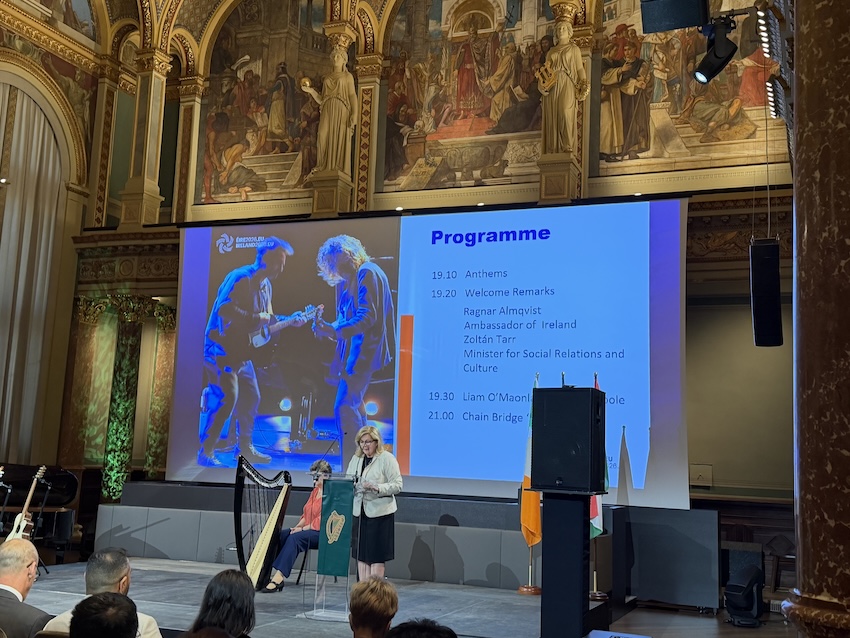
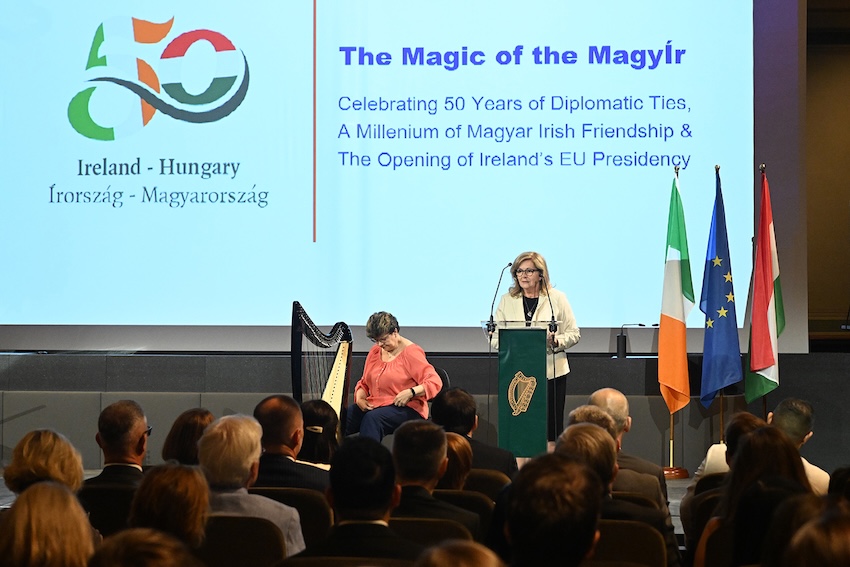
The national anthems of Ireland, Hungary and the European Union were then beautifully performed by Hungarian artists Márta and Hedvig.
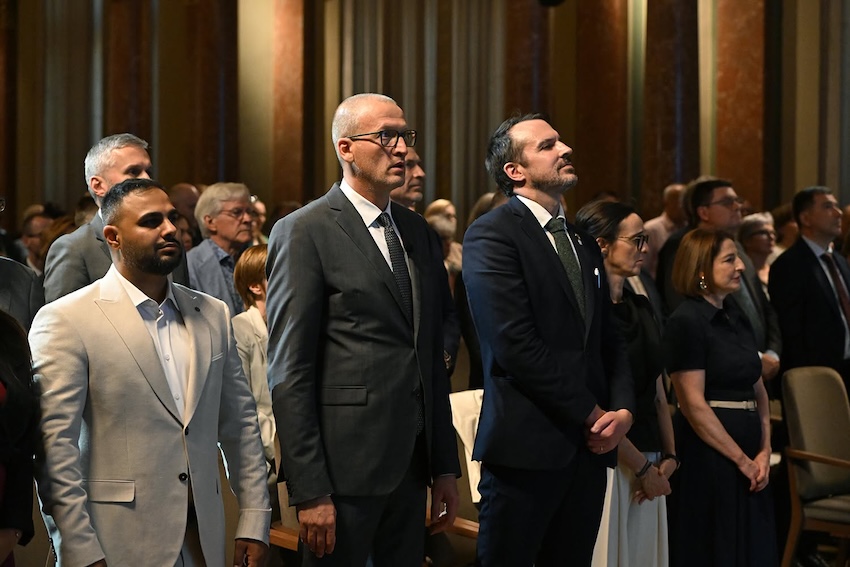
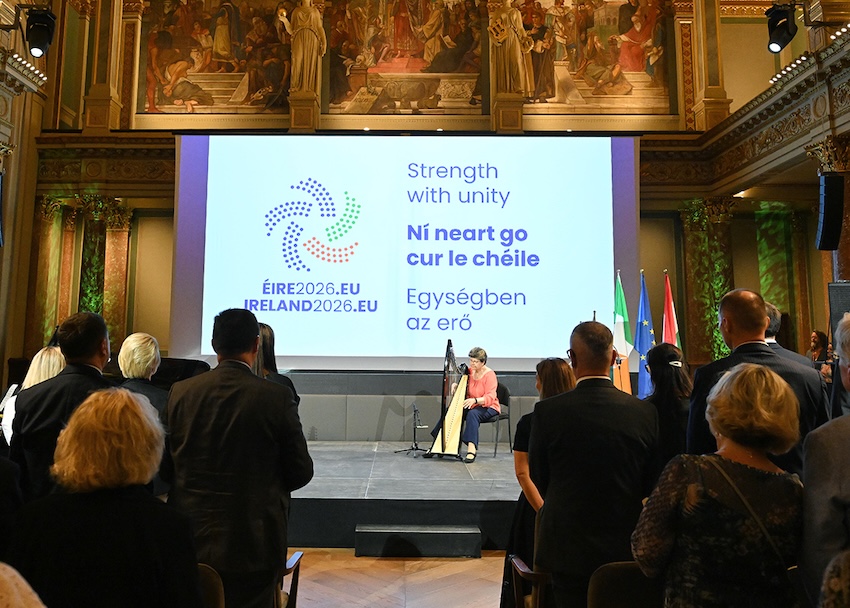
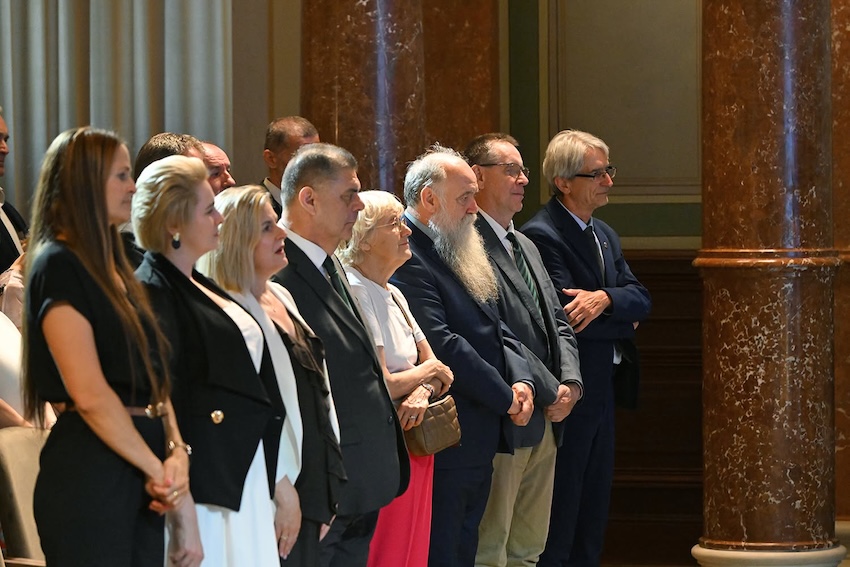
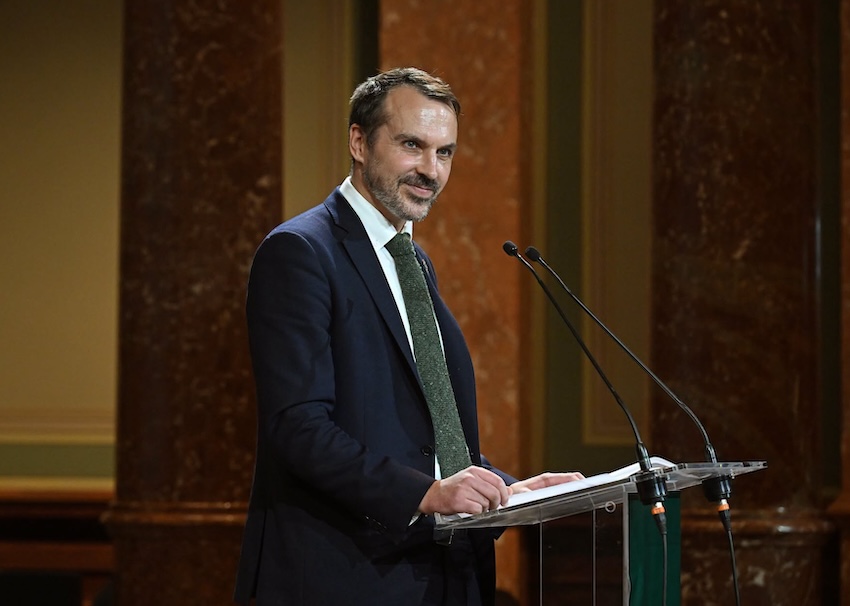
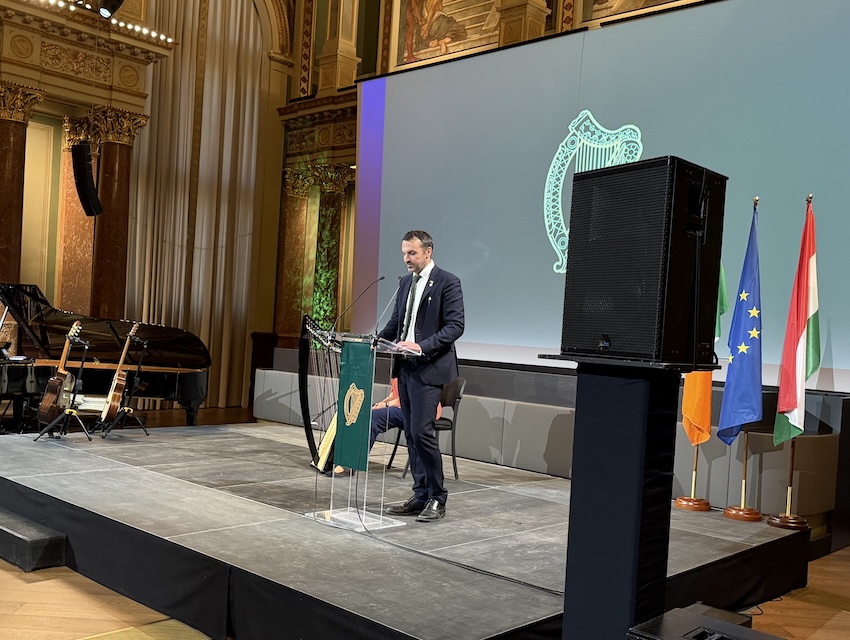
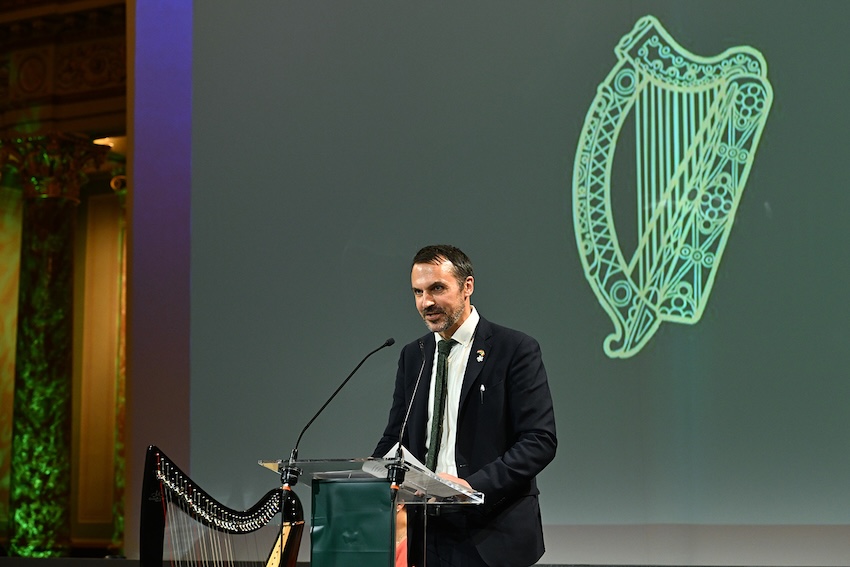
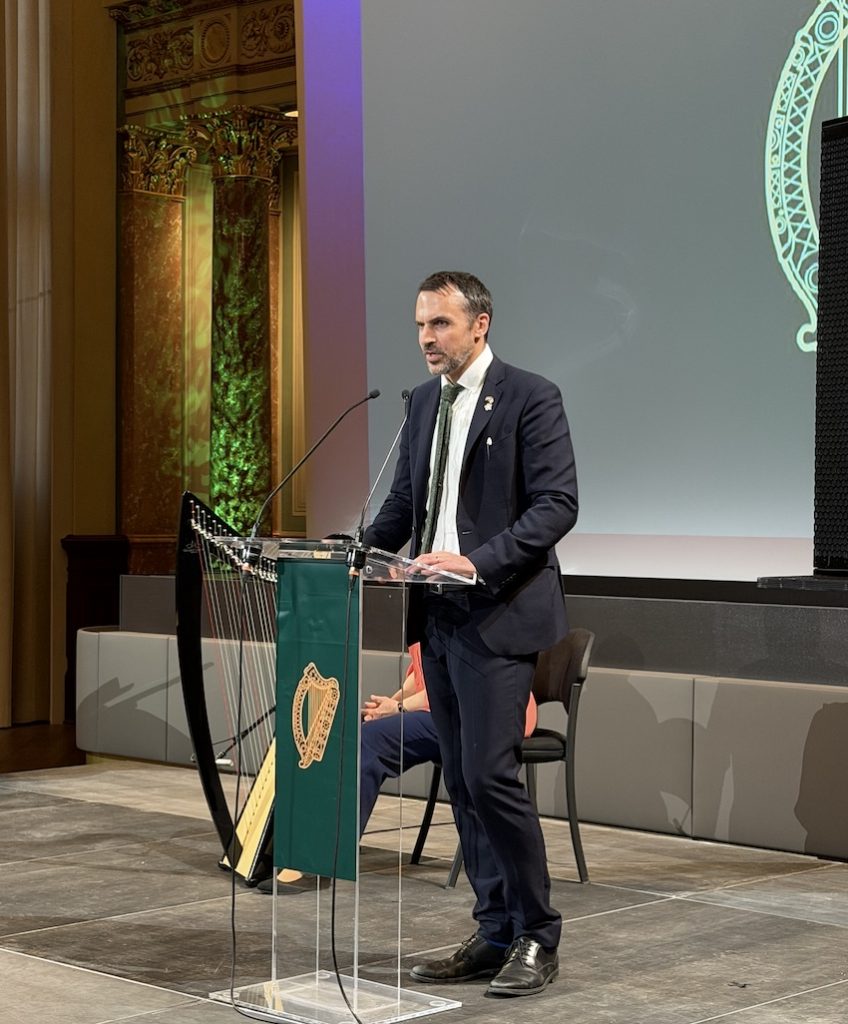
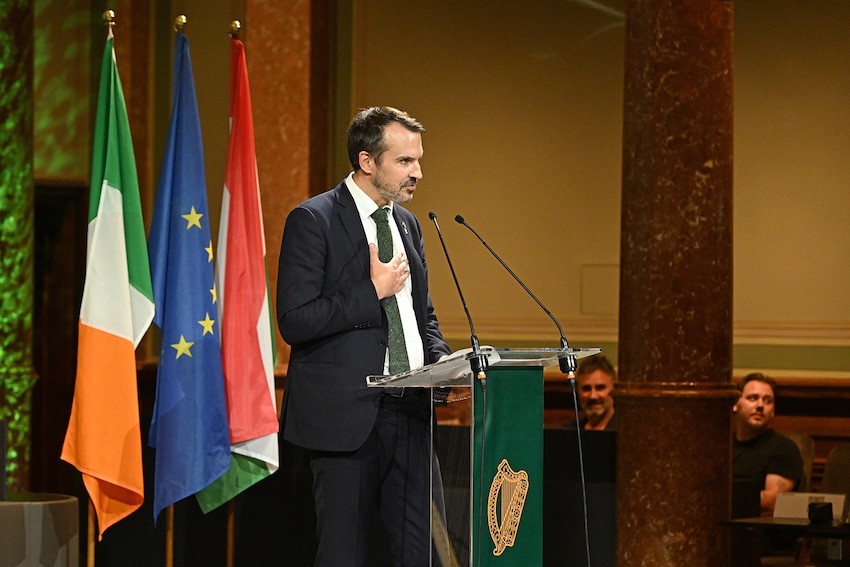
The event proceeded with an address by His Excellency Ragnar Almqvist, Ambassador of Ireland to Hungary. Beginning his speech in Hungarian, Ambassador Almqvist once again demonstrated his affection for the Hungarian language and his well-known fascination with its unique expressions and proverbs. Addressing the distinguished Guests of Honour and the audience, A Chairde, he reflected humorously on his three years in Budapest:
“Three sweltering summers I’ve lived in the great Magyar metropolis. I understand now how Pest got its name from the Slavic word for stove or oven. And why you call this uborkaszezon. Because, after an hour under the blazing Budapest sun, all Irishmen resemble cucumbers. And most move like them. Which is to say, not at all.
After three years here, there are still things I don’t understand – how to solve a Rubik’s Cube, make vowels harmonise, or make sense of Hungarian politics.
But I’ve come to know one thing well – how it was that, across the ages and the waters, the Magyar and the Irish forged a friendship as deep as the Danube. Because we are a kindred people. Fond of loud music and fast dancing. Famed for our dark humour and strong spirits – and not just whiskey or Unicum.
Fiercely proud of our unique cultures and challenging languages. And also of our difficult histories – eras of occupation and revolt that forged in us a deep resilience. A resilience so deep that, on not qualifying for this World Cup – bocsánat megint (sorry again) – our fans could shrug, order a pint or a pálinka – and, sometime perhaps, even a pint of pálinka. And agree that “Több is veszett Mohácsnál.” – “More was lost at Mohács.” Or, for that matter, at the Boyne.
“Három a magyar igazság” – “Three is the Hungarian truth” you say here, Minister Tarr. And, in the absence of football, we are gathered tonight for three reasons.
First, to mark the opening of Ireland’s Presidency of the Council of the European Union. Second, to commemorate 50 years of diplomatic relations between our two states. And third, above all else, to celebrate – and renew – a millennium of MagyÍr friendship.
1. Irish EU Council Presidency from 1 July to 31 December 2026
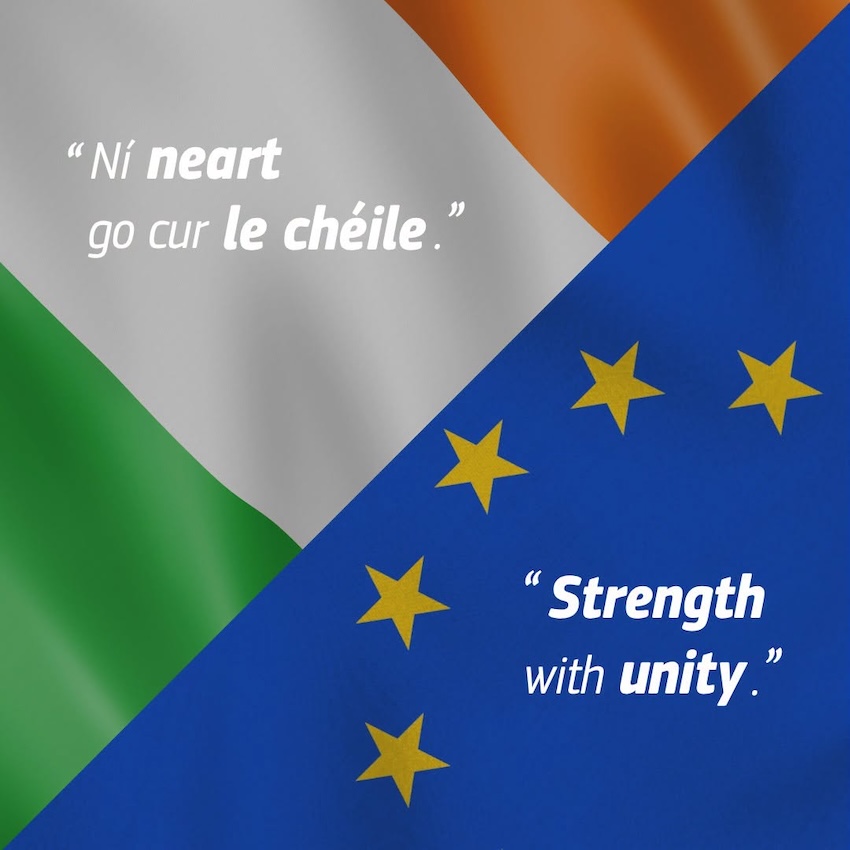
“Ní neart go cur le Chéile” runs our Presidency’s motto. Strength with unity. Egységben az Erő. That is the essence of our European Union.
It is the reason Ireland, as Presidency in 2004, was so proud to welcome Hungary – and nine other countries – into our community.
And the reason we are so happy now, under this new Government, and through the efforts of so many brave friends here in civil society, the media and beyond, to see Hungary reaffirm its place at the heart of Europe.
2. Diplomatic Ties
Fifty years ago, the Irish and Hungarian states established diplomatic relations. But the course of our peoples’ friendship runs far deeper, like the Danube, stretching back almost to the time of King Saint Stephen.
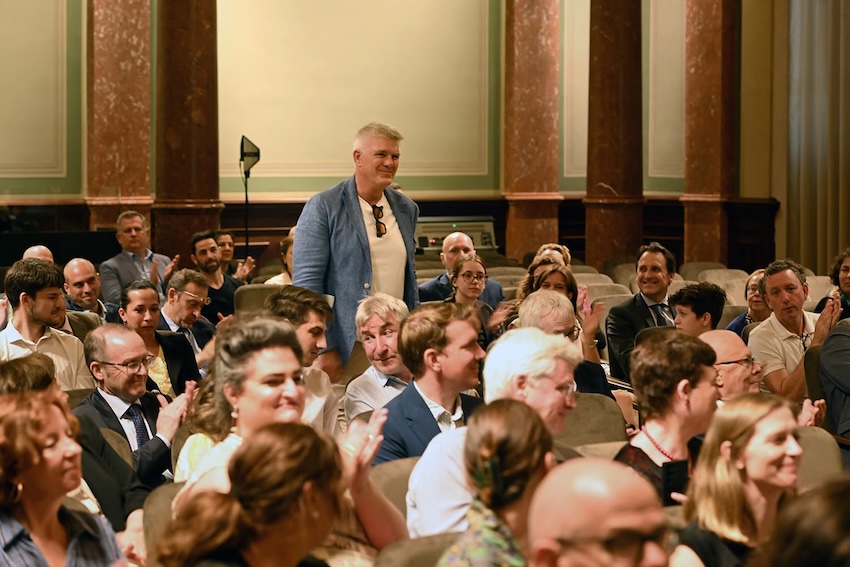
From the Hungarian heart of our greatest novel, James Joyce’s Ulysses, to the Cork heritage of Hungary’s Olympic swimming hero Hubert “Hubi” Kós – whose father, Nick Kós, is with us tonight and founded the Irish-Hungarian Business Circle.
There are as many stories as there are Magyars in Ireland – around 10,000. And even if the number of Irish people who have made Hungary their home is smaller: “Kicsi a bors, de erős.” Small is the peppercorn, but strong.
The same is true for our small but mighty Embassy team – James, Nargiza, Timi, Zoli, Zsuzsi, Bence, Bea and Marianna – who have organised tonight’s programme, and so much more over these past weeks, and who, I submit, deserve a special round of applause.
3. Millennium of MagyÍr Friendship
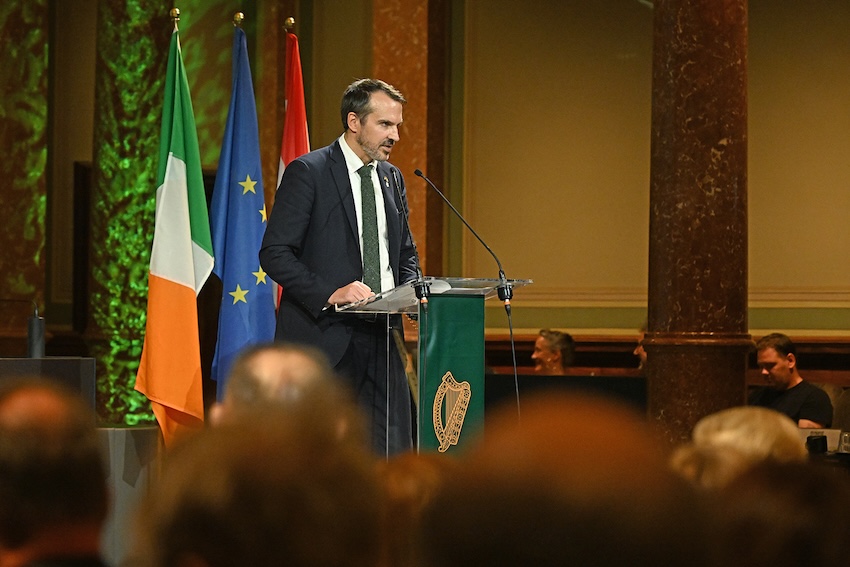
One story, perhaps, captures the magic of what we call MagyÍr. On St Patrick’s Day, Minister Tarr, I recalled how Ireland, in its first speech at the United Nations seven decades ago, paid tribute to the “courage of a very gallant people” – the Hungarian heroes of 1956.
Weeks later, we welcomed to our shores 540 Hungarian refugees fleeing Soviet tanks. Among them was Henry Spelter, a confectioner from one of Budapest’s great baking families. He found work at Dublin’s oldest café: Bewley’s. There, he introduced the Marika Cake to the menu, which was rechristened “Mary Cake” for the Irish public. For decades, Dubliners savoured its rich flavours. But, in time, Henry left Ireland – as many did – for America. Bewley’s menu changed, and his recipe was lost. Six years ago, Hazel Carmichael, a great-granddaughter of the café’s founder, rediscovered it and brought the Mary Cake back to Bewley’s.
Today, in honour of Henry, sales of the cake raise funds for Ukrainians displaced by Russia’s invasion, including the 100,000 who have found refuge on our shores.
I am grateful to Hazel for joining us this week, and for working with our friends at Arán – probably Budapest’s best bakery, certainly its best Irish bakery – to make these mini Mary Cakes for tonight’s celebration. Anyone who tastes them will find: Yes, Ben Stiller had it right. There is something about Mary. But there is something about Hazel, too. As there was about Henry Spelter. Namely that dark as history may sometimes be, kindness, like light, echoes through the ages.
So does culture. As you know, Minister Tarr, culture is at the core of what it means to be Magyar. The Greatest Hungarian (a legnagyobb magyar), Count István Széchenyi, understood this when founding this Academy two centuries ago.
As the Academy’s President, Mihály Pósfai, does today. We are indebted to him and his predecessor, Tamás Freund, for welcoming us to this splendid – and sacred – space.
And to the Director of the Academy’s Library, the incomparable and irrepressible István Monok, for inspiring us with this idea and paving the way. István celebrated his own special anniversary yesterday – his 70th birthday. Boldog születésnapot, barátom. Happy Birthday, my friend. You don’t look a day older than our nations’ diplomatic ties.
As István knows, culture counts in Ireland too, epitomised by our national symbol, the harp. Before statesmen ever shaped our state, artists imagined Ireland into being. And they continue to inspire us today.
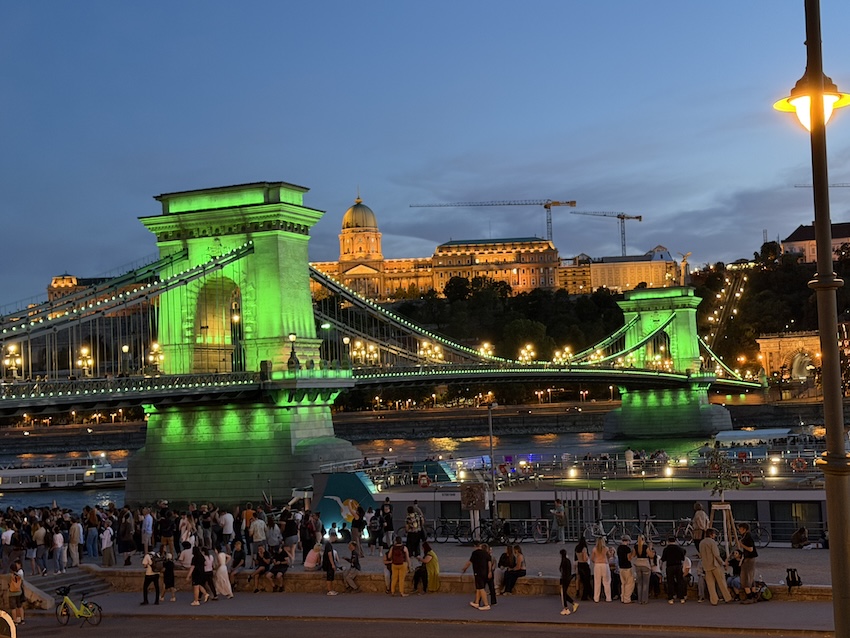
To conclude our evening, I invite you to take a look at the Chain Bridge, built by Széchenyi – itself a work of art. Which, thanks to Budapest’s Mayor, Gergely Karácsony, and with the support of our friends at Pannonia Bio, will turn green over the Danube.
Before that, we have the privilege of listening to two of Ireland’s brightest musical lights. From India to Indiana, from Melbourne to Mali, Liam Ó Maonlaí and Peter O’Toole have travelled the globe, blending ancient Irish traditions with world music, soul with sean-nós. As the Irish here know, they have composed some of the finest rock songs that we – the home to Thin Lizzy, U2 and The Cranberries – have ever produced. Their band, Hothouse Flowers, enjoys iconic status. In short: they are rock stars.
Our country is small. Give two Irish strangers a minute, and they’ll discover three connections. Liam and I first met only yesterday. But we attended the same Dublin Gaelscoil. And our parents spent their summers together in the same West Kerry Gaeltacht. Is mór an áthas dom fáilte a chur rompu – agus roimh Peter agus Marion freisin. I am delighted to welcome them – and Peter and Marion too.
It is a great joy and honour to have you, Minister Tarr, here alongside Deputy Speaker Kőszegi, State Secretary Klára Breuer, and so many other Hungarian friends. Welcoming you to the podium, let me conclude by toasting: The incredible Irish who have made Hungary their home. The many marvellous Magyars who enrich our nation. A thousand-year-old friendship that neither politics nor football – however tragic it may be – can ever break. And the community we have built together – le Chéile – beneath the European stars. Köszönöm, a chairde. Sláinte! Egészségedre!”
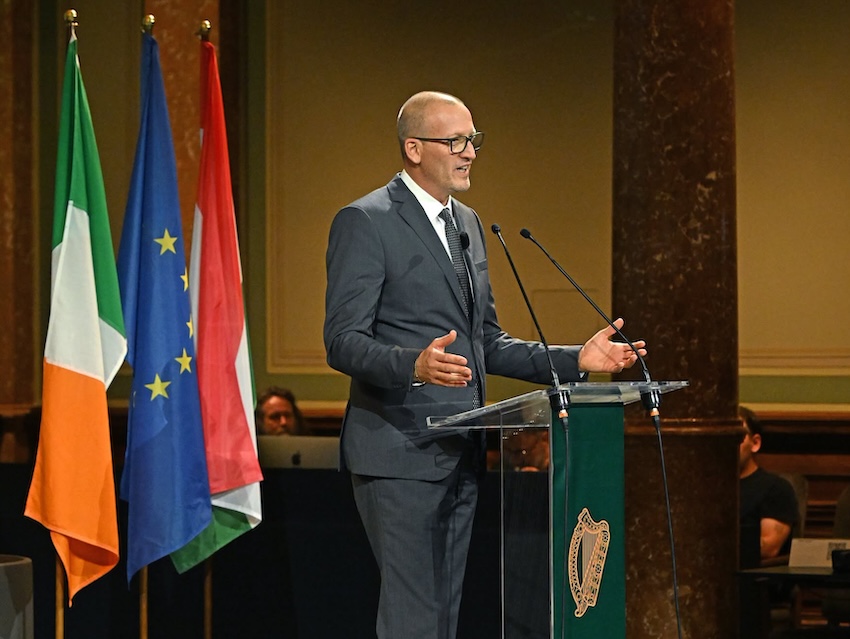
Following the Ambassador’s address, Hungarian Minister for Social Relations and Culture, Zoltán Tarr took the floor. He congratulated Ireland on assuming the Presidency of the Council of the European Union and warmly welcomed the celebration of five decades of diplomatic relations between the two countries. He highlighted the importance of continued European cooperation, cultural dialogue, and the enduring friendship that unites Hungary and Ireland, expressing confidence that these excellent bilateral relations would continue to flourish in the years ahead.
An Outstanding Concert by Liam Ó Maonlaí and Peter O’Toole
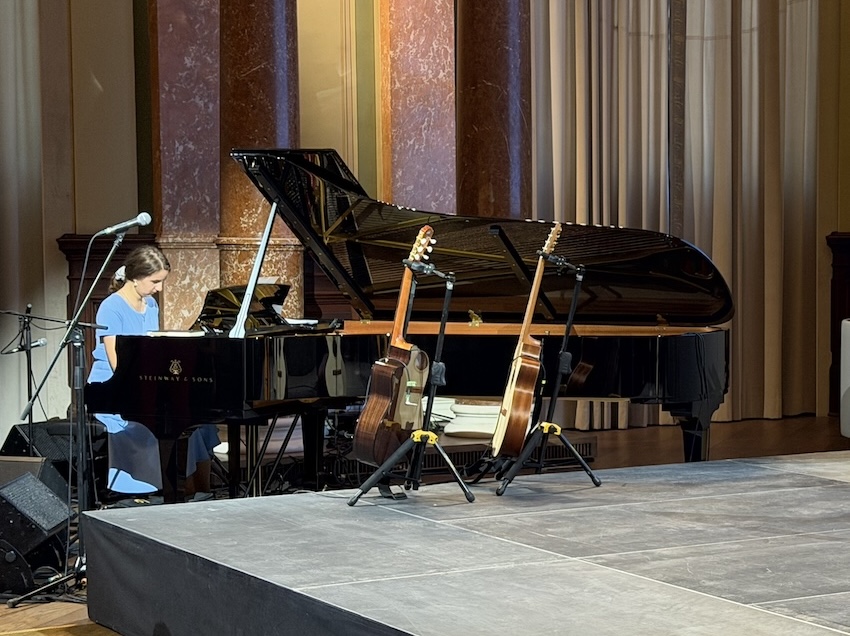
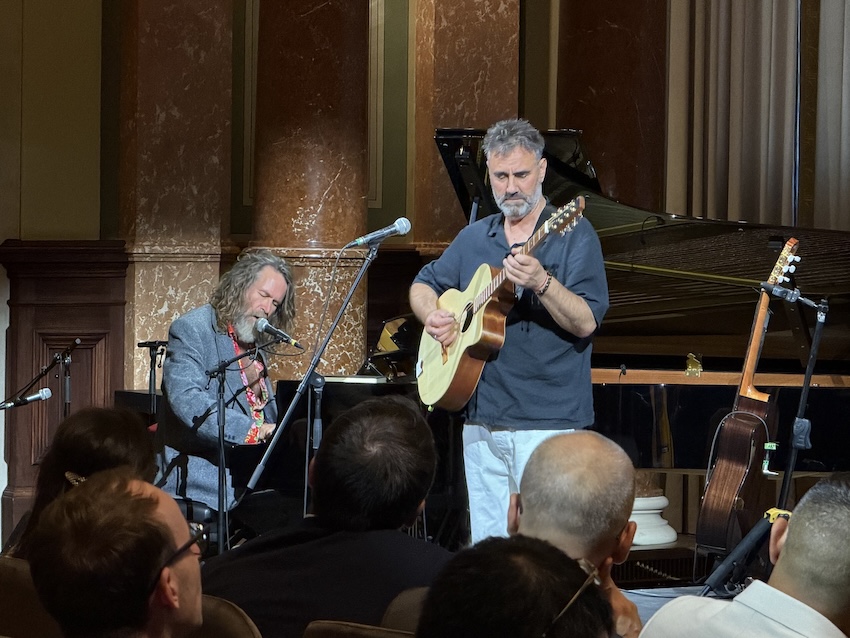
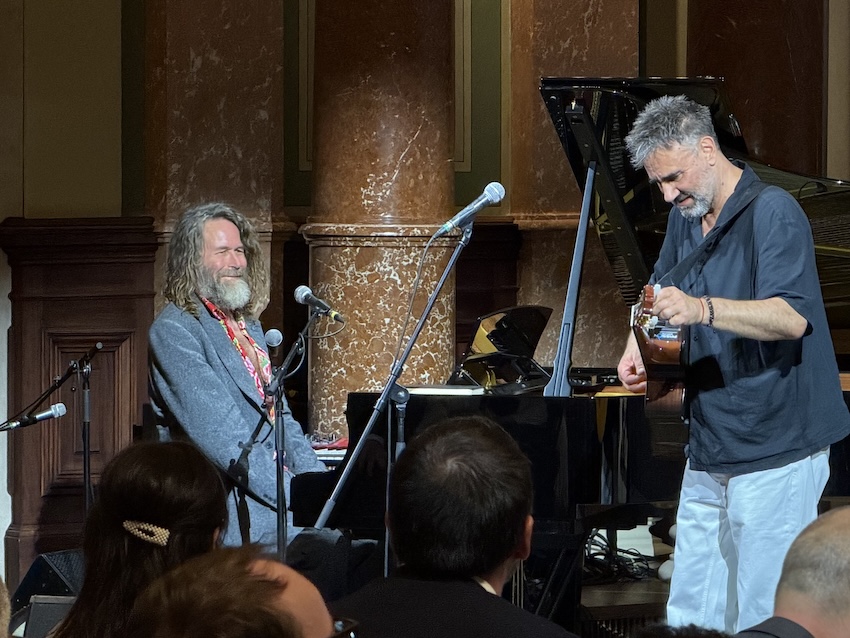
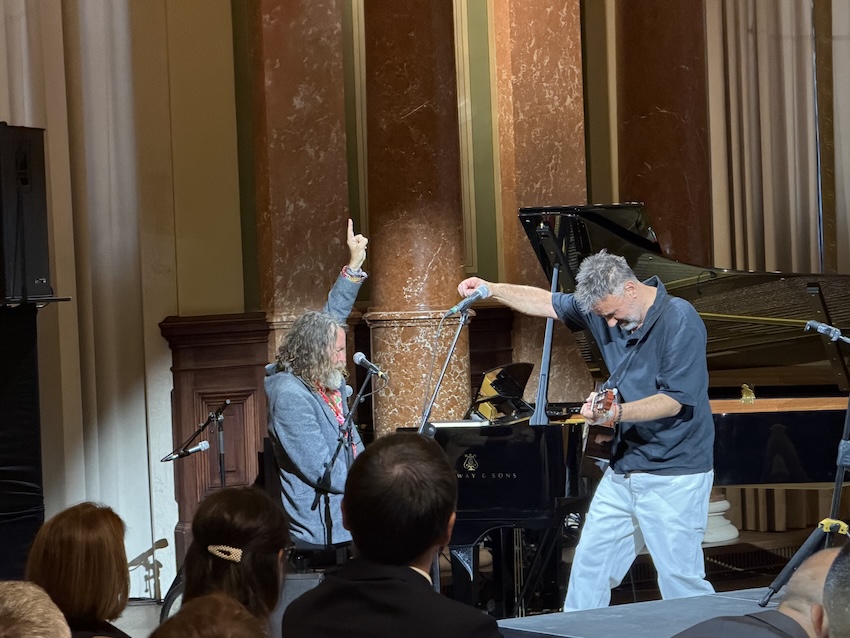
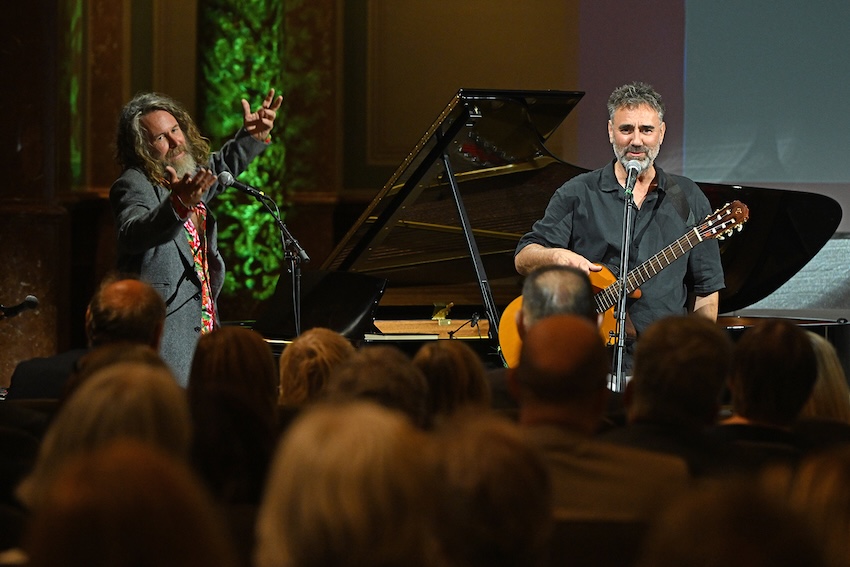
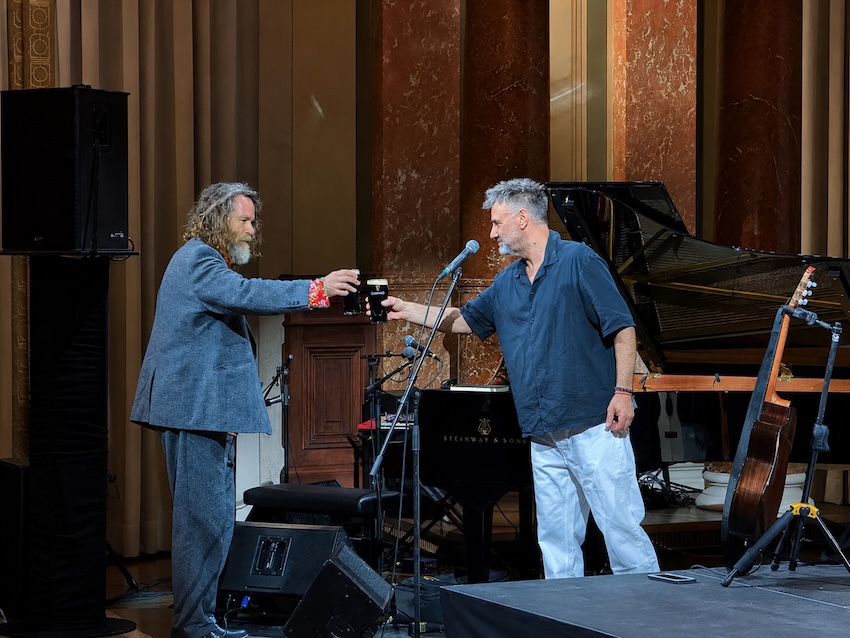
After the official programme, the guests eagerly anticipated the artistic highlight of the evening. At the invitation of Ambassador Ragnar Almqvist, the legendary Irish musicians Liam Ó Maonlaí and Peter O’Toole, members of the internationally acclaimed Hothouse Flowers, travelled to Budapest to give a special performance in honour of this memorable occasion before a fully packed hall. Their extraordinary concert blended traditional Irish sean-nós, folk music, soul, blues and rock, creating an unforgettable musical experience that perfectly reflected the spirit of the evening – deeply rooted in tradition yet embracing openness, creativity and cultural exchange.
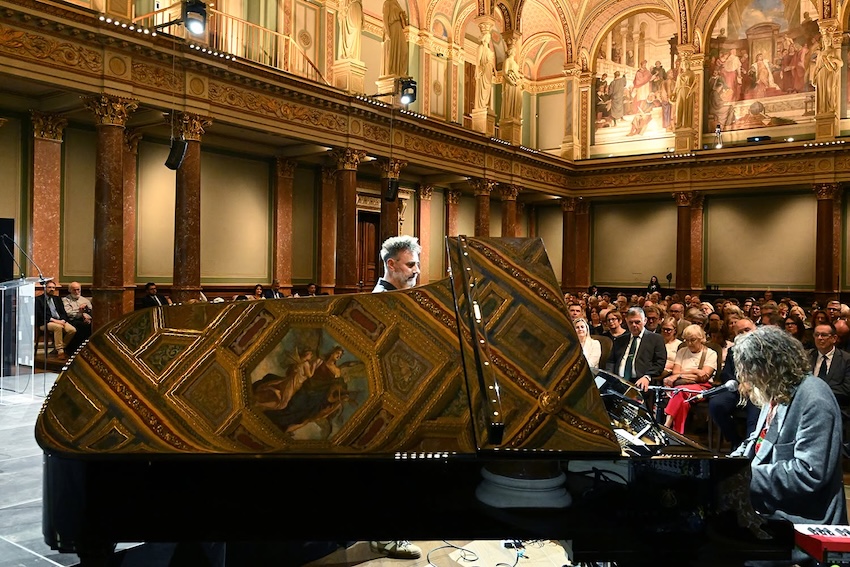
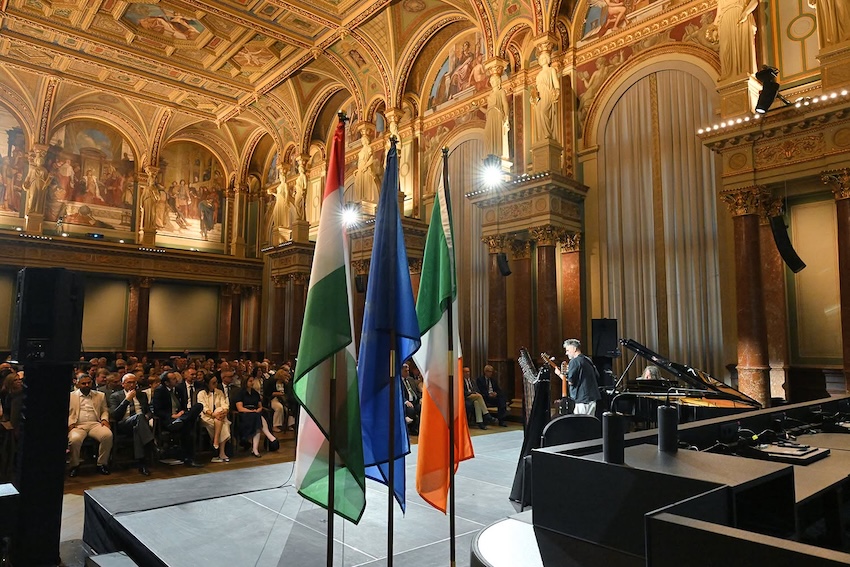
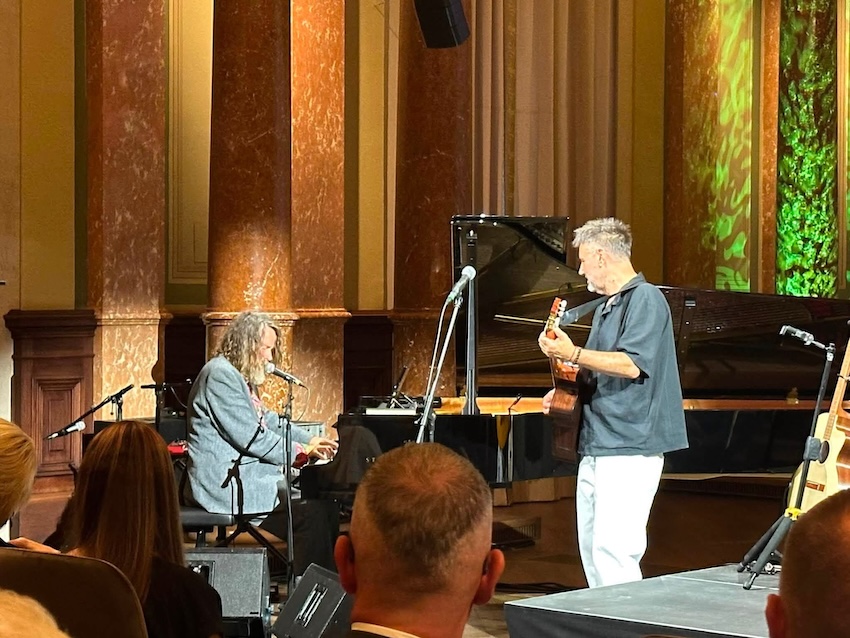
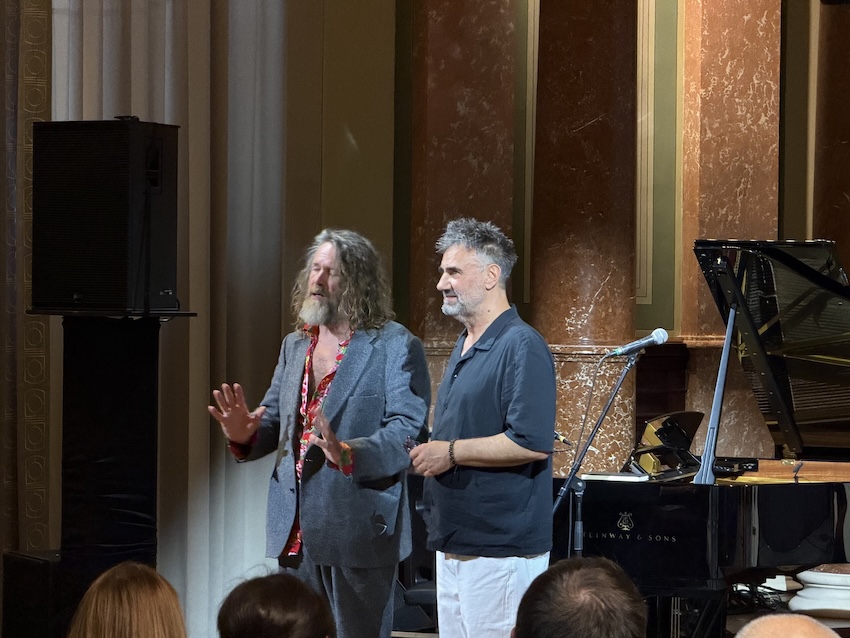
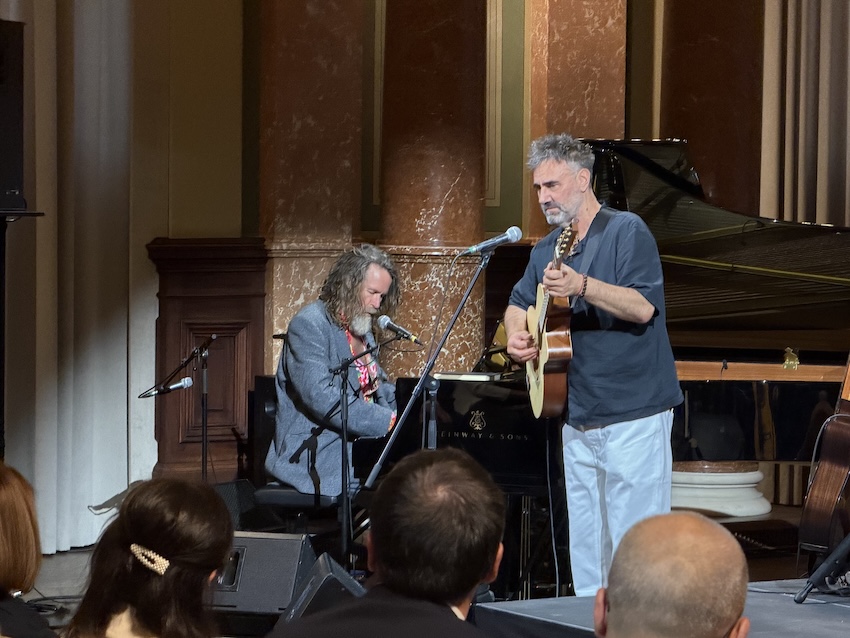
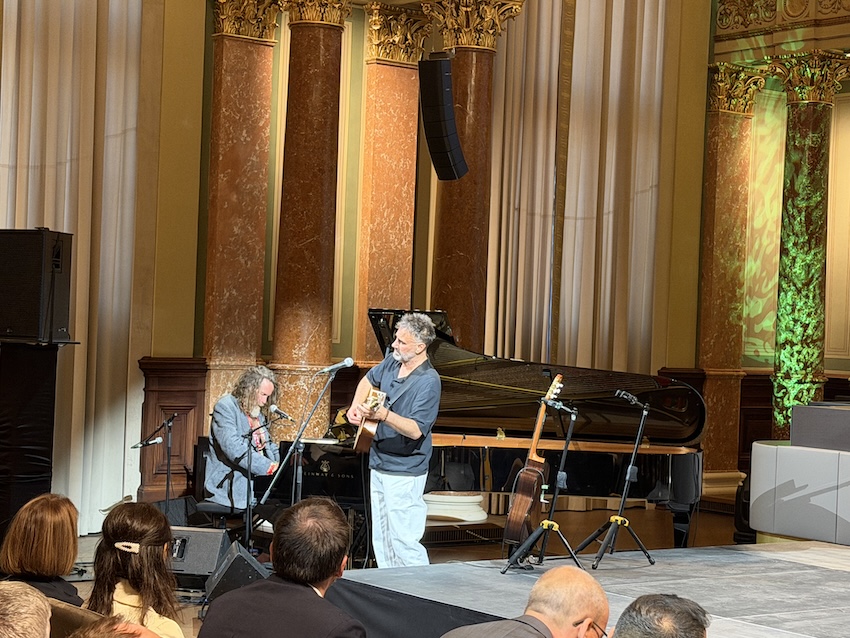
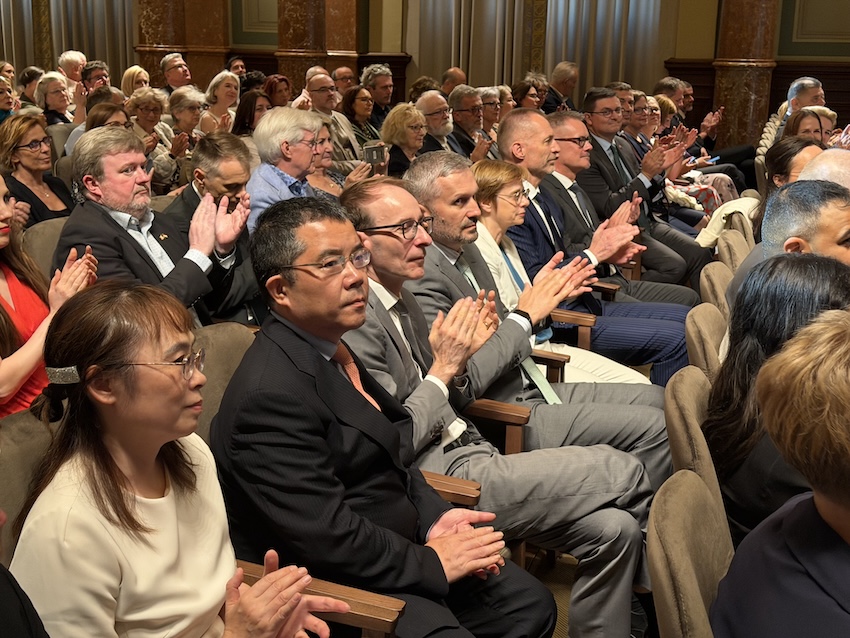
The audience was captivated from the very first notes. Liam Ó Maonlaí’s powerful vocals and expressive piano playing, paired with Peter O’Toole’s masterful guitar performance, filled the magnificent Ceremonial Hall with warmth, energy and emotion. Throughout the entire concert, the audience responded with enthusiastic applause, clearly enjoying every moment of the performance by the two exceptional musicians, whose artistry transcends musical genres and national borders.
A Green Finale over the Danube
After the concert, the guests stepped outside the Academy to witness the evening’s spectacular finale. The iconic Széchenyi Chain Bridge, one of Budapest’s most recognizable landmarks, inaugurated in 1849 and spanning the Danube directly opposite the Academy, was illuminated in brilliant green – the national colour of Ireland.
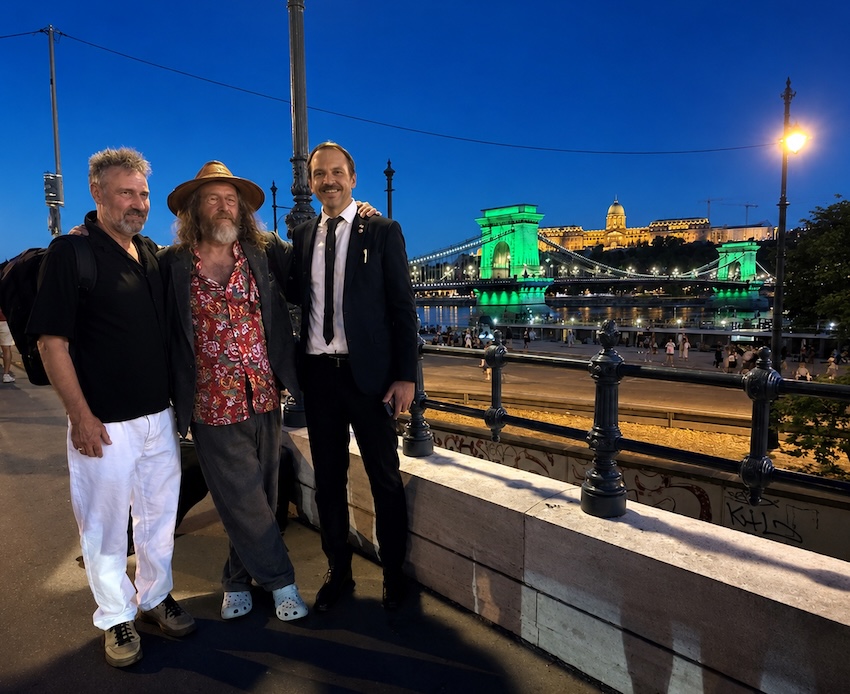
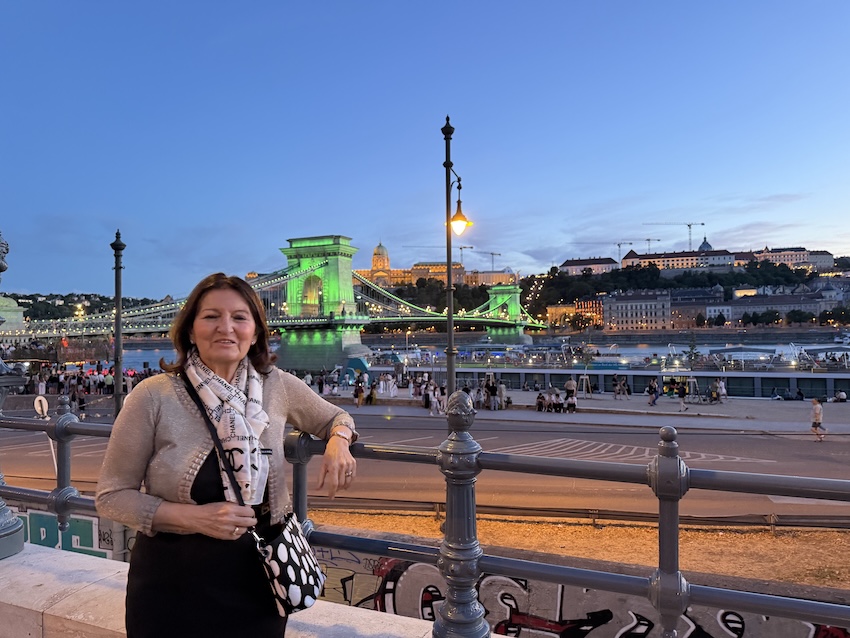
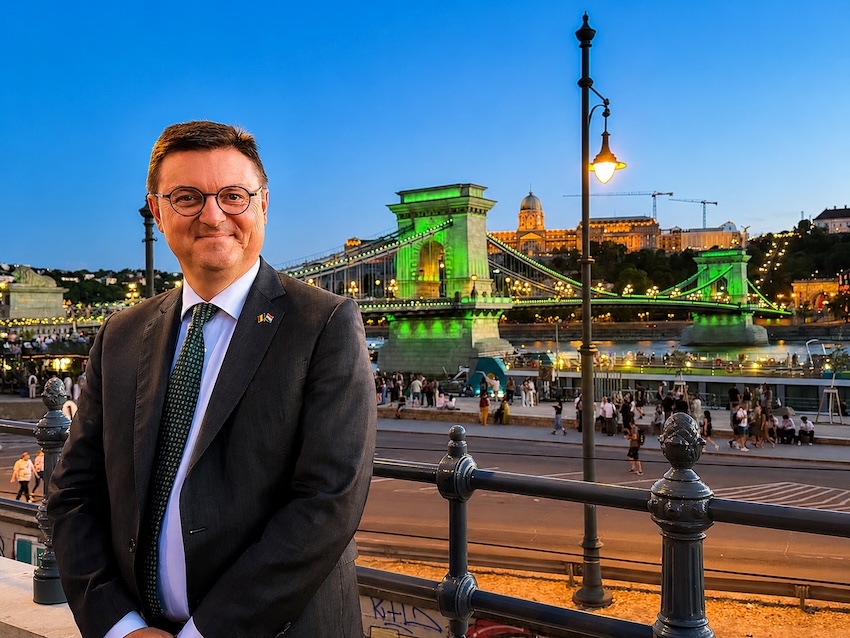
Made possible through the support of Budapest’s Mayor, Gergely Karácsony and Pannonia Bio, the illumination transformed one of the most beloved landmarks of Budapest into a striking symbol of friendship between the two nations.
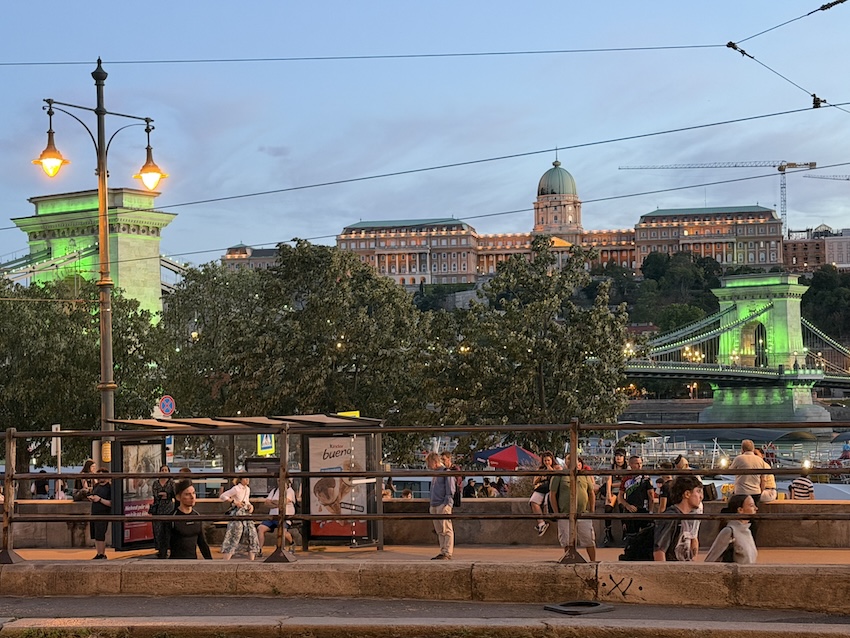
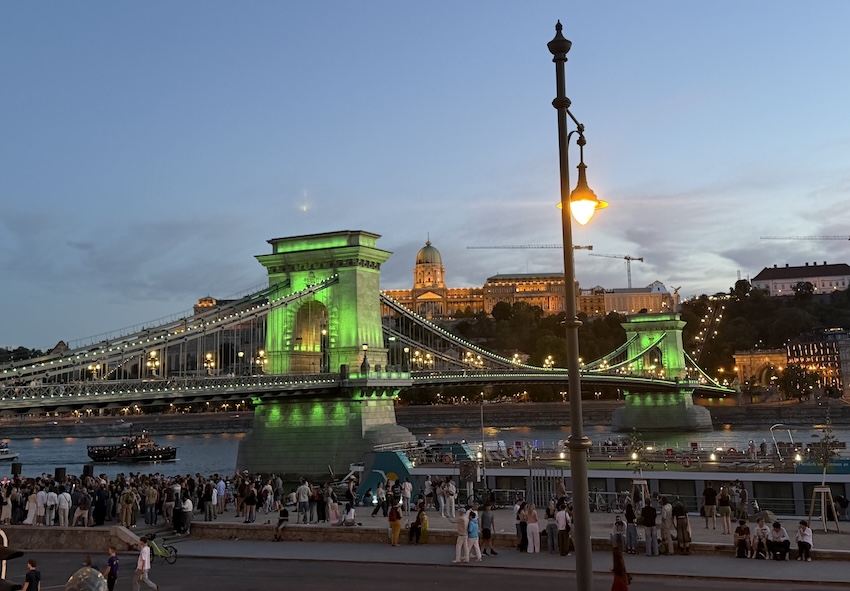
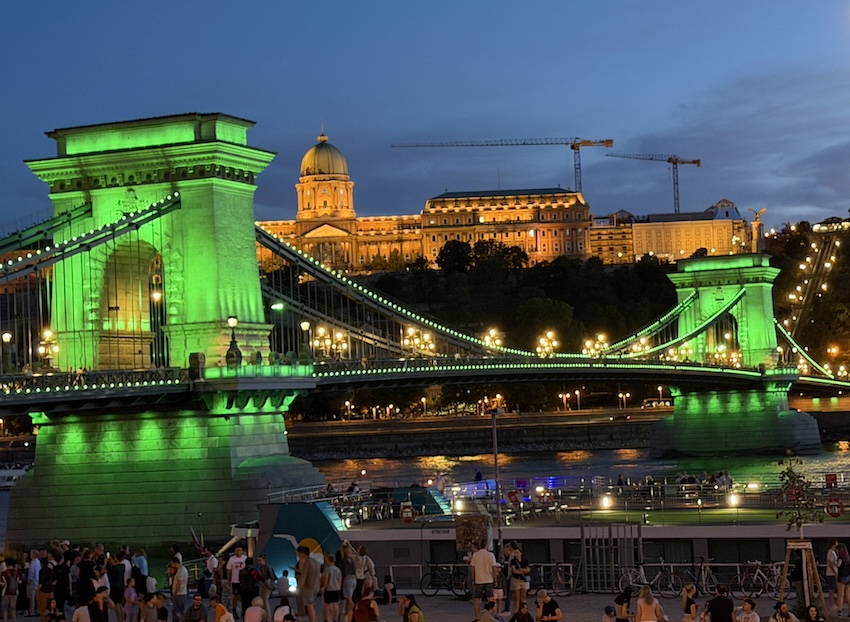
Reflected in the waters of the Danube, with the illuminated Buda Castle as a magnificent backdrop, the glowing green bridge created an unforgettable sight, bringing a perfect end to an evening celebrating Ireland’s Presidency of the Council of the European Union and the enduring friendship between Ireland and Hungary.

Source: Embassy of Ireland in Budapest
Photos from the Embassy of Ireland in Budapest