Edited by Anna Popper
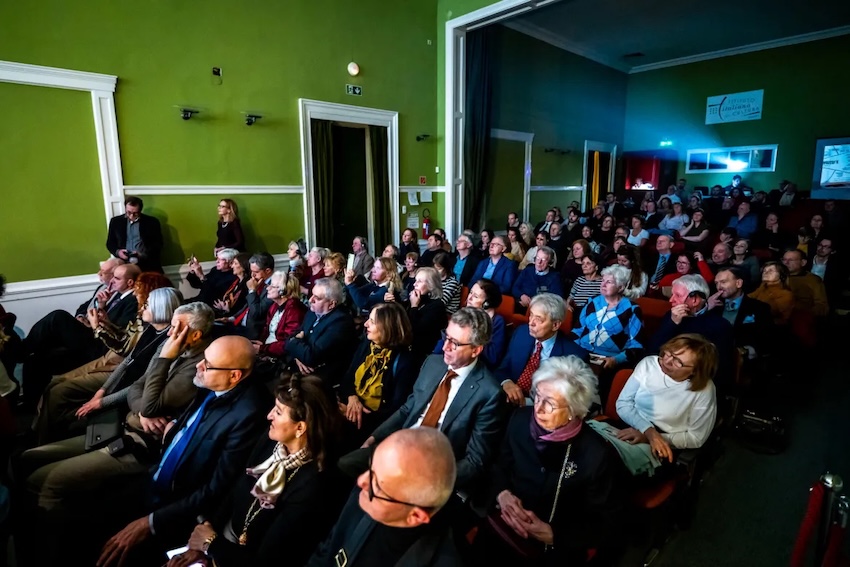
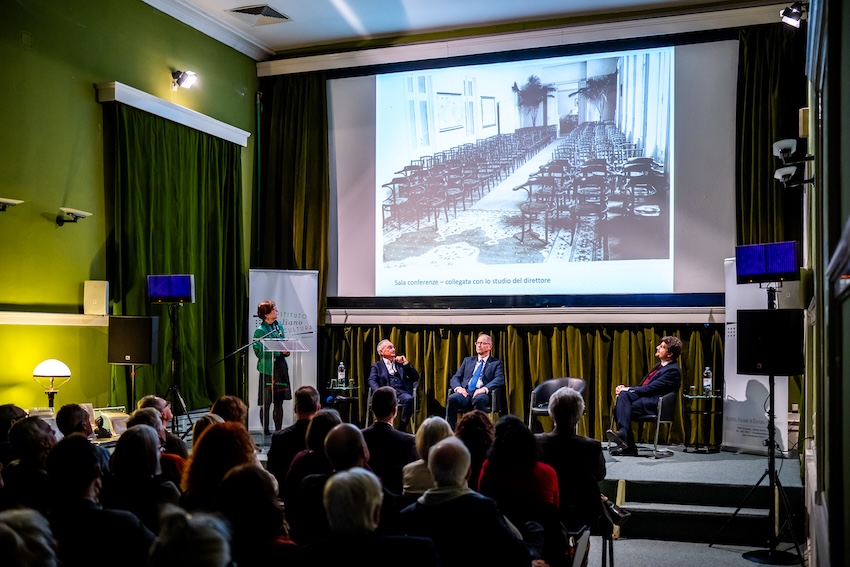
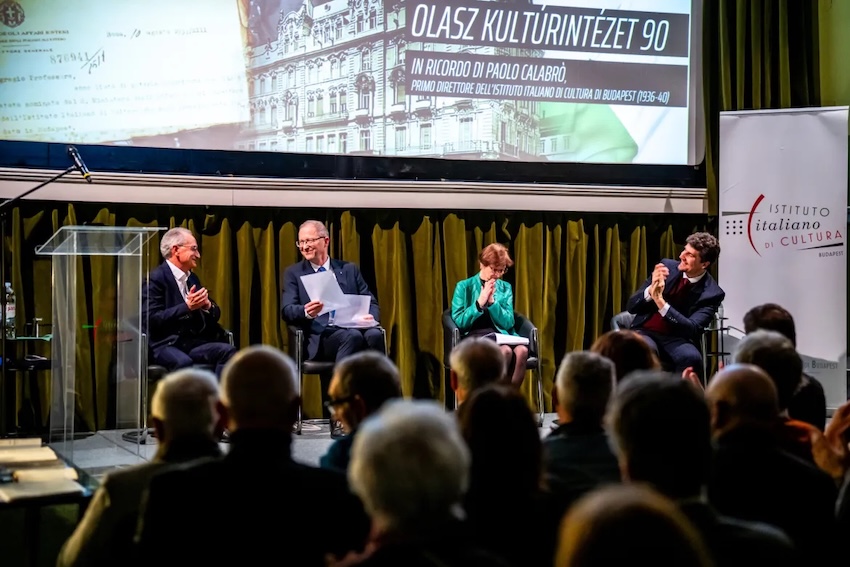
On 12 February 2026, the Italian Institute of Culture (IIC) in Budapest hosted a solemn commemorative evening marking the 90th anniversary of its founding. Scholars, diplomats, and long-time friends of the Institute gathered for an intellectually rich celebration that looked back on nine decades of Italian–Hungarian cultural dialogue. As on many occasions, the event attracted a large and engaged audience from Hungary and Italy – many of them regular participants in the Institute’s vibrant cultural programmes.
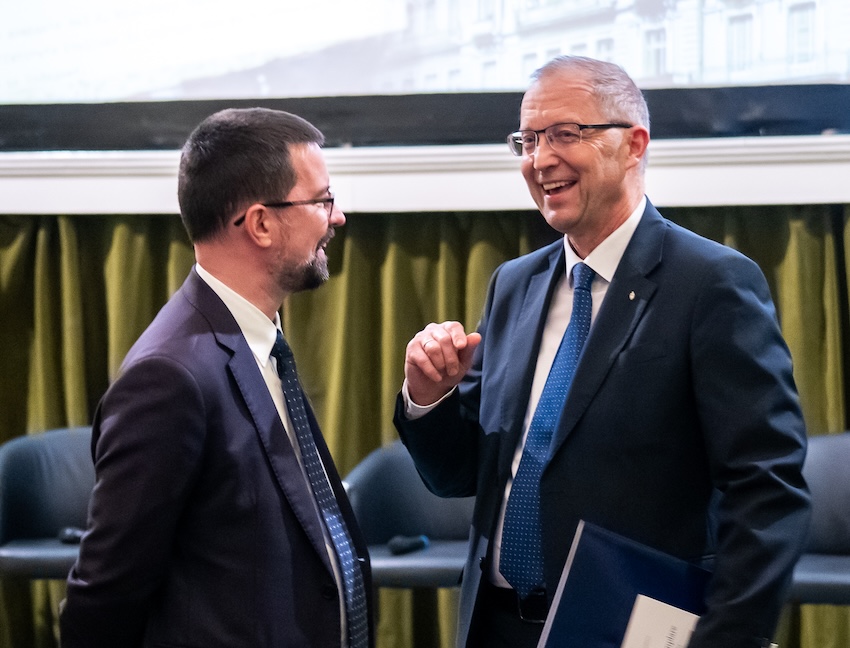
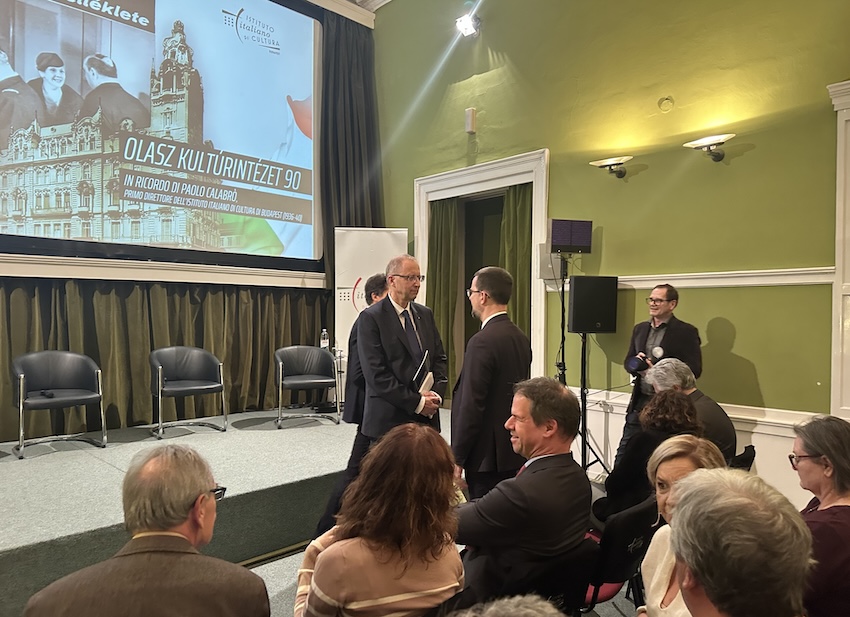
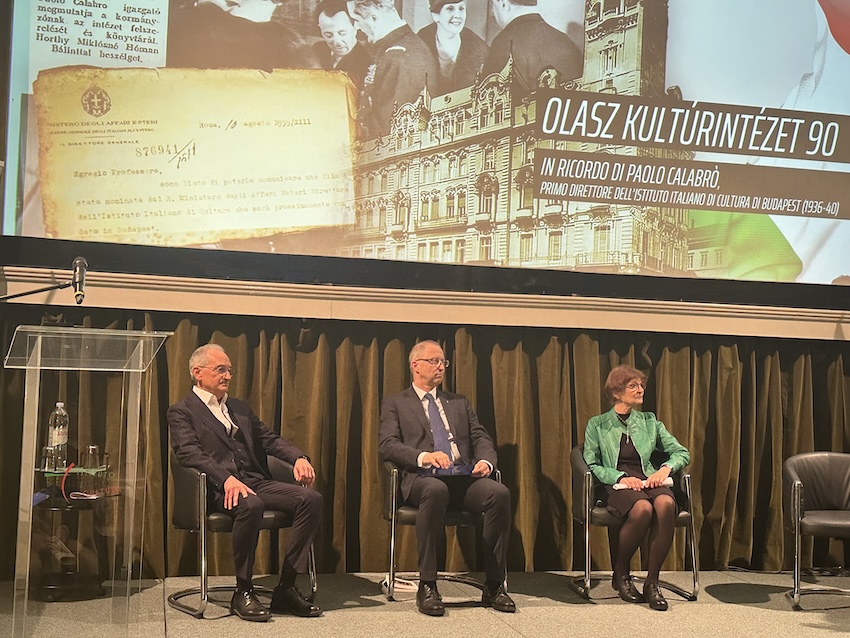
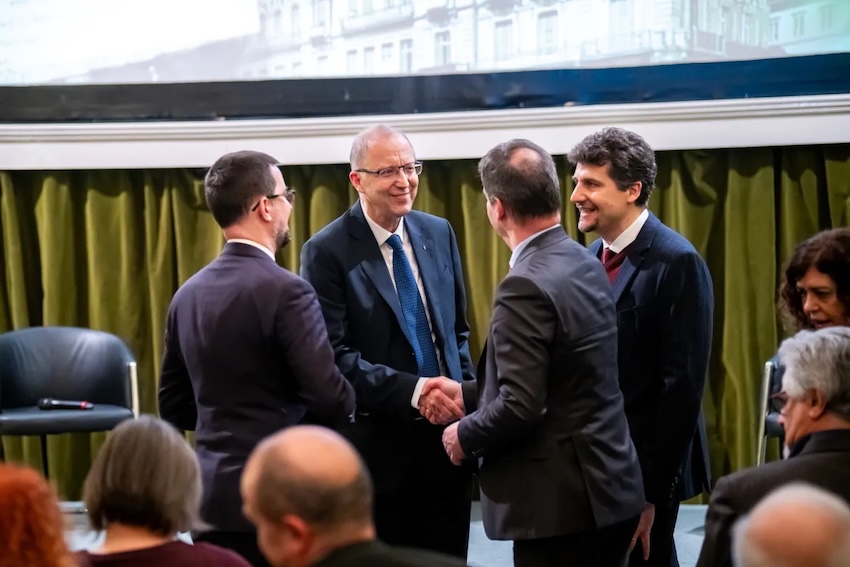
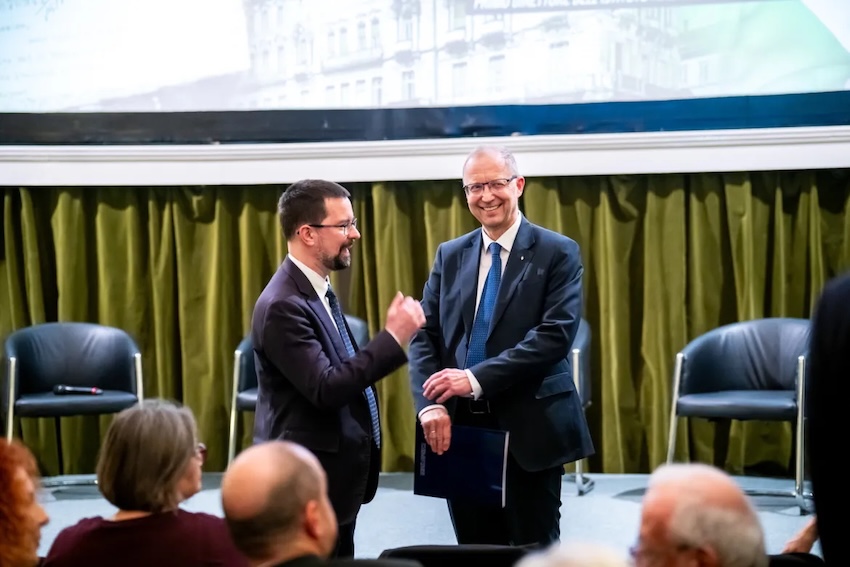
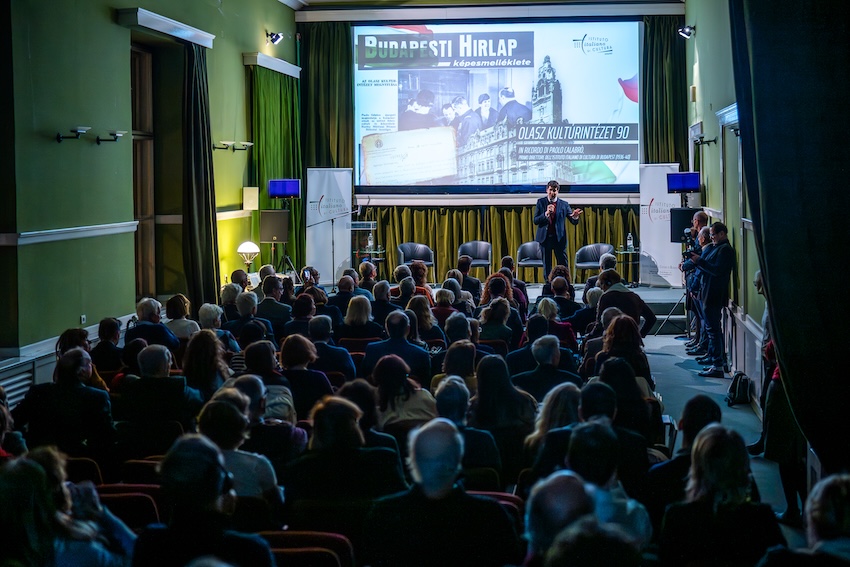
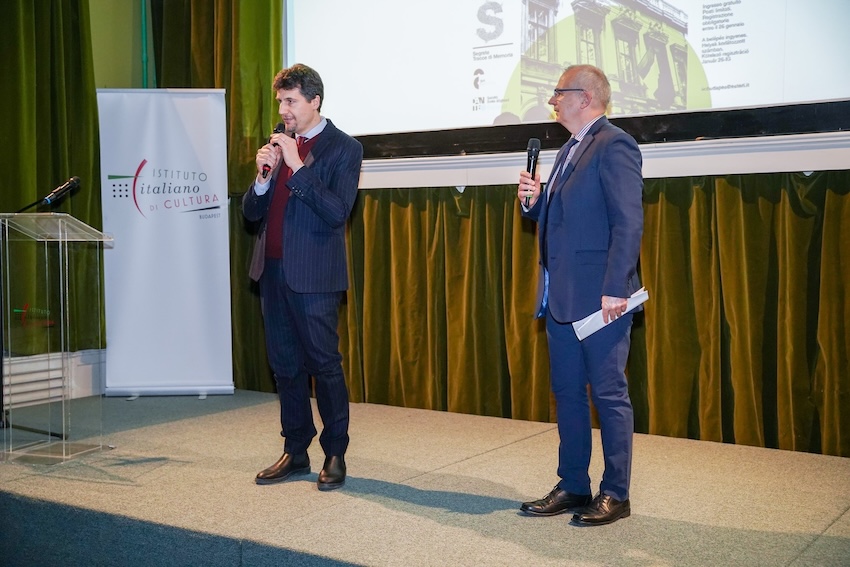
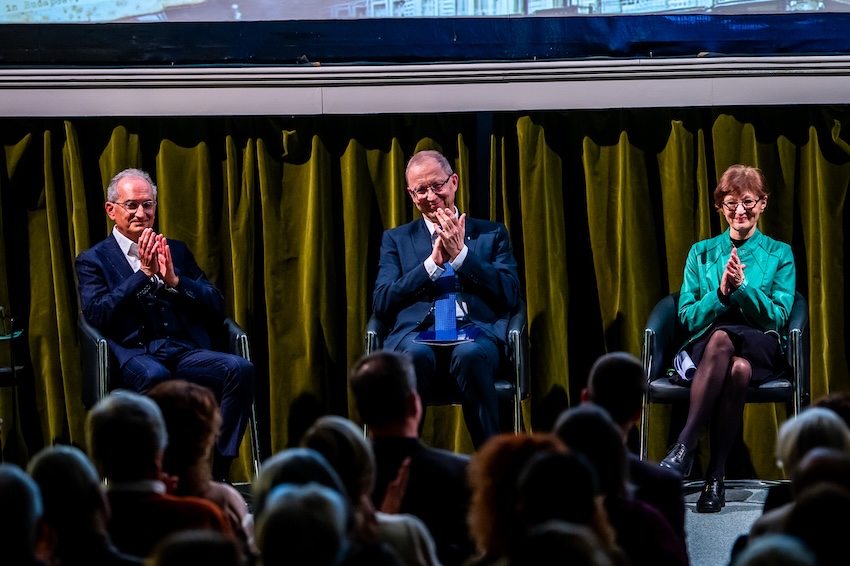
The evening was opened by IIC Director Gabriele La Posta, who welcomed the distinguished guests. Among them were H.E. Jonathan Lacôte, Ambassador of France to Hungary and members of the diplomatic corps, Antal Molnár, Deputy Director General for Research of the ELTE Research Centre for the Humanities and Director of the Institute of History, and Zsuzsanna Ordasi, art historian at Károli Gáspár Reformed University.
A particularly meaningful presence was that of the evening’s Guest of Honour, Avv. Paolo Emilio Russo, grandson of Paolo Calabrò, the first director of the Italian Institute in Budapest. His participation added a deeply personal dimension to the celebration, connecting the present-day institution with its historical origins.
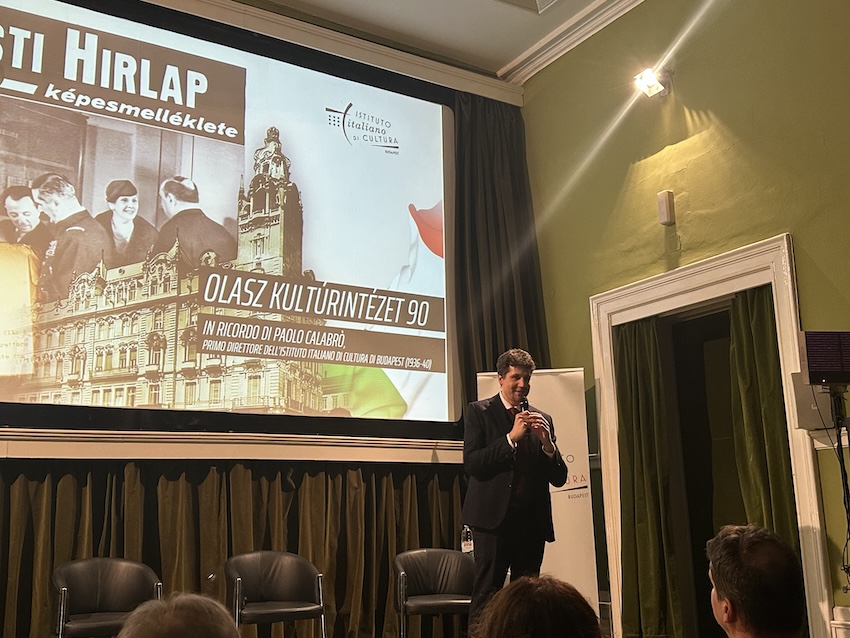
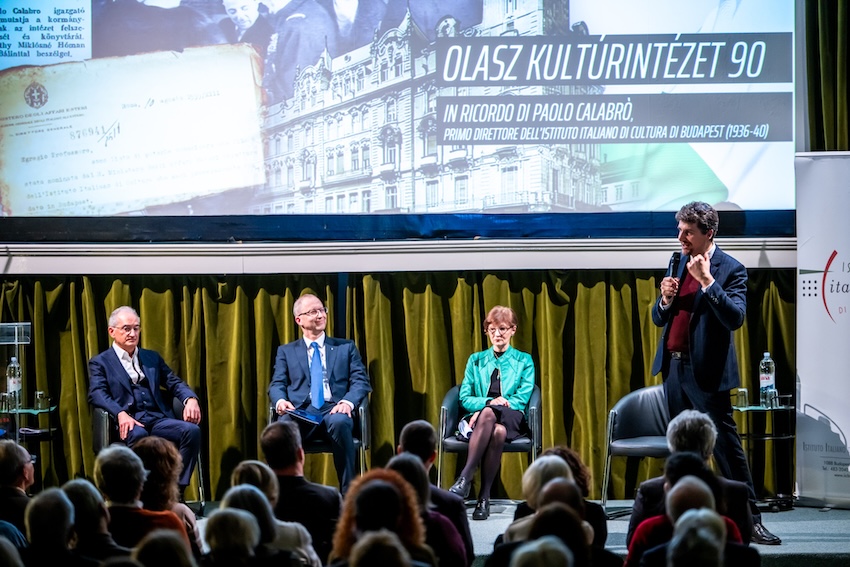
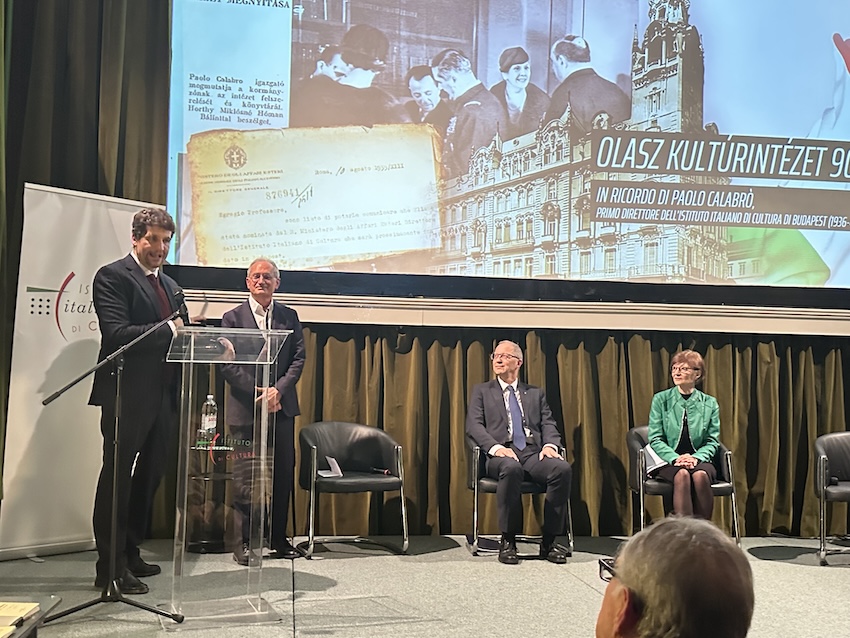
In his introductory remarks, Director La Posta recalled the broader historical context of the 1930s, when Italy considered it essential to strengthen its cultural presence in Central Europe, including Hungary, by promoting the Italian language and culture during the interwar period. He also briefly retraced the history of the Institute’s premises, illustrating how the institution has been embedded in some of Budapest’s most remarkable architectural spaces.
From Klotild Palace to Historic Landmark
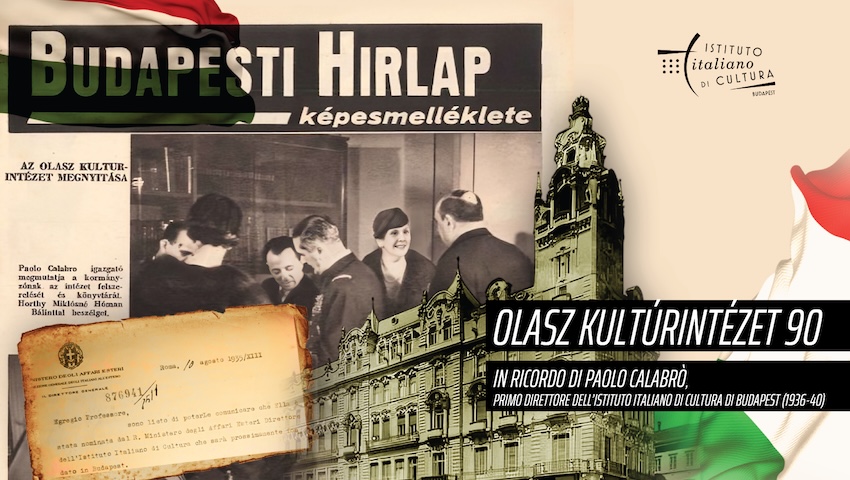
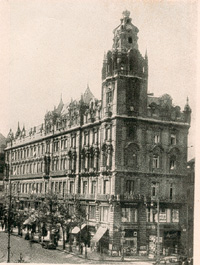
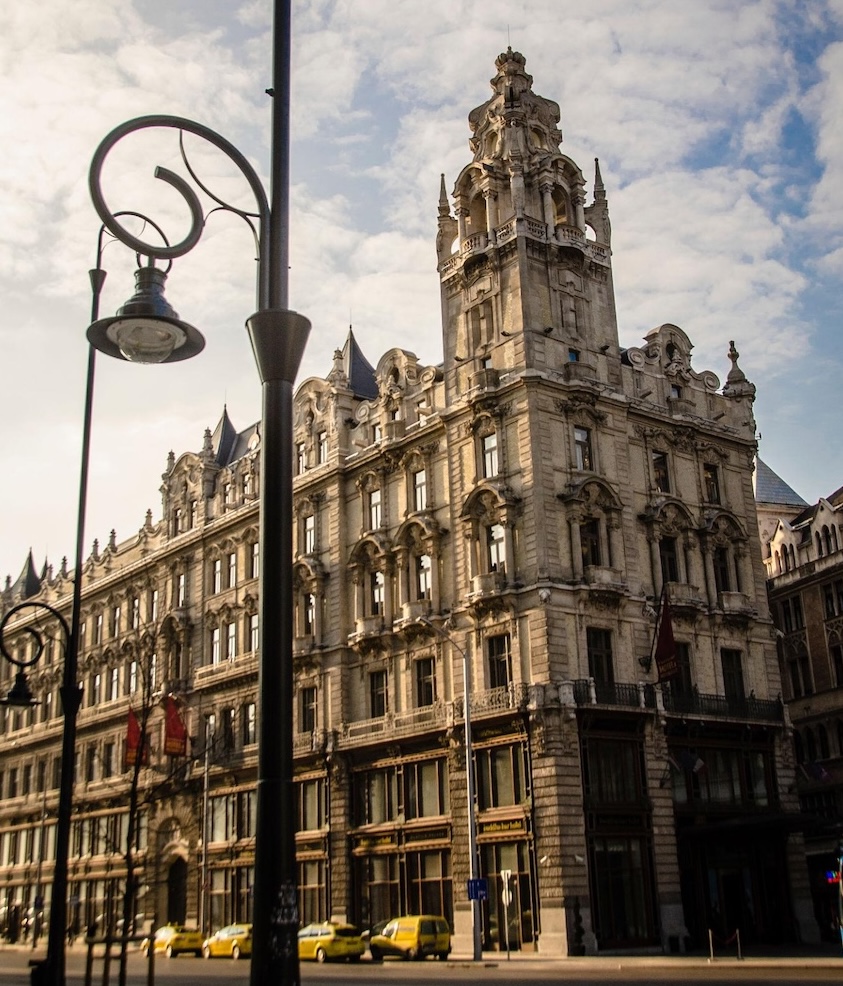
The Italian Institute in Budapest was founded in 1935 and began operating in 1936 on the first floor of Klotild Palace (under reconstruction as a luxury hotel) in the very heart of the Hungarian capital.
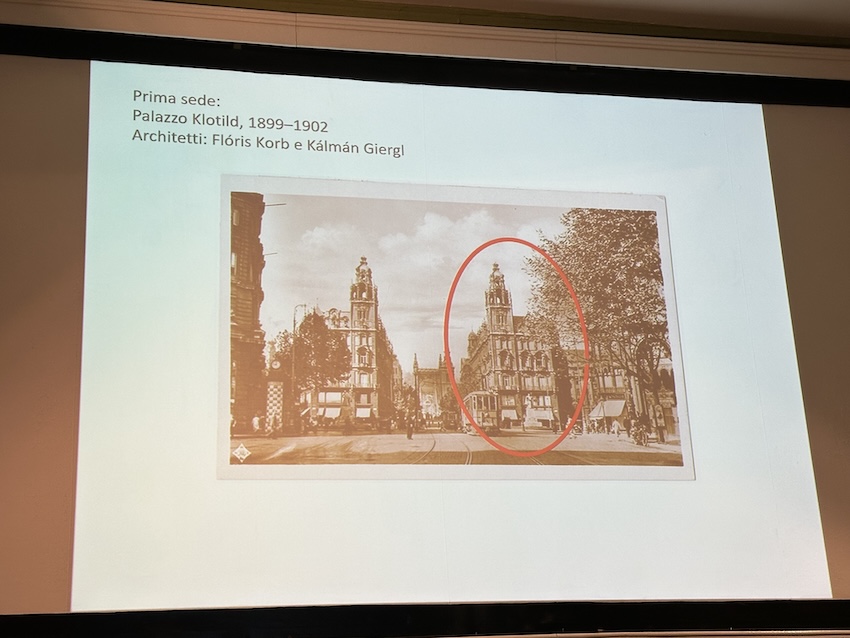
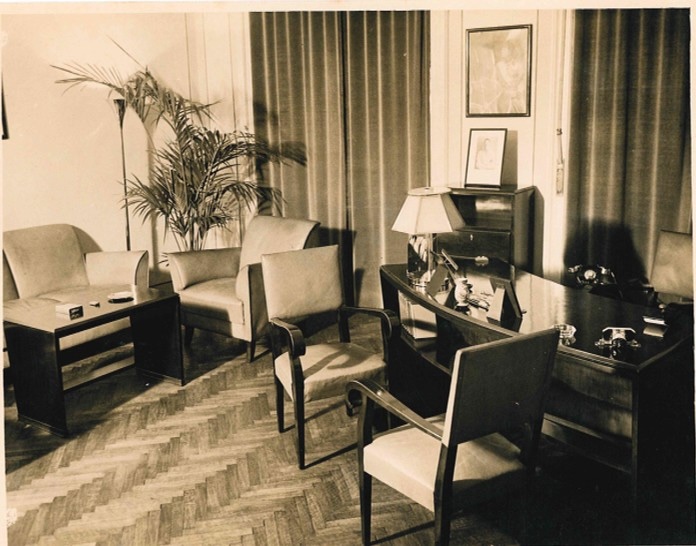
In 1942, the Institute moved to its current headquarters in the Palace Quarter, housed in a distinguished 19th-century building designed by the celebrated Hungarian architect Miklós Ybl. Completed in 1866, the building originally served as the seat of the Lower House of the Hungarian Parliament until 1902. That year, the National Assembly moved to its new, permanent seat along the Danube – the monumental neo-Gothic Parliament building designed by Imre Steindl, today one of Budapest’s most recognisable landmarks.
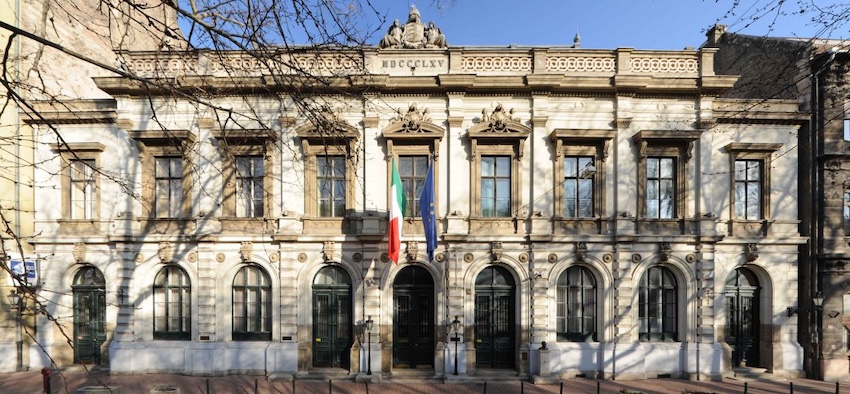
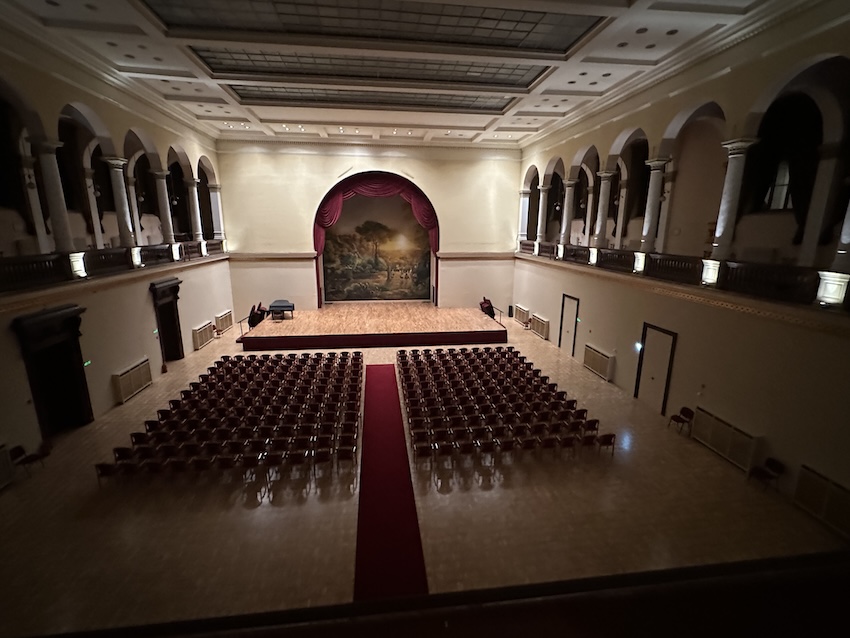
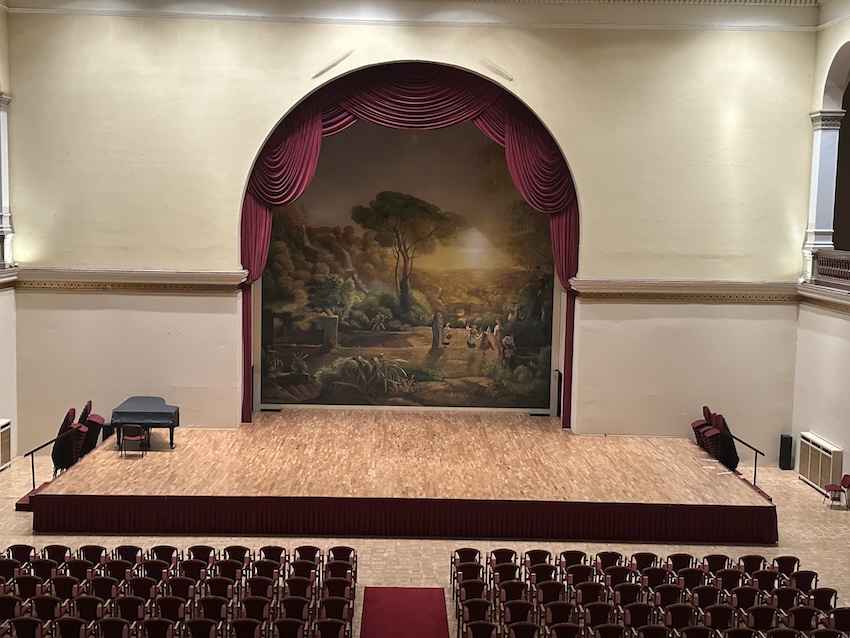
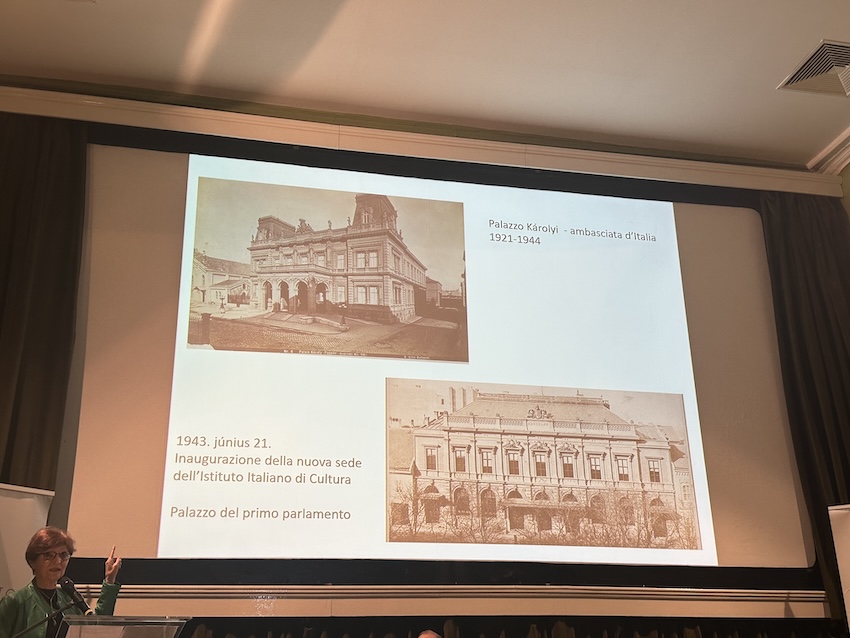
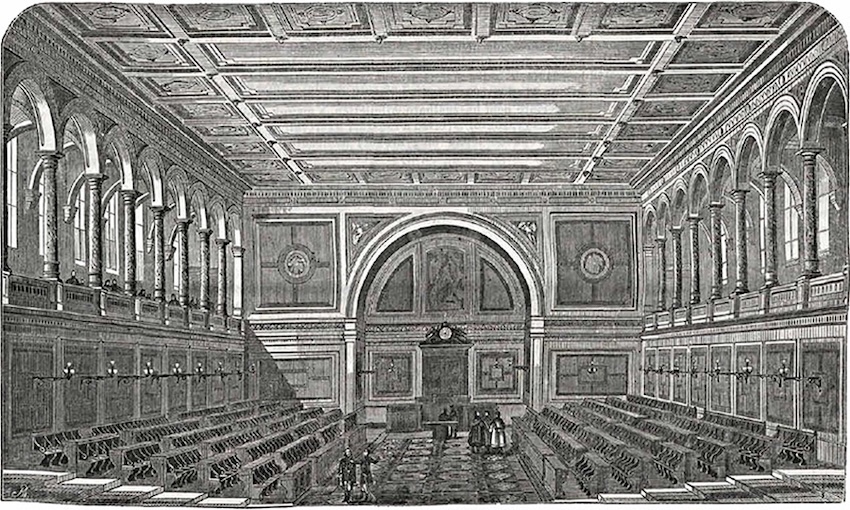
This architectural continuity reflects the Institute’s symbolic role: a space once dedicated to parliamentary debate now serves as a forum for cultural exchange and intellectual cooperation.
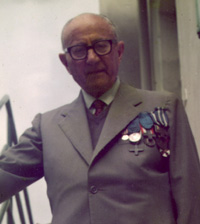
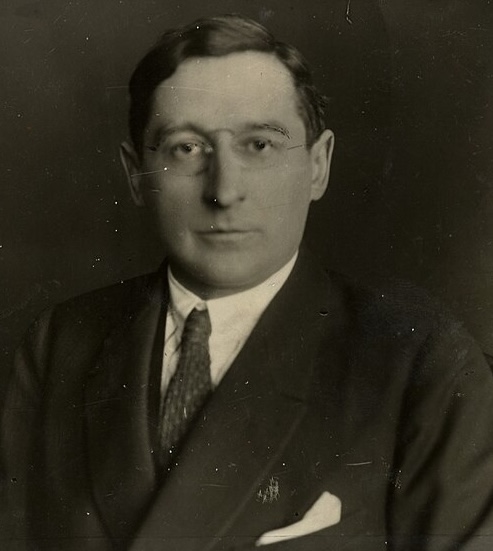
Director La Posta also paid tribute to the Institute’s first director, Professor Paolo Calabrò (1895–1986), who led the institution between 1936 and 1940.
Having lived in Hungary since 1925, Calabrò played a decisive role in strengthening the Italian cultural presence in the country and founded the Budapest Dante Committee. He became a central figure in the development of Italian–Hungarian cultural relations.
Cultural Diplomacy in the Interwar Period
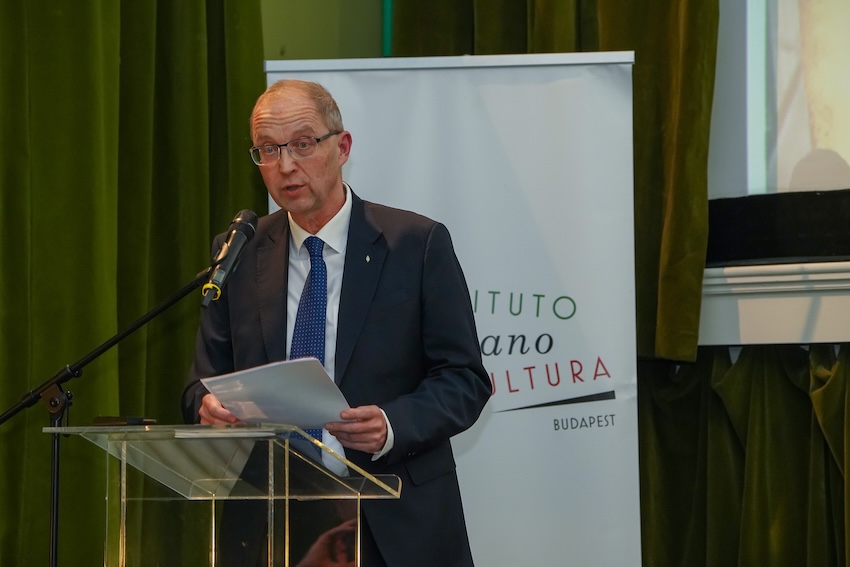
The historical framework of these relations was explored by historian Antal Molnár of the ELTE Research Centre for the Humanities – Institute of History. In his lecture, Italian–Hungarian Cultural Relations Between the Two World Wars, Molnár placed the creation of the Hungarian Institute in Rome in 1928 and the Italian Cultural Institute in Budapest in 1935 within the broader diplomatic transformations of the interwar period.
After the First World War, diplomacy became increasingly professionalised and specialised. Alongside traditional political diplomacy, cultural diplomacy developed into a structured instrument of foreign policy.
For Hungary, the Treaty of Trianon in 1920 significantly restricted the country’s diplomatic options, making alliances particularly important in overcoming international isolation. The Hungarian–Italian Treaty of Friendship, signed on 5 April 1927, represented a key step in this process.
Molnár highlighted the crucial role of the Hungarian Minister of Culture at the time, whose forward-looking cultural policy elevated culture into a strategic diplomatic tool. The bilateral cultural agreement signed between Italy and Hungary in 1935 opened new horizons for institutional cooperation. Within this context, the Italian Cultural Institute in Budapest became part of a broader network of Italian cultural institutions in Central Europe, aimed at strengthening Italy’s international presence through cultural exchange. By the 1920s and 1930s, Italian–Hungarian cultural diplomacy reached one of the highest levels of cooperation in Europe – a historical experience that continues to offer valuable lessons for today’s cultural and diplomatic professionals.
The Institute’s Cultural Mission and Early Activities
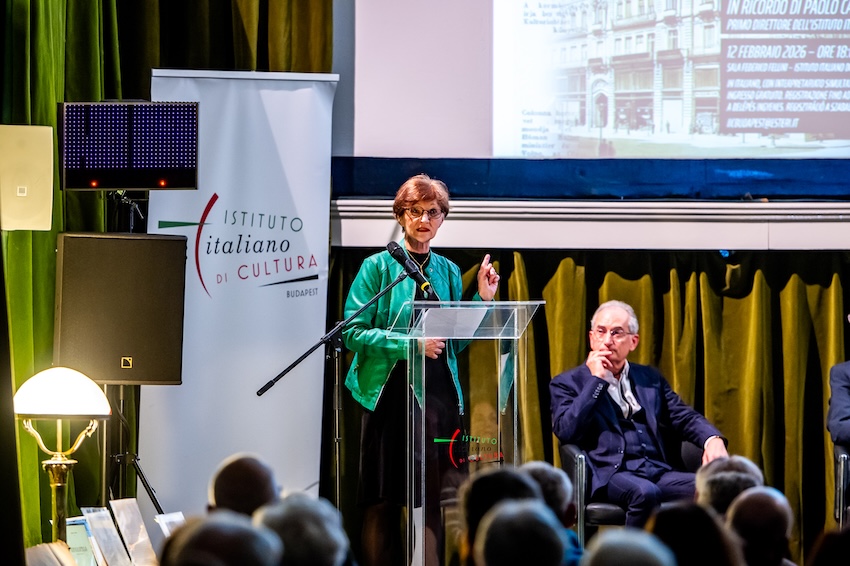
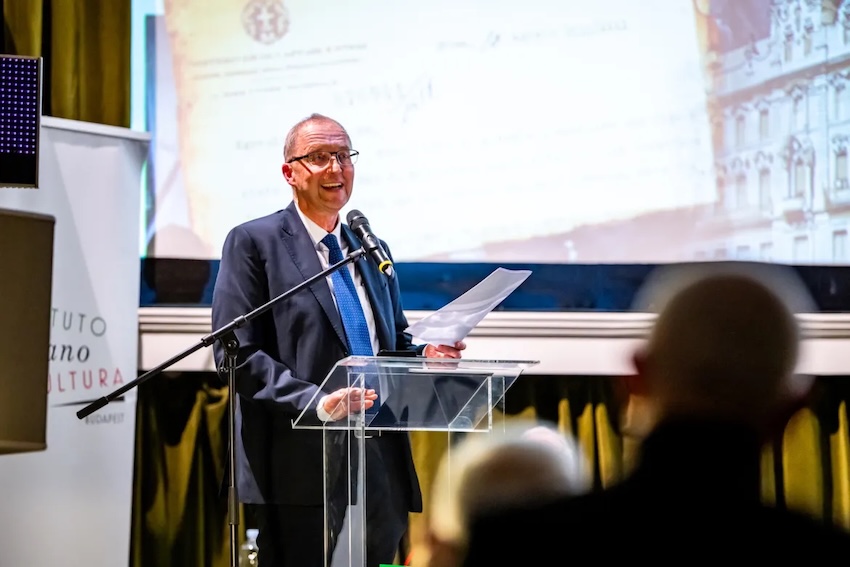
Art historian Zsuzsanna Ordasi from Károli Gáspár Reformed University provided an overview of the Institute’s activities from its foundation to the present day. For nine decades, the Institute has served as a dynamic centre of cultural and intellectual exchange through language courses, literary programs, exhibitions, concerts, lectures and a specialised library.
The Italian Cultural Institute in Budapest was officially inaugurated on 22 February 1936, marking an important milestone in the development of the long-standing cultural relations between Italy and Hungary.
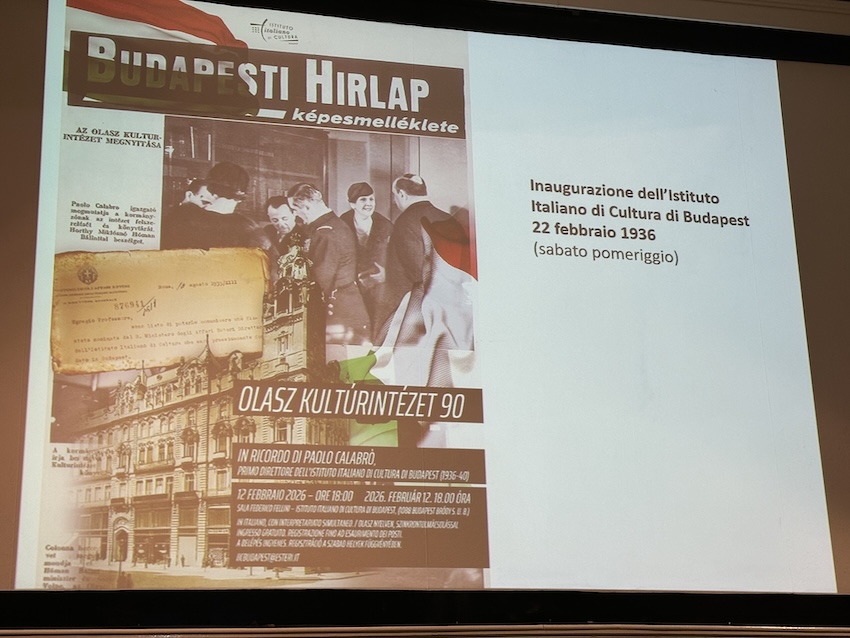
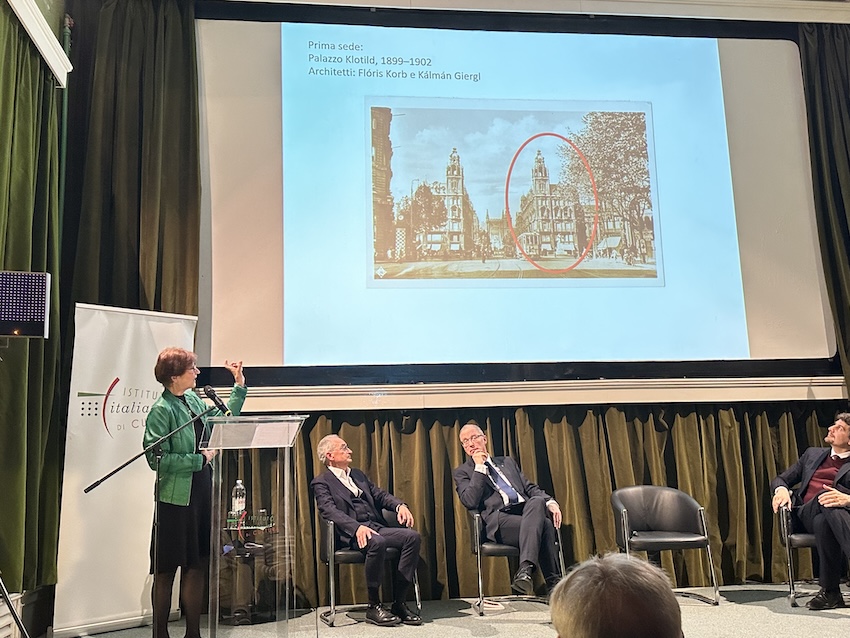
Even before the Institute’s establishment, there were Italian cultural initiatives in Budapest, reflecting the strong interest of Hungarian audiences in the Italian language and culture. Minister of Culture Kuno Klebelsberg (1922-1931) played a crucial role in preparing the ground for the Institute, promoting the teaching of Italian at Hungarian universities and secondary schools.
During the 1920s, Italian language courses spread throughout the country. In several Hungarian cities, including Budapest, Debrecen, Szeged, Pécs, Nyíregyháza, Kaposvár, Miskolc, Baja, Szombathely and Sopron, free courses were organised, attracting thousands of participants and demonstrating the widespread appeal of Italian culture.
The Institute itself was conceived as a cultural centre, comparable to the Hungarian Academy in Rome. In addition to language teaching, it offered Corsi di alta cultura – advanced courses in Italian literature, art, history and the cultural relations between the two countries. Scholars had access to a well-equipped library and a reading room with books, journals, and newspapers from Italy.
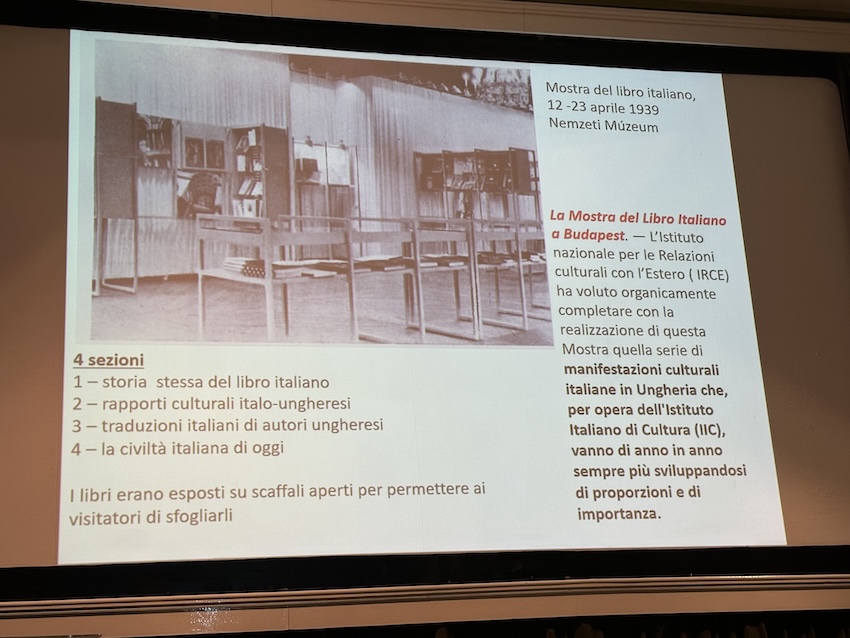
Between 1936 and 1940, under the direction of Paolo Calabrò, the Institute rapidly became an important centre of cultural life in Budapest. Exhibitions, concerts, literary events and lectures were organised with the participation of prominent artists, musicians and scholars.
Among the most significant early initiatives was an exhibition of contemporary Italian art at the Műcsarnok (Exhibition Hall), where Hungarian audiences could admire works by artists such as Gerardo Dottori, Fortunato Depero, Adolfo Wildt, Libero Andreotti, Carlo Carrà, Arturo Tosi, Filippo De Pisis, Mario Sironi and Felice Carena. Several works from this exhibition later entered the collection of the Museum of Fine Arts in Budapest.
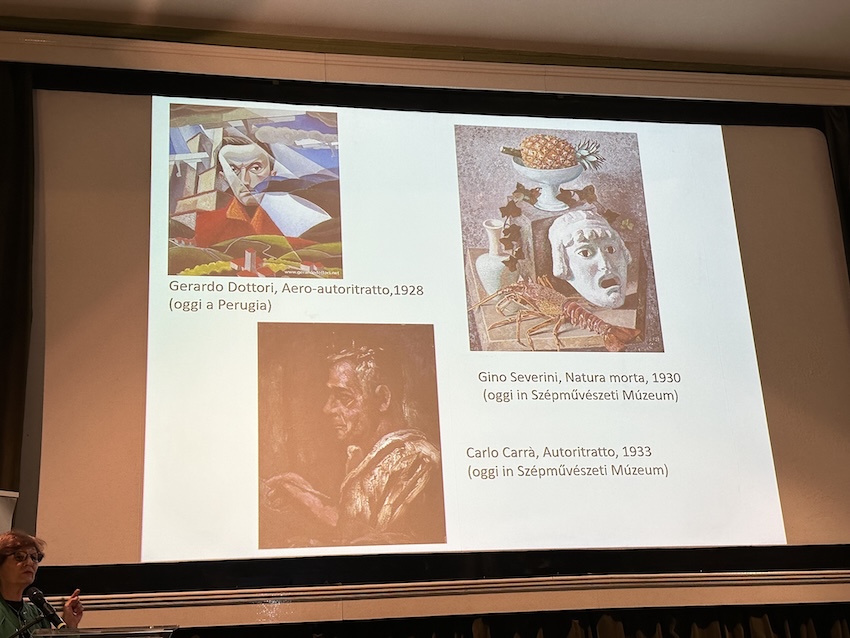
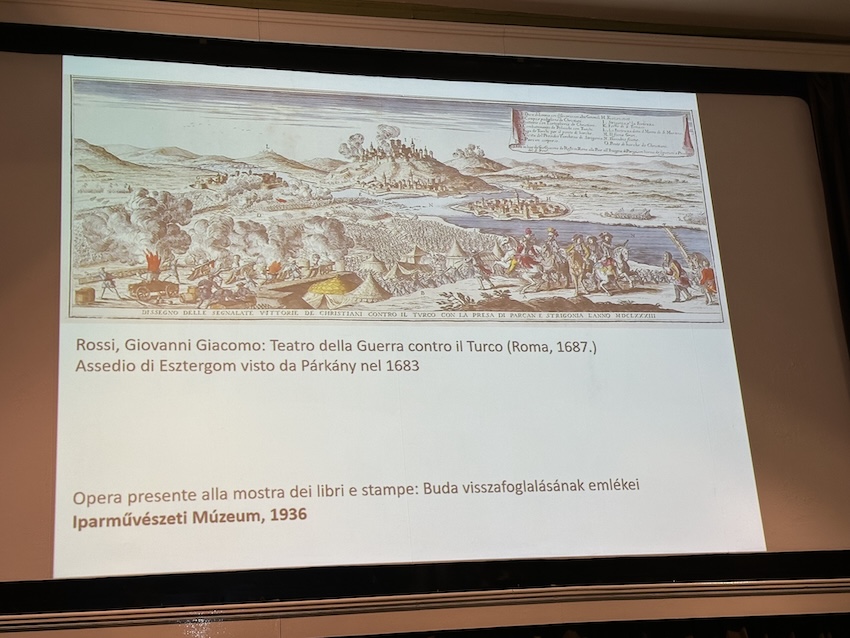
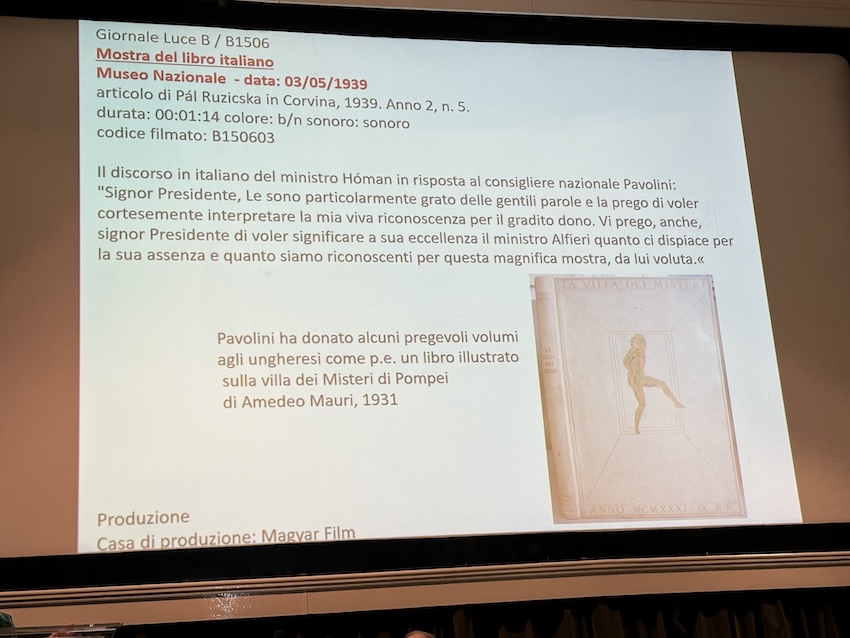
The art historian Tibor Gerevich, director of the Hungarian Academy in Rome, also played a key role in promoting the study of Italian art among Hungarian scholars.
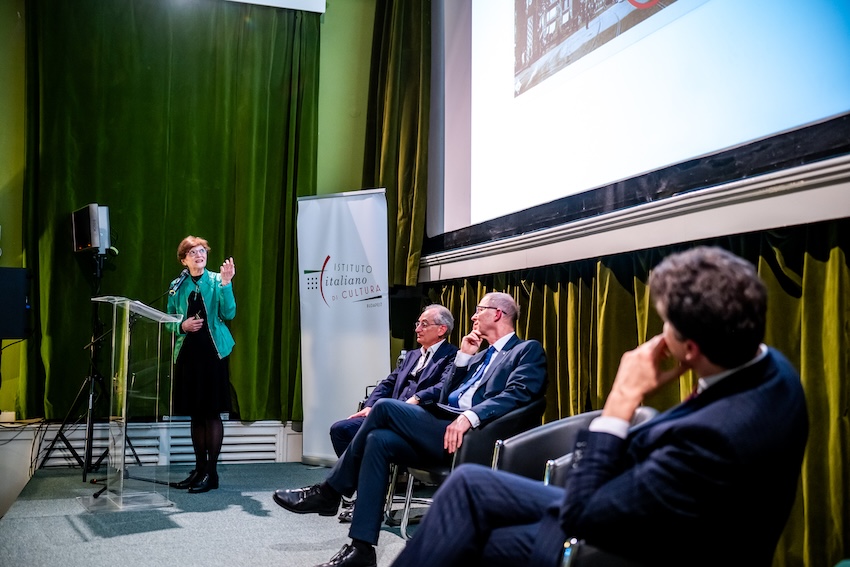
The Institute was equally active in literature and publishing. Book exhibitions and literary evenings presented Italian authors and highlighted the historical cultural ties and the intellectual exchanges between Italy and Hungary. Music and performing arts also played a central role. Italian musicians regularly performed in Budapest, while film screenings and lectures introduced Hungarian audiences to Italian cinema and culture. Italian music, including operas, reached wider audiences through radio broadcasts.
The Institute’s activities were not limited to the capital. Cultural events and language courses were organised in several provincial cities including Debrecen, Miskolc, Pécs and Szombathely, demonstrating the broad national interest in Italian culture.
Language teaching remained the Institute’s principal mission. Each year, hundreds of students attended courses in Italian language and literature. At the end of the academic year examinations were held. The top students were awarded scholarships to attend courses at the University for Foreigners in Perugia. These opportunities were made possible, in part, by the personal involvement of Paolo Calabrò, who himself taught there during the summer months.
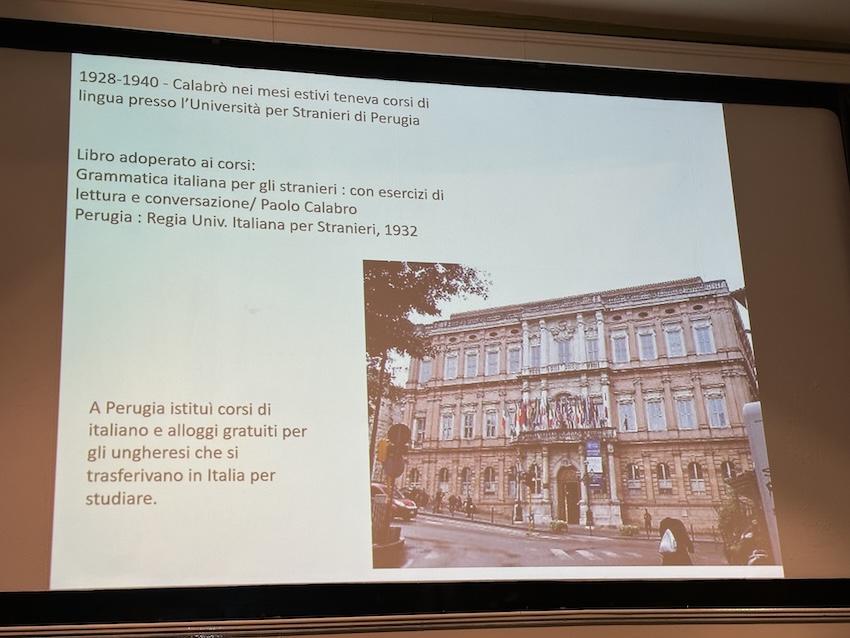
Paolo Calabrò: A Builder of Cultural Bridges
Paolo Calabrò’s contribution to cultural life in Hungary extended far beyond his role as director of the Institute. From 1925 onward, during his time in Hungary, he worked as a lecturer in Italian at the Széchenyi High School in Pécs. He later moved to Budapest, where he taught Italian at several institutions, including the Berzsenyi High School, the Eötvös Collegium, and the Academy of Fine Arts. He was also actively involved in the Matteo Corvino Society and later became president of the Dante Alighieri Society in Hungary.
Calabrò also authored an influential Italian grammar for foreign learners, which was widely used in language courses and accompanied by a vocabulary compiled by Pál Rónai. The textbook continued to be used even after the Second World War.
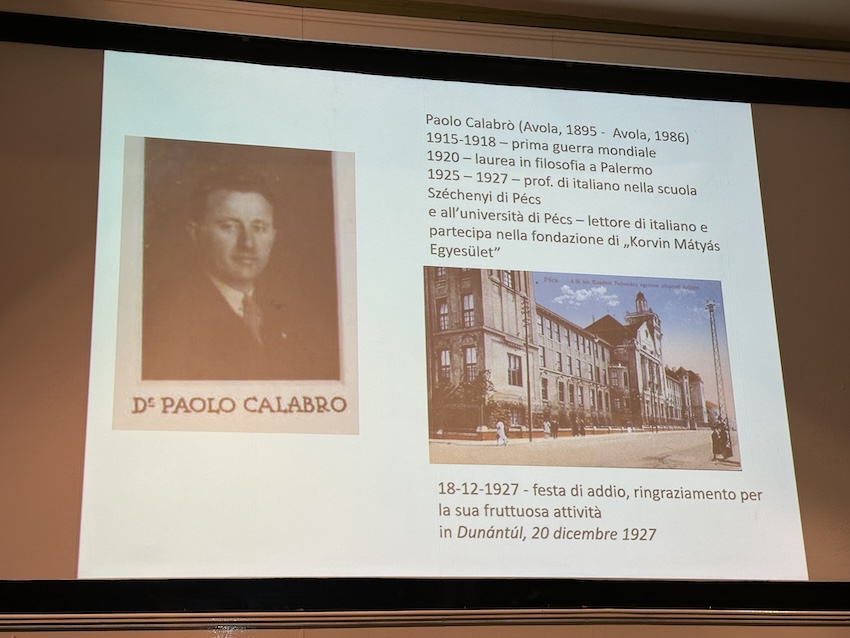
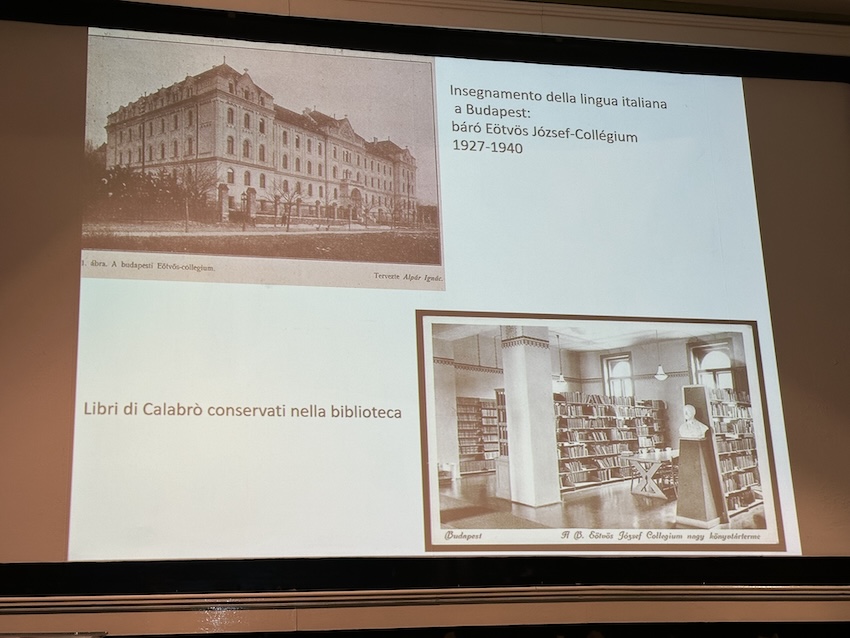
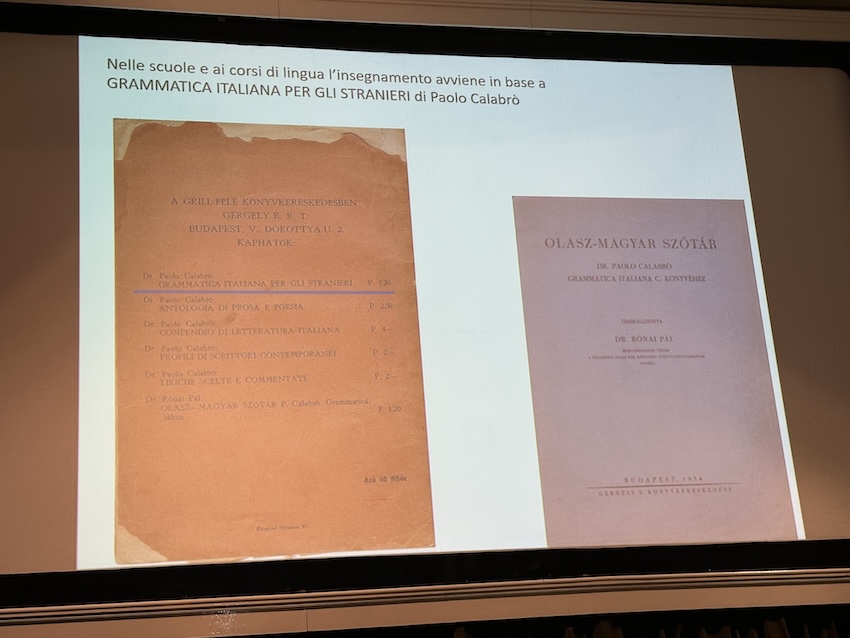
Through his dedication and tireless work, Prof. Paolo Calabrò played a fundamental role in strengthening Italian–Hungarian cultural relations during the interwar period. Under his leadership, the Institute became an important centre for language teaching, artistic exchange and scholarly cooperation.
A Personal Tribute and a Symbolic Gift
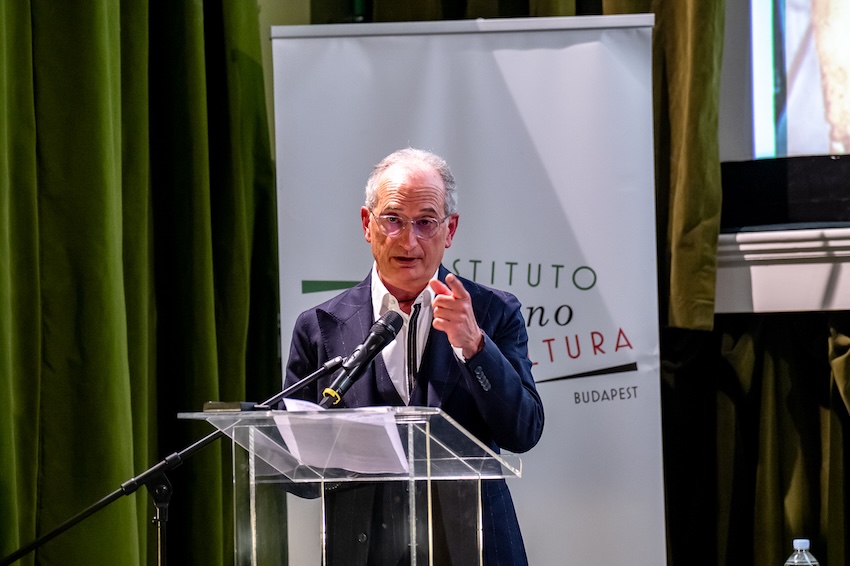
The event’s Guest of Honour, Avv. Paolo Emilio Russo, offered a historically rich portrait of his grandfather’s work in Hungary. His testimony highlighted the extraordinary cultural dynamism of the Institute during its early years.
Within just three years, the Institute recorded some 10,000 enrolments across 221 courses – a remarkable achievement for the time. The Institute welcomed leading figures of Italian intellectual and artistic life to Budapest, including Luigi Pirandello, Giovanni Papini, Arturo Toscanini, Vittorio De Sica and Enrico Fermi.
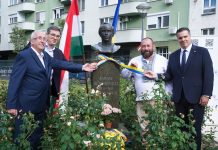
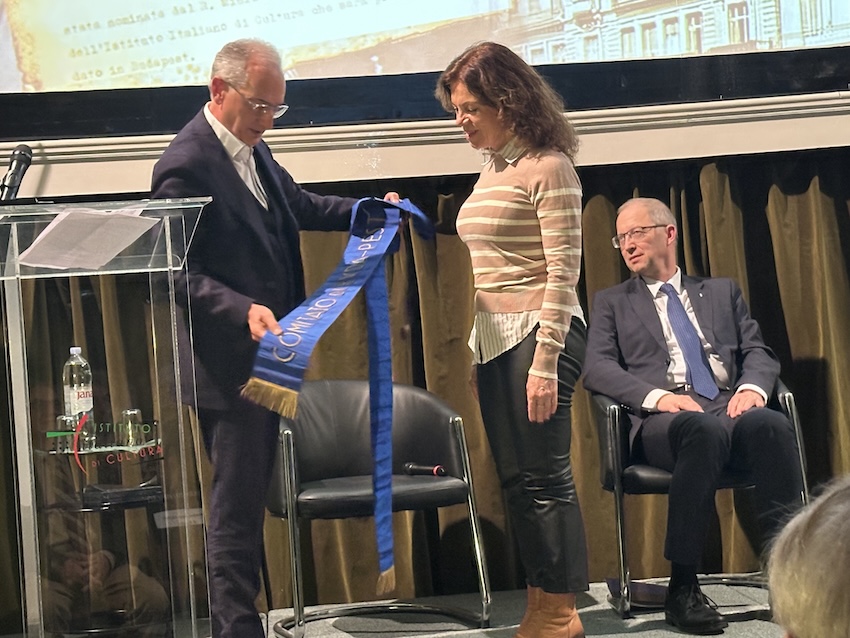
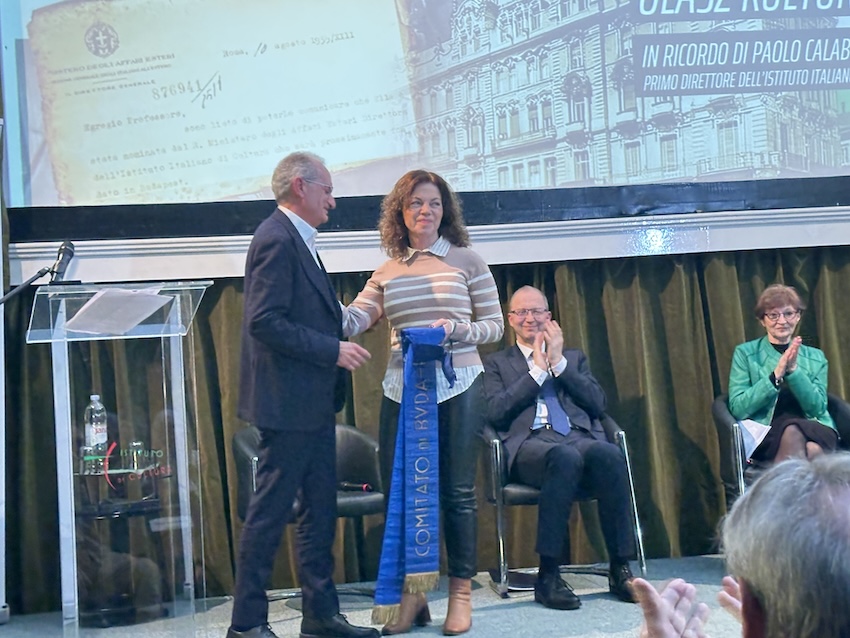
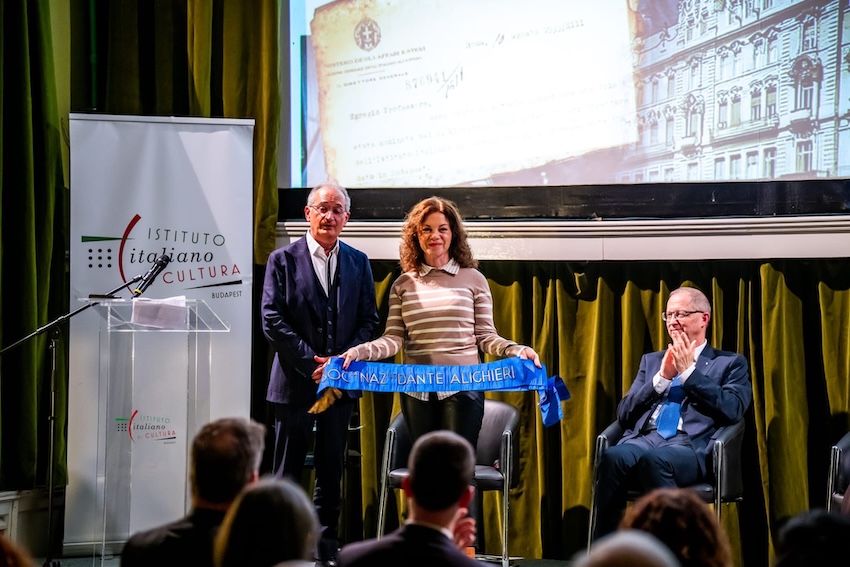
In a touching moment at the conclusion of the evening, Paolo Emilio Russo presented a unique historical ribbon to Edith Csészi, President of the Dante Alighieri Society in Budapest. This ribbon had originally been donated by the former Dante Committee of Bolzano to the Budapest Dante Committee. The gesture symbolised the continuity of cultural dialogue across generations.
Exhibition of Memory and Intellectual Heritage
The commemorative lectures were accompanied by a small exhibition of original documents, historical photographs, and archival materials brought by Paolo Russo, as well as items from the collections of the Italian Institute of Culture. Of particular significance were documents relating to Calabrò’s teaching activity at the Eötvös Collegium in Budapest – an elite academic institution often compared to the Scuola Normale of Pisa – where he contributed to shaping generations of Hungarian intellectuals through the study of Italian language and literature.
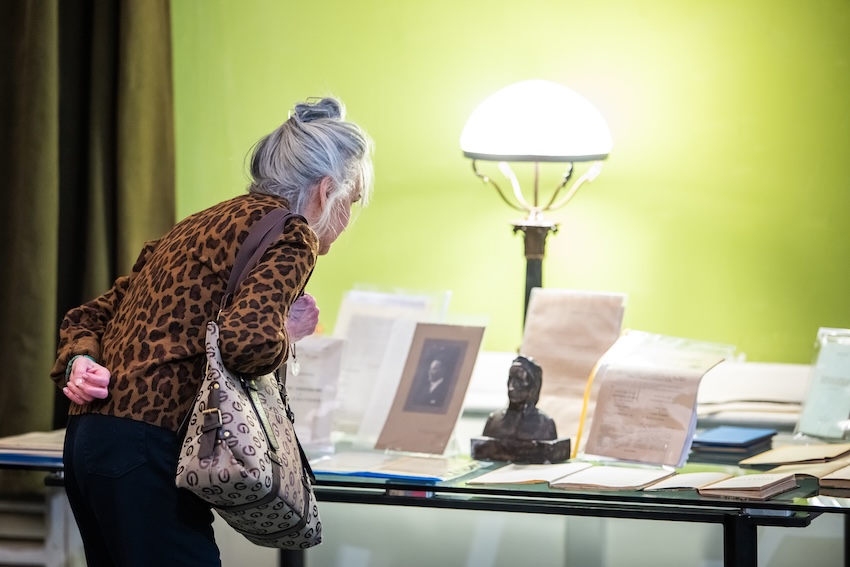
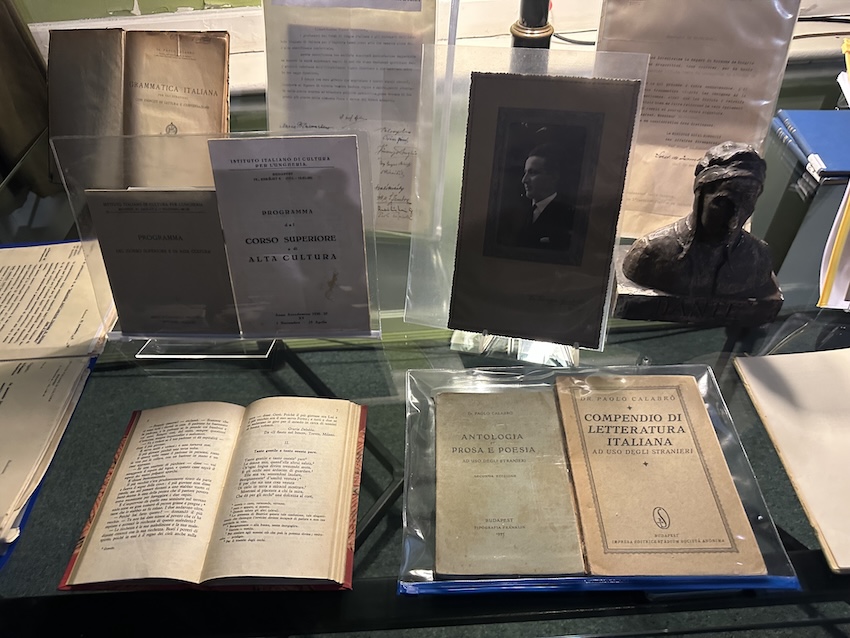
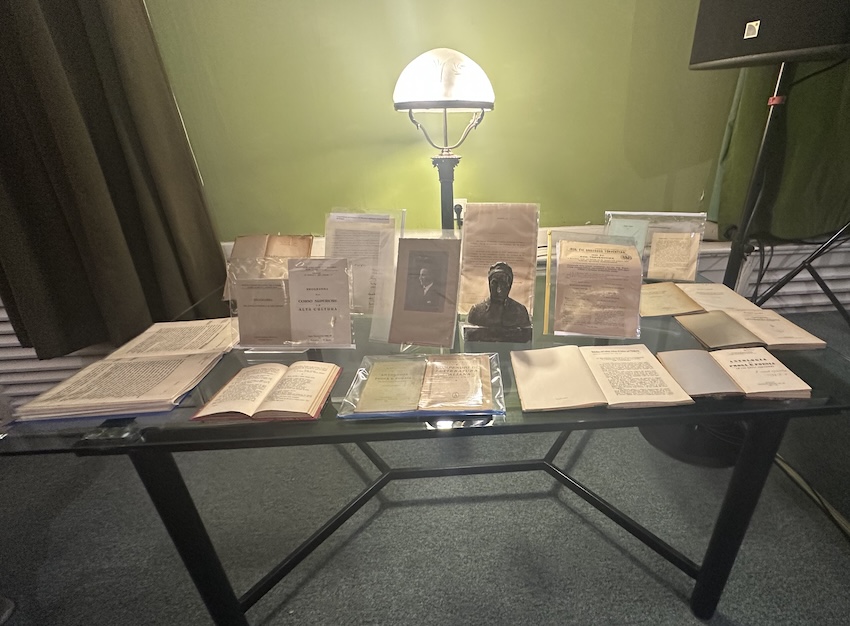
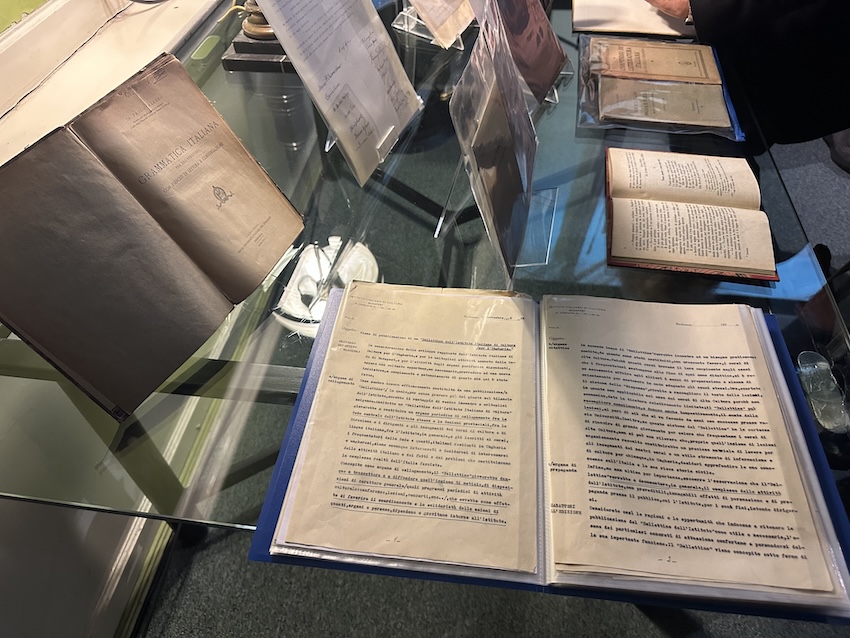
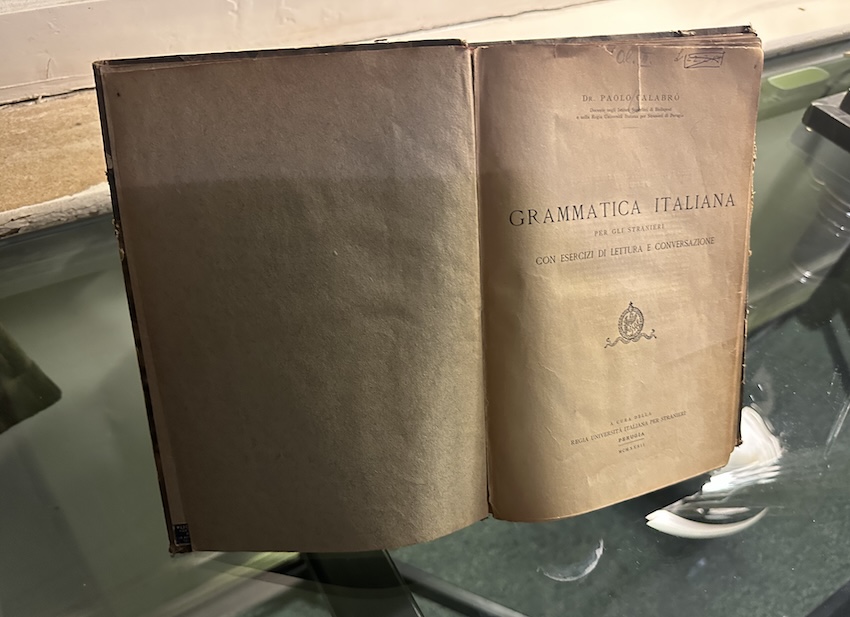
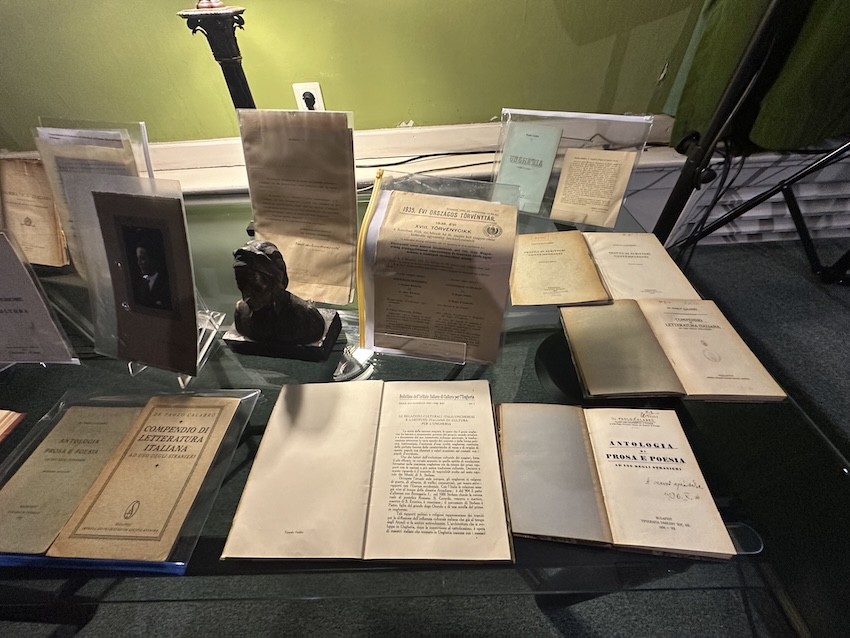
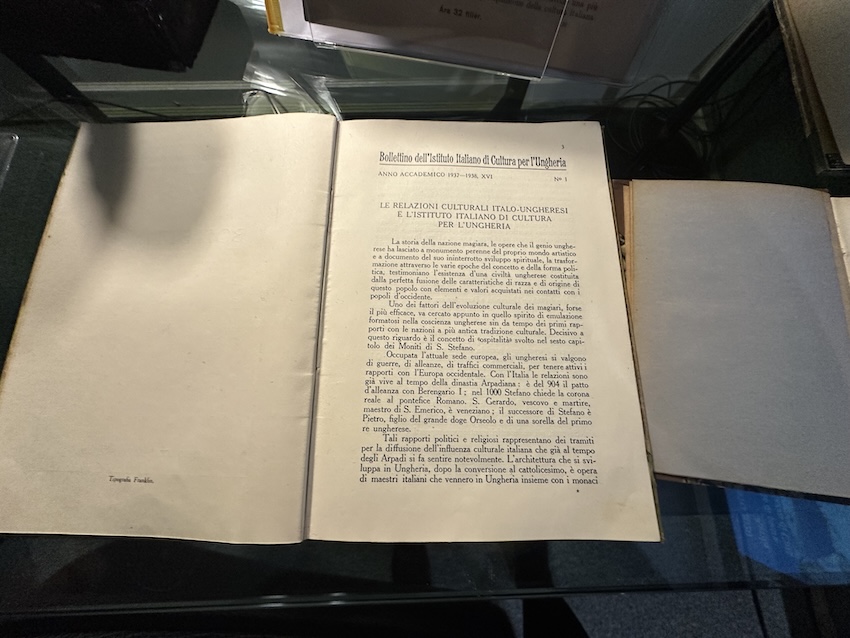
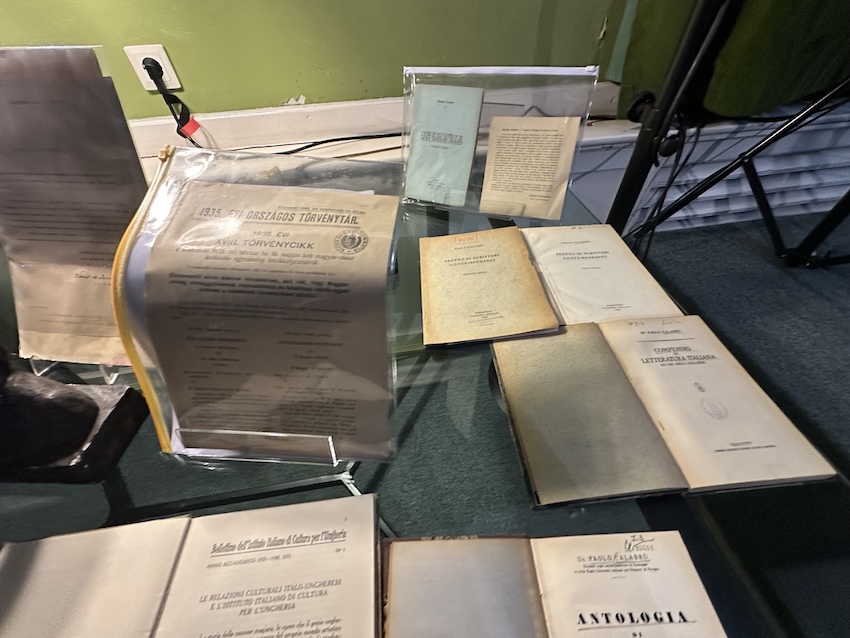
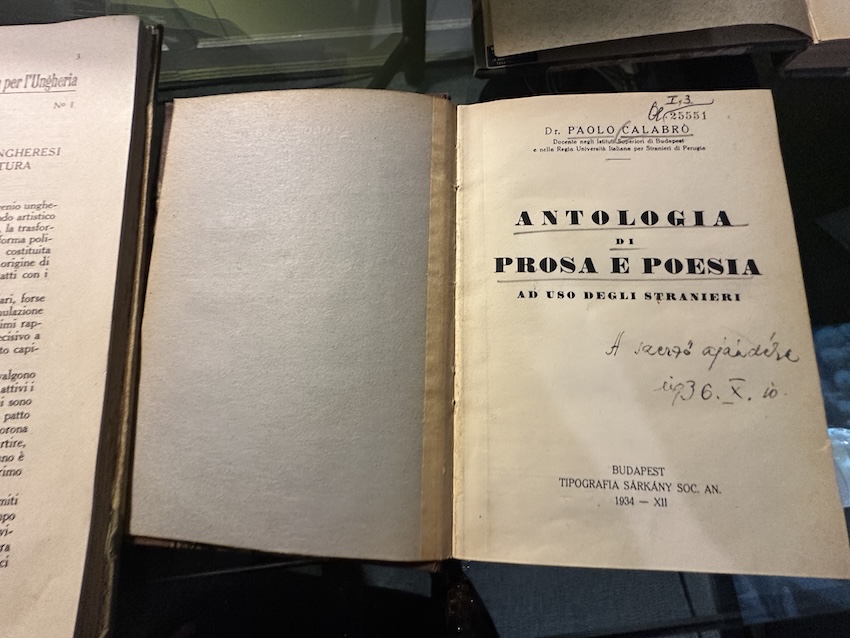
These materials offered a rare glimpse into the formative decades of the Institute’s activity and the intellectual environment in which Paolo Calabrò carried out his mission, and illustrated the cultural ambition that characterised the Institute’s early years.
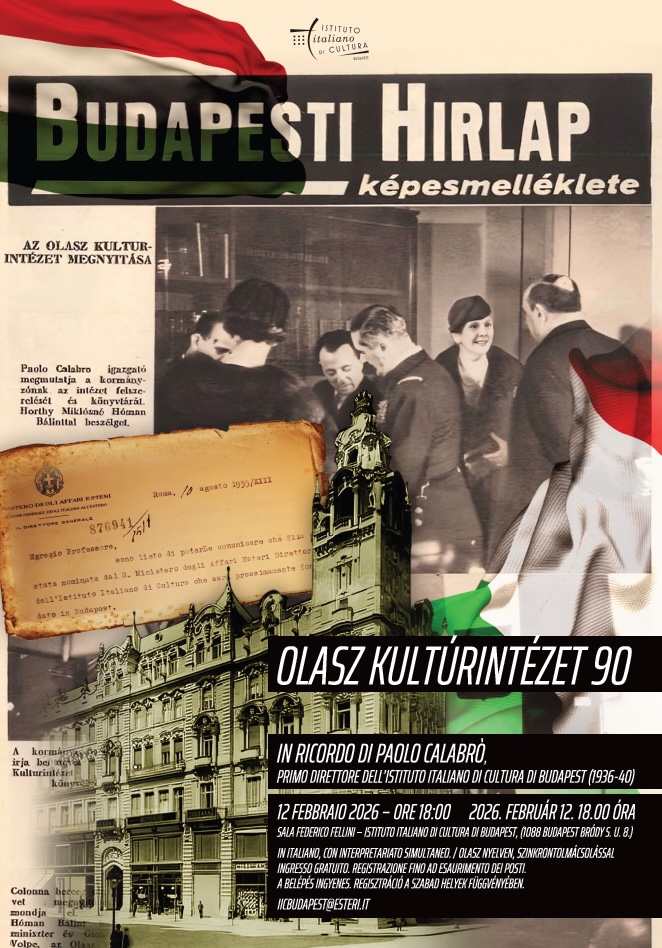
Ninety years after its foundation, the Italian Institute of Culture in Budapest stands also as a testament to the enduring power of culture and a living bridge connecting nations, traditions and generations.
Despite changing historical circumstances, the institution has consistently preserved its core mission: fostering dialogue between Italian and Hungarian cultures.
A further mark of distinction – and a testament of the Italian Institute’s historical importance – is the depiction of its current building on the reverse of Hungary’s highest-denomination banknote, the 20,000-forint note. The image evokes the period in the 19th century when the edifice served as the seat of the Hungarian Parliament.
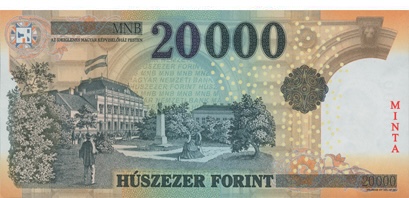
Source: Italian Institute of Culture in Budapest
Photos from the Italian Institute of Culture in Budapest, Máté Steirer, Miklós Bémer