Edited by Anna Popper
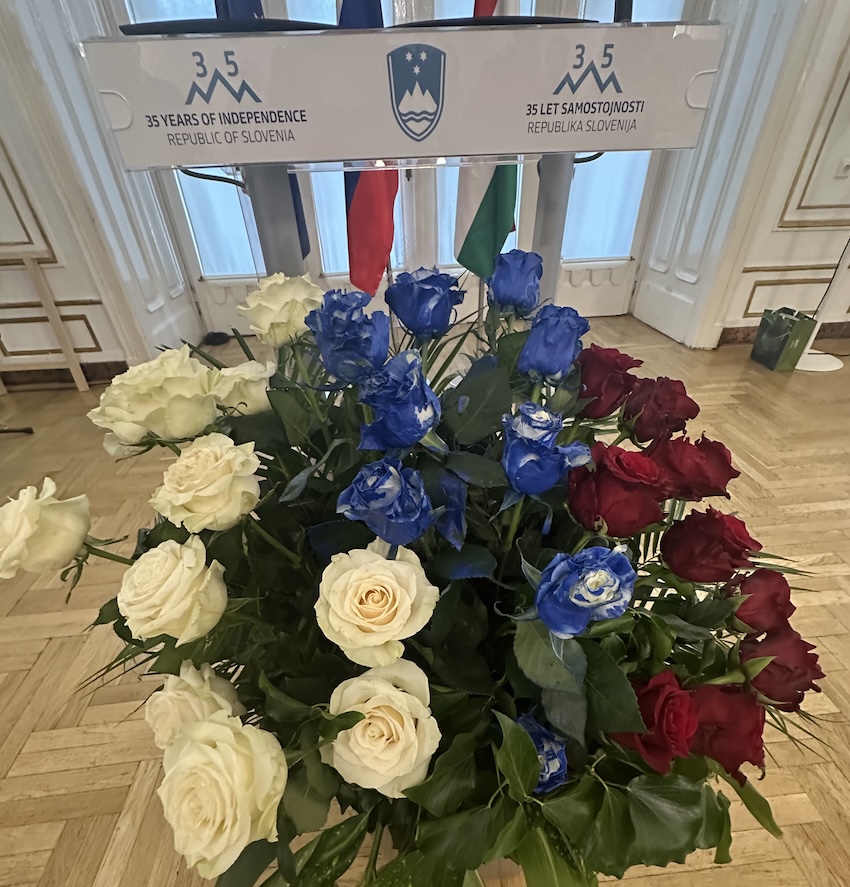
On 25 June, Slovenia celebrates Statehood Day (Dan državnosti), commemorating the historic moment in 1991 when the country declared its independence and became a sovereign state. On this day, the Assembly of the Republic of Slovenia adopted the Basic Constitutional Charter on the Sovereignty and Independence of the Republic of Slovenia together with the Declaration of Independence, formally establishing Slovenia as an independent nation.
Slovenia’s journey towards independence began with the historic plebiscite held on 23 December 1990, when an overwhelming majority of voters opted for an independent and sovereign Slovenia. This democratic decision laid the foundation for the country’s peaceful path to statehood and its emergence as a respected member of the international community.
Over the past 35 years, Slovenia has developed into a modern, outward-looking and internationally connected European nation. It has become a member of the United Nations, the European Union, the Eurozone (EA) and the Schengen Area, and enjoys international recognition for its exceptional natural beauty, high quality of life, innovation spirit and strong commitment to sustainability.
Statehood Day serves both to celebrate extraordinary national achievements and to commemorate the values that continue to shape the country. It is a day to honour the past, celebrate the present and look confidently to the future.
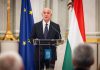
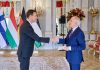
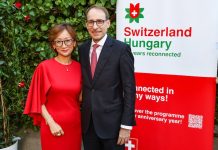
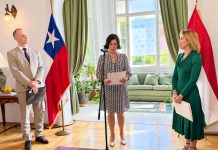
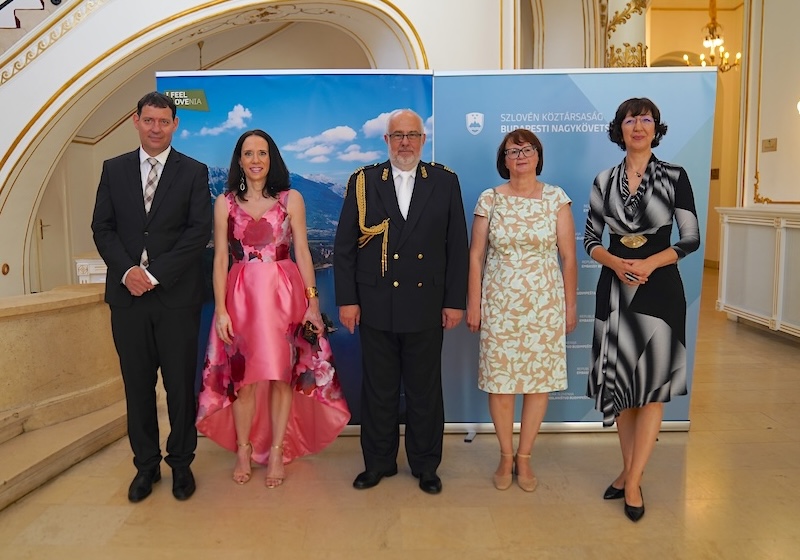
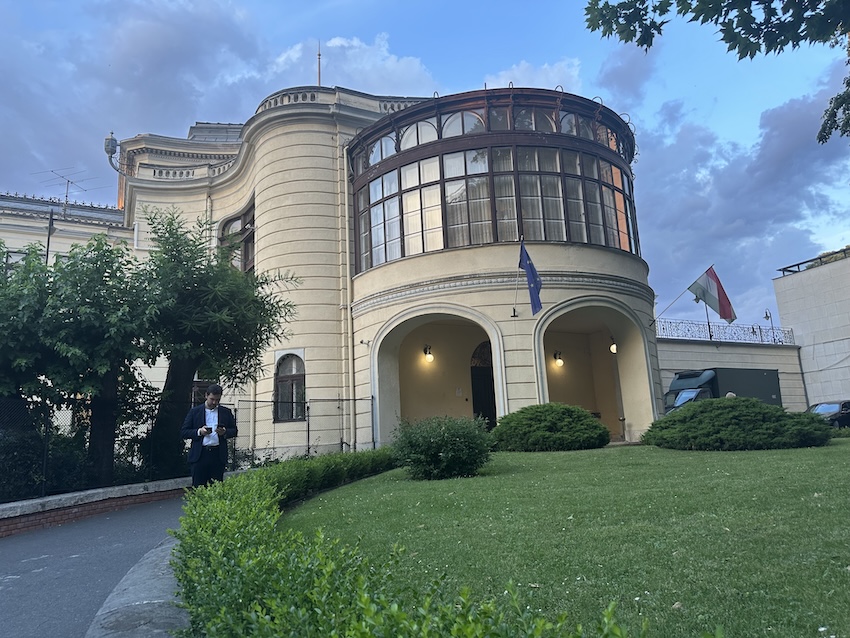
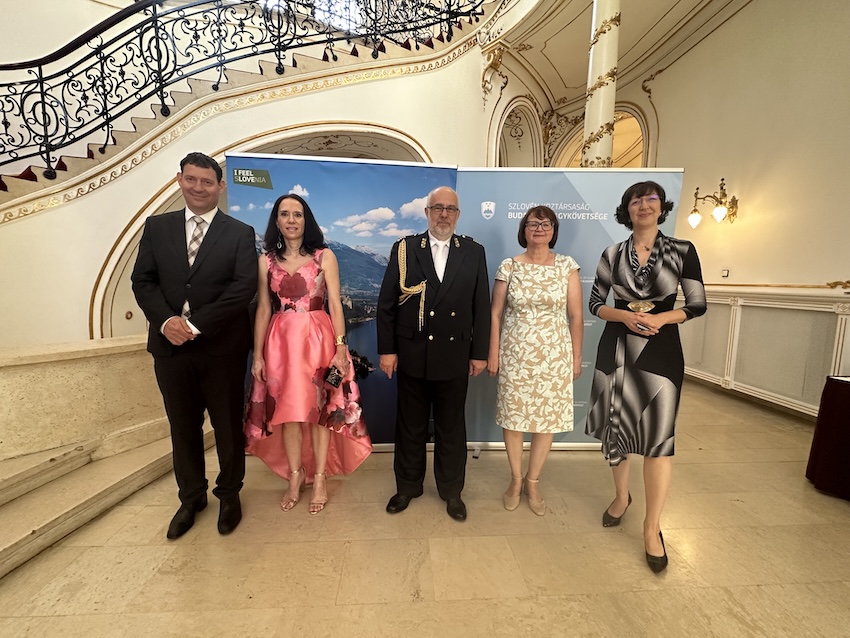
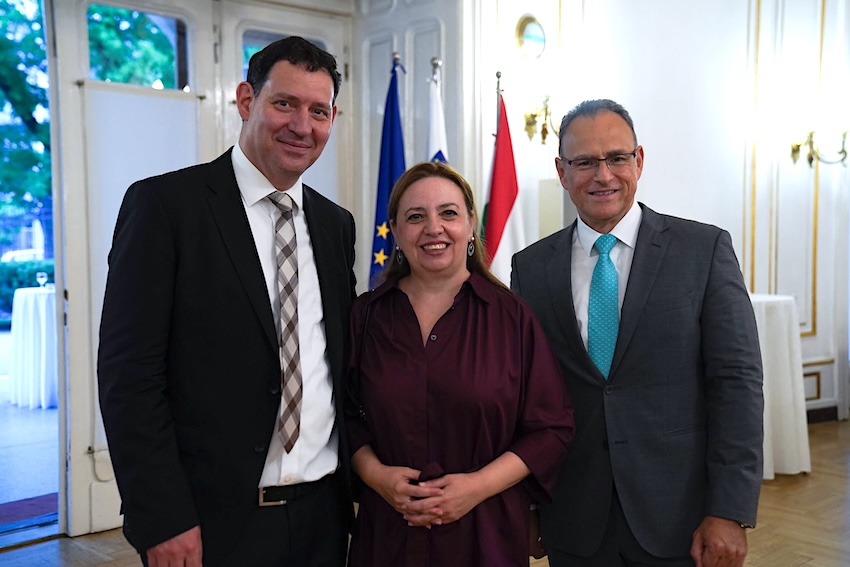
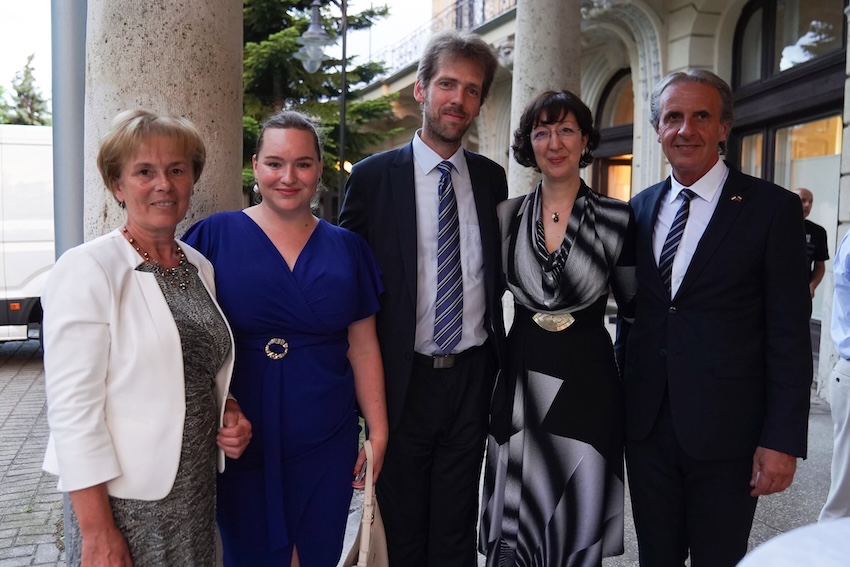
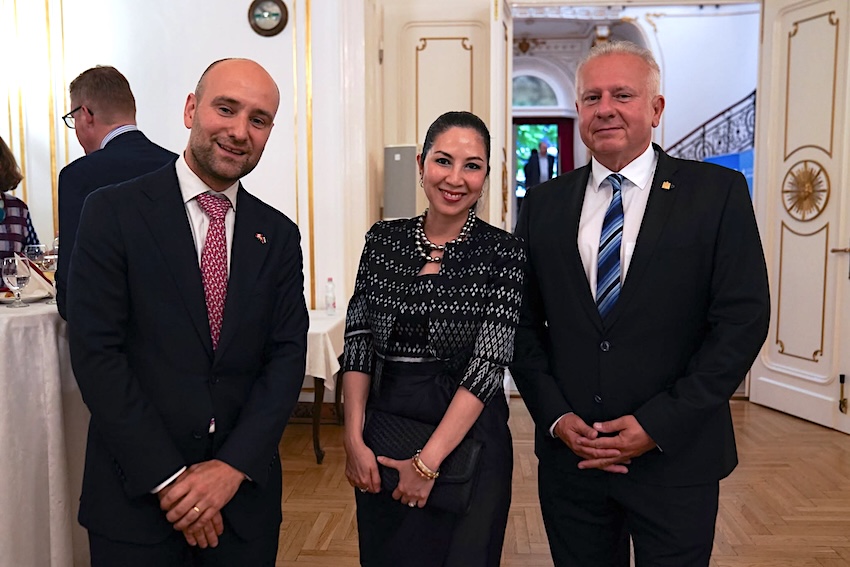
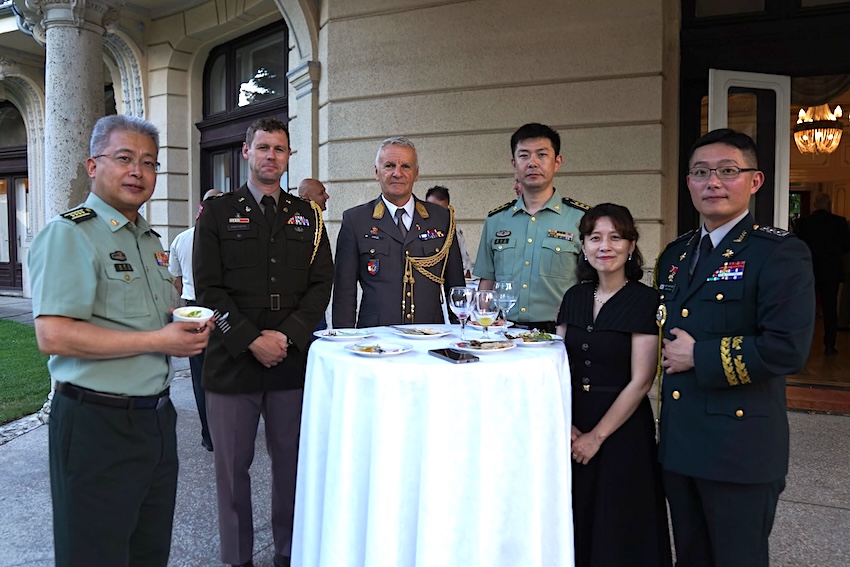
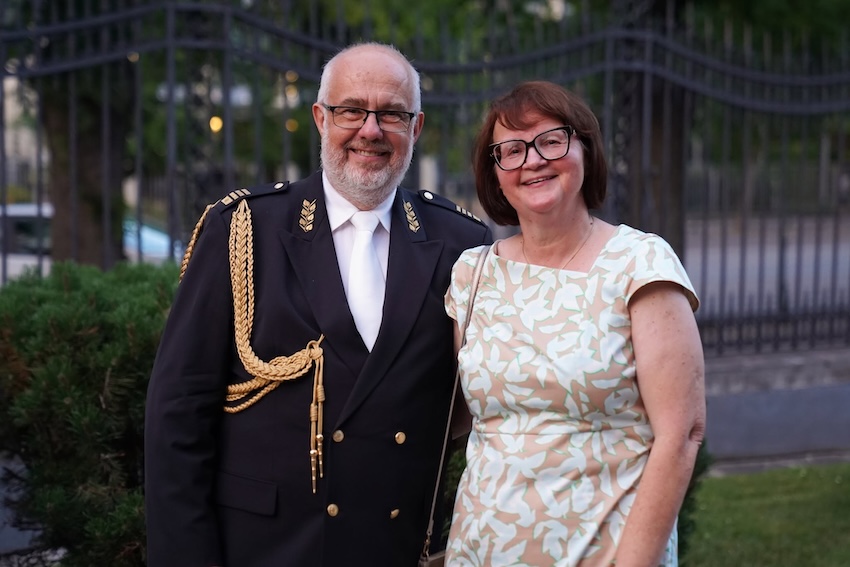
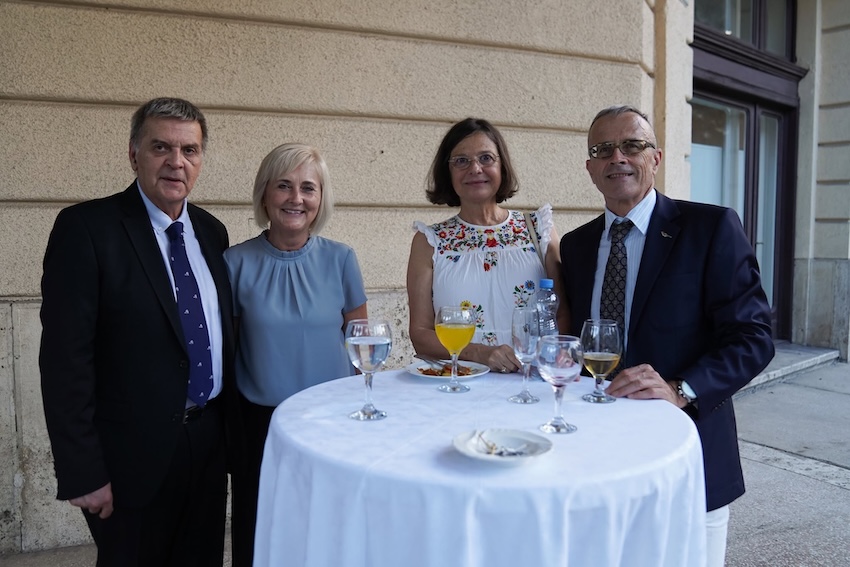
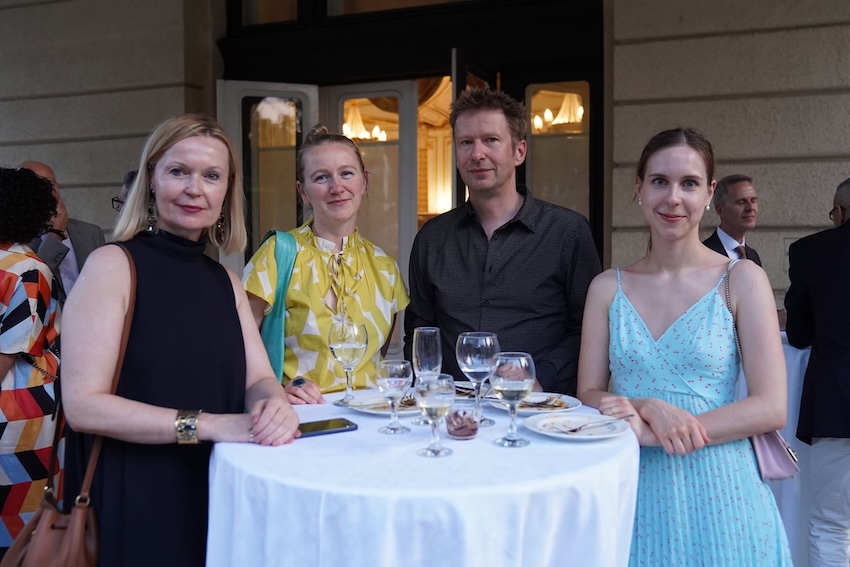
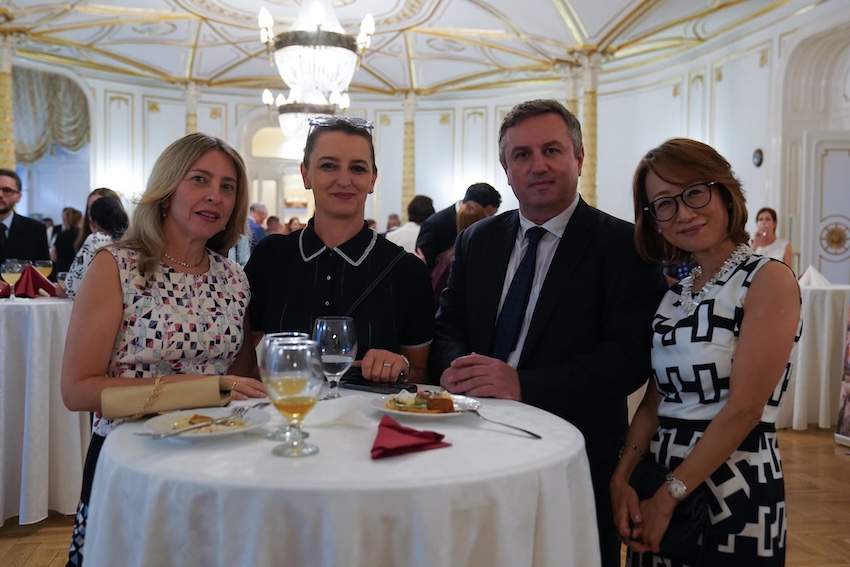
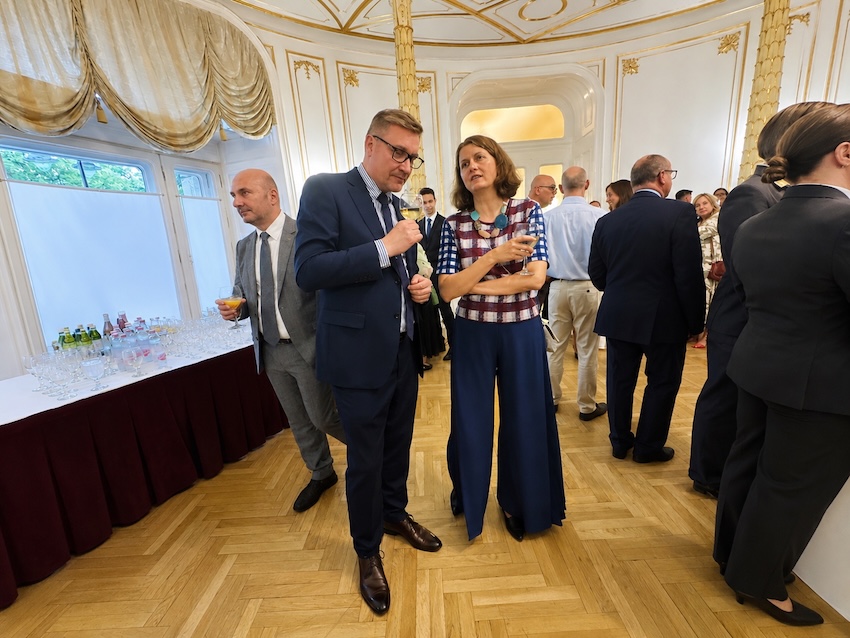
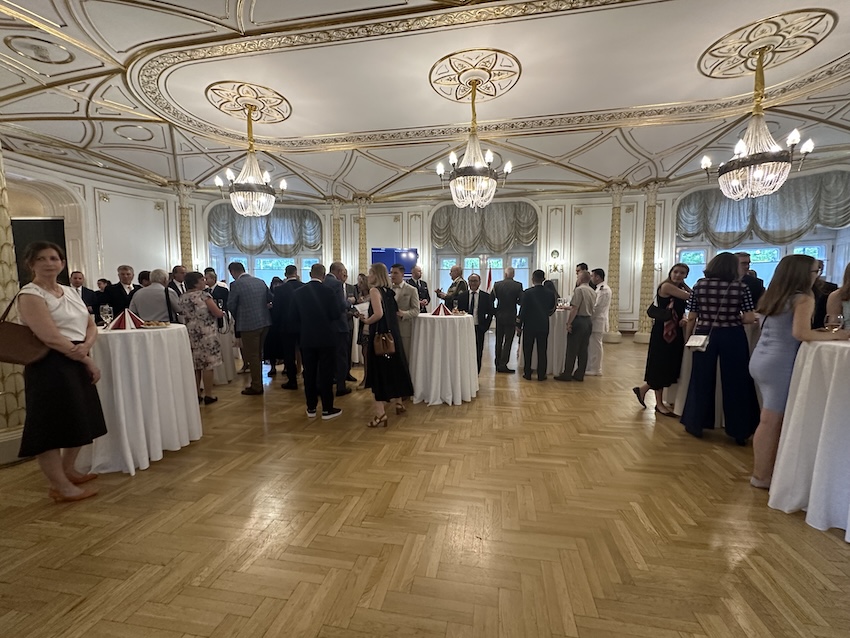
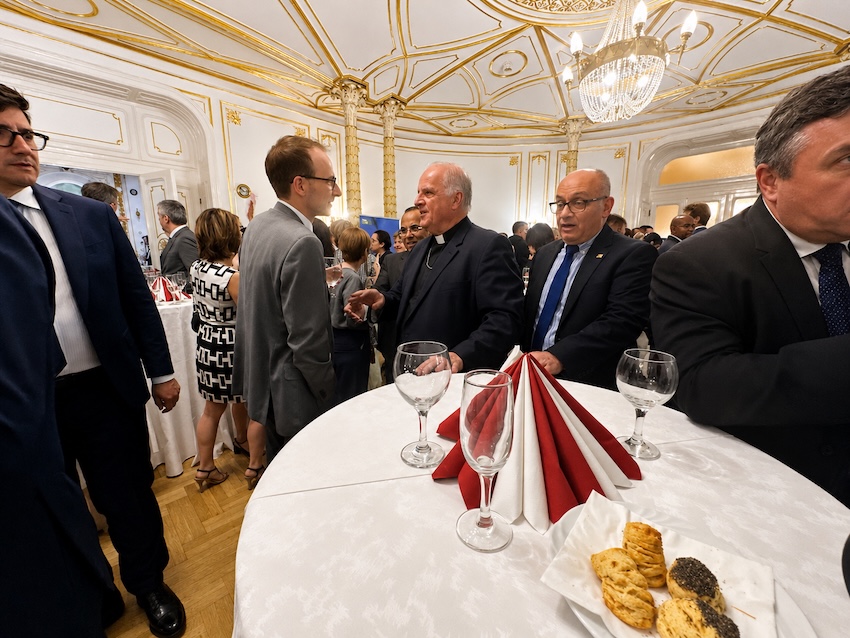
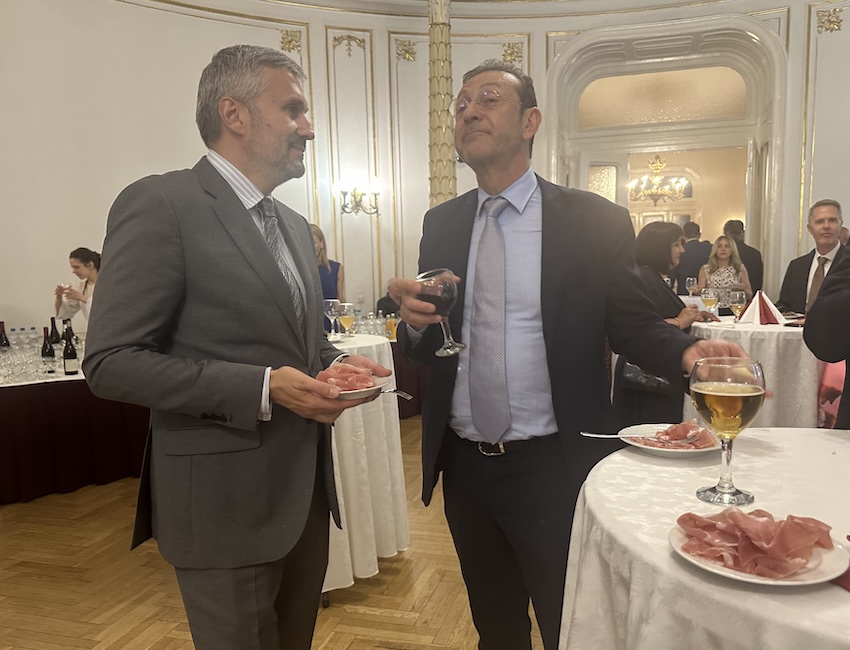
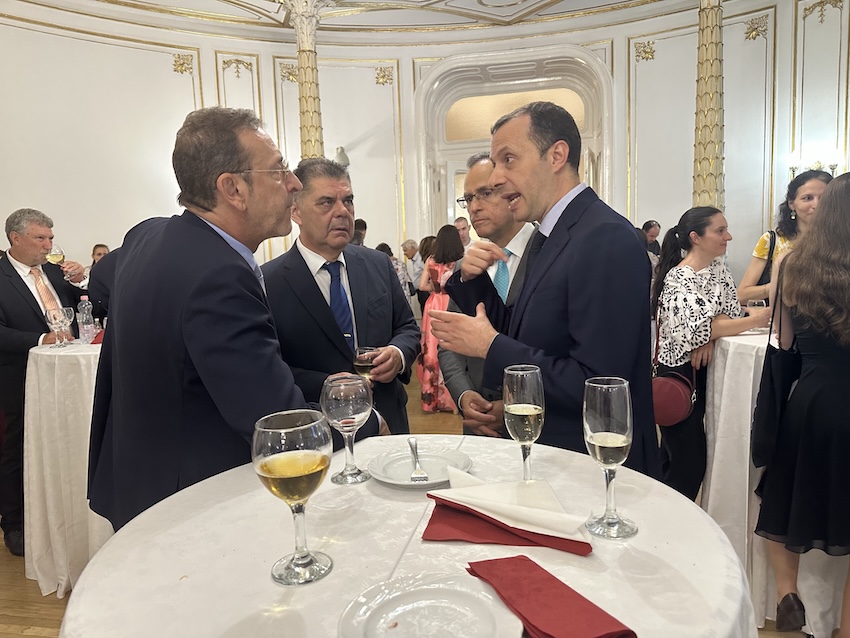
On the occasion of this important national anniversary, H.E. Mag. Anžej Frangeš, Ambassador of the Republic of Slovenia to Hungary, and his spouse, Mrs. Tanja Plesnik, hosted an official diplomatic reception at the Stefania Palace, the Honvéd Cultural Centre in Budapest.
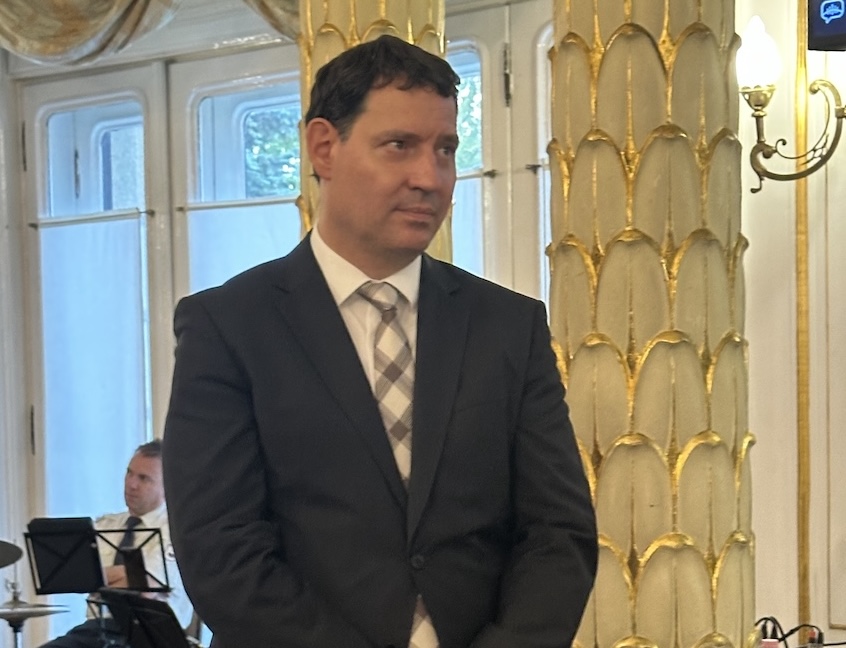
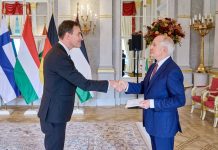
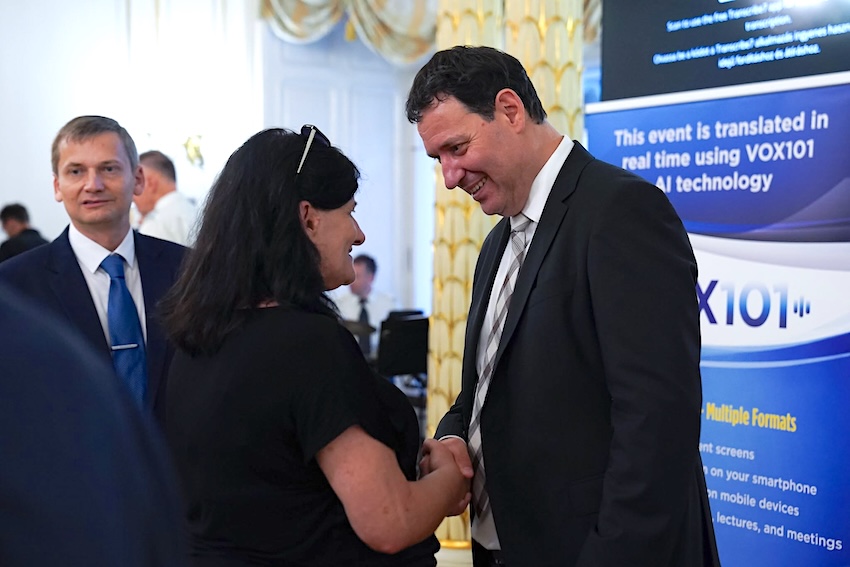
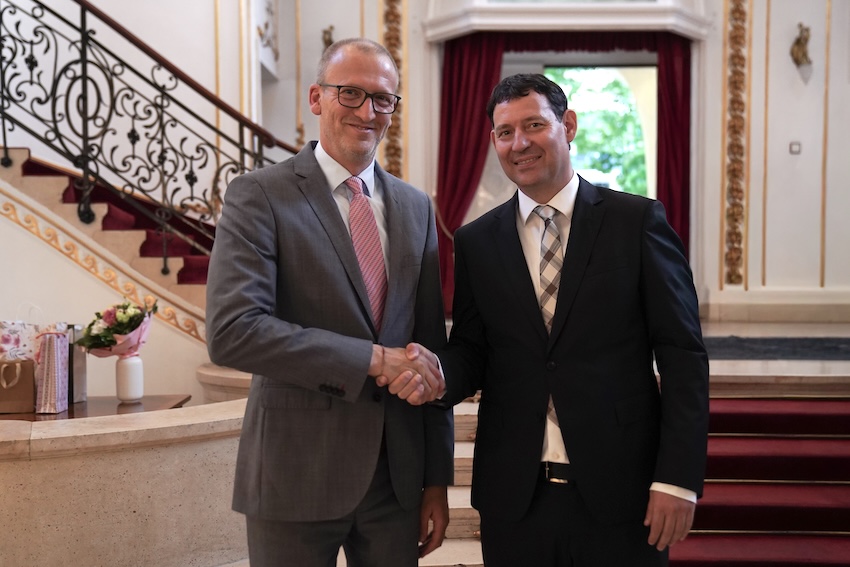
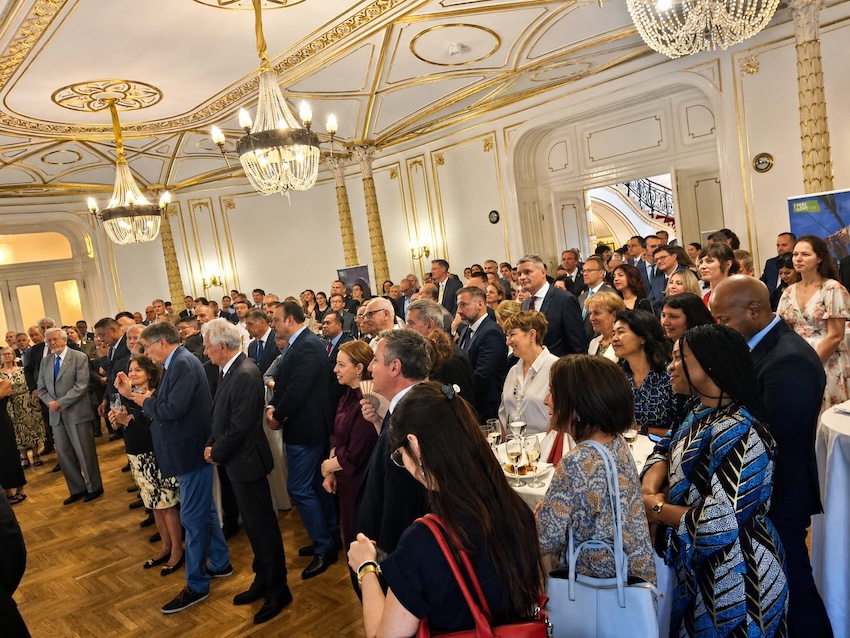
The event brought together high-profile officials from the Hungarian government, including the Guest of Honour, Minister of Social Relations and Culture, Zoltán Tarr, members of the diplomatic corps, representatives of international organisations, business leaders, representatives of the cultural and academic circles, friends of Slovenia and Slovenian nationals.
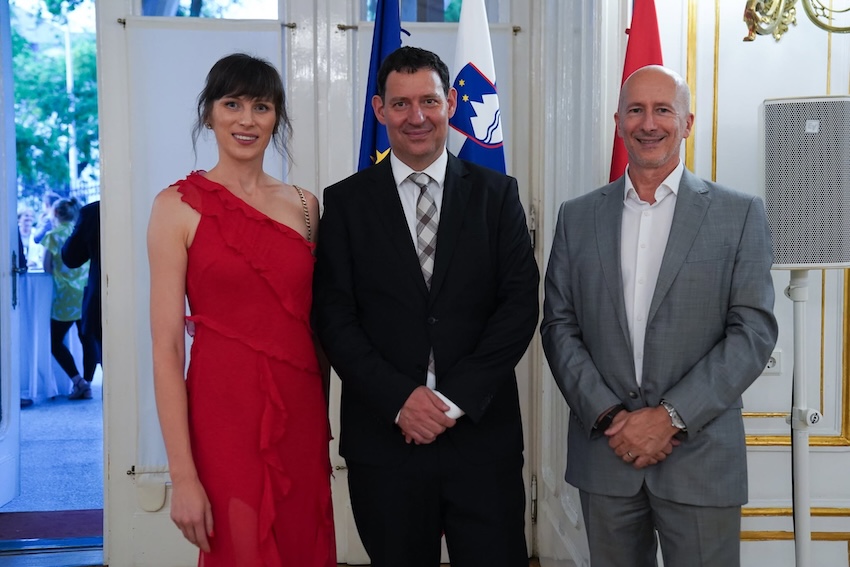
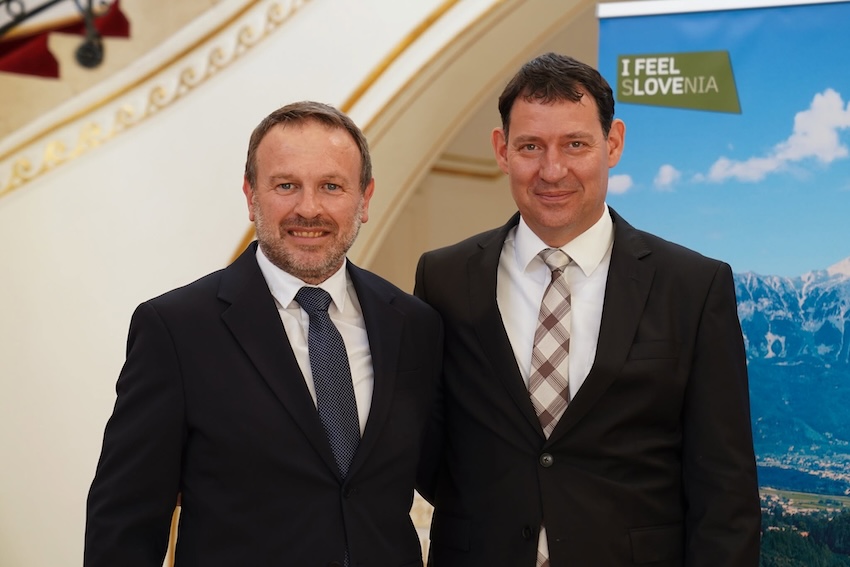
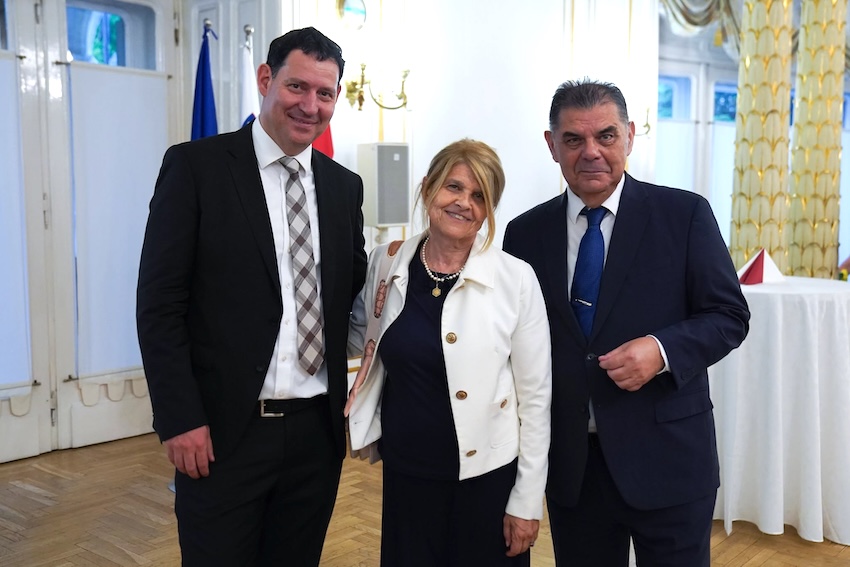
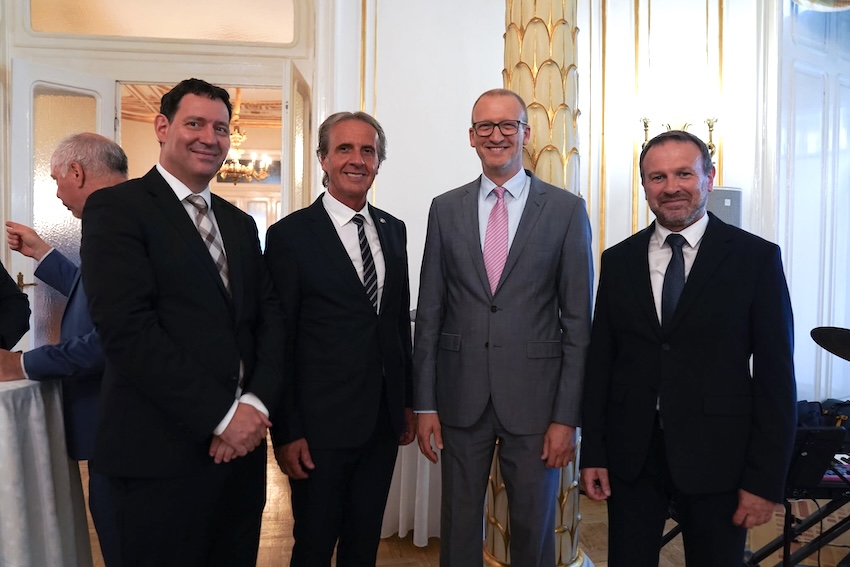
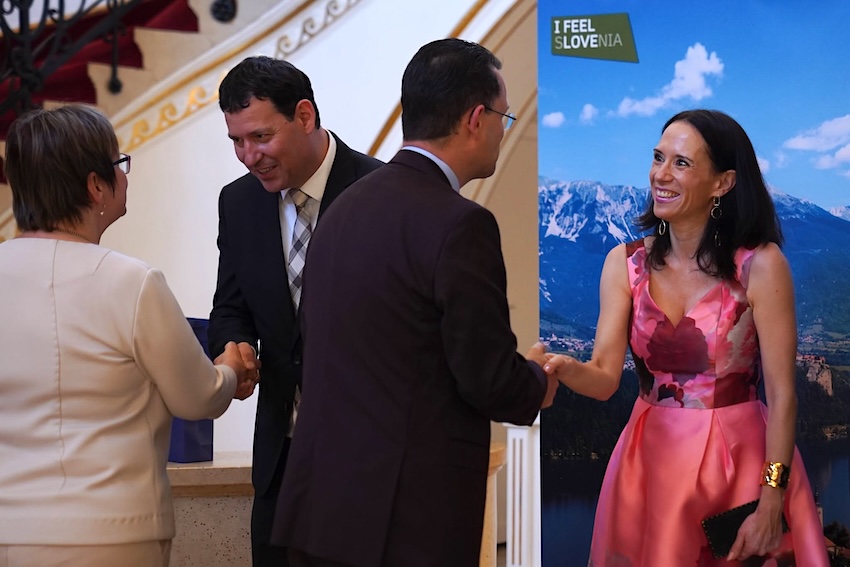
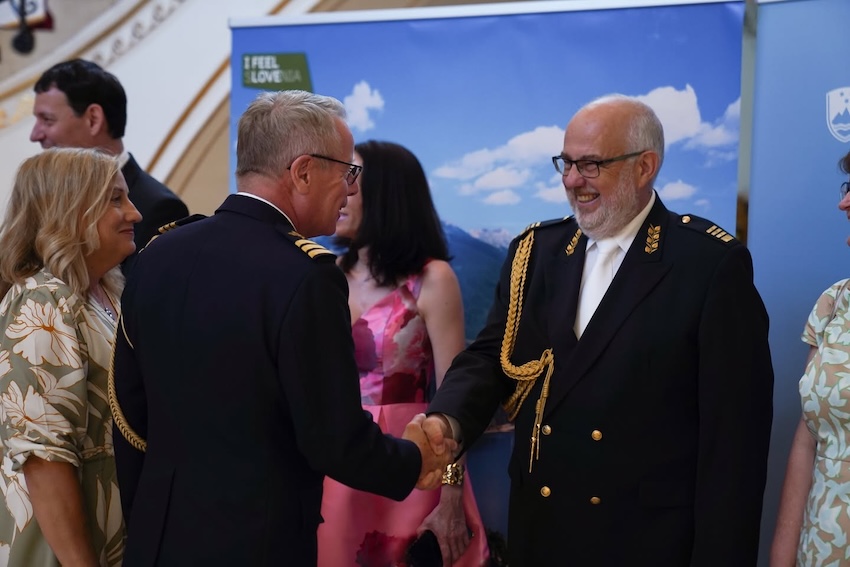
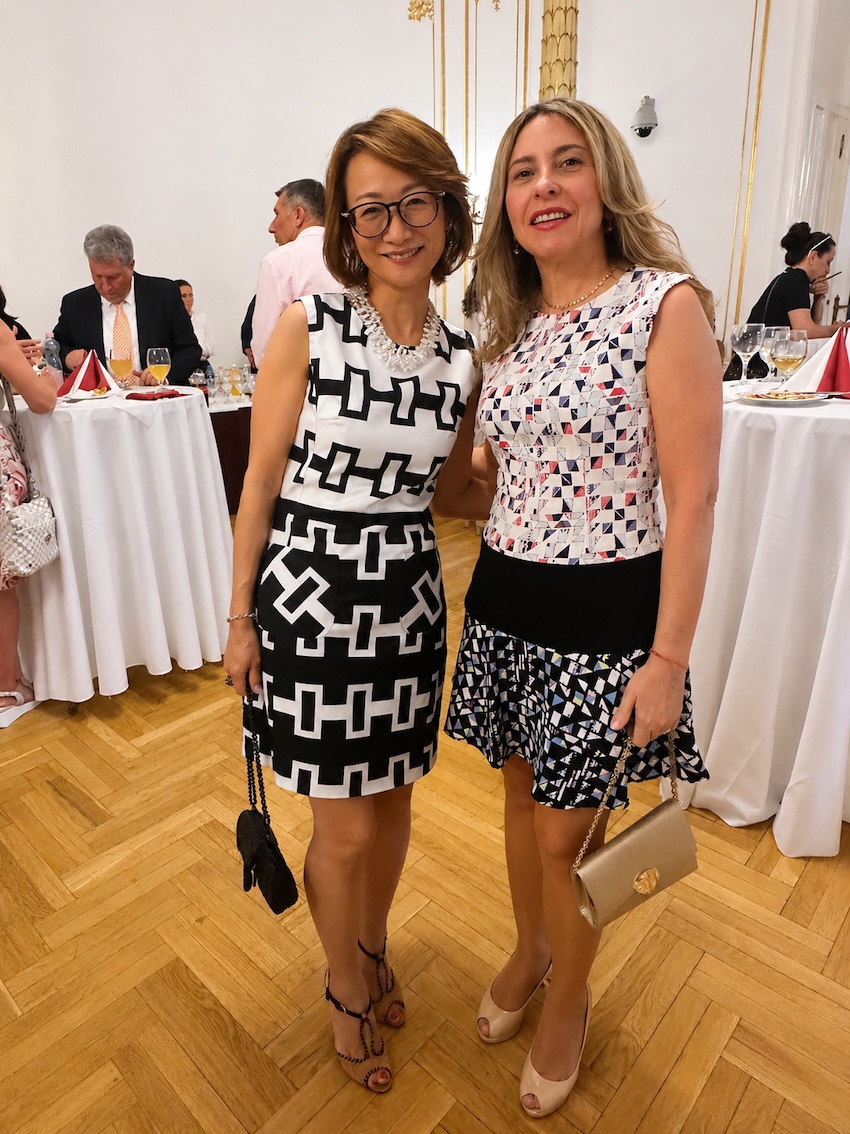
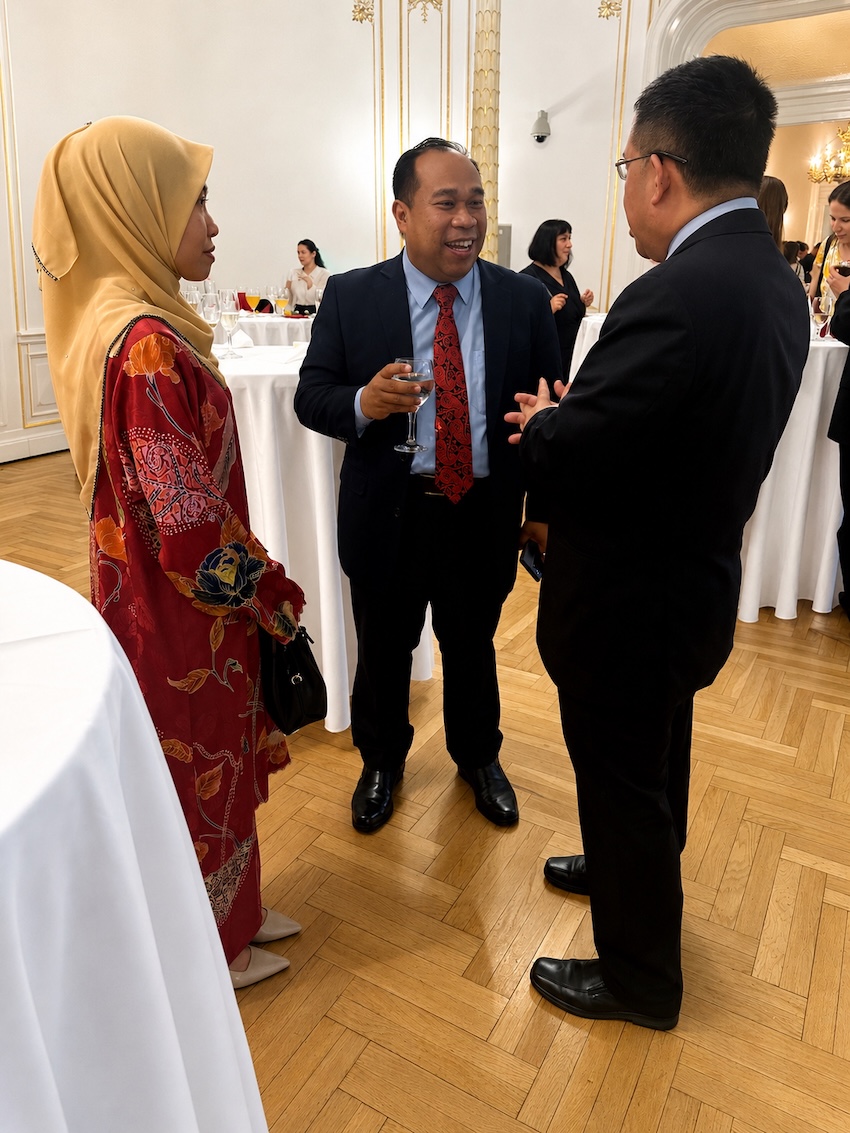
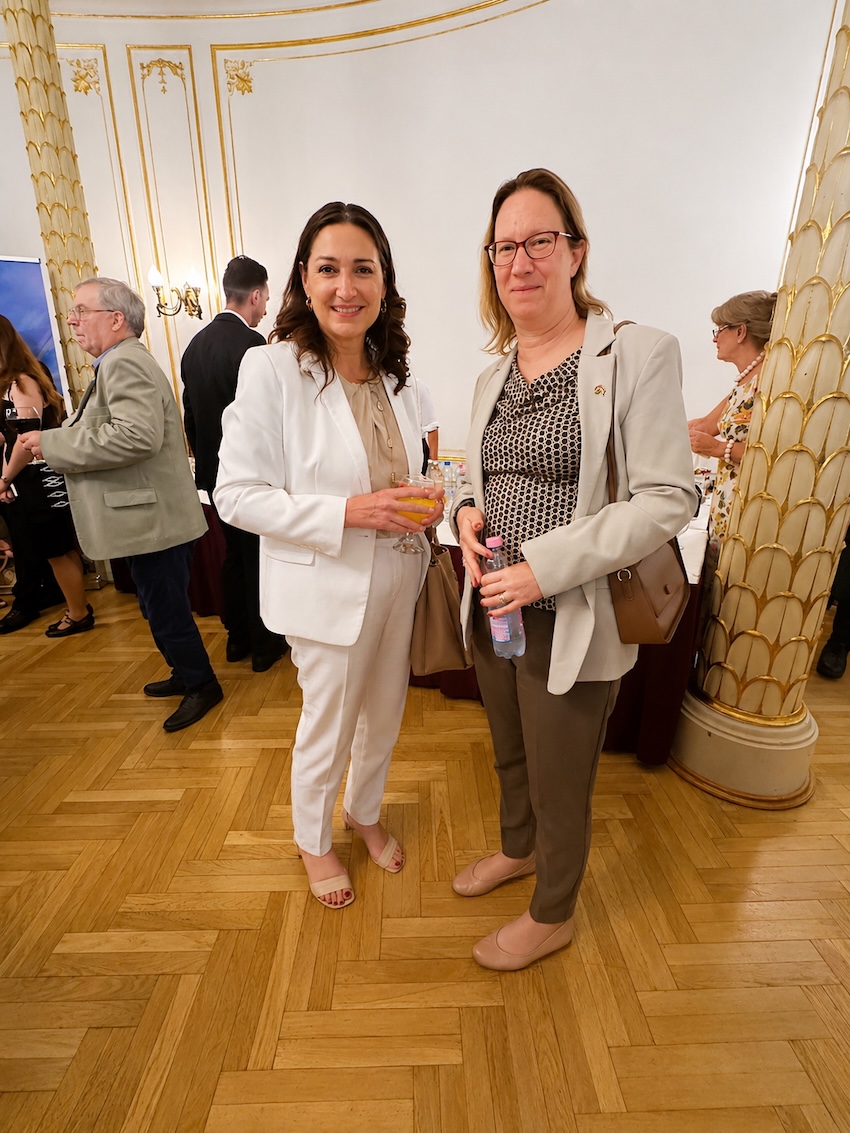
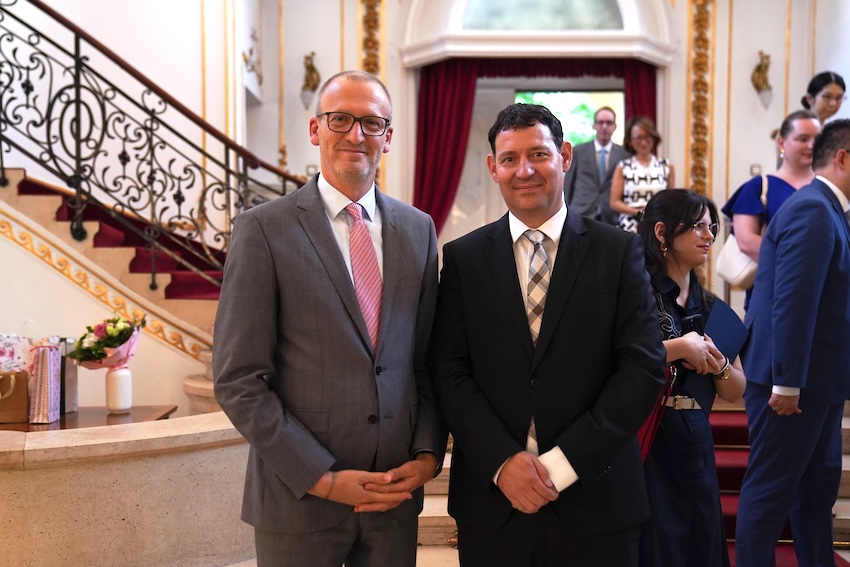
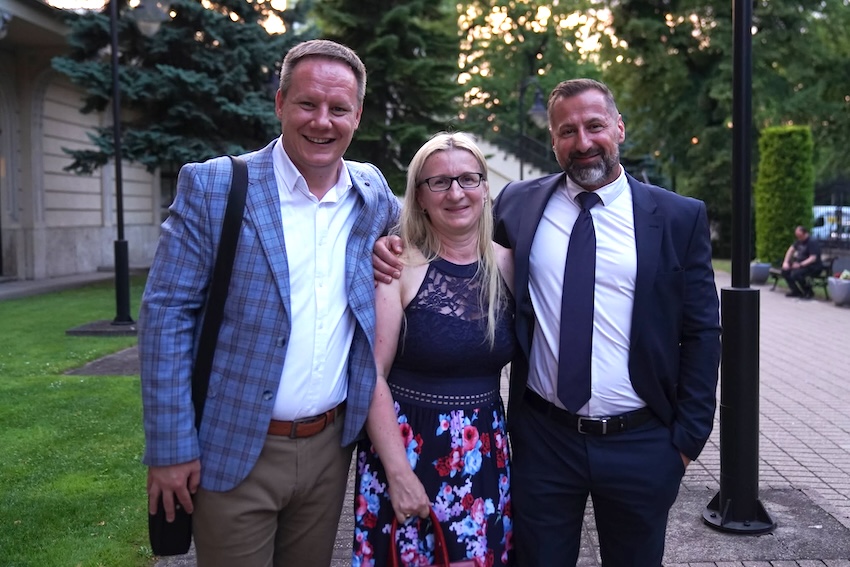
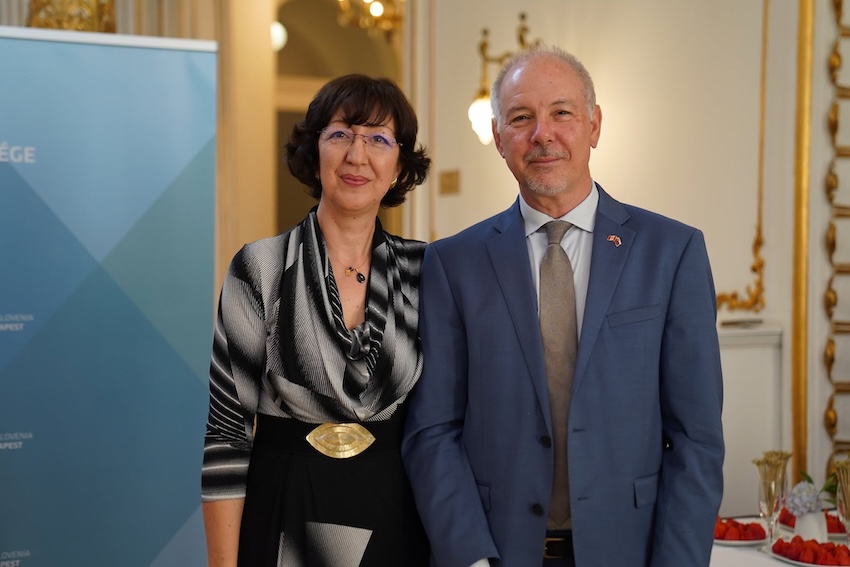
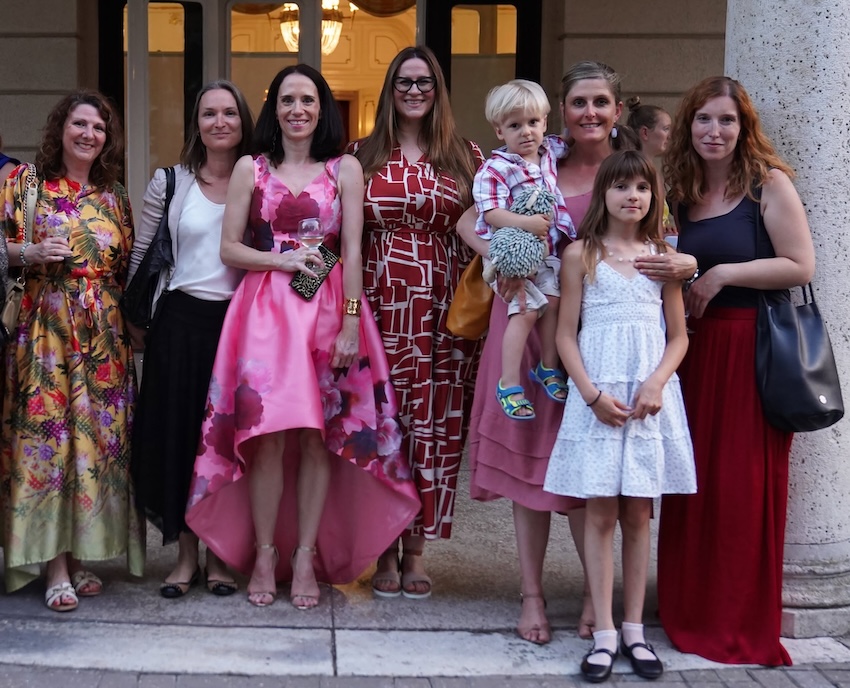
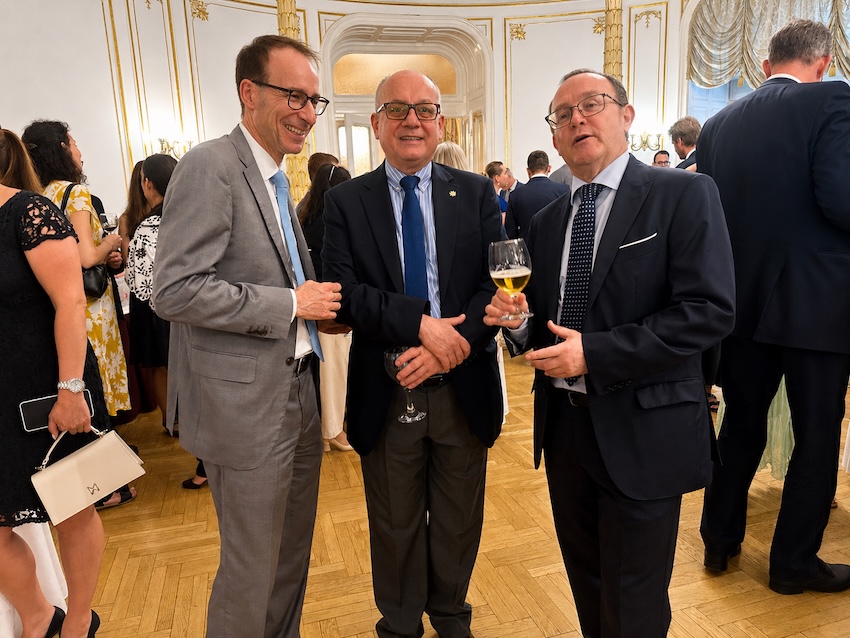
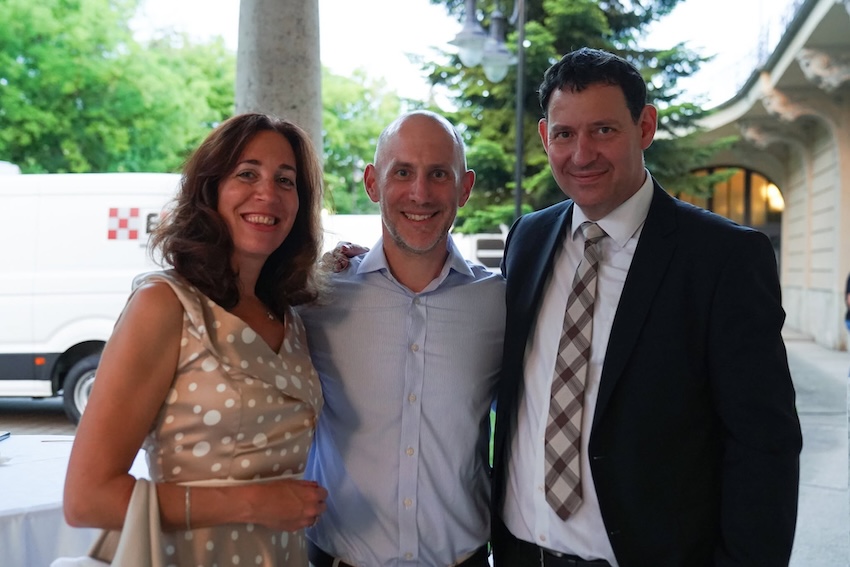
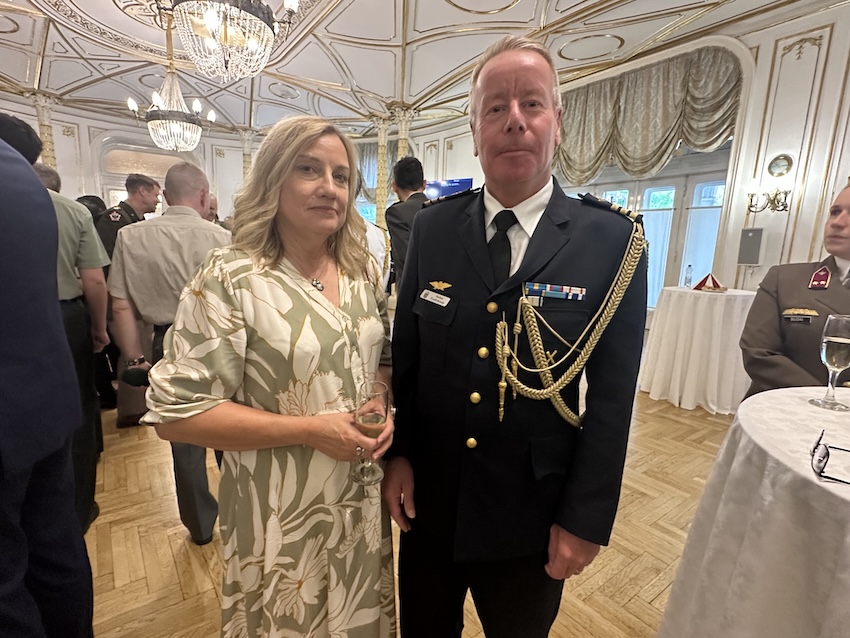
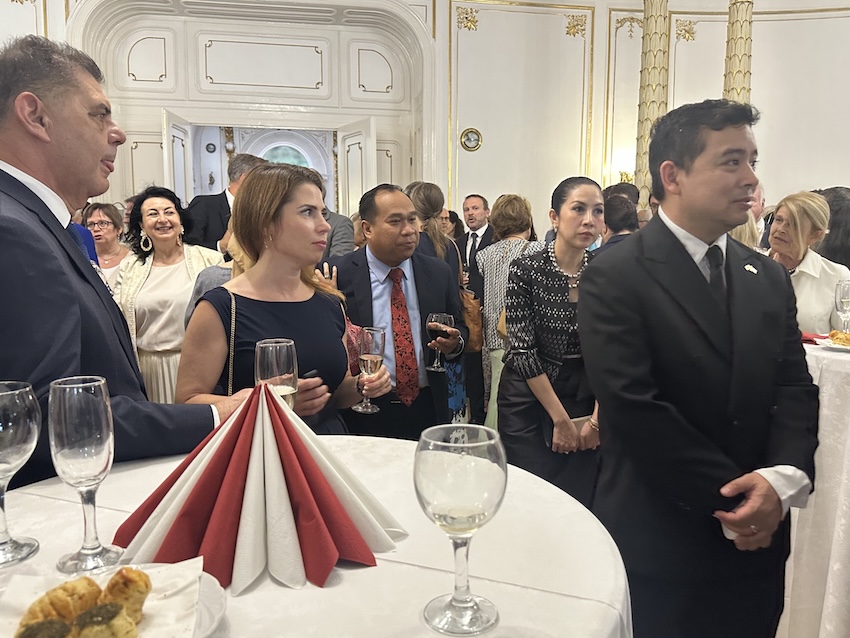
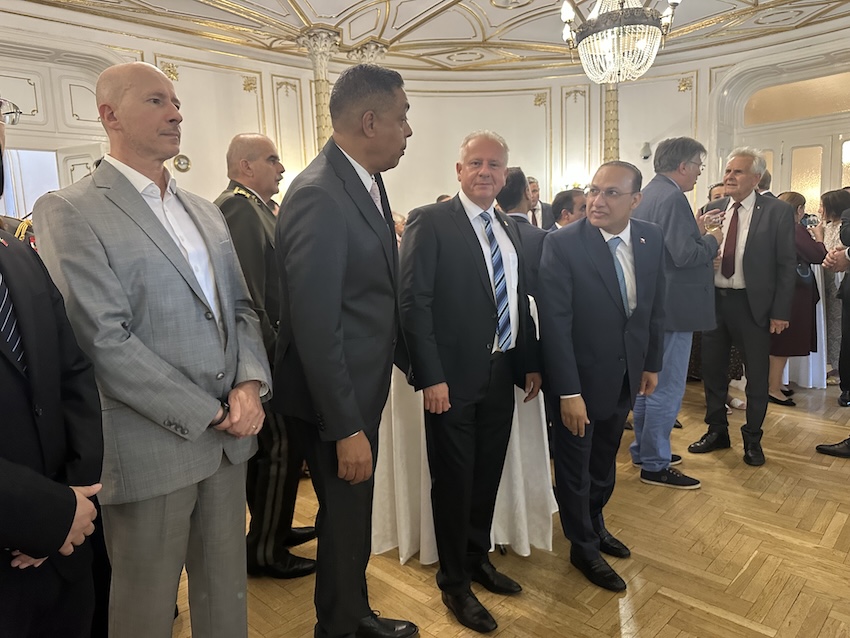
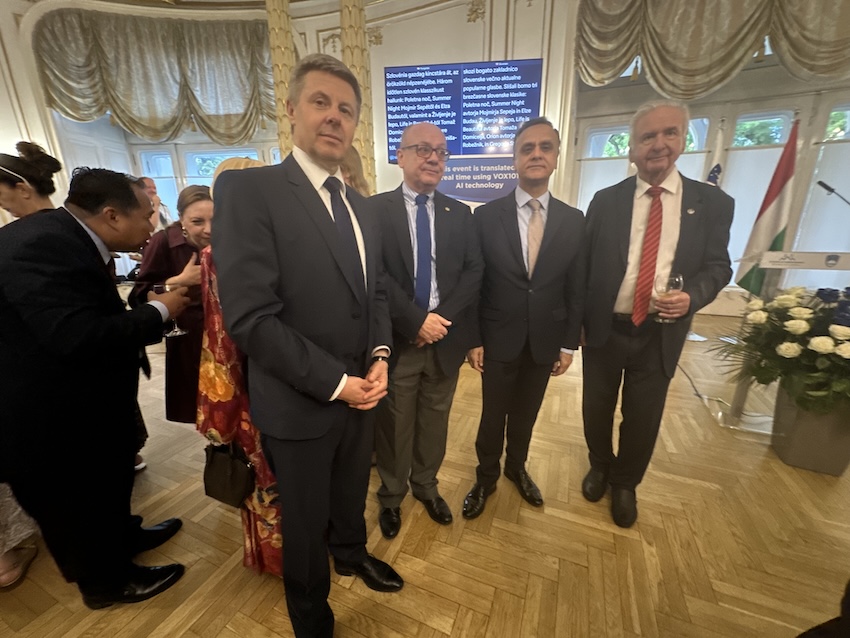
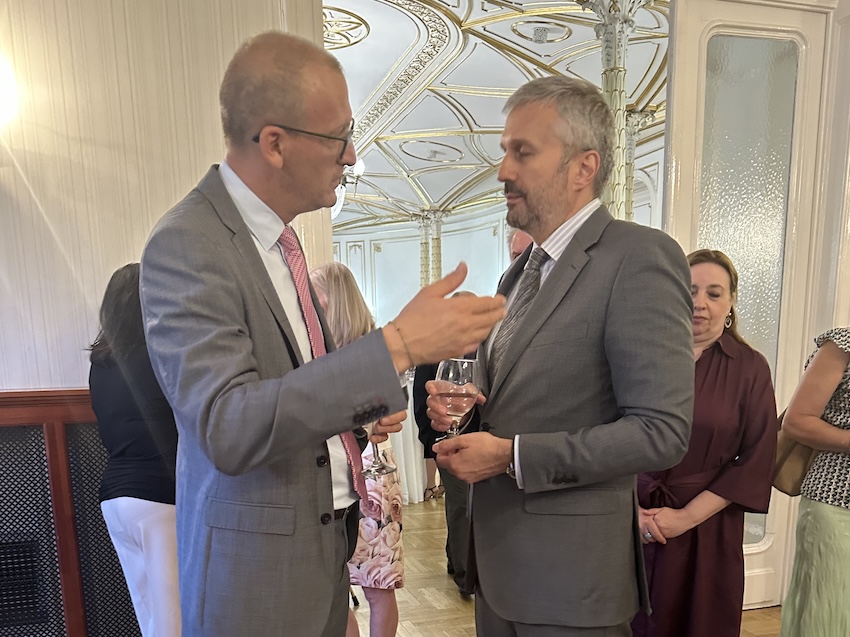
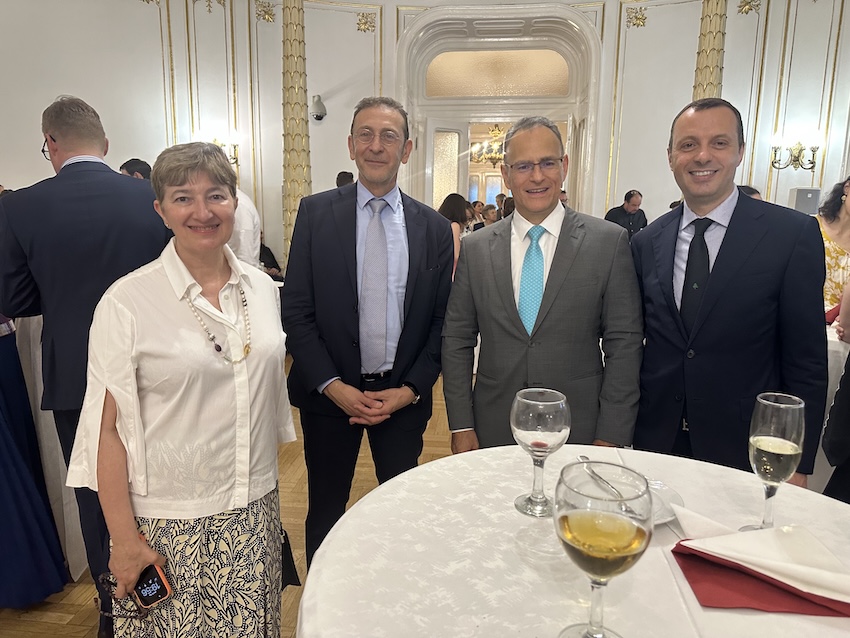
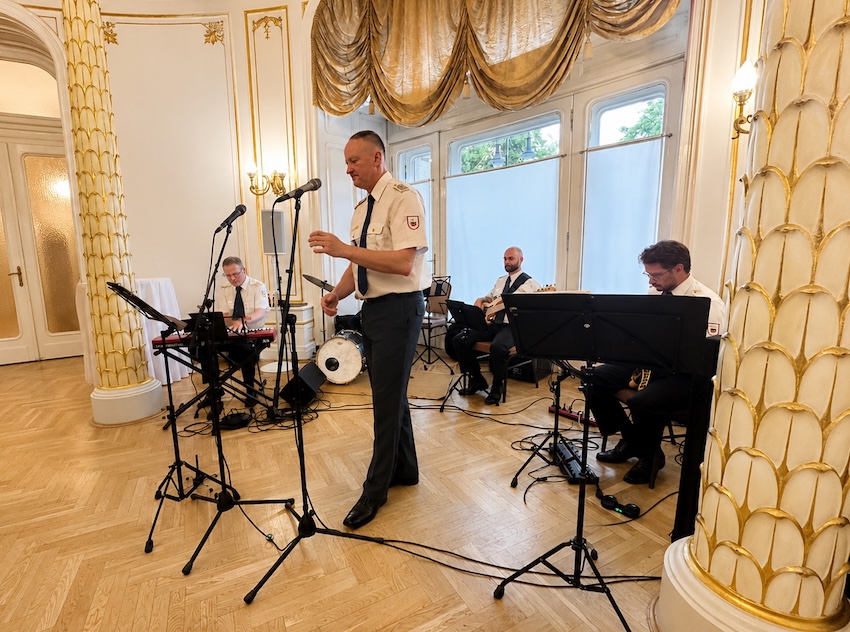
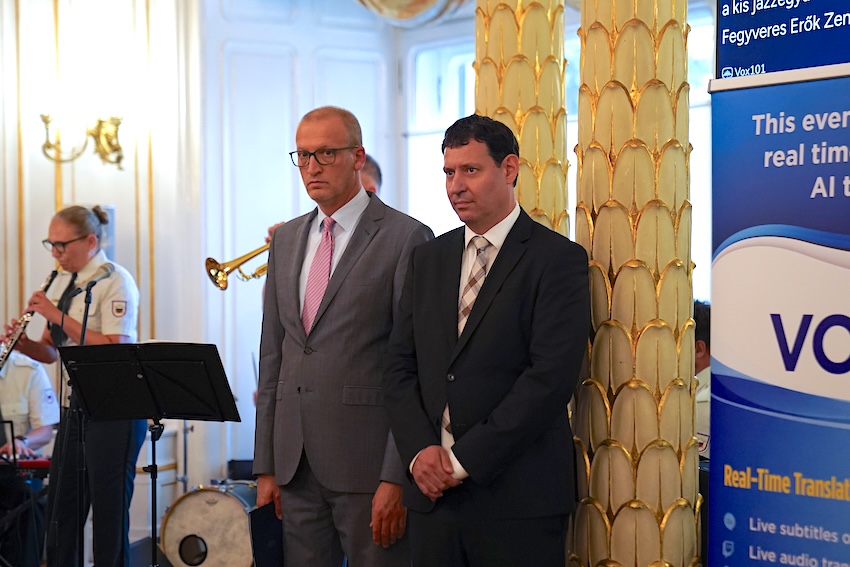
The celebration started with the national anthems of Slovenia, Hungary and the European Union, interpreted by the Slovenian Armed Forces Band.
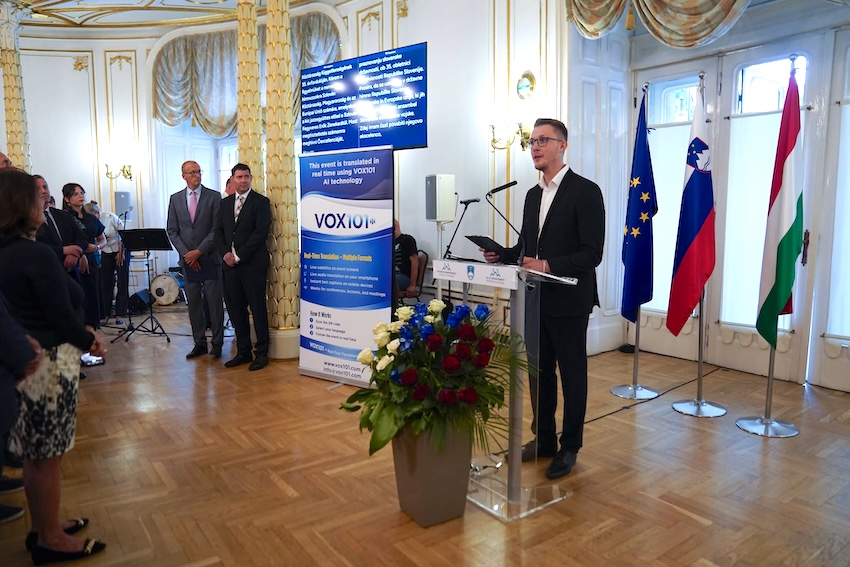
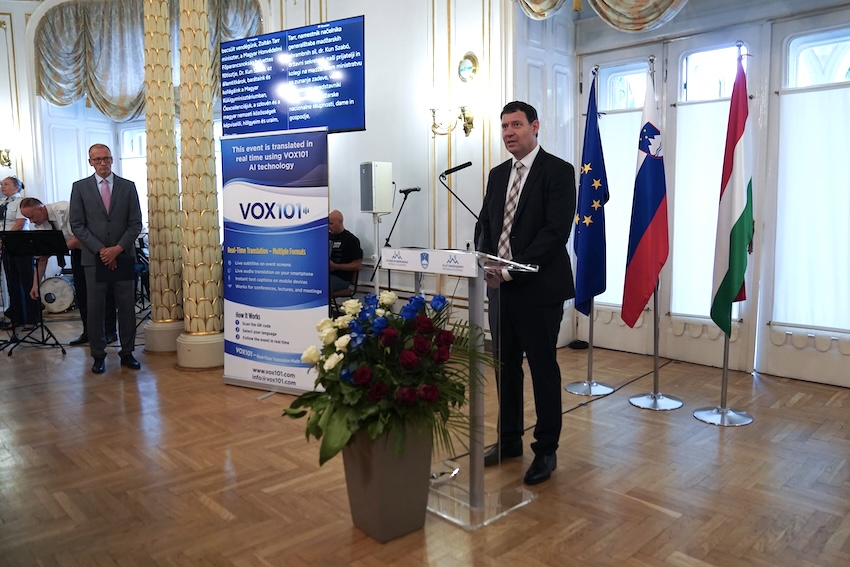
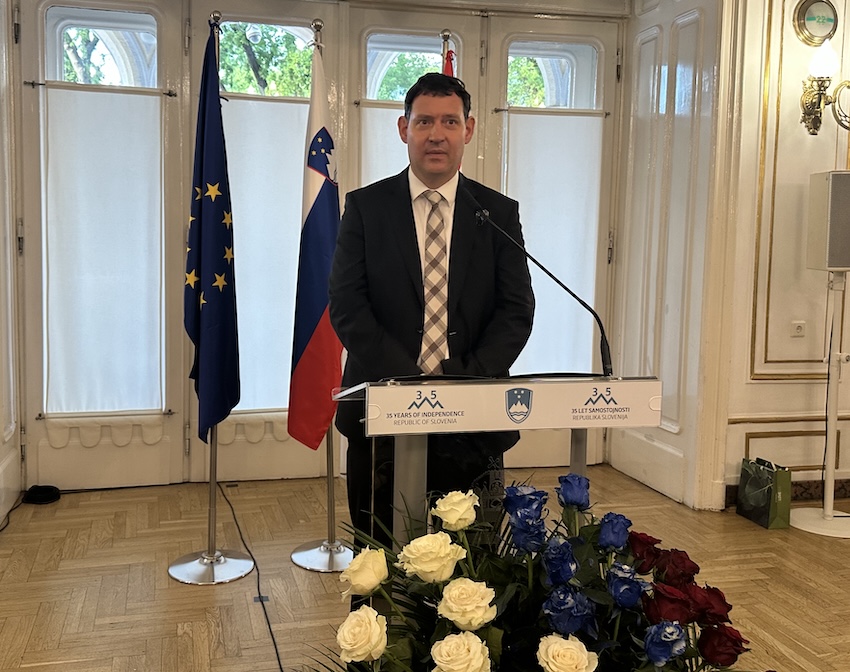
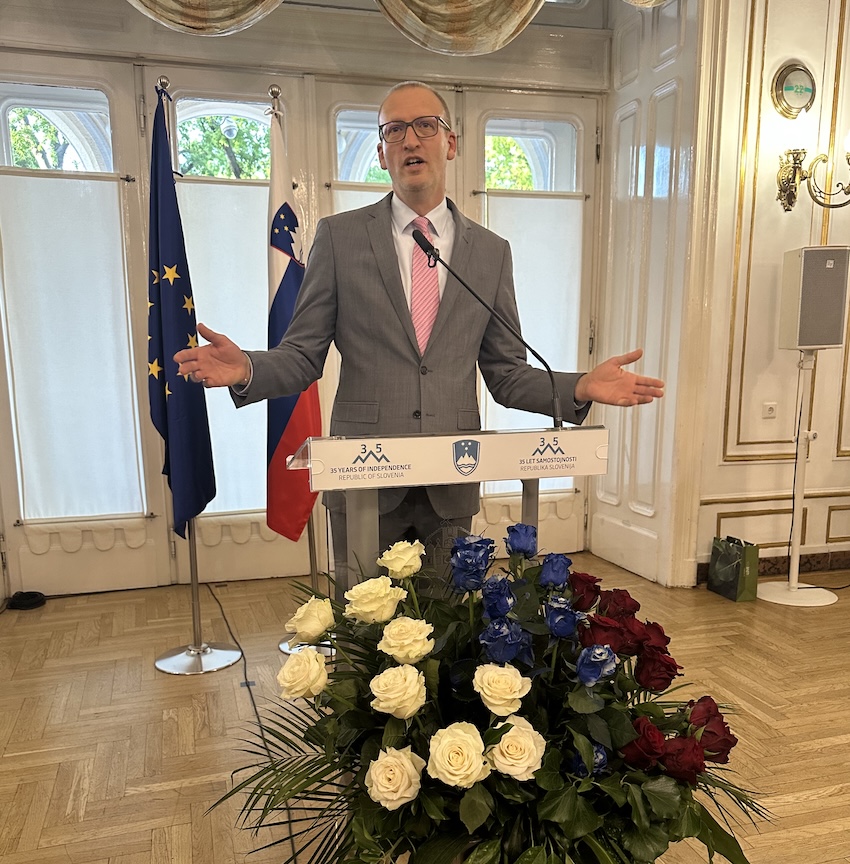
It was followed by the address of Ambassador Anžej Frangeš:
“Distinguished Guests, our Esteemed Guest of Honour, Minister Zoltán Tarr, Chief of the General Staff of the Hungarian Defence Forces, Lieutenant General Zsolt Sándor, State Secretaries, our friends and colleagues at the Hungarian Ministry of Foreign Affairs, Excellencies, Representatives of the Slovenian and Hungarian National Communities, Ladies and Gentlemen, Dear Friends of Slovenia, Dragi Slovenke in Slovenci, it is a great honour and pleasure to welcome you today to the celebration of Slovenia’s Statehood Day.
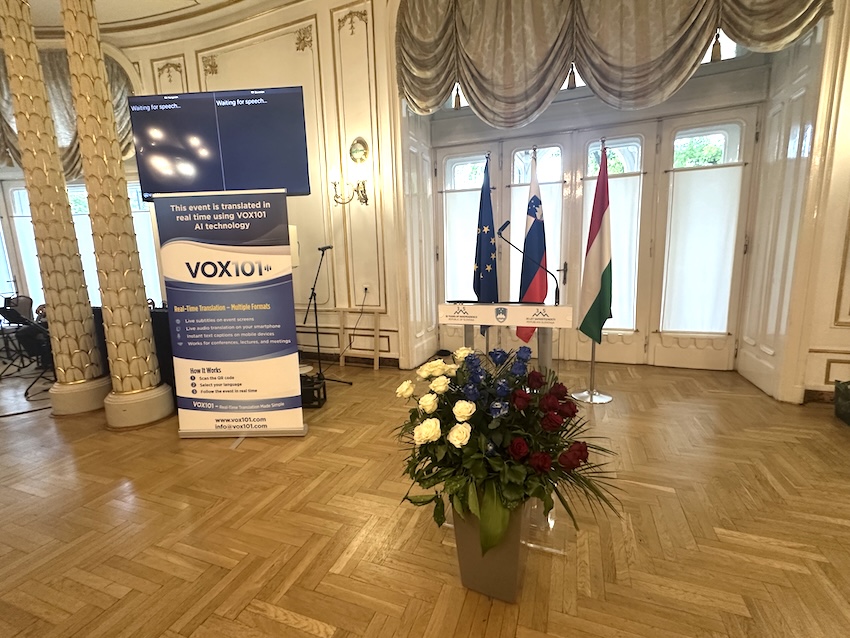
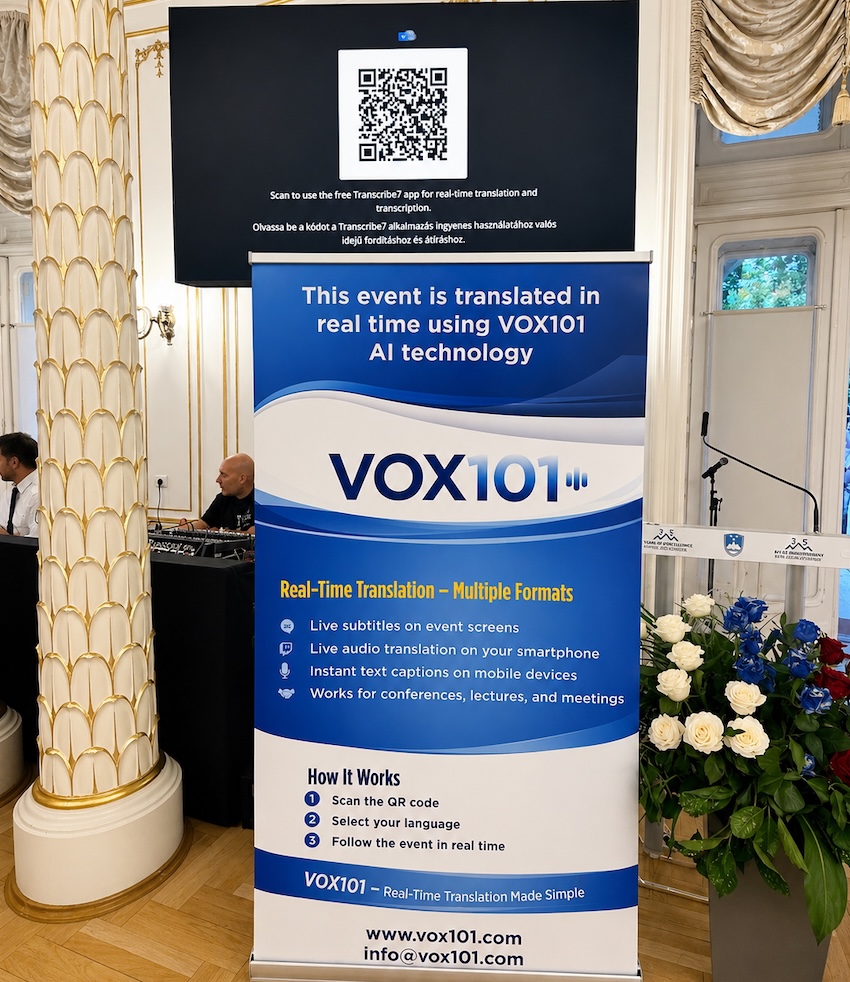
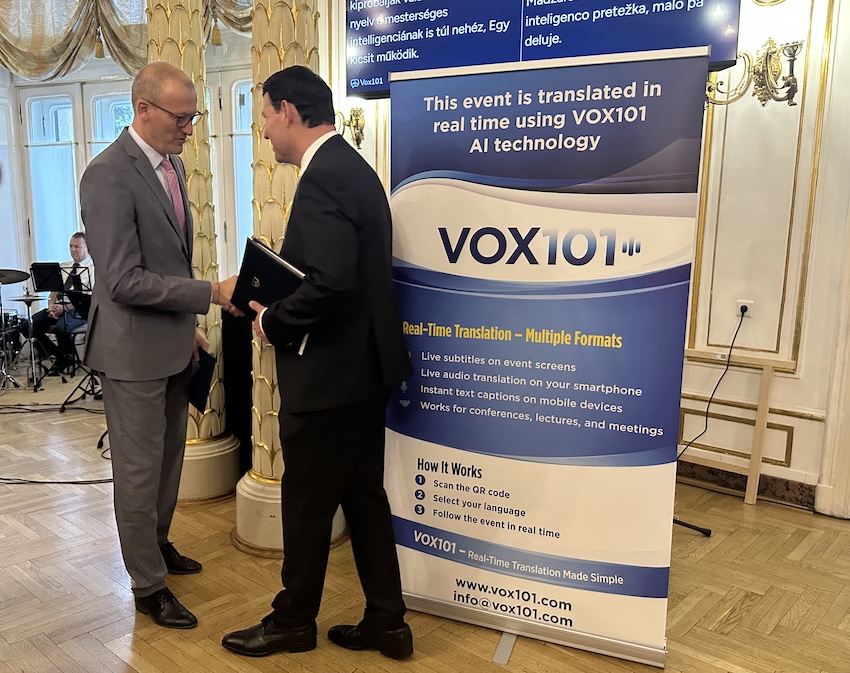
As you can see on this screen, my remarks are being translated live into Slovenian and Hungarian thanks to an AI translation tool – the VOX101 technology, developed by a Slovenian company. This innovation is another example of Slovenia’s creativity. So, if you find the translated version better than the original, I will take it as a compliment to Slovenian innovation. And if our Hungarian-speaking audience start laughing a little too much at the wrong parts of the speech, please feel free to contact the developer.
This year, we mark the 35th anniversary of the independent Republic of Slovenia. For Slovenians, independence is one of the most defining moments in our history. It represents unity, respect for our state and its people at home, in neighbouring countries, and around the world, as well as a commitment to building a future of development and progress.
Today’s celebration in Budapest offers an opportunity to reflect on the deep ties between Slovenia and Hungary. The relationship between our two respective countries is built on far more than geographical proximity. Our nations are bound together by centuries of shared history, rich cultural exchanges, and, above all, by the people who have lived side by side for generations. I am pleased to affirm that Slovenia and Hungary enjoy excellent bilateral relations. It is therefore a privilege and a pleasure for me to serve as Slovenia’s Ambassador to Hungary. We cooperate closely in many areas, ranging from economic development, energy, and connectivity to culture, education, and regional cooperation.
And this year, with the formation of new governments in both of our countries, we look forward to new opportunities and fresh perspectives. I am convinced that Slovenia and Hungary will continue to work together for the benefit of our citizens, our border regions, and our common European future. Our dialogue is open, constructive, and based on mutual trust.
The Slovenian community in Hungary and the Hungarian community in Slovenia are particularly valuable parts of our shared heritage. Their existence enriches both societies and serves as a living bridge between our two nations. In this context, the role of our national communities remains indispensable. They are among the most important architects of bilateral relations.
We are grateful and proud that the Slovenian community in Hungary, in the Porabje region, has preserved its linguistic and cultural identity, making it a unique and treasured part of the shared heritage of both Slovenia and Hungary.
Such achievements do not happen by themselves; they are the result of the dedication and commitment of many individuals. Therefore, allow me to extend a special greeting to the former Advocate of the Slovenian National Community in the Hungarian Parliament, Ms. Erika Köles Kiss. Dear Erika, thank you for your 12 years of devoted service and excellent work done, thank you from the bottom of myheart.
At the same time, I warmly congratulate the newly elected Advocate, Mr. Karel Holec. Dear Karči, I wish you every success in your mandate.
I would also like to congratulate Mr. Ferenc Horváth on his re-election to the National Assembly of the Republic of Slovenia as the Deputy representing the Hungarian national community in Slovenia. The Hungarian community in Slovenia enjoys constitutionally guaranteed rights and direct representation in Parliament, reflecting Slovenia’s strong commitment to minority rights. Dear Feri, I wish you every success in your continued work on behalf of the Hungarian community.
Ladies and Gentlemen,
The friendship between Slovenia and Hungary is built on strong foundations, but it is also a relationship that continues to evolve and grow. Our border regions are places where cultures, traditions, and people meet. Together with our Hungarian friends, we will continue to nurture this spirit.
Let me express my appreciation to the Hungarian Defence Forces for their generous hospitality in hosting us this evening in this magnificent palace – the Stefania palota.
And since every good host deserves a good guest, let me also thank our Defence Attaché, Colonel Milan Kranjec, who concludes his service this year, for his dedication, professionalism, and friendship.
As you may have noticed, I have placed particular emphasis on the importance of national communities in my speech. I wished to underline this message also by inviting Minister Zoltán Tarr as our Guest of Honour. Among his many important responsibilities, Minister Tarr is also in charge of matters relating to national communities in Hungary. Minister, I look forward to working closely with you and your team in the years ahead.
I would also like to mention my wonderful team at the Embassy and the Consulate General in Monošter / Szentgotthard. Simona, Dubravka, Tina, Marko, Maša, Gabor, Tanja, Csaba, Milan – you are everything an ambassador could wish for. I know that since my arrival you have experienced an extremely turbulent period, and I can assure you: it is not going to get any easier anytime soon! The same goes for my wife Tanja, and our beautiful children. Without your love, support, and patience, none of this would be possible.
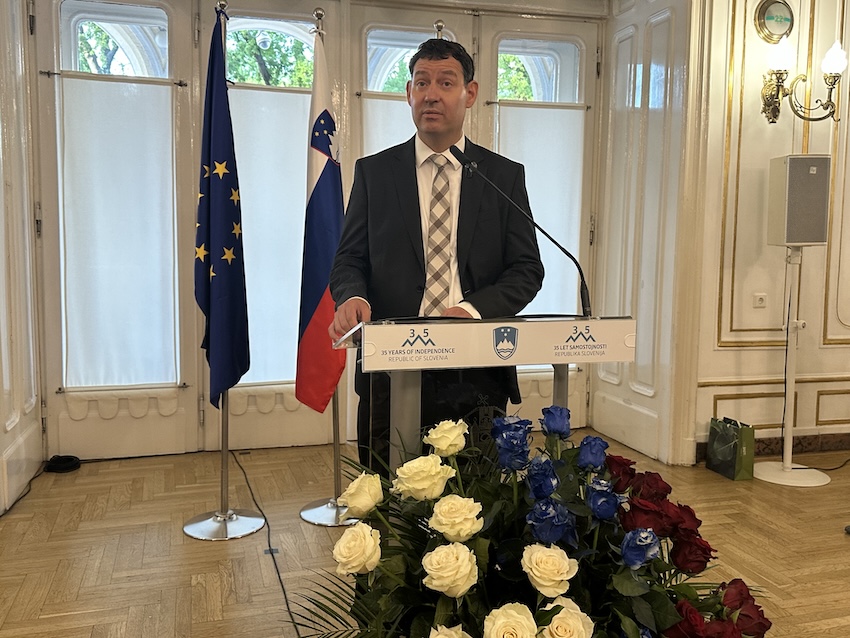
And now, allow me to say a few words in Slovenian to my compatriots and everyone who has had the patience and opportunity to learn our beautiful language:
Dragi Slovenke in Slovenci, dragi prijatelji vseh narodnosti, še posebej pa Madžari, kiste na tak ali drugačen način povezani s Slovenijo, hvala vam za priložnost, da lahko praznik dneva državnosti Republike Slovenije preživimo skupaj. Vsi na veleposlaništvu smo vam iskreno hvaležni za vsak pogovor, vsak nasvet in za dobro voljo, ki jo dnevno delite z nami. Vaša podpora, prijateljstvo in povezanost s Slovenijo nam veliko pomenijo in nas navdihujejo pri našem delu.
At the end, I would like to thank the companies that supported this event – the Port of Koper and Heineken Slovenia. Thank you for your attention. Hvala lepa. Köszönöm szépen.”
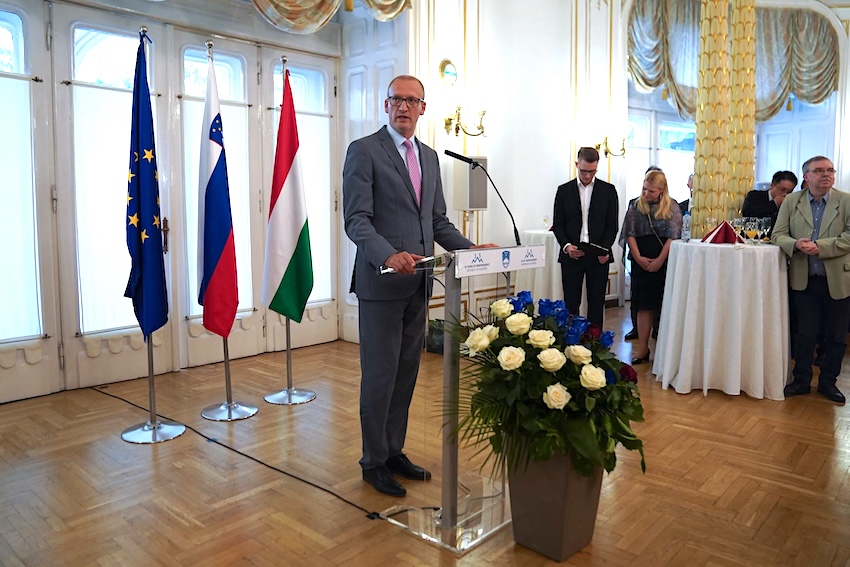
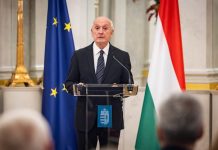
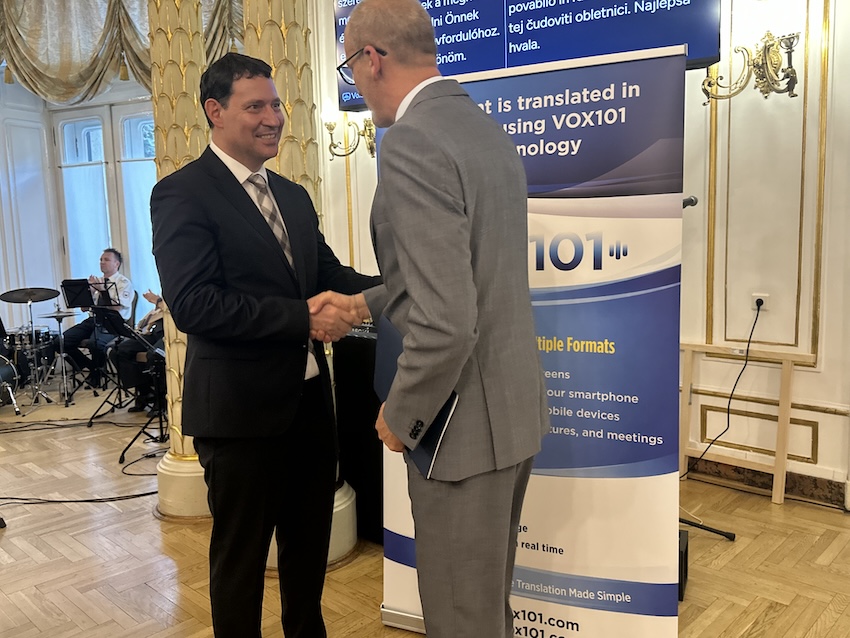
On the Ambassador’s request, Hungarian Minister for Social Affairs and Culture Zoltán Tarr took the stage. In his speech, Minister Tarr expressed his pleasure at joining the celebration of the 35th anniversary of Slovenia’s independence. Describing the occasion as both an honour and a personal milestone, he recalled that one of his first workplaces had been at the nearby Hungarian Reformed Church, making his return to the venue particularly meaningful.
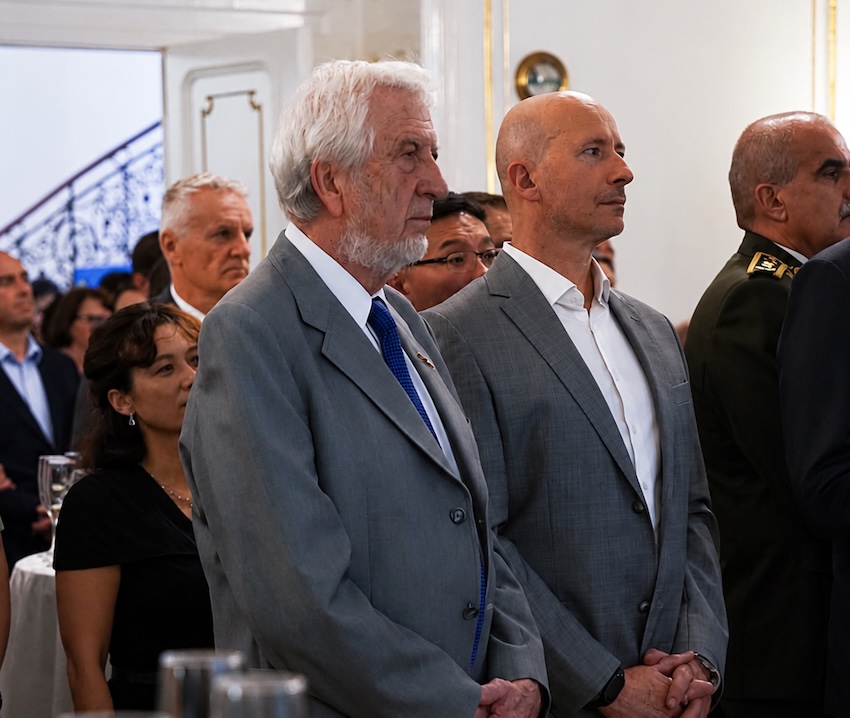
Congratulating the Slovenian people on Statehood Day, the Minister also recalled that Hungary was among the first countries to recognize Slovenia’s independence in 1991 and to establish diplomatic relations with the new republic. He paid tribute to Prime Minister József Antall and Hungary’s first Minister of Foreign Affairs, Géza Jeszenszky, who was present at the reception, for their decisive role in laying the foundations of the excellent bilateral relationship that has flourished over the past three and a half decades.
Minister Tarr emphasized that Hungary and Slovenia enjoy an exemplary partnership based on mutual trust, shared European values, and close regional cooperation. He welcomed the recent meeting between the two Prime Ministers on the margins of the European Council, welcomed the ongoing dialogue between the foreign ministers. He also expressed his anticipation of welcoming Slovenia’s Foreign Minister to Budapest this autumn for the summit of the Central Five (C5) Foreign Ministers, to be hosted by the Hungarian capital and attended by the foreign ministers of Austria, the Czech Republic, Hungary, Slovakia and Slovenia.
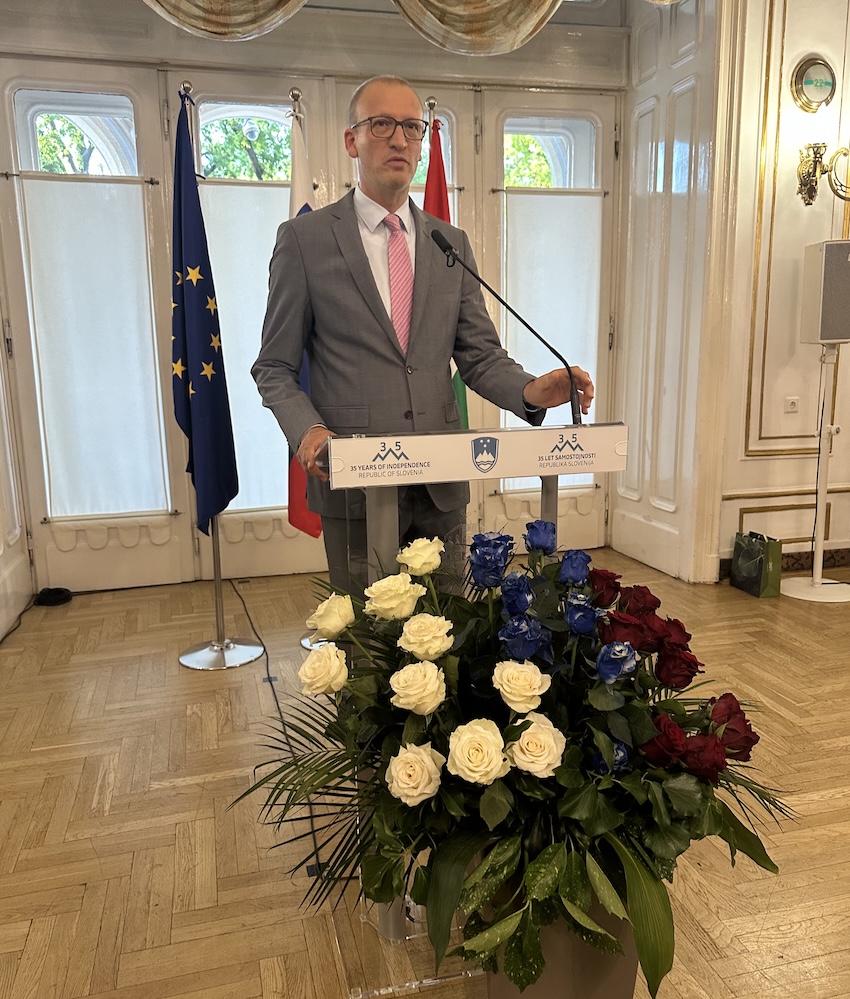
Looking ahead, he said he was working to build strong ties with Slovenia’s new government. He emphasized that both governments remain firmly committed to the European Union and the NATO Alliance and expressed confidence that this shared commitment would provide a solid foundation for further strengthening bilateral cooperation and advancing common regional and European objectives. He stressed that Hungary’s success is closely linked to the success of its neighbours, making close Central European cooperation essential in addressing today’s common challenges.
Turning to economic relations, the Minister welcomed Slovenia’s decision to remove border controls along the Hungarian–Slovenian internal Schengen border, describing it as an important step in facilitating the free movement of people and goods while making everyday life easier for communities living along the border. He noted that bilateral trade between the two neighbouring countries has tripled in recent years and welcomed the participation of Hungarian companies in major Slovenian investment projects, including the €350 million EMONIKA complex, a renewable district of Ljubljana – a modern development and an all-in-one hub for living, working, shopping, relaxing, and connecting in Ljubljana’s vibrant centre. He expressed confidence that economic cooperation will be further expanded in the coming years.
Minister Tarr also highlighted the exemplary situation of the Hungarian minority in Slovenia’s Prekmurje region and the Slovenian minority in Hungary’s Rába Valley (Porabje), describing these communities as living bridges between the two nations and one of the strongest pillars of Hungarian–Slovenian friendship.
Speaking in his capacity as Minister for Social Affairs and Culture, he underlined the considerable opportunities for expanding bilateral cooperation through cultural exchanges, institutional partnerships, joint artistic productions and other collaborative initiatives. He expressed confidence that cultural diplomacy would continue to bring the two countries even closer together.
Concluding his remarks, Minister Tarr thanked the Ambassador for his dedicated work in strengthening Hungarian–Slovenian bonds and reaffirmed Hungary’s commitment to further deepening its friendship and cooperation with Slovenia.
Today, 35 years later, Statehood Day is not only a commemoration of the events that profoundly shaped Slovenia’s history, but also a celebration of national unity, responsibility, democracy and pride.
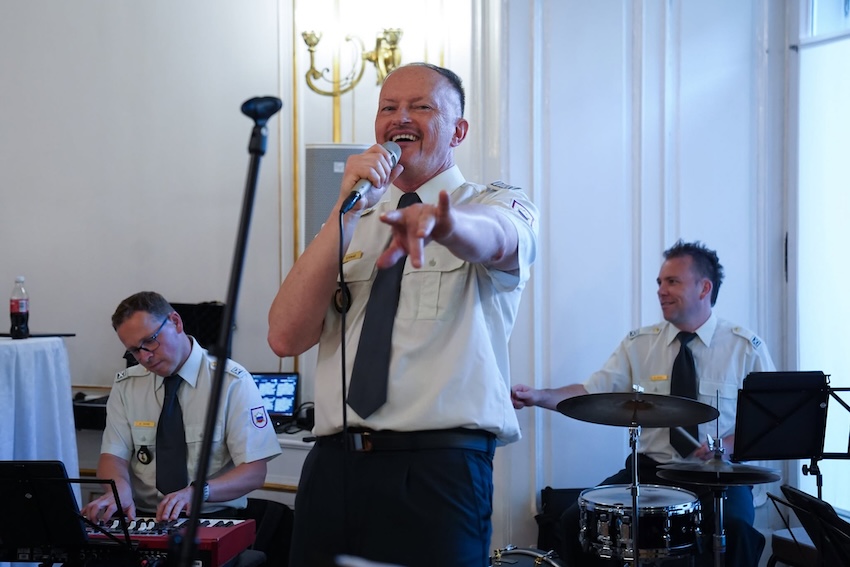
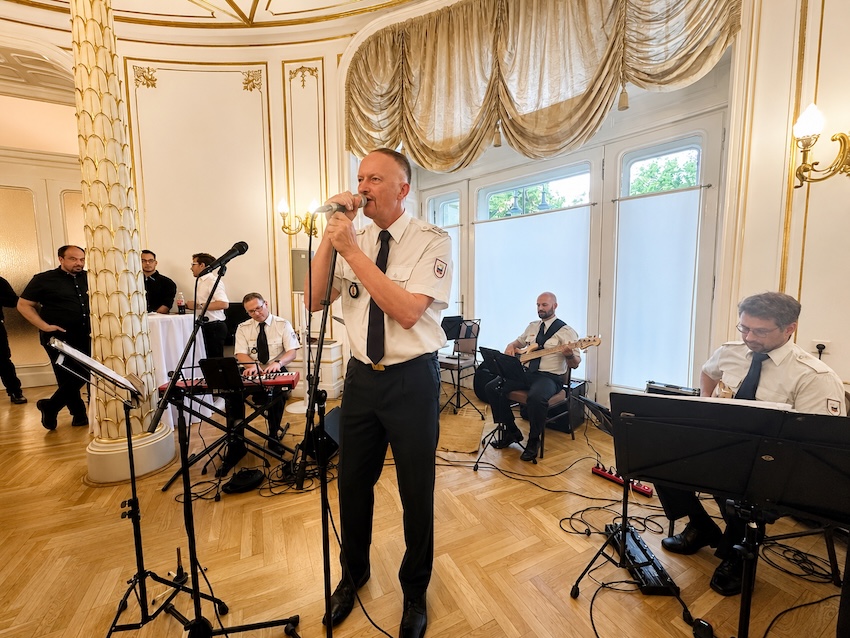
After the official proceedings, guests were invited to enjoy a performance by the Jazz Ensemble of the Slovenian Armed Forces Band, under the direction of Rudolf Sternad. Celebrating its 30th anniversary this year, the ensemble presented a programme of timeless Slovenian classics from their rich and diverse musical repertoire.
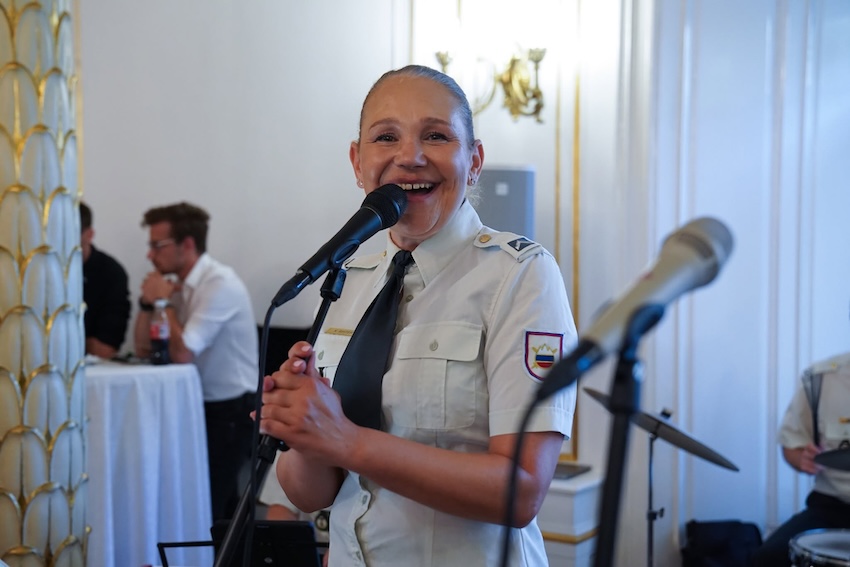
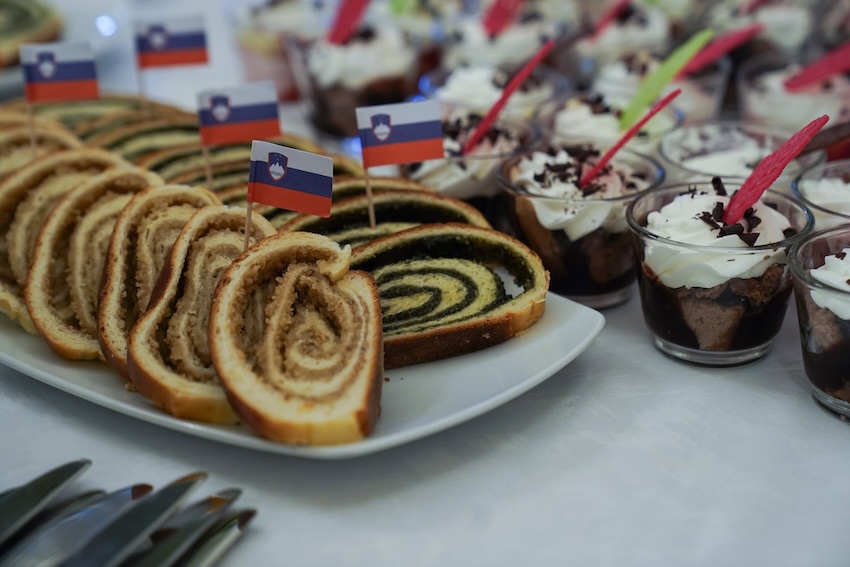
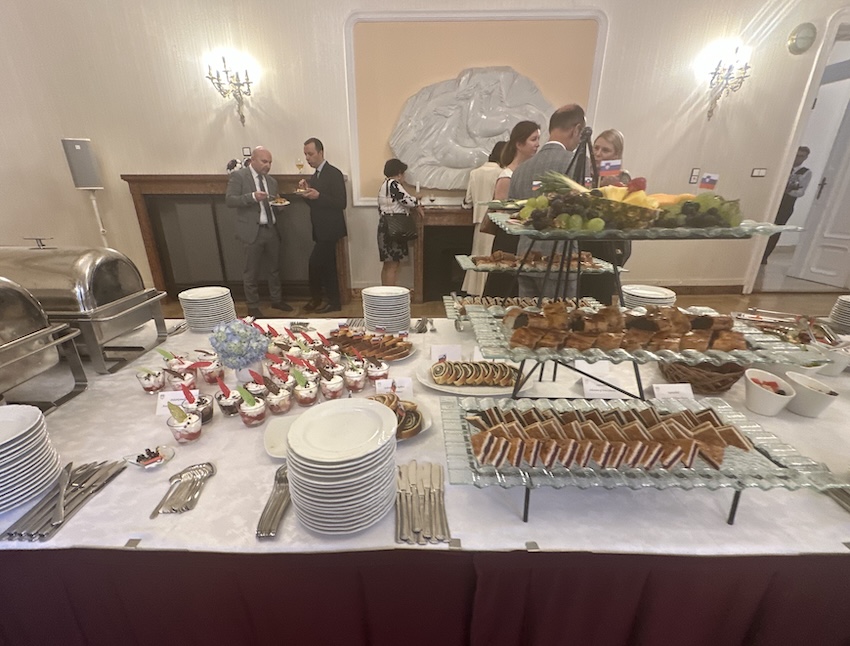
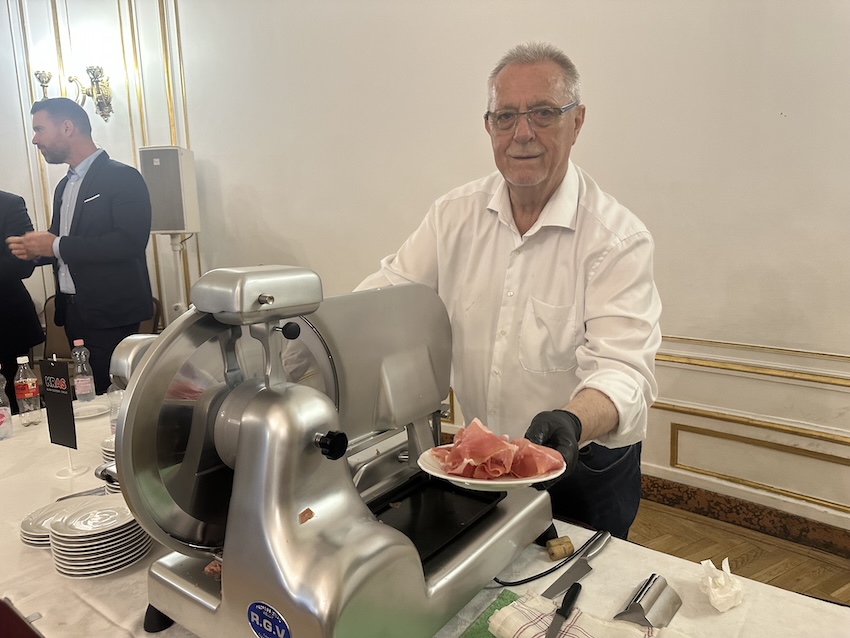
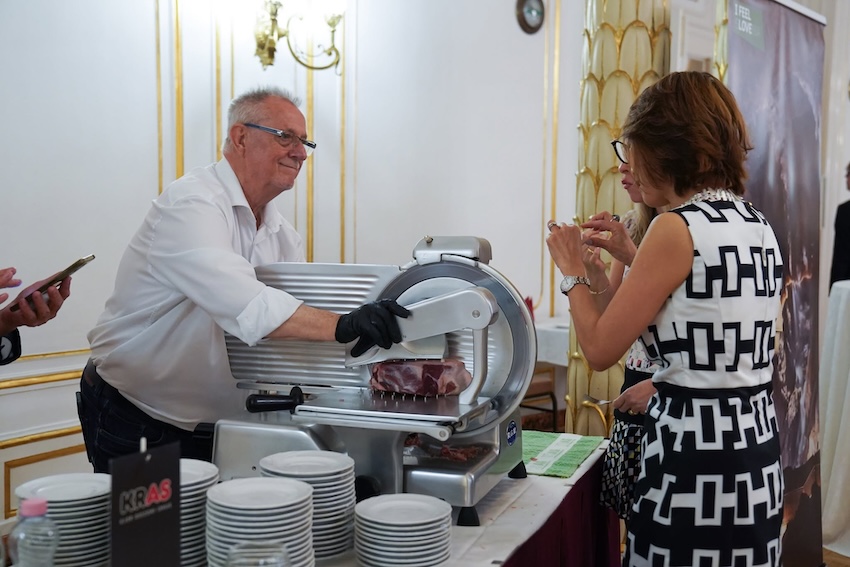
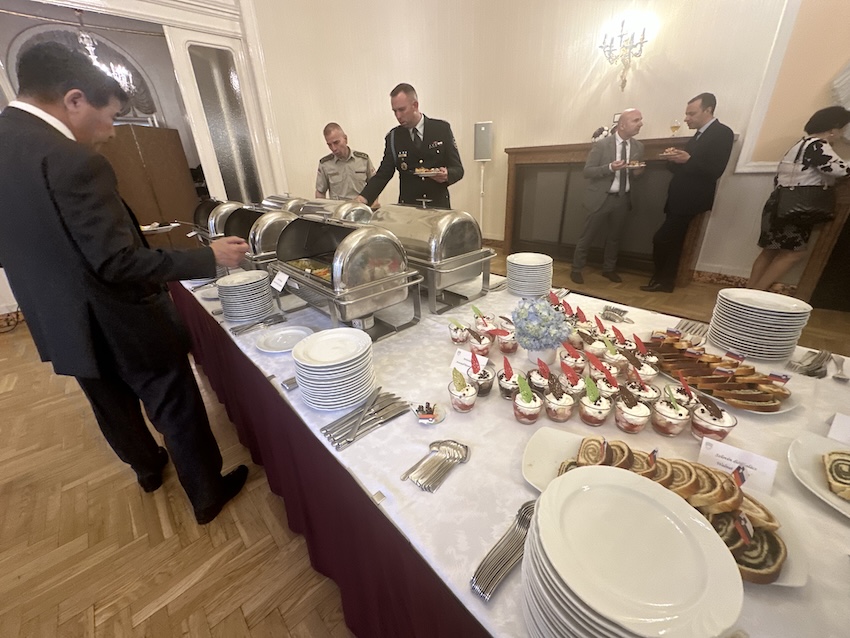
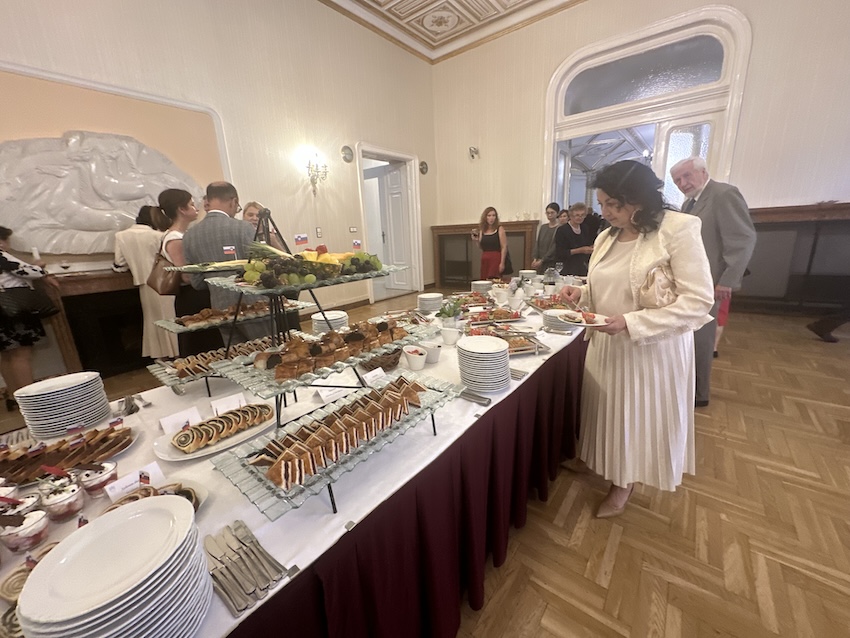
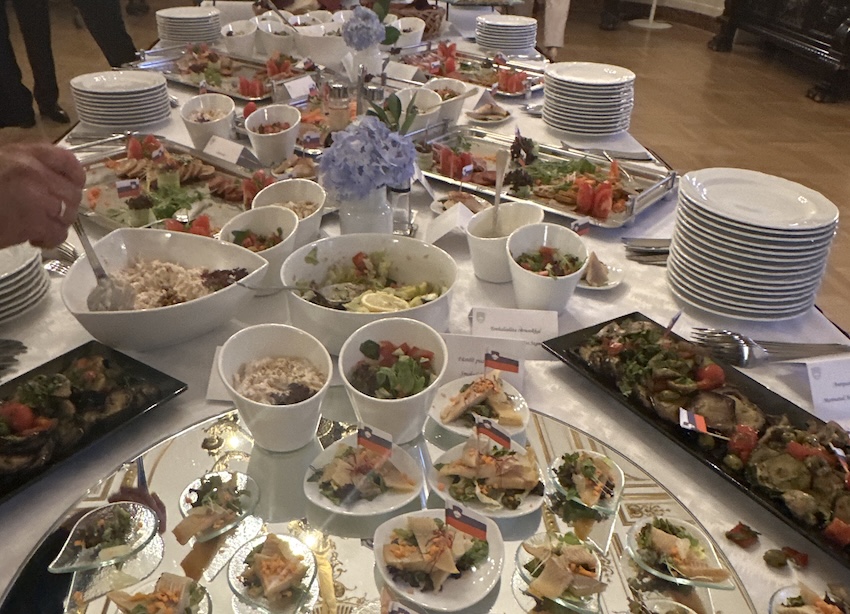
The guests enjoyed the lavish buffet dinner with a selection of Slovenian specialities, accompanied by wines and beers from Slovenia.
Slovenia: Member of UN Human Rights Council 2026-2028
Following its successful term as a non-permanent member of the United Nations Security Council (2024–2025), the Republic of Slovenia has continued to strengthen its international engagement by assuming another important global responsibility. On 1 January 2026, it became a member of the United Nations Human Rights Council (UNHRC) for the third time, serving a three-year term from 2026 to 2028.
The UN Human Rights Council is the United Nations’ principal body responsible for promoting, protecting and strengthening human rights worldwide. Slovenia has been actively engaged in the Council’s work since its establishment in 2006. During its 2026–2028 term, Slovenia will place particular emphasis on gender equality and the rights of women and girls, human rights and the environment, children’s rights, human rights education, the rights of older persons, and the protection of minority rights. Slovenia will also advocate for the effective functioning of the Human Rights Council, including by drawing attention to gross and systematic human rights violations around the world.
Source: Embassy of Slovenia in Budapest
Photos from the Embassy of Slovenia in Budapest