



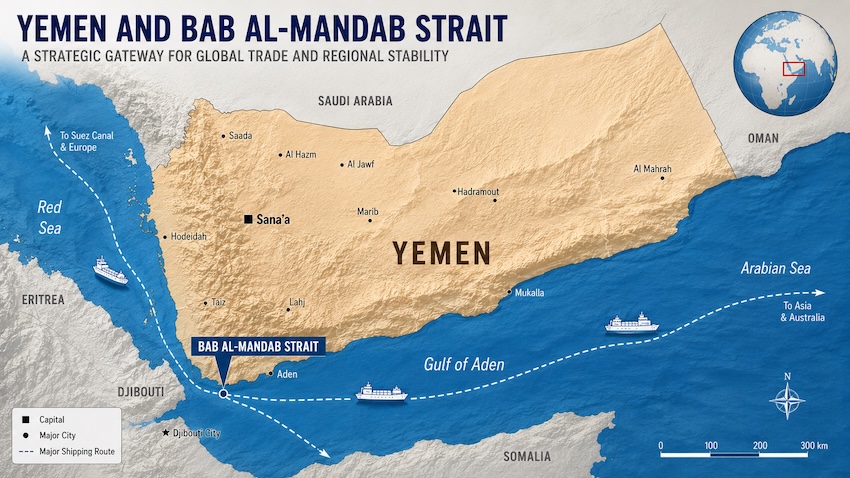
Bab al-Mandab Strait Between Global Security and Human Tragedy in Yemen
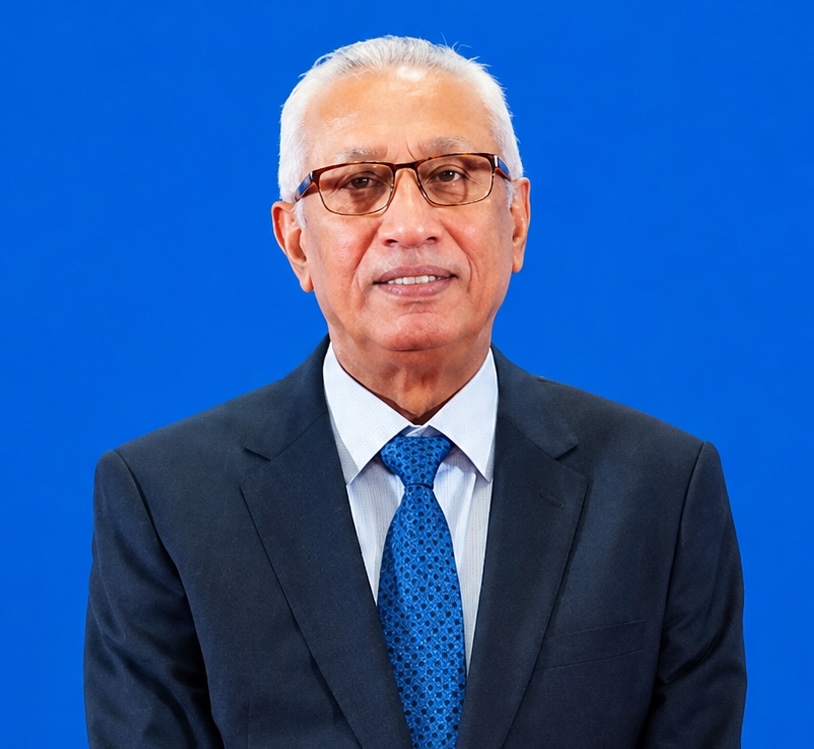
By Ambassador Ahmed Abdullah Nagi,
Chargé d’Affaires of the Embassy of the Republic of Yemen in Hungary

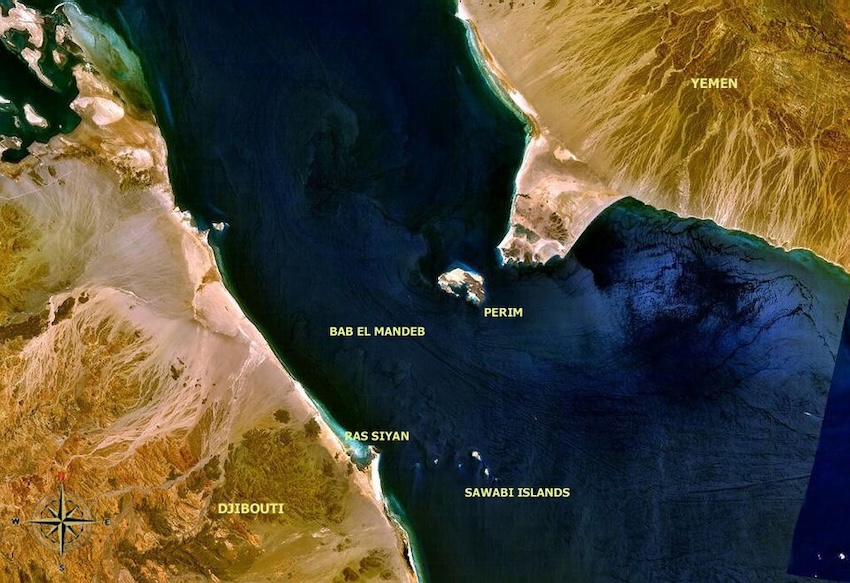
Bab al-Mandab Strait is no longer merely a maritime passage connecting the Red Sea to the Gulf of Aden; it has become one of the most important indicators of stability in the global economic system. Every threat targeting this 27-kilometer-wide strait between the Horn of Africa and the southern tip of the Arabian Peninsula has direct repercussions for international trade, energy security, supply chains, shipping costs and insurance rates. As the Houthi attacks on shipping continue to escalate, the international community faces a real test: Will it act proactively to prevent Bab al-Mandab from becoming another Strait of Hormuz, or will it merely manage crises after they occur?
Approximately 13% of global trade passes through Bab al-Mandab, including a significant part of the oil and gas exports destined for Europe and Asia. Any sustained disruption of this strait therefore threatens not only regional nations but the entire global economy through rising transportation and insurance costs, supply chain disruptions, and soaring energy and commodity prices. The security of Bab al-Mandab is thus no longer just a Yemeni or Middle Eastern issue, but a shared international concern.
In this context, the recent threats by the Houthi forces to impose an “embargo” on Saudi maritime navigation in the Red Sea are unjustified. These radical militias claim that this blockade on Saudi shipping is a response to the blockade on Yemen. In reality there is no blockade on Yemen; rather, restrictions have been imposed on activities of Houthi movement following their 2014 coup, particularly since 2015, pursuant to international decisions, most notably UN Security Council Resolution 2216 adopted in 2015.
In contrast, the Kingdom of Saudi Arabia has provided unlimited humanitarian, developmental, and economic support to the Yemeni people during the worst phase of Yemen’s contemporary history. Without this aid, the suffering of the Yemeni people would have intensified and worsened.
Official data indicates the continued flow of commercial and relief ships to ports under Houthi control. Since the beginning of 2026, more than 300 ships have entered these ports, including 157 ships loaded with food supplies, 104 ships carrying construction materials, and 45 ships carrying petroleum derivatives. These figures weaken the narrative of a comprehensive blockade and confirm the continuation of trade movements and humanitarian supplies.
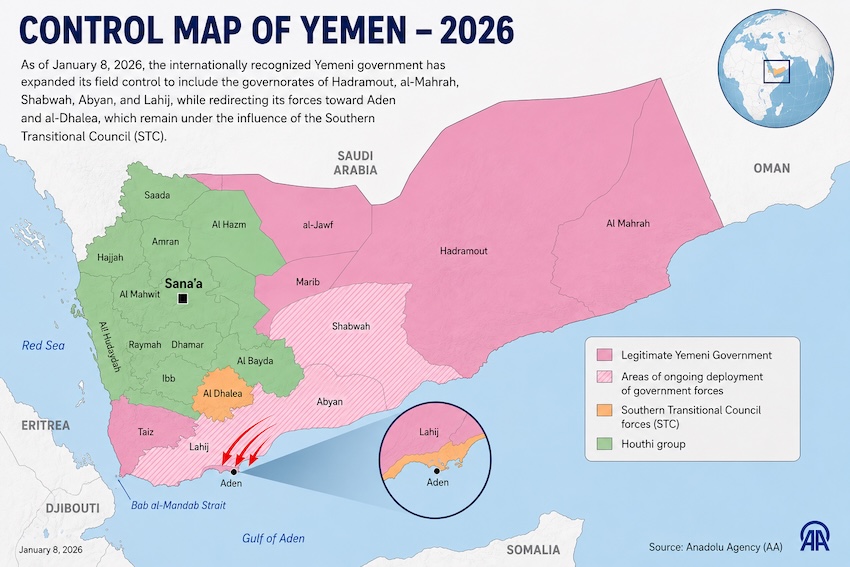
On the contrary, military developments indicate the growing offensive capabilities of the Houthis on Yemen’s west coast, including the deployment of missiles, drones, and attack boats, as well as reports of continued Iranian logistical and intelligence support, including the return of the Iranian ship formerly known as “Saviz” to the Red Sea under a new name. This reflects that what is occurring does not represent an isolated local development but rather falls within a broader Iranian strategy seeking to possess leverage over the most strategically important international maritime passages.
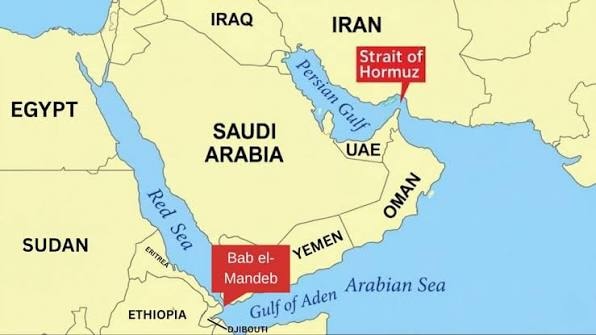
From this perspective emerges the comparison with the Strait of Hormuz. The world has become accustomed over past decades to dealing with threats targeting that strait as part of the Gulf security landscape, despite the economic disruptions they cause. Today, the international community faces the risk of repeating the same scenario in Bab al-Mandab, but through Iranian proxies in Yemen, as the Red Sea and Bab al-Mandab experience escalating threats against international navigation. These developments reflect the continued use of this vital maritime passage by the Iranian-backed Houthi group as an instrument of political and military pressure. If disrupting navigation or threatening to do so becomes an acceptable political tool, the world will face a dangerous precedent that could jeopardise one of the most critical maritime passages of the 21st century. The danger lies not only in the direct impact on commercial shipping but also in the potential establishment of a new maritime security order in the region based on using international waterways as means to impose political will and achieving geopolitical objectives.
Saudi Arabia: From Crisis Management to Peacemaking Opportunities
Amid these challenges, Saudi Arabia’s pivotal role in supporting Yemen’s stability cannot be overlooked. Since the beginning of the crisis, the Saudi role has not been limited to supporting the legitimate Yemeni Government, but has included launching one of the largest humanitarian and development assistance programs through the King Salman Humanitarian Aid and Relief Centre (KSrelief.org), supporting the Central Bank of Yemen, financing the fuel needed to continue basic services, and implementing projects in the health, education, water and food security sectors. This support has helped to mitigate the humanitarian crises and has contributed to prevent the complete collapse of state institutions.
Saudi Arabia has also played a central role in promoting political solutions, leading – in coordination with Oman and the United Nations – intensive efforts to end the war and achieve comprehensive settlement. The Yemeni Government has shown clear flexibility to engage constructively with these initiatives, based on its conviction that a just and lasting peace is the only way to end the suffering of the Yemeni people and rebuild the state. However, the ongoing military escalation by the Houthis has prevented tangible progress, highlighting the need for a more decisive international stance in support of the peace process and for holding accountable those parties who obstruct it.
Yemen: When Children Become the Greatest Victims

Maritime security cannot be separated from the humanitarian reality in Yemen. While the world focuses on ship movements in the Red Sea, millions of Yemenis suffer one of the worst humanitarian crises in modern times. War has destroyed the economy, weakened state institutions, eroded essential services, and pushed millions of families into poverty and displacement.
Most painfully, the primary victims of this war are the children. An entire generation has grown up in an environment dominated by fear and violence, lacking opportunities for education, healthcare, and psychological stability. These children need not only food and medicine, but genuine opportunities to reclaim their lives and build a future. If the war continues, Yemen will lose not only its present, but also its future, because rebuilding the state begins with human reconstruction.
Therefore, supporting peace in Yemen should not be viewed merely as a moral obligation but as an investment in regional and international security. Each child who returns to school is a step toward stability; each institution resuming operations reduces the opportunities for extremism and violence; and each advance in the peace process directly reflects on Red Sea security and global trade stability.
Responsibility Beyond Protecting Maritime Passages
Protecting Bab al-Mandab cannot be achieved solely by deploying more naval vessels or strengthening military patrols, important as these are. It requires a comprehensive vision addressing the root causes of the crisis. Lasting stability begins with the restoration of Yemeni state’s institutions and sovereignty, support for the legitimate and internationally recognized Yemeni Government, and the promotion of development and reconstruction efforts, alongside continued international pressure to ensure freedom of navigation and hold accountable those who threaten it.
Today, the international community faces two clear choices: either taking timely action to prevent Bab al-Mandab from becoming “another Hormuz”, or waiting for a new reality to take hold in which global trade becomes hostage to regional crises.
Protecting Bab al-Mandab is not the responsibility of Yemen alone, but of the entire international community. It is about safeguarding global freedom of trade, energy security, and international economic stability. At the same time, it is also about protecting the future of millions of Yemenis who deserve to live in a safe and stable state, not on an open battlefield.
Yemen’s stability is the true guarantee for Red Sea security, and Red Sea security is an integral part of global security.
Source: Embassy of the Republic of Yemen in Budapest