
Edited by Anna Popper
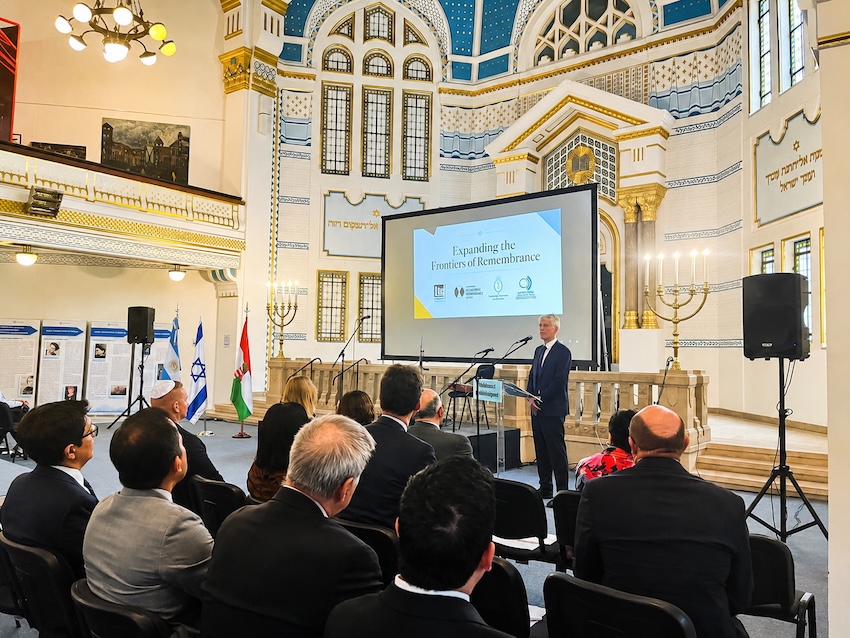
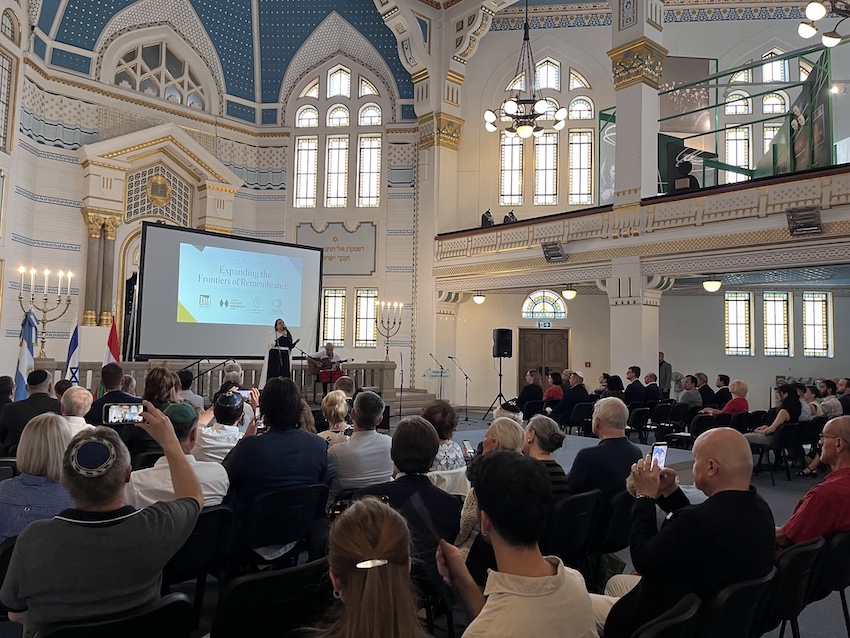
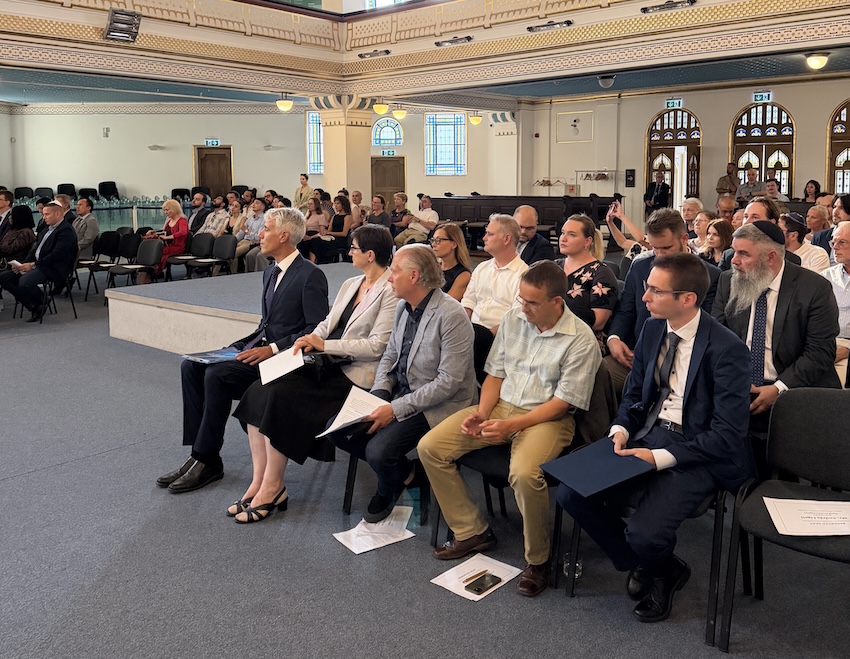
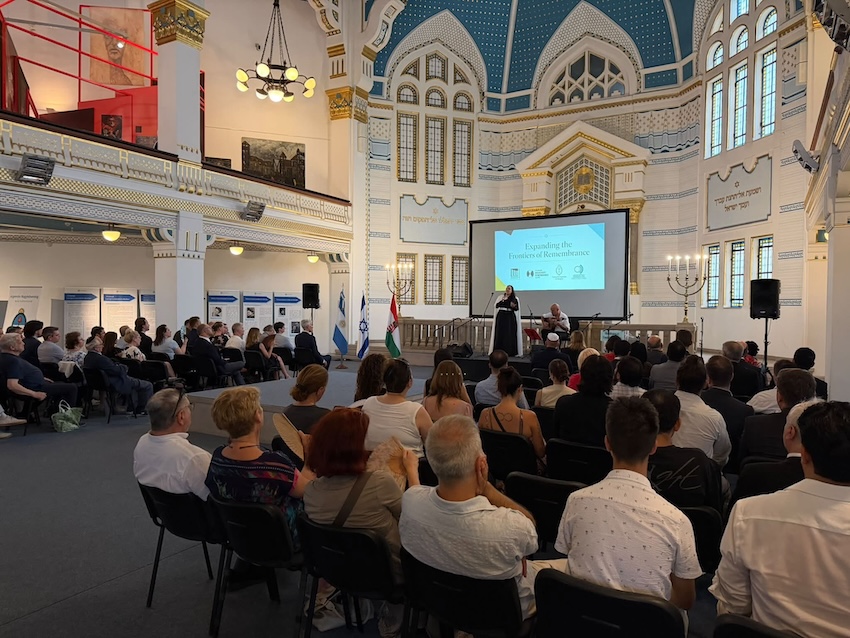
On 1 July 2026, the Holocaust Memorial Centre in Budapest hosted an international commemorative event under the motto “Expanding the Frontiers of Remembrance”, bringing together government officials, diplomats, leaders of Hungarian and international Jewish organizations, academics, historians, and cultural figures to reaffirm their shared commitment to Holocaust remembrance and the fight against antisemitism. The programme was jointly organized by the Embassy of the Argentine Republic in Hungary and the Holocaust Memorial Centre within the framework of Argentina’s Presidency of the International Holocaust Remembrance Alliance (IHRA).

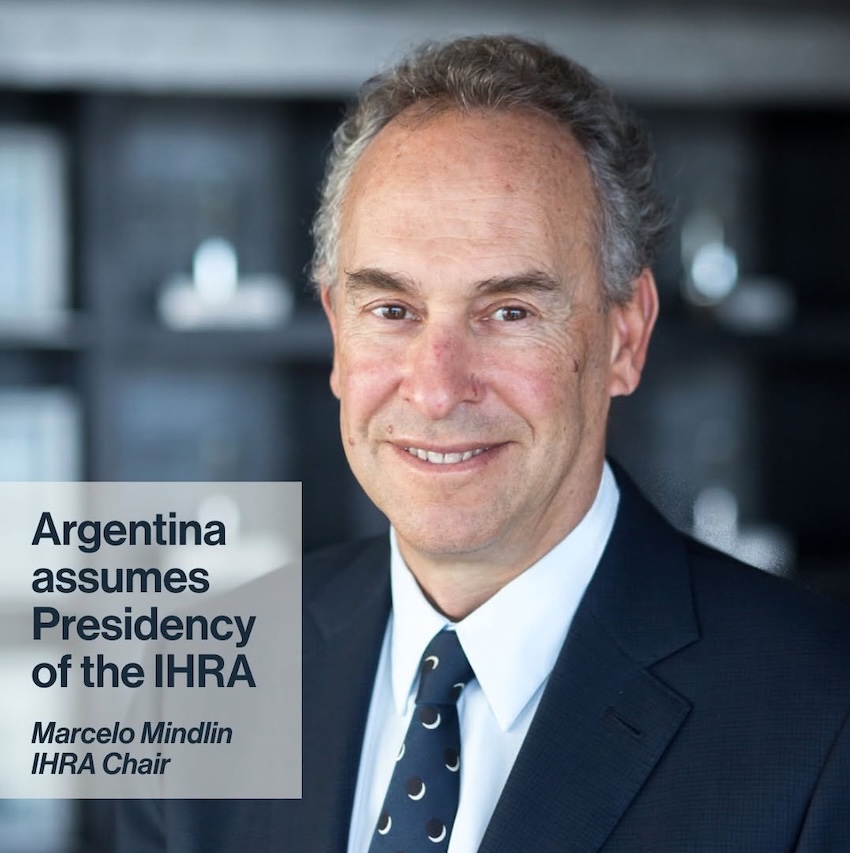
Argentina assumed the rotating Presidency of IHRA from Israel in March 2026, becoming the first Latin American country to hold this responsibility.
Its presidency represents a historic milestone for the Alliance, reaffirming its commitment to preserving Holocaust remembrance, advancing historical research, combating antisemitism, and strengthening international cooperation.
Priorities of the Argentine Presidency include bringing the IHRA closer to Latin America and facilitating broader access to Holocaust archives.
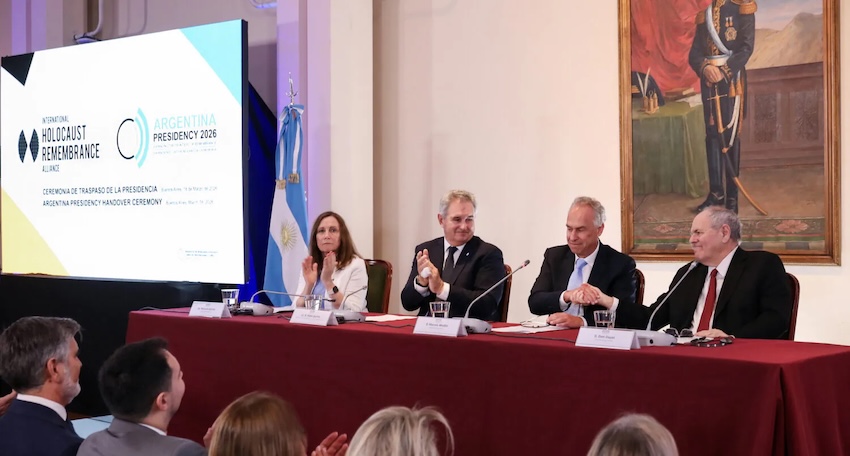
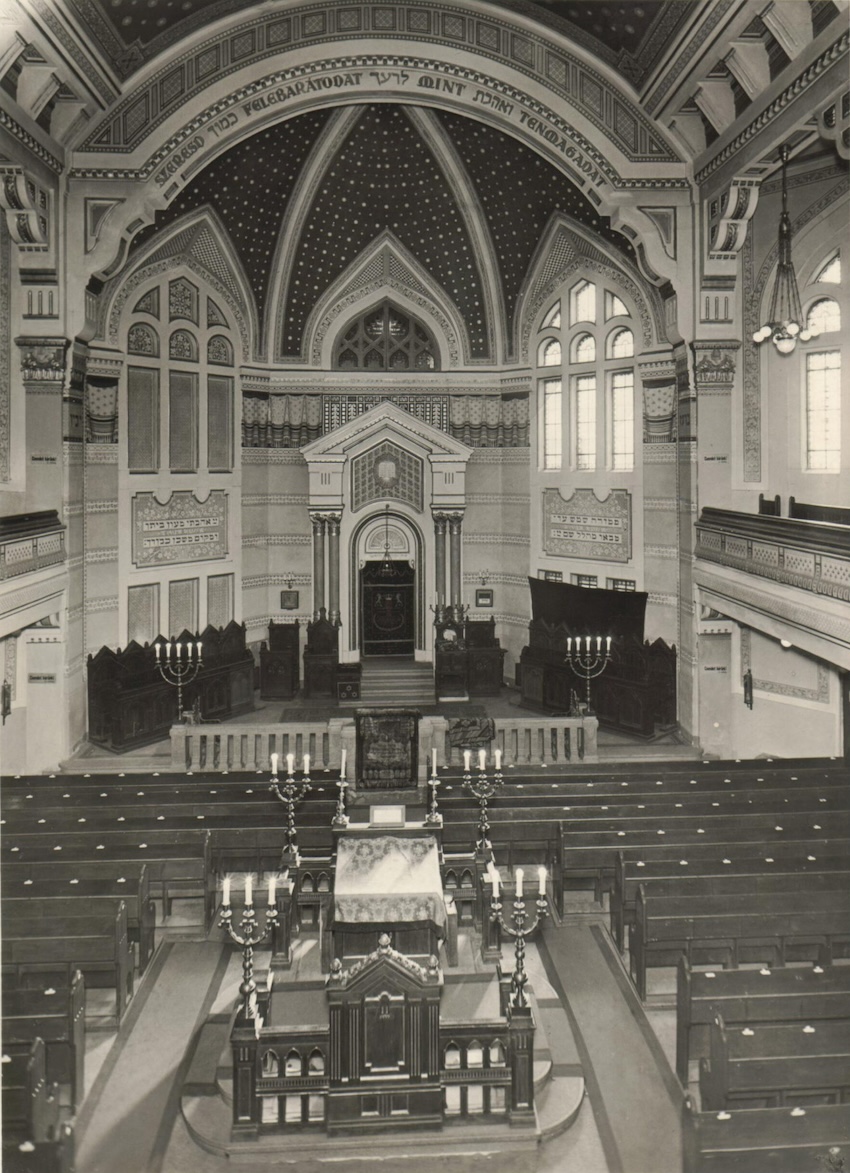
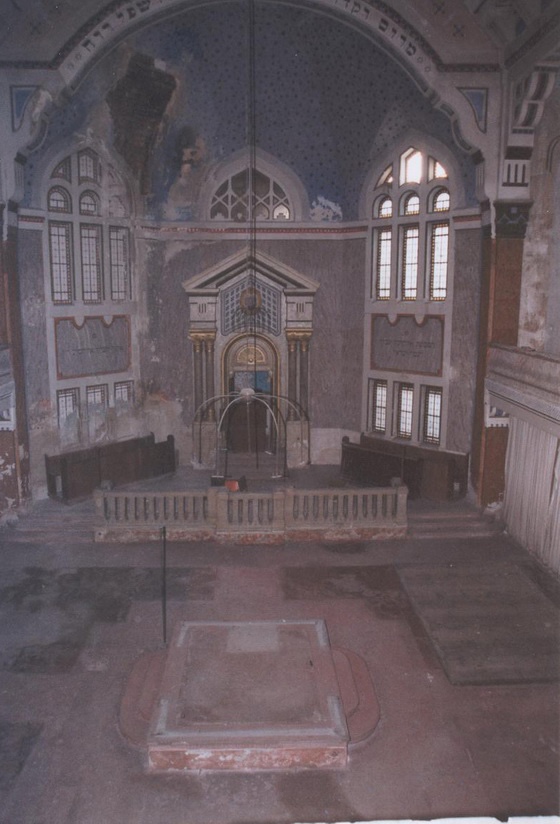
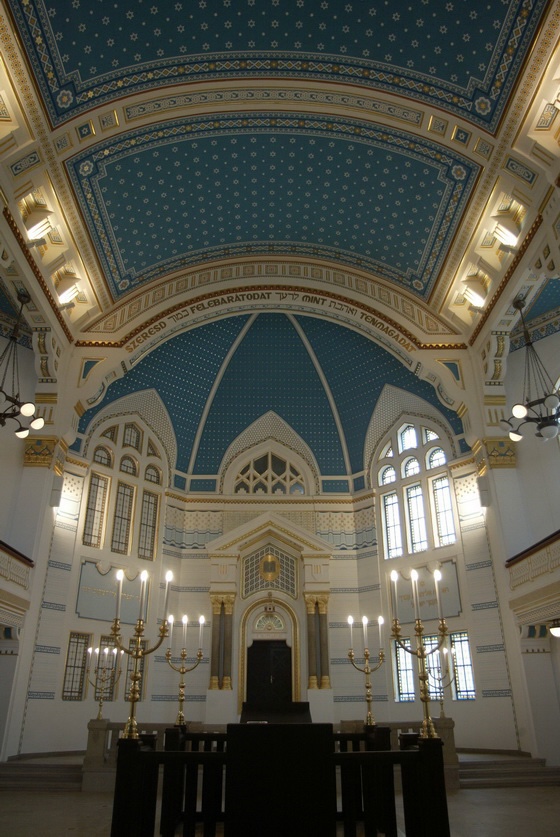
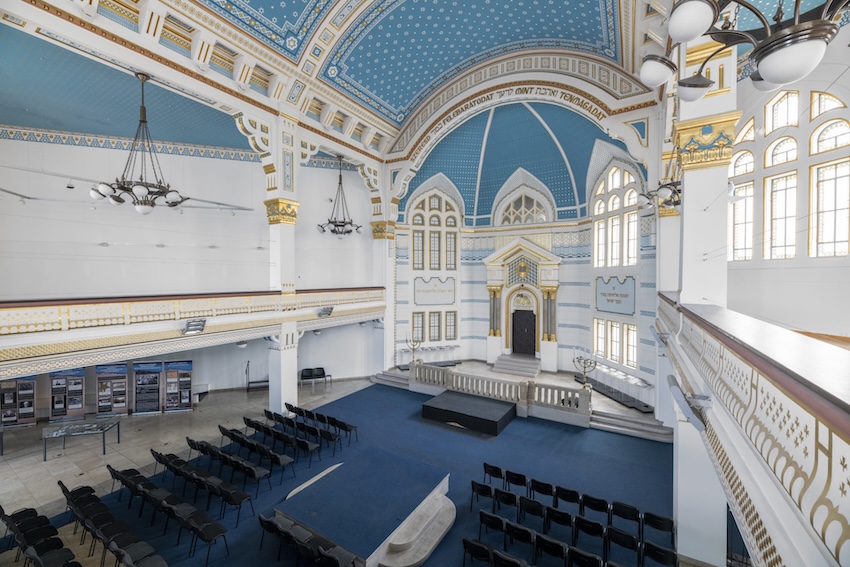
The event was held in the former Páva Street Synagogue, built in 1924 for Budapest’s Neolog Jewish community. Following its restoration, the synagogue was repurposed as an integral part of the Holocaust Memorial Centre.
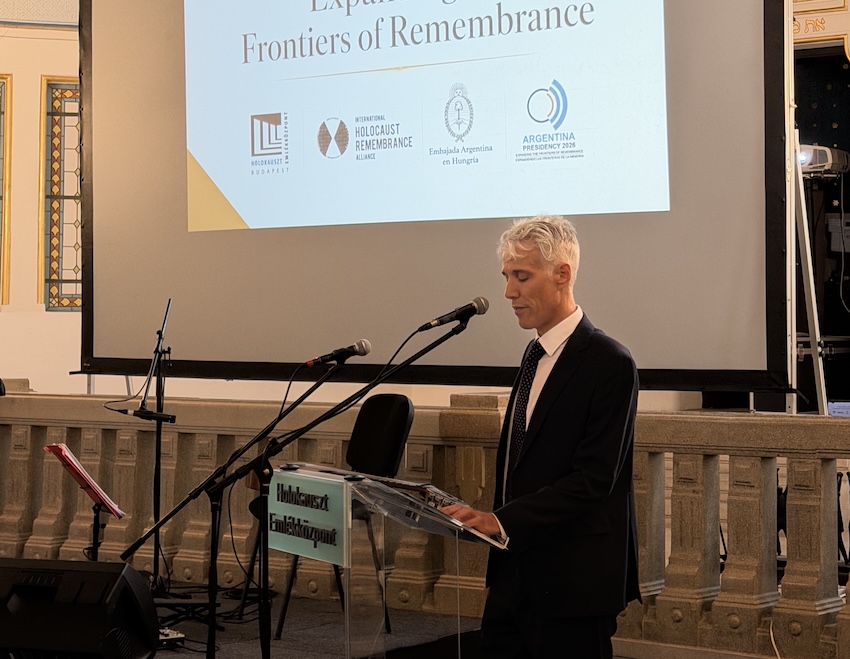
The ceremony was opened with a welcoming address by Mr. Ricardo Vignolo, Chargé d’Affaires a.i. of the Argentine Embassy in Hungary:
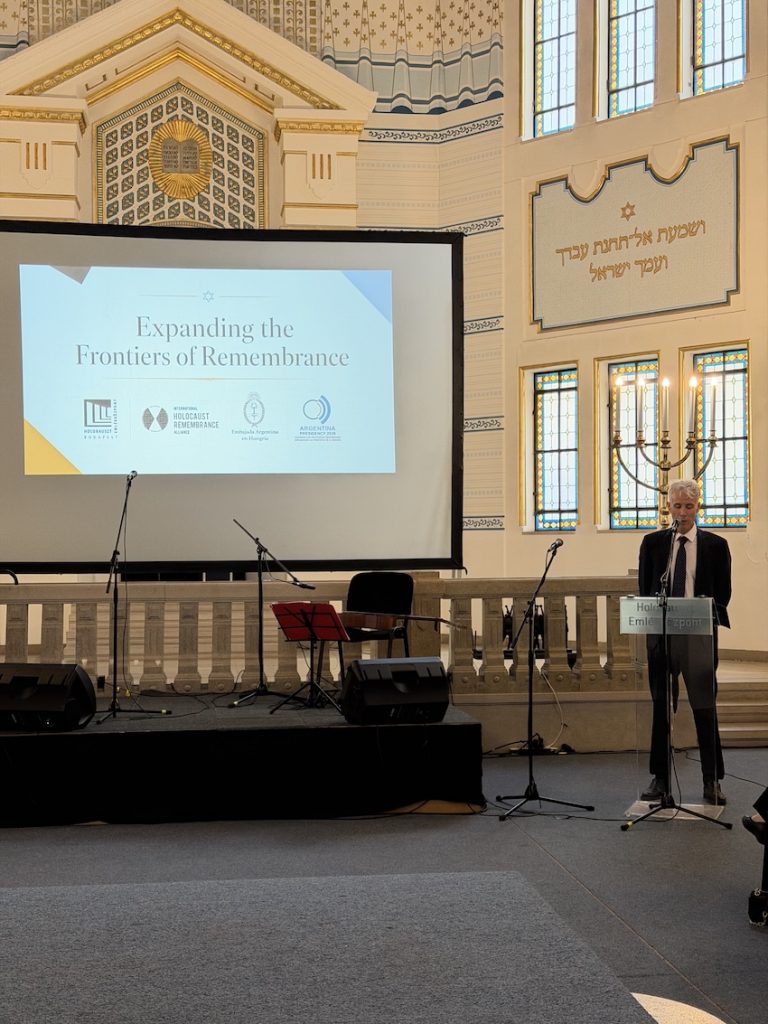
“Dear Madam State Secretary, distinguished government officials, Excellencies, Ambassadors and members of the Diplomatic Corps, representatives of Jewish, academic, cultural and memorial institutions, dear guests, dear friends, it is my great pleasure to welcome you, on behalf of the Embassy of Argentina, to this event entitled “Expanding the Frontiers of Remembrance”, organized jointly with the Budapest Holocaust Memorial Centre within the framework of Argentina’s Presidency of the International Holocaust Remembrance Alliance (IHRA).
Allow me to begin by expressing our sincere gratitude to all of you for joining us this evening. Your presence is far more than a gesture of institutional courtesy. Above all, it reflects a shared commitment to a cause that transcends borders, governments and generations: the preservation of memory, the defence of historical truth, and the fight against all forms of antisemitism, discrimination and hatred.
Since 1983, every Argentine administration has maintained a firm and growing commitment to Holocaust remembrance, making it a matter of enduring state policy. Argentina has been a full member of the IHRA since 2002. It is, therefore, both a great honour and a profound responsibility for us to assume the Presidency of this important organization. Argentina took over this responsibility in March 2026, succeeding Israel’s Presidency, becoming the first Latin American nation to hold this position at a time when the memory of the Holocaust demands to be protected, preserved and passed on with the utmost seriousness more than ever.
The motto chosen by the Argentine Presidency, “Expanding the Frontiers of Remembrance”, clearly expresses the spirit of our mandate. It means taking this agenda beyond its traditional settings. It means bringing it closer to new regions, new generations, new institutions and new public forums. But it also carries a deeper meaning. The memory of the Holocaust does not belong only to the places where the tragedy occurred. It belongs to all humanity. Its lessons challenge every society that aspires to live in freedom, democracy and respect for human dignity.
Argentina understands this responsibility through its own history. Thousands of Holocaust survivors found refuge in our country and rebuilt their lives there. Today, approximately 150 survivors still live in Argentina. They became the cornerstone of Holocaust remembrance in our country. Through their testimony, their dedication and their active presence, they helped build one of the largest Jewish communities in Latin America and one of the largest in the world outside Israel – a community that is an integral part of Argentine society and lives in harmony and full integration.
We believe this chapter of our history honours the Argentine people. Above all, however, it obliges us to preserve the memory, educate future generations, protect community life and religious freedom, and combat, without ambiguity, antisemitism, Holocaust denial, trivialization and distortion.
Argentina has also experienced the devastating pain of terrorism. The wounds left by the terrorist attacks in Buenos Aires in the 1990s are deeply etched in our national memory and continue to demand justice. For our country, therefore, the fight against antisemitism and terrorism is neither abstract nor distant. Our voice is shaped by our own historical experience, which reinforces our responsibility today.
In this context, the Argentine Presidency of the IHRA has established a concrete and ambitious work programme with three principal priorities.
The first priority is to strengthen Holocaust education, research and remembrance, with particular attention to younger generations, educators, museums, archives and institutions dedicated to preserving historical memory. These institutions are therefore of central importance.
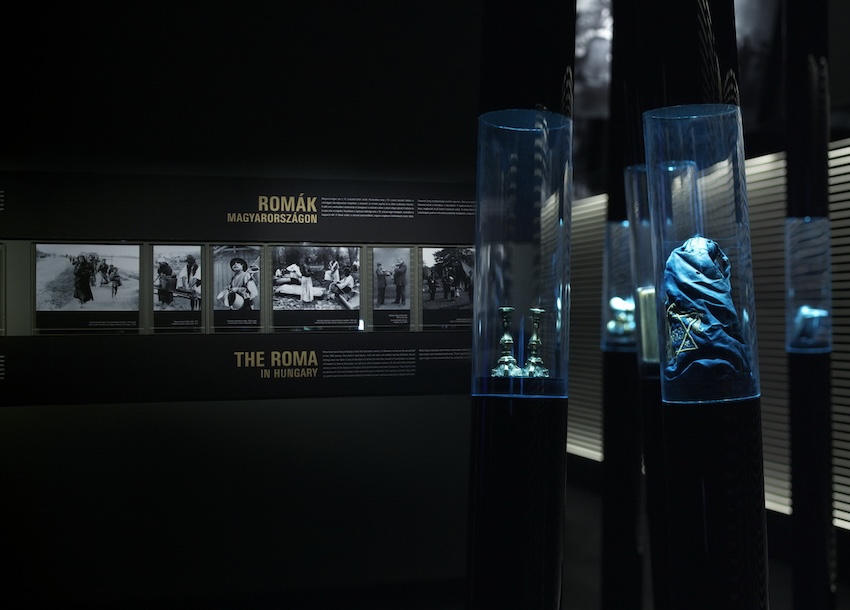
The second is to promote greater research, recognition and visibility of the genocide of the Roma people – a tragedy that likewise deserves remembrance, justice and public awareness. This priority has particular resonance here in Central Europe, where the history of Roma communities forms an inseparable part of the region’s heritage.
The third is to intensify the fight against antisemitism in all its forms – from overt violence to more subtle expressions of prejudice, denial, distortion, relativization and indifference.
These priorities reflect an Argentine foreign policy firmly committed to freedom, democracy, peace, human dignity and the defence of truth. In this same spirit, the recent strengthening of the strategic partnership between Argentina and Israel through the Isaac Accords reflects a shared determination to enhance international cooperation in combating antisemitism, terrorism and the threats facing free societies.
Ladies and Gentlemen,
We are united by the conviction that remembrance is not a passive act. Remembering requires studying, teaching, listening to survivors’ testimonies, preserving documents, opening archives, supporting survivors and giving voice to those who were silenced for far too long.
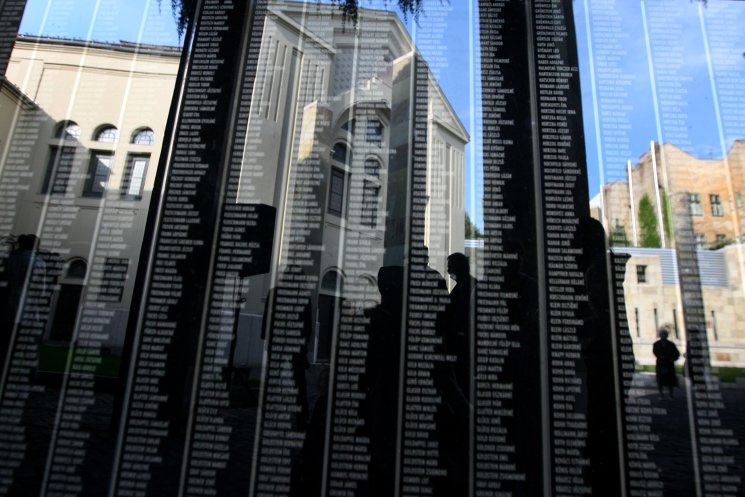
Budapest is a particularly meaningful place to reflect on these issues. Here, the memory of the Holocaust is neither distant nor abstract. It is woven into the history of this city – its streets, its families, its communities, its suffering, and its remarkable efforts to rebuild.
For this reason, hosting this event in Hungary holds special significance for us. It enables us to build bridges between Argentina’s experience, European history and the invaluable work carried out for many years by Hungarian institutions dedicated to research, education and remembrance.
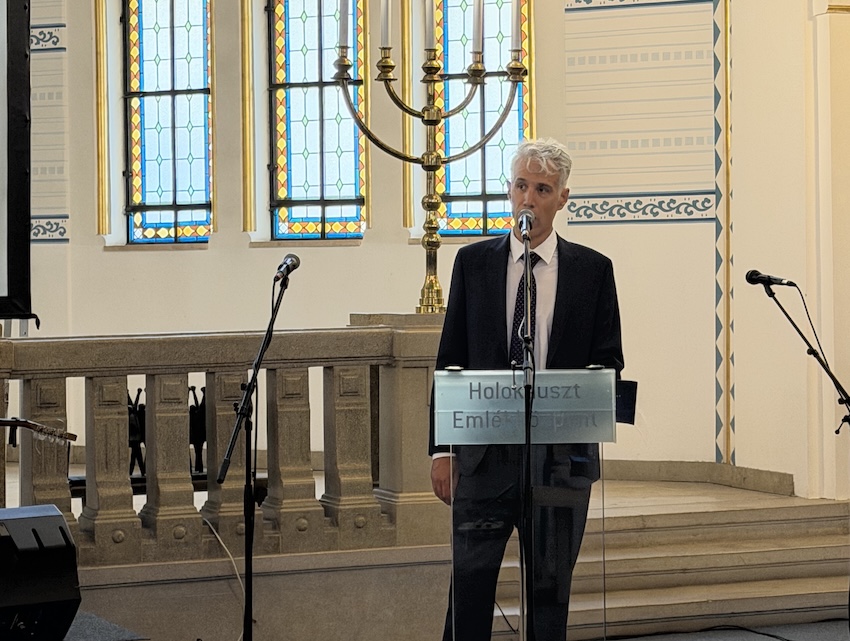
Argentina assumes the IHRA Presidency with humility, but also with determination. We do not seek to teach from afar, but rather to contribute, to listen, to cooperate and to build bridges. We want Latin America to play a stronger role in this global conversation while bringing the work of the IHRA closer to our region.
We want more institutions, more educators, more young people and more communities to become part of this shared effort. Because memory cannot remain confined to history books. It must live in our classrooms, museums, archives, public commemorations and in the everyday conscience of our societies.
At a time when hate speech, old prejudices in new forms, violence, indifference and historical distortion are once again gaining ground, the mission of the IHRA has become more relevant than ever.
This is why we are firmly convinced that commemoration alone is not enough – we must act. Remembering alone is not enough – we must educate and transmit. Condemning hatred alone is not enough – we must build societies capable of recognizing and confronting it before it takes root.
This, in our view, is the true meaning of “Expanding the Frontiers of Remembrance”. It means bringing truth wherever oblivion threatens to prevail. It means bringing education wherever ignorance spreads. It means bearing witness wherever denial emerges. And it means fostering cooperation wherever indifference weakens our shared responsibility.
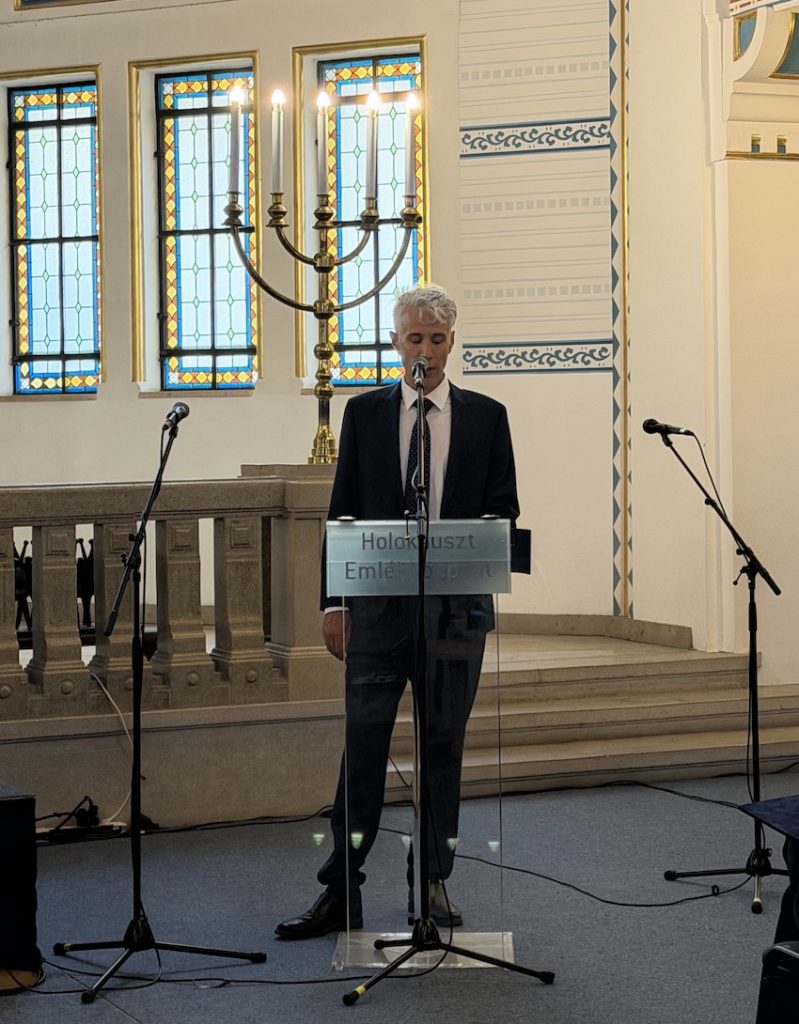
I would like to conclude by expressing my heartfelt gratitude to the institutions, public authorities and representatives of the Jewish community, as well as to our partners from the academic, diplomatic and cultural communities who are with us today. Your presence strengthens this gathering and reminds us that remembrance is a shared responsibility.
The Embassy of Argentina in Hungary reaffirms its commitment to working together with all of you to promote cooperation, education, research and dialogue during Argentina’s Presidency of the IHRA, while also expanding these initiatives throughout the Spanish-speaking world.
May today’s event make a meaningful contribution to this common endeavour. May it help us honour the victims, support the survivors and uphold historical truth. And may memory always guide us in the defence of life, liberty and human dignity. Thank you very much.”
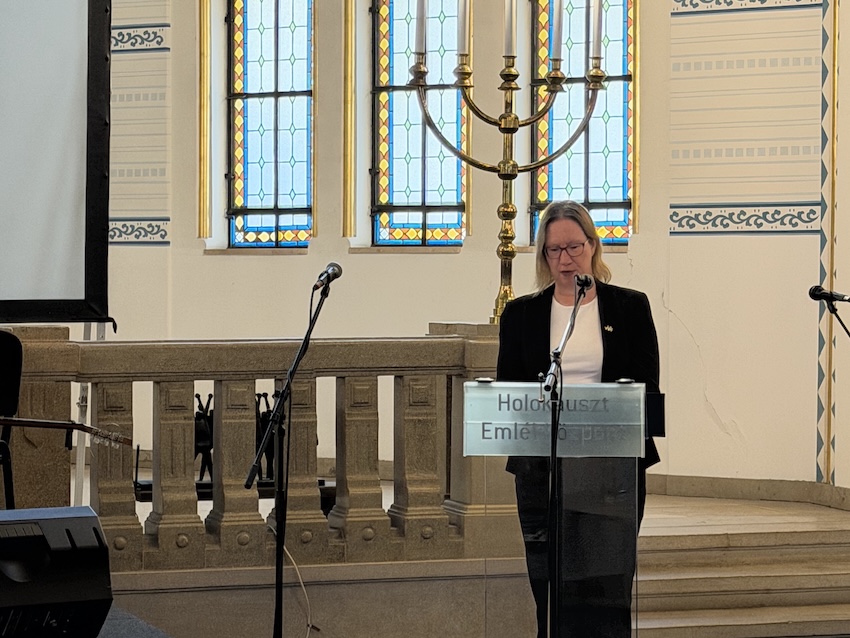
The Argentine Head of Mission was joined by Her Excellency Maya Kadosh, Ambassador of the State of Israel to Hungary, and Mr. András Ligeti, representing the World Jewish Congress. In their addresses they stressed that remembrance is not only a tribute to the victims of the Holocaust, but also an essential responsibility in safeguarding democratic values, combating antisemitism, and defending human dignity in the face of contemporary challenges.
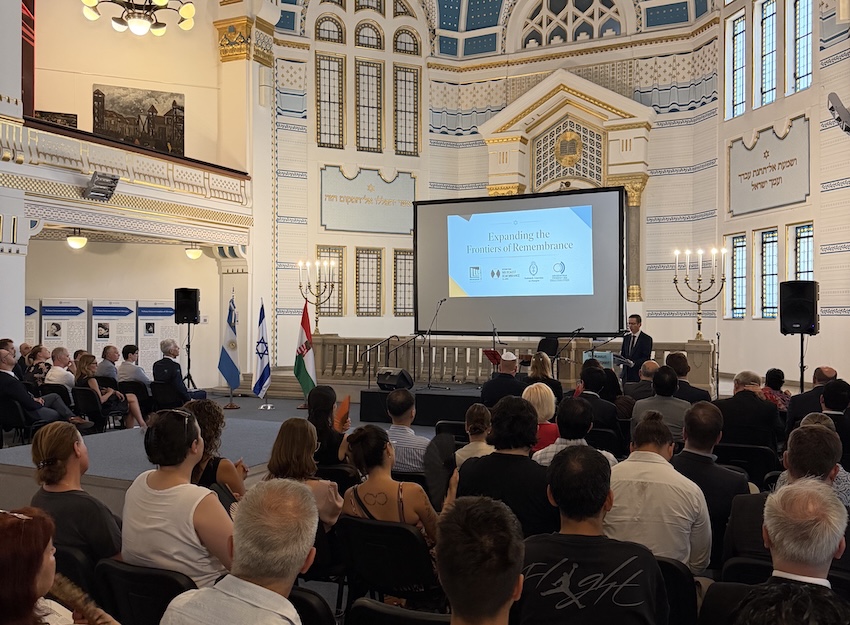
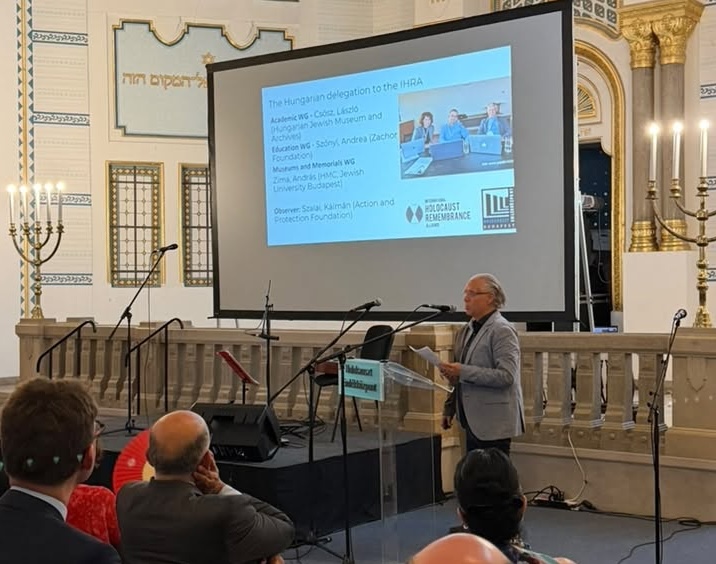
The intellectual centrepiece of the evening was the presentations by Dr. András Zima, Director of the Holocaust Memorial Centre, and Dr. László Csősz, Chief Archivist of the Hungarian Jewish Museum and Archives. Their lectures explored the importance of historical documentation, archival research, and education in ensuring that the lessons of the Holocaust reach future generations.
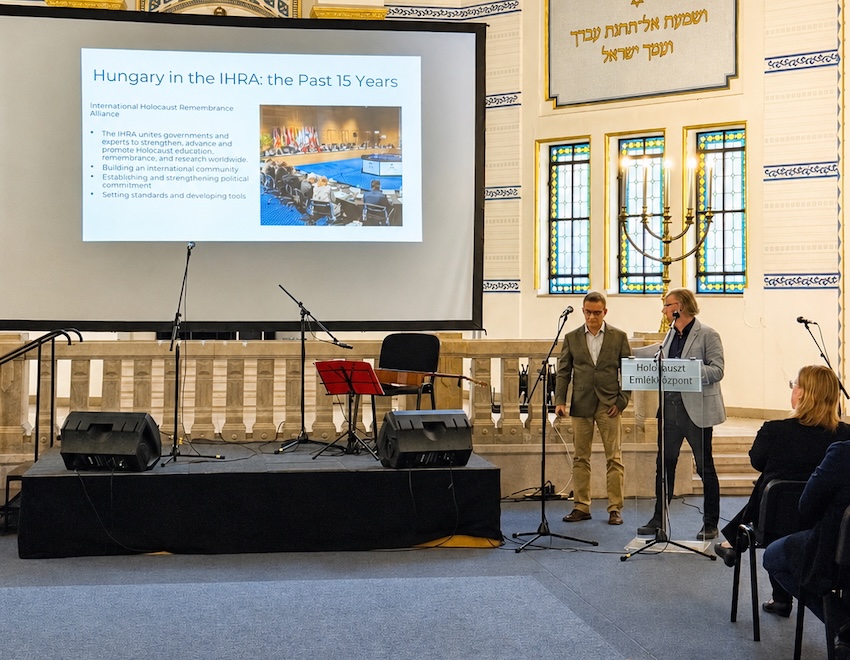
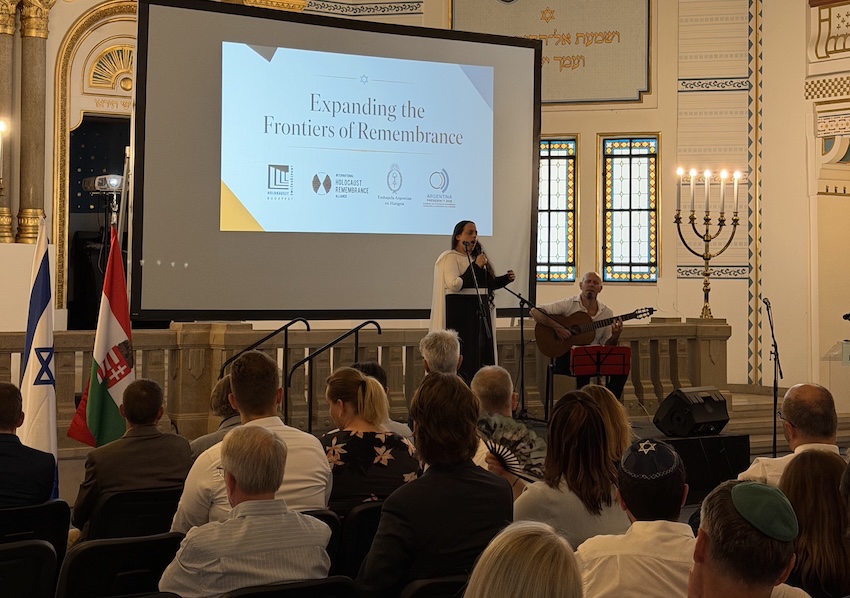
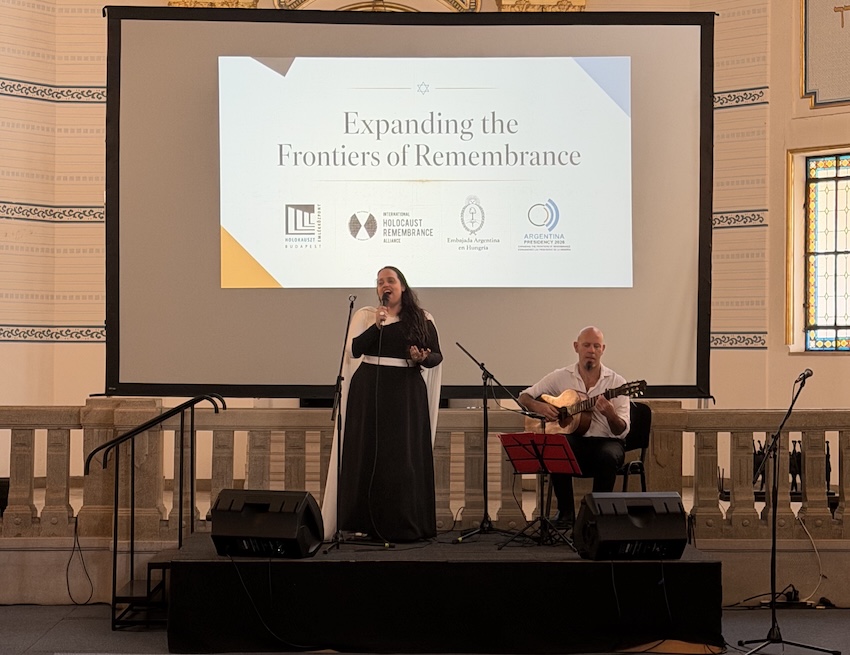
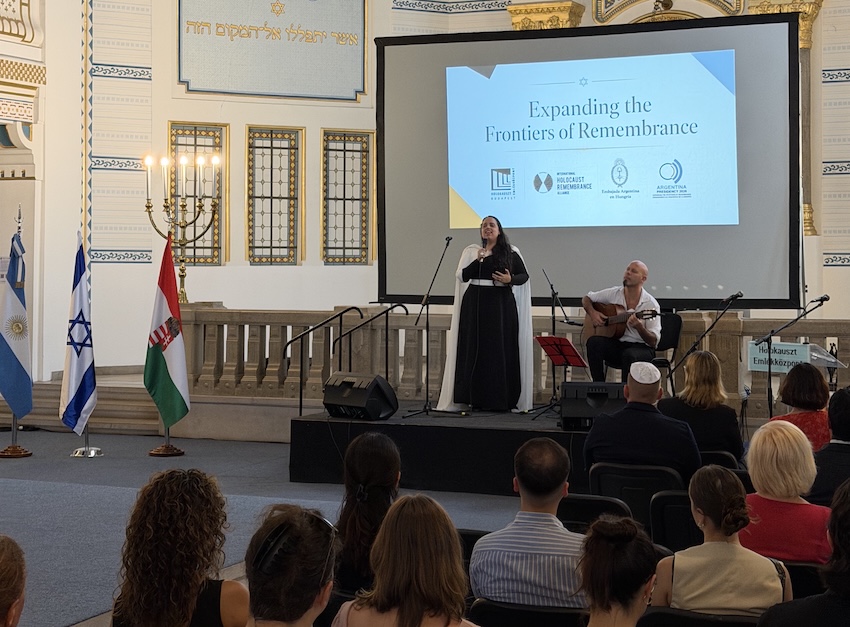
During the evening, guests had the privilege of enjoying outstanding performances by the acclaimed Duo Libera, featuring singer Eszter Ádám and guitarist Juan Pablo Esmok, in the magnificent and historic building of the former synagogue – a landmark of Jewish-Hungarian heritage. Their captivating musical programme beautifully reflected the rich cultural dialogue between Jewish, Hungarian, and Argentine traditions, enchanting the audience and adding a memorable artistic dimension to this special occasion.
Source: Embassy of Argentina in Budapest
Photos from the Embassy of Argentina in Budapest, and the Holocaust Memorial Centre in Budapest