
Edited by Anna Popper
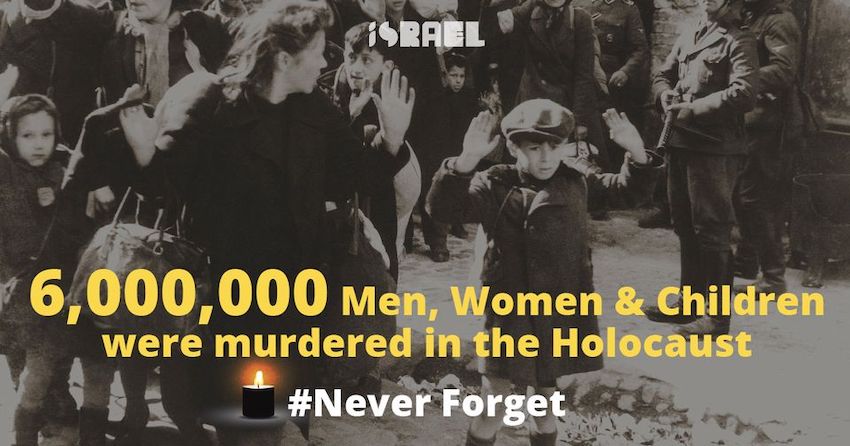
International Holocaust Remembrance Day is observed on 27 January, the anniversary of the liberation of Auschwitz-Birkenau, the most notorious of the German Nazi concentration and extermination camps, located in southern Poland which was under German occupation during World War II. In 2005, the UN General Assembly adopted a resolution designating the day as an annual commemoration, remembering the 6 million Jews murdered by the Nazis and their collaborators, all victims of Nazi persecution and victims of subsequent genocides.

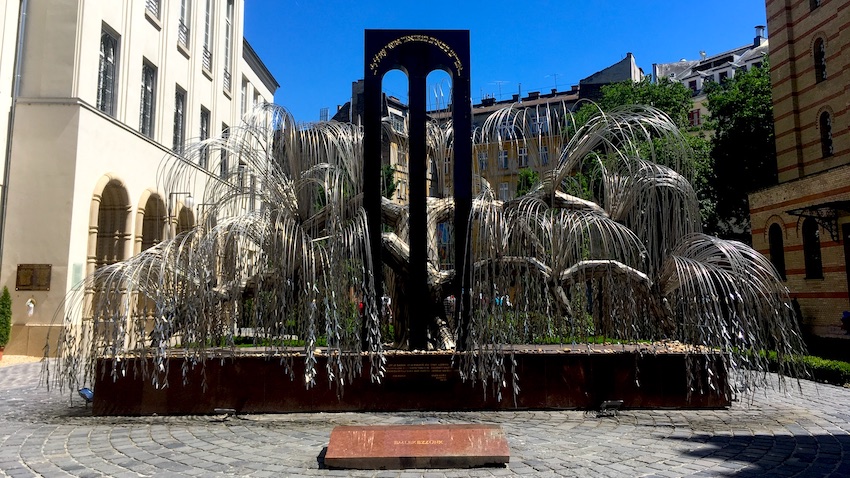
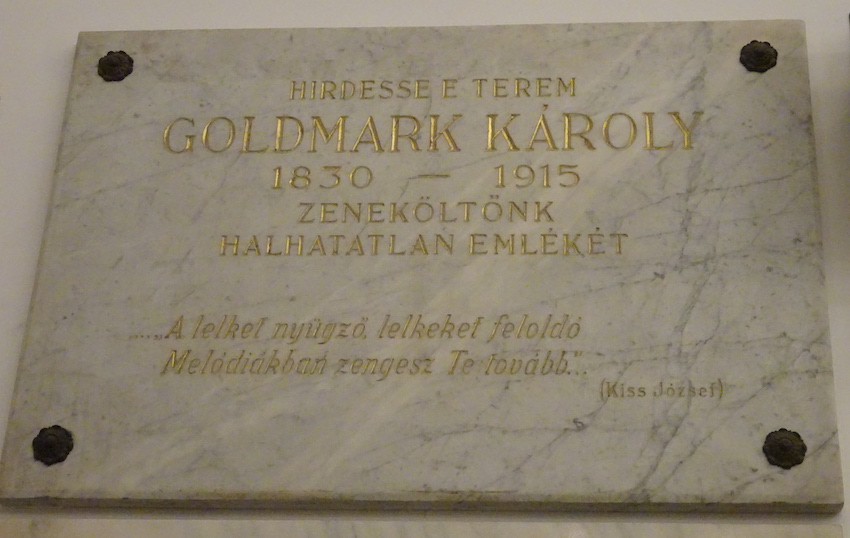
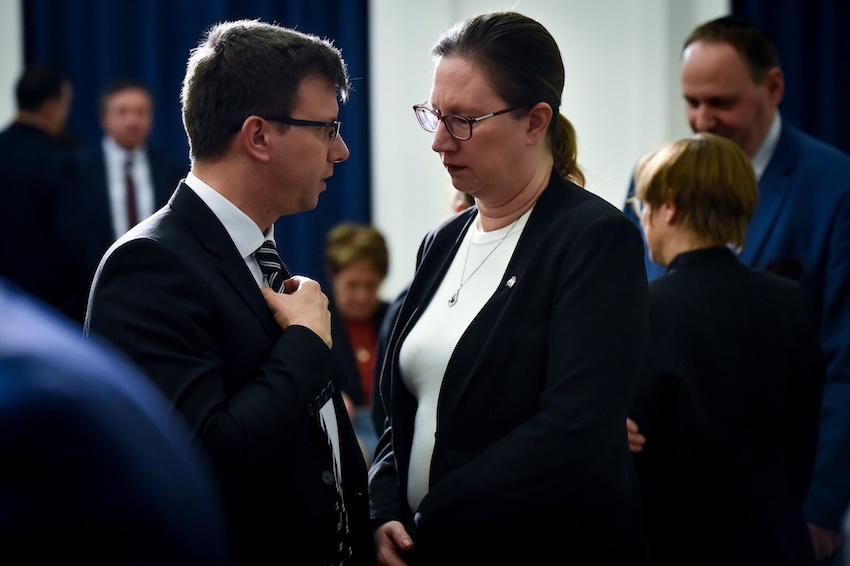
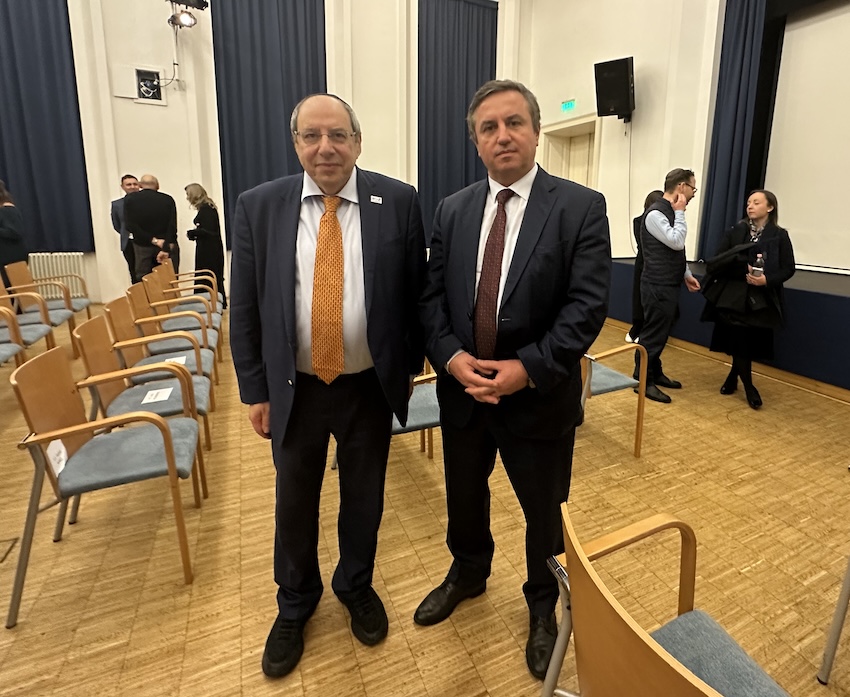
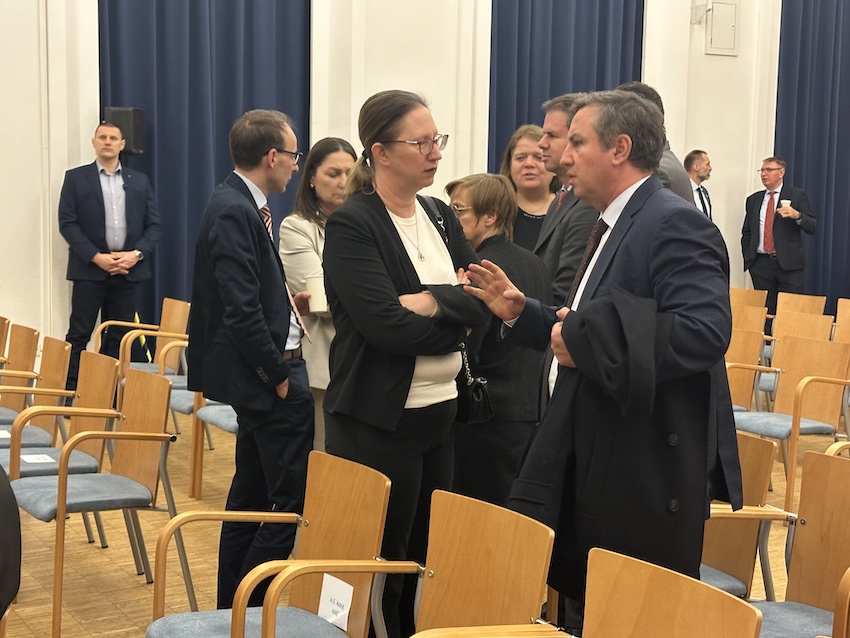
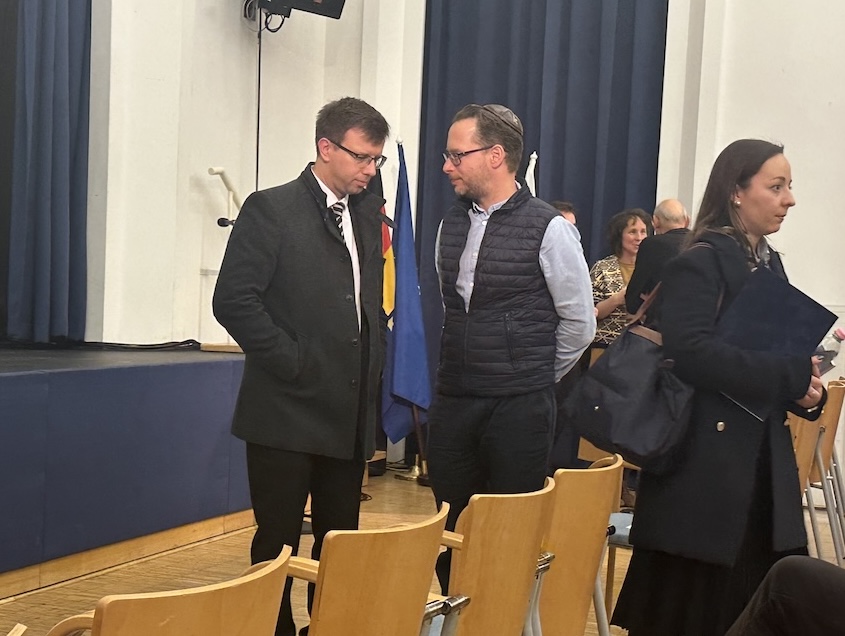
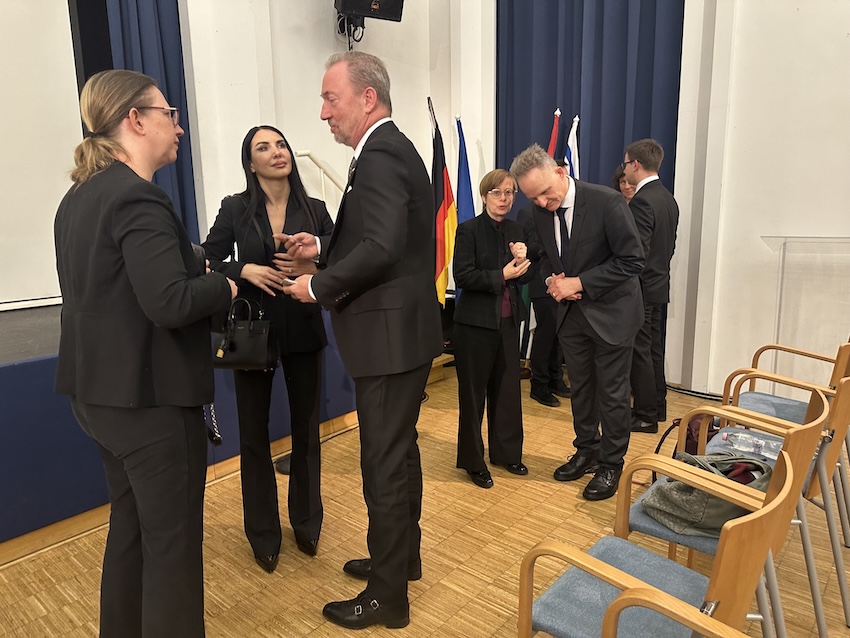
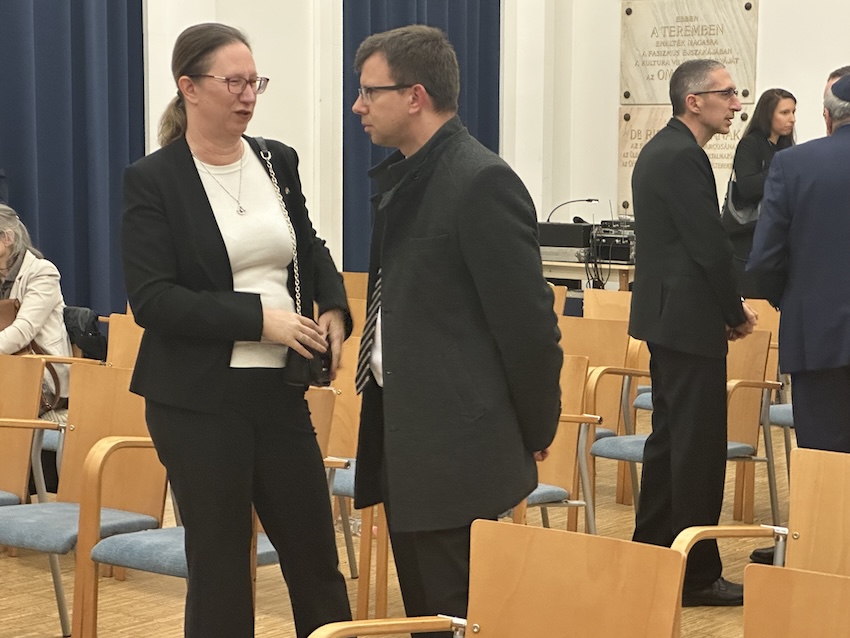
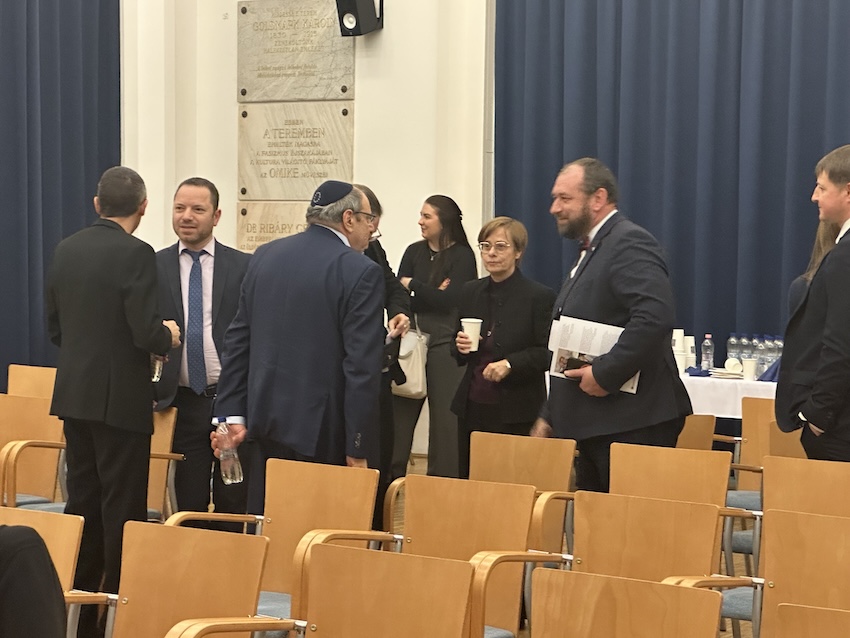
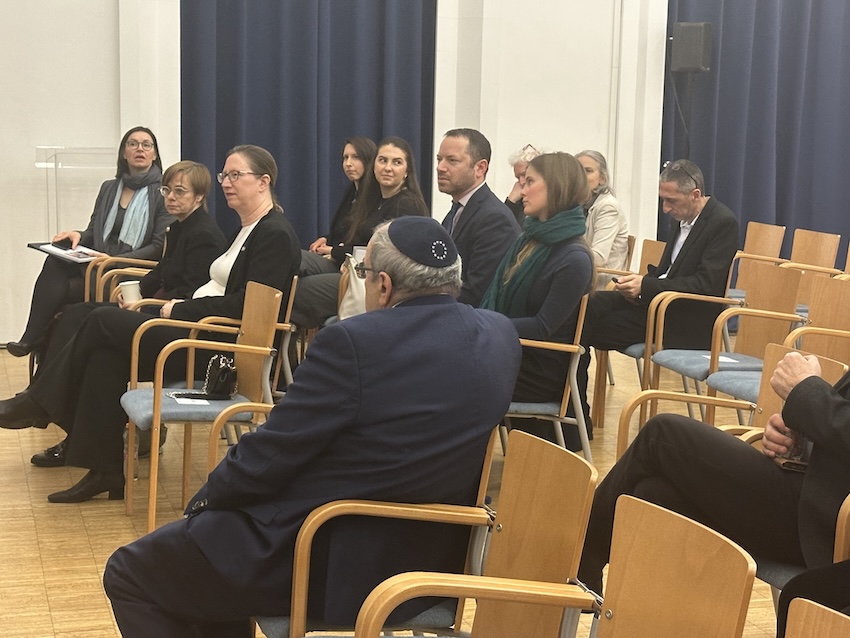
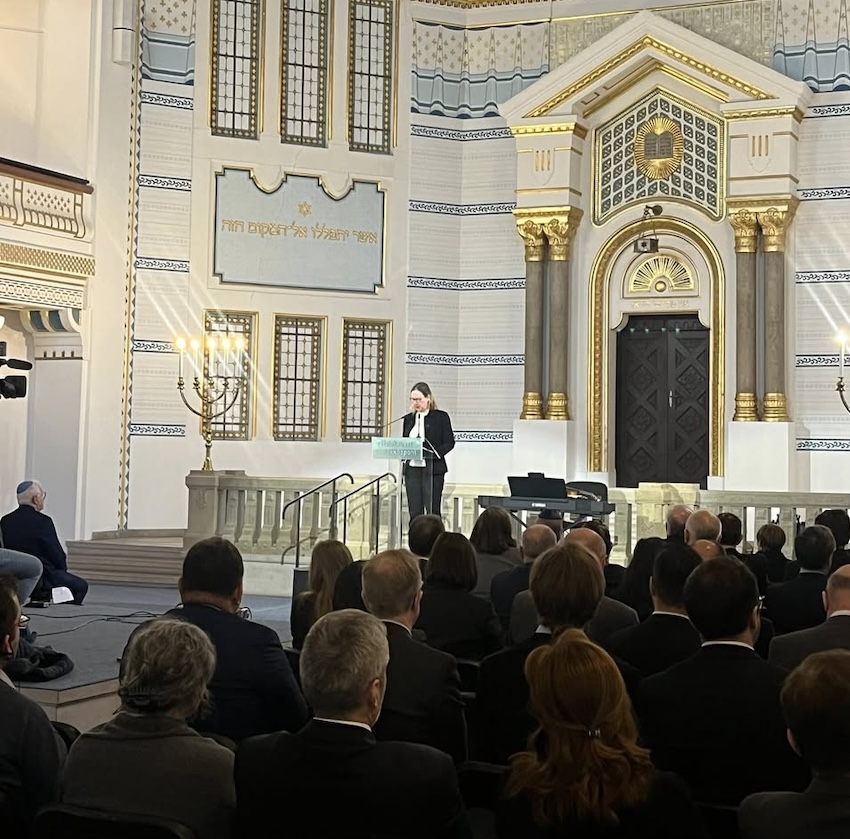
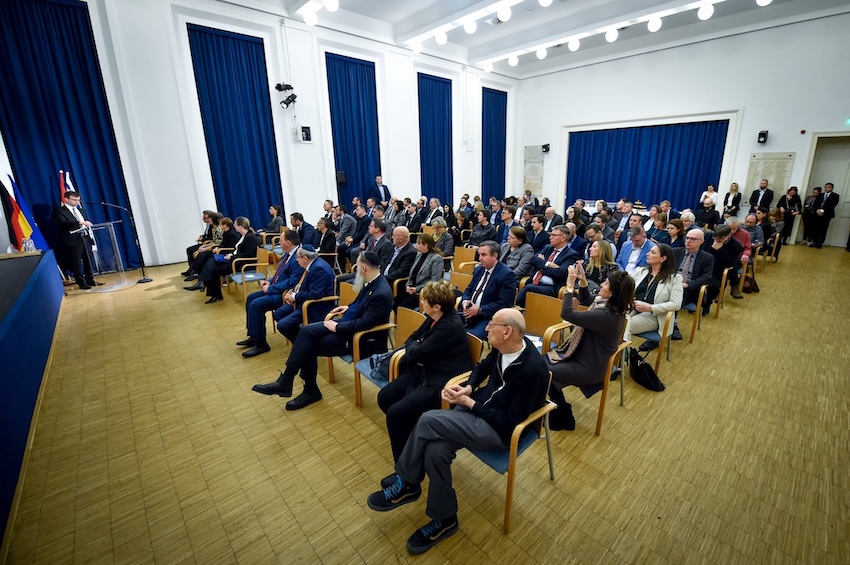
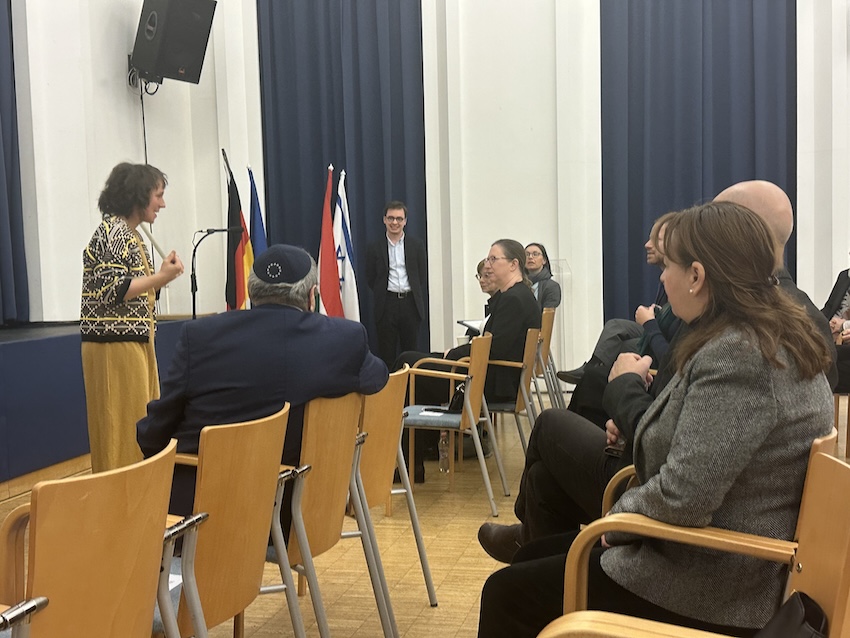
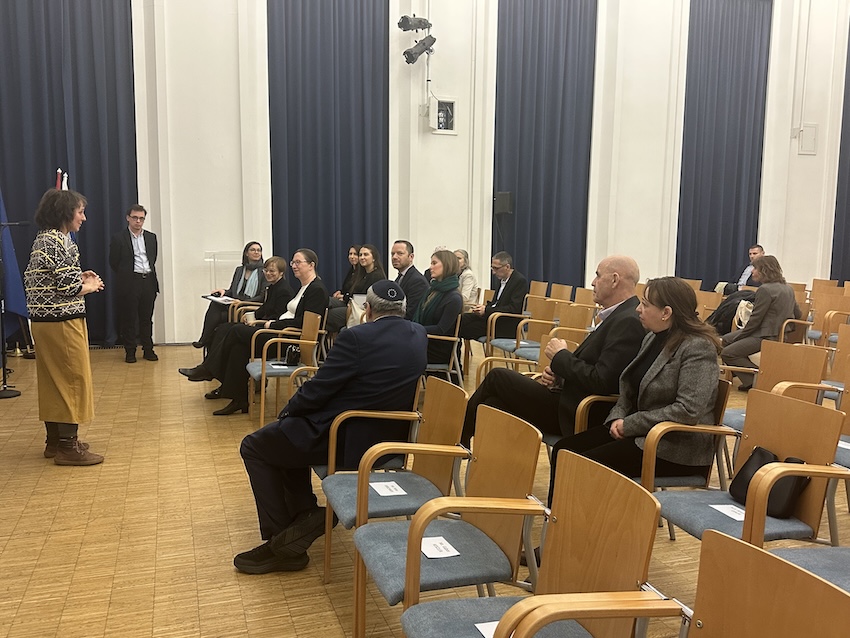
To mark International Holocaust Remembrance Day in Budapest, the Embassy of the Federal Republic of Germany, the Embassy of the State of Israel, and the Jewish Community Centre (JCC Budapest) hosted an evening of reflection and remembrance, with a screening of the short film “Personal Histories – Behind-the-Scenes” documentary. The event took place in the Goldmark Hall, situated in Budapest’s Jewish Quarter, near the Great Synagogue on Dohány Street.

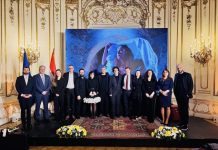
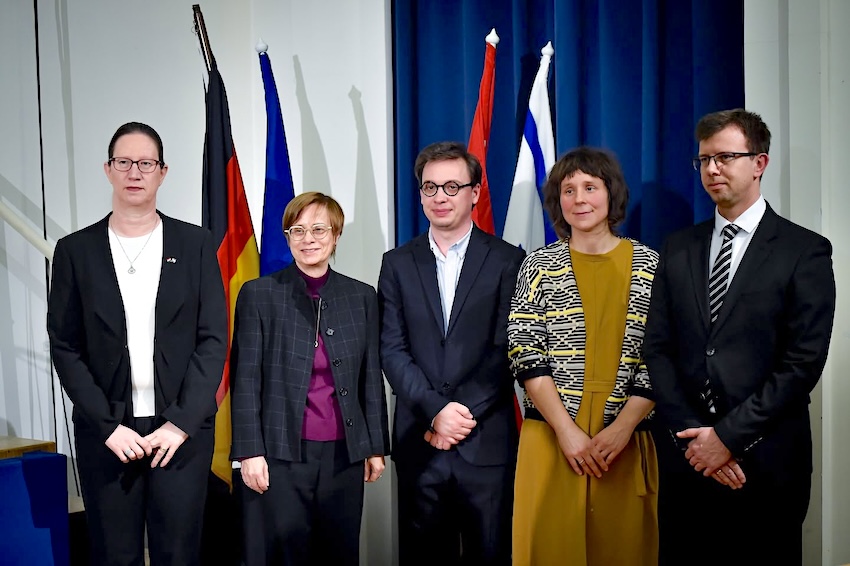
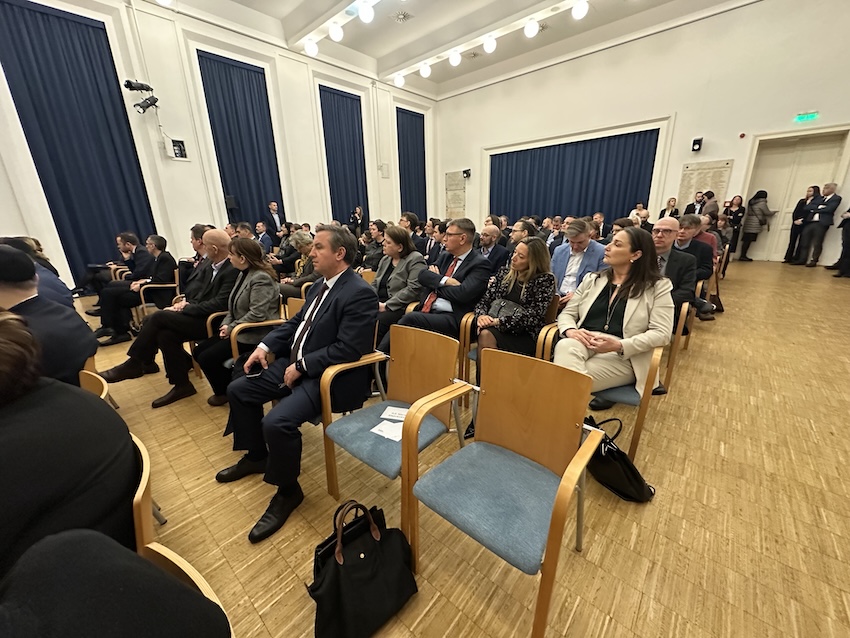
Ambassadors, diplomats, Hungarian Holocaust survivors and members of the Jewish community, including Mr. Péter Nógrádi, Vice President of MAZSIHISZ (Federation of Hungarian Jewish Communities), attended the commemoration.
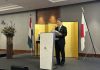
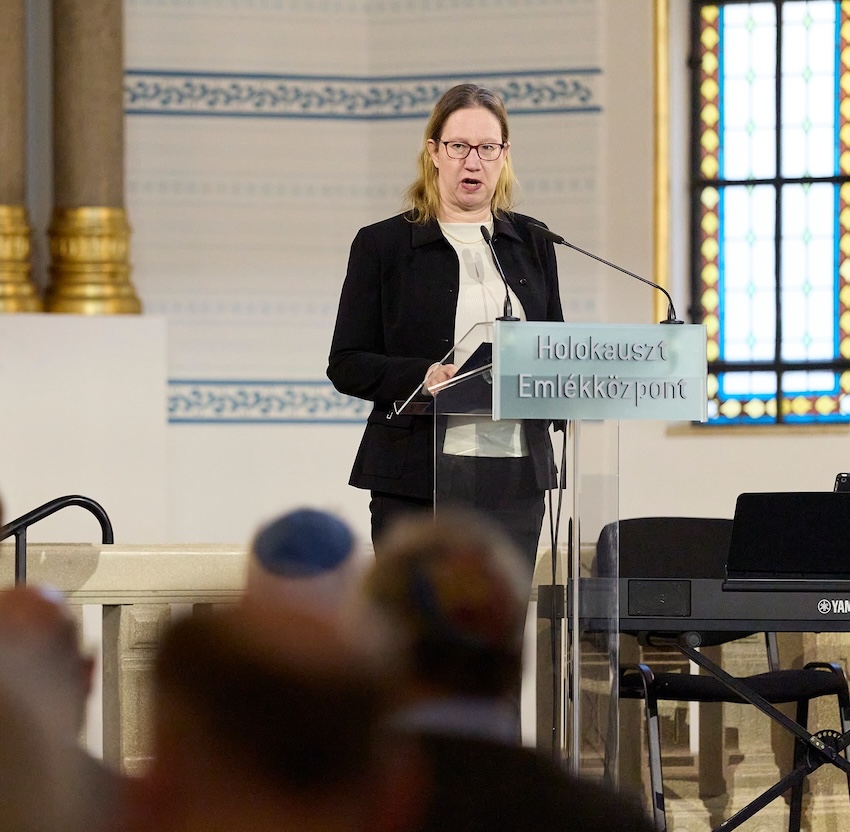
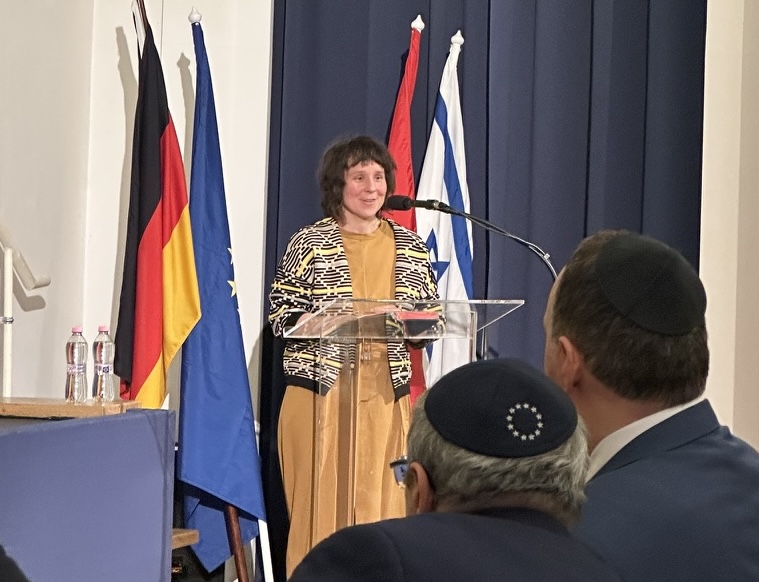
The event began with the address of H.E. Mrs Julia Gross, Ambassador of the Federal Republic of Germany to Hungary:
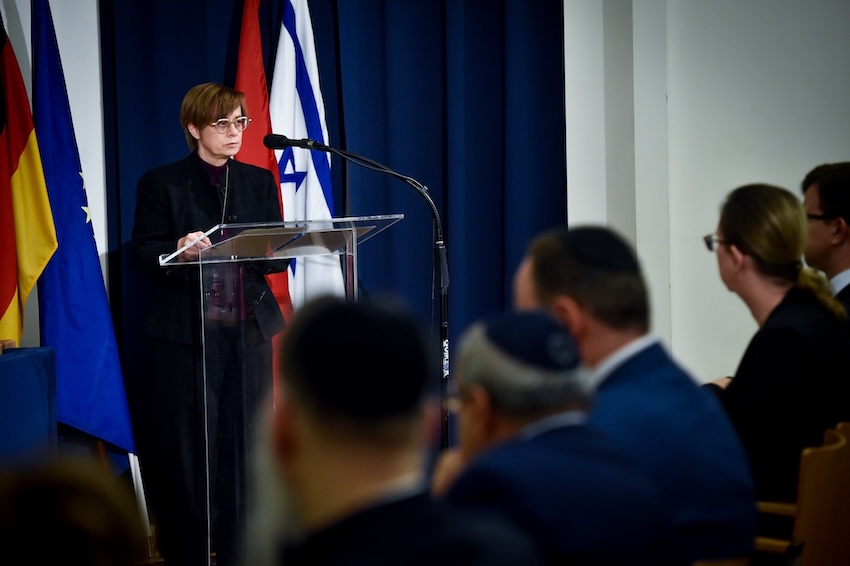
“Minister Bóka, Ambassador Kadosh, Excellencies, Representatives of the Jewish Communities, Ladies and Gentlemen, it is a profound honour to stand before you in the Goldmark Hall. This room is a silent witness to the darkest hours and the most resilient spirit of Budapest’s Jewish community. Between 1939 and 1944, when Jewish artists were banned from the public stage, this hall became the sanctuary of the ‘Invisible Theatre’.
As the representative of Germany, I stand here in humility and gratitude. It was the Nazi regime and its hateful ideology that forced these artists within these walls, segregating and persecuting them. While the Germany of today is a different one, we remain profoundly aware that Germany carries a special and lasting responsibility for the crimes committed by our ancestors. This responsibility defines our identity and our actions today. And we are grateful to have been accepted as partners both in remembrance and in efforts to combat antisemitism.
We gather to remember the six million Jewish lives extinguished in the Shoah, including the 570,000 Hungarian Jews, whose loss left an indelible wound in this nation. We also bow our heads in memory of the Roma and Sinti, people with disabilities, as well as homosexuals, and all those persecuted and murdered by the Nazi regime. To remember them all is our historical and moral duty.
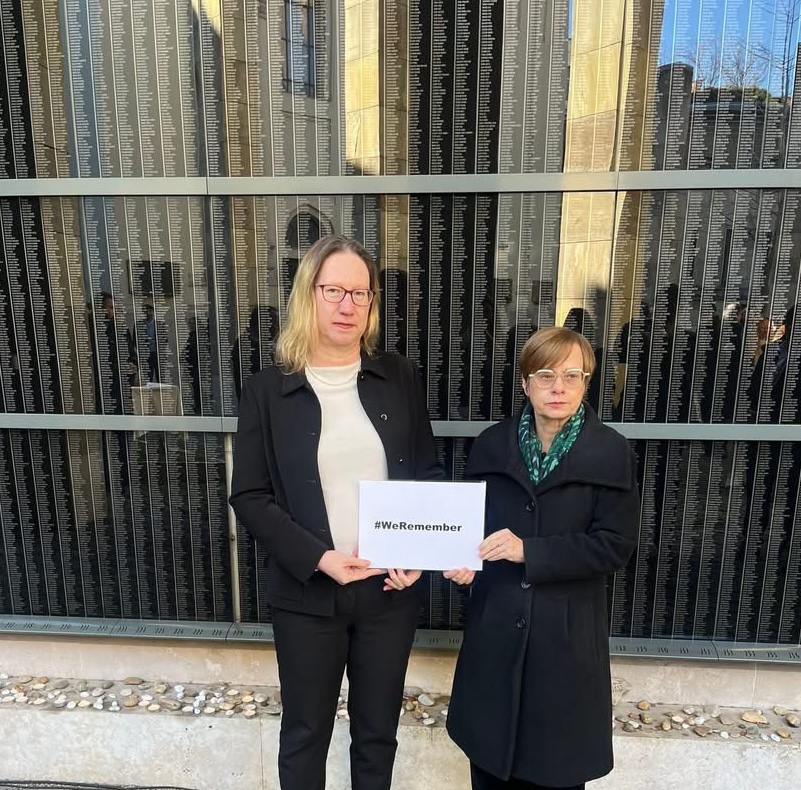
But we must ask ourselves: what is the value of memory if it does not produce the courage to act? These were your words, dear Maya, just a few days ago. Indeed, remembering the past is inseparable from the duty to confront the challenges of the present: we must stand firm against the alarming rise of antisemitism in all its forms. It is our shared responsibility to turn our remembrance into the courage to defend Jewish life here and now.
Tonight’s ‘Personal Histories’ project ensures that these millions do not remain merely an abstract number. It is a prime example of what we strive for: a transnational, future-oriented culture of remembrance. For us, remembering this collapse of civilization is not a project with an end date; it is a permanent task. And this work is urgent. We are currently witnessing a painful historical transition: the era of eyewitnesses and survivors is inevitably drawing to a close. As the voices of those who personally endured the horrors of the Shoah fall silent, we face the challenge of preserving their memory and ensuring that their stories do not fade away with them. By transforming survivor testimonies into theatre, young students become ‘secondary witnesses’. They contribute to ensuring that the stories of those targeted by the Nazis are not lost, but remain a living dialogue within our society.
Germany must continue to draw its lessons from the Holocaust and the failures of our history. This implies we must stand up for Israel’s right to exist, for Israel’s security, and for the protection of Jewish life everywhere. It is a true relief that the last remaining hostage was returned from Gaza to Israel, and the fighting in Gaza has stopped. At the same time, we must advocate with equal emphasis for the provisions of international humanitarian law and the protection of universal human rights. We are deeply moved by the human suffering both in Israel and in Gaza and continue to work toward a future in which both Israelis and Palestinians can live in lasting peace. The rise of antisemitism in Europe and elsewhere, especially after the barbaric attacks of 7 October 2023, is a growing and serious threat – to Jewish life, to peace and democracy in our societies, and thus to all of us.
Ambassador Kadosh, you reminded us on 27 January that the greatest tragedy of the Holocaust was the silence of the world. We must not repeat that silence – not when human dignity is attacked, and not when the truth of history is being questioned for political gain. It is with utmost concern that we see the rise of a right-wing party in Germany whose honorary president declared the Holocaust to be no more than ‘an irrelevant episode’ in German history.
We must also remember that the Shoah did not begin with the extermination camps, but with people boycotting, insulting, or passively watching their neighbours being harassed. Combatting antisemitism is a task for governments, but also for all of us wherever we are. False narratives and lies must be addressed and refuted at all levels, for words quickly turn into action, as we saw with horror in the Bondi beach massacre in Australia. This is only the latest and most visible outbreak of hatred against Jews.
Heeding the universal lessons of the Shoah means speaking out against massive human rights violations wherever they occur – in Iran, Sudan, or in the brutality of Putin’s war of aggression. We are deeply saddened that a Ukrainian survivor of the Shoah, Evgenyia Besfamilnaya, froze to death in her apartment in Kyiv, because Russia targets civilian energy infrastructure in the middle of an especially cold winter. May her memory be a blessing! As the historian Yehuda Bauer said: ‘You are not responsible for what happened in the past, but you are responsible for what happens in the future’.
Let us ensure that ‘Never Again’ will not become an empty slogan, but remains an active, daily promise for all people. Thank you.”
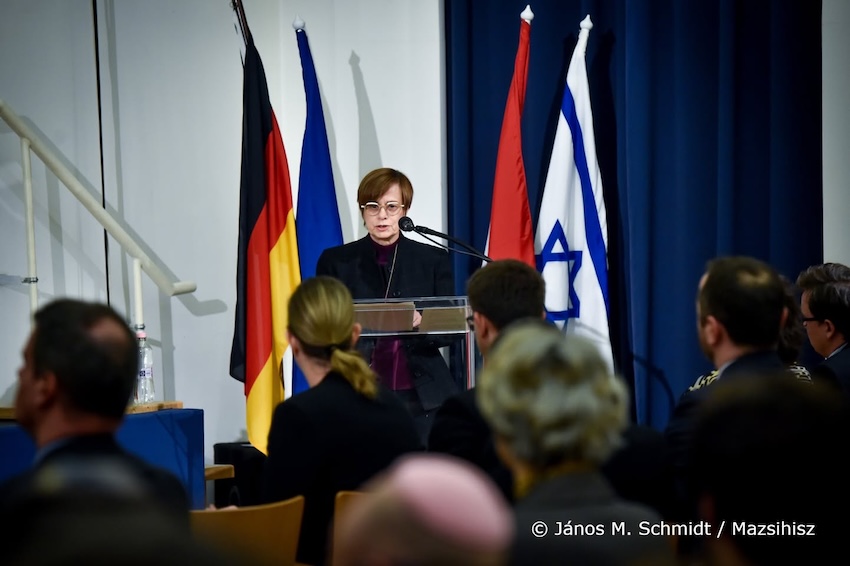
The next speaker, Her Excellency Maya Kadosh, Ambassador of the State of Israel to Hungary, took the floor:
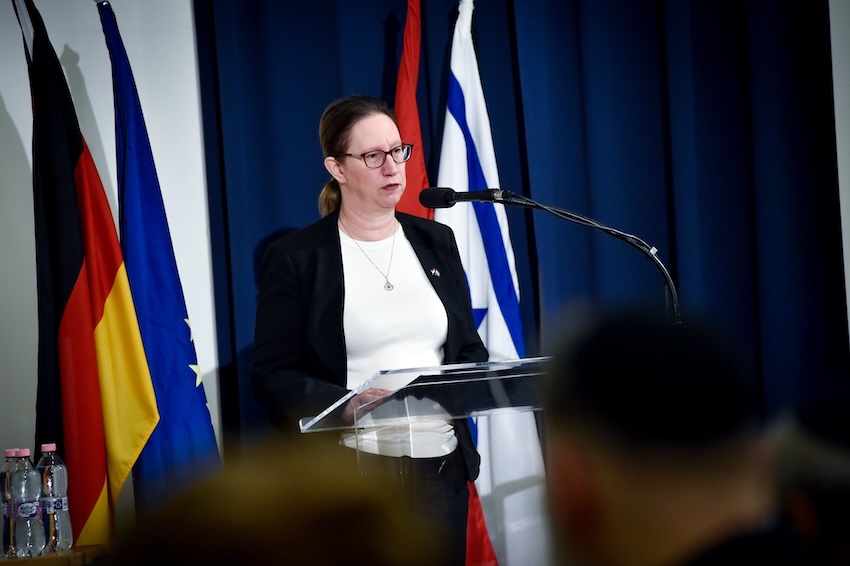
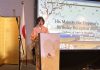
“Excellencies, Distinguished Guests, partners from the German Embassy and most importantly, the young participants of the ‘Personal Histories’ project.
We have gathered here today in the heart of Budapest to honour the memory of the six million Jews who were murdered during the Holocaust. But we are not just here to look backward; we are here to ensure that the light of memory continues to burn in a world where the voices of survivors are becoming a precious, vanishing resource.
I stand before you as a member of the Third Generation. My family history is marked by a profound ‘before’ and ‘after’.
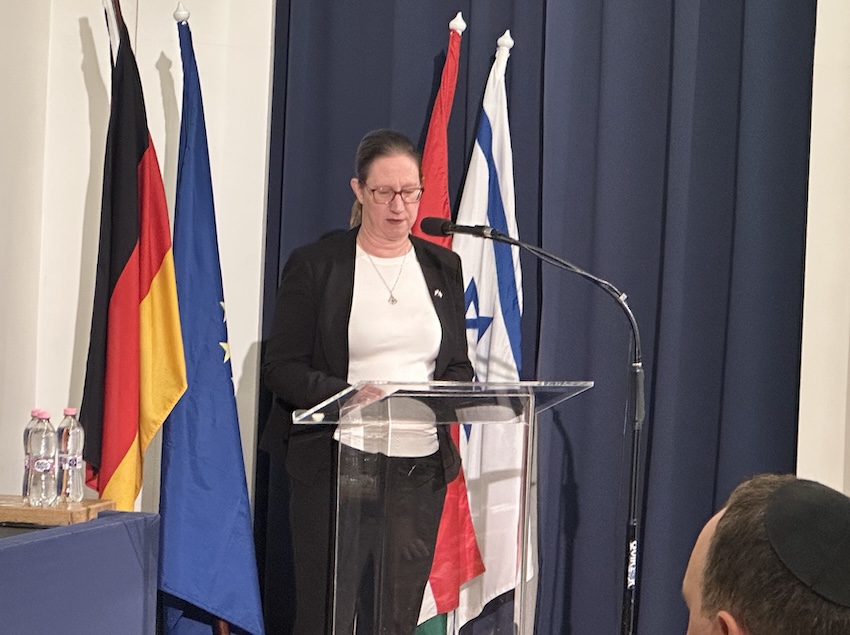
My grandfather, Baruch, was a survivor of Auschwitz. He carried the physical and emotional scars of the Shoah, yet growing up in his home, the Holocaust was not a story, but a silence. He refused to speak of his experiences. He forbade us from watching films or news programs about the war. He wanted to protect us, to give us a life unburdened by the weight of his trauma. But the paradox of that protection is that I grew up without memory. In his efforts to shield me, a void was created where history should have been. The very little I know about my grandfather’s story I learned from the Pages of Testimony at Yad Vashem. There, he wrote a single, haunting line for each family member he lost: Abigail, who fled to Russia and died there; Shifra, who, like him, reached Auschwitz but did not survive; Yerachmiel, who starved to death in the Ghetto. I never heard their stories. How did my grandfather feel as he watched his brother wither from hunger? What did his mother, Frida Malka, do in those final moments? Because he stayed silent, I have spent my life filling in these details through mental exercises, trying to imagine the sights, the sounds, and the unbearable choices they faced.
Today, this ‘filling in the details’ is more than just a personal exercise; it is an act of resistance. We live in a time of rising antisemitism across Europe and the globe, in which the truth about the Holocaust is sometimes suppressed. It is deeply troubling that major institutions like the BBC broadcast a day of Holocaust programming while strikingly omitting the word ‘Jews’. This is not a mistake; it is part of a dangerous trend to ‘universalizing’ the Holocaust which effectively erases its Jewish victims from their own tragedy.
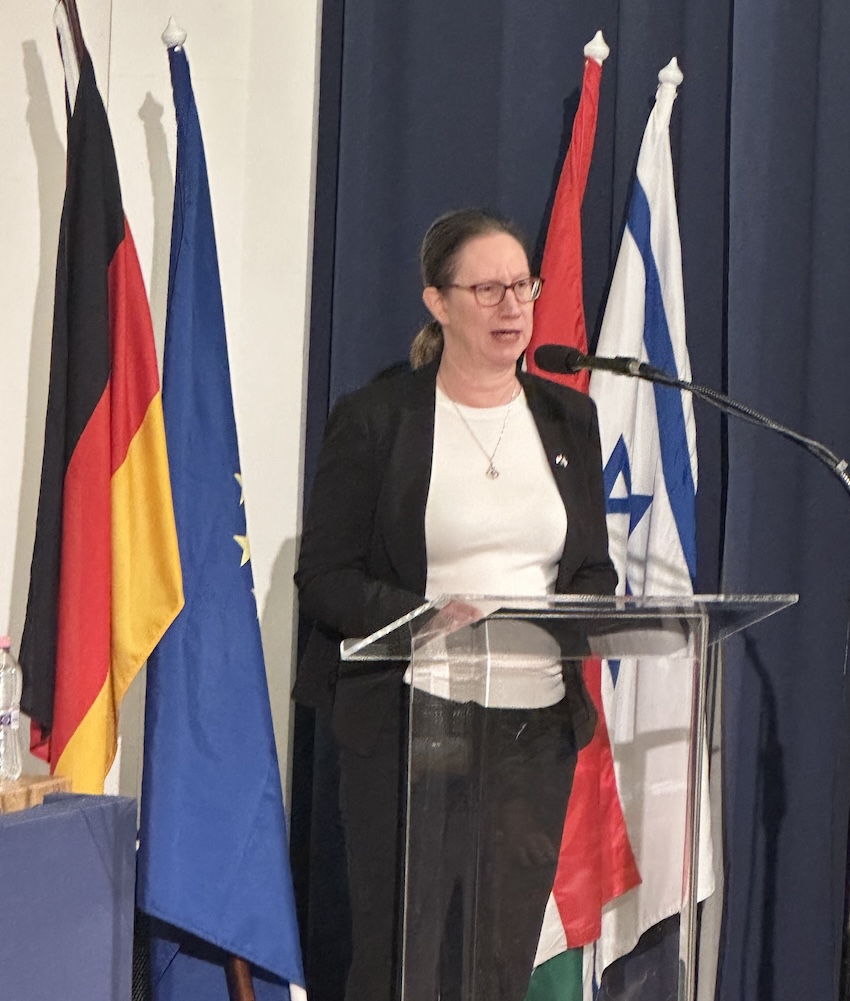
When people try to rub out the fact that the Holocaust was a systematic crime specifically against the Jewish people, they not only distort history but also pave the way for present-day hatred. If we allow the Jewish identity of the victims to be deleted, we lose the very essence of why we say ‘Never Again’.
This is why the project we are witnessing tonight at the JCC is so vital. It anchors the memory in truth. We are moving past the era of simply ‘hearing’ testimony and entering an era of embodying it. When these teenagers participate in improvisation based on survivor testimonies, they are doing what I had to do in my mind for years. They are ensuring that the names of the Jewish victims are spoken, felt, and remembered.
To our partners in the German Embassy: your presence here signifies a shared responsibility to confront this ring tide of hate and to call it by its name: antisemitism.
My message to the young performers is that they are now the guardians of these specific Jewish stories. By taking these testimonies onto the stage, they have ensured that the silence my grandfather sought for our protection was replaced by a powerful, empathetic resonance. By giving a voice to Yerachmiel, Shifra and Abigail, it is ensured that their identities will never be erased.”

It was followed by the remarks of Mr. János Bóka, Minister for European Union Affairs:
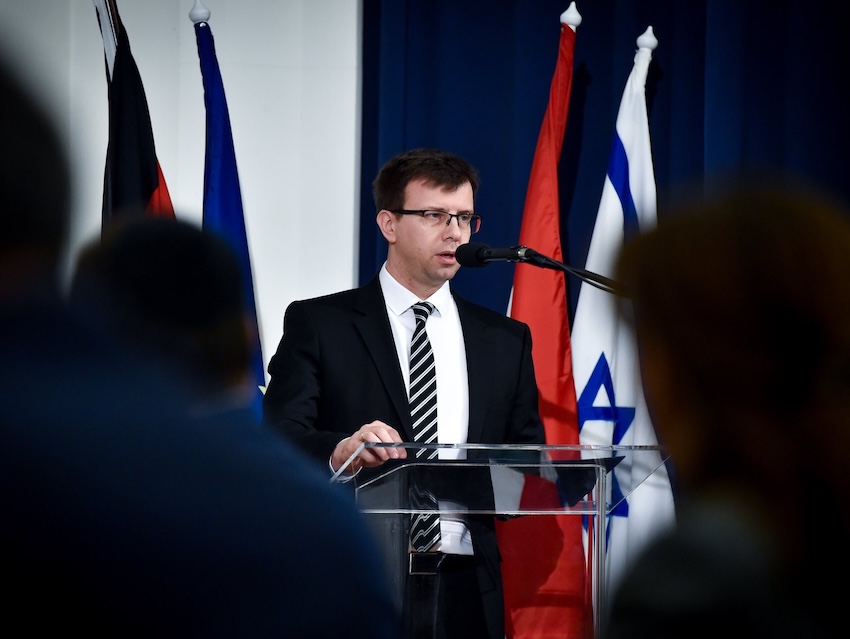
“Your Excellences, Ladies and Gentlemen, we struggle to find words for something that defies words. We struggle to restore the human dignity of victims who were dehumanised in life, in death, and even afterward. We struggle to find traces of life and hope in the valley of the shadow of death.
The Holocaust tore apart the fabric of time. It lives in the past, weighs on the present, and warns the future. So today I speak of past, present, and future – and I speak about us: Hungary, Hungarians, and the Hungarian government.
Let us first be clear about what happened. The Hungarian state betrayed its own citizens. It stripped them of dignity and property, stigmatised and broke them, and handed them over to murderers – or killed them itself. This is a heavy burden on all Hungarians. Its shadow is long: lost lives, destroyed communities, and pain passed down through generations. This burden also defines the responsibility of every Hungarian government today.
Therefore, on behalf of the Government of Hungary, I reaffirm our commitment to the safety and security of Jewish communities in Hungary. I reaffirm our commitment to foster a vibrant Jewish life, so that Jewish identity can be lived freely in our shared homeland – where a thousand ties bind us together as one indivisible Hungarian nation.
The present echoes not only the past but also the future – and this echo is increasingly disturbing. We often say, ‘Never again’. But what does this mean when new ghettos appear in European cities – not made of bricks, but of fear? If Jewish students feel unsafe on public transport, these are walls. If Jewish students are harassed at universities, these are walls. If Jewish artists or scientists are excluded unless they denounce the State of Israel, these are walls. If synagogues and cemeteries are desecrated and Jews are insulted or killed for being Jewish, these are walls.
A struggle is underway for the soul of Europe. Antisemitism is no longer confined to the margins; it has entered the mainstream media, politics, and public discourse. If Europe abandons its Jewish communities and heritage, it ceases to be Europe. This is not just a Jewish concern – it is a European one. Our civilisation itself is at stake. History teaches us that antisemitism weakens society as a whole. We all know very well that it usually starts with Jews, but never ends with Jews.
So how did we get here? And why does Europe seem so defenceless after the Holocaust? We have built institutions, passed laws, and educated generations. Yet antisemitism is on the rise. I believe this is a self-inflicted wound. We cannot fight antisemitism without the tools of social stability and political responsibility. We cannot combat it if universities surrender to pressure instead of reason. And we cannot fight it without real political ownership behind our laws and institutions.
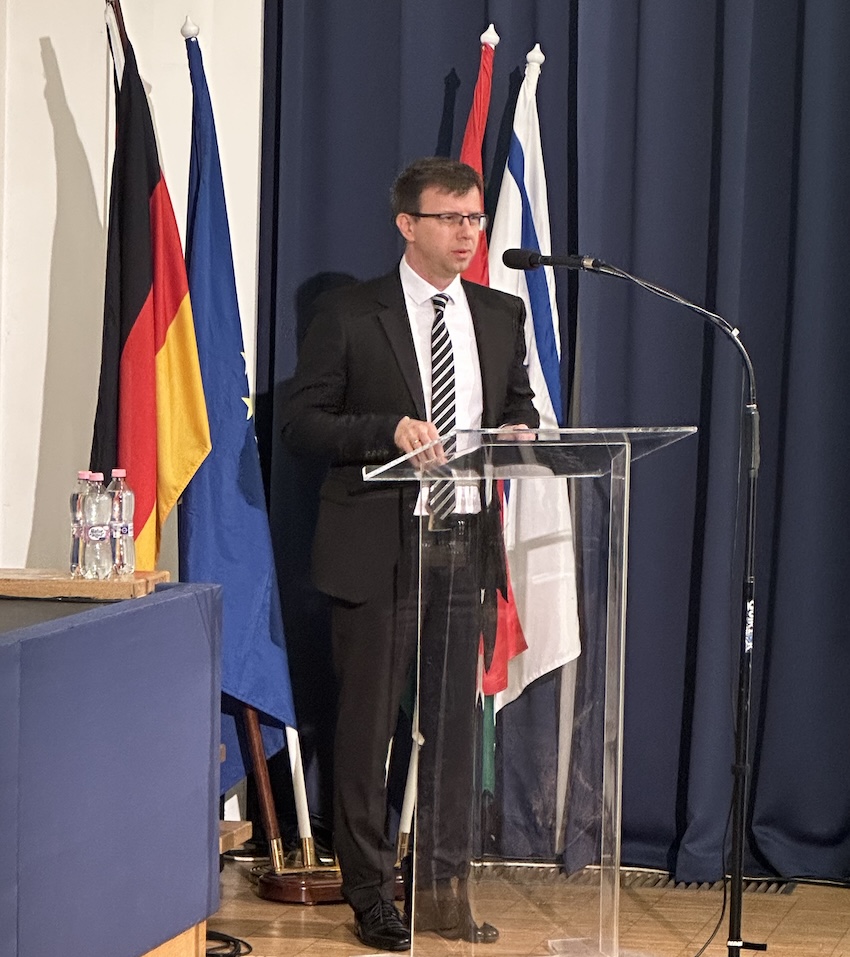
As a seventeenth-century French theologian warned: ‘God laughs at those who complain about the effects while endorsing the causes’.
My message is therefore not despair but resolve. We must combat both the effects and the causes. I can tell you that it is possible to implement a zero-tolerance policy against antisemitism. It is possible to protect our Jewish communities and foster Jewish life. It is possible to build a strategic partnership and friendship with the State of Israel, even under the most challenging circumstances.
The relationship between Israel and Europe’s Jewish communities is undeniable. Policies of exclusion, isolation, or sanctions weaken our credibility and ultimately harm the Jewish communities themselves. We do not stand alone. Together with committed partners, we can confront antisemitism wherever it appears. Hungary offers its partnership to all who share this responsibility. Together, we can make a difference. I pray that the Almighty grants us the wisdom never to forget, the courage to face our past, and the strength to shape our future. And above all, I pray for peace – in Europe and in the land of Israel, as the Psalm says: ‘May there be peace within your walls and security within your citadels’. For the sake of my family and friends, I say: Peace be within you.”
Concluding the event, Production Manager Gergő Borbás presented the Personal Histories – Behind-the-Scenes Budapest documentary. Originally created by the Theater na de Dam, the film was screened for the audience, bringing to life the terrible events of the Second World War through the voices of young people – stories entrusted to them by survivors.
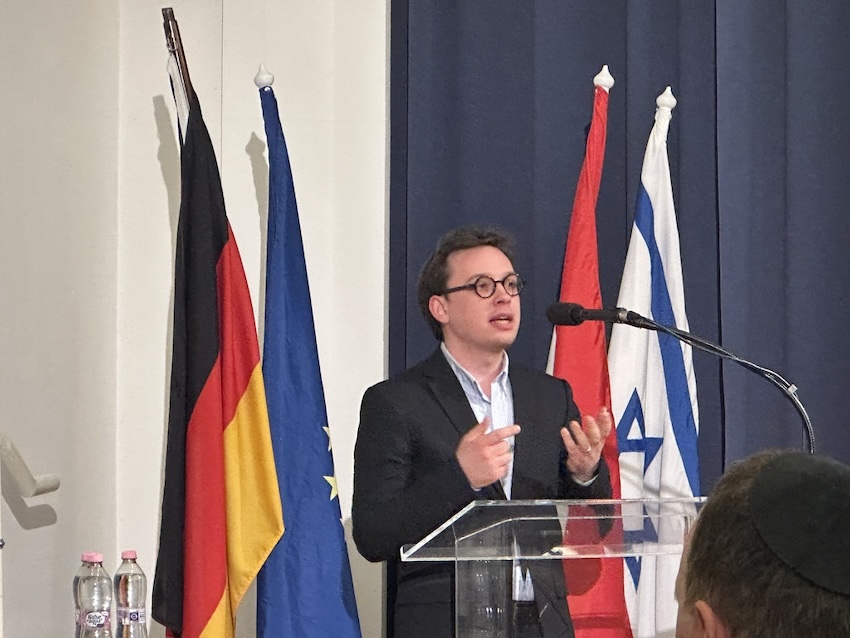
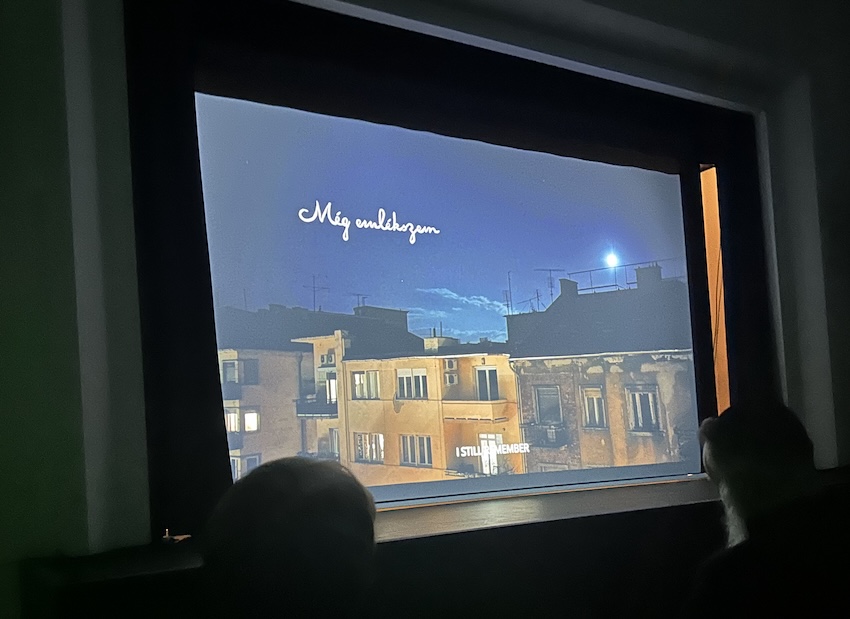
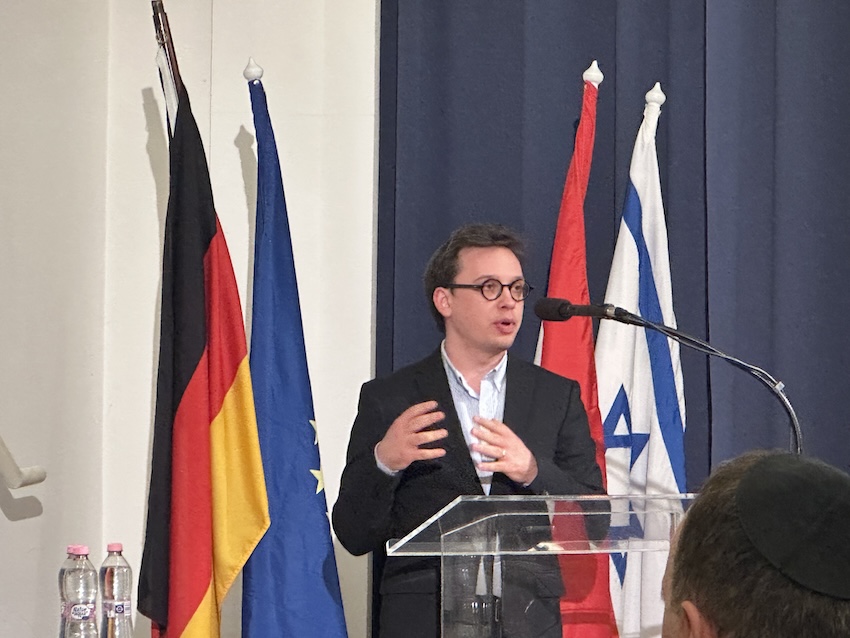
Director Viola Kallós also spoke about the project, highlighting its mission to preserve memory through personal narratives and intergenerational dialogue. Engaging with these memories and keeping them alive remains essential today. The past is not a distant, closed chapter, but a shared heritage that continues to shape our present. Through personal stories, the project reminds us why it is vital that these memories are not forgotten.
Memorial in Honour of the Hungarian Holocaust Victims

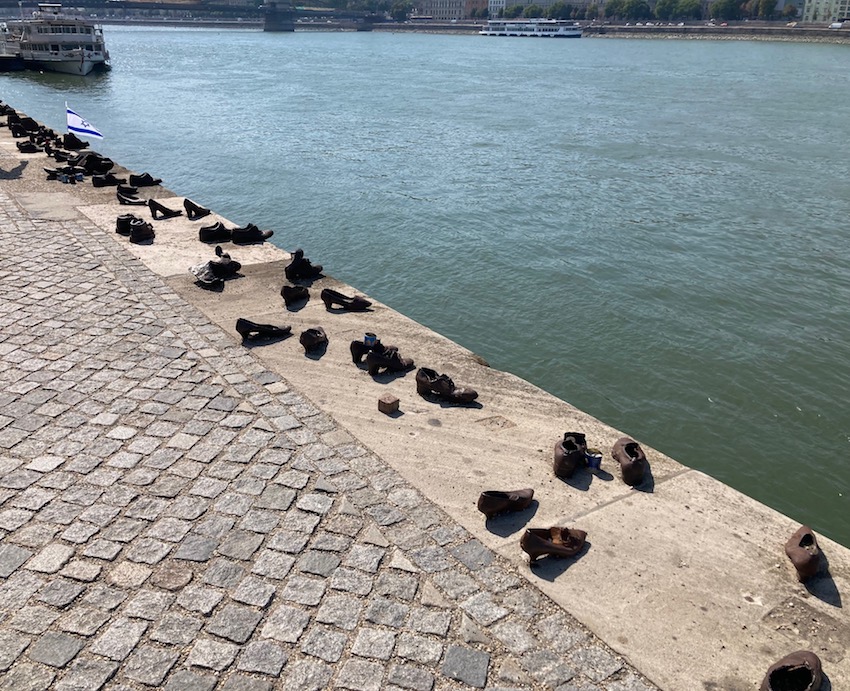
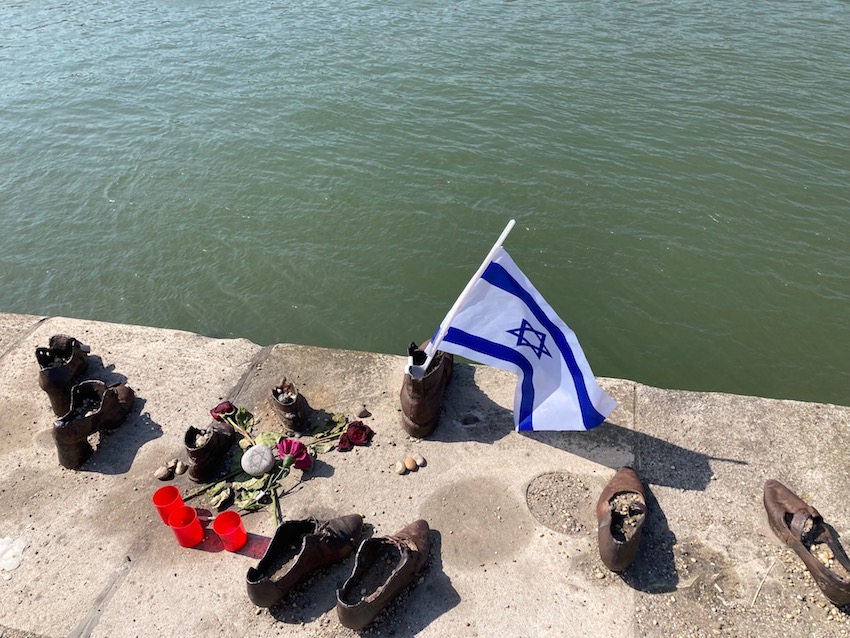
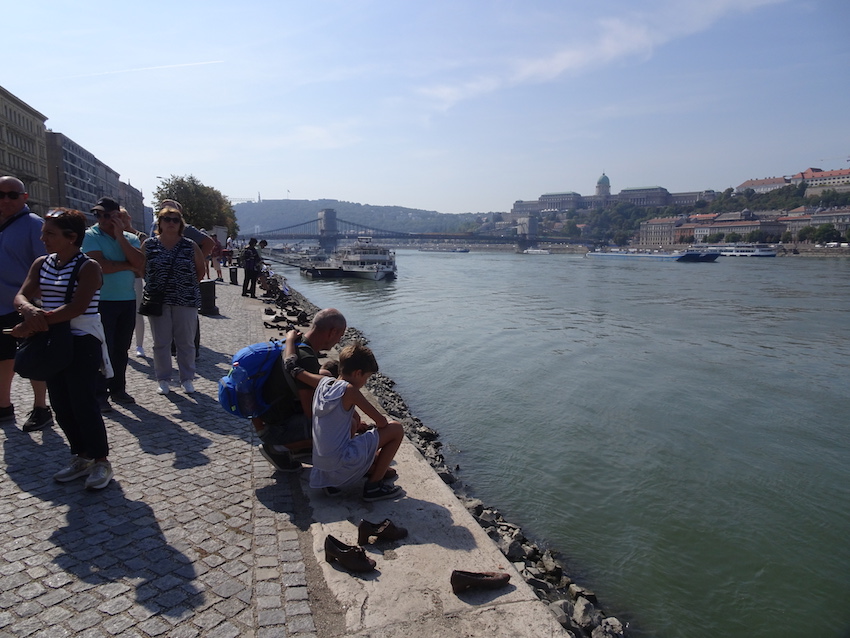
The Shoes on the Danube Embankment in Budapest is a deeply moving memorial dedicated to the Hungarian Jews murdered by Hungarian Nazis of the Arrow Cross Party on the banks of the Danube River in the winter of 1944–1945. Located on the Pest side between the Széchenyi Chain Bridge and the Margaret Bridge, the memorial is one of Budapest’s most poignant places of remembrance.
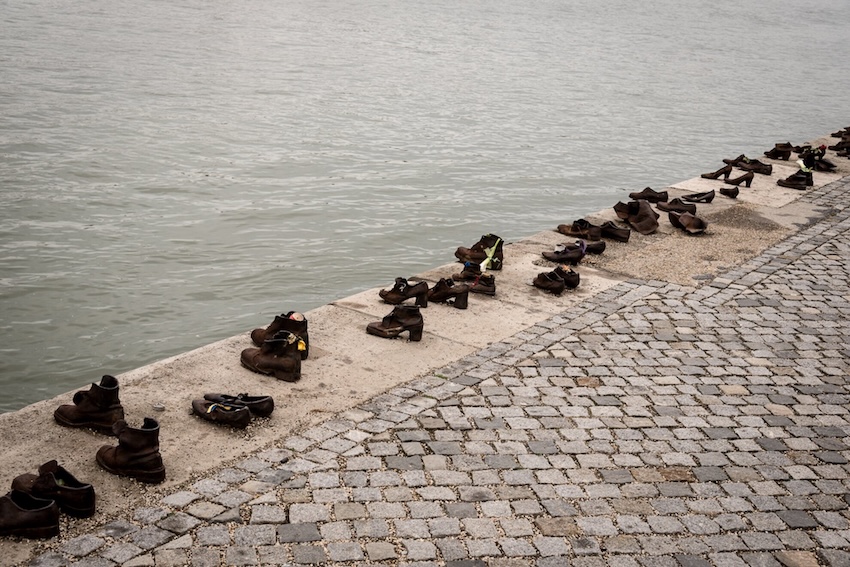
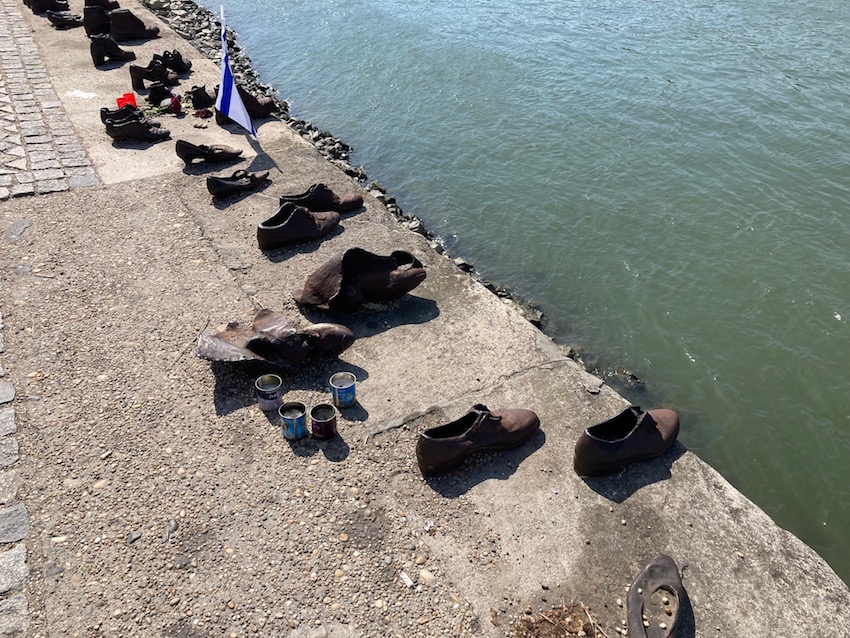
The installation consists of sixty pairs of cast-iron shoes – men’s, women’s, and children’s – lined along the riverbank, as if their owners had stepped out of them just before being shot into the river.
The memorial was conceived by film director Can Togay and created in collaboration with sculptor Gyula Pauer. Since its installation in 2005, it has been a place of quiet reflection. Today, the shoes are often adorned with candles and stones placed there by visitors and passersby – simple, solemn gestures that honour the innocent victims and preserve their memory.
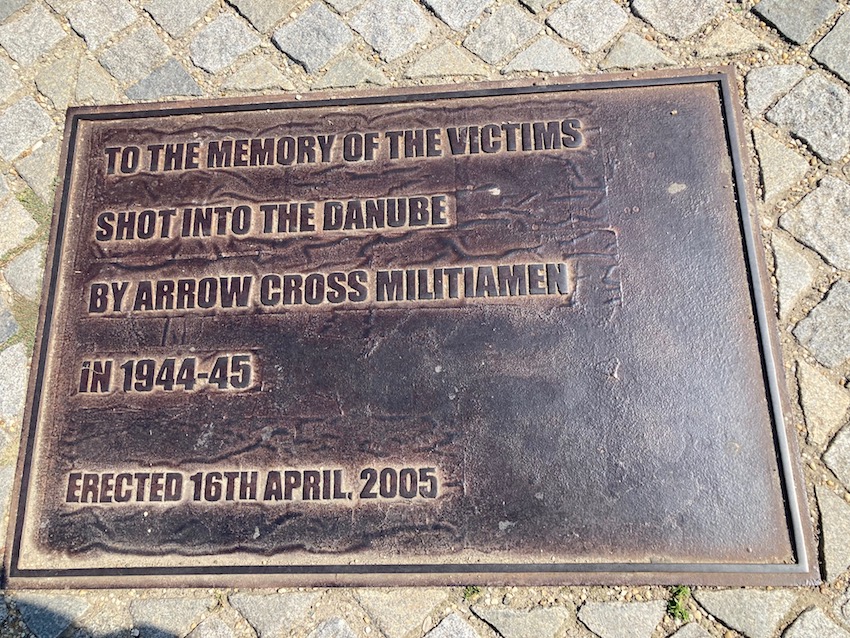
At three points along the memorial, cast-iron plaques bear inscriptions in Hungarian, English, and Hebrew: “To the memory of the victims shot into the Danube by Hungarian Nazis of the Arrow Cross Party in 1944–1945.”
Sources: Embassy of Germany in Budapest, Embassy of State of Israel in Budapest
Photos from the German Embassy, the Embassy of the State of Israel, and Diplomatic Press Agency