


Edited by Anna Popper

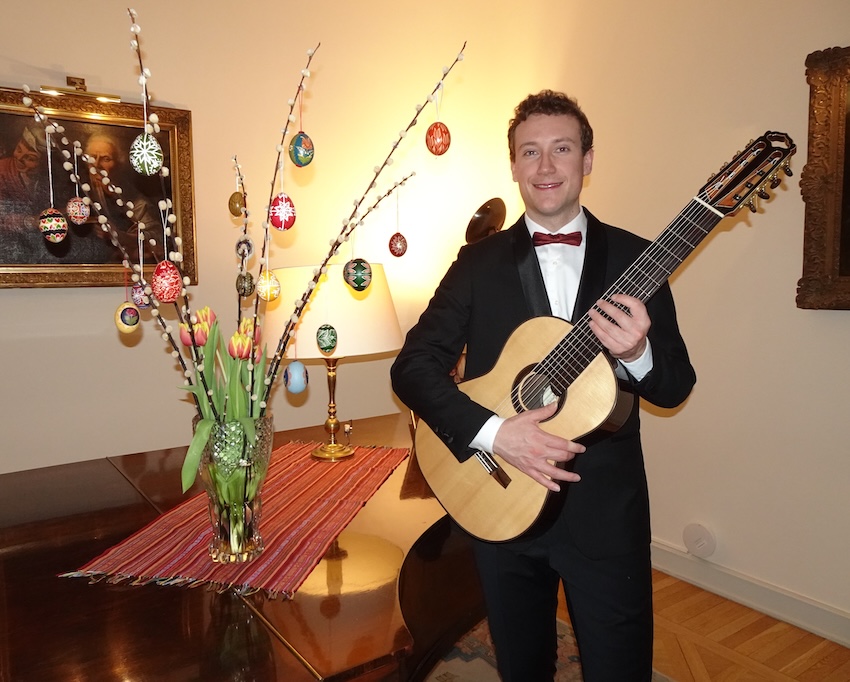
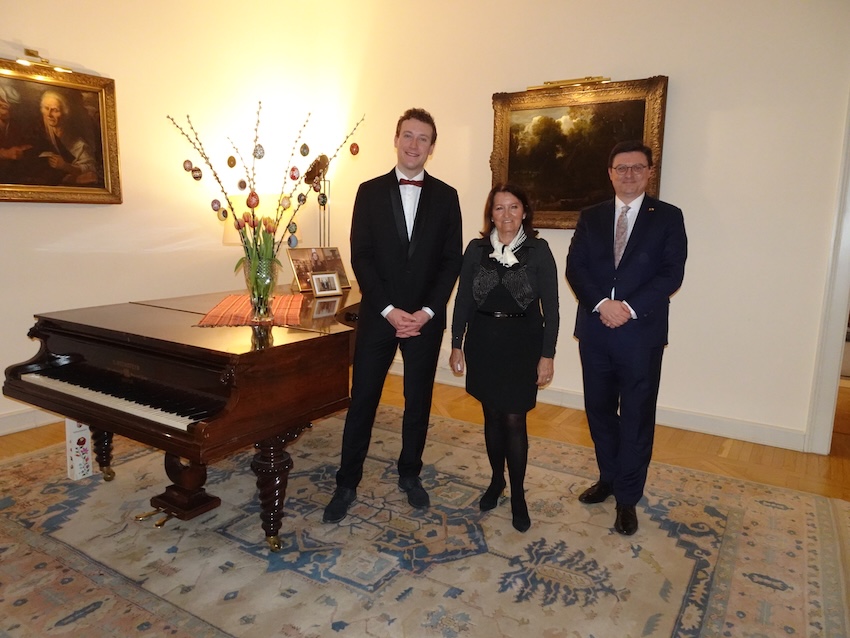
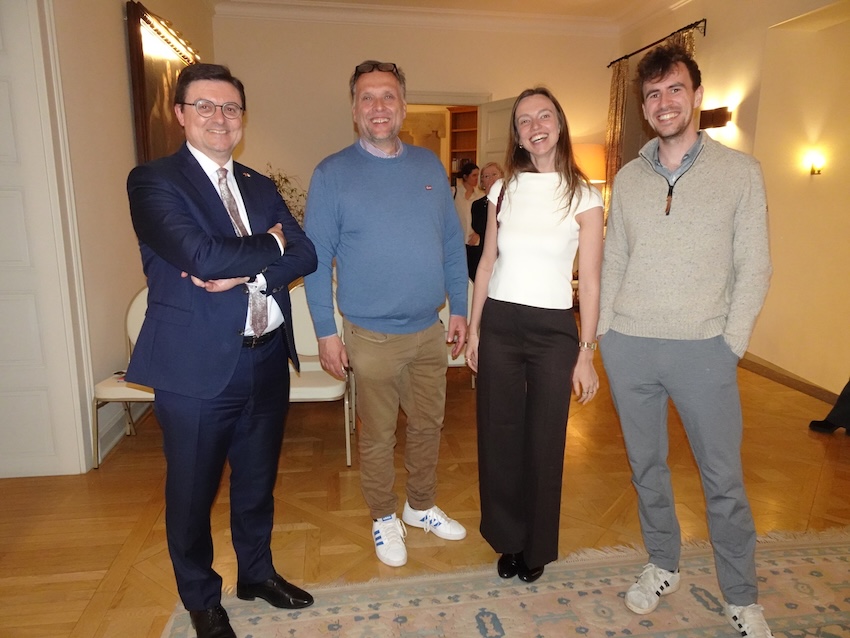
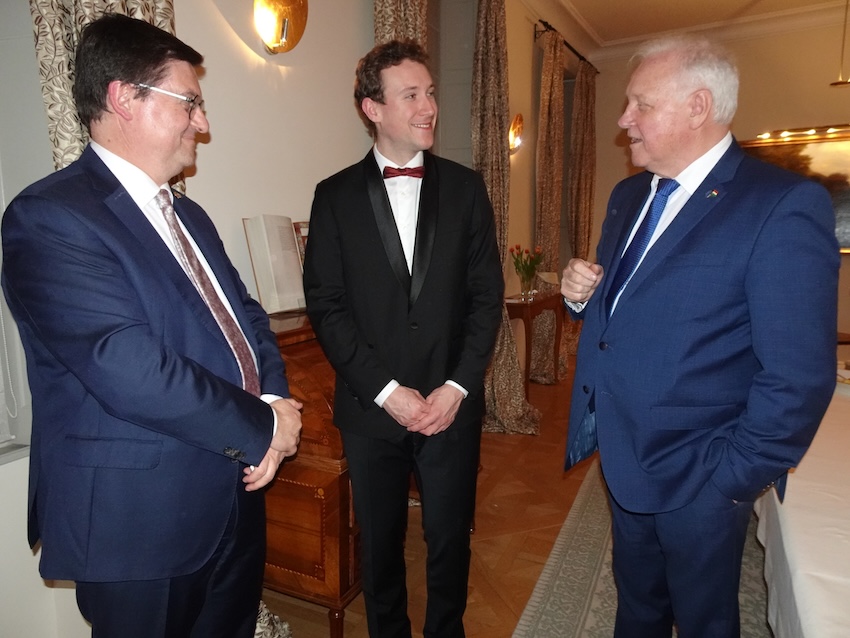
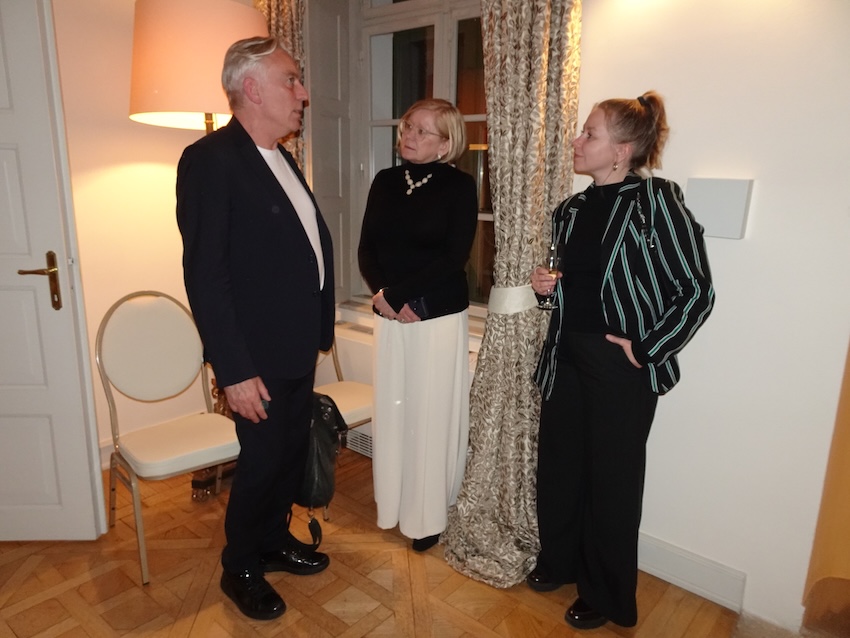
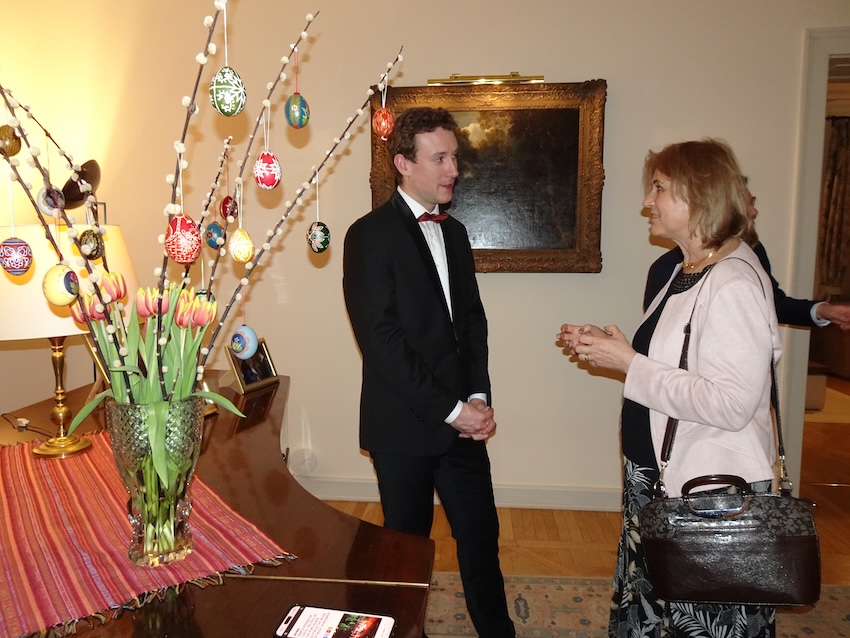
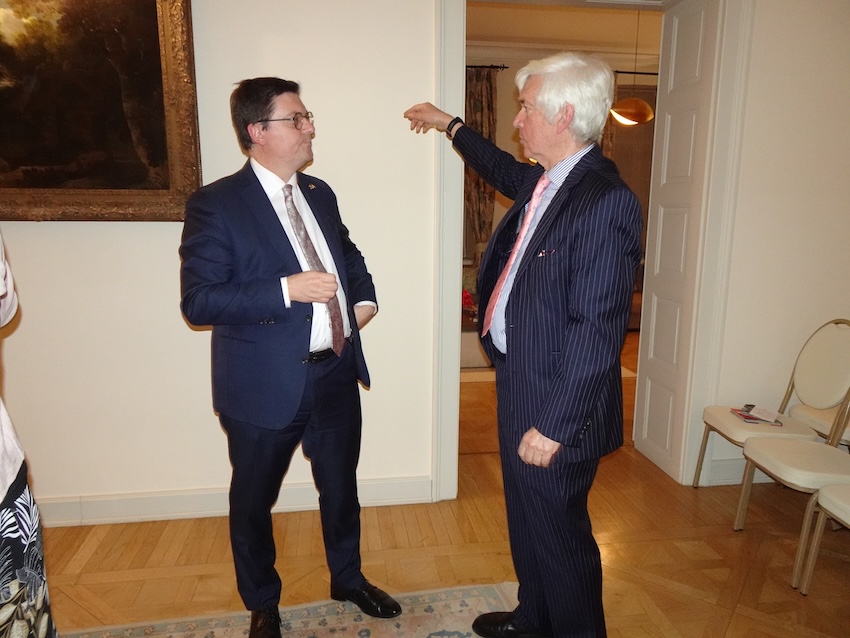
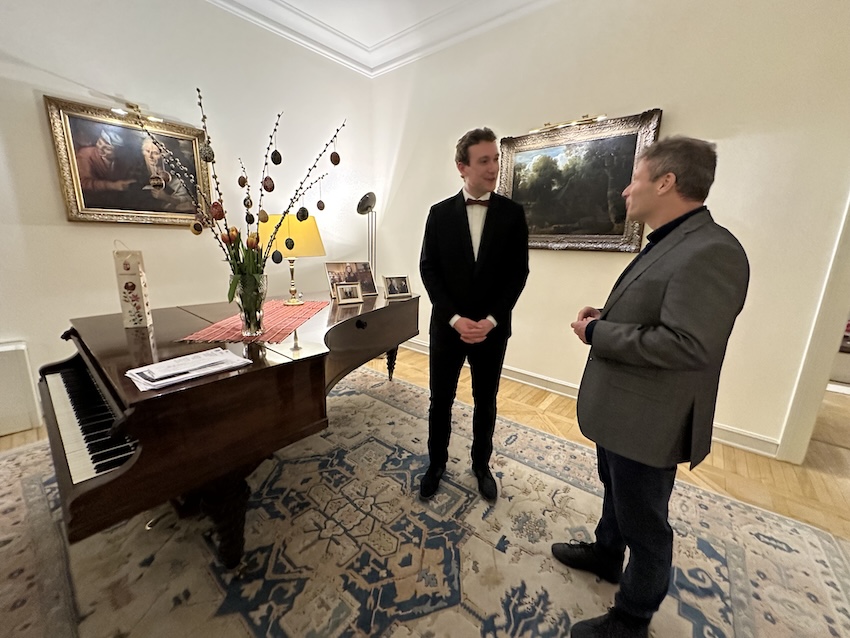
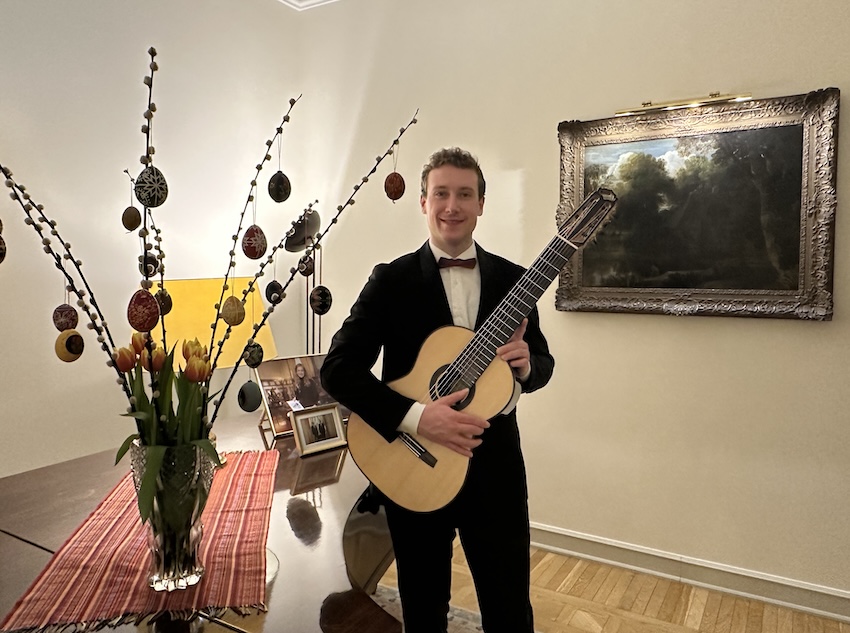
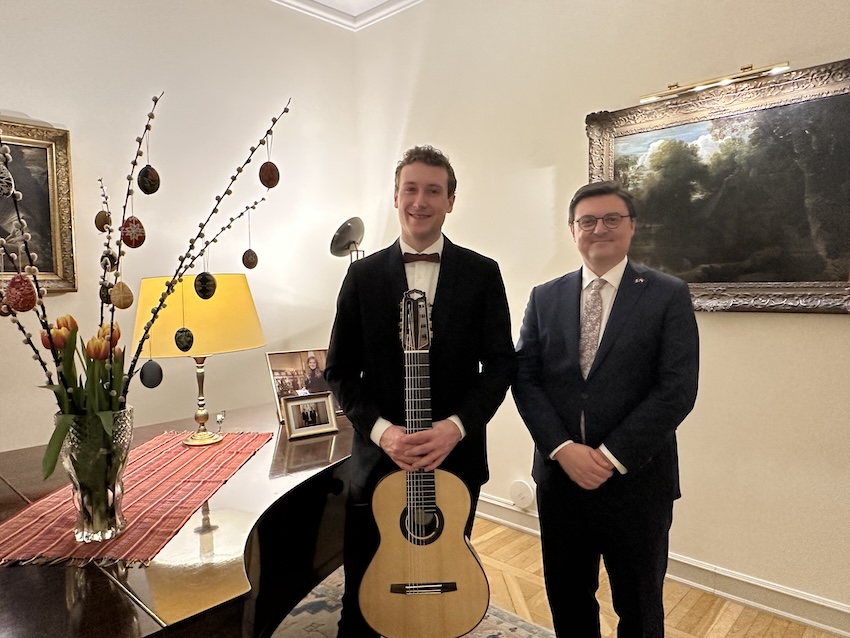
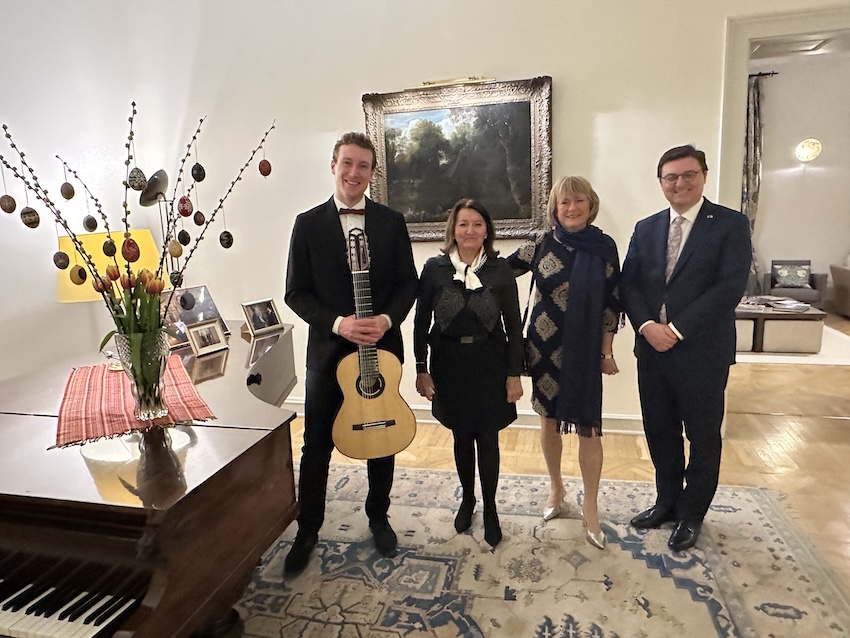
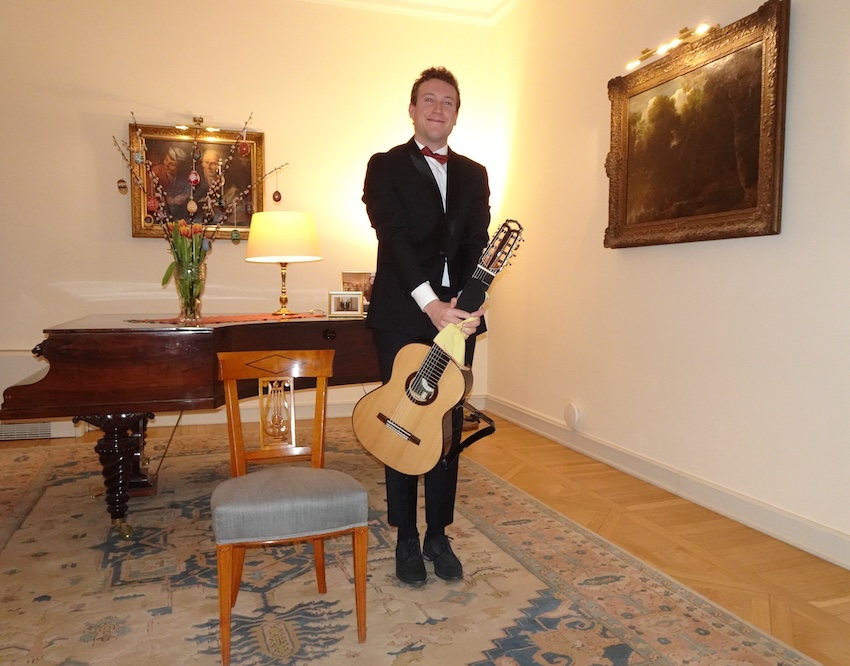
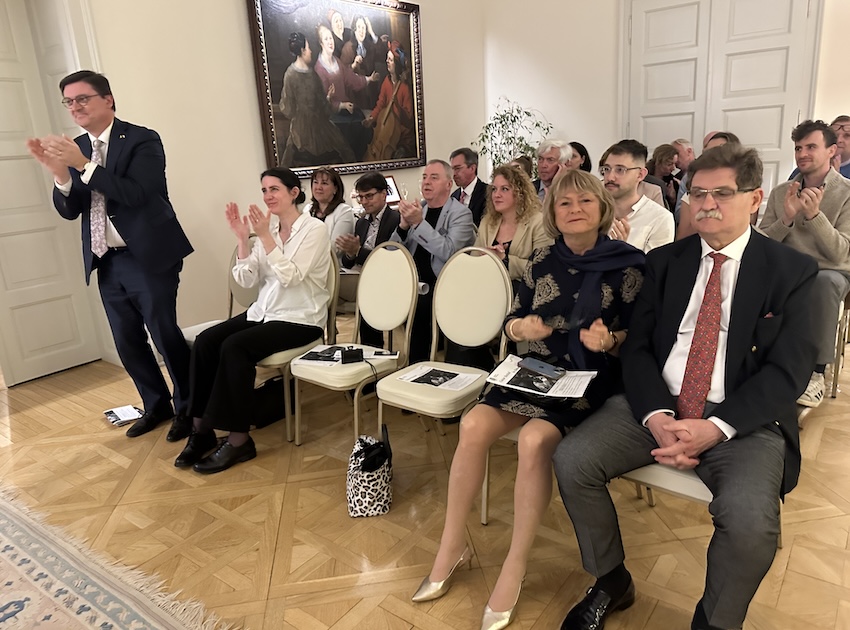
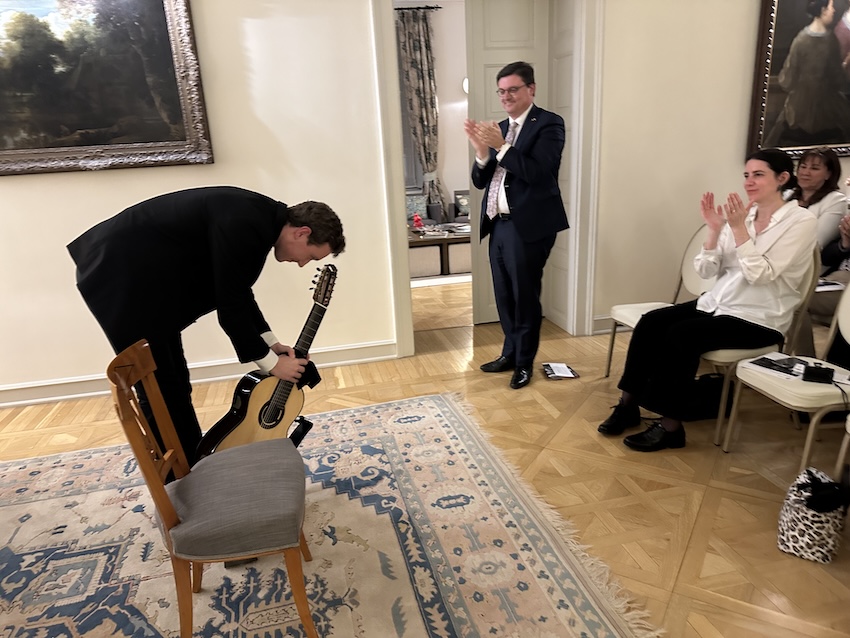
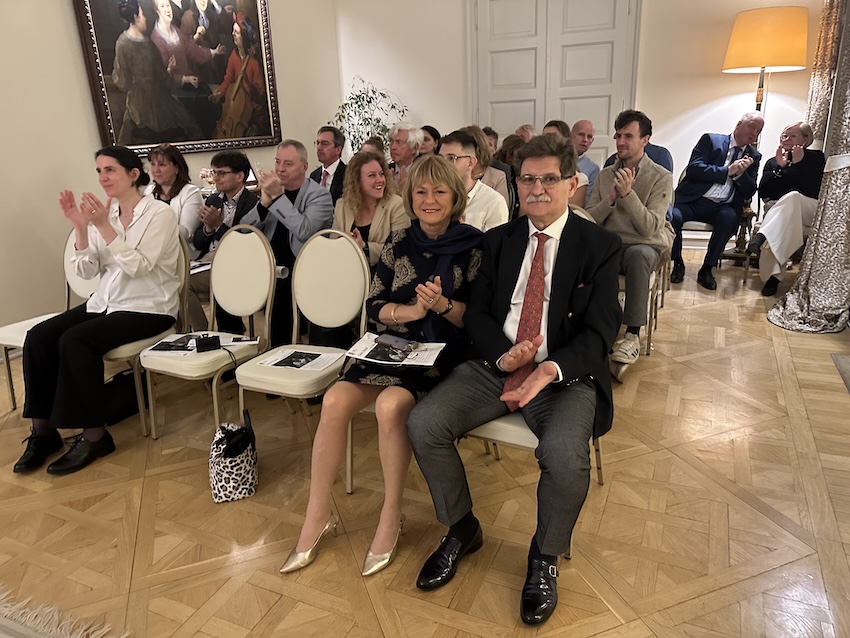
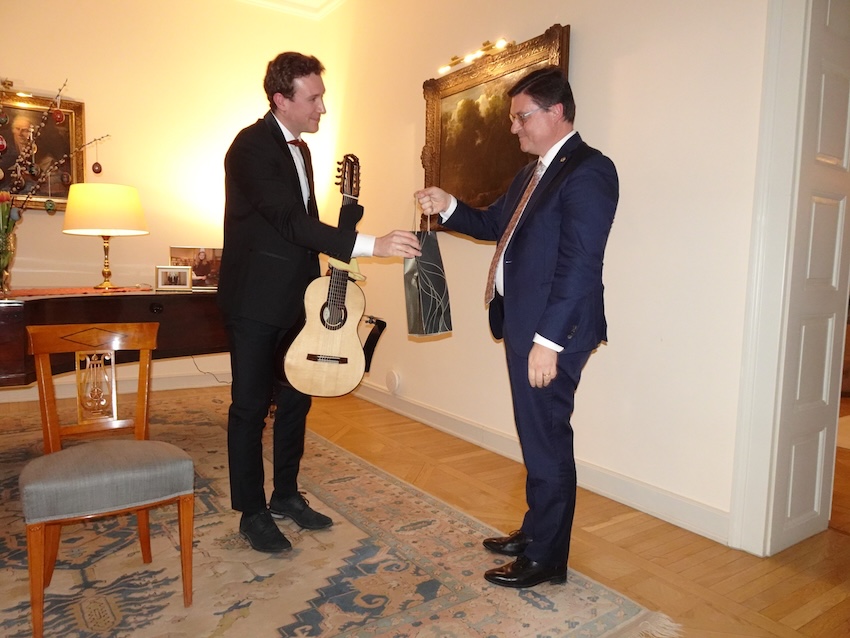
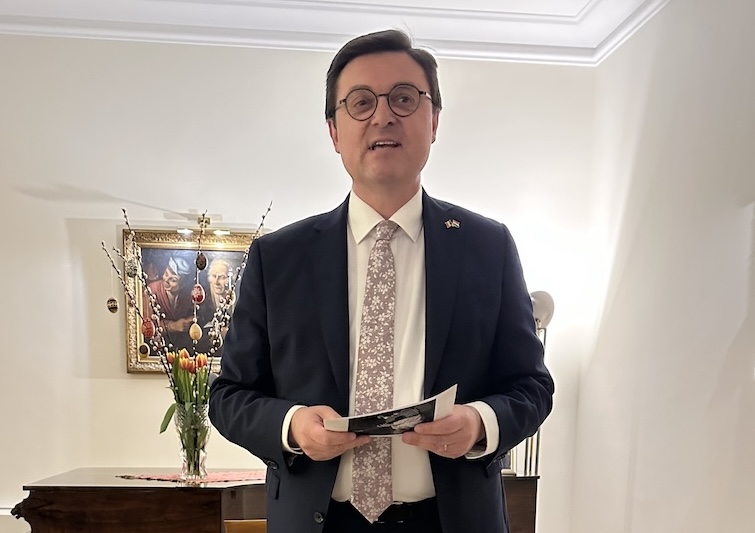
On the evening of 2 April 2026, in the refined setting of the Ambassadorial Residence in Budapest, His Excellency Mr. Jeroen Vergeylen, Ambassador of the Kingdom of Belgium to Hungary, hosted a special classical guitar concert in Easter mood by the young and highly accomplished Belgian guitarist Nathan Andrien. The event formed part of the Embassy’s cultural diplomacy efforts and brought together members of the diplomatic corps, Hungarian and Belgian guests, and representatives of the cultural sphere.
A Concert in the Spirit of Easter
It was a thoughtful and symbolic initiative to mark “Maundy Thursday” evening – the eve of Good Friday – with a solo recital that reflected the depth and contemplative nature of the upcoming holiday. The carefully curated program, performed with sensitivity and artistic maturity, evoked the spiritual atmosphere of Easter: a time of reflection, sorrow, and hope. In this spirit, the music chosen by the artist resonated deeply, offering a meditative and introspective experience for the audience.
Ambassadorial Welcome and Introduction of the Artist
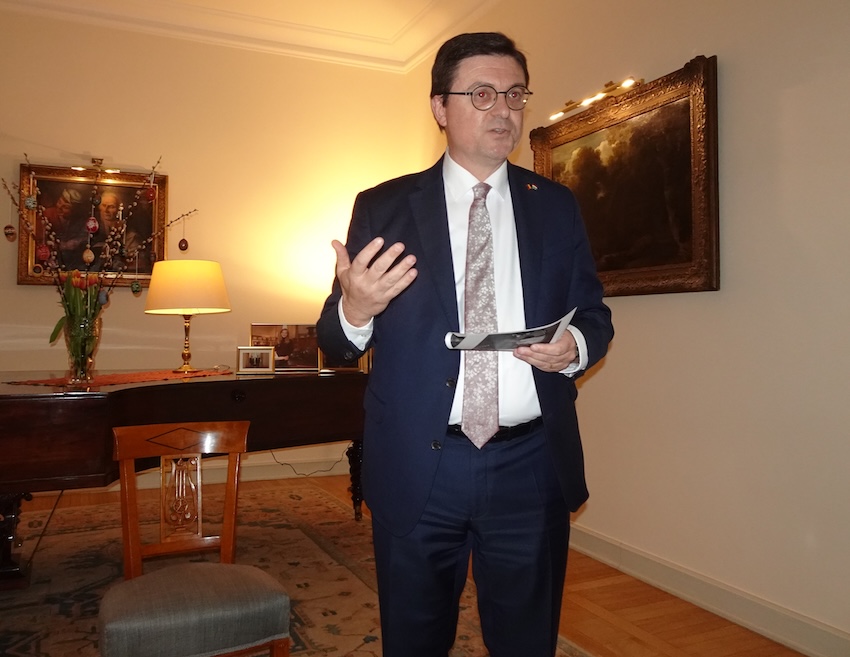
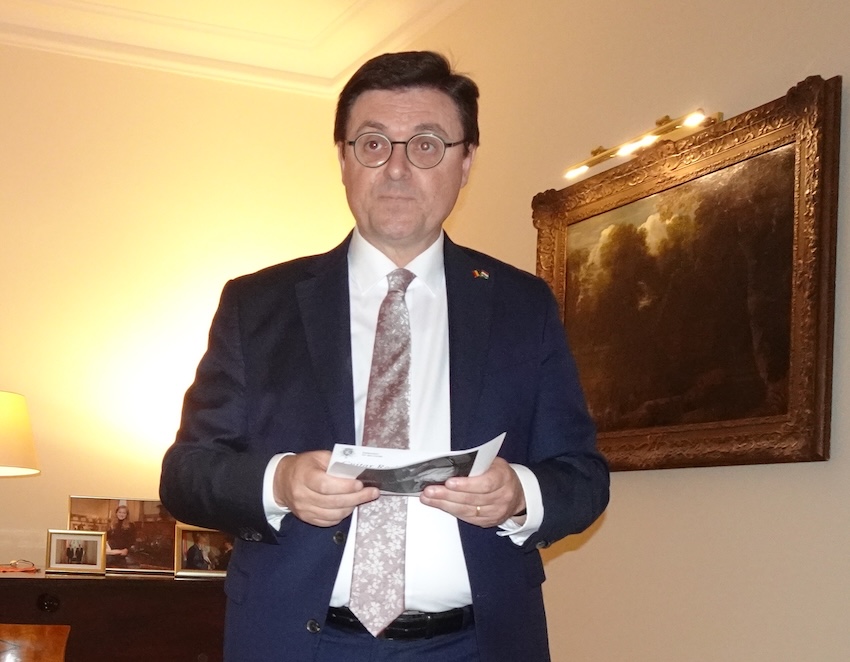
Prior to the performance, Ambassador Vergeylen warmly welcomed the distinguished guests and highlighted the importance of cultural encounters in strengthening bilateral relations. He then introduced Nathan Andrien, emphasizing his remarkable achievements despite his young age.
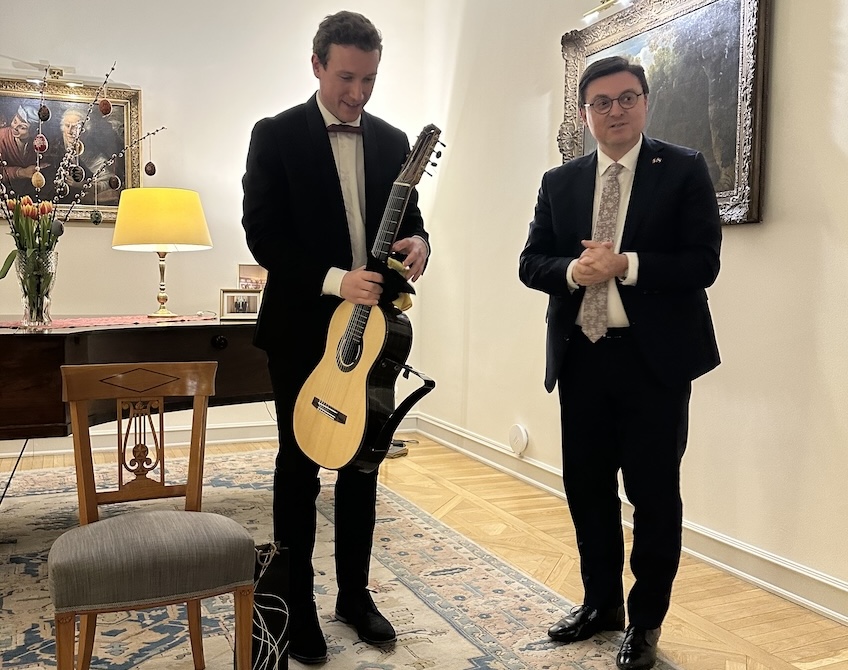
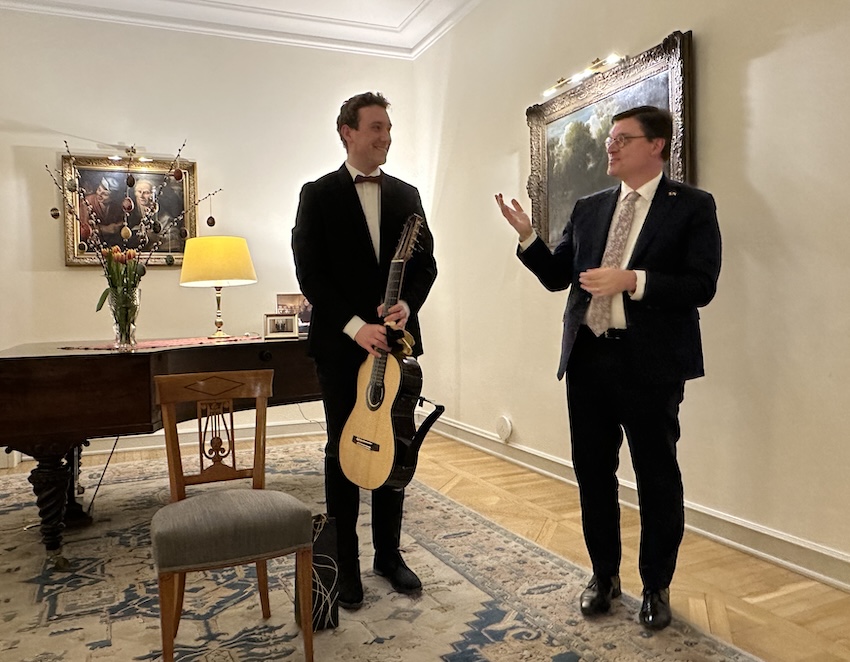
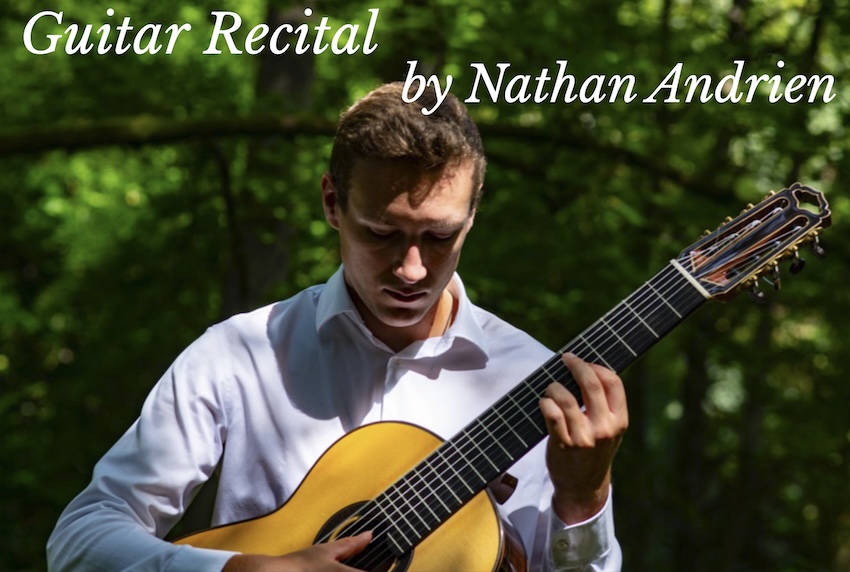
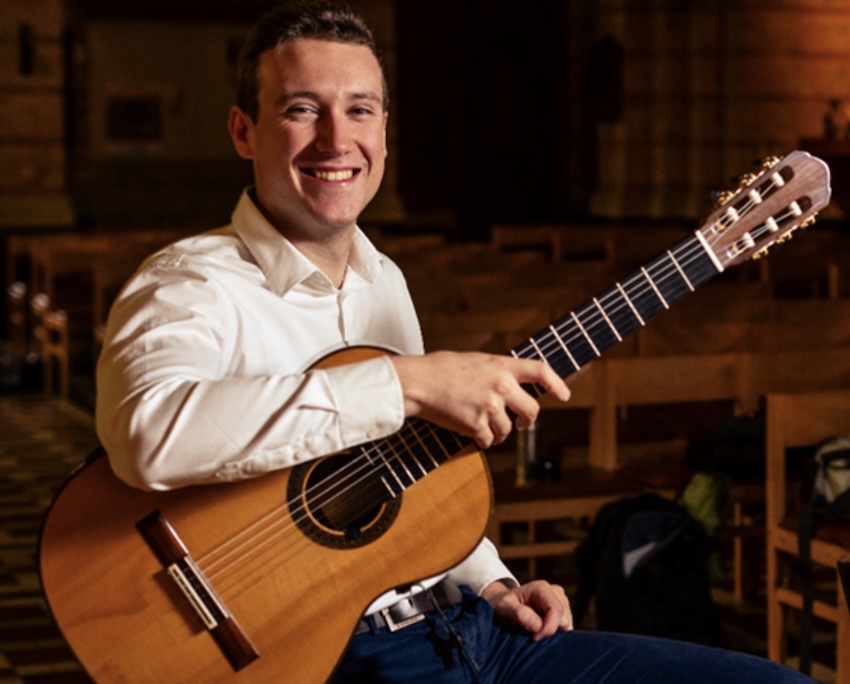
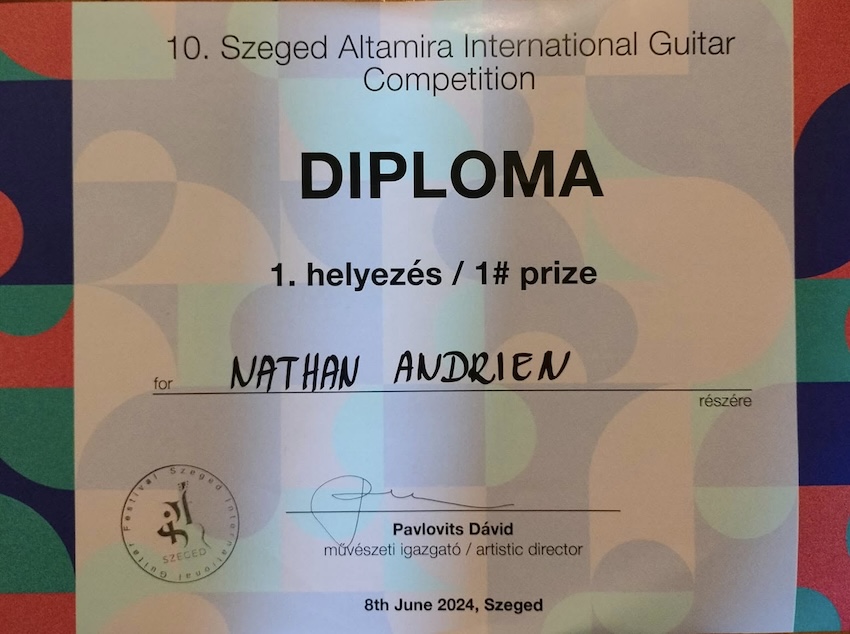
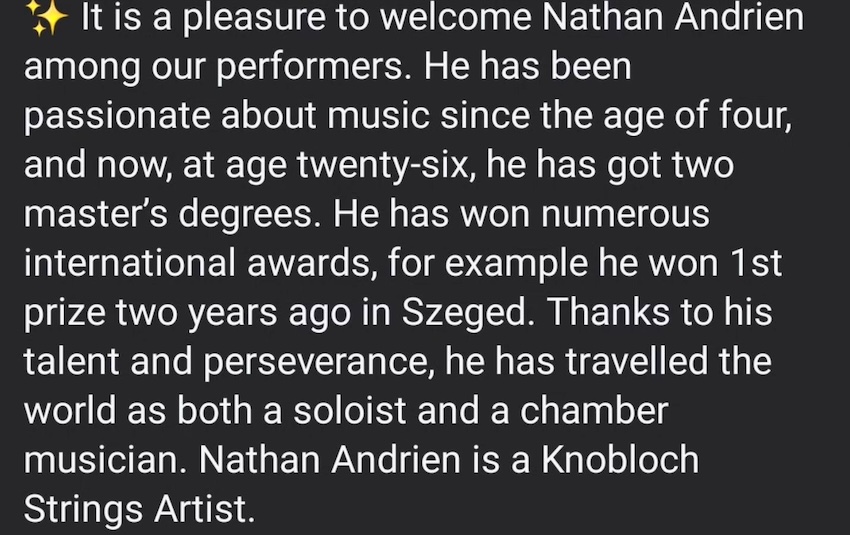
Born in 2000, Nathan has already established himself as an internationally recognized guitarist. His awards include First Prize at the Szeged International Guitar Competition 2024 and at the Nouvelles Étoiles Competition 2026 in Paris. A graduate with highest honours from the Royal Conservatory of Liège, he also pursued studies at the Franz Liszt Academy of Music in Budapest, and is currently continuing his master’s studies under Carlo Marchione at the Maastricht Conservatory.
A Refined and Expressive Musical Programme
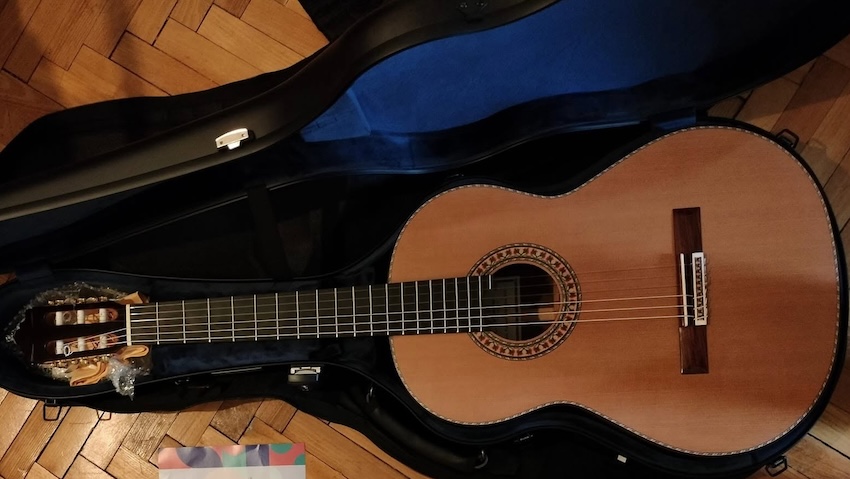
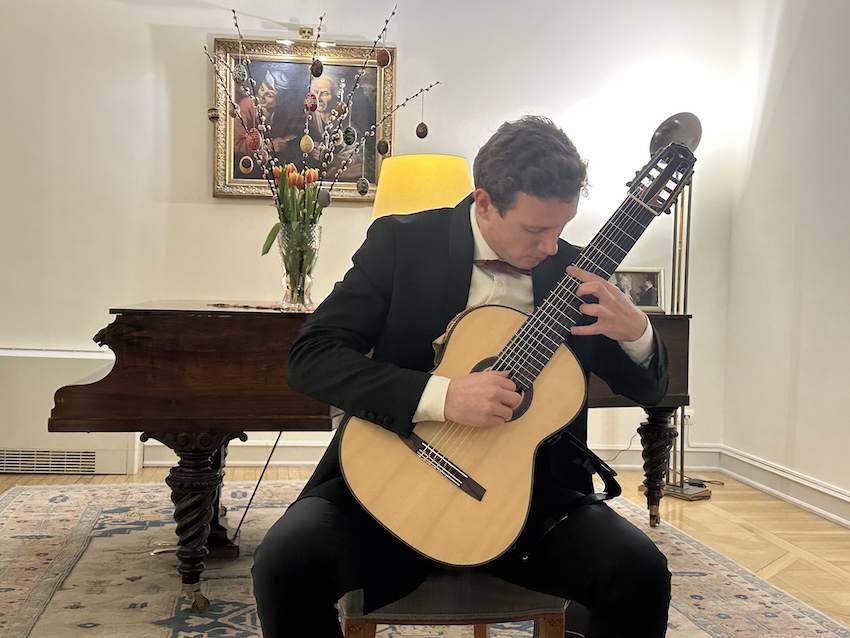
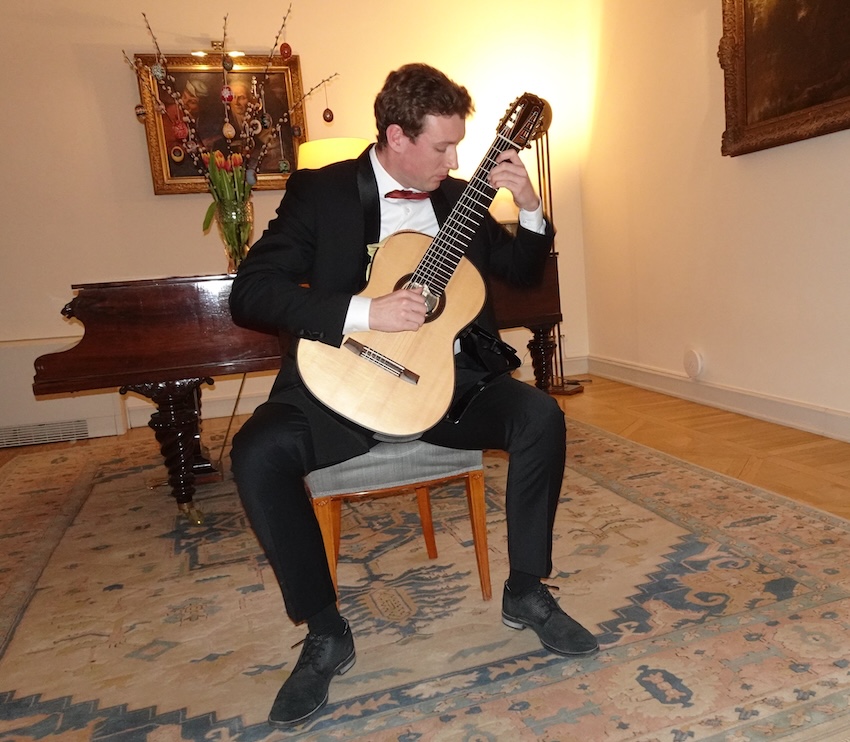
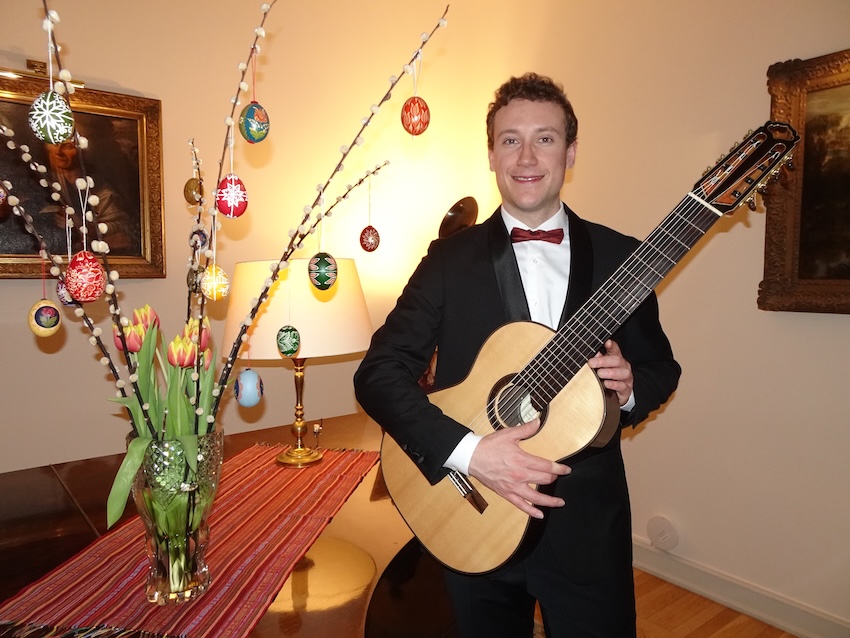
The recital featured a sophisticated selection of works – many originally composed for other instruments and transcribed by the artist himself for his distinctive 8-string guitar, underscoring his originality and creative versatility:
- Isaac Albéniz – Asturias (Suite Española No. 1)
- Johann Sebastian Bach – Sinfonias (BWV 797, 788) and Allemande (BWV 996)
- Alexander Scriabin – Prelude for the left hand, Op. 9 No. 1
- Alexandre Tansman – Variations on theme from Scriabin
- Adrien Coeck – Lamento
- György Kurtág – Calmo, scorrevole (from 3 Pieces for Guitar)
- Johann Kaspar Mertz – Hungarian Fantasy, Op. 65
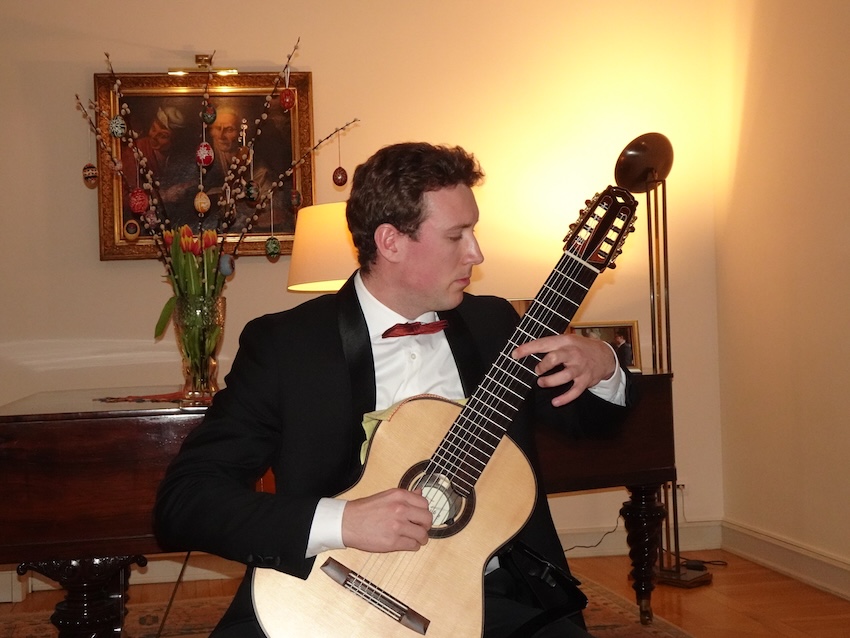
A particularly meaningful moment was the inclusion of a work by György Kurtág, the internationally renowned Hungarian composer who recently celebrated his 100th birthday – an homage that was greatly appreciated by the audience.


The Sound World of the 8-String Guitar
Before the final piece of his program and the encore, Nathan Andrien addressed the audience, expressing his gratitude for their presence and applause, and special thanks to the Ambassador for this opportunity.
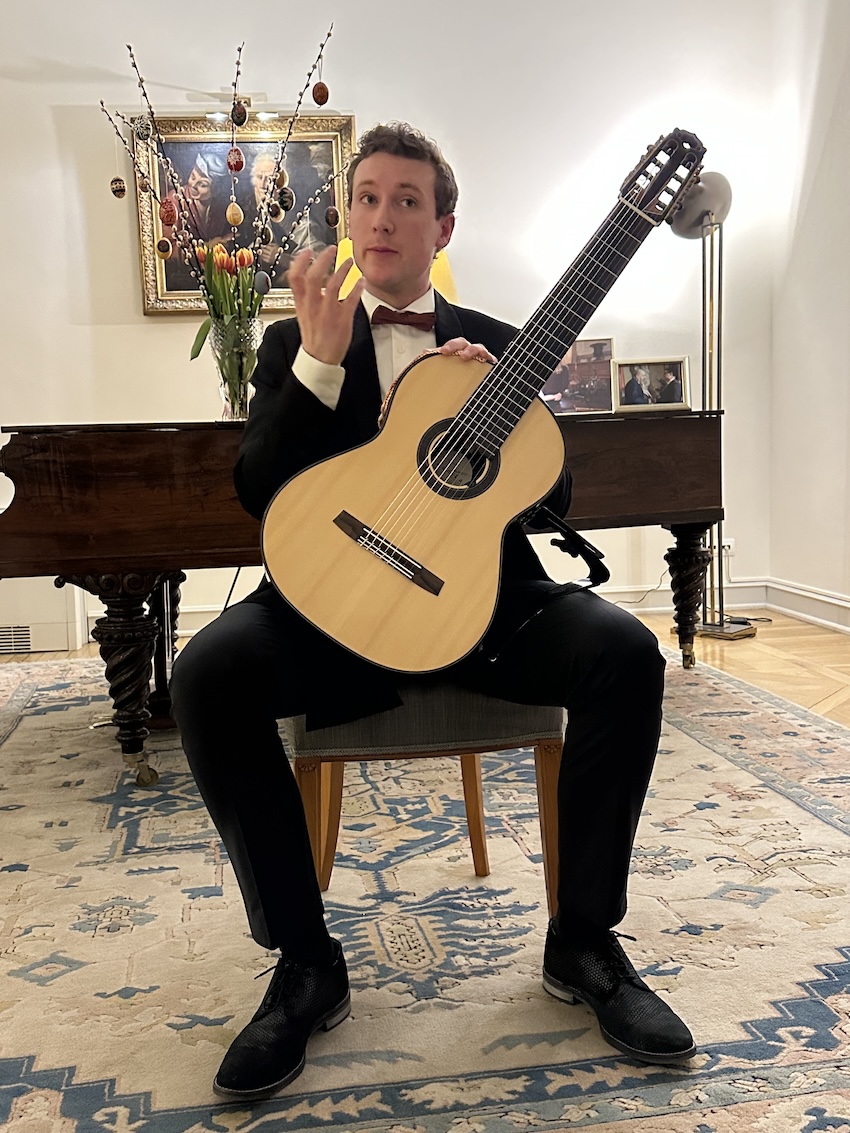
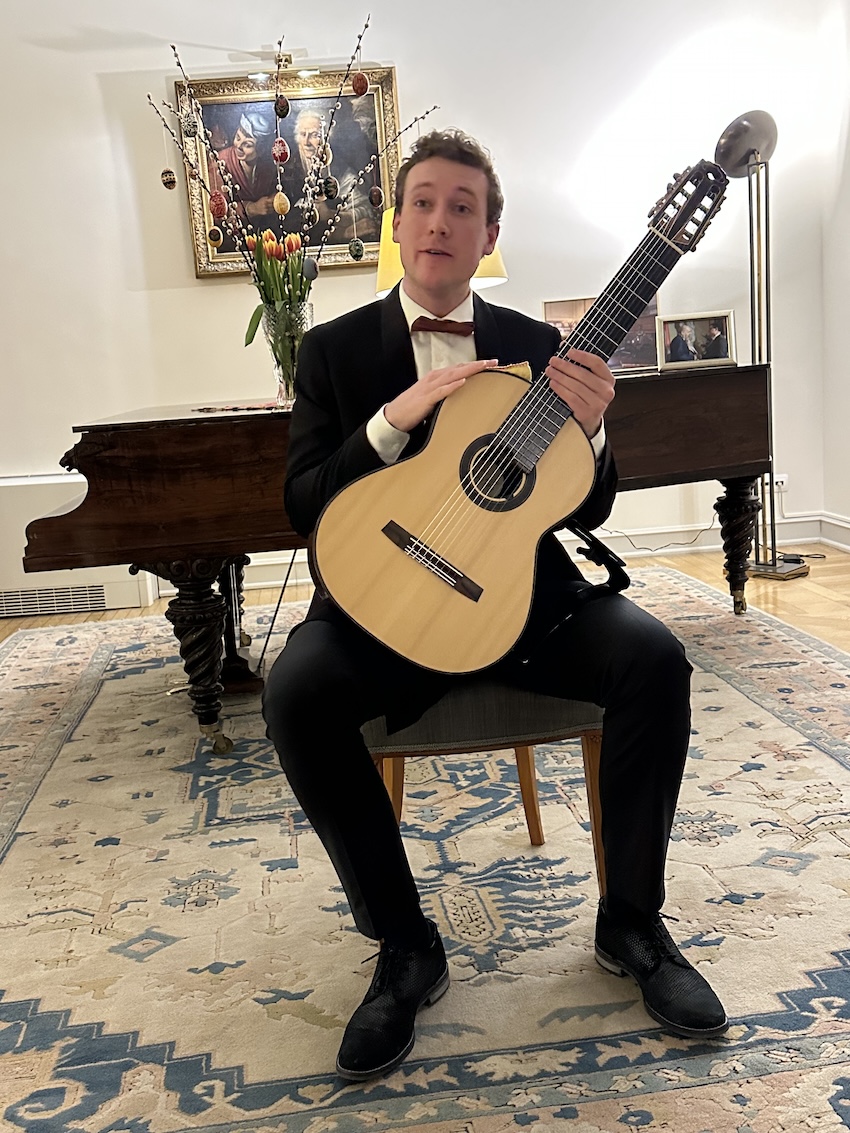
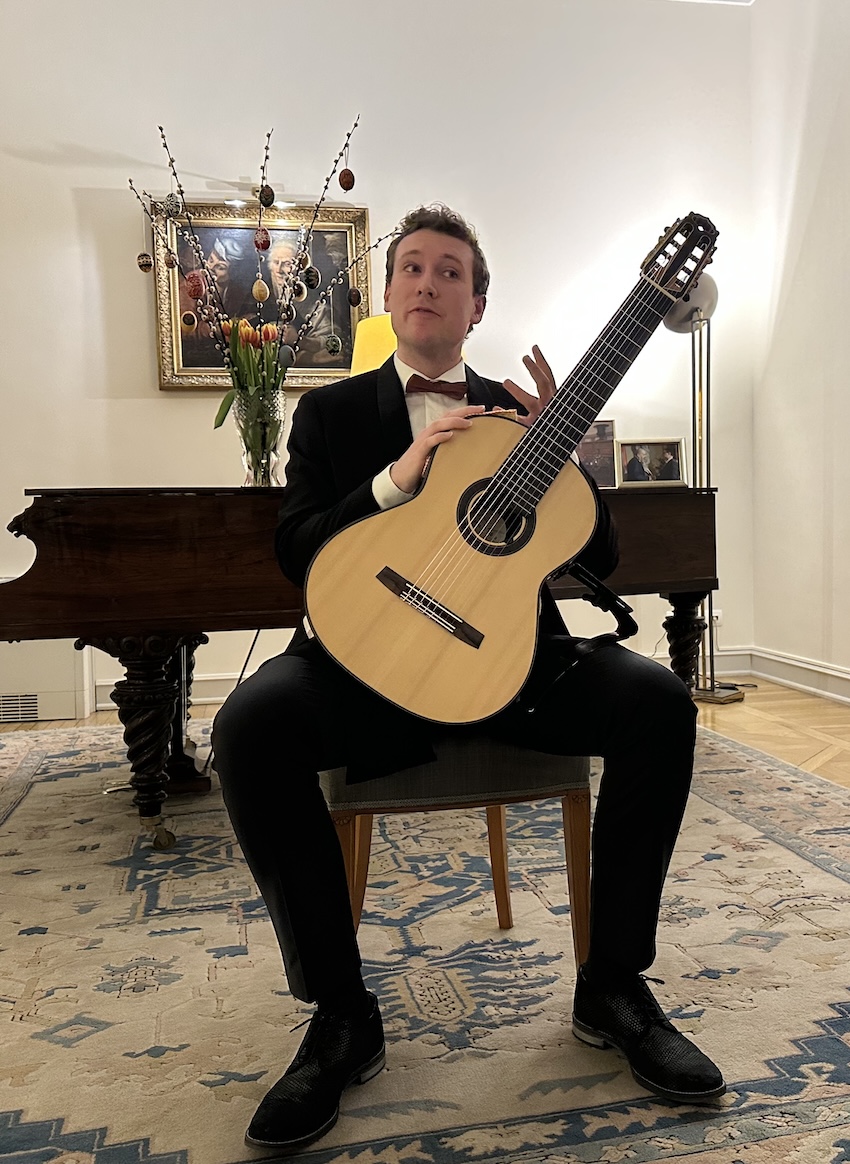
He also explained that his artistic identity is closely linked to the use of the 8-string guitar, an instrument that expands the expressive and harmonic possibilities of the classical guitar. This extended range allows for richer textures, deeper bass lines, and a broader palette of tonal colours – particularly well-suited for transcriptions of keyboard and orchestral works. This approach enables him to bring Romantic and Baroque repertoire closer to its original expressive intent while also opening new dimensions within the traditional guitar literature.
Musical Education and Artistic Vision
Nathan Andrien’s musical formation reflects both depth and international breadth. In 2018, he entered the Royal Conservatory of Liège in Belgium, where he studied under Hughes Kolp and Adrien Brogna. There, he obtained both a Master’s degree in Guitar Pedagogy and a Master’s degree in Classical Guitar with a ‘soloist’ specialization, graduating with the Highest Honours.
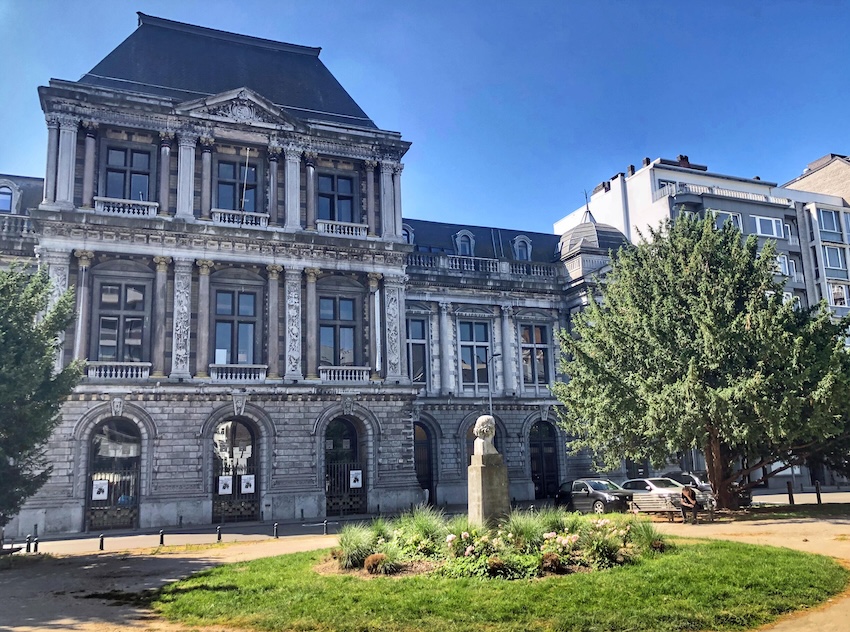
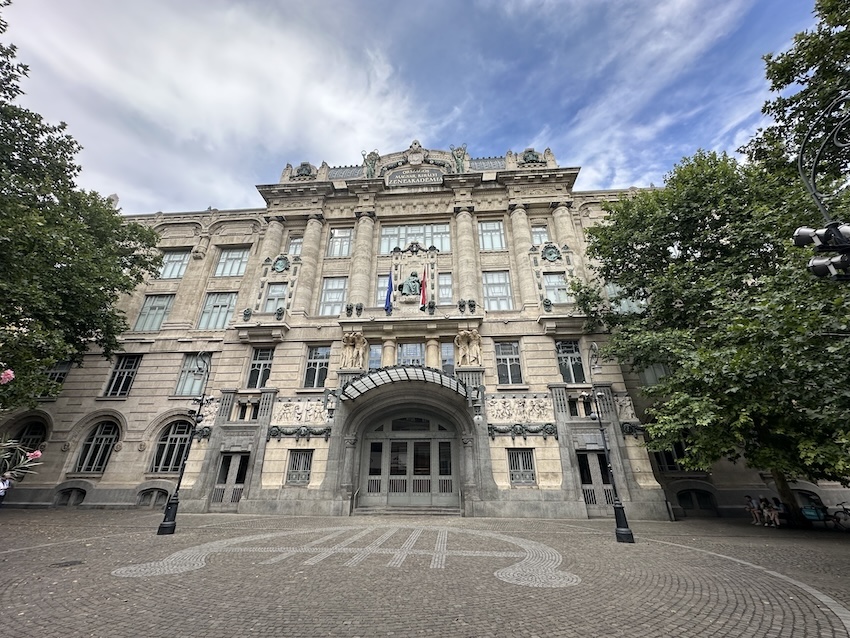
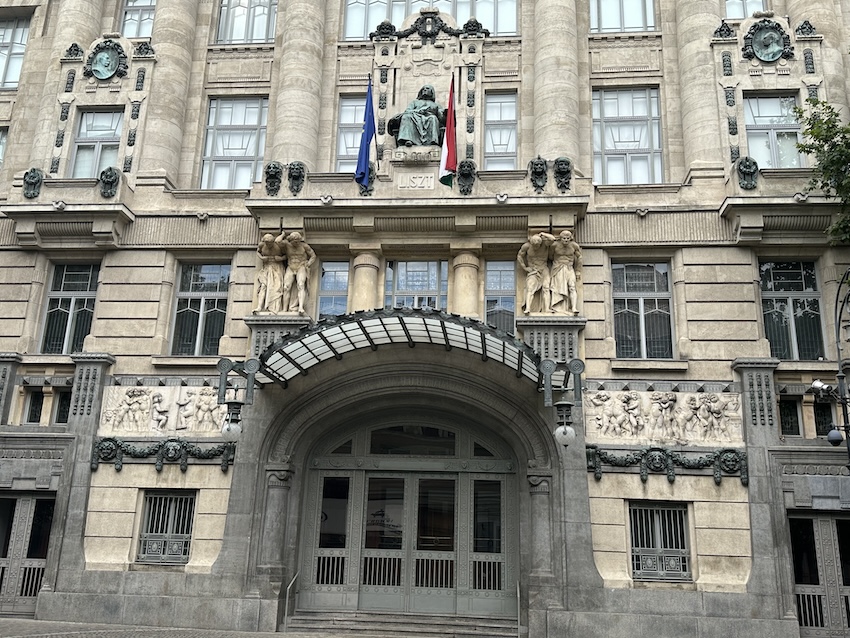
His artistic development was further enriched through studies at the Franz Liszt Academy of Music in Budapest under András Csáki. He is currently pursuing a Master of Music degree at the Conservatorium Maastricht, where he studies under the renowned guitarist Carlo Marchione.
Over the years, he has also participated in numerous international summer courses in Hungary and Poland, working with distinguished musicians such as Gabriel Bianco of the Conservatorium van Amsterdam and Łukasz Kuropaczewski of the University of Graz. In addition, he benefited from guidance and masterclasses with some of the most prominent figures of the classical guitar world, including Manuel Barrueco, Judicaël Perroy, Pablo Márquez, Marcin Dylla, and Aniello Desiderio.
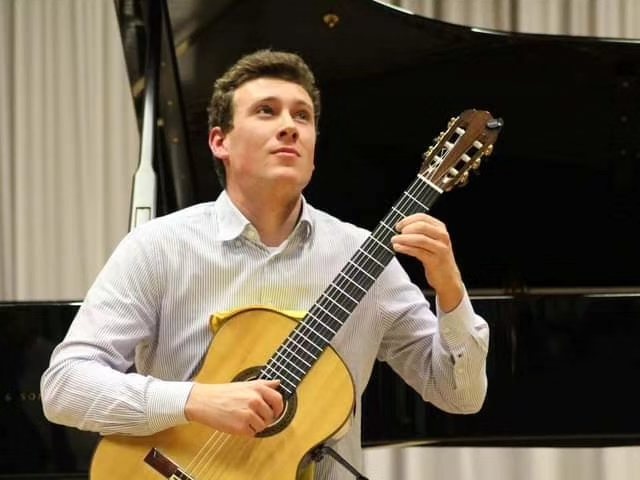
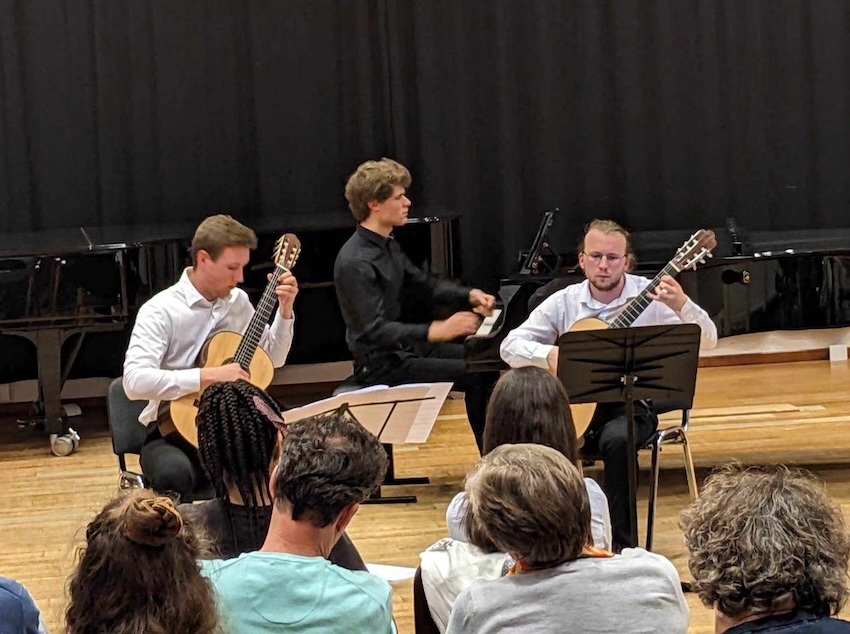

With his instrument, Nathan pursues a clear artistic mission: to introduce audiences to both lesser-known treasures of the guitar repertoire and major works of classical music in new and engaging forms. A defining aspect of his musical personality is his commitment to expanding the reach of the classical guitar. He actively works on transcriptions for solo and chamber settings, offering fresh perspectives on well-known repertoire through the instrument’s light, nuanced, and expressive qualities. His arrangements include works by composers such as Chopin, Rameau, and Franck, many of which are already part of his concert programs.
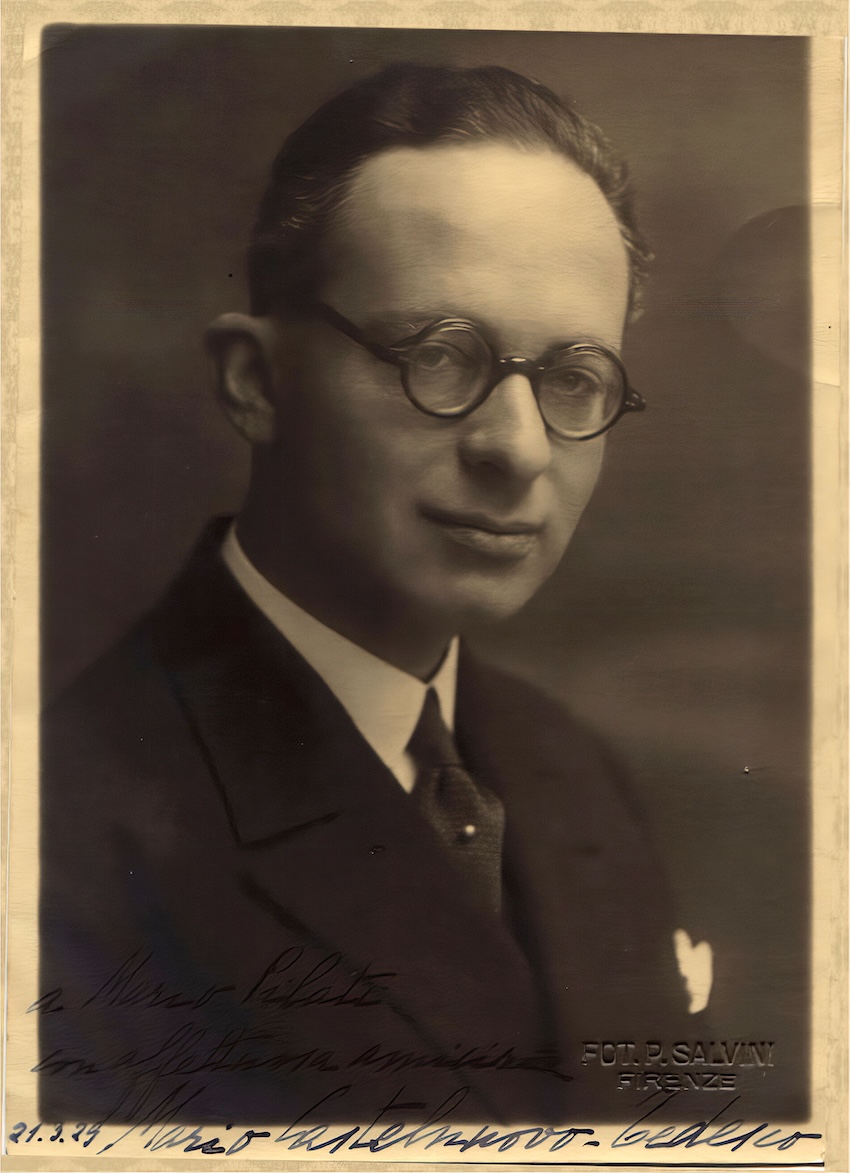
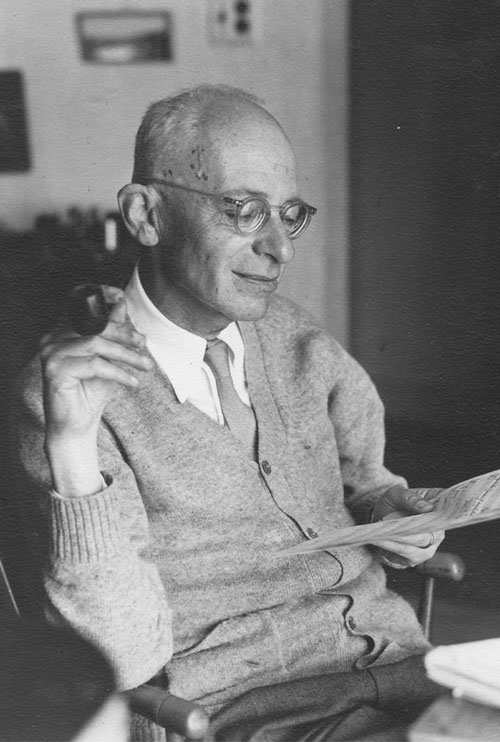
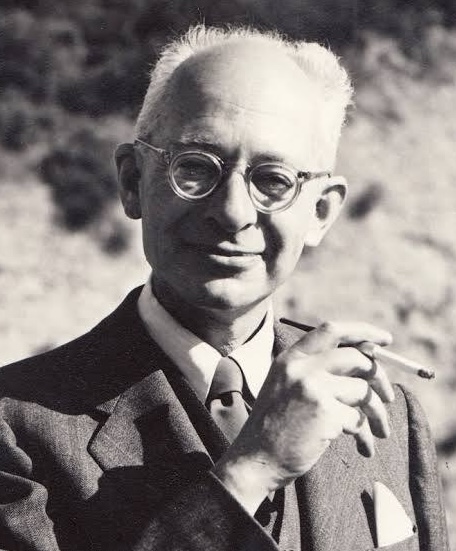
He also highlighted the influence of the Italian composer Mario Castelnuovo-Tedesco (1895–1968), one of the most important guitar composers of the twentieth century, whose extensive body of work for the instrument continues to inspire him. Castelnuovo-Tedesco’s career – spanning Europe and Hollywood, where he composed the music for nearly 200 films – serves as a model of artistic versatility and creative ambition for Nathan.
Conversation with the Artist
Following the concert, I had the privilege and pleasure of speaking with the artist and gaining insights into his musical journey and aspirations. Nathan began his musical studies at the age of four – initially inspired by a cousin who was a rock musician – and developed a great curiosity and passion for the guitar early on.
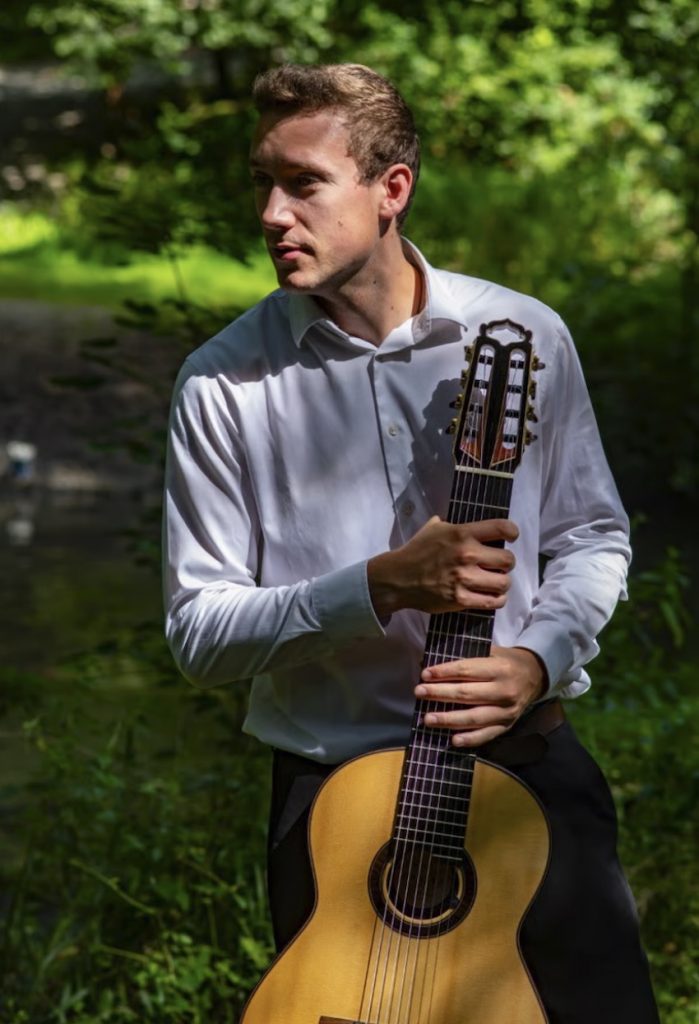
Today, his career encompasses solo concerts, chamber music collaborations, and active engagement with contemporary composers. He performs throughout Europe and South America and is involved in various ensembles, including guitar and mandolin duos. Alongside his concert career, he is also committed to music education.
His artistic credo reflects a coherent concept: “As a young artist, I am dedicated to broaden the audience of classical guitar. My performances allow people to discover hidden gems of the guitar repertoire, while also listening to well-known pieces and/or composers adapted to the light and colourful touch of the classical guitar. Through this unique experience of music that will take you in and outside of your comfort zone, I want to share with you my vision of music. I value diversity and discovery, but most importantly beauty, and I ensure every concert offers an authentic and sensitive experience.”
When asked how he envisions his future, Nathan Andrien expressed a dedicated outlook: he aims to pursue an active international concert career while simultaneously engaging in higher music education. Alongside performing, he is deeply committed to teaching, with the goal of transmitting his knowledge, experience, and passion for the guitar – an instrument that has become an integral part of his life.
A Historic Residence and a Living Legacy in Hungary
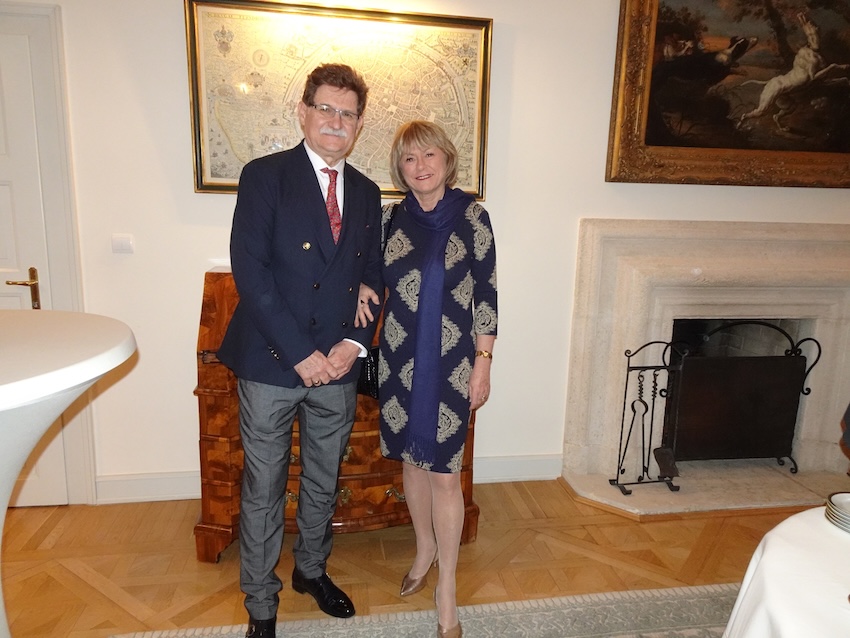
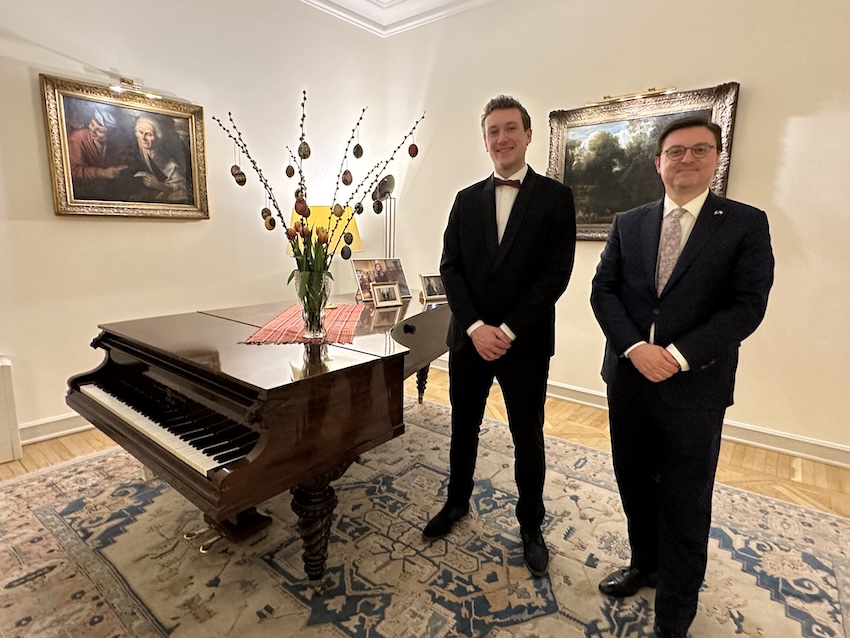
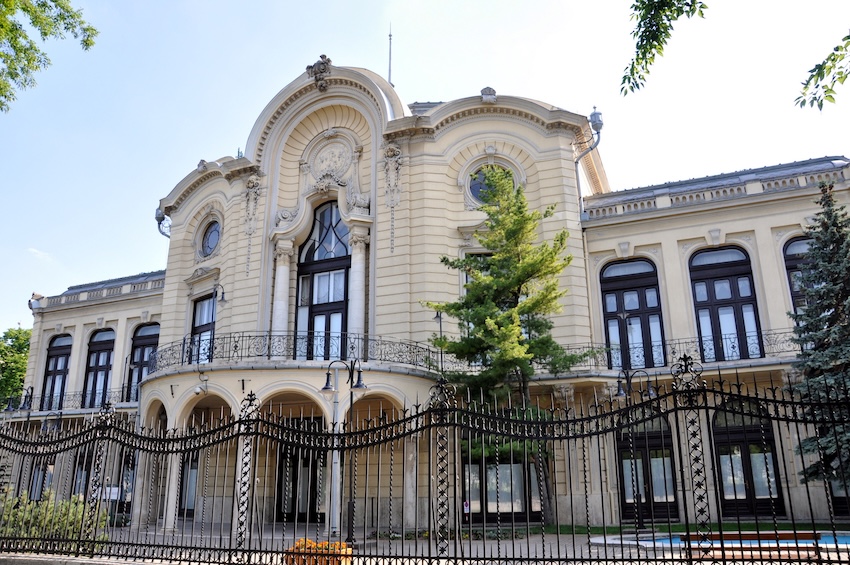
The audience responded with warm and appreciative applause to the deeply expressive performance. The emotional impact of the music was further enhanced by the historic ambiance: the over 200-year-old residence, owned by the Kingdom of Belgium for over a century, provided an intimate and distinguished setting for the evening.
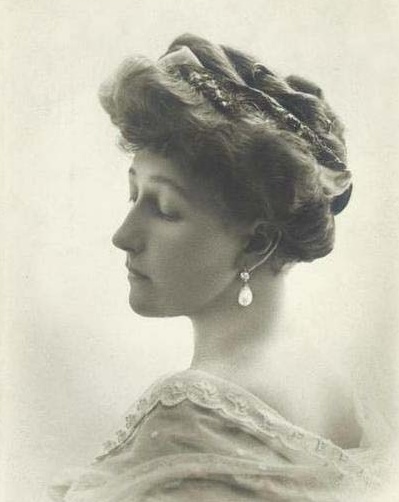
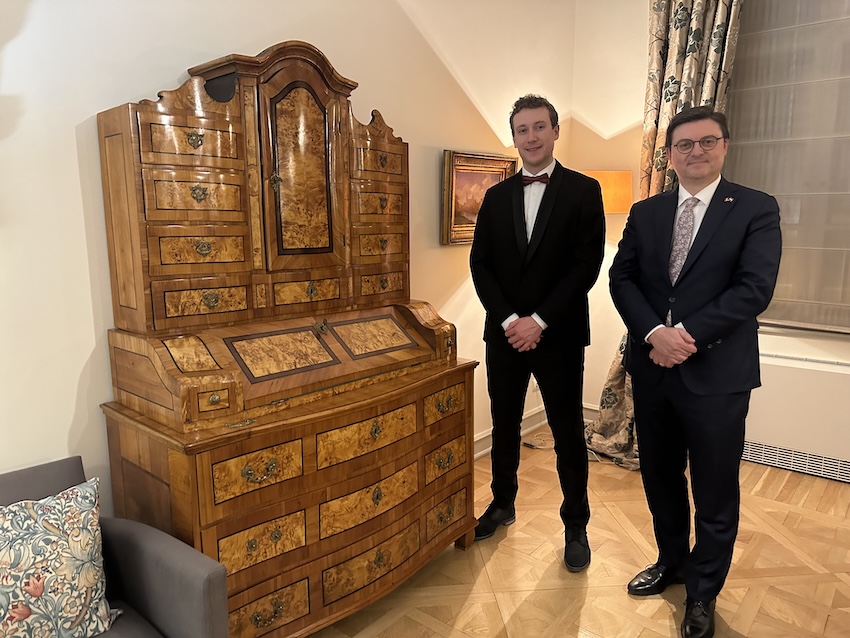
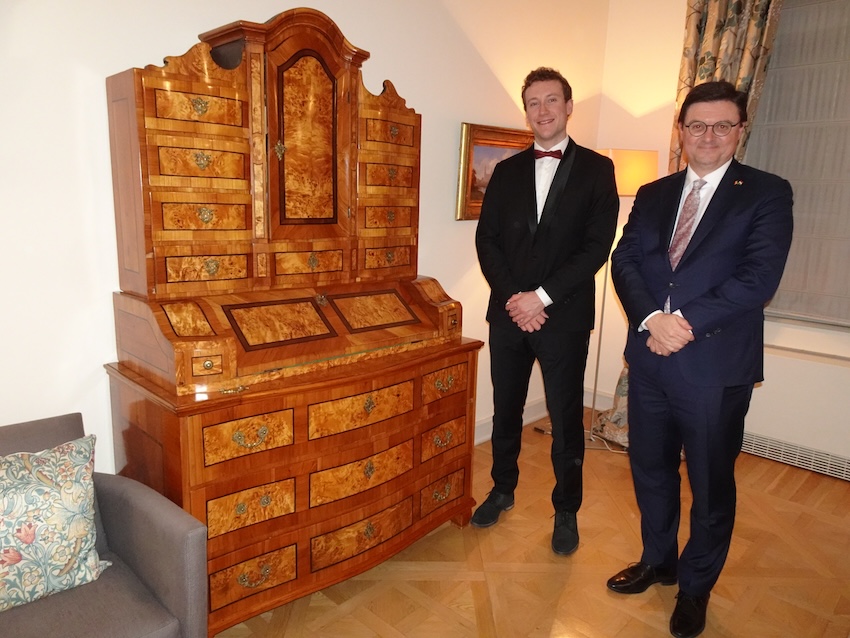
The residence is made even more unique by remarkable pieces of historical furniture that once belonged to Princess Stéphanie Clotilde Louise Herminie Marie Charlotte of Belgium (1864-1945), who became Crown Princess of the Austro-Hungarian Monarchy through her marriage to Crown Prince Rudolf of Austria, heir-apparent to the imperial throne of the Austro-Hungarian Empire.
These treasured objects are carefully preserved by the Ambassador, who takes great pride in sharing their fascinating stories and lesser-known connections to Hungary with his guests.
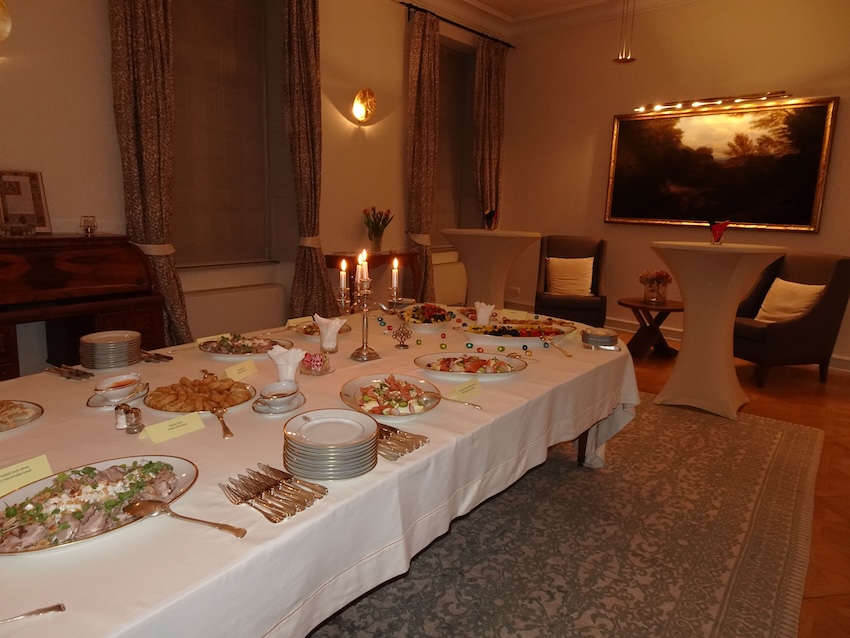
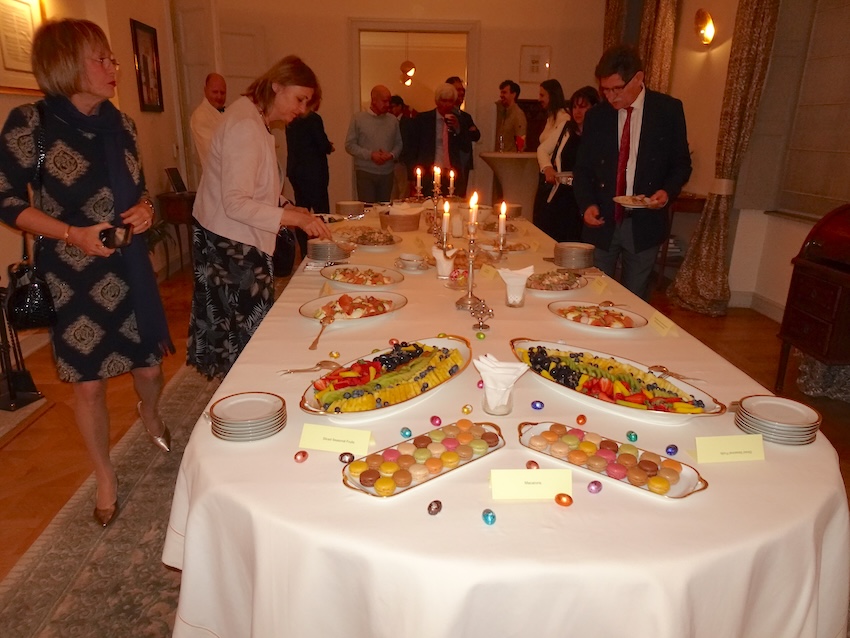
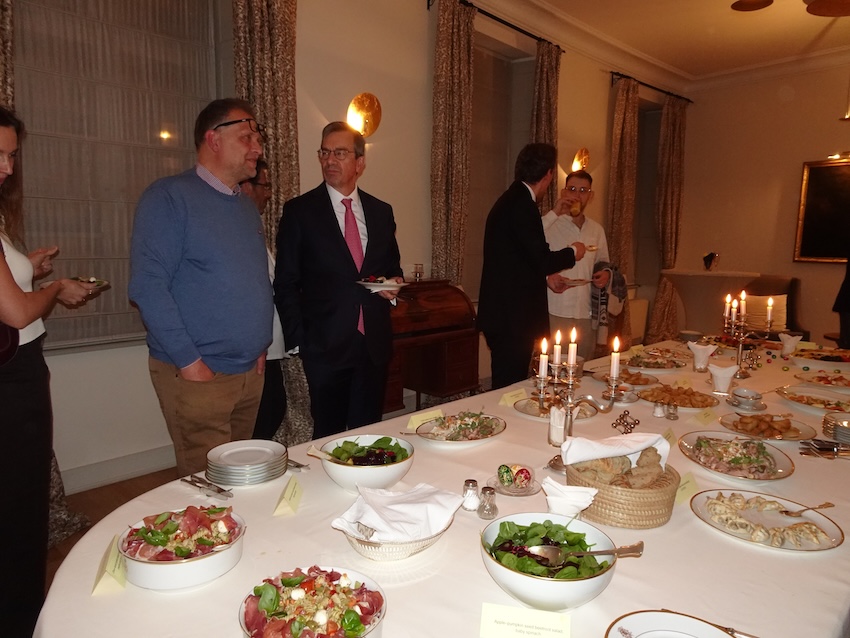
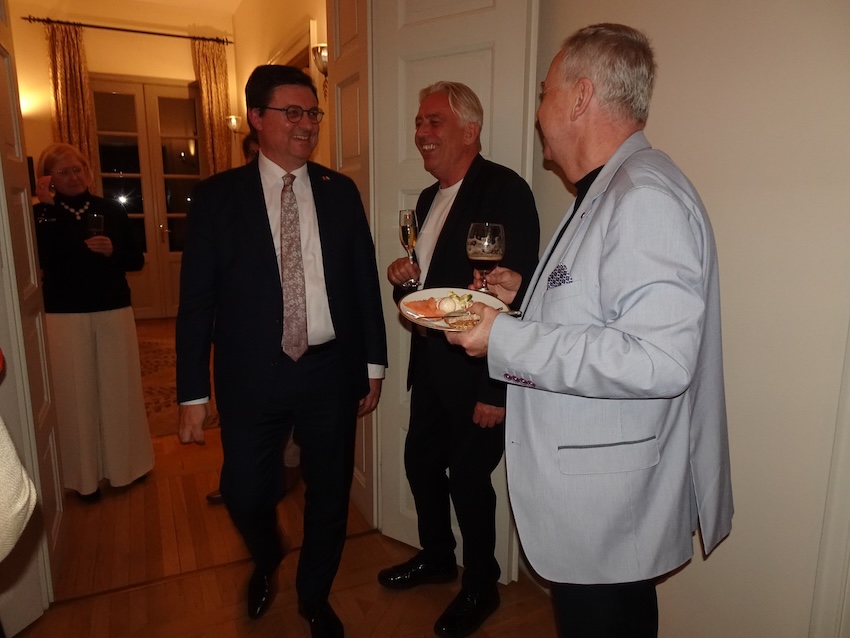
After the concert, the evening concluded with a lavish dinner reception featuring Belgian specialties and fine beverages, offering guests the opportunity for relaxed conversation and cultural exchange in an elegant and welcoming atmosphere.
From Budapest to Szeged
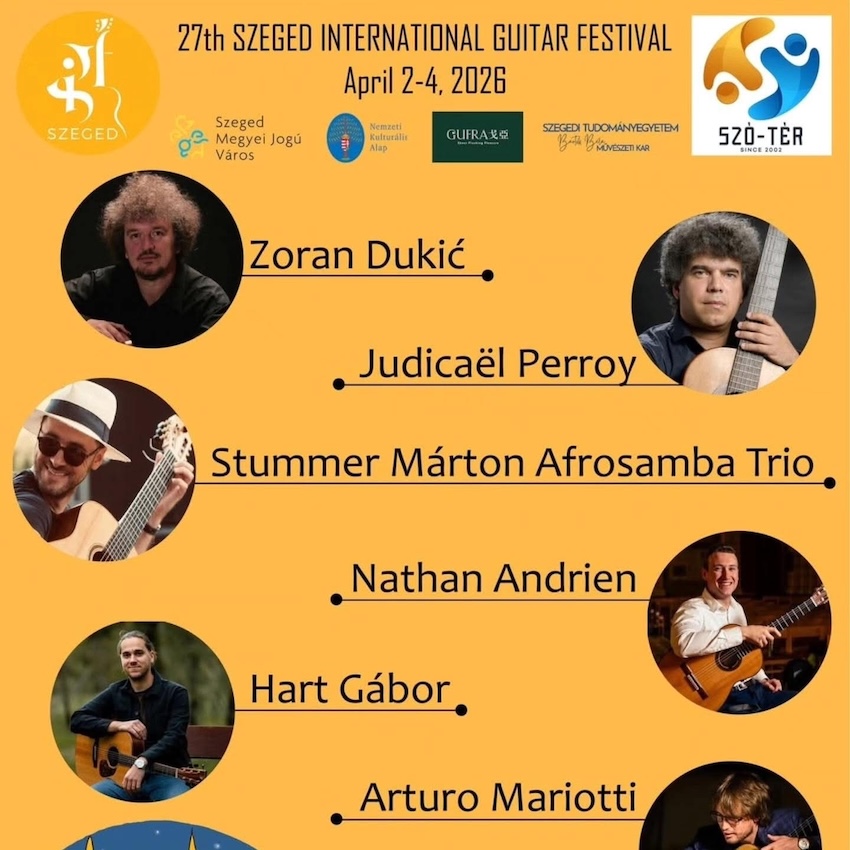
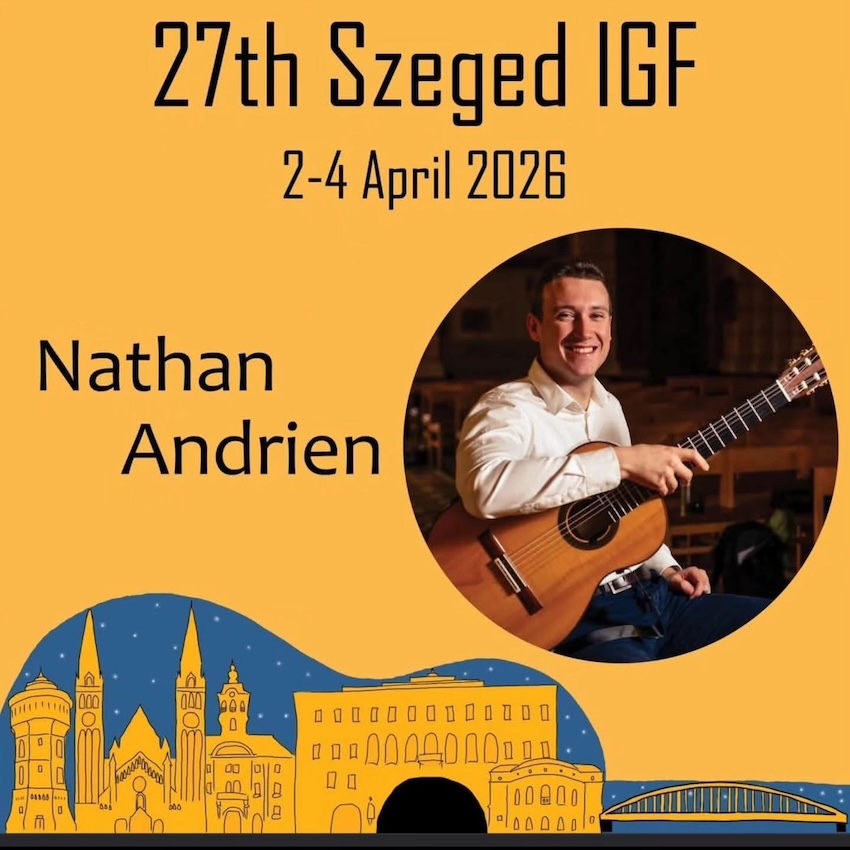
The following day, Nathan Andrien travelled to Szeged, where he was invited to perform at the 27th International Guitar Festival. The city holds special significance for him, as it was there that he won the prestigious Szeged International Guitar Competition in 2024 – an achievement that marked an important milestone in his career.


The Hungarian Connections and Living Legacy of Princess Stéphanie of Belgium
While attending this emotional event, inspired by the Ambassador’s engaging stories about the Belgian-Hungarian ties and the unique atmosphere of the historic residence, I found myself reflecting on the remarkable history of Princess Stéphanie of Belgium and felt compelled to briefly revisit her life and her deep connection to Hungary.
What Hungarian connections did Princess Stéphanie of Belgium have, whose presence is still reflected in the historic residence where the concert took place?
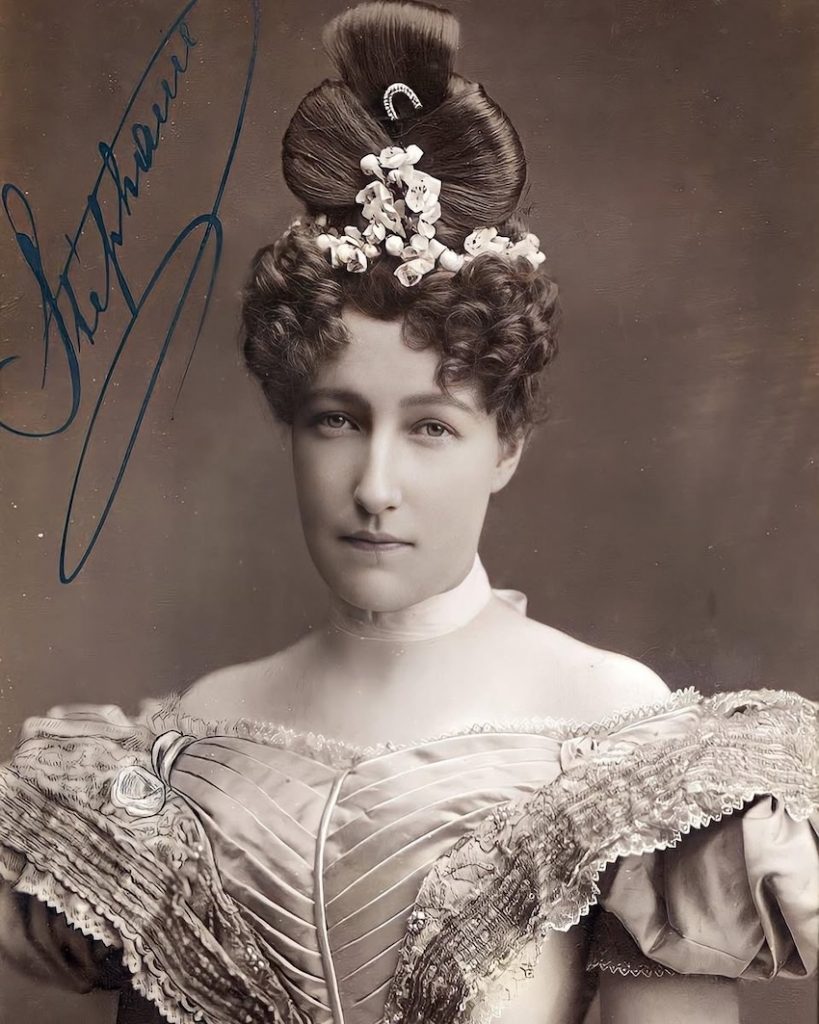
Princess Stéphanie was the daughter of King Leopold II of Belgium and Princess Marie Henriette of Austria. On her mother’s side, she was the granddaughter of Archduke Joseph (1776-1847), who served as Palatine of Hungary for 52 years and enjoyed exceptional respect and admiration in Hungarian society. It is no coincidence that in 1869, the first public statue in Pest was erected in his honour, on the square that still bears his name – József Nádor Square, in the very heart of Budapest. He is still considered “the most Hungarian of the Habsburgs”: Austrian by birth, yet Hungarian at heart. Archduke Joseph, Palatine of Hungary, is buried in the crypt of Buda Castle.
His daughter, Princess Marie Henriette of Austria (1836-1902) – later Queen of the Belgians and Stéphanie’s mother – was born in Buda, where the family resided, and spent much of her childhood in the Royal Palace of Buda. From her marriage to King Leopold II of Belgium, their second daughter Stéphanie was born.
In 1881, at the age of seventeen, Stéphanie married Crown Prince Rudolf of Austria. It was a typical dynastic union, concluded for reasons of state rather than from personal liking. It is widely known that in 1889, Crown Prince Rudolf died in Mayerling in a tragic suicide, leaving Stéphanie widowed at the age of twenty-five. Her life thereafter became difficult, and much like her mother-in-law, Empress Elisabeth (“Sisi”), the Dowager Crown Princess spent long periods travelling.
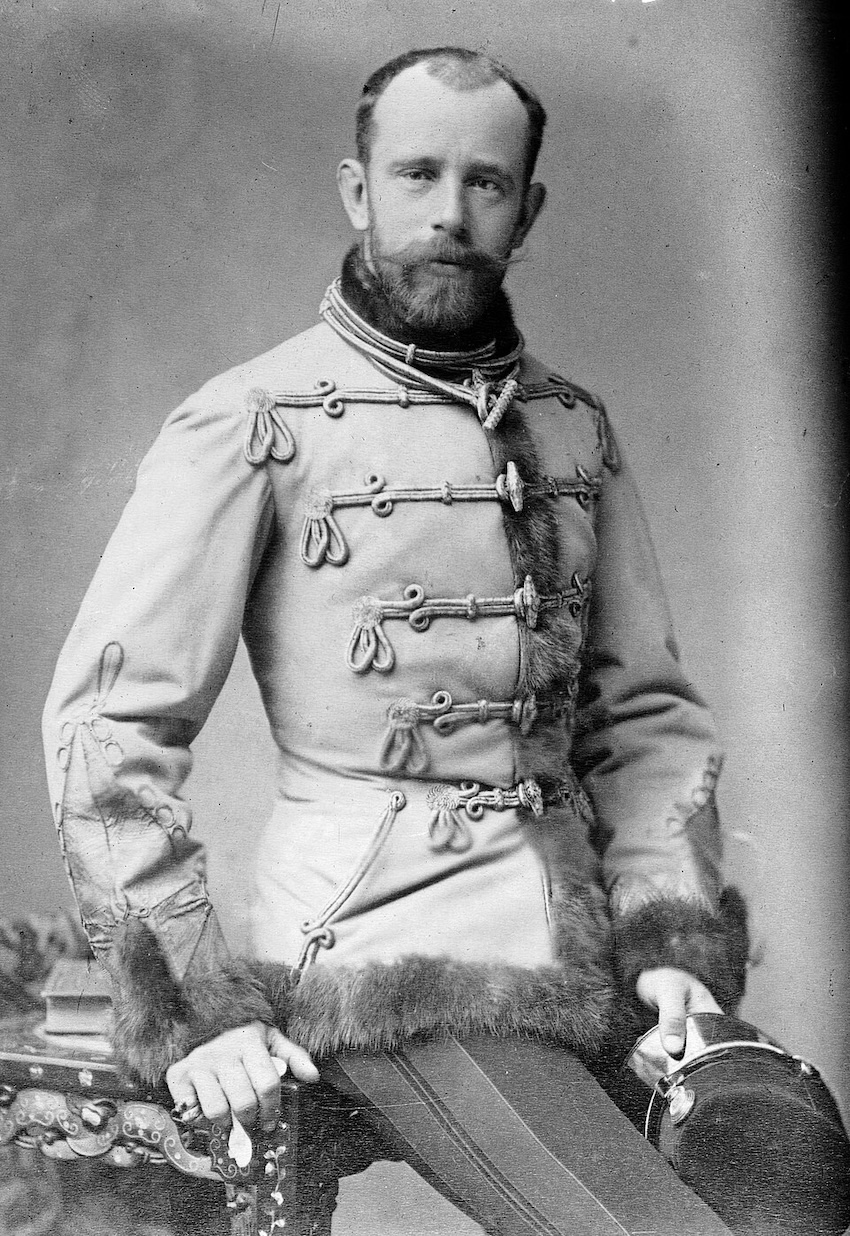
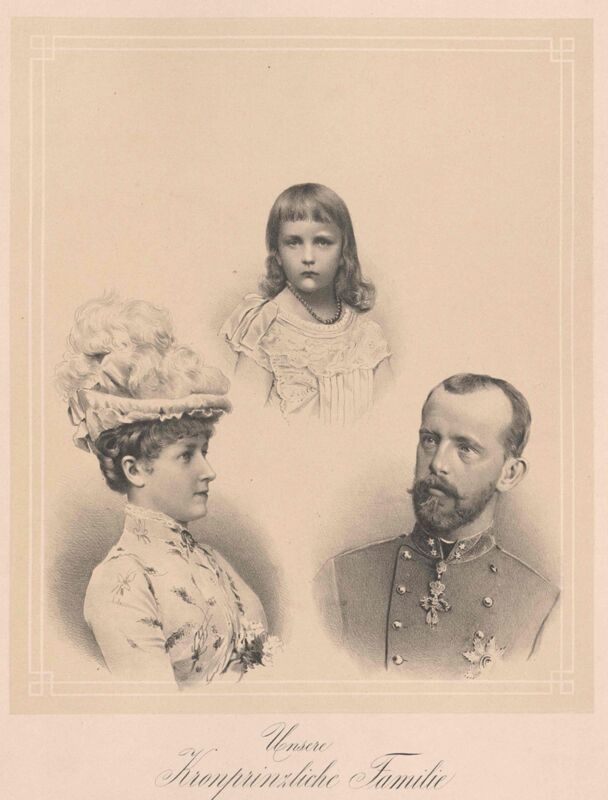
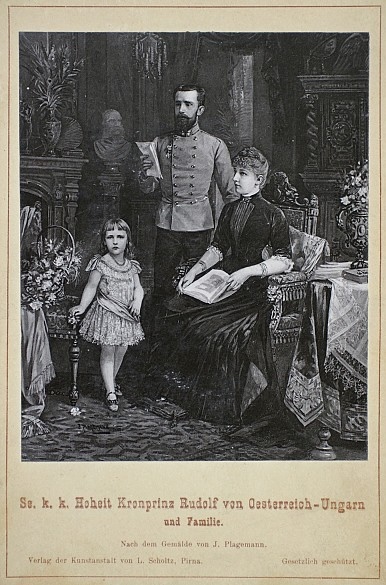
Love, however, eventually found Stéphanie in the person of a Hungarian aristocrat: Count Elemér Lónyay de Nagy-Lónya et Vásáros-Namény (1863–1946). The two fell deeply in love, and on 22 March 1900, after eleven years of widowhood, Stéphanie married Count Lónyay at Miramare Castle near Trieste (where Sisi frequently stayed). In order to do so, she had to renounce her title and rank as an Austrian Archduchess. Nevertheless, this marriage marked the beginning of a truly blissful period in her life – more than 45 years spent in great happiness with the Hungarian Count Elemér Lónyay, her second husband, a union she never had cause to regret.
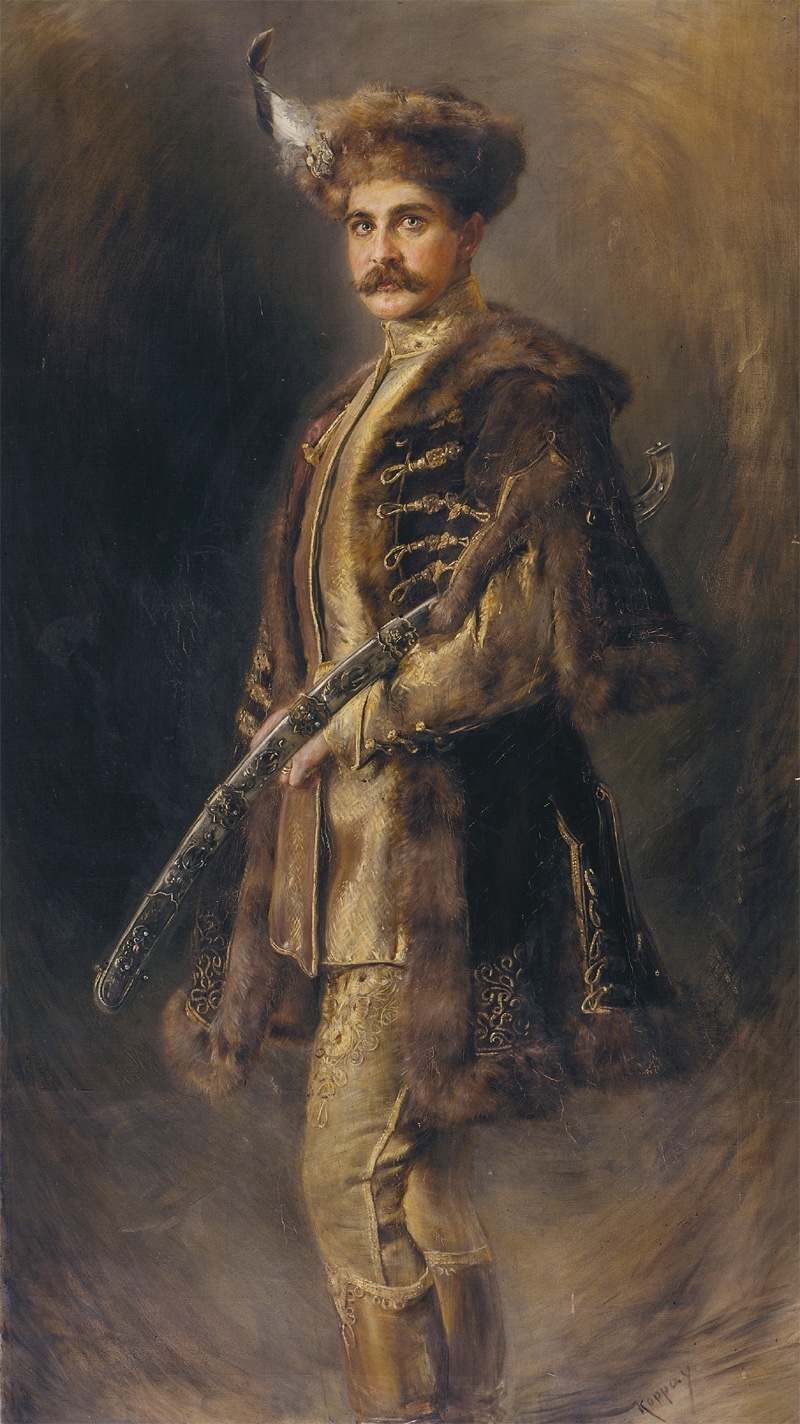
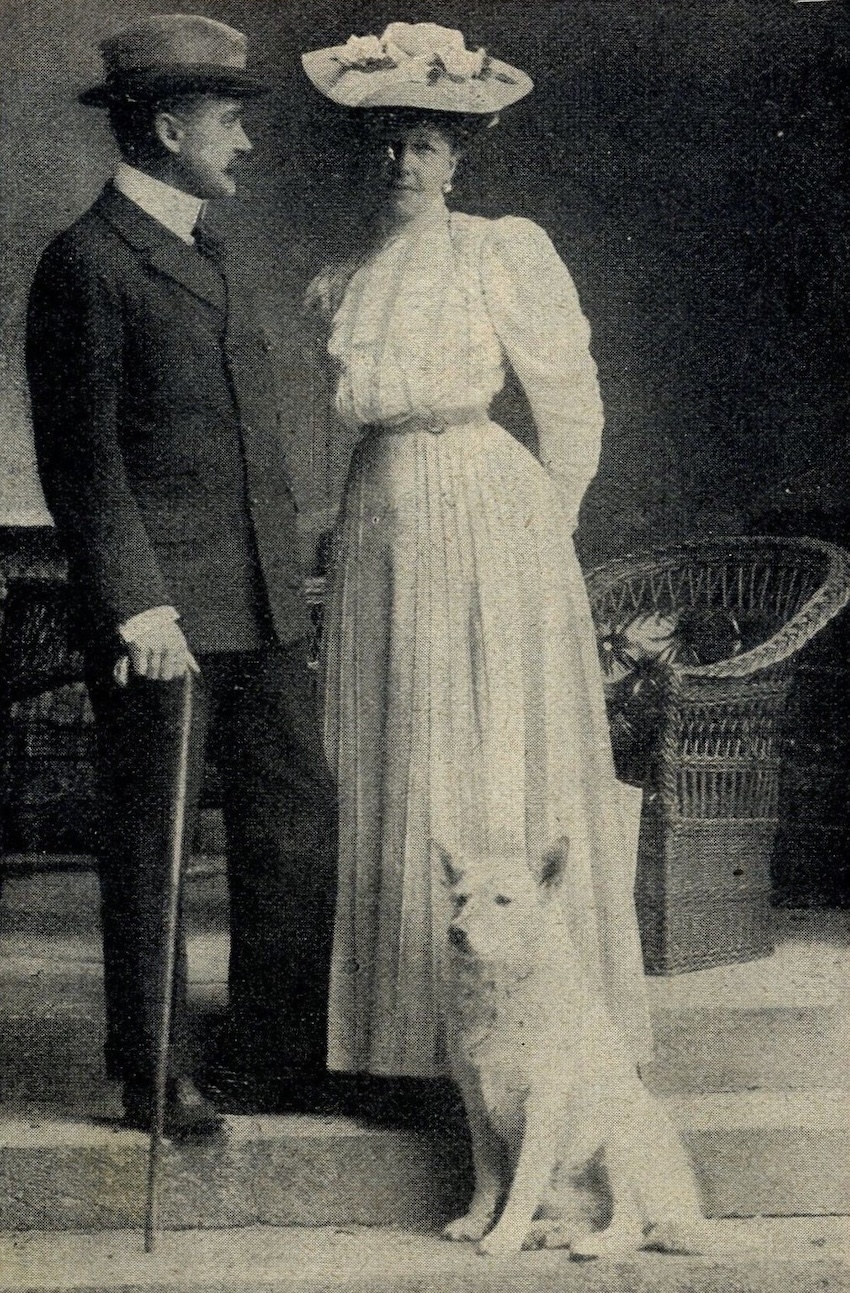
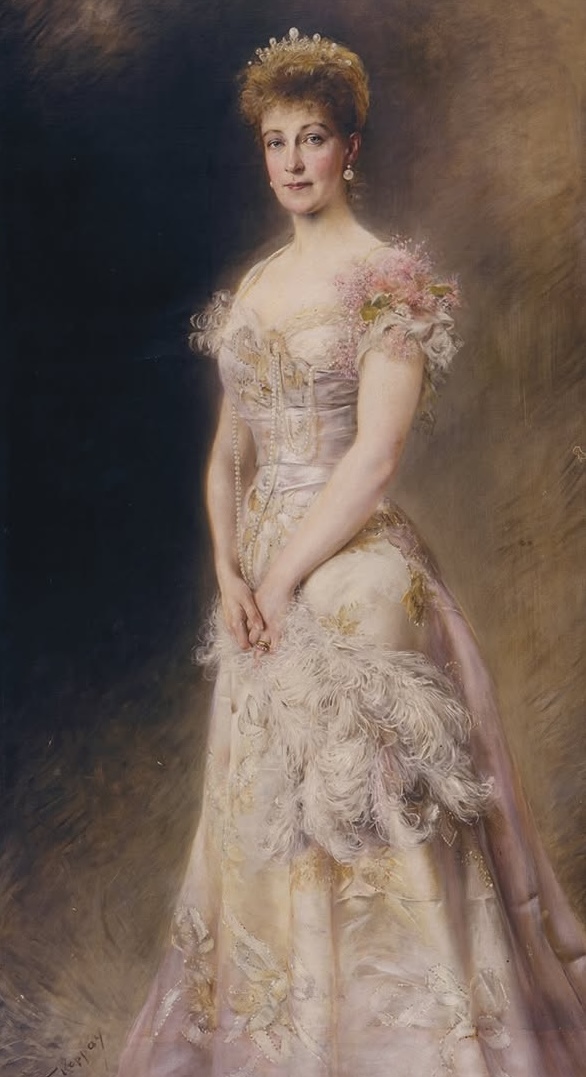
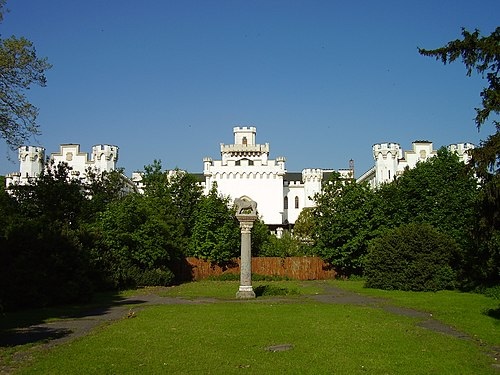
The couple settled at the Lónyay Castle in Oroszvár, then part of the Kingdom of Hungary, (today Rusovce, a suburb of Bratislava, Slovakia). In 1917, Emperor Charles I of Austria (King Charles IV of Hungary) elevated Elemér Lónyay to the rank of prince, further strengthening their position within the Hungarian aristocracy.
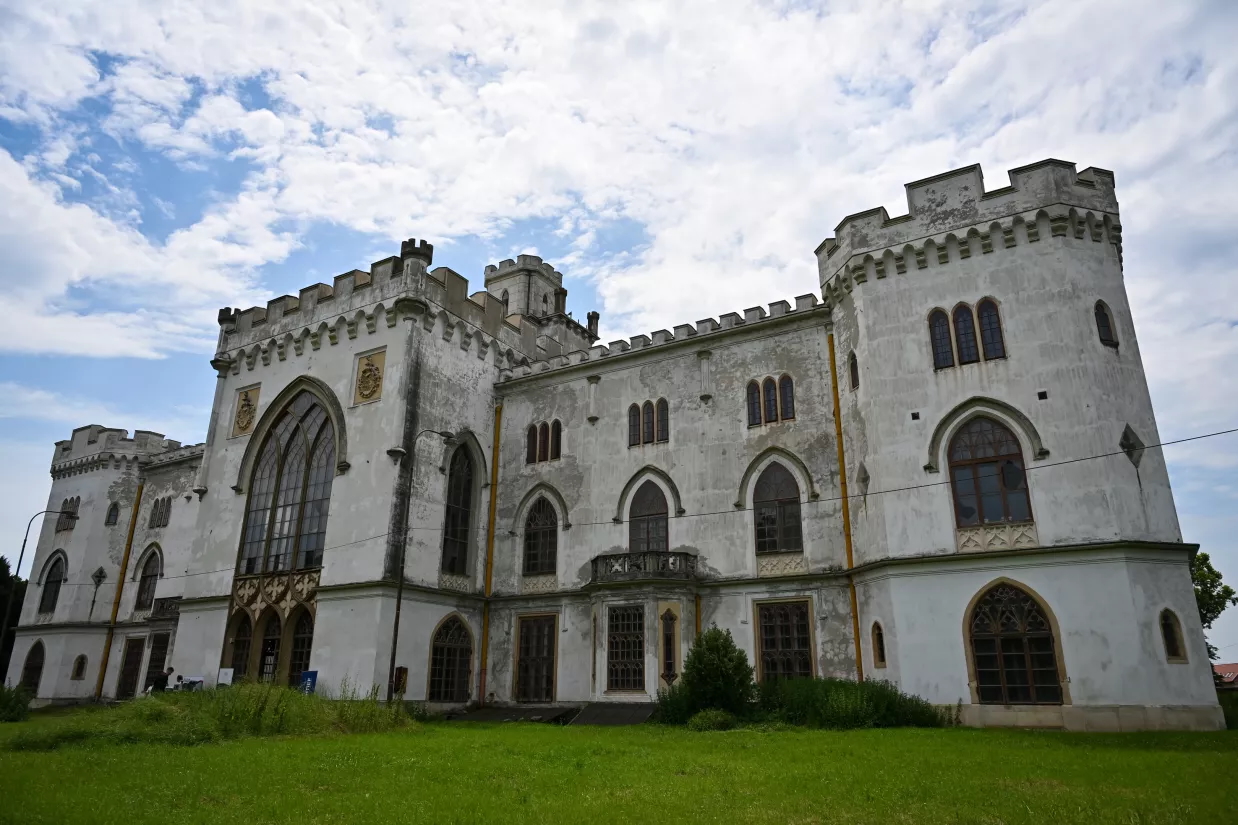
At the end of World War II, the princely couple was forced to flee from their estate the advancing Soviet Red Army. They found refuge in the millennia-old Benedictine Archabbey of Pannonhalma, where Archabbot Kelemen Krizosztom sheltered them alongside other refugees. Later, they bequeathed their estates and art collections to the abbey. Princess Stéphanie passed away there on 23 August 1945, at the age of 81. Her husband died one year later in Budapest. The Lónyay couple was laid to rest in the lower church of the Pannonhalma Archabbey in Western Hungary.
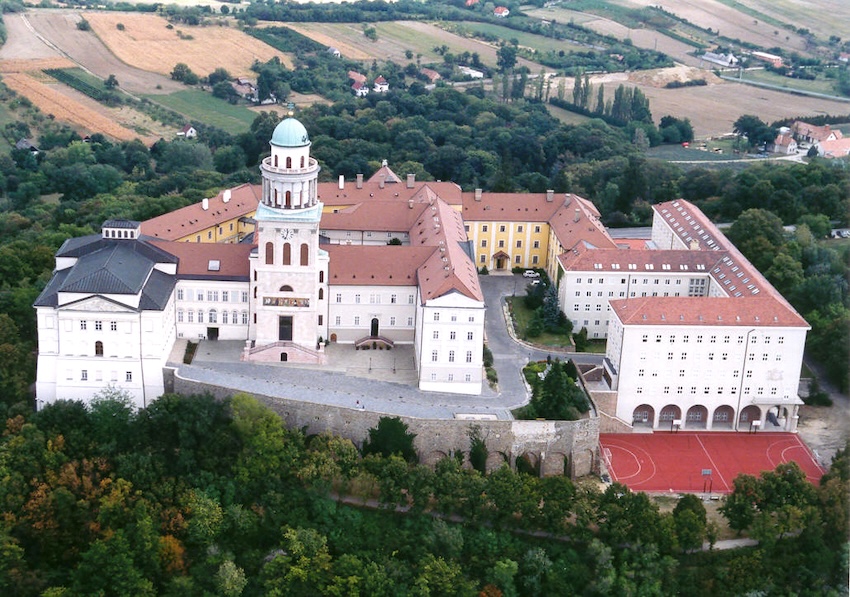
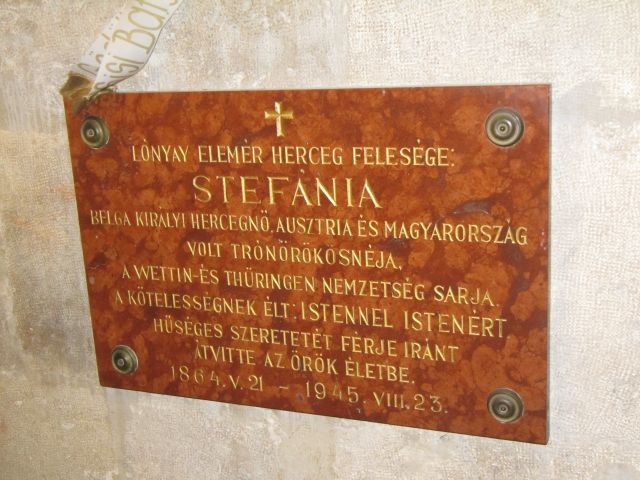
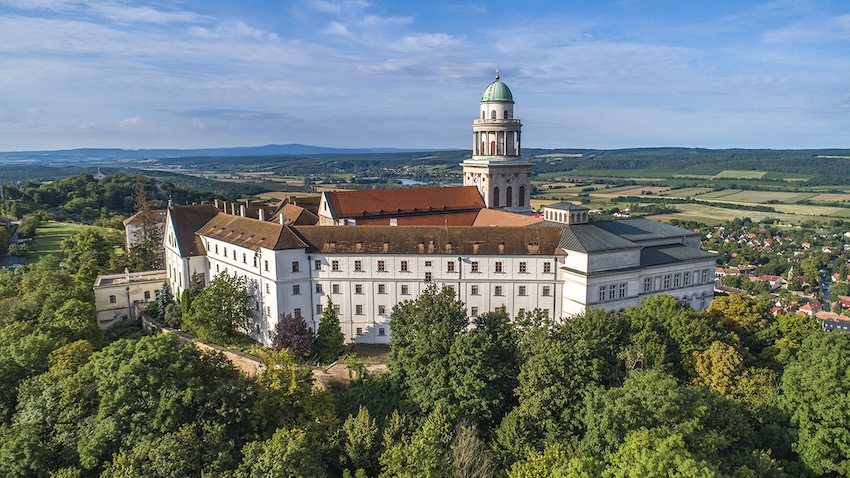
Her memory continues to live on in Hungary to this day. In Budapest, Stefánia út (Stefánia Avenue) and the beautiful Stefánia Palace bear her name, while her legacy is also preserved in Hungarian cultural and culinary traditions. Princess Stéphanie, a passionate admirer of Hungarian cuisine, left a lasting imprint on gastronomy: her name is associated with dishes such as Stefánia-style meatloaf – baked minced meat filled with a whole egg – as well as the well-known Stefánia cake, Stefánia risotto, and Stefánia soufflé.
These enduring cultural references serve as a testament to the deep and lasting ties between Princess Stéphanie and Hungary.


Source: Embassy of Belgium in Budapest
Photos: Diplomatic Press Agency