


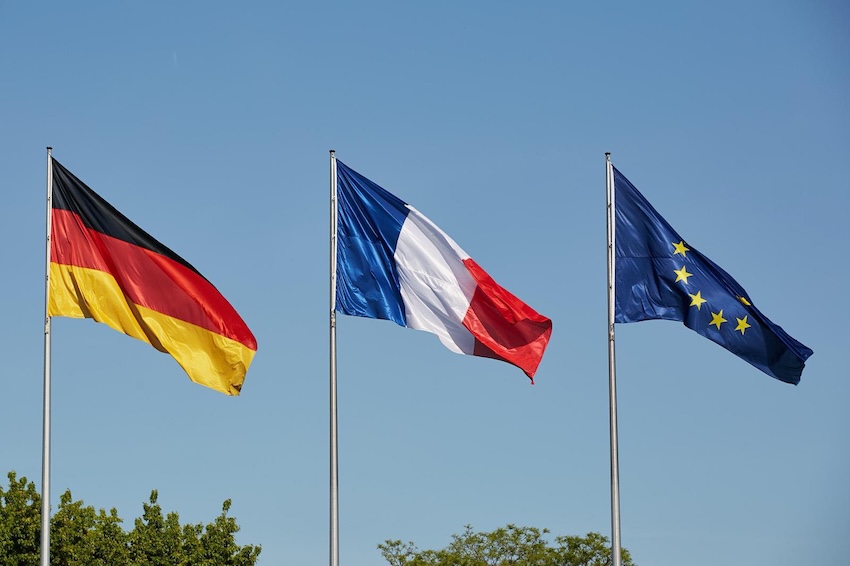
Signed on 22 January 1963, the Élysée Treaty aimed to establish close bilateral collaboration between France and Germany, helping to reconcile past conflicts and enabling both countries to emerge as one of the key “engines” of European integration. While it stands as a symbolic foundation of the close friendship and partnership between France and Germany, its message extends far beyond these two countries.
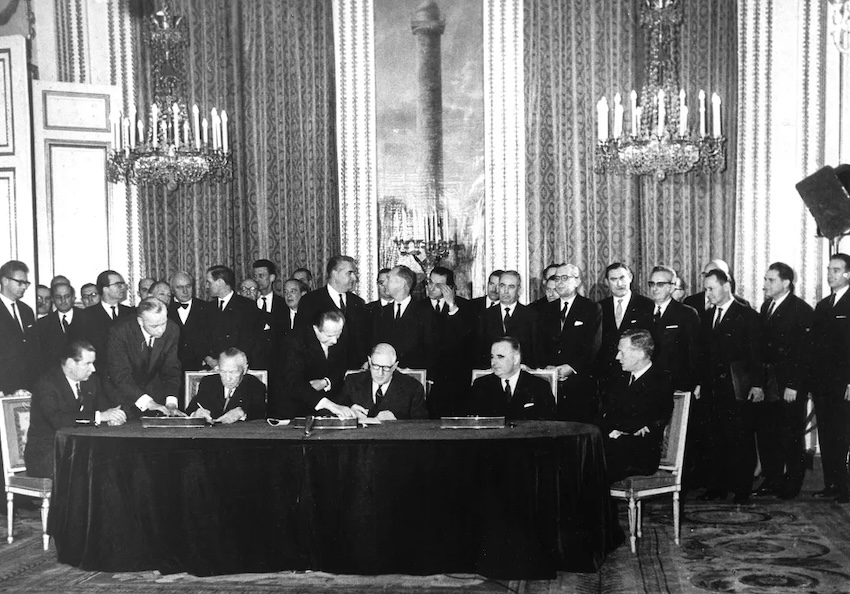
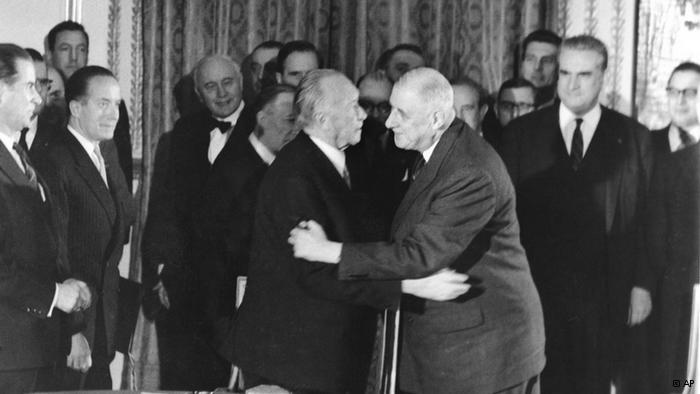
The Élysée Treaty was born 18 years after the end of the Second World War through the personal commitment of German Chancellor Konrad Adenauer and French President Charles de Gaulle, both opponents of the Nazi regime. They deliberately chose a treaty – rather than a mere declaration – to signal that Franco-German cooperation would be permanent, structured, and resilient. The treaty set out a clear framework for regular coordination and aimed to bring citizens closer together through exchanges and civil-society initiatives, helping both nations to learn about each other’s languages, cultures, and perspectives.
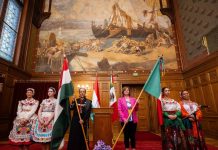
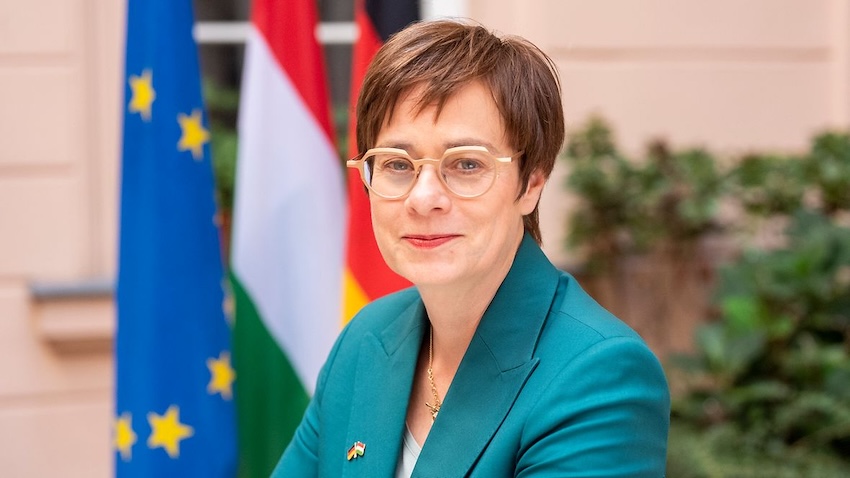
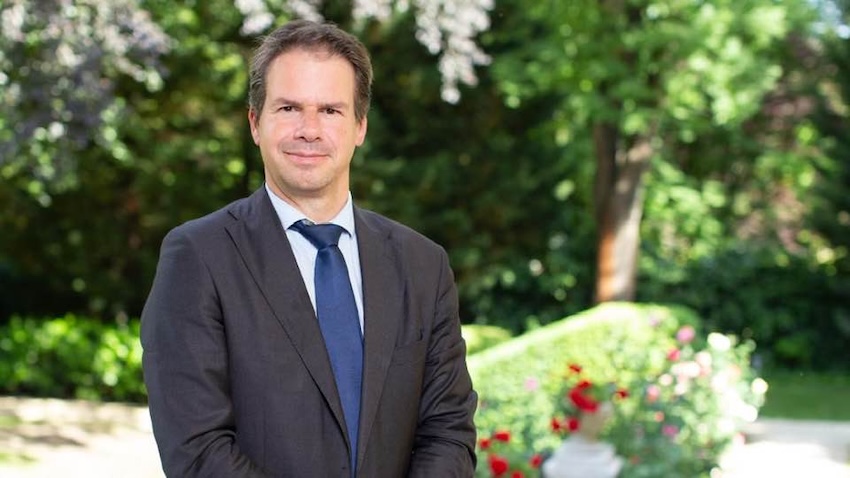
To mark the anniversary of the Élysée Treaty, H.E. Ms. Julia Gross, Ambassador of the Federal Republic of Germany to Hungary, and H.E. Mr. Jonathan Lacôte, Ambassador of the French Republic to Hungary, co-authored a joint article reflecting on the Treaty’s significance for Europe and the enduring importance of Franco-German cooperation.
The original text, unchanged:
“Stronger Together: Why Cooperation Is Europe’s True Sovereignty”
“Today, Germany and France are celebrating the anniversary of the Élysée Treaty. You might wonder why this bilateral treaty should be of interest in Hungary. It marked a historic turning point and continues to serve as a blueprint for European integration. The Treaty taught us an important European lesson that applies to all our EU partners: European states achieve strong sovereignty through cooperation. European cooperation is not the opposite of national sovereignty; it is its precondition. Alone, we are vulnerable. Together, we are stronger.
So, what is this important treaty, and what does it actually mean today? If you have never heard of it, let us explain why it is far more than a footnote in European history:
On 22 January 1963, French President Charles de Gaulle and German Chancellor Konrad Adenauer signed the Treaty of Friendship—later known as the Élysée Treaty—committing their two countries to an unprecedented level of cooperation.
Against the backdrop of centuries old history of rivalry and war between Germany and France, culminating in the horrors of Nazi Germany’s World War II, this Treaty opened a radically new chapter. The Treaty served as a stimulus for cooperation ranging from bilingual schools to the creation of a joint German-French military brigade, and it paved the way for deeper integration of the European project, which eventually became the European Union.
Historians are quick to point out that Chancellor Adenauer and President de Gaulle had different visions of what an integrated Europe might look like. True. But they shared a fundamental and existential belief: that war must never return to Europe, and that a peaceful Europe has a lot to offer the world.
As Adenauer put it: ‘We have to act. Others are acting too. Otherwise, a development we Europeans cannot shape will simply overwhelm us.’
By signing the Treaty, the two former enemies also affirmed their shared conviction that pragmatic cooperation between countries fosters peace and understanding—the very formula that has turned the European Union into a unique success story. It is important to note that the Élysée Treaty did not emerge from harmony, but from a decision to cooperate despite deep differences. But even today, differences of opinion remain between our countries, for example regarding the EU–Mercosur free trade agreement. But even today, the spirit of cooperation, mutual respect, and understanding continues to prevail. Then as now, it remains true: We need institutionalized dialogue, not chaotic disputes conducted through the media. We need respect for diverse historical experiences. Europe needs more spaces for dialogue—not fewer.
Following Hungary’s democratic transition, this Franco-German spirit also resonated in Budapest. One of Prime Minister József Antall’s first official trips after taking office led him to Berlin and Paris, signalling Hungary’s determination to anchor itself in a Europe of cooperation, shared sovereignty, and democratic values.
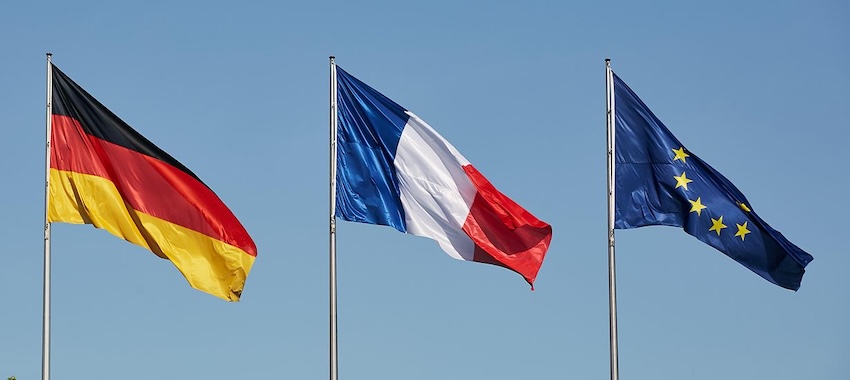
In 2019, the Treaty was thoroughly updated. The ‘Aachen Treaty’ spells out that the German-French friendship has reached its historical telos as one of the key motors of European integration, peace, and prosperity on our continent. Germany and France acknowledge a common responsibility for Europe in a rapidly changing world. But make no mistake: The cooperation between France and Germany is not a one-on-one relationship. We see it as a shared responsibility to contribute to efficient EU decision-making and to spare our European partners the consequences of potential disagreements. In this sense, it is anything but exclusive.
President Putin’s brutal war of aggression against the sovereign State of Ukraine is a strong reminder that peace in Europe cannot be taken for granted. Putin is waging war not only against the citizens of Ukraine; he and his ideologues have made it plain time and again that they are fighting against the European way of life. The very fact that there are states governed by the firm rule of law, with democratic mechanisms for the protection of political minorities or for the changes of political majorities, is seen as a provocation by his camp.
Both Germany and France have therefore redoubled their efforts to strengthen their own defence capabilities and to help Ukraine in its fight for survival as a sovereign State, in order to achieve a just and lasting peace. To be blunt: there is only one party here not interested in a ceasefire or serious negotiations, and that is Russia.
France, Germany, their European partners, and the United States are currently engaged in intensive discussions to frame a settlement in Ukraine based on a sustainable and monitored ceasefire, the strengthening of Ukrainian defence capabilities, providing security guarantees, and granting economic support.
We also take note of the fact that the alleged ‘decay’ of European civilization is described as a threat in the new U.S. Security Doctrine. We respectfully ask what this means. After all, if we consult any index of prosperity, such as the Prosperity Institute’s Index, it clearly shows that European countries are global leaders when it comes to governance, security, and the well-being of their citizens, despite the existing challenges in our societies.
Thus, we do not share this sense of gloom. But we are not naïve. Many in the world view our freedom as a threat, because their own populations might ask for the same freedom. To defend our way of life, we have to undertake serious reforms at both the national and European levels. For all of us it should be clear: Europe is a daily political choice, not a historical given.
The Élysée Treaty laid the foundation for our freedom, our common wealth and our sovereignty in Europe. It is up to all of us—not only Germany and France—to keep alive the spirit of cooperation and dialogue embodied in the Élysée Treaty, even with differing views and in challenging times.”
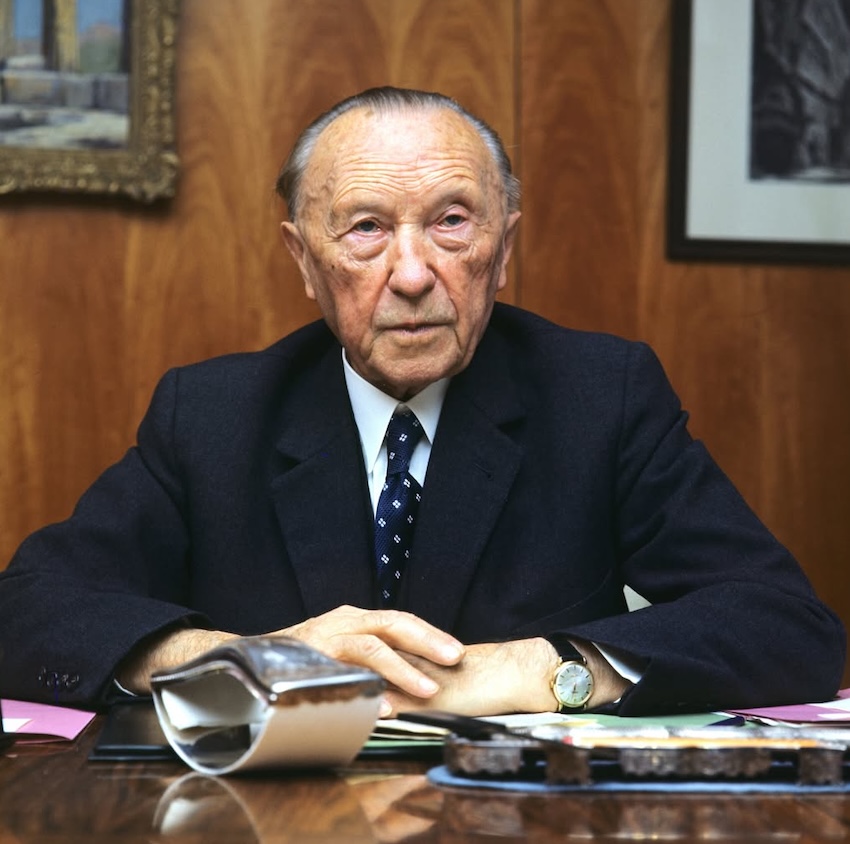
Commemorating the 150th Anniversary of Chancellor Konrad Adenauer’s Birth
In 2026, Germany commemorates the 150th anniversary of the birth of the first Federal Chancellor of the Federal Republic of Germany, born on 5 January 1876. Konrad Adenauer is honoured for his foresight and his resistance to National Socialism. He had the courage to stand up against tyranny as Mayor of Cologne and later worked tirelessly for peace and prosperity in Europe.
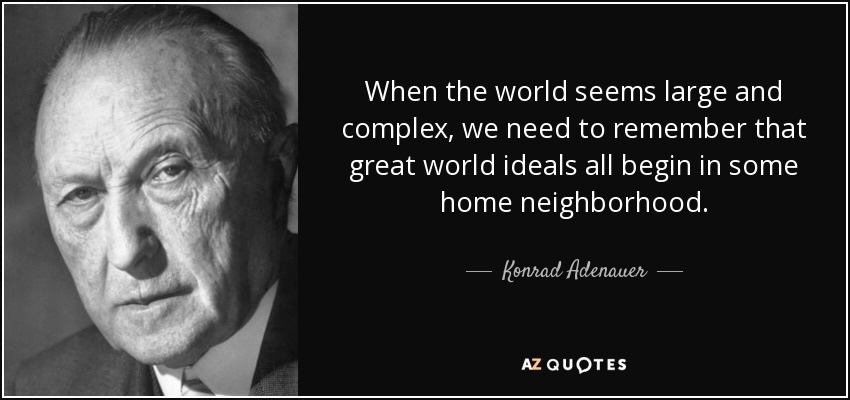
After the devastation of the Second World War and the atrocities of the Nazi regime, one conclusion was clear to him: “It’s no use—we must ruthlessly cast overboard many inhibitions based on national ideas and traditions in light of the new developments in the world, and we must act. Others are acting too. Otherwise, a development that we Europeans cannot influence will simply pass over us.”
This sober analysis still holds true today. Adenauer was the architect of modern Germany and a co-architect of European integration. Together with bold partners, he founded the European institutions and, despite considerable opposition, firmly anchored Germany within the Western community of values. An optimist to the very end of his long life, he died on 19 April 1967 at the age of 91 at his home in Rhöndorf, near Bonn.
Photos: Picture Alliance