Choral Echoes – From Peja to Budapest: Two University Choirs, One Musical Language
Edited by Anna Popper
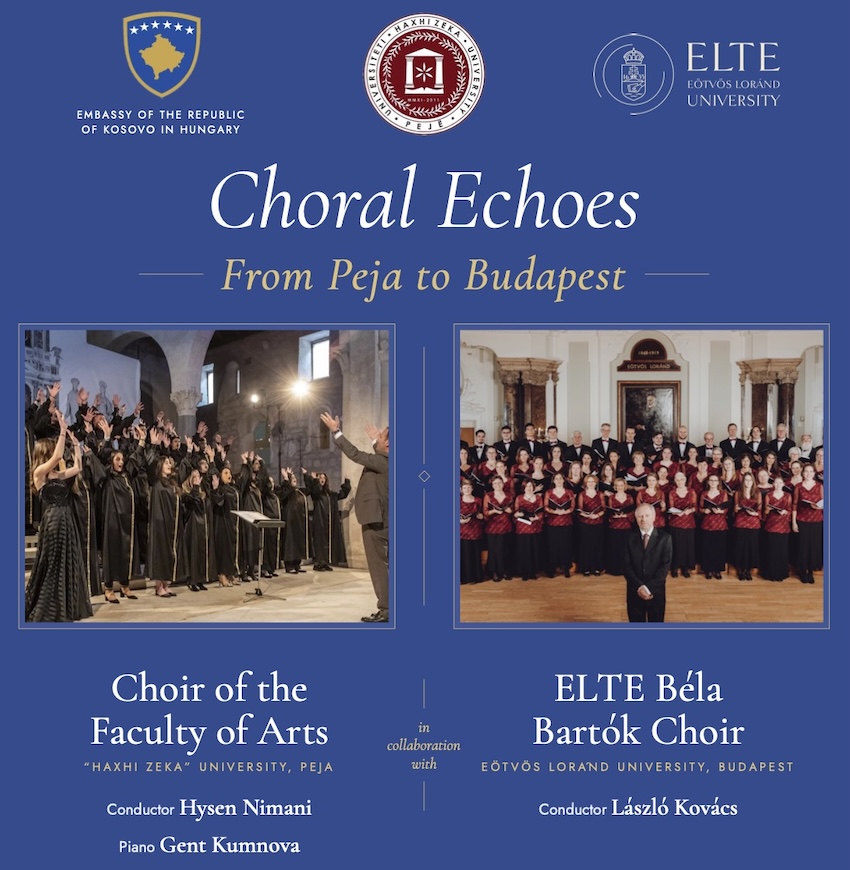
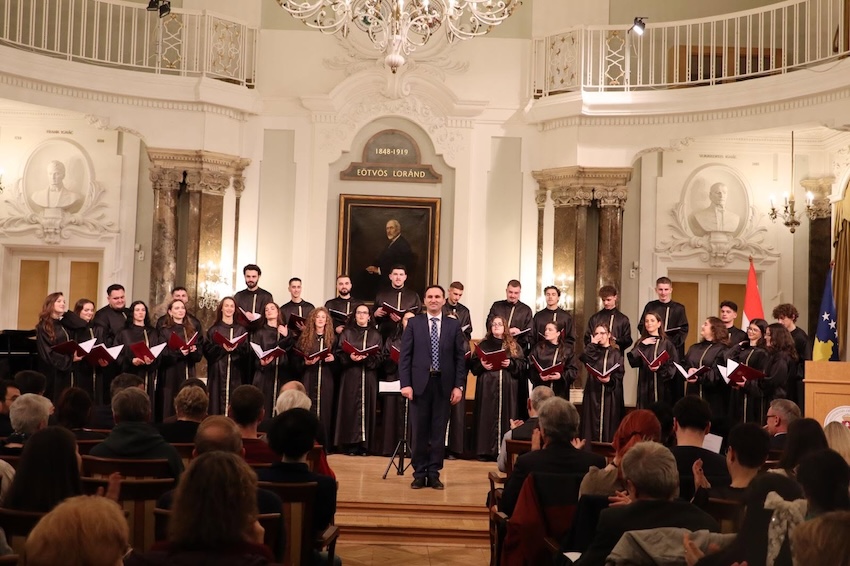
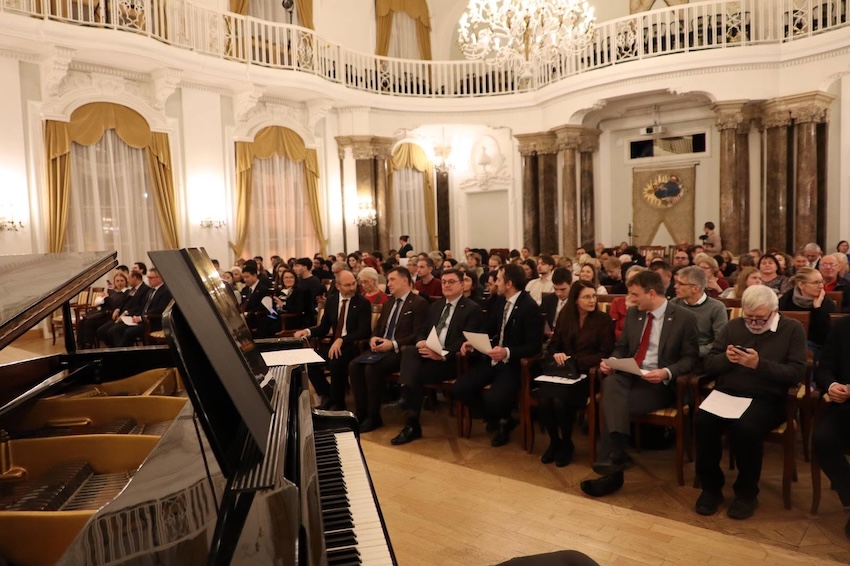
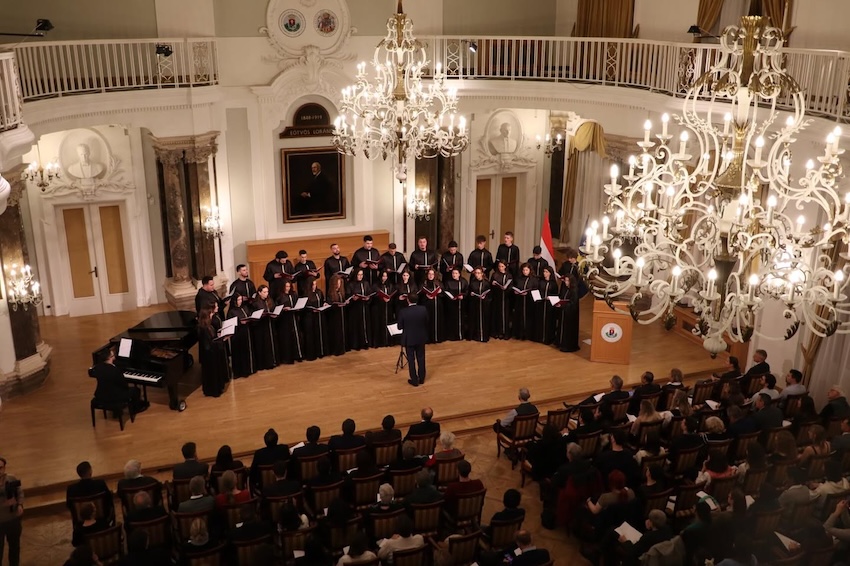
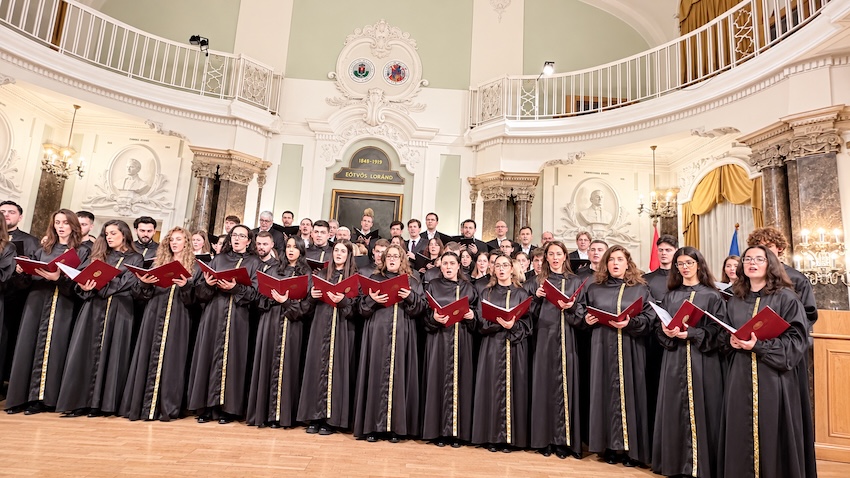
On 17 November 2026, the magnificent Aula Magna of Eötvös Loránd University (ELTE) in Budapest hosted a special concert entitled Choral Echoes, bringing together musicians from Kosovo and Hungary: the Choir of the Faculty of Arts of Haxhi Zeka University in Peja and ELTE University’s Béla Bartók Choir.
Held in the university’s historic ceremonial hall, the concert provided a meaningful setting for an international cultural encounter, demonstrating how artistic collaboration can strengthen relations between countries and bring communities closer together.
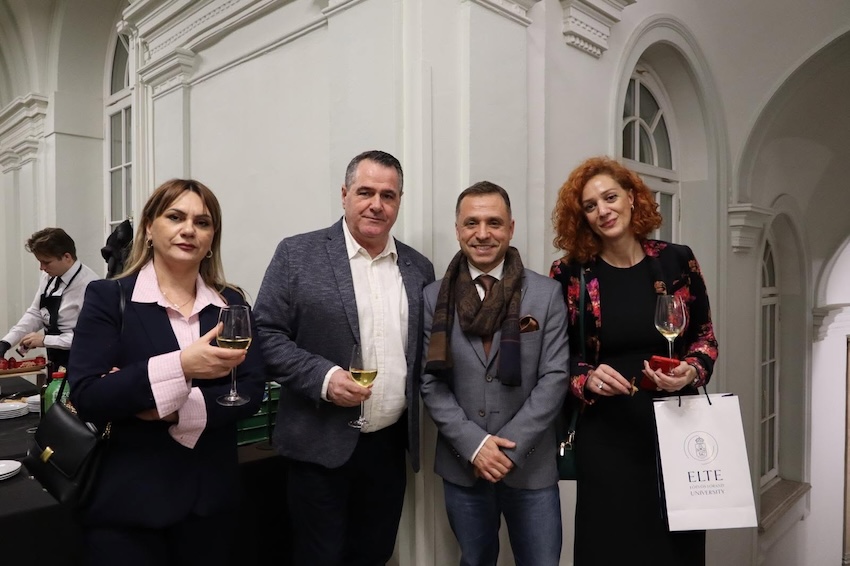
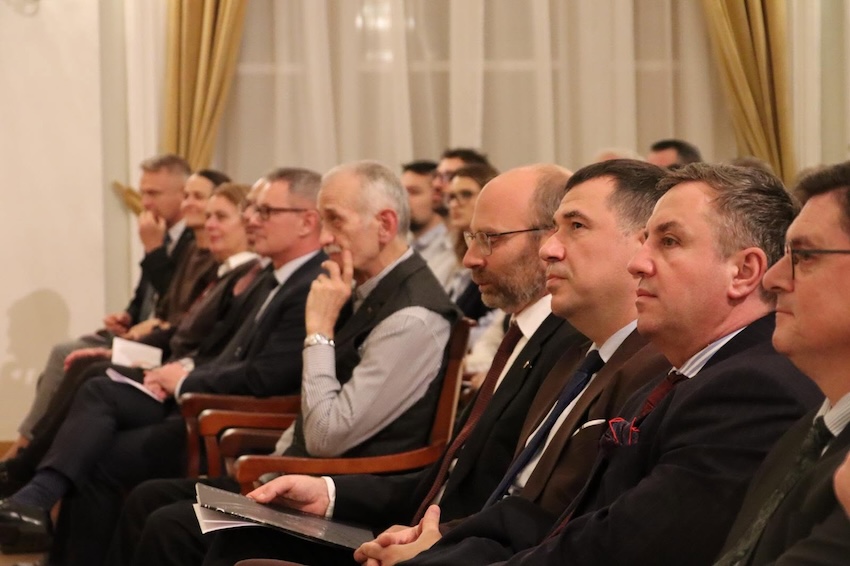
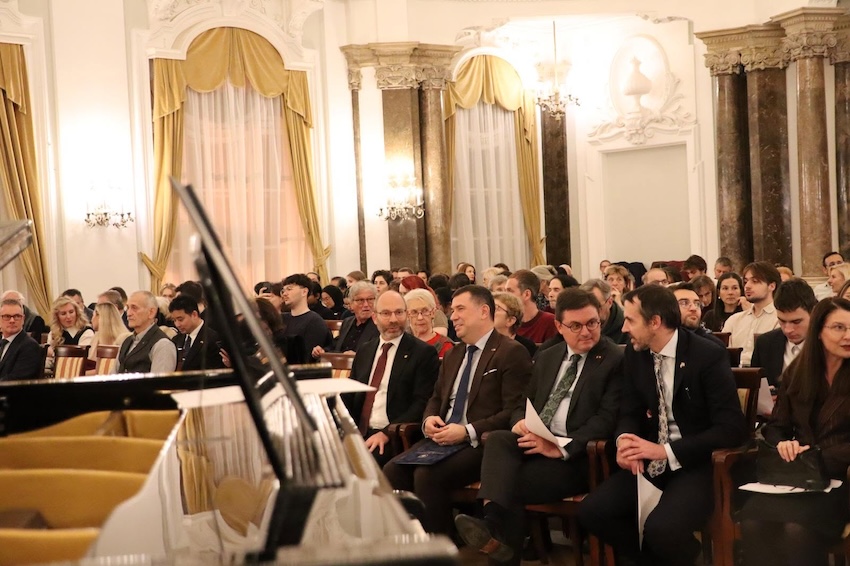
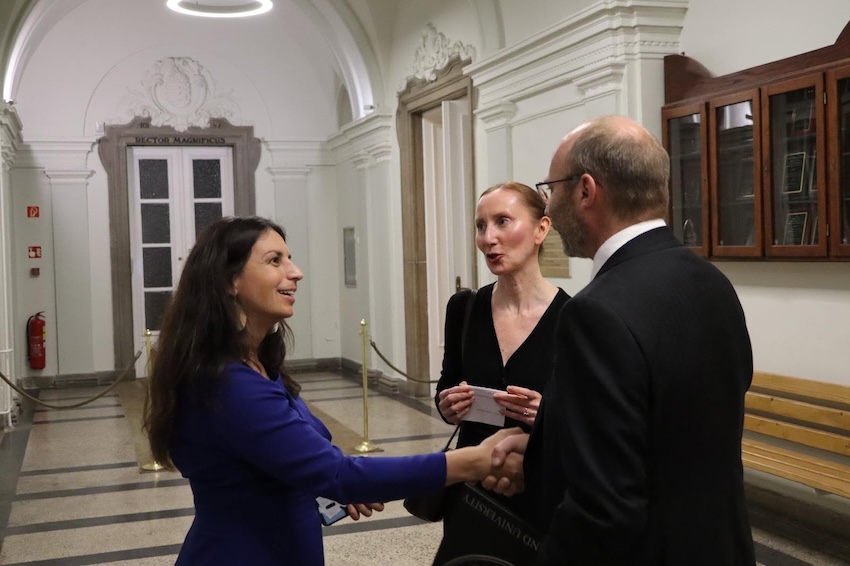
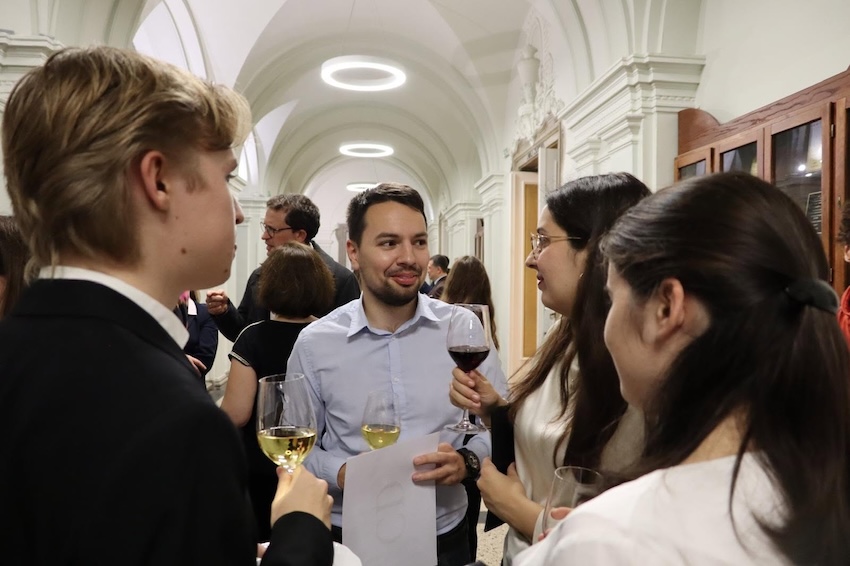
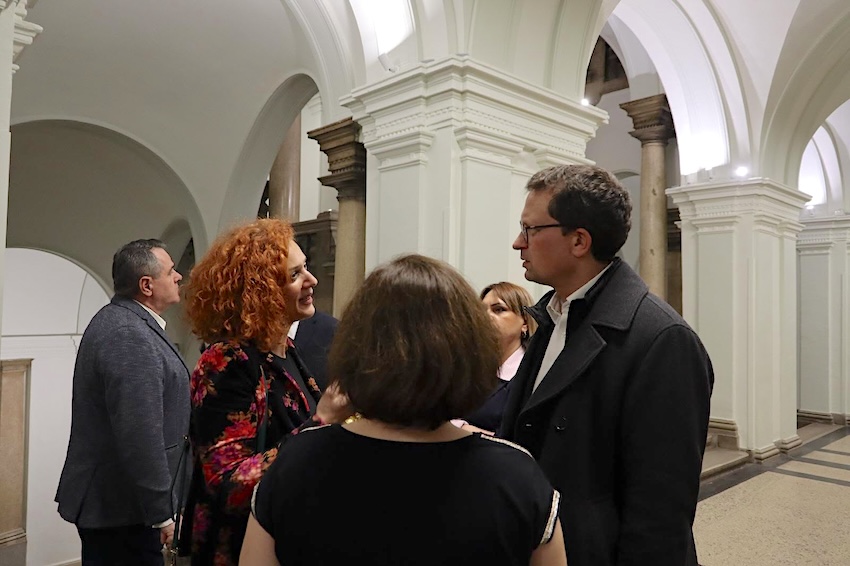
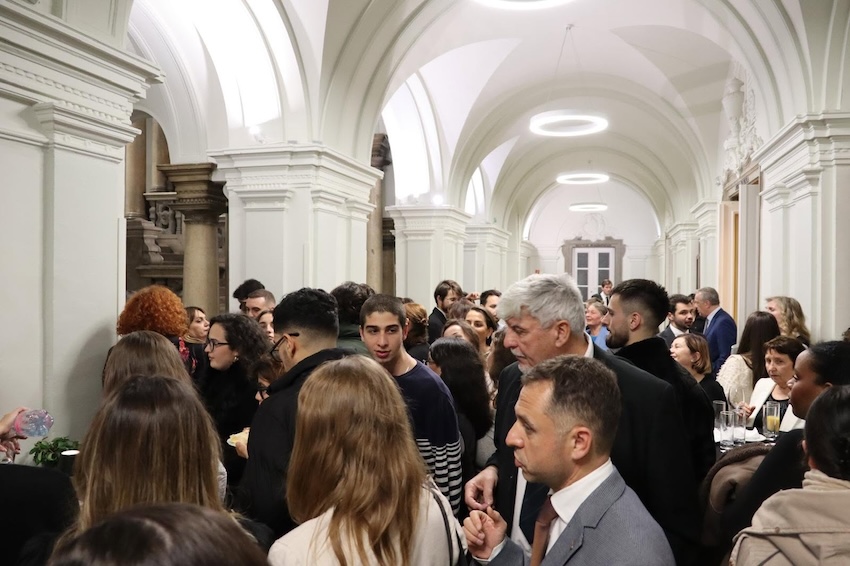
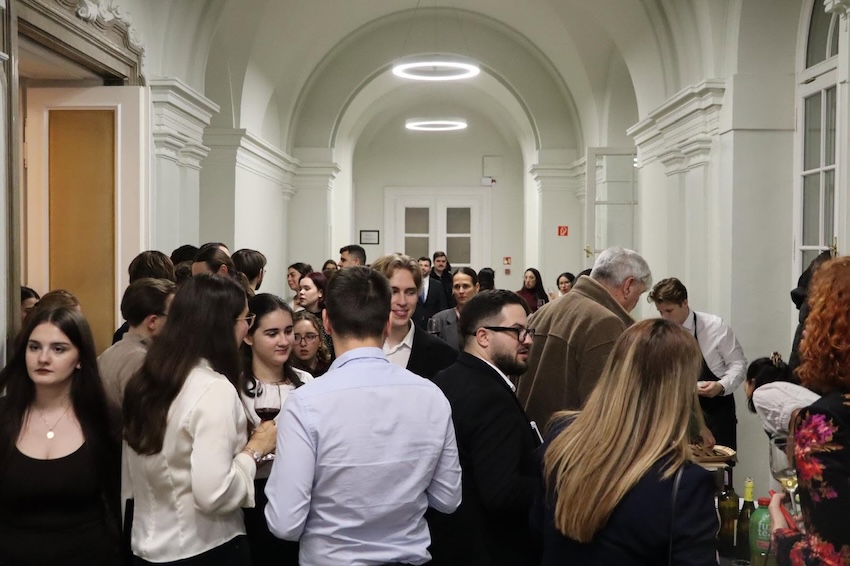
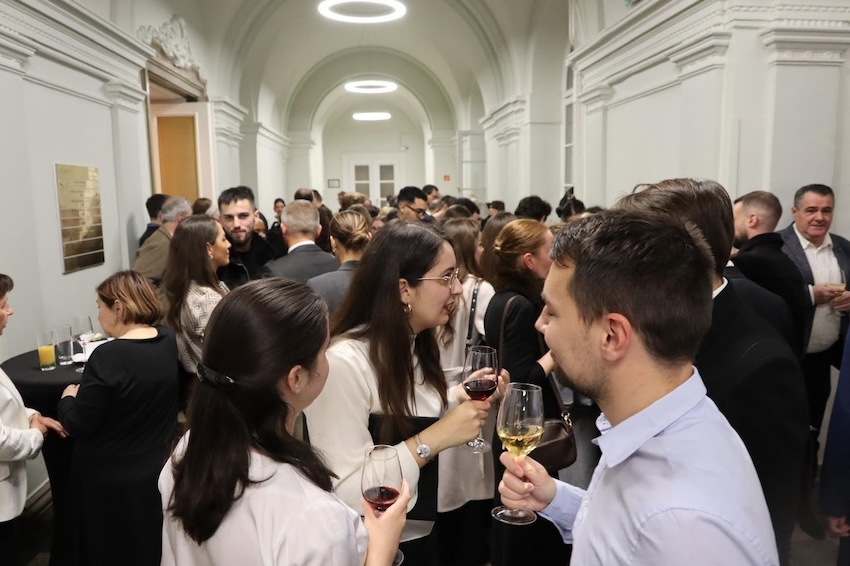
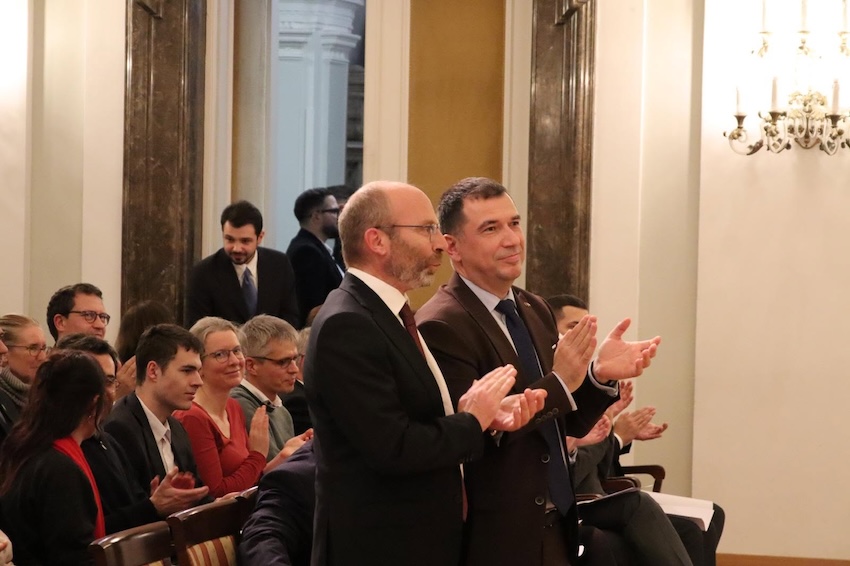
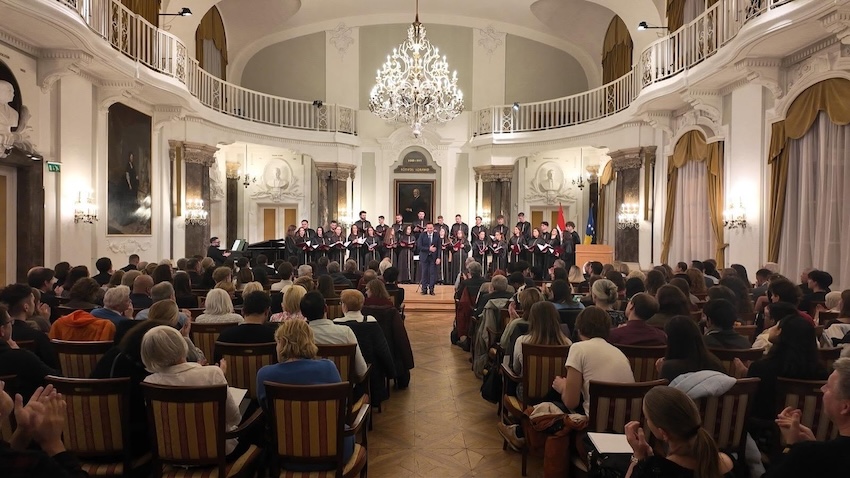
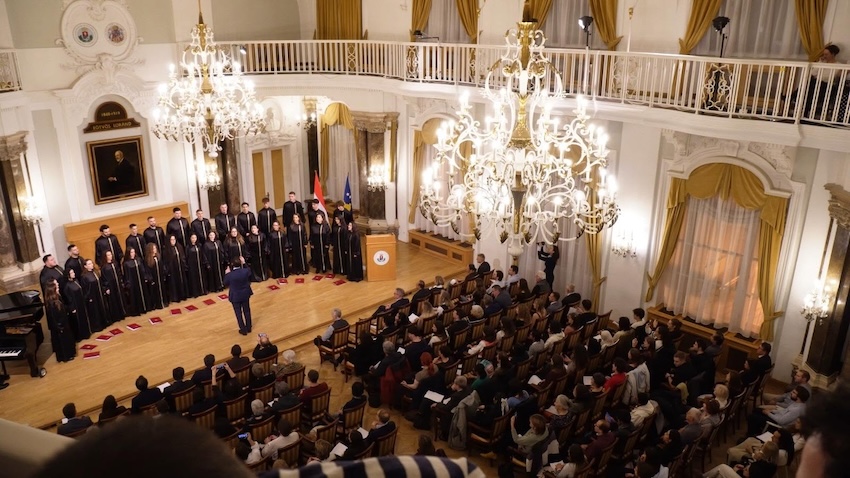
The event attracted a large audience, including members of the diplomatic corps, university professors, students, classical music enthusiasts, and representatives of the Kosovar community in Hungary. The guests enjoyed an evening of performances distinguished by artistic quality, dedication and the enthusiasm of the participating musicians.
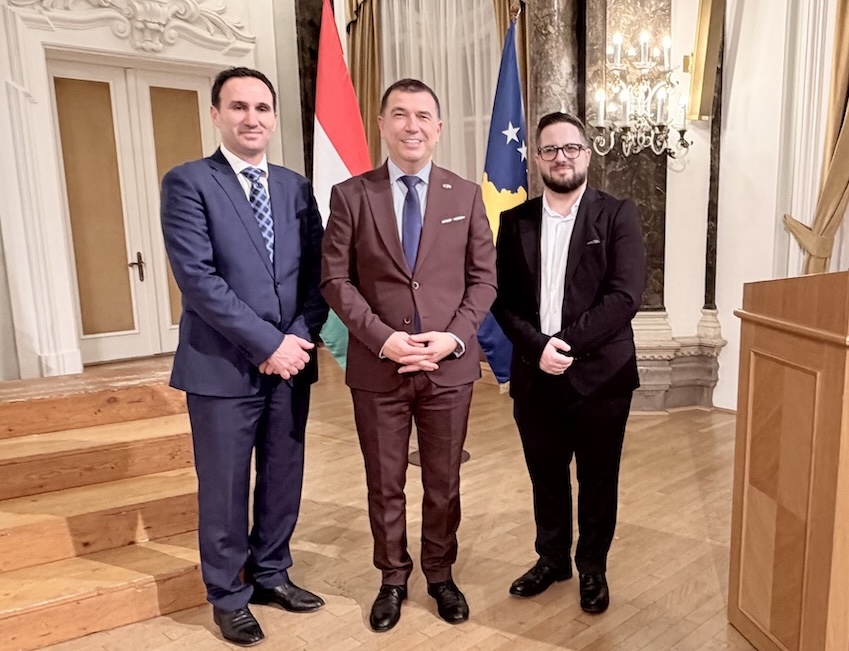
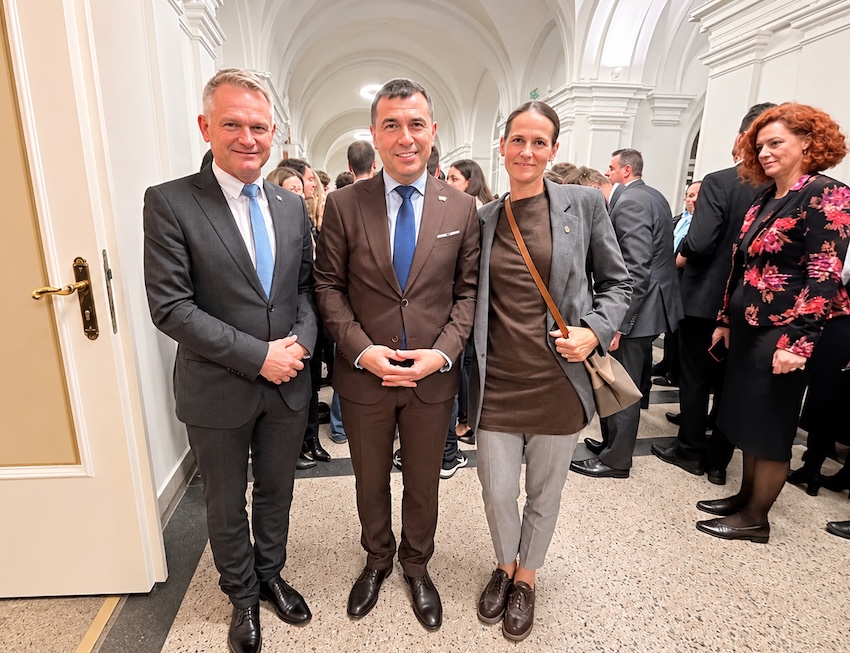
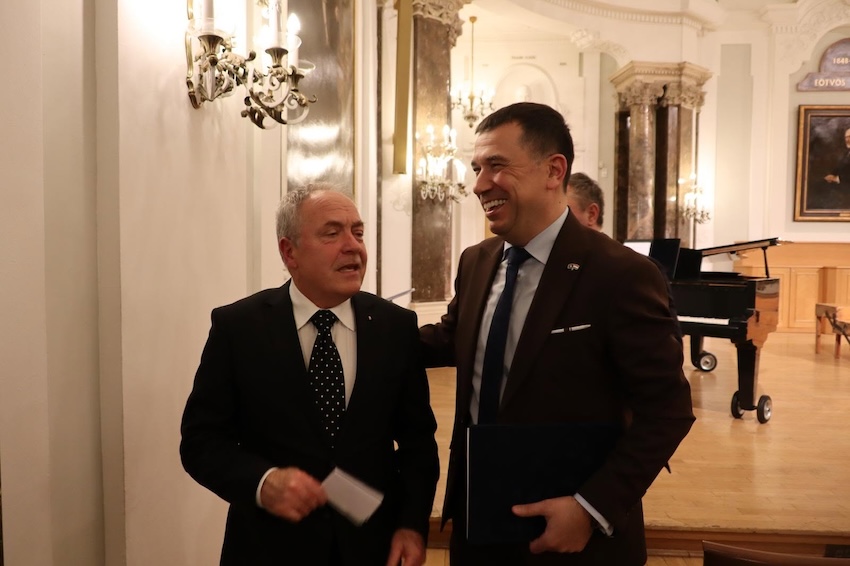
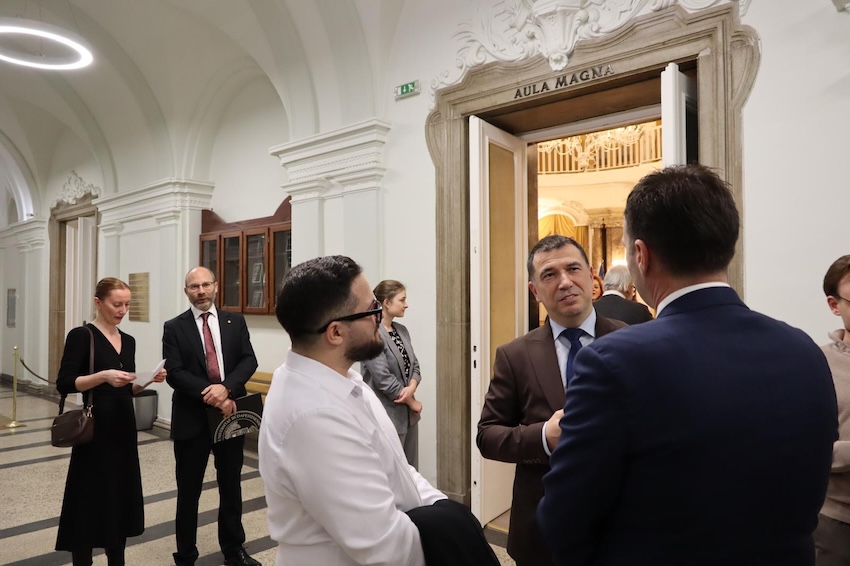
A Warm Welcome and a Message of Friendship
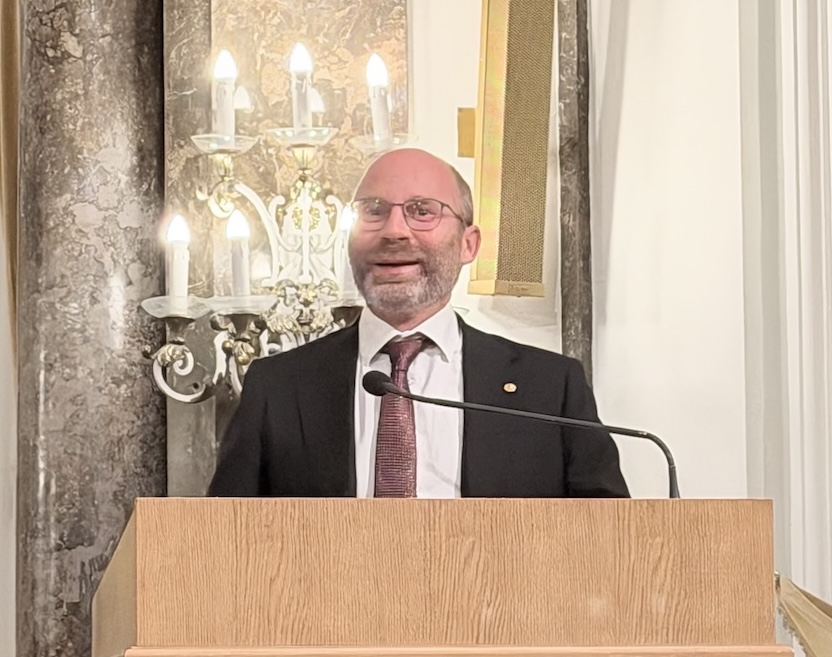
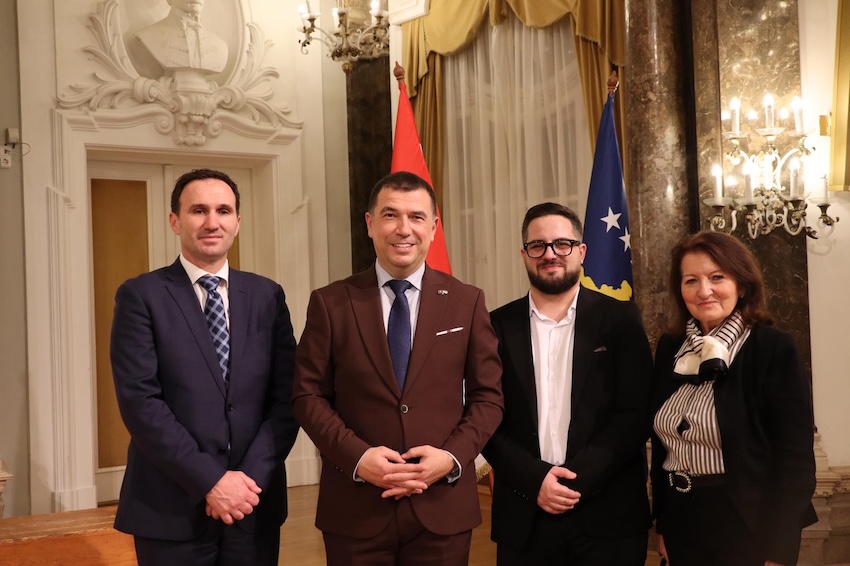
The musical evening opened with welcoming remarks by Prof. Gábor Á. Zemplén, Vice-Rector for International Affairs at ELTE University, who greeted the distinguished guests, academics and performers.
Praising the initiative that brought the two universities together, he highlighted the importance of international academic cooperation, further strengthened by the signing of a cultural exchange agreement prior to the concert. His words set the tone for an evening celebrating the connections that universities can create beyond their academic communities, through shared artistic experiences and personal encounters.
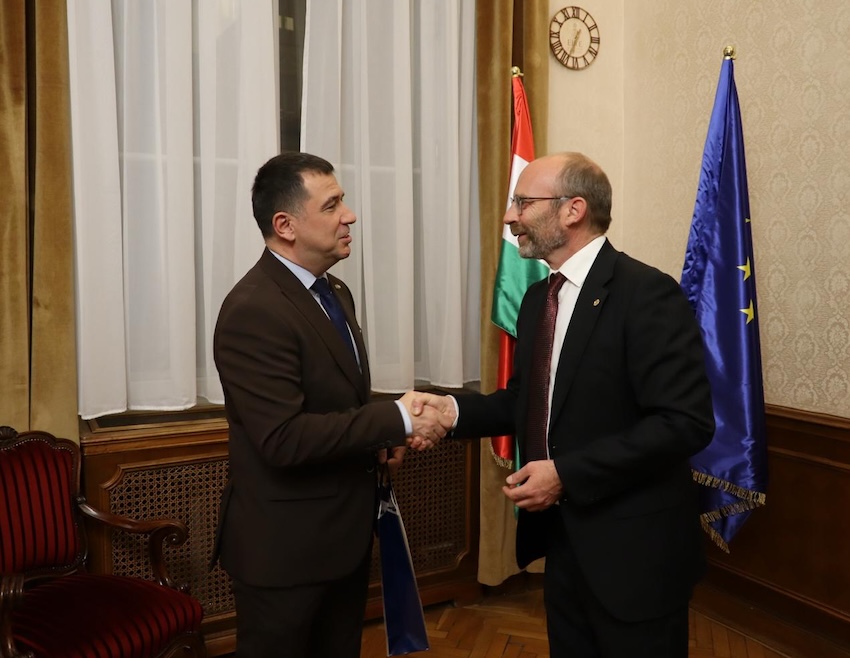
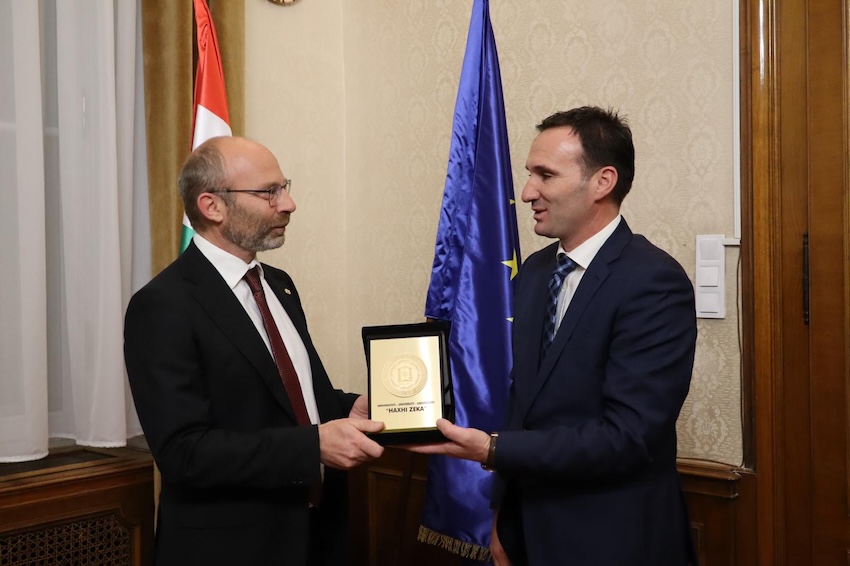
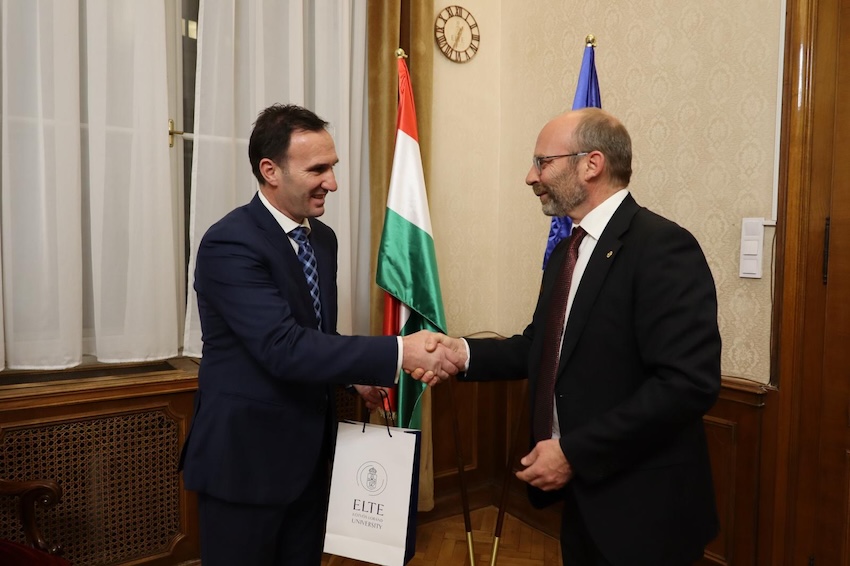
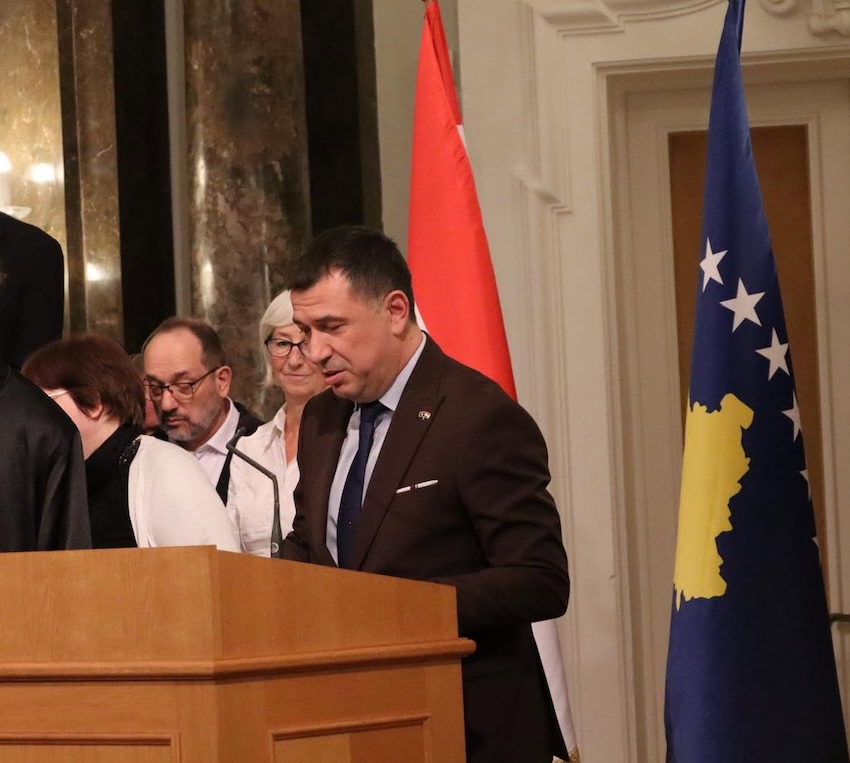
This was followed by the address of H.E. Mr. Delfin Pllana, Ambassador of the Republic of Kosovo to Hungary:
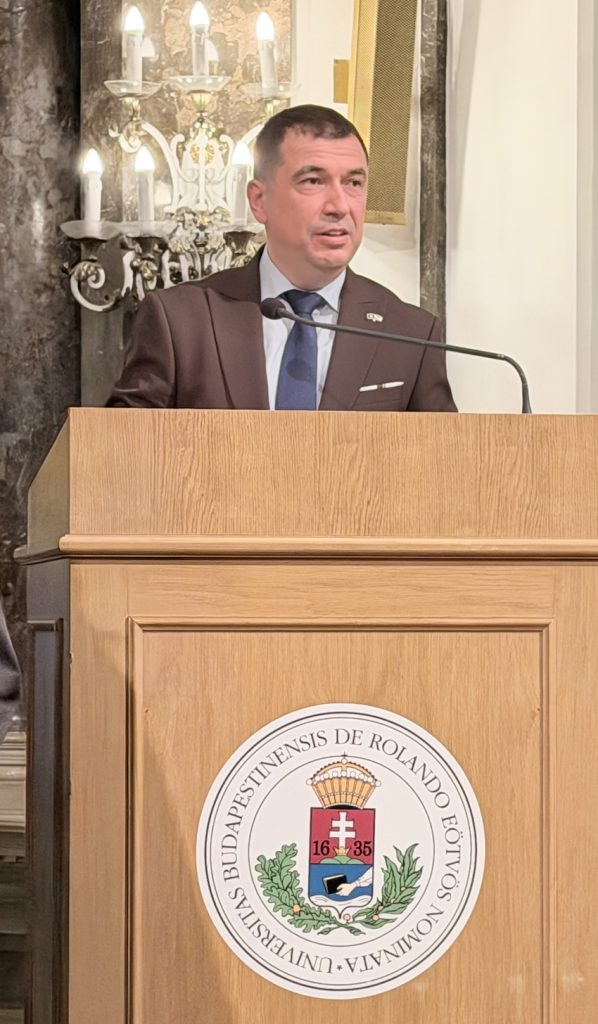
“Distinguished Vice-Rector for International Affairs at ELTE University, Professor Gábor Zemplén, Dear Professors, Conductors László Kovács and Hysen Nimani, Dear Musicians, Excellencies, Distinguished Guests, Ladies and Gentlemen, good evening, and a very warm welcome to all of you!
On behalf of the Embassy of the Republic of Kosovo, it is my great pleasure to welcome you to this special concert, “Choral Echoes: From Peja to Budapest”. Tonight, we celebrate not only the beauty of music, but also the friendship between Kosovo and Hungary, the significance of university cooperation, and the power of cultural exchange to bring people together.
First, allow me to express my sincere appreciation to Eötvös Loránd University (ELTE) for its hospitality and continued partnership. ELTE holds a special place in the relations between our two countries. Through the Stipendium Hungaricum scholarship programme, numerous young people from Kosovo have had the opportunity to study here, gaining not only academic knowledge but also friendships, experiences and lasting connections with Hungary. These students are among the finest bridges between our societies. They remind us that academic cooperation is not simply about institutions and agreements – it is about people, opportunities and a shared future.
Ladies and Gentlemen,
Tonight’s concert marks the continuation of a beautiful musical friendship. Some of you may remember that on 3 December 2024, ELTE hosted the Prizren Wind Orchestra for a memorable performance here in Budapest. And now, for the second time, we are bringing together musicians from Kosovo and Hungary, this time through the wonderful tradition of choral music.
We are delighted to welcome the Choir of the Faculty of Arts of the University “Haxhi Zeka” from Peja, conducted by Hysen Nimani, with Gent Kumnova on piano, performing in collaboration with the distinguished ELTE Béla Bartók Choir, under the direction of László Kovács. I would like to sincerely thank both universities, the conductors and all the performers for making this musical encounter possible. And since this is already our second collaboration here in Budapest, it is only fair to say: next year should be “payback time”!
In 2027, we would very much like to see the ELTE ensemble travel to Kosovo and perform in Prizren and Peja, where I am certain they will receive an equally warm welcome, wonderful hospitality and enthusiastic audiences. After all, cultural exchange should always be a two-way street – or, in our case, a two-way musical journey!
Dear Friends,
Music has a unique ability to connect people beyond borders and languages. A melody needs no translation, and harmony speaks a language that everyone understands. A choir is perhaps one of the finest examples of cooperation: different voices, each with its own character, coming together through listening, mutual respect and a shared purpose to create something truly beautiful. This is precisely the spirit we wish to see in the relations between Kosovo and Hungary – within our universities, our cultural institutions and our societies. I hope that tonight’s concert will inspire even more academic partnerships, student exchanges, artistic collaborations and lasting friendships between our two countries.
Let me conclude by once again thanking ELTE for hosting us, the University “Haxhi Zeka” for joining this initiative, and all the musicians for sharing their talent with us. And to our Hungarian friends: we look forward to welcoming you in Kosovo next year – this time, it will be our turn to host, and your turn to travel!
May the echoes of tonight’s music resonate far beyond this hall – from Budapest to Peja, from Prizren to Budapest, and back again. Thank you very much. Köszönöm szépen! Faleminderit! Enjoy the concert!”
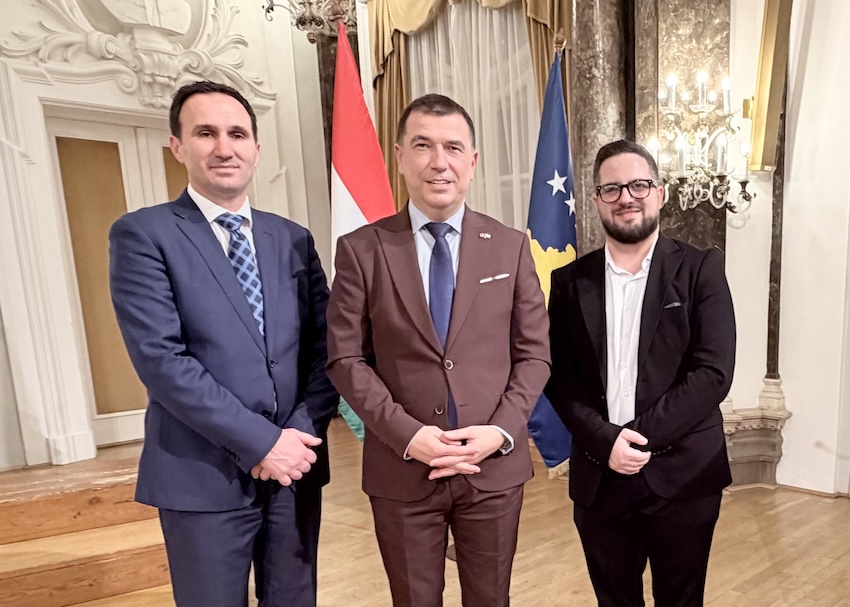
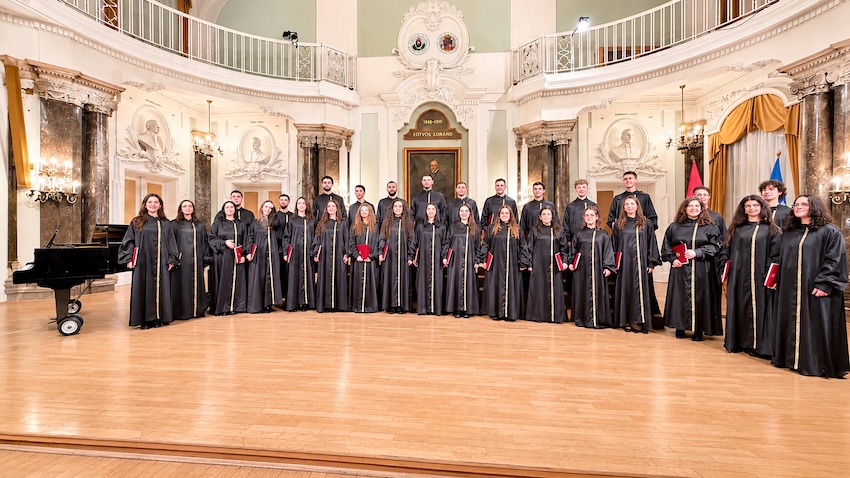
The Ambassador’s remarks provided an important diplomatic perspective, highlighting how academic partnerships and cultural initiatives can contribute to stronger and more enduring relations between Kosovo and Hungary.
A Musical Encounter Across Borders
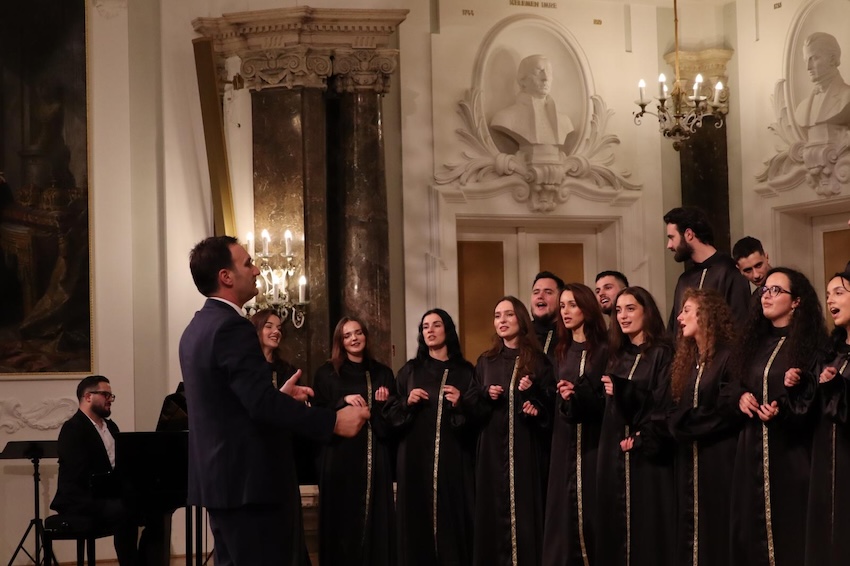
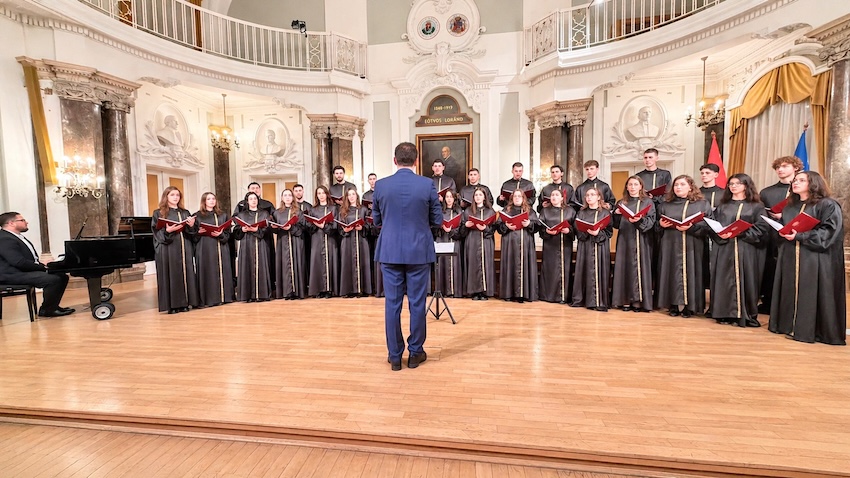
The concert opened with a joint performance of Mozart’s Ave Verum Corpus by the Choir of the Faculty of Arts of Haxhi Zeka University in Peja and ELTE University’s Béla Bartók Choir, conducted by László Kovács. The two ensembles created a wonderful opening moment by uniting their voices in a shared interpretation of Mozart’s timeless composition.
The programme then continued with an engaging concert presented by the students of the Faculty of Arts of Haxhi Zeka University from Peja. Under the direction of Professor Hysen Nimani and accompanied by pianist Gent Kumnova, the young Kosovar performers offered a diverse repertoire spanning different styles, composers and eras. The program featured works by Igor Stravinsky, Rexho Mulliqi, Esat Rizvanolli, Lorenc Antoni, Rafet Rudi, Giuseppe Verdi, Roger Emerson, William L. Dawson, Jake Runestad and Michael John Trotta, alongside a traditional song from South Africa.
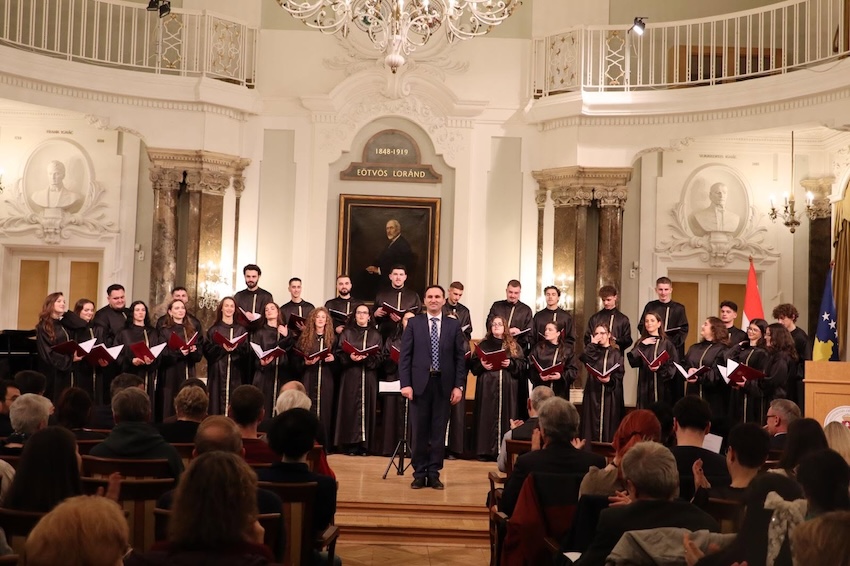
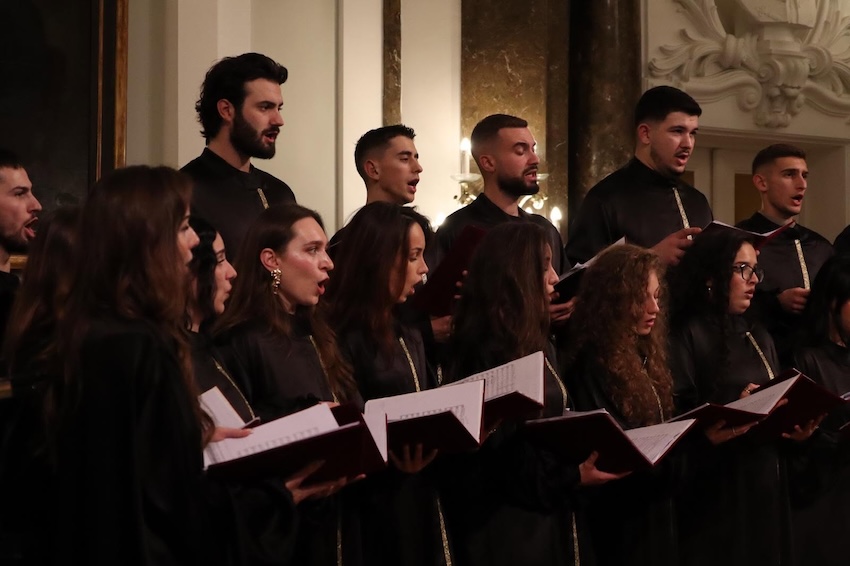
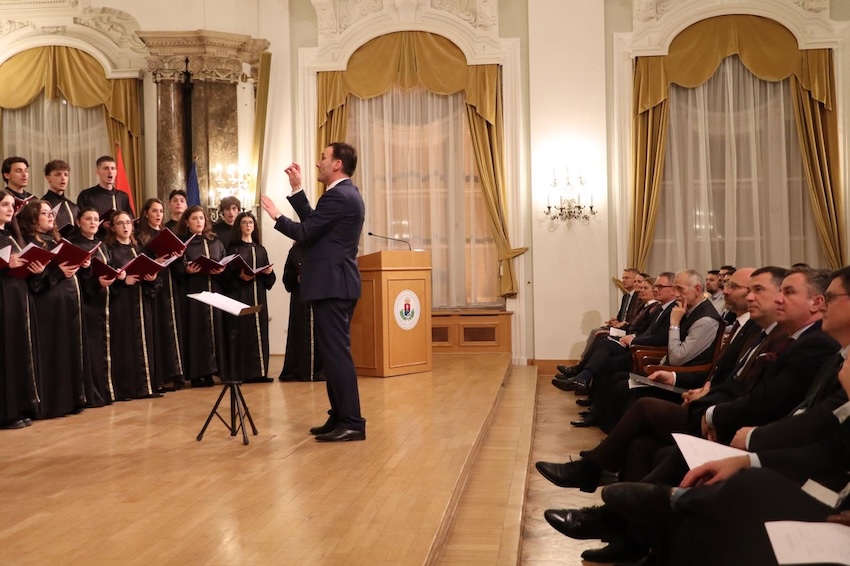
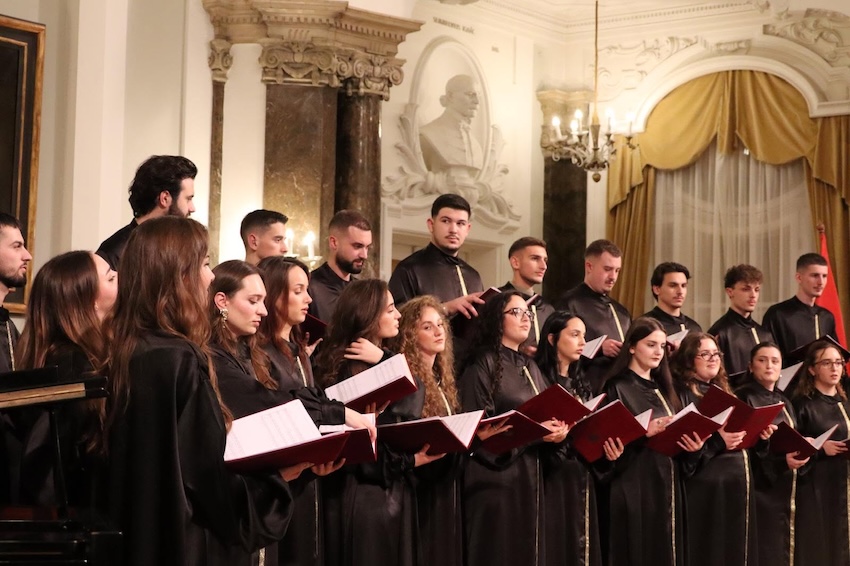
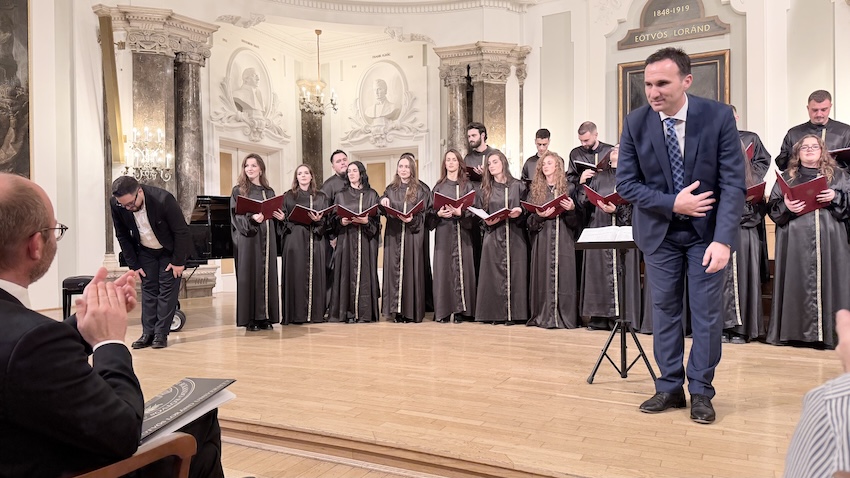
One of the evening’s most remarkable and applauded performances was Jake Runestad’s Nyon, Nyon. This refreshingly original choral composition combined music with lively movements, expressive gestures and humour by the mixed choir, lending the performance an unexpected and delightful theatrical dimension. The audience was so enthusiastic that the piece was performed once again as an encore.
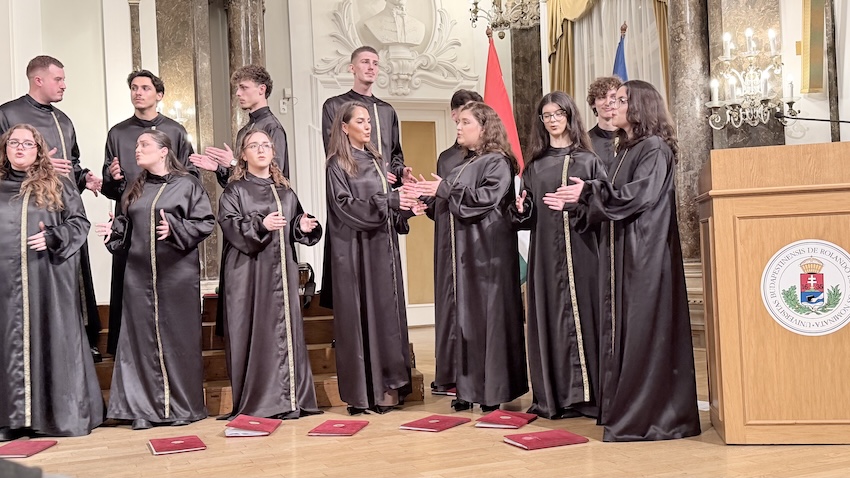
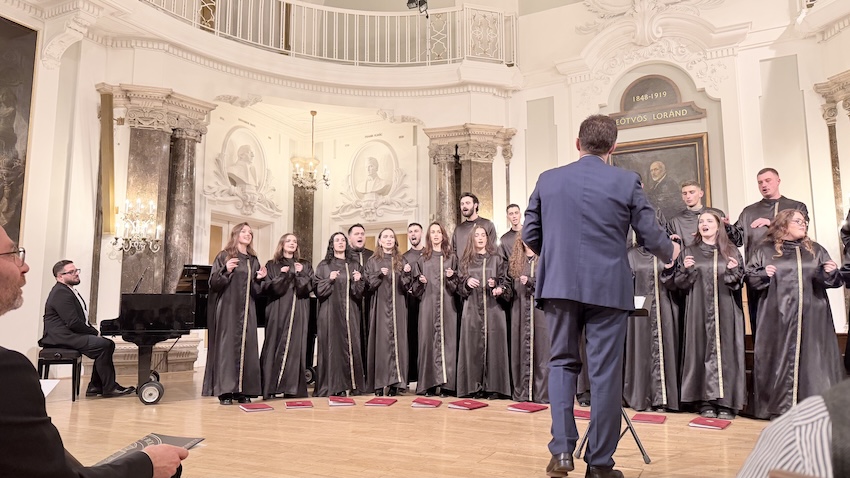
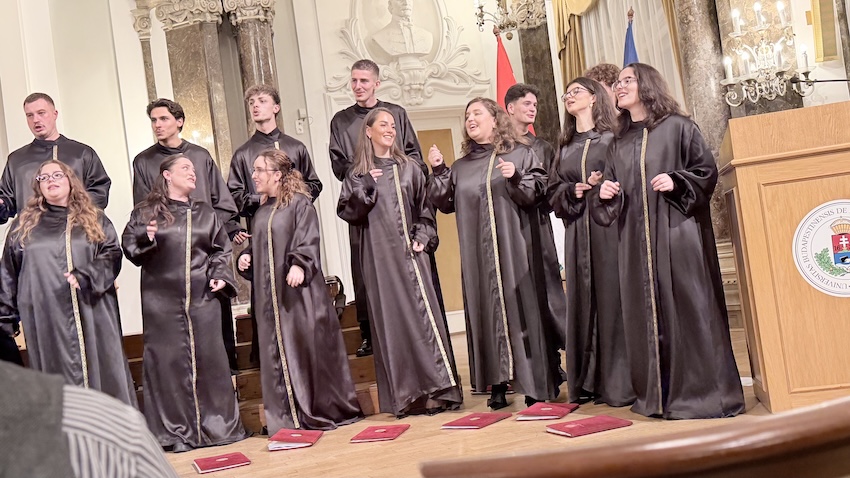
The performers’ impressive musicality, artistic versatility, radiant smiles and wonderful sense of humour captivated the audience throughout the entire evening. The variety of the repertoire, combined with the students’ dynamism and confident stage presence, resulted in an exceptionally enjoyable concert, earning warm and sustained applause. It was a convincing demonstration of the talent, creativity and artistic vitality of the young generation of Kosovar musicians.
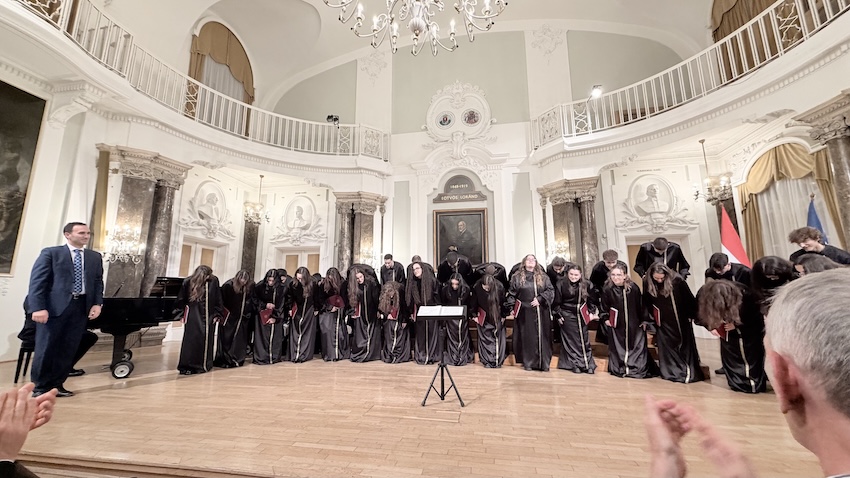
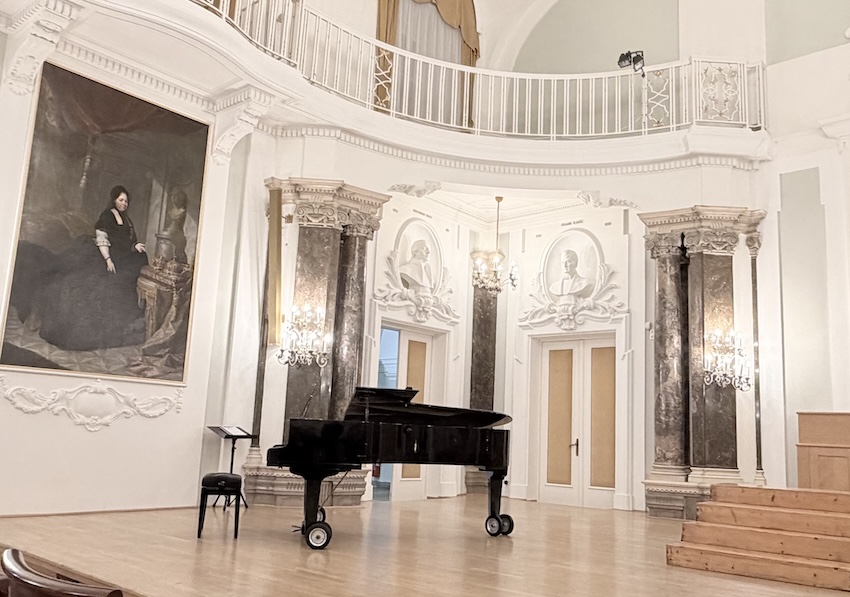
The Aula Magna: Where History Meets Music
The ELTE’s origins date back to 1635, when Cardinal Péter Pázmány founded the university in Nagyszombat – then part of the Kingdom of Hungary (today Trnava, Slovakia). Its subsequent history is closely connected with Empress Maria Theresa, Queen of Hungary, who had the institution moved to Buda in 1777, then to Pest in 1784, eventually becoming one of Hungary’s most prestigious centres of higher education.
The Aula Magna itself reflects this remarkable academic heritage. Its walls preserve the memory of three defining figures in the university’s history: Cardinal Péter Pázmány, the founder; Empress Maria Theresa, Queen of Hungary, whose decision shaped the institution’s future in Hungary; and Loránd Eötvös, the internationally renowned Hungarian physicist and the university’s namesake.
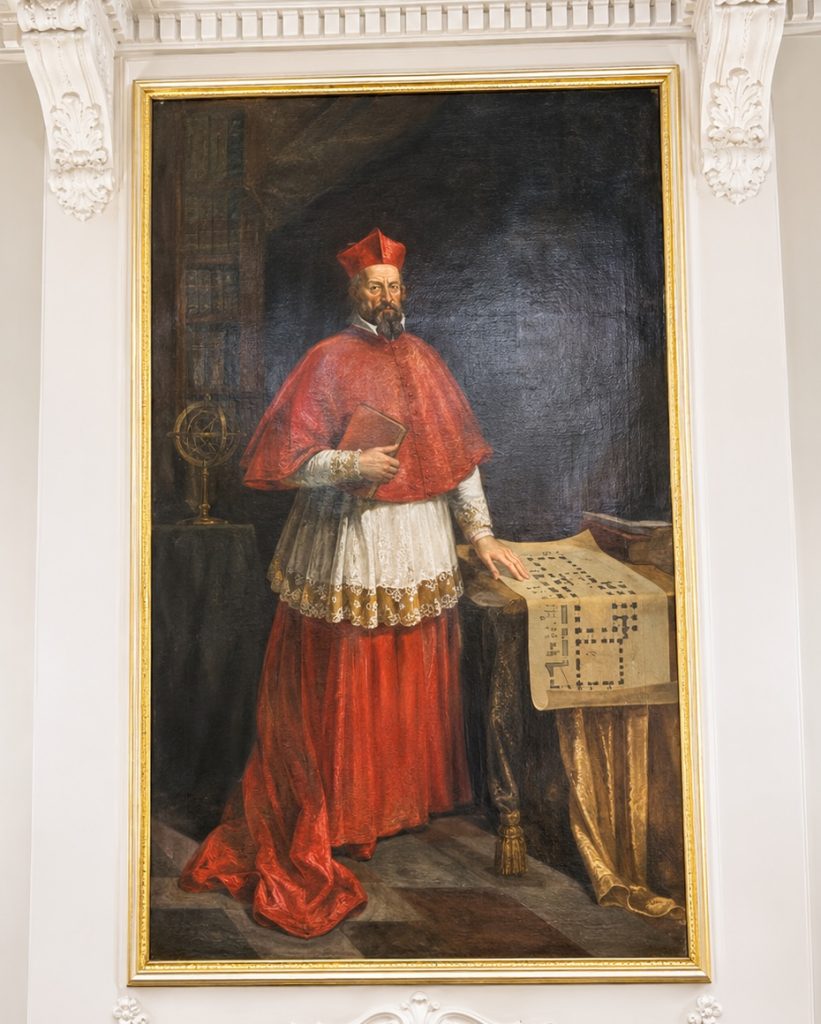
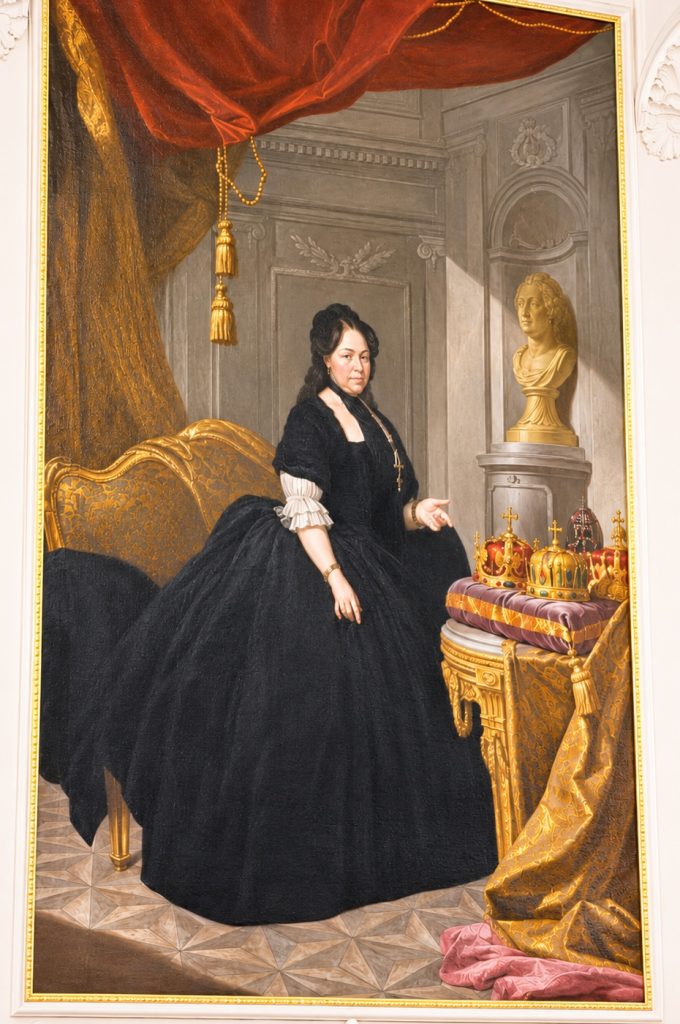
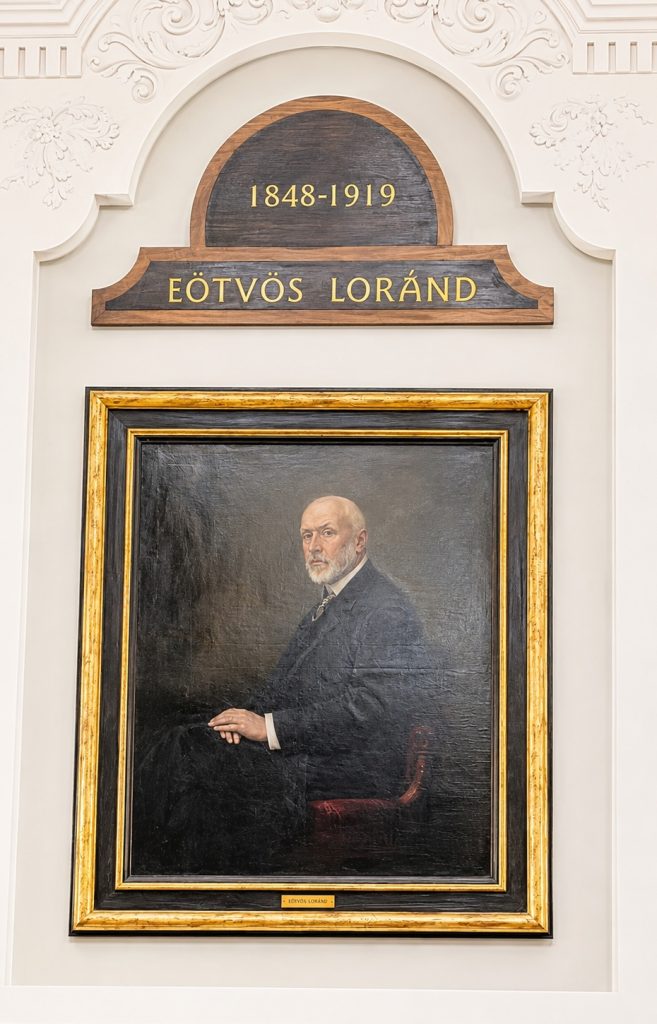
Alongside their portraits, busts of distinguished scholars and professors also contribute to the hall’s exceptional historical atmosphere. Looking down on the performers, the bust of Loránd Eötvös seemed almost to preside over this special musical encounter between Kosovo and Hungary. Surrounded by centuries of academic and cultural heritage, the audience experienced much more than just a concert. The Aula Magna provided an evocative setting in which the university’s intellectual past met the artistic aspirations of a new generation.
Two University Choirs, One Musical Language
Beyond its musical significance, Choral Echoes highlighted the vital role that universities and cultural institutions play in fostering international relations. Cultural diplomacy is not limited to formal meetings and exchanges. It also flourishes through artistic cooperation and events, shared experiences and personal connections.
The collaboration between the Choir of the Faculty of Arts of Haxhi Zeka University in Peja and ELTE University’s Béla Bartók Choir in Budapest was a particularly meaningful example of this approach.
University partnerships, student exchanges and joint cultural initiatives create opportunities for young people to discover different traditions, develop mutual understanding and build relationships that can last a lifetime.
Source: Embassy of Kosovo in Budapest
Photos from the Embassy of Kosovo in Budapest