



Edited by Anna Popper
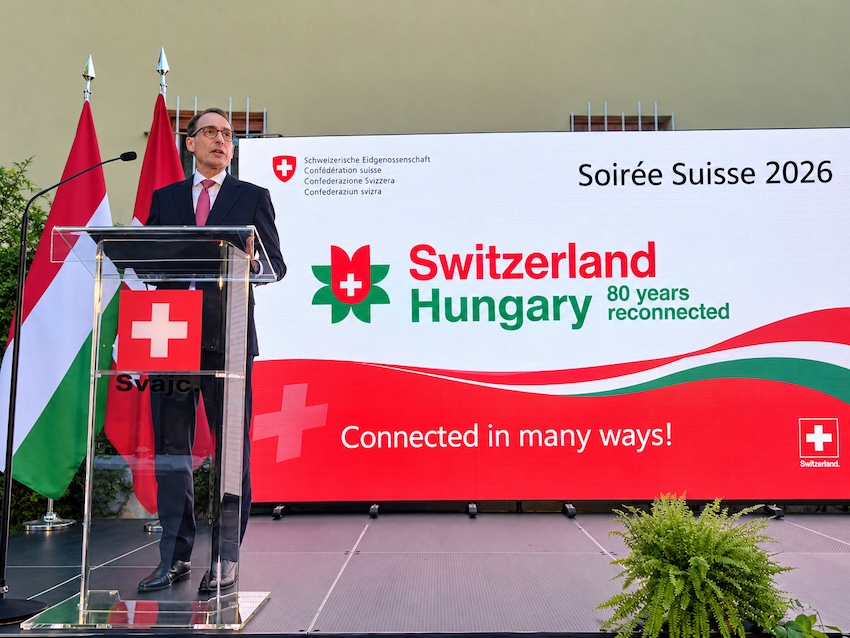
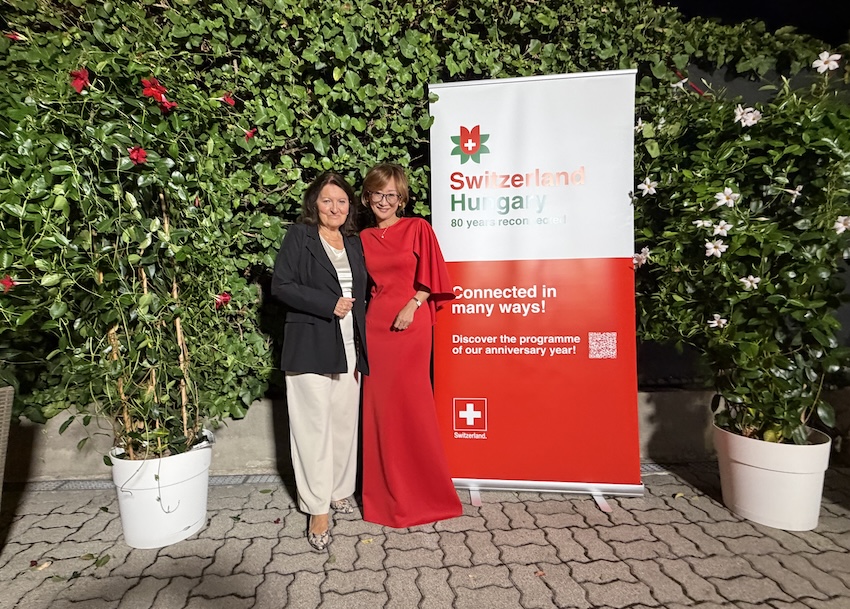
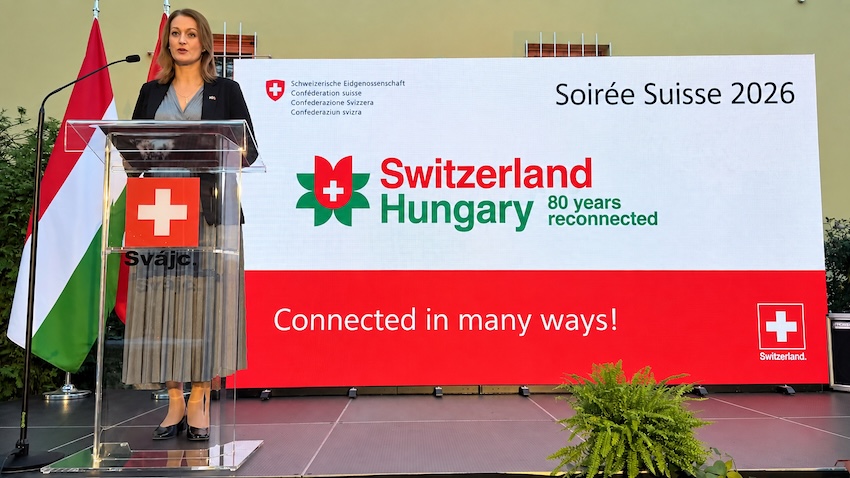
The Embassy of Switzerland in Hungary marks a significant milestone in 2026: the 80th anniversary of the resumption of diplomatic relations between Switzerland and Hungary. Throughout the year, a diverse programme of events highlights the close and multifaceted relationship between the two countries under the anniversary motto “Connected in many ways!”
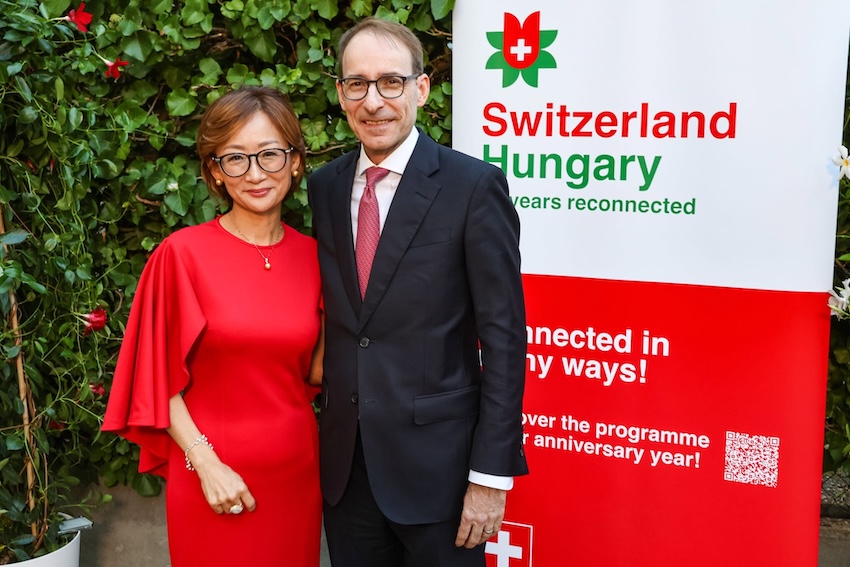
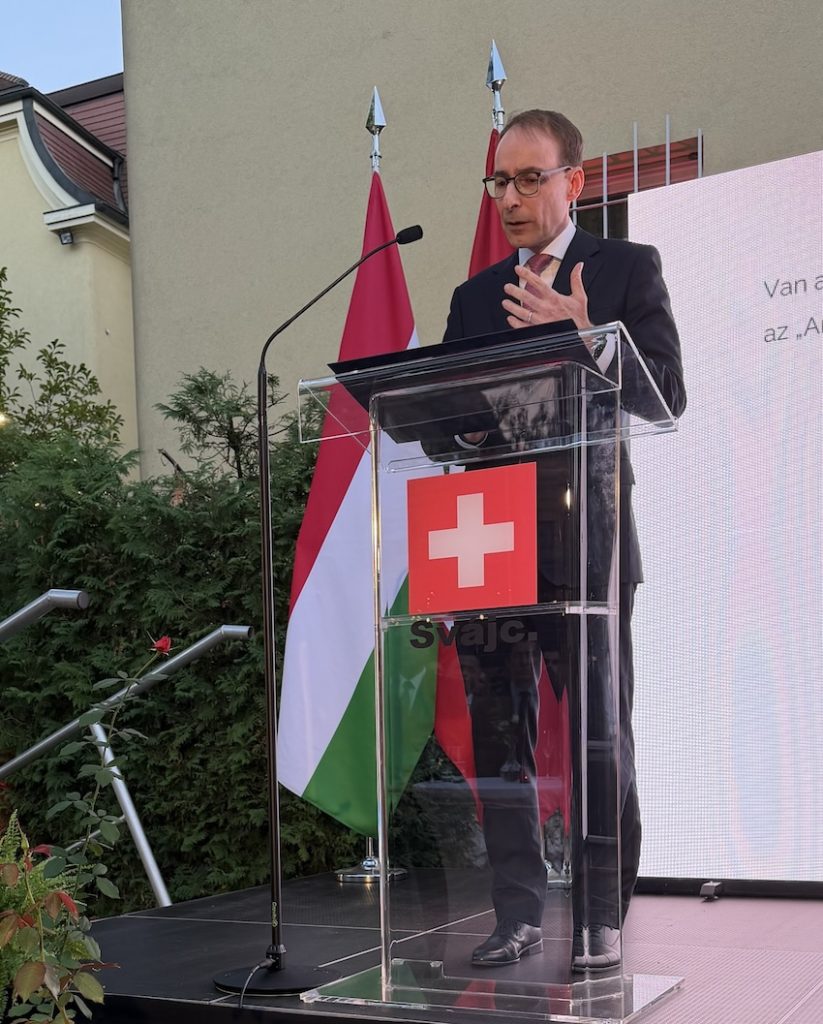
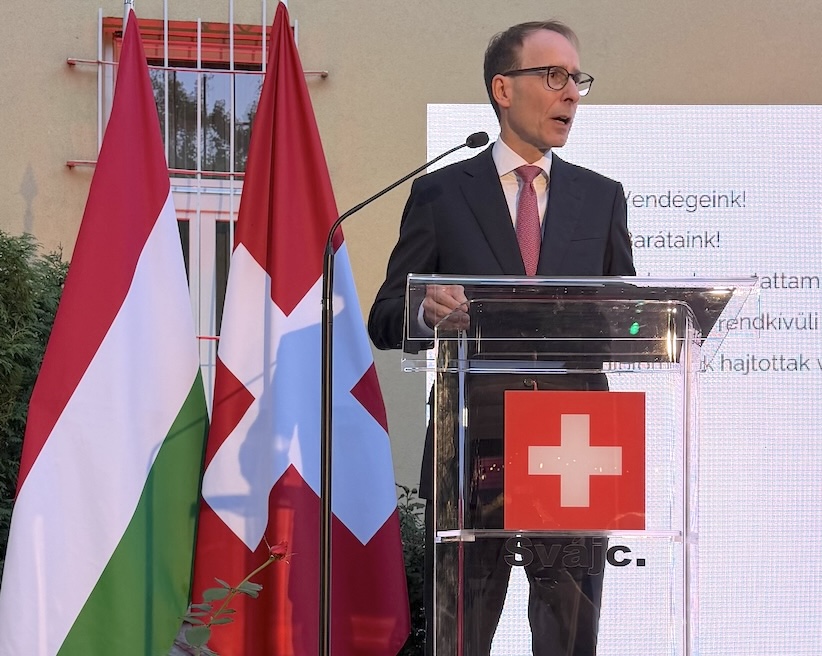
The first Soirée Suisse, hosted by His Excellency Alexander Renggli, Ambassador of the Swiss Confederation to Hungary and Mrs. Cindy Renggli in the garden of the Swiss Embassy in Budapest, provided a truly memorable occasion to celebrate these longstanding ties.
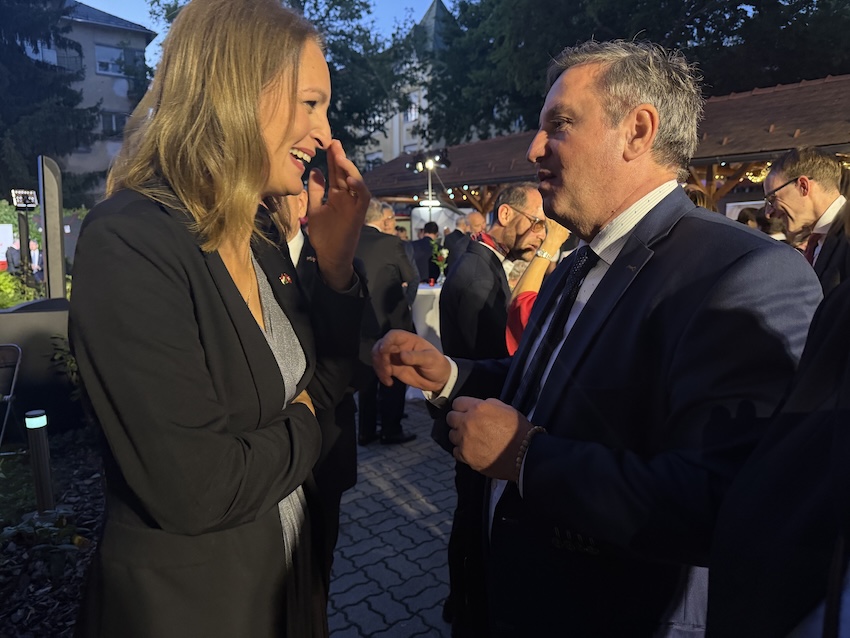
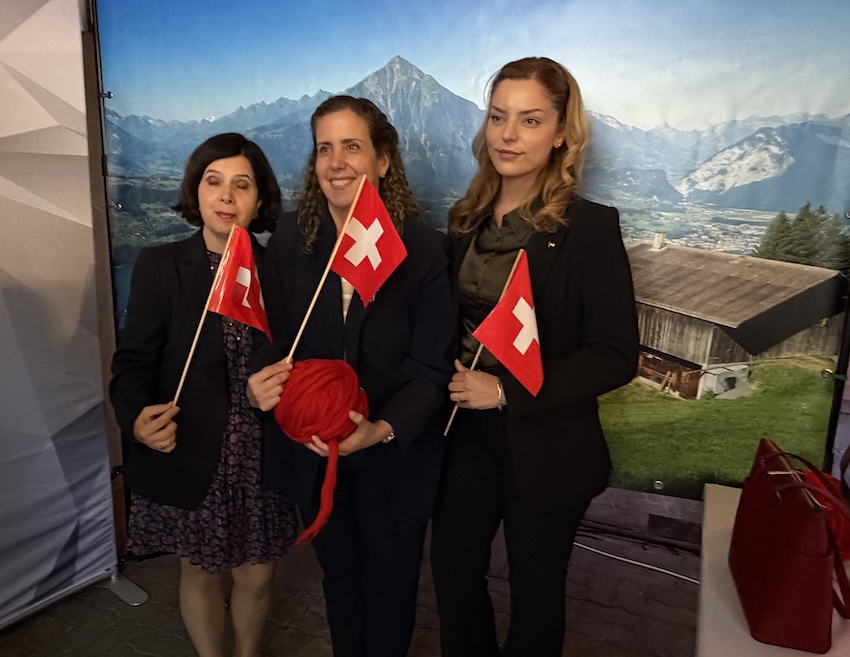
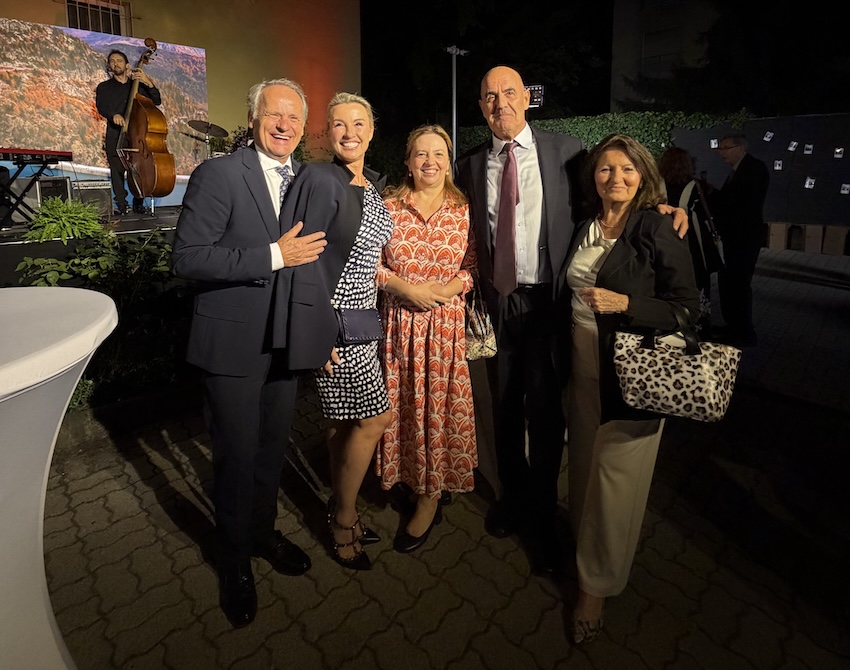
Hundreds of guests, partners, and friends of Switzerland gathered for a grand evening that brought together diplomacy, history, culture, business and the flavours of Switzerland.
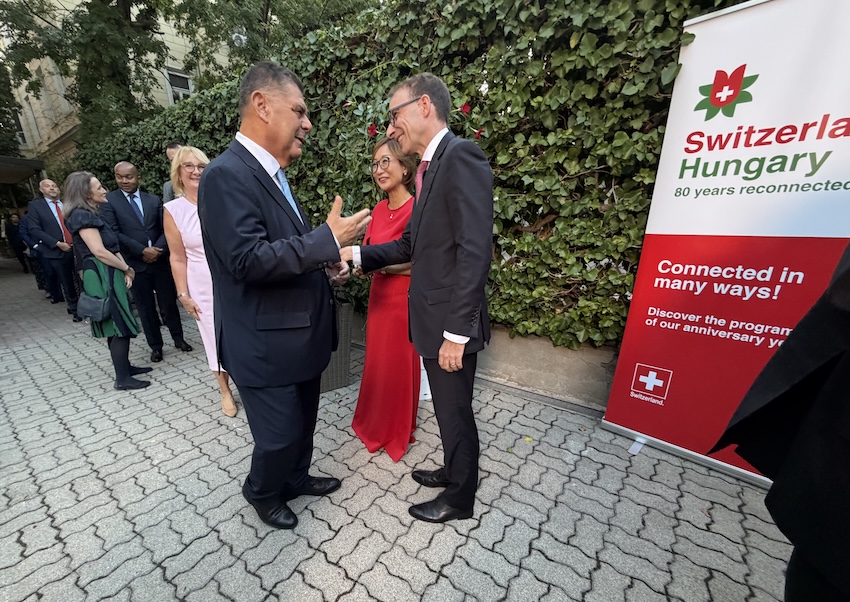

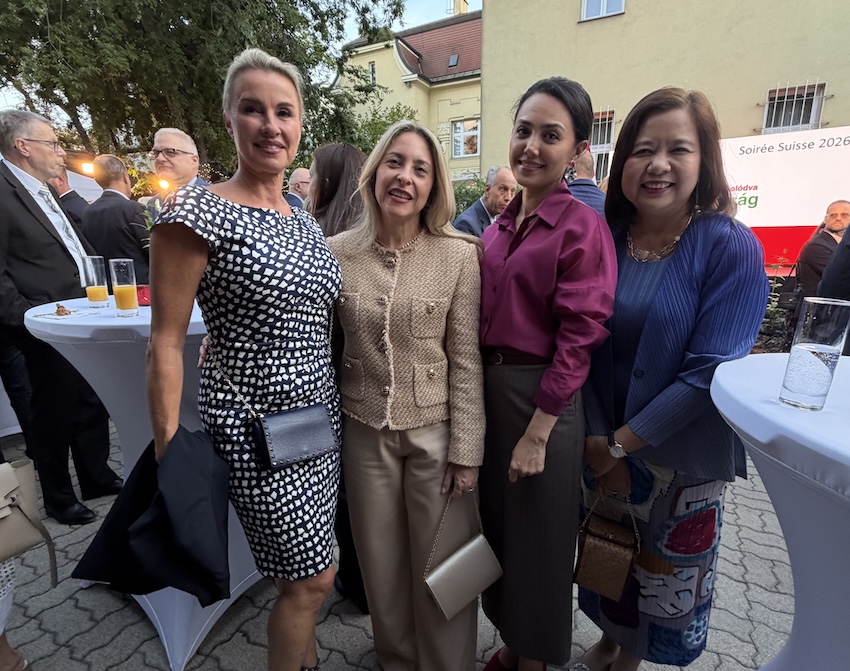
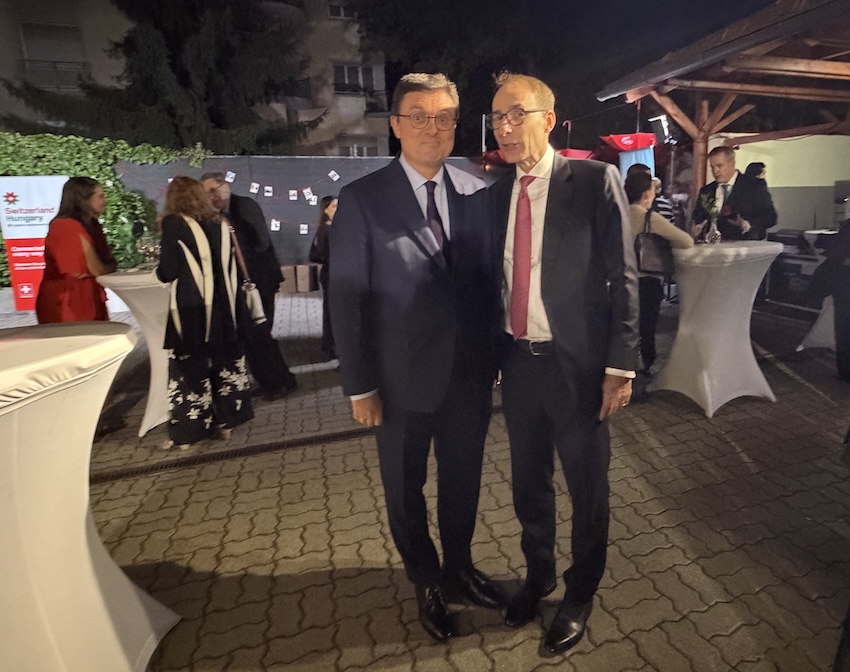
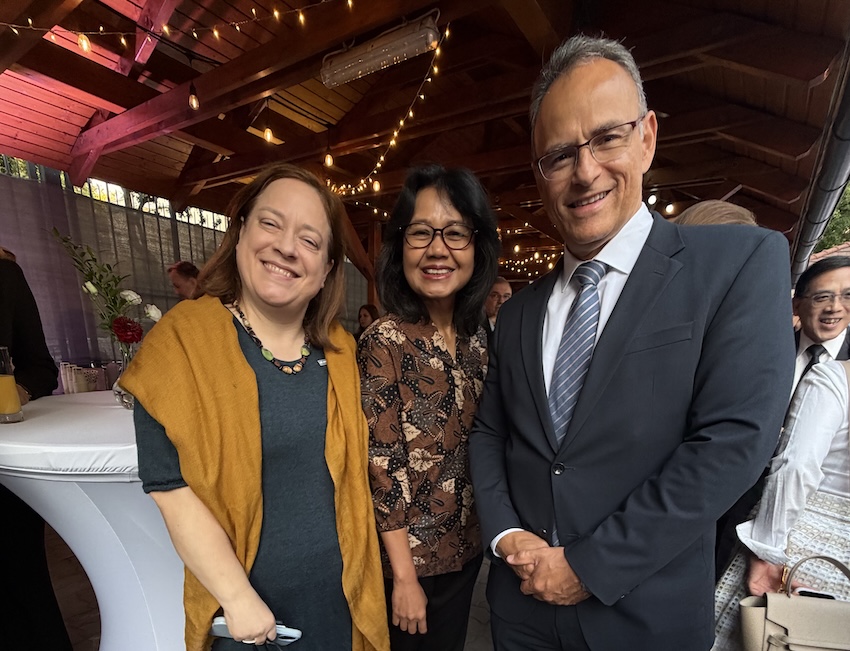
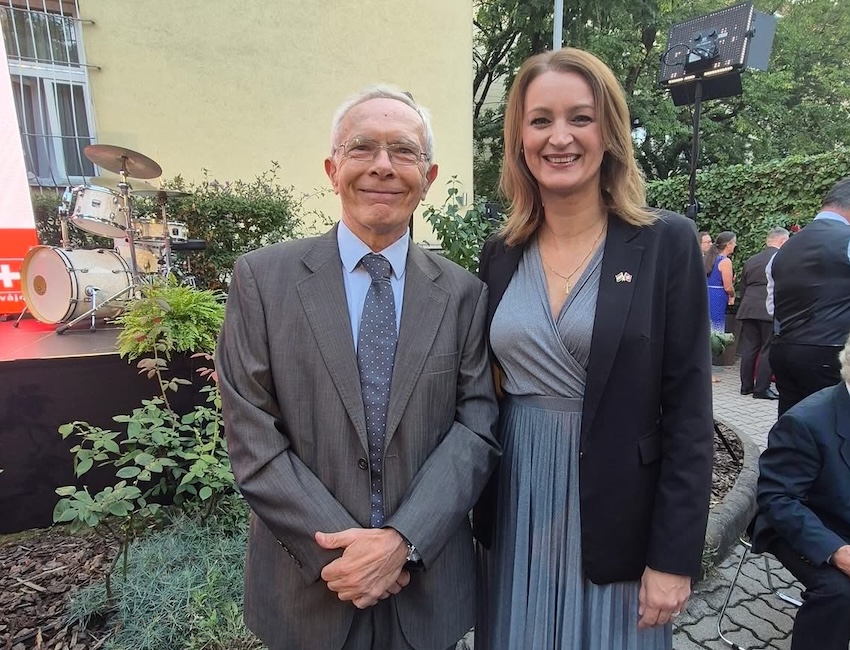
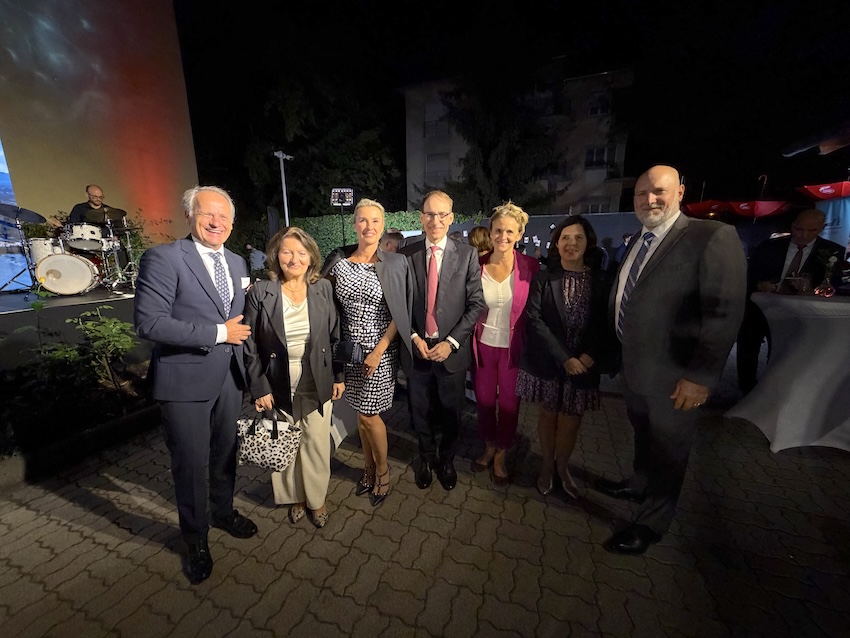
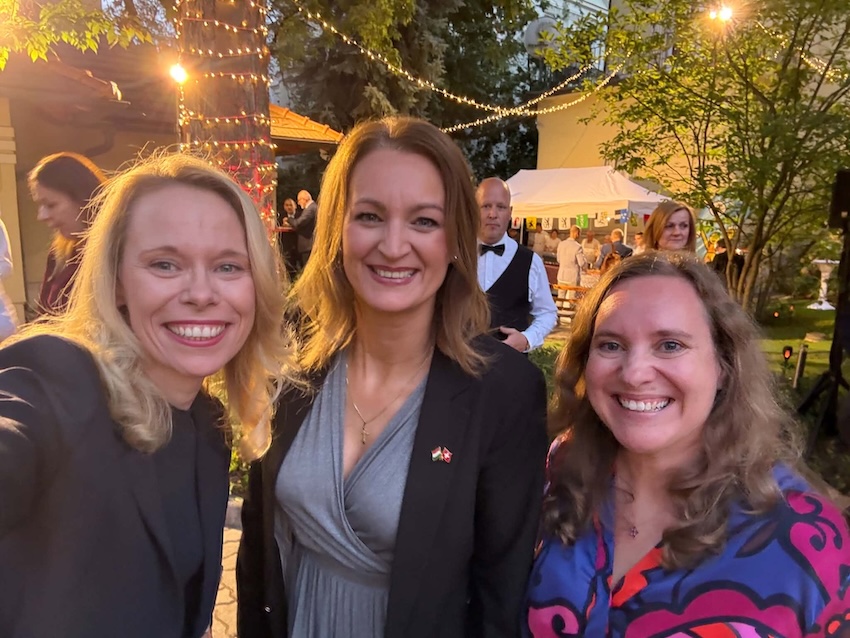

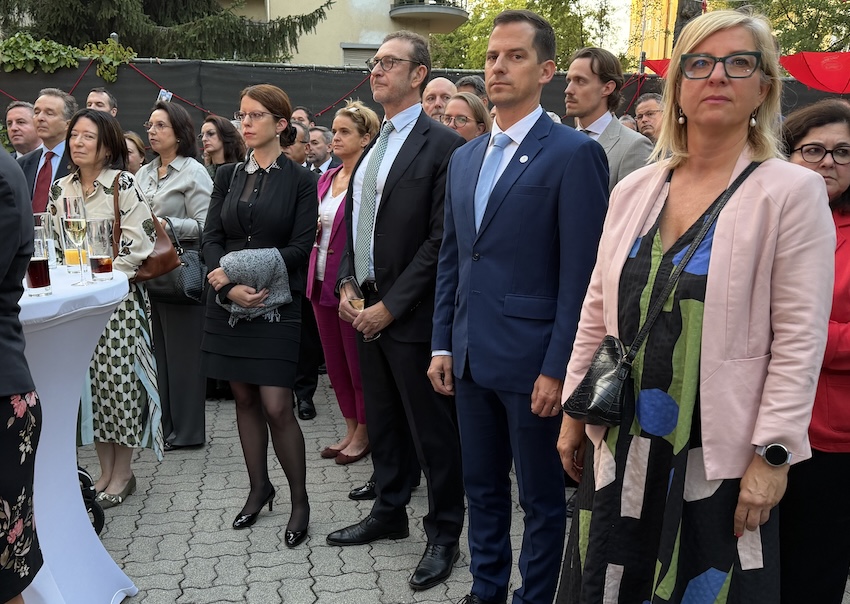
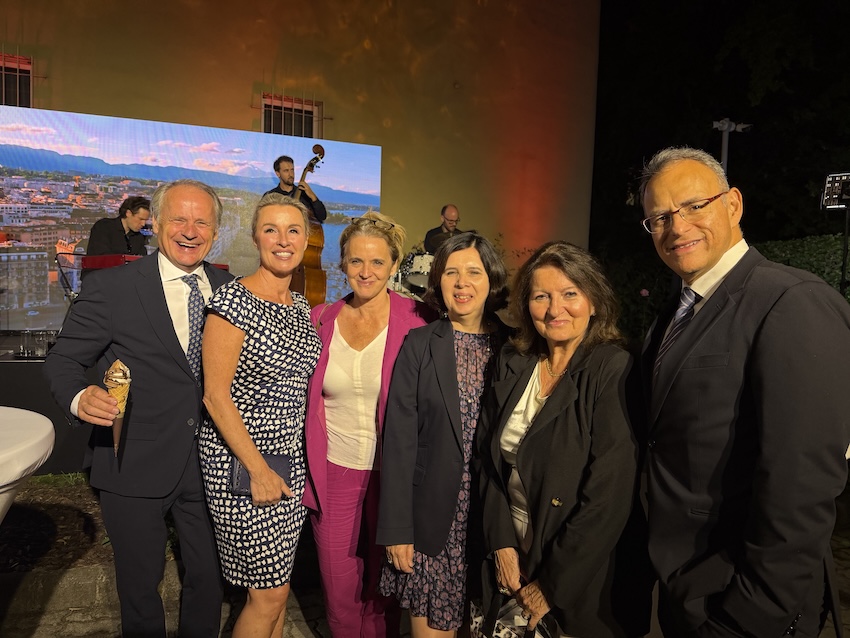
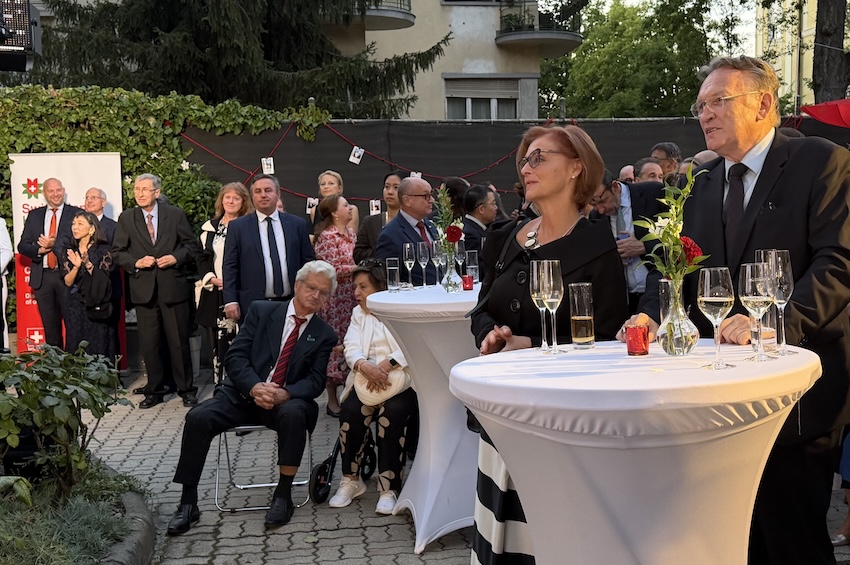
The event was honoured by the presence of Ágnes Forsthoffer, Speaker of the Hungarian National Assembly; her attendance underlined the high importance attached to Swiss-Hungarian relations.
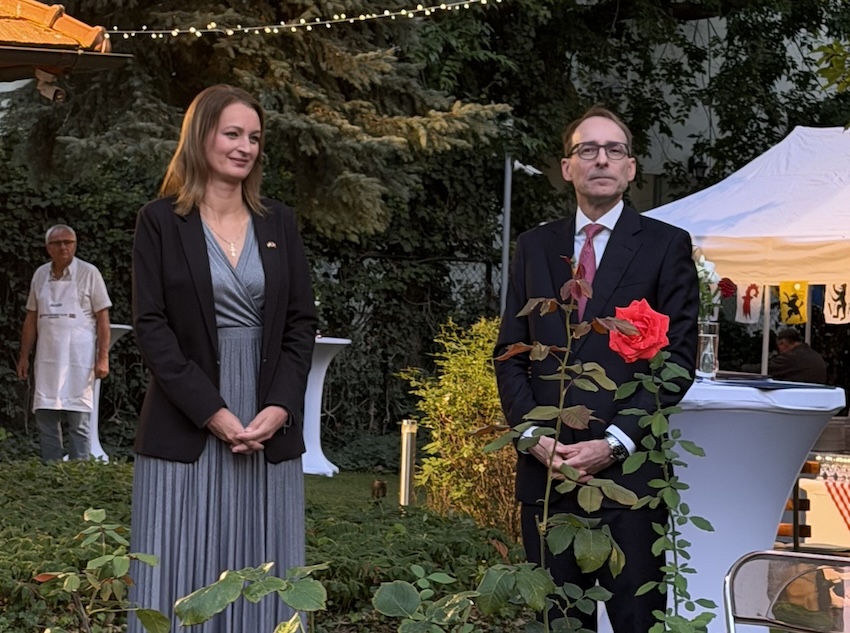
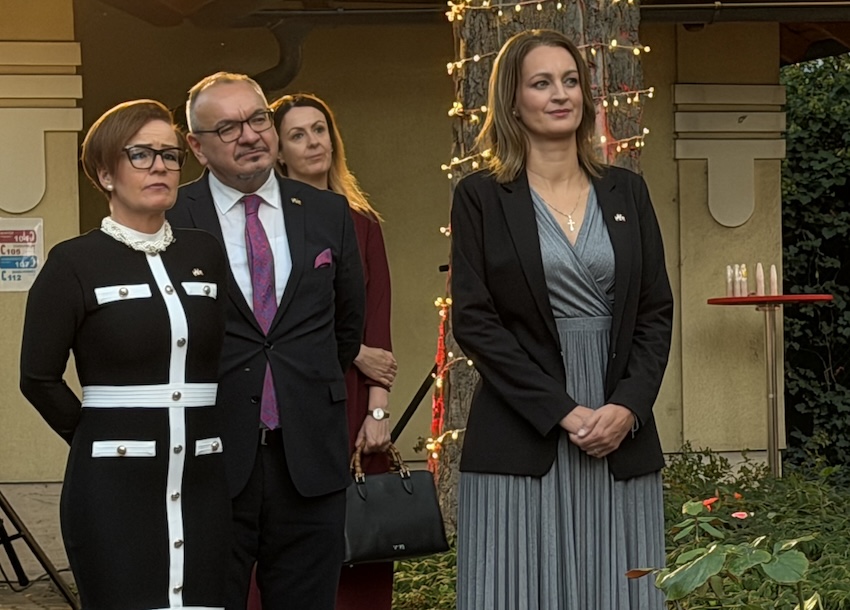
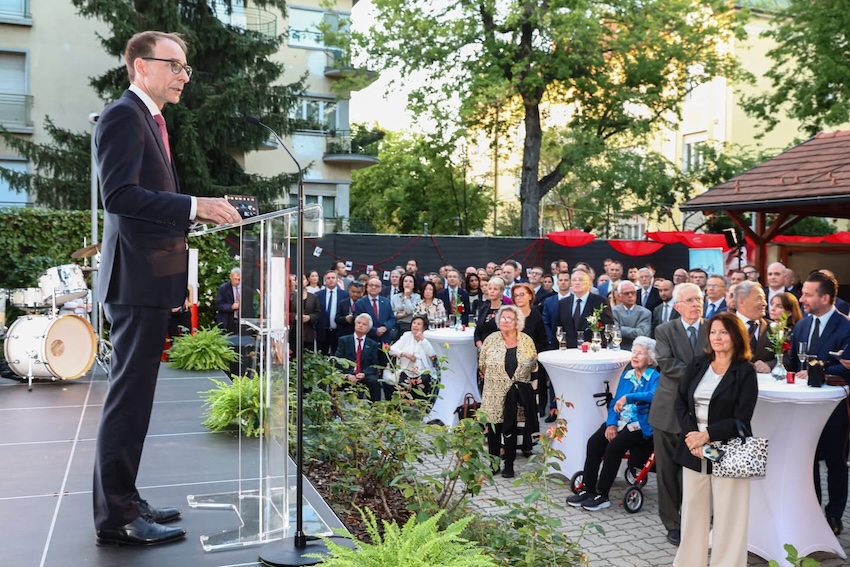
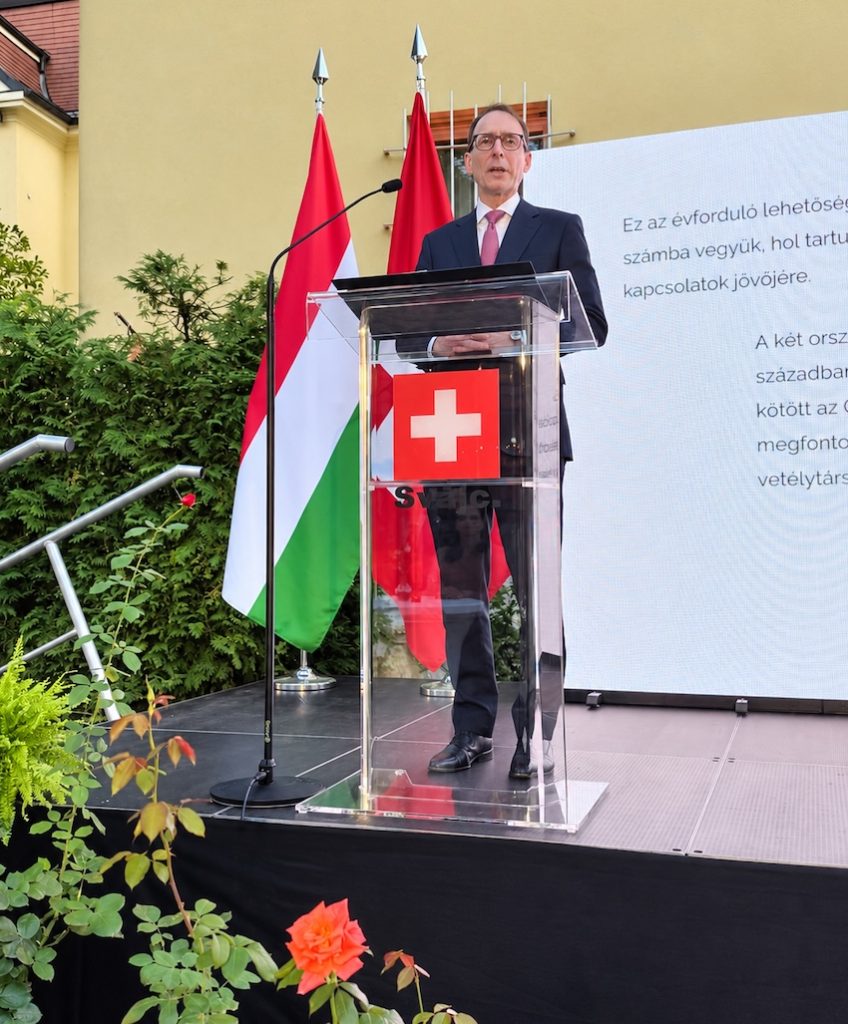
In his address, welcoming the distinguished guests – including state secretaries, members of the diplomatic corps, and representatives of Hungarian public life – Ambassador Renggli described the anniversary as an opportunity not only to celebrate, but also to reflect on the past, assess the present, and look toward the future of Swiss-Hungarian relations.
He recalled that the ties between the two countries stretch back many centuries. As early as the 15th century, King Matthias Corvinus of Hungary concluded a ten-year friendship treaty with the Old Swiss Confederacy. Behind this diplomatic agreement was also a practical consideration: preventing his Habsburg rival from recruiting the highly valued Swiss mercenaries.
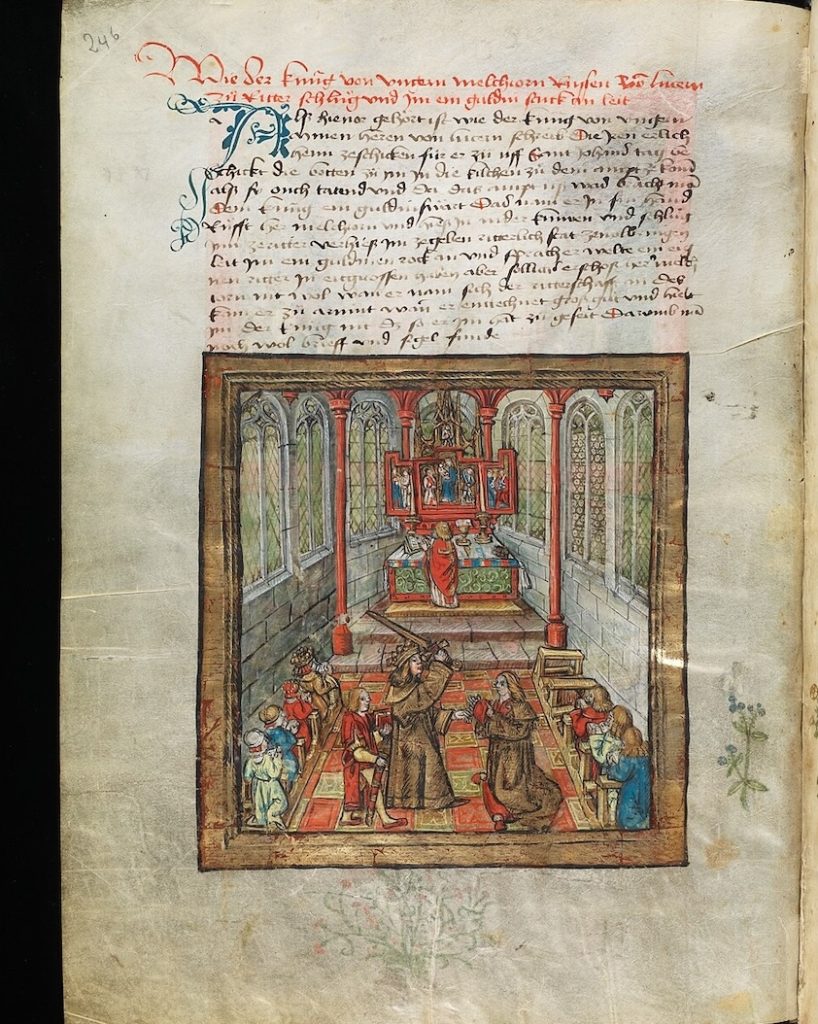
(The image is from the Lucerne Chronicle of Diebold Schilling the Younger, 1513, kept in the Zentral- und Hochschulbibliothek Luzern, depicting King Matthias Corvinus knighting the Lucerne envoy Melchior Russ in St Stephen’s Cathedral in Vienna.)
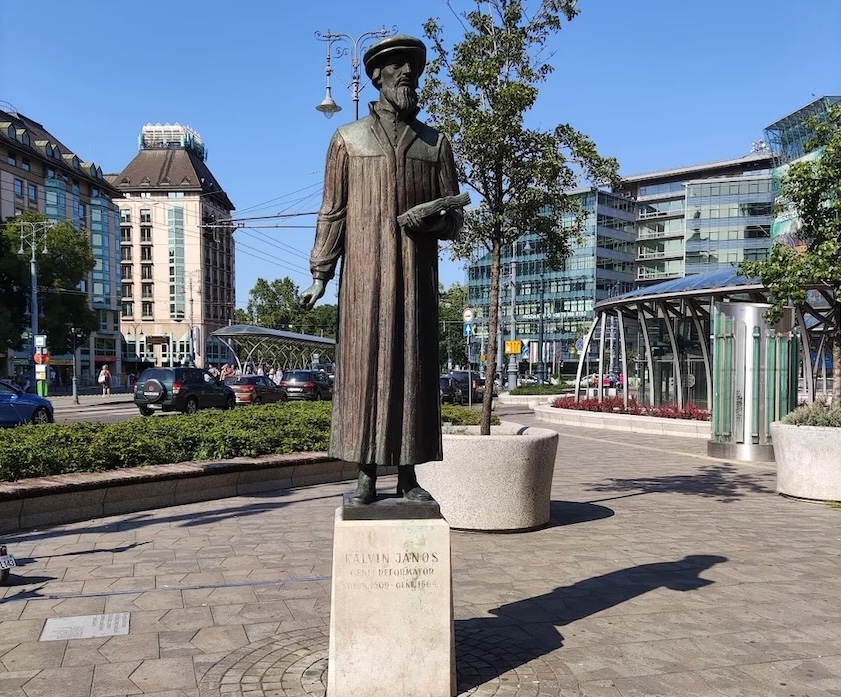
Over the centuries, the relationship developed in ever more diverse directions. The Reformation, and particularly Calvinism, exerted a significant influence on Hungary and contributed to a lasting exchange of cultural and intellectual ideas between the two countries. (John Calvin Statue at Calvin Square in Budapest)
Swiss Entrepreneurs in Hungary
The 19th century added another important dimension to the relationship, as Swiss capital and entrepreneurs contributed to the industrialisation of Hungary. Names that remain particularly well-remembered include Abraham Ganz (heavy industry), Émile Gerbeaud (confectionery), and Henry Haggenmacher (brewing).
Their legacy demonstrates that relations between Switzerland and Hungary were never limited to political and diplomatic contacts; rather, they were also shaped by entrepreneurship, industry, and trade, as well as by individuals whose life paths linked the two countries.
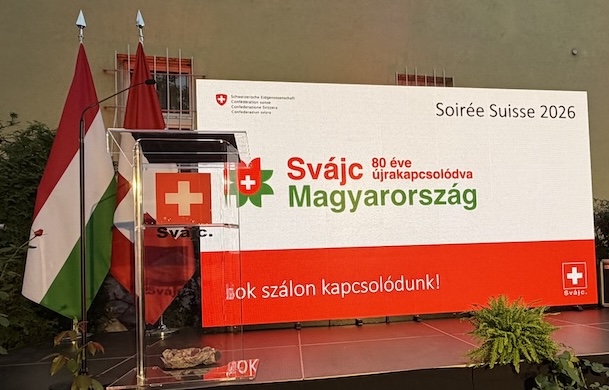
Switzerland recognised the Hungarian state in 1920, following the dissolution of the Habsburg Monarchy. In 1938, Switzerland established an independent resident legation in Budapest – at the very address where the Swiss Embassy is located today: Stefánia út 107.
Diplomatic relations between Switzerland and Hungary were temporarily interrupted after World War II. They were resumed in the autumn of 1946, and it is this resumption that Switzerland and Hungary are commemorating 80 years later.
The Swiss Humanitarian Legacy
Reflecting on the recent history of the two countries, Ambassador Renggli highlighted three particularly important moments.
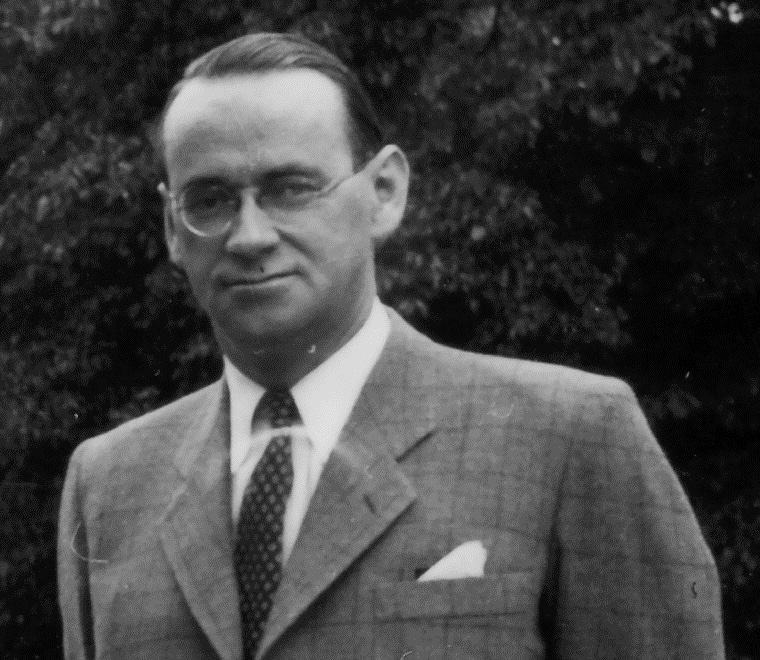
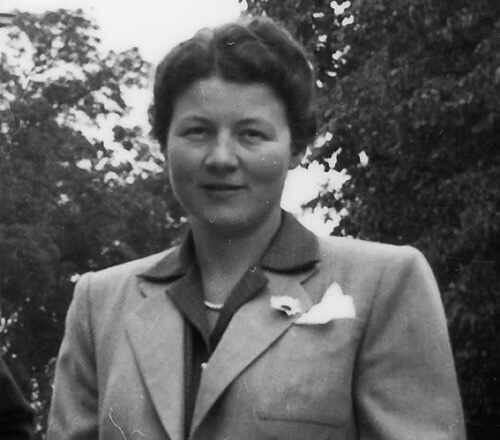
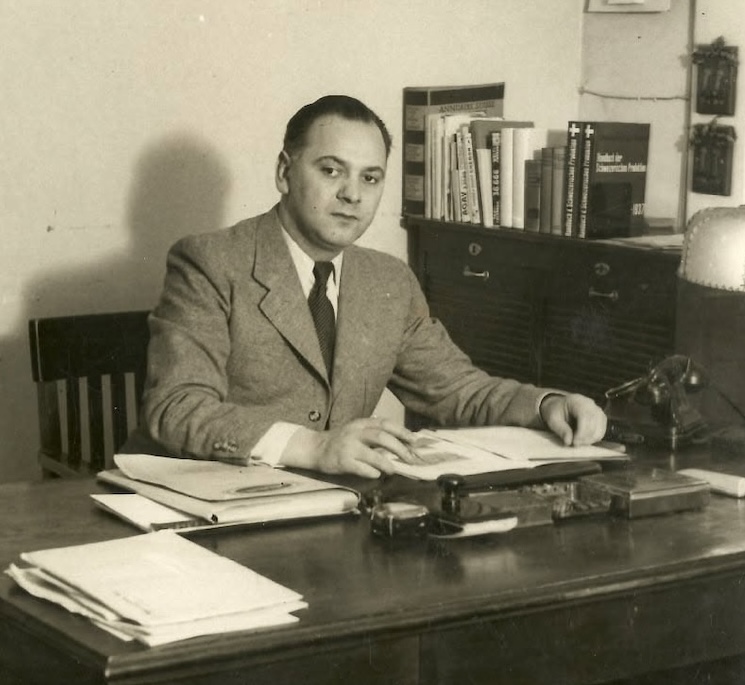
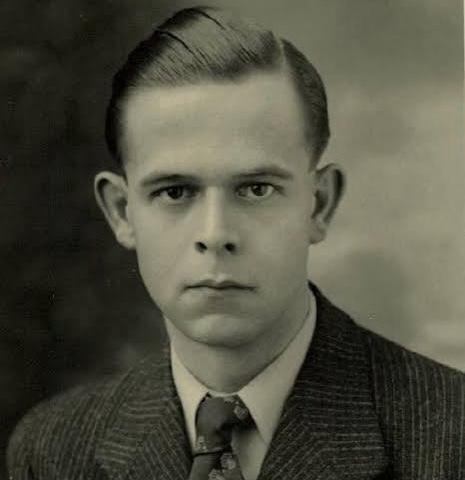
The first was the remarkable contribution made by Swiss citizens to international efforts to protect and rescue Hungarian Jews during 1944 and 1945. Prominent figures included Carl Lutz, his wife Gertrud, Friedrich Born, and Harald Feller, all of whom played important humanitarian roles during one of the darkest eras of European history. Their courage and commitment have become an enduring part of the shared historical memory of Switzerland and Hungary.
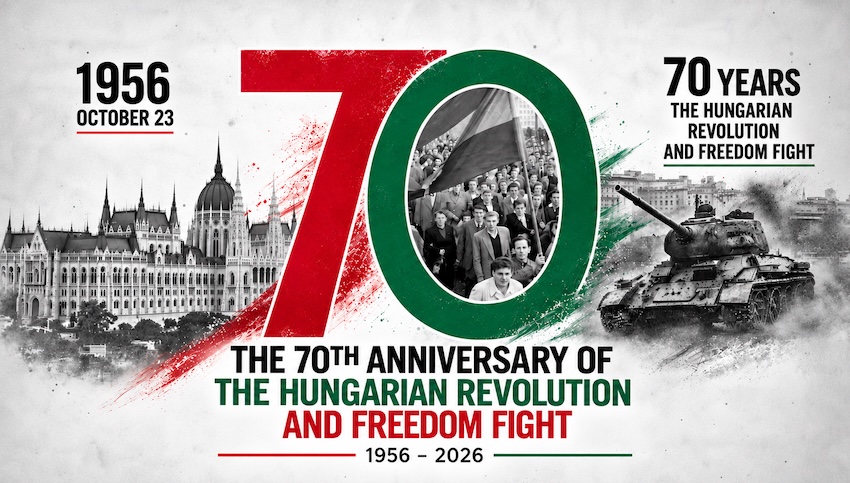
Ambassador Renggli identified 1956 – the 70th anniversary of which is being commemorated this year – as the second defining moment. Following the Hungarian Uprising, the Swiss people responded with remarkable solidarity. More than 12,000 Hungarians found refuge in Switzerland. This act of humanitarian solidarity created a lasting legacy of goodwill, friendship and personal connections between the two countries. For many Hungarian families, Switzerland became part of their personal history, while the experience forged human bridges connecting Swiss and Hungarian society to this day.
The Ambassador cited the ongoing process of European integration as the third key development; this process dismantled trade barriers, facilitated mobility, and created new opportunities for cooperation. Hungary’s accession to the European Union in 2004, along with Switzerland’s bilateral agreements with the EU, brought the two countries closer together and provided further impetus to their bilateral relations.
A Multifaceted Partnership
Relations between Switzerland and Hungary are today described as close, substantial, and multifaceted. Switzerland is one of the most significant investors in Hungary; more than 900 Swiss companies operate in the country, having created over 33,000 jobs.
Beyond investment and trade, a dense network of connections links the people of the two countries through culture, education, science and countless personal exchanges. Swiss nationals living and working in Hungary, as well as Hungarians with strong personal and professional ties to Switzerland, form an important human bridge between the two societies.
At the political and diplomatic levels, Switzerland and Hungary maintain regular and constructive dialogue. Ambassador Renggli expressed his appreciation to the many Hungarian partners from government, business, academia, culture, and civil society, whose commitment and cooperation contribute to the richness and dynamism of bilateral relations.
The breadth and diversity of the relationship are reflected in the motto chosen for the anniversary year: “Connected in many ways!” Together with its Hungarian partners, the Embassy of Switzerland has prepared a broad programme of events for 2026, with particular emphasis on the second half of the year.
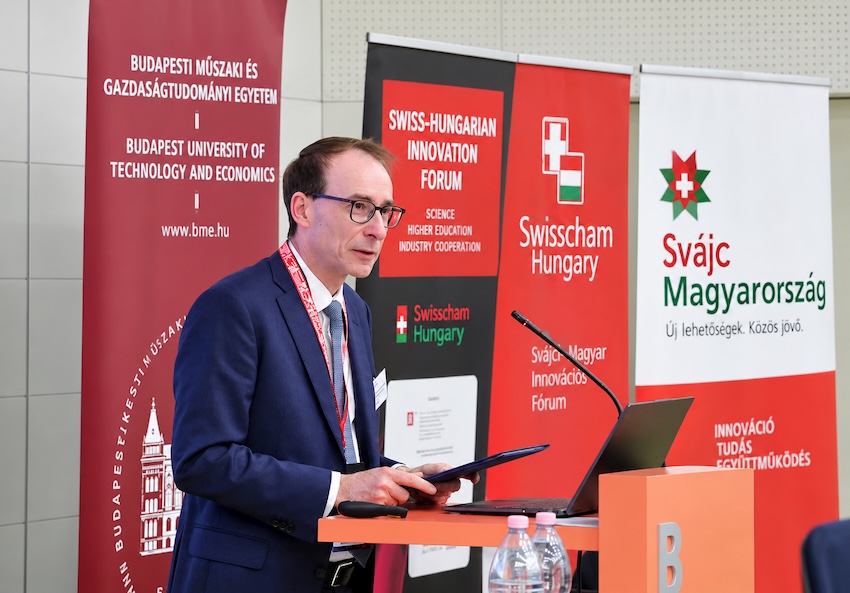
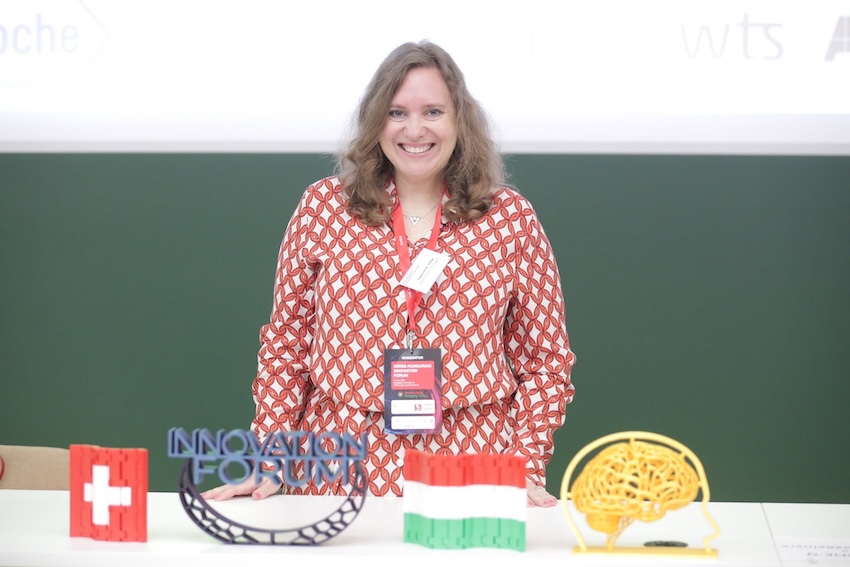
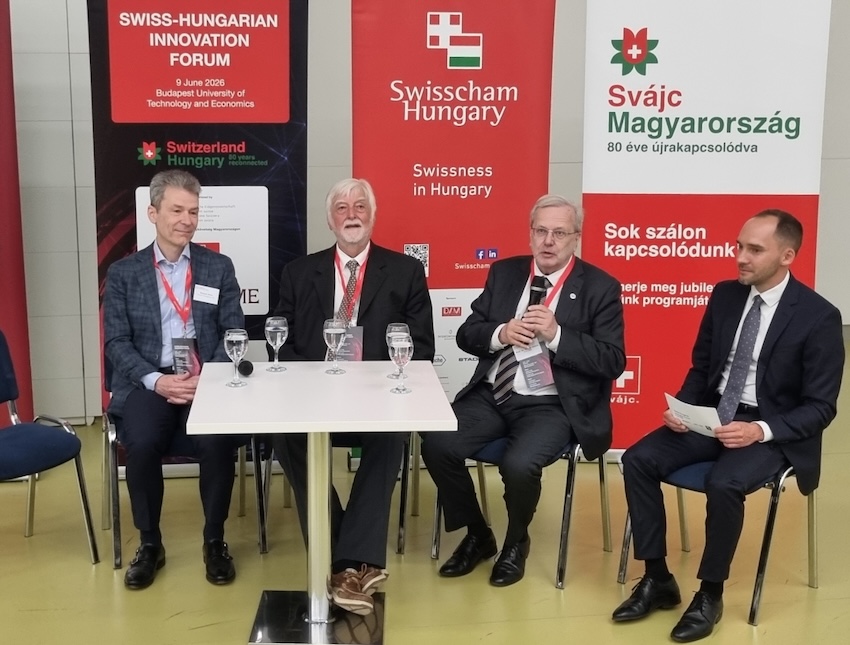
In June, the Swiss Embassy, together with SwissCham Hungary, organised the first Swiss-Hungarian Innovation Forum at the Budapest University of Technology and Economics, bringing together representatives interested in innovation, business and cooperation.
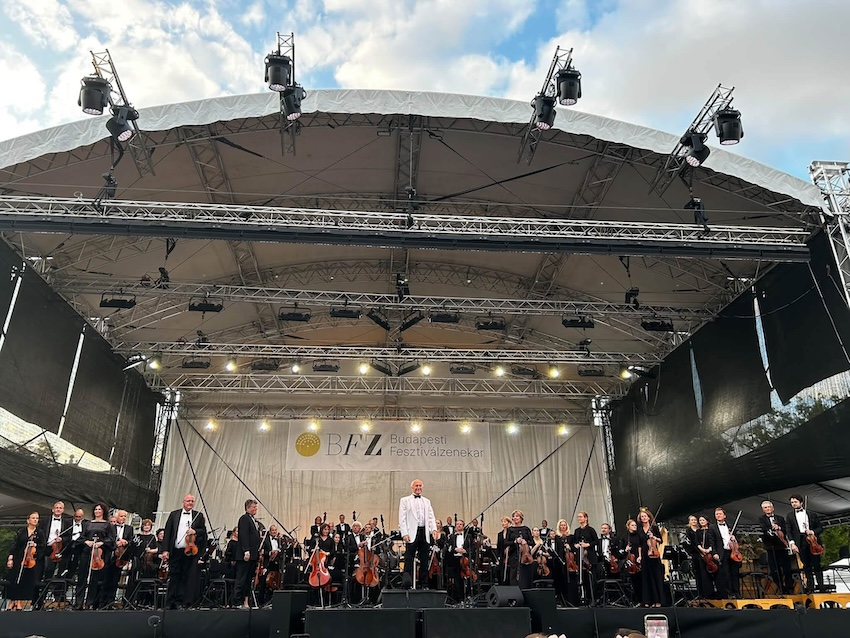
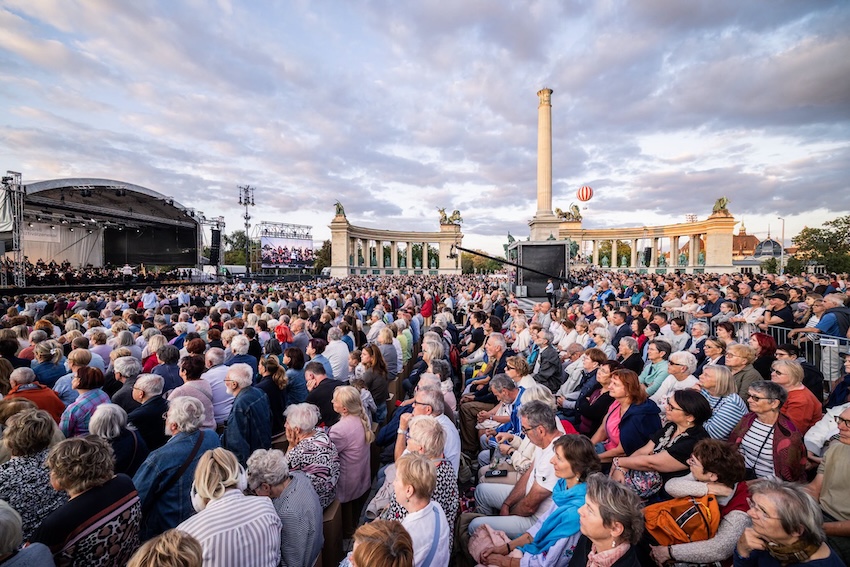
In addition, the Embassy collaborated with the Budapest Festival Orchestra on its grandiose free open-air concert at Heroes’ Square – another cultural highlight of the anniversary programme.
From 1 to 4 October, Switzerland appeared together with Austria and Germany as a German-language Guest of Honor country at the 31st International Book Festival, thereby expanding the anniversary programme to include literature and cultural exchange.
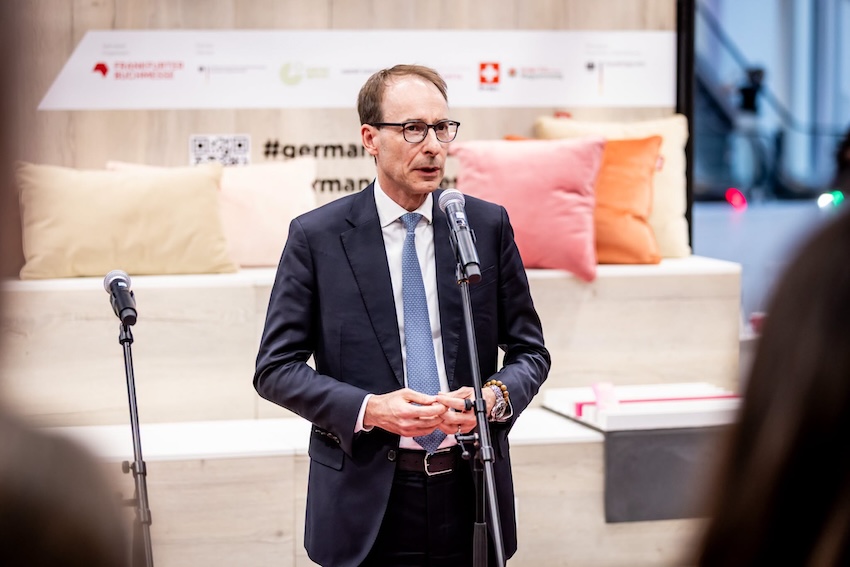
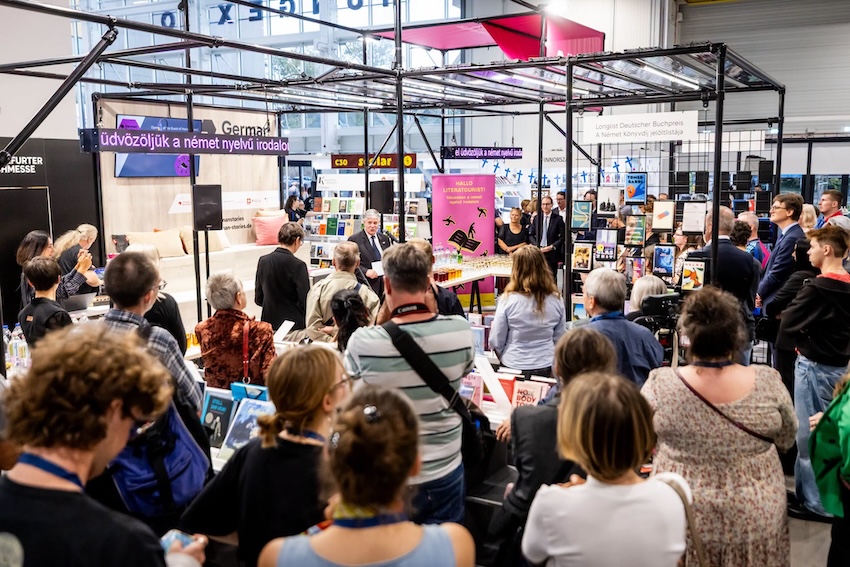
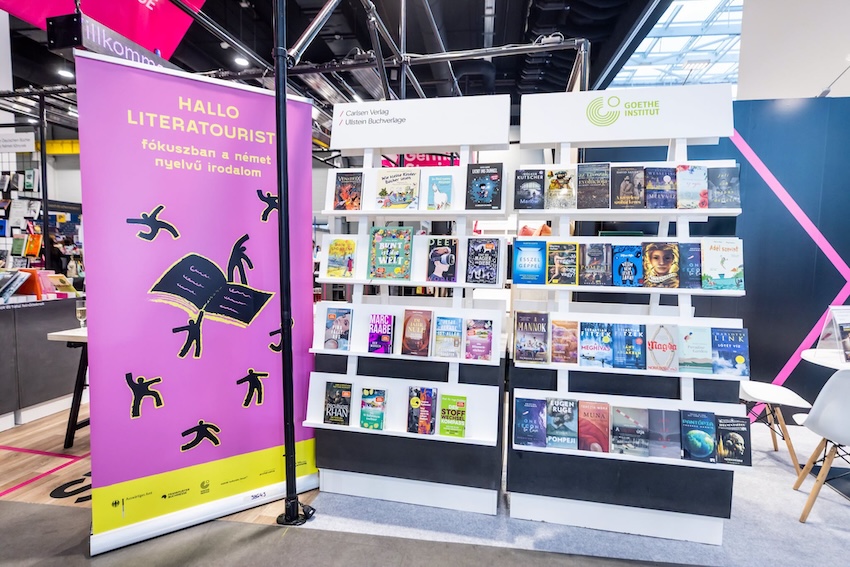
The Embassy also welcomed official and private delegations from Switzerland and co-organised a Healthcare Forum. Further cultural events are planned, and the Carl Lutz lectures at Andrássy University Budapest will continue until the end of the year.
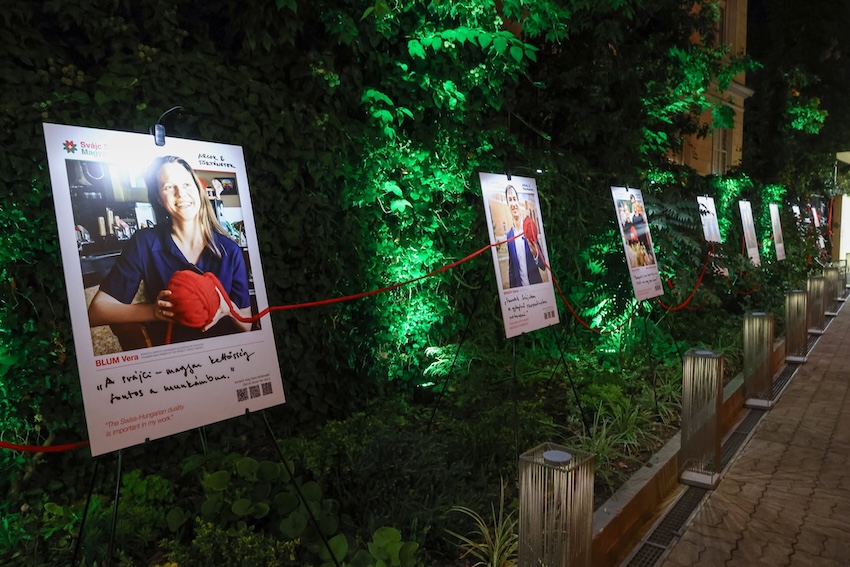
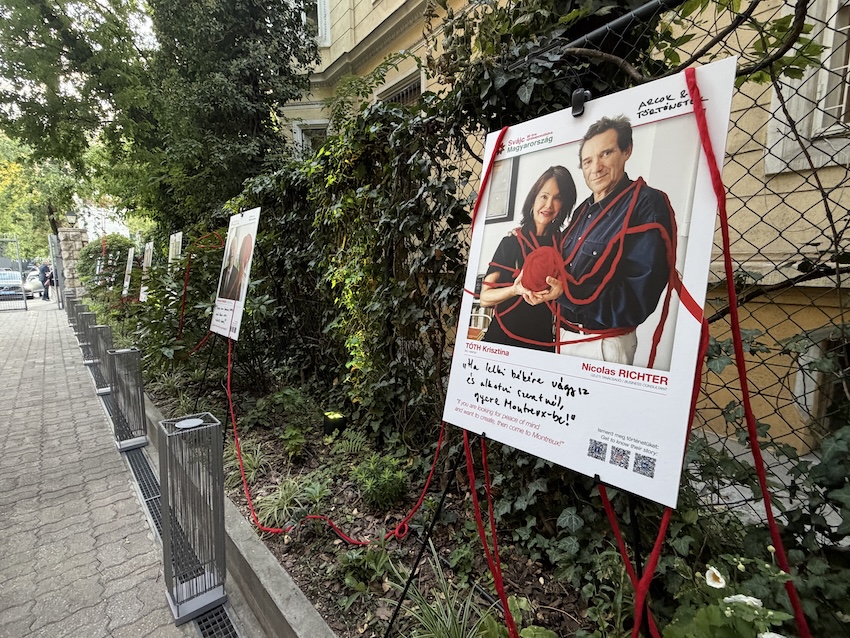
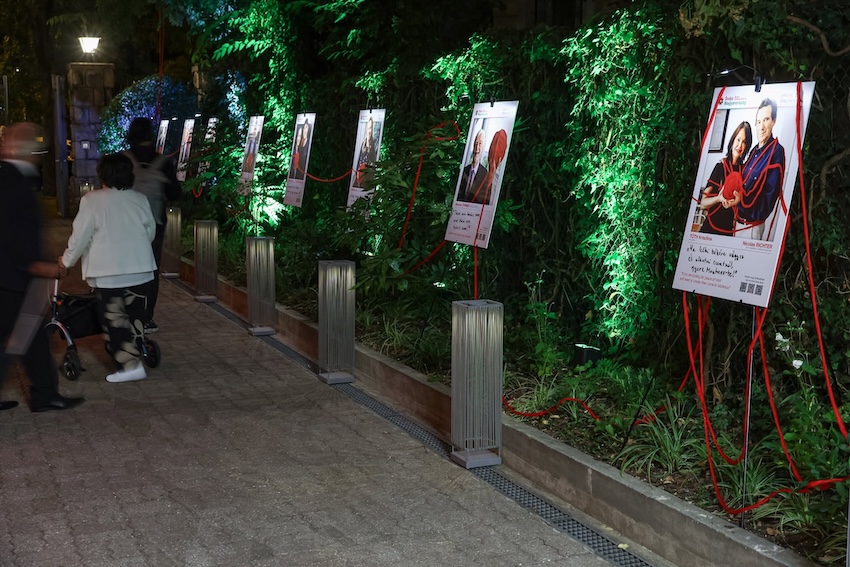
Among the anniversary initiatives, Ambassador Renggli highlighted the “Faces and Stories” campaign, which introduces people whose lives and work illustrate the depth and diversity of Swiss-Hungarian relations. Their stories are presented both online and through a photo exhibition that was displayed at the Soirée Suisse. This added a human dimension to the anniversary, demonstrating that international relations are ultimately built not only through treaties, institutions and economic agreements, but also through the personal stories of individuals who connect societies.
Ambassador Renggli stressed that in times of rapid economic, technological and geopolitical change, reliable partnerships matter more than ever. He underlined Switzerland’s commitment to stabilising and further developing its relations with the European Union, which Switzerland considers its most important political and economic partner. This is also of direct relevance to relations with Hungary as an EU member state.
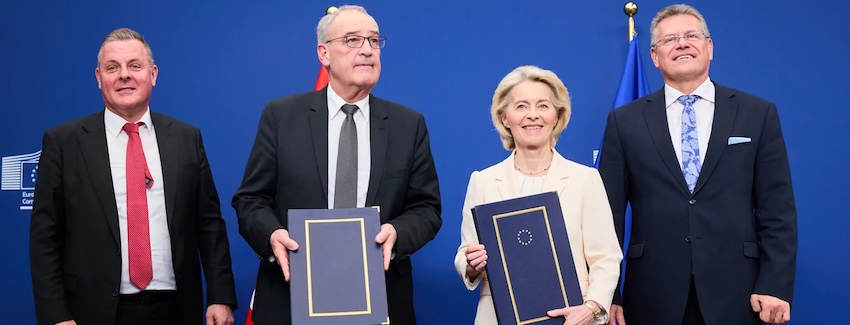
In March 2026, Switzerland and the European Union signed the new package of agreements known in Switzerland as “Bilaterals III”. The agreements are now undergoing the respective parliamentary procedures and approval processes in Switzerland and the European Union. In keeping with Switzerland’s tradition of direct democracy, Swiss citizens will ultimately have the final say.
Ambassador Renggli expressed his intention to continue working with the new government of Hungary, to maintain close dialogue and exchange, and to identify areas where Switzerland and Hungary can cooperate for their mutual benefit. He emphasised his desire for Switzerland to continue to be perceived in Hungary as a trusted partner and an innovative nation that contributes to Hungary’s competitiveness and prosperity.
A tangible expression of the partnership is the Swiss-Hungarian Cooperation Programme, funded through the Swiss Contribution. The programme will continue to be implemented jointly in Hungary, supporting projects across a wide range of areas. These include vocational training, research, health, geothermal energy, water and wastewater management, digital education for disadvantaged groups and other fields. Collectively, these projects help reduce economic and social disparities while strengthening cooperation between the two countries.
In concluding his address, the Ambassador stated that Switzerland and Hungary would also further expand their relations in the fields of culture, science and education – areas that are essential to maintaining the human dimension of bilateral ties and ensuring that the two countries remain, in the words of the anniversary motto, truly “Connected in many ways!”
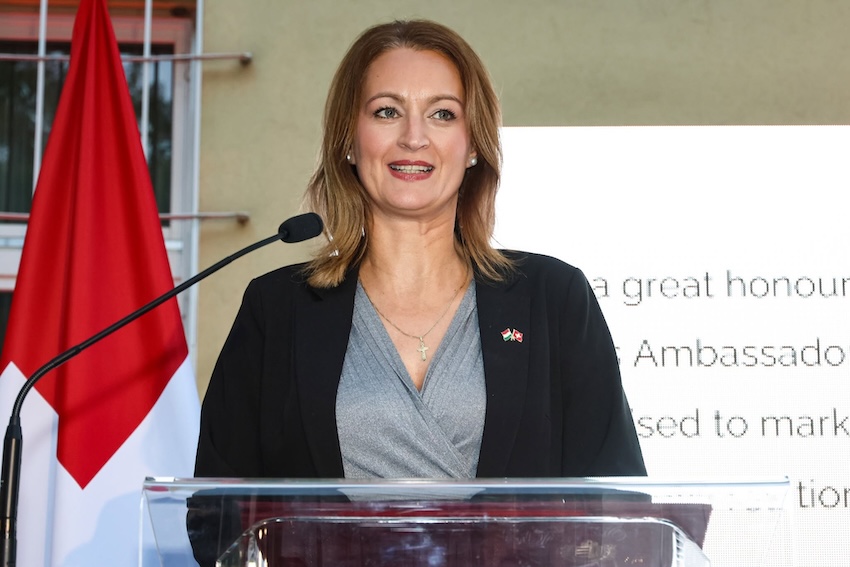
In her remarks as Guest of Honour, Ágnes Forsthoffer, Speaker of the Hungarian National Assembly expressed her great honour at attending the Soirée Suisse, dedicated to the 80th anniversary of the resumption of diplomatic relations between Switzerland and Hungary.
She stressed that, despite their different geographical and historical circumstances, the two countries are united by shared values and goals. The relations have developed over the past eight decades into a multifaceted and vibrant partnership, including the innovation as an emerging field of cooperation. The Swiss Contribution also plays a significant role in strengthening social cohesion and reducing development disparities in Hungary.
The two countries enjoy close links in culture. Switzerland’s participation as a Guest of Honour at the 31st Budapest International Book Festival, gives Hungarian readers the opportunity to meet authors such as Christian Kracht.
Writers of Hungarian origin based in Switzerland were also mentioned, such as Melinda Nadj Abonji and Nelio Biedermann, whose works reflect the intertwined histories of the two countries.
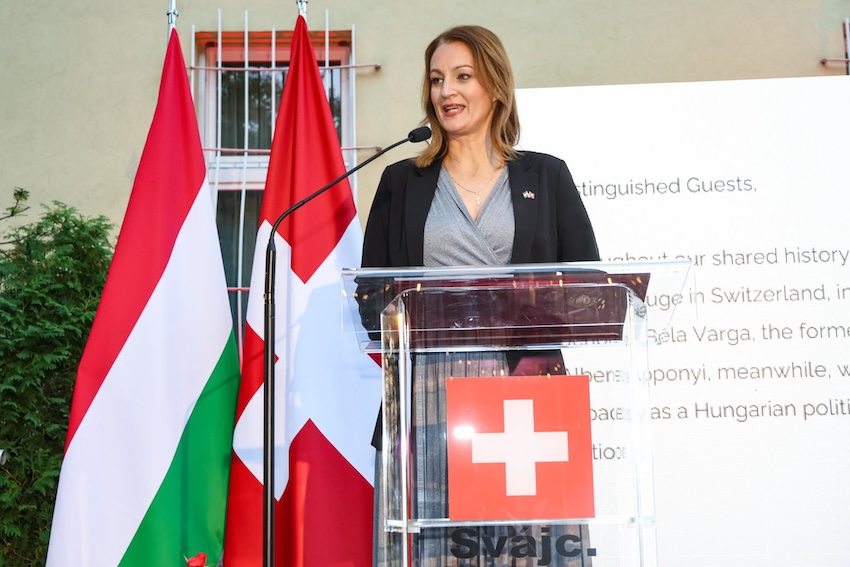
Regarding education, Forsthoffer recalled that nearly 500 Hungarian university students were studying in Switzerland by 2025.
Turning to the human dimension of the relationship, she cited prominent Hungarians with past ties to Switzerland, among them Pál Teleki (twice Prime Minister of Hungary), Béla Varga (former Speaker of the National Assembly), and Count Albert Apponyi. She also highlighted more recent figures, such as pianist Géza Anda, historian András Oplatka and neurobiologist Professor Botond Roska.
Pointing to the 70th anniversary of the 1956 Revolution and War of Independence – to be commemorated on 23 October 2026 – she expressed Hungary’s gratitude for Switzerland’s humanitarian solidarity and for welcoming thousands of Hungarian refugees. She also highlighted the continuing bridging role played by Hungarians in Switzerland and Swiss citizens in Hungary.
Referring to the International Day of Democracy, marked in Parliament on 15 September, Forsthoffer praised Switzerland’s democratic traditions and culture of civic participation as a remarkable example for whole Europe – particularly the role of citizen involvement in political decision-making. This direct participation strengthens trust between citizens and institutions and helps ensure that democracy is not merely a system of institutions, but an everyday practice in public life.
She also expressed her gratitude to all those who have contributed to Hungarian-Swiss friendship over the past 80 years and wished for the partnership to continue in a spirit of mutual respect, trust and shared values.
The Guest of Honor concluded by wishing: “Long live Hungarian-Swiss friendship!”
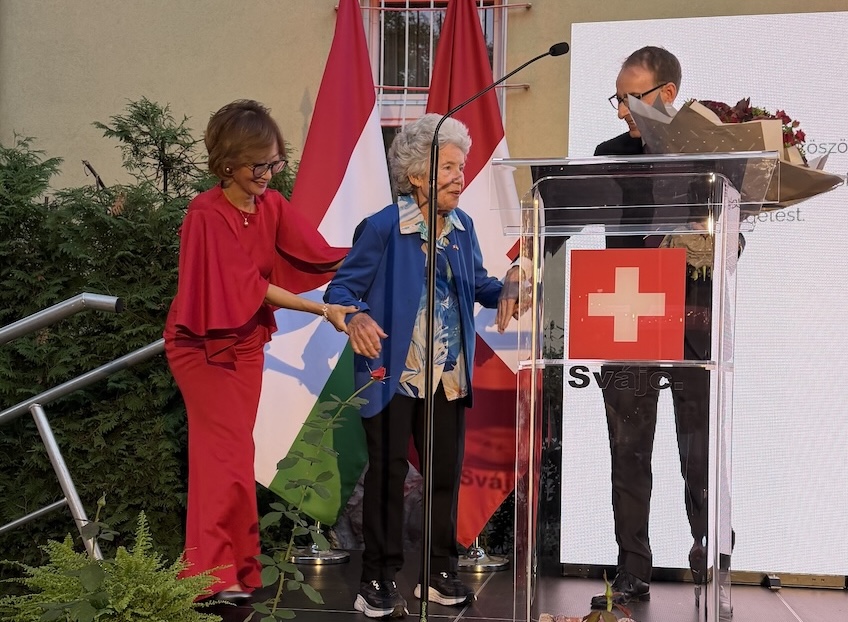
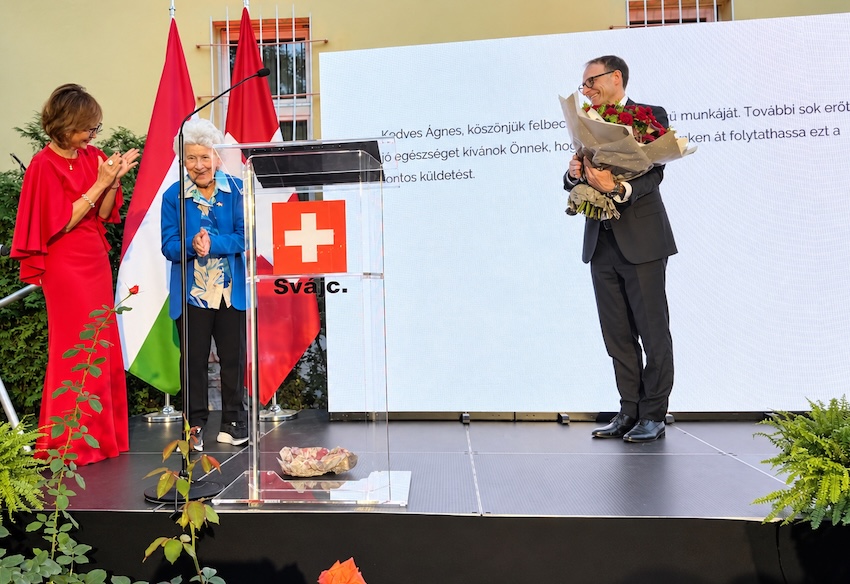
One of the most moving moments of the Soirée Suisse was a special honour to Agnes Hirschi, stepdaughter of the Swiss diplomat Carl Lutz. For decades, Agnes Hirschi has devoted herself to preserving the memory of Carl Lutz and his extraordinary rescue operations in Budapest. Through her tireless efforts, she has helped ensure that his humanitarian legacy and the stories of the people he sought to protect continue to reach future generations. In paying tribute to her, Ambassador Alexander Renggli expressed deep appreciation for her invaluable work and wished her continued good health, so that she may carry on this important mission for many more years to come.
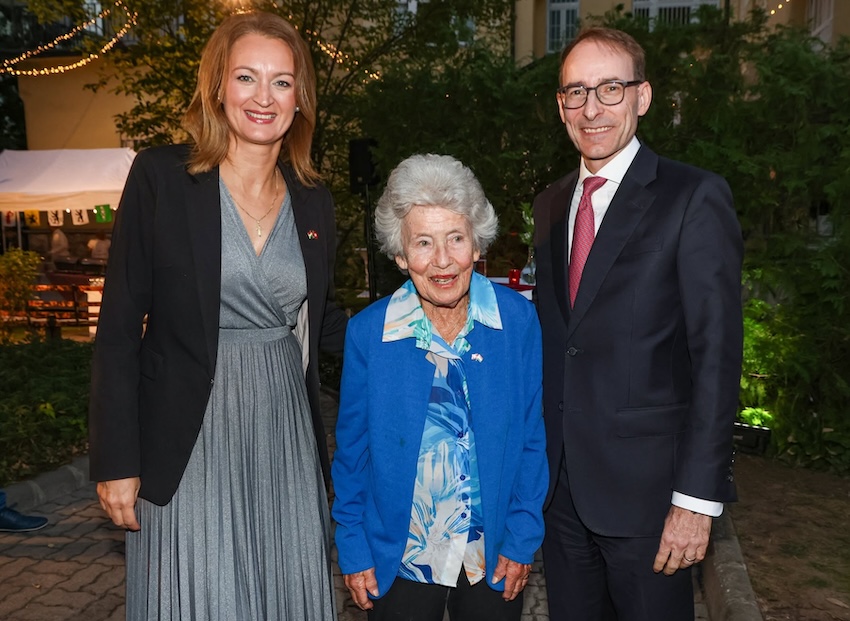
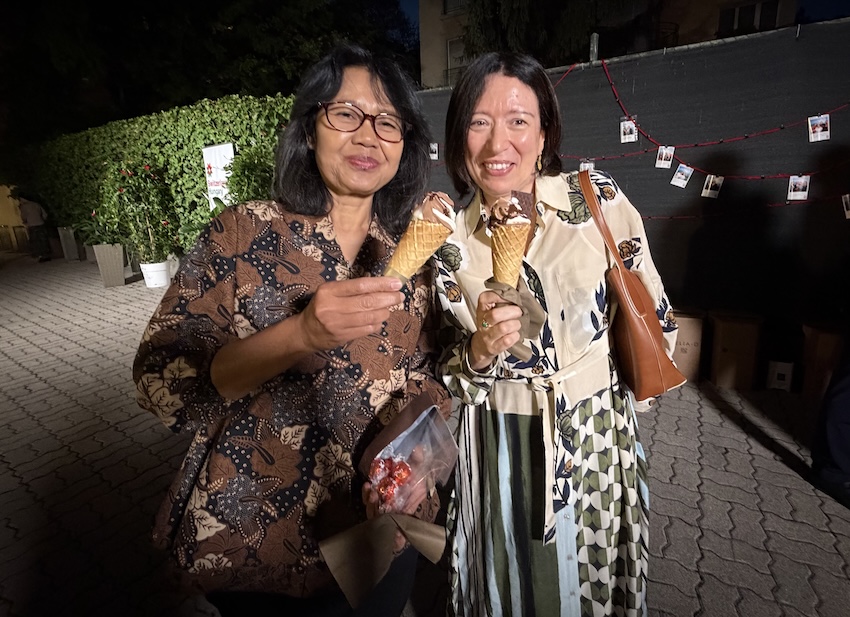
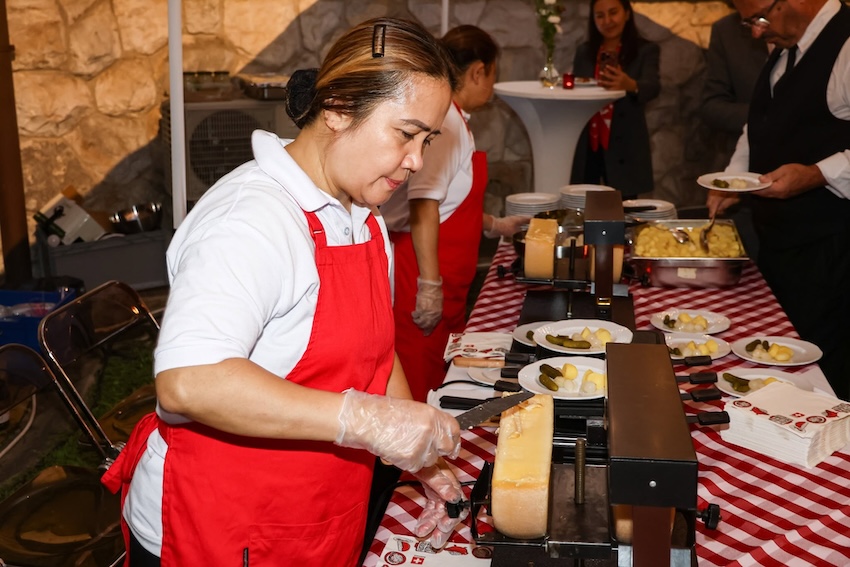
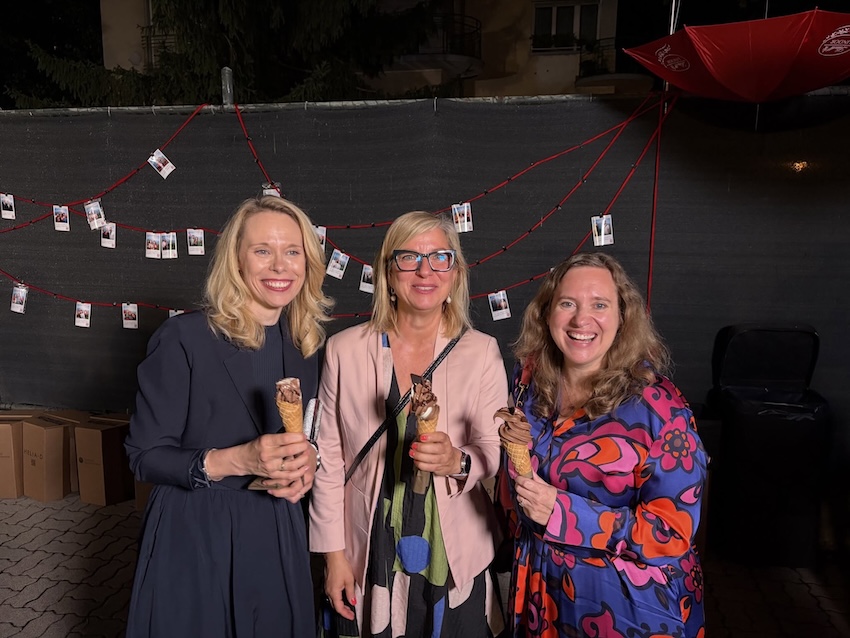
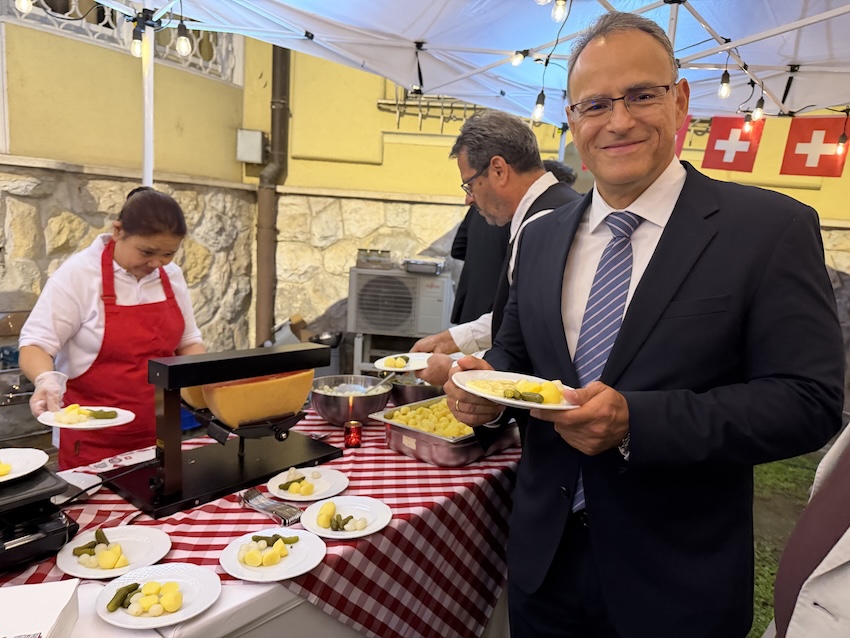
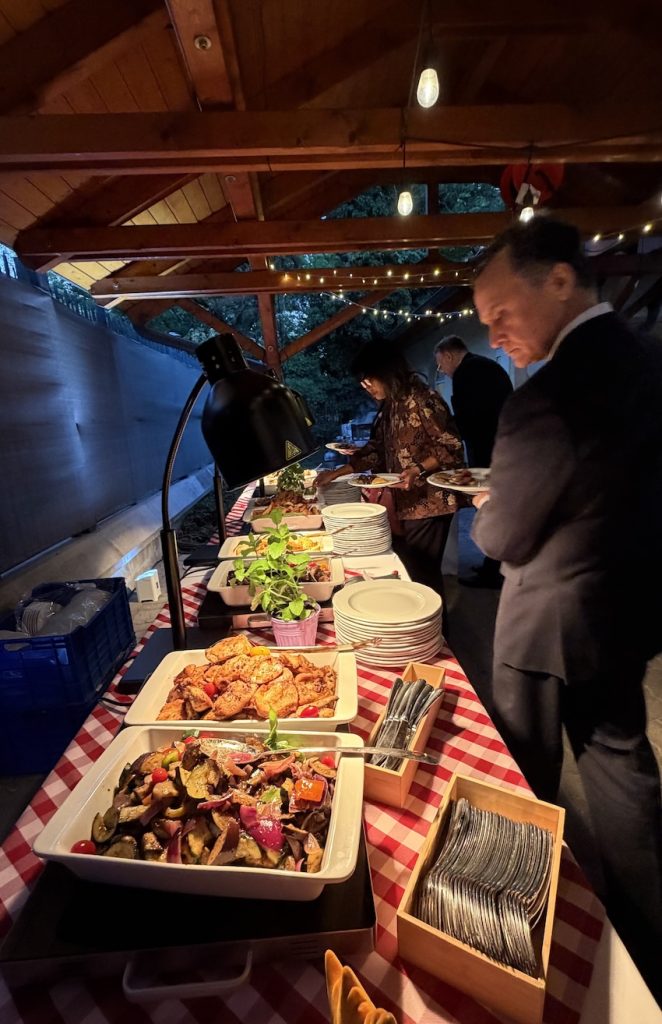
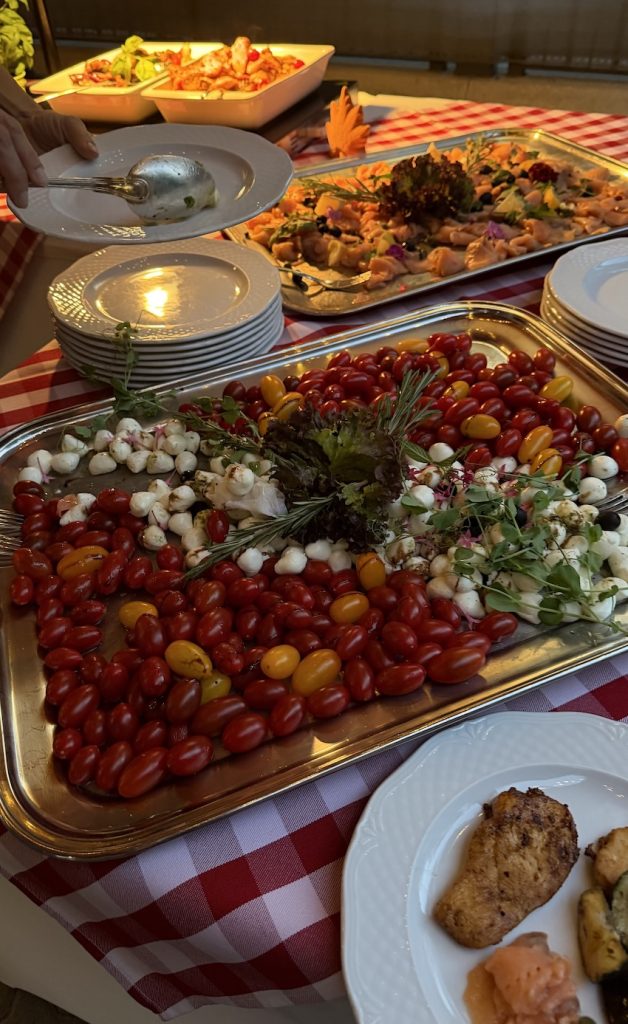
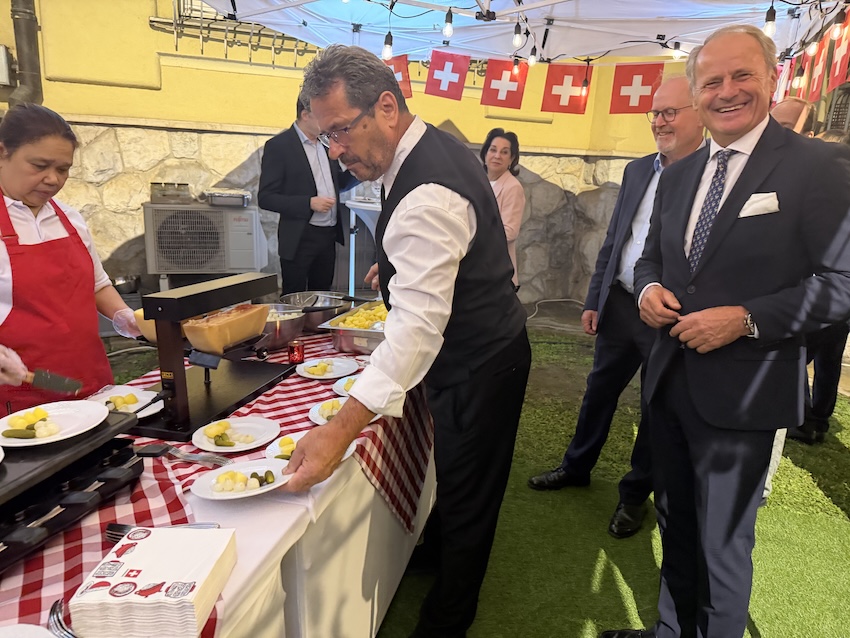
Following the official programme, guests were invited to enjoy the reception in a convivial atmosphere of the Soirée Suisse. A Swiss celebration would hardly be complete without the country’s culinary traditions: the evening offered guests a taste of Switzerland featuring Raclette, traditional St. Gallen bratwurst, Lindt chocolate and ice cream, Nespresso coffee and Haggenmacher beer.
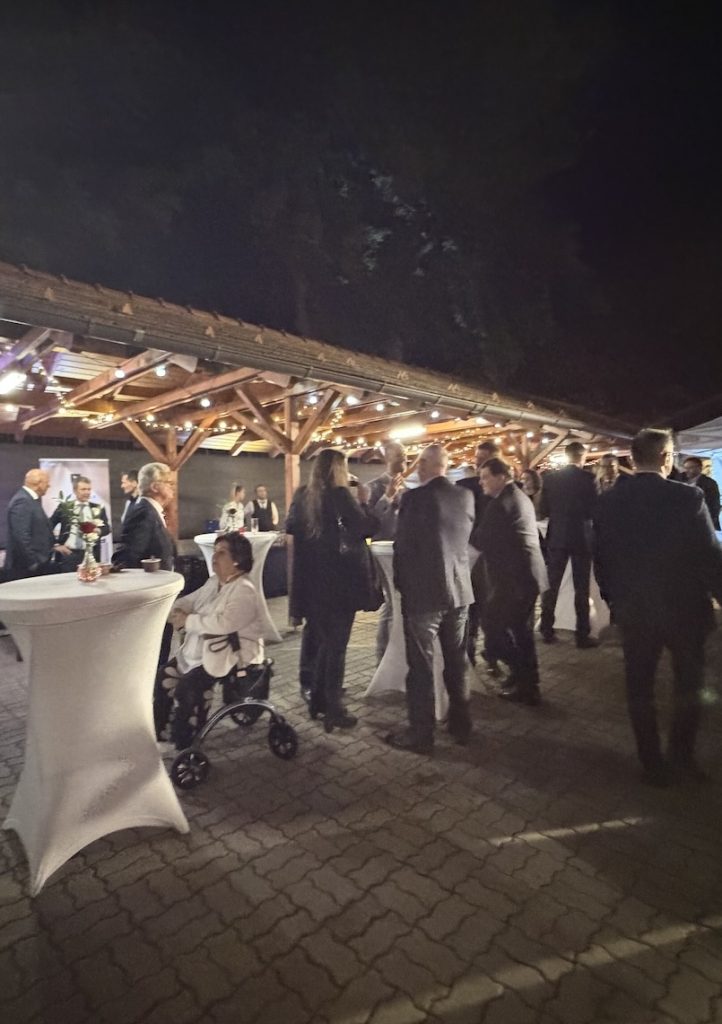
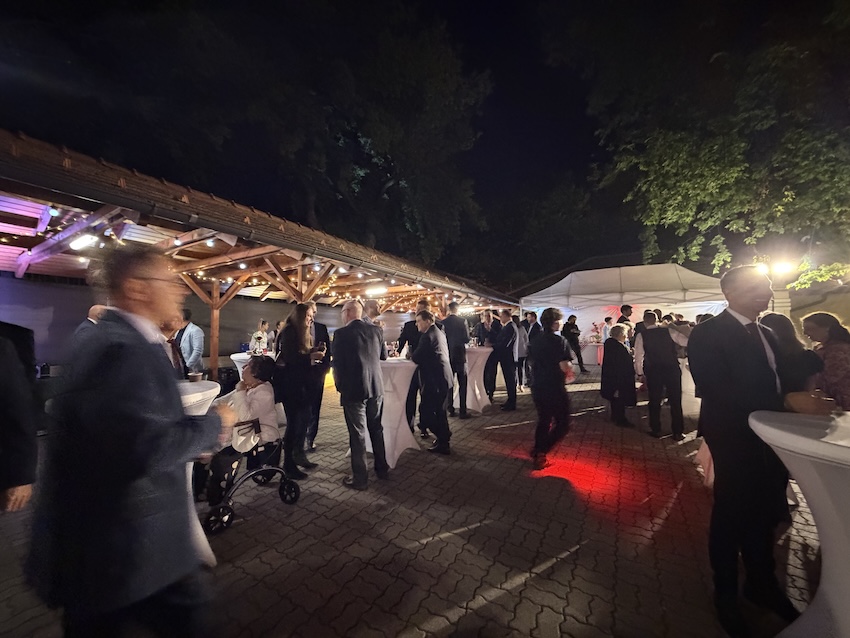

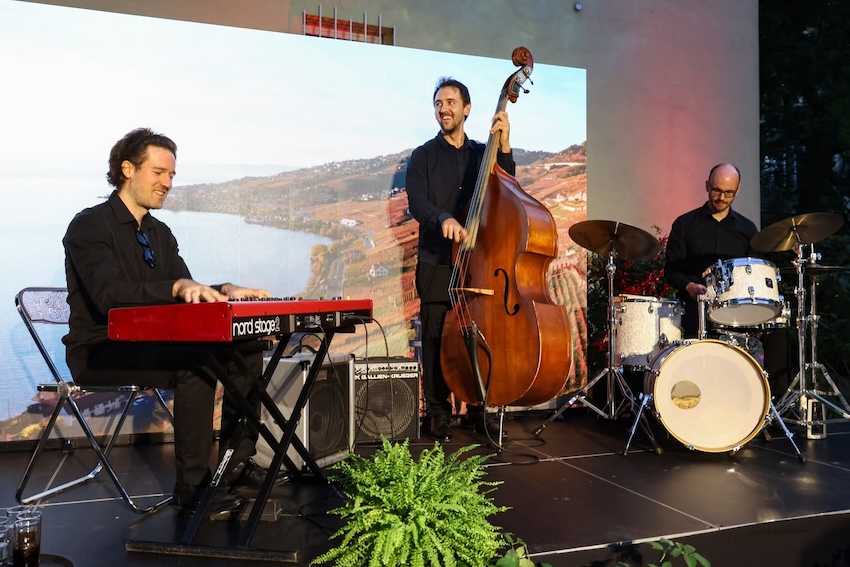
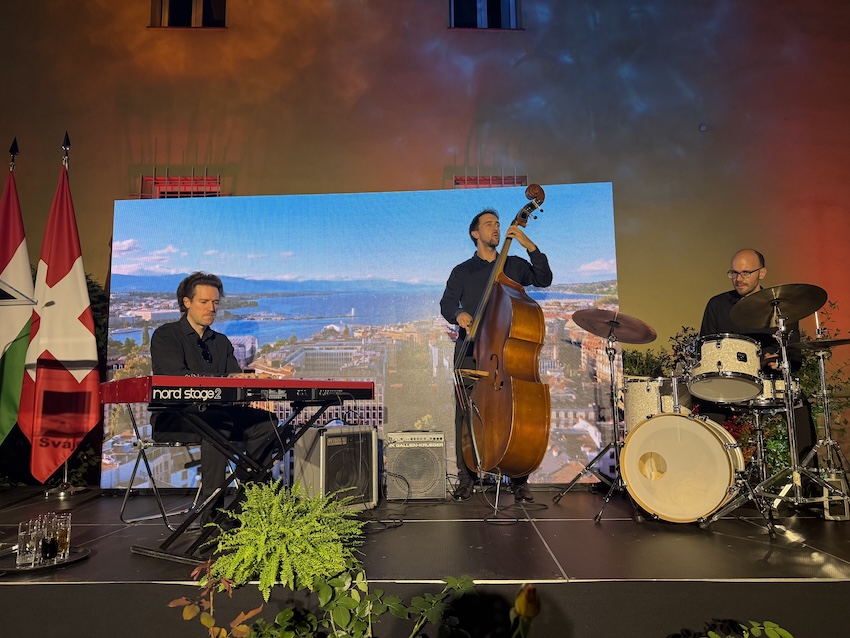
Live jazz provided the musical backdrop for the evening, performed by Márton Juhász, Áron Tálas, and István Tóth Jr., all active figures in Hungary’s jazz scene. The three musicians have been performing together in various formations since 2014, and each of them has a personal or professional connection to Switzerland. Their programme created a relaxed and convivial atmosphere in the Embassy garden, giving guests the opportunity to meet, exchange views, and enjoy the evening in an informal setting.
The Soirée Suisse celebrated the multifaceted ties between Switzerland and Hungary, shaped by history, diplomacy, business, culture, education, and countless personal connections. As the Embassy of Switzerland continues its anniversary programme throughout 2026, the evening offered a fitting reflection on a partnership deeply rooted in history, yet continually renewed through cooperation, friendship and shared values.
The event concluded on a warm and gracious note, with appreciation extended to the partners, sponsors and guests whose support and presence made the evening a memorable tribute to 80 years of renewed diplomatic relations and to a partnership that continues to flourish.
Source: Embassy of Switzerland in Budapest
Photos from the Embassy of Switzerland in Budapest, and Diplomatic Press Agency