

Edited by Anna Popper
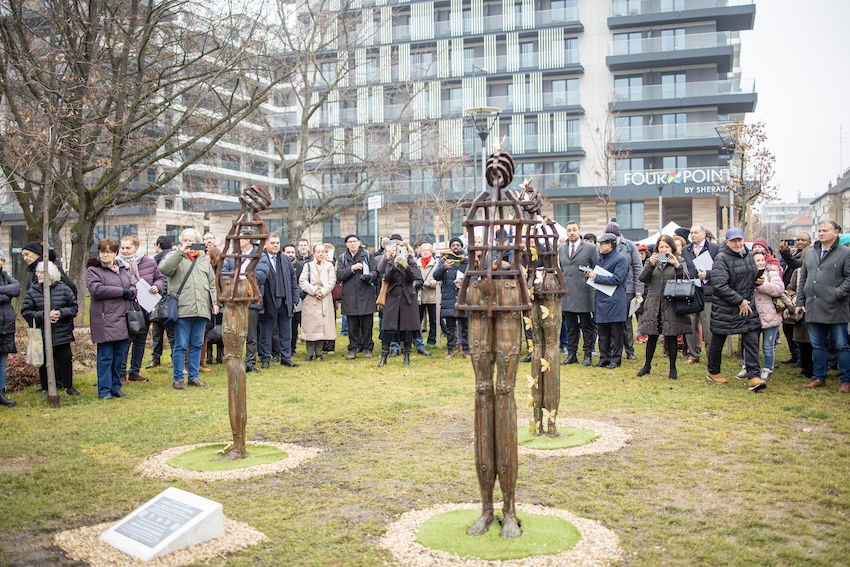
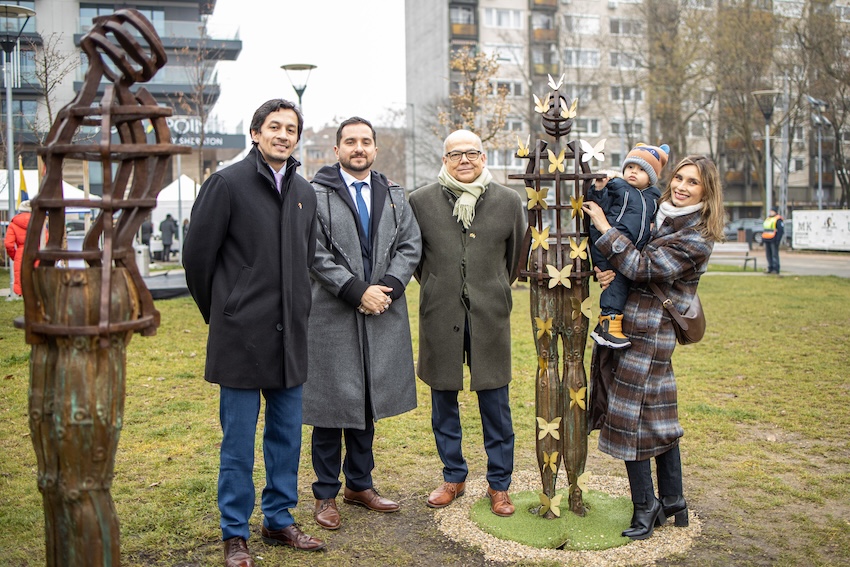
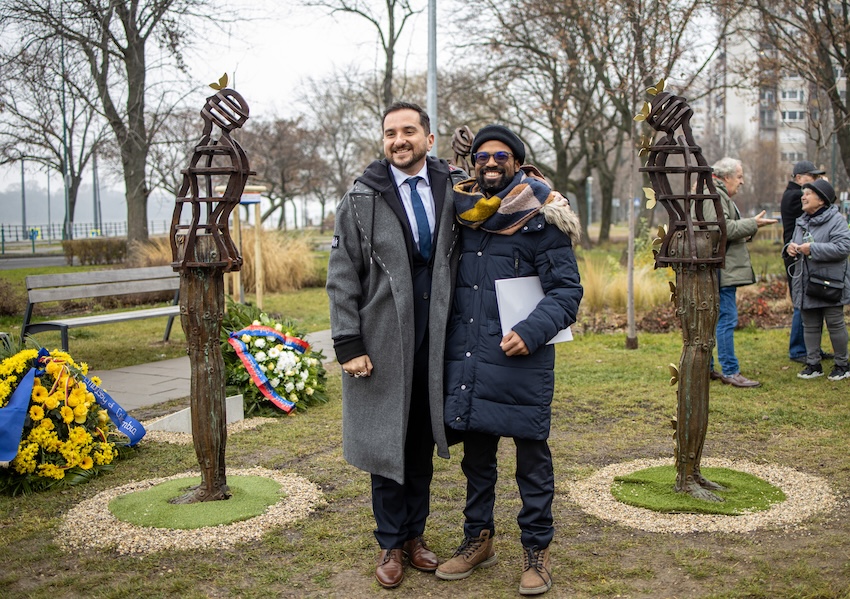
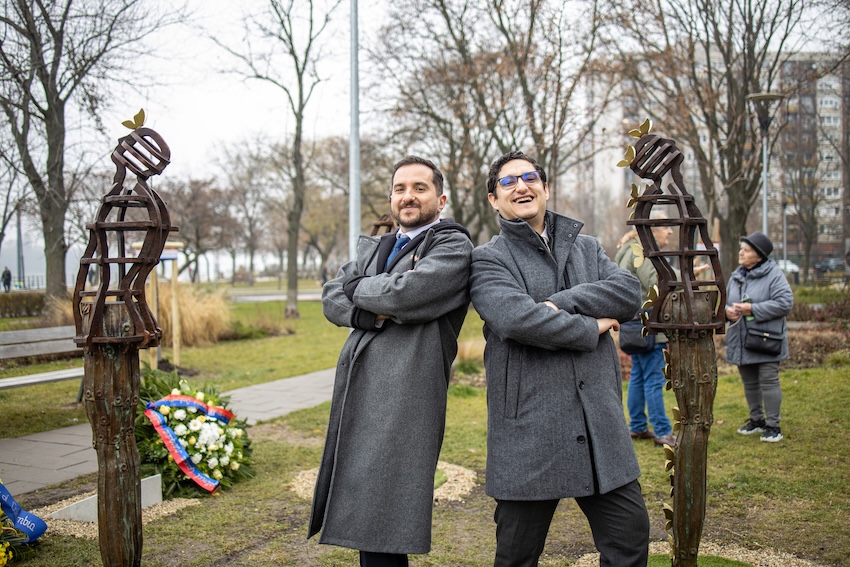
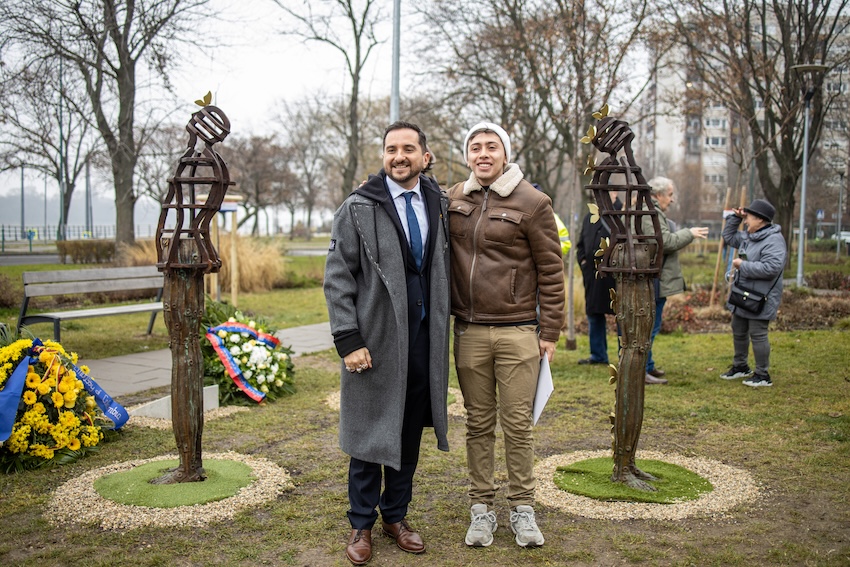
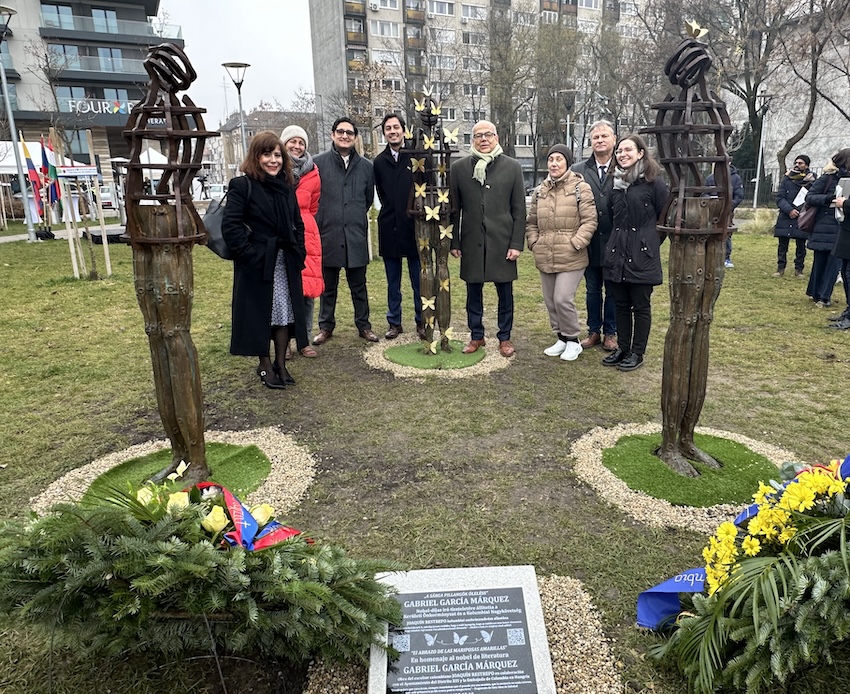
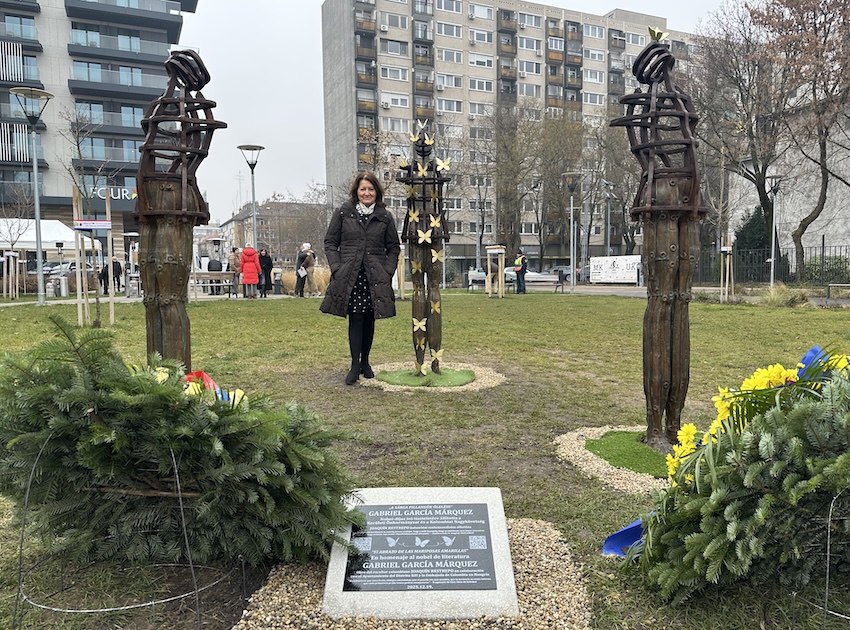
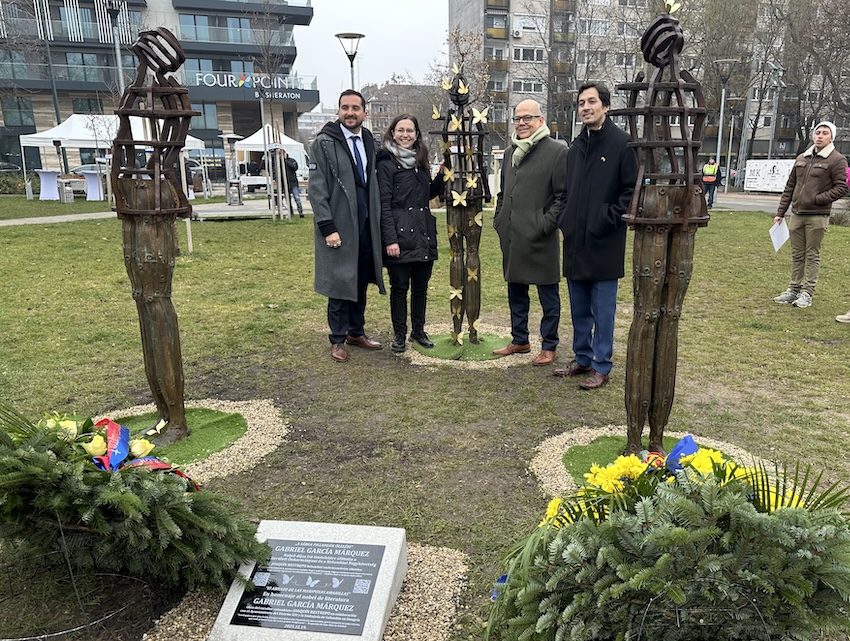
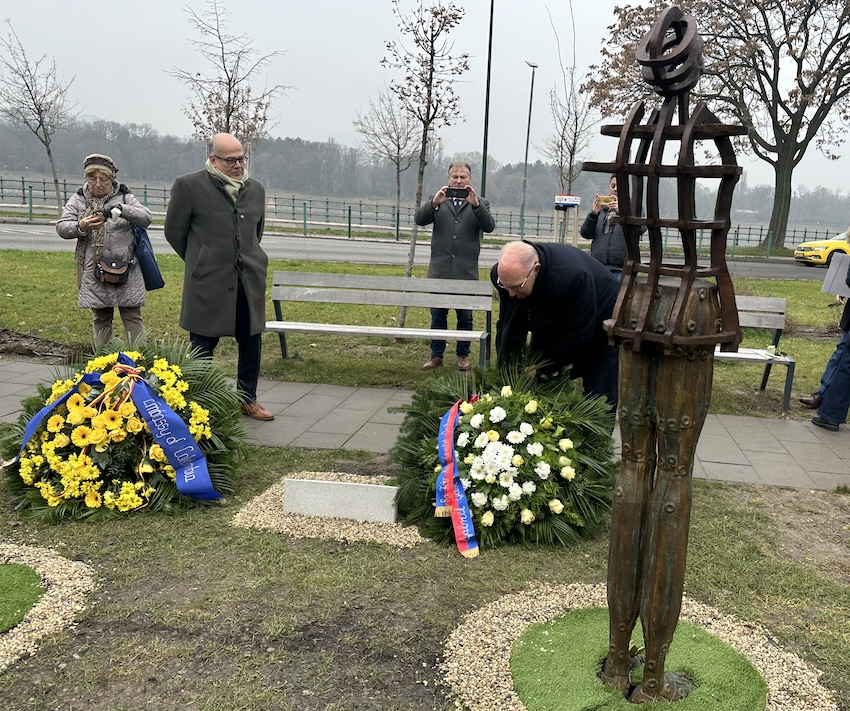
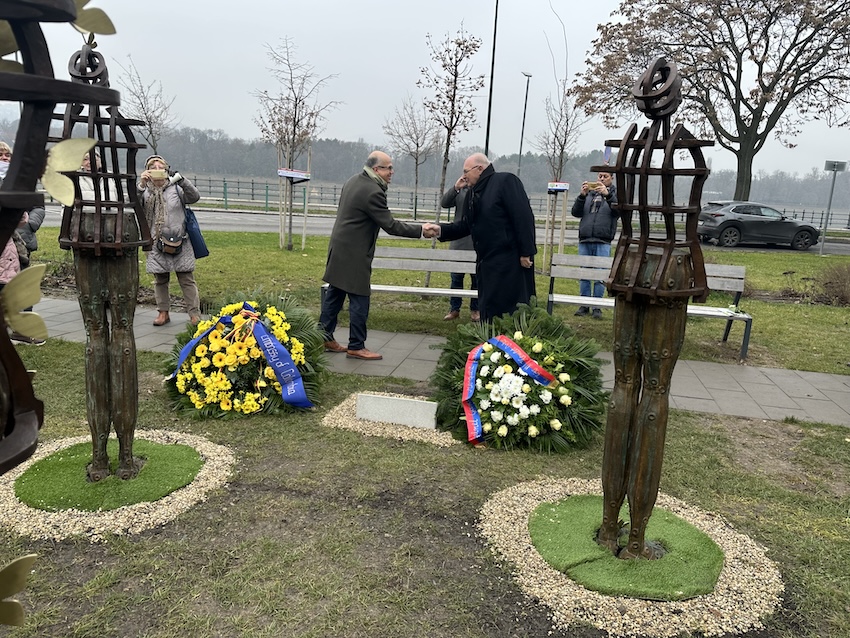
A beautiful and moving ceremony marked the unveiling of a sculpture ensemble on 19 December 2025, honouring Nobel Prize–awarded author Gabriel García Márquez, Colombia’s greatest literary icon. The artwork by acclaimed Colombian artist Joaquín Restrepo was installed in Gabriel García Márquez Park in Budapest’s 13th District.
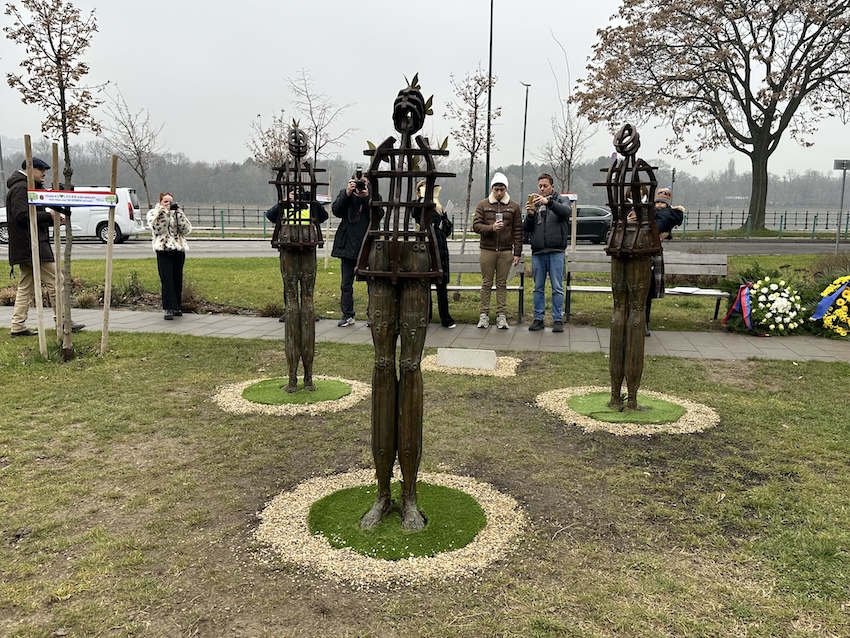
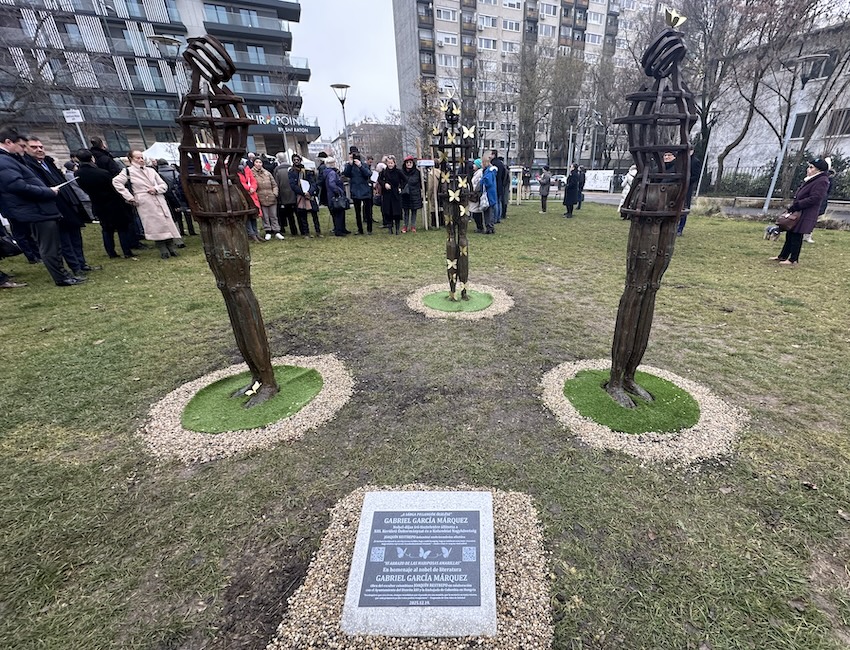
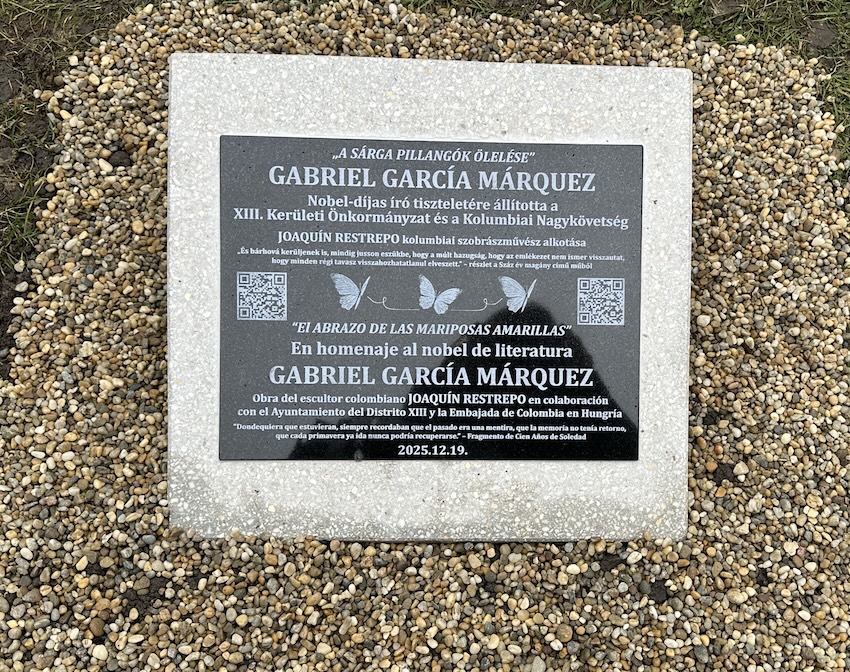
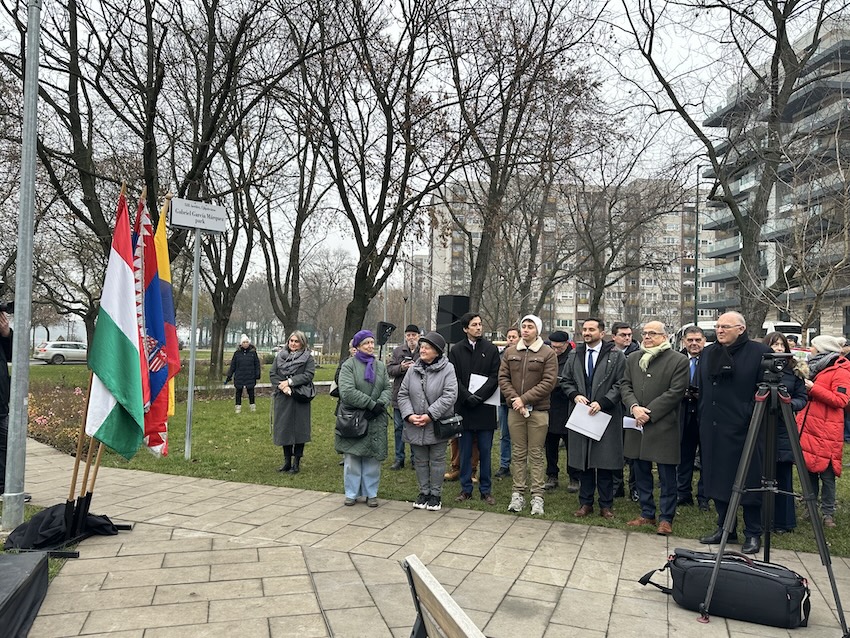
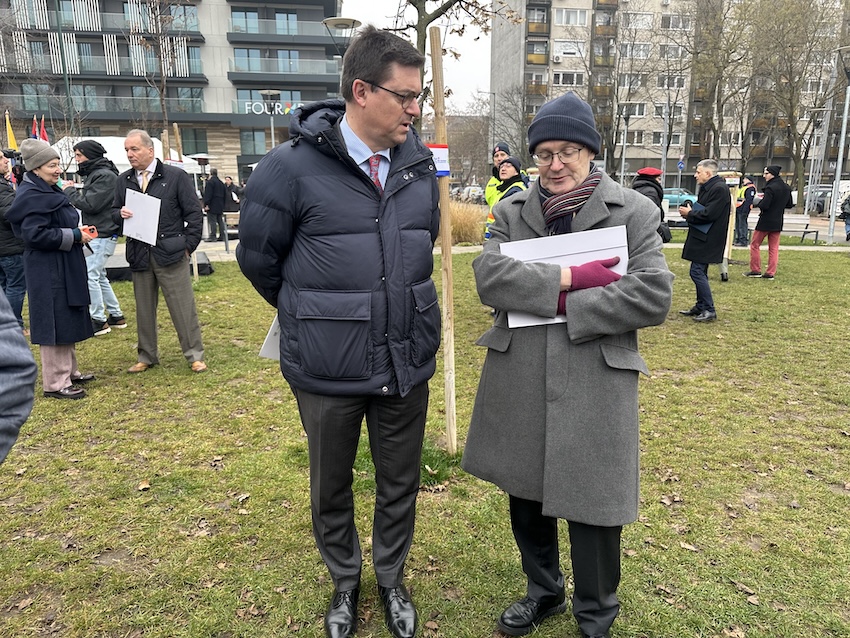
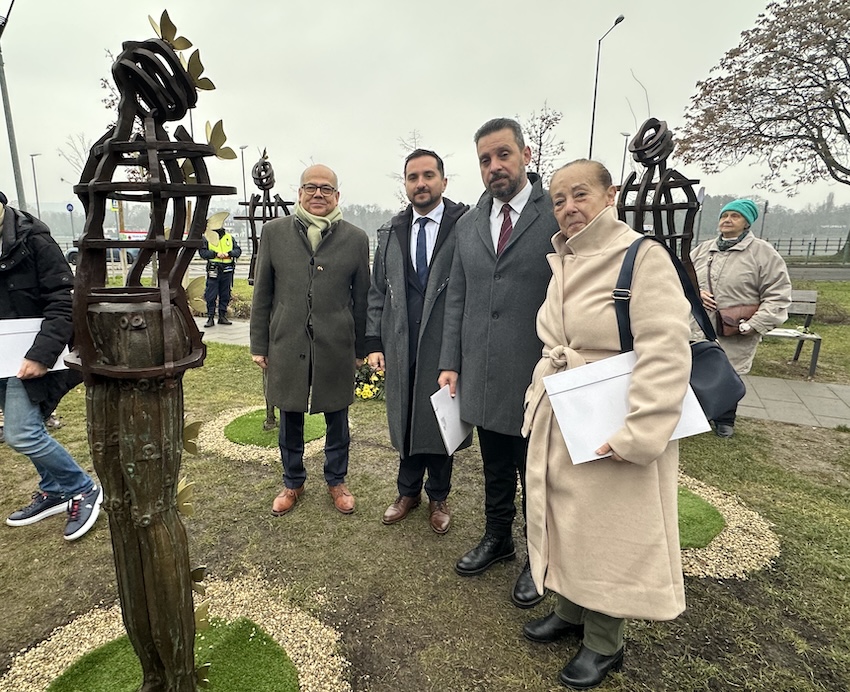
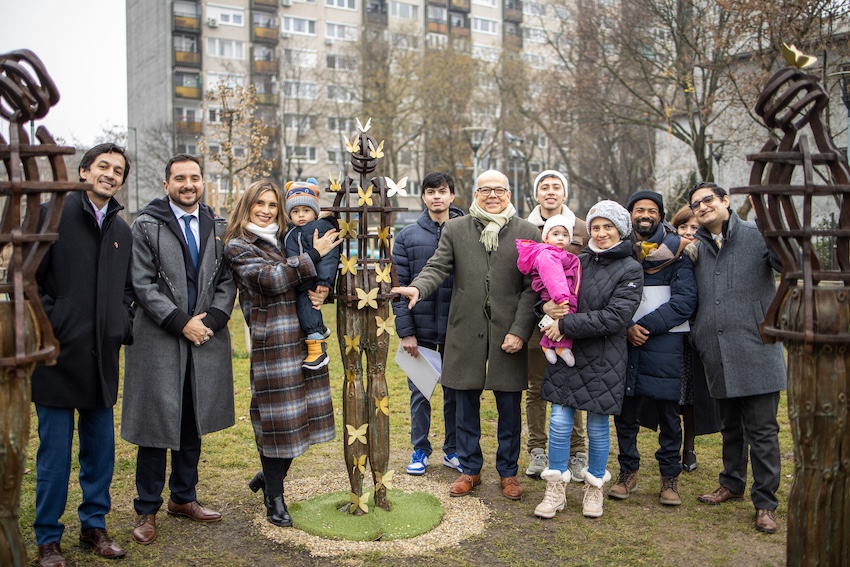
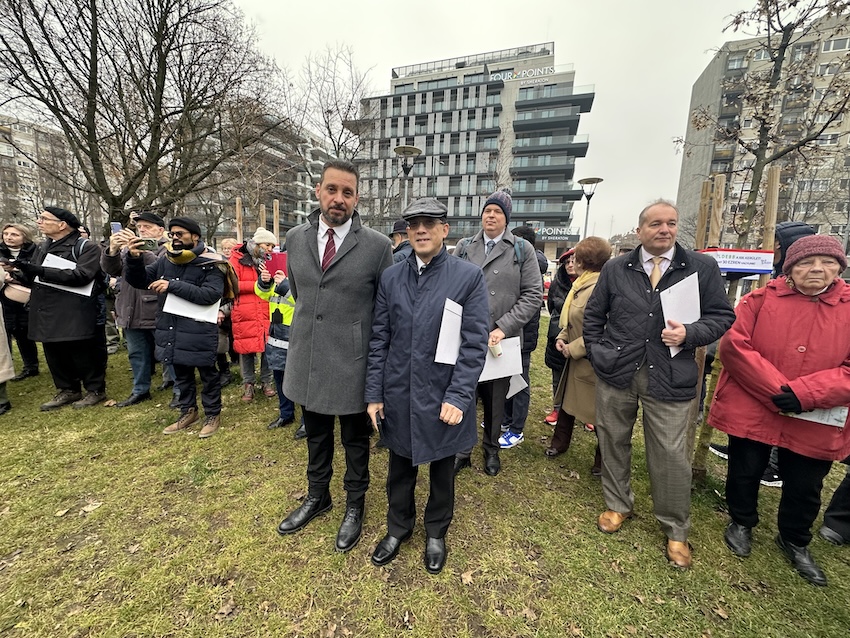
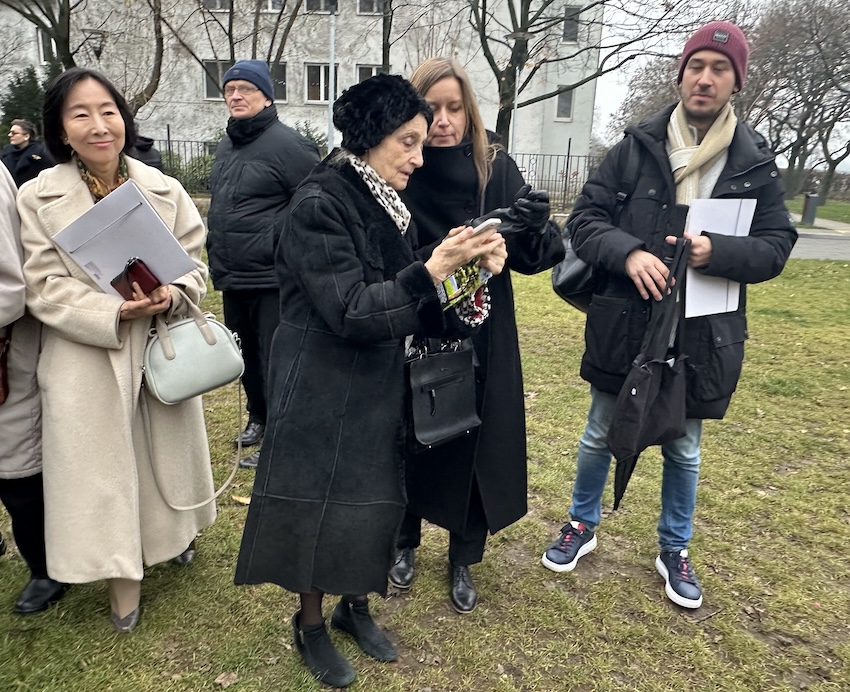
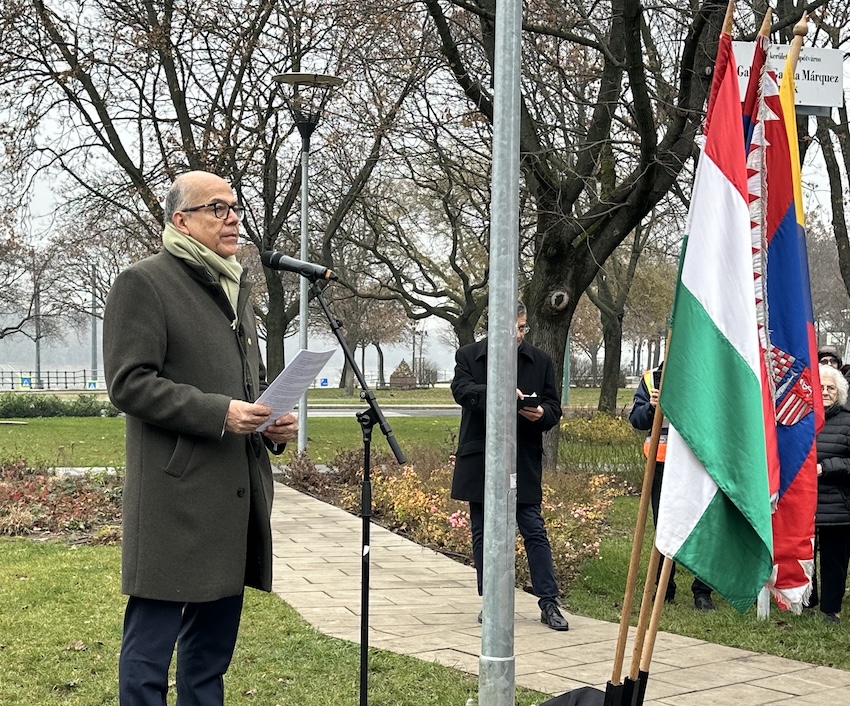
The event was hosted by H.E. Ignacio Enrique Ruiz Perea, Ambassador of the Republic of Colombia to Hungary. The park, nestled within a modern cityscape on the Pest side of the River Danube, provided the ideal setting for the celebration, welcoming a distinguished gathering, including members of the diplomatic corps, Hungarian government officials, art lovers, friends of Colombia and local inhabitants. The artist’s presence was a particularly meaningful gesture, and it was a pleasure to meet him on this special occasion. The sculptures invite visitors to pause and enter the poetic universe of García Márquez, reminding us how public spaces can bring cultures closer together through art, memory, and imagination.
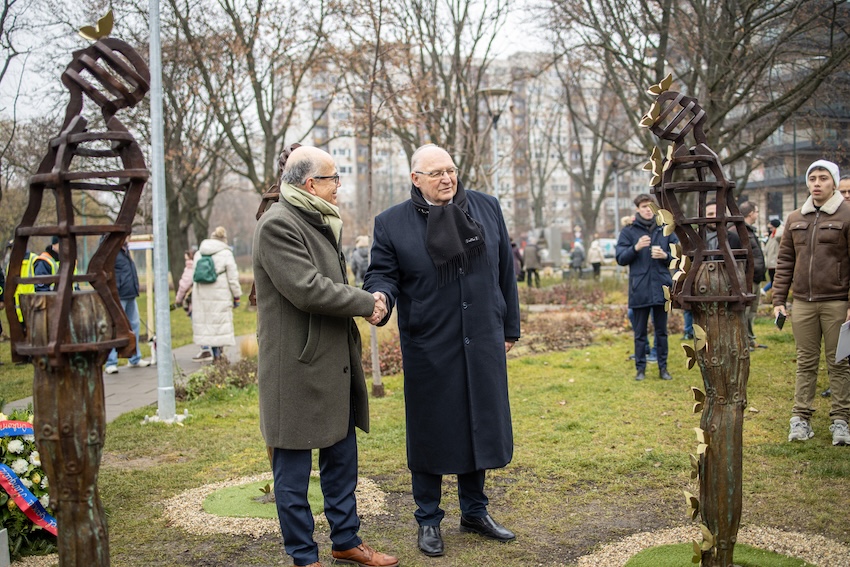
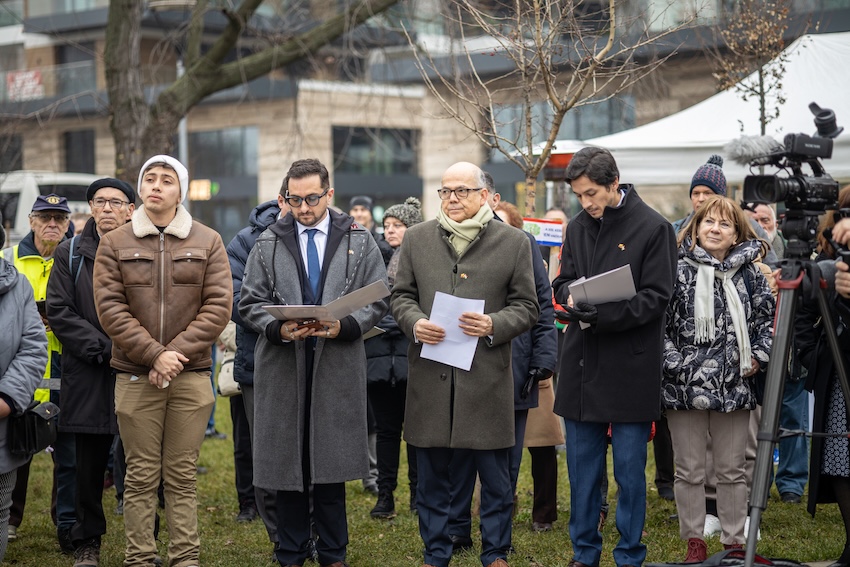
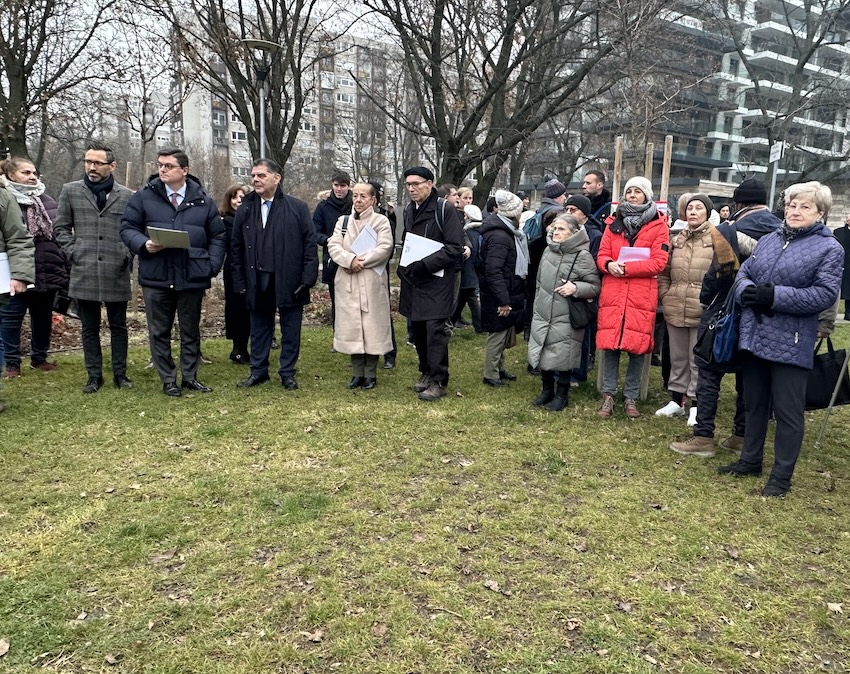
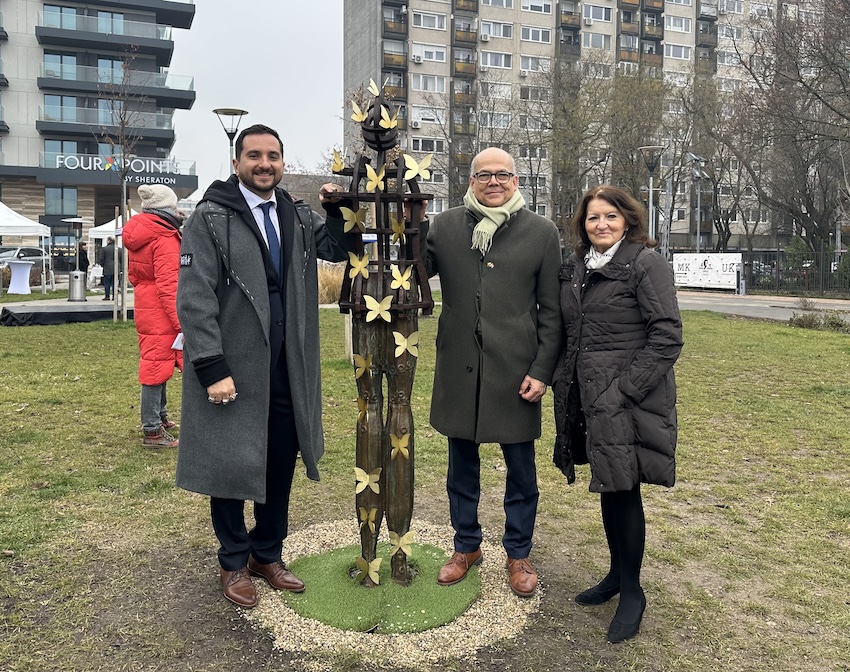
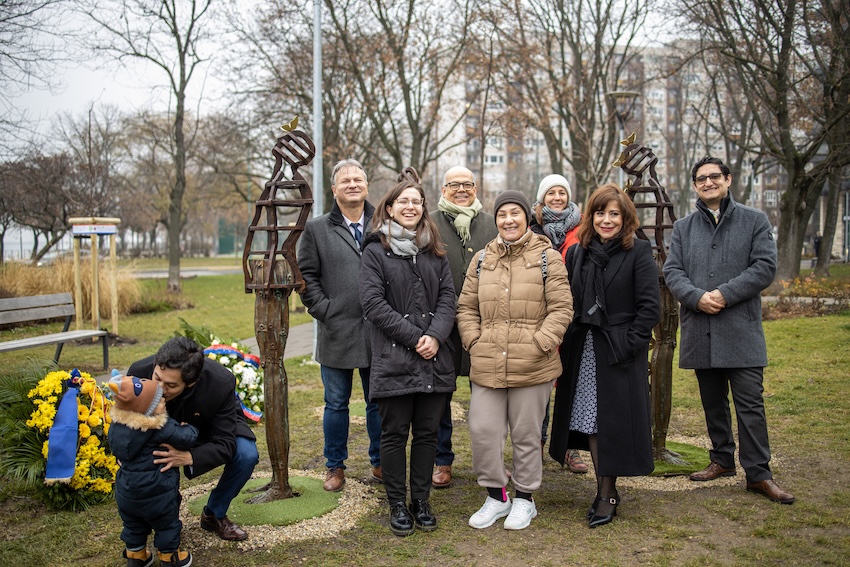
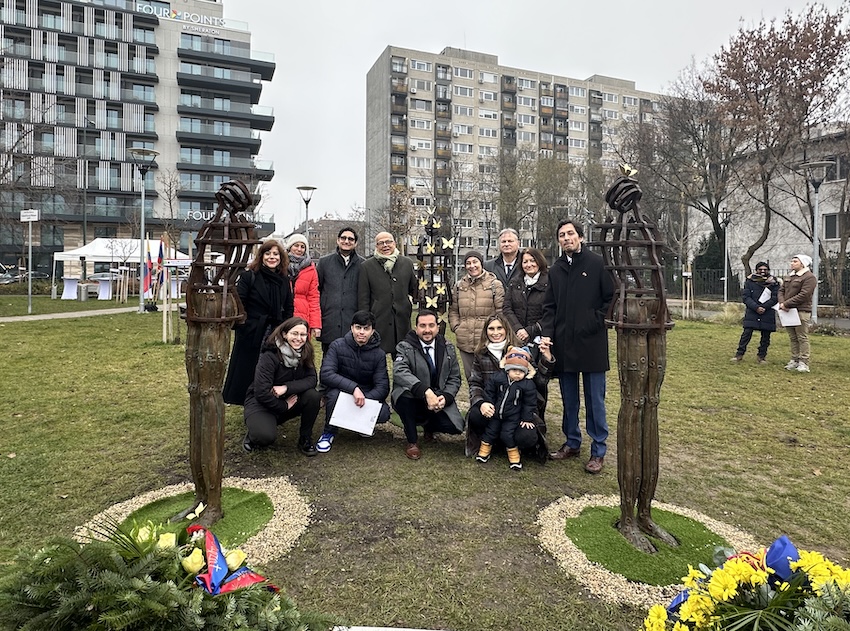
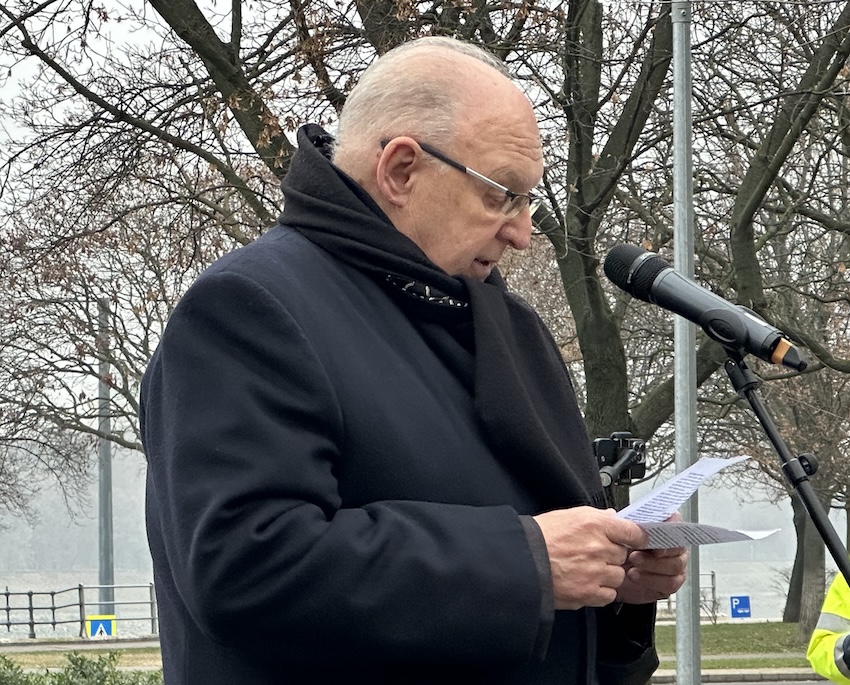
The ceremony started with the opening remarks by Dr. József Tóth, Mayor of Budapest’s 13th District:
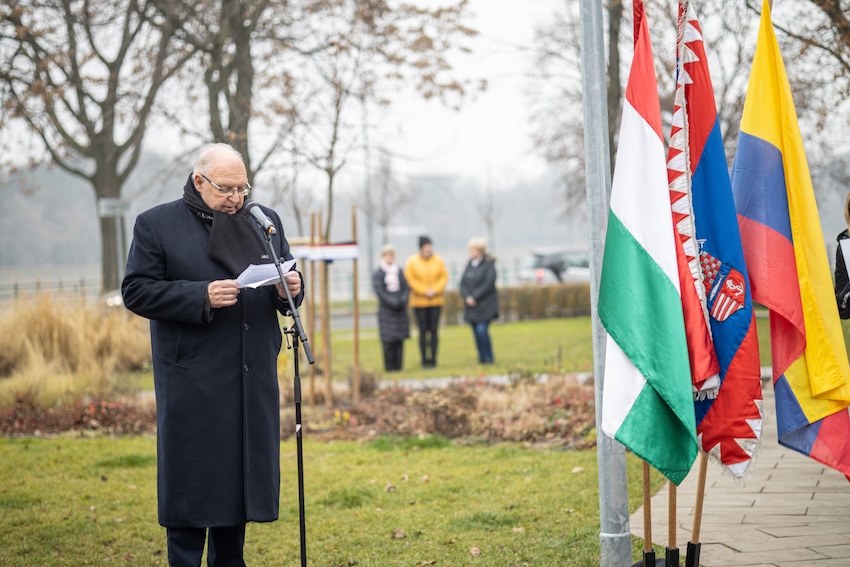
“Dear Ladies and Gentlemen, today we unveil a sculpture group in memory of Gabriel García Márquez, an outstanding figure in world literature. The work is being placed here in the park that bears his name, thanks to the close cooperation between the Embassy of Colombia in Budapest – headquartered in our 13th District since 2018 – and the government of Budapest’s 13th District.
At the Embassy’s initiative, we held a ceremony on 9 December 2019, together with Ambassador Carmenza Jaramillo, and officially designated the space as Gabriel García Márquez Park. On 25 March 2024, we opened the renovated park. The proportion of green areas increased to 70%, the former gas station was removed, and the park was expanded. On 4 December 2025, we formally accepted the Embassy of Colombia’s donation of Joaquín Restrepo’s sculptural work The Embrace of the Yellow Butterflies and provided a place for it here in Gabriel García Márquez Park. The district government handled the site design, construction, and installation.
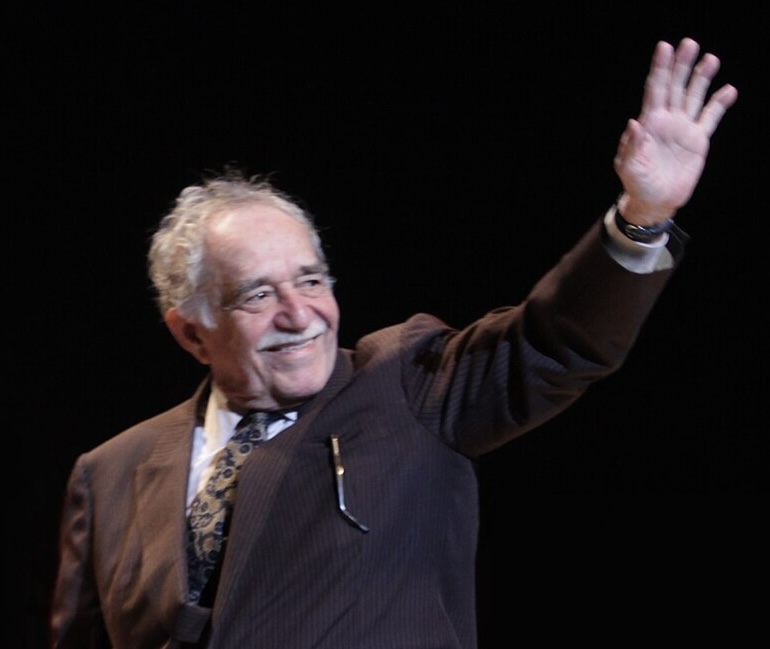
Gabriel García Márquez was born on 6 March 1927, in Aracataca, Colombia. He is widely considered the best-known representative of magical realism, and his life was nearly as vivid as his books. The stories of his maternal grandfather – a veteran of the Thousand Days’ War – and the “magical visions” of his grandmother shaped his imagination and, ultimately, his writing. He first studied law in Bogotá, then began his journalistic career at El Espectador. In 1957, working as a reporter, he visited Budapest as a delegate to the Moscow World Festival of Youth and Students, and his only Hungarian-language interview appeared in a local bus factory magazine. Later, his work took him to Rome, Paris, Barcelona, Caracas, New York and into the hearts of readers all over the world.
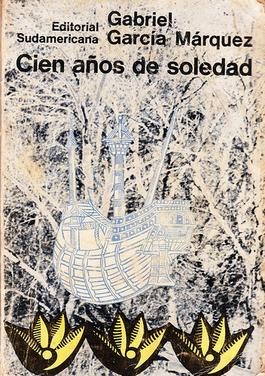
His most famous novel, One Hundred Years of Solitude, was published in 1967 and sold tens of millions of copies. In 1982, he received the Nobel Prize in Literature. Written in Spanish, his works have been translated into 25 languages, including Hungarian. I would like to mention that Márquez was the favourite author of the Hungarian writer Miklós Vámos, an honorary citizen of our district. Marquez passed away on 17 April 2014 in Mexico City at the age of 87, leaving behind a body of work that continues to connect cultures across language barriers and continents.
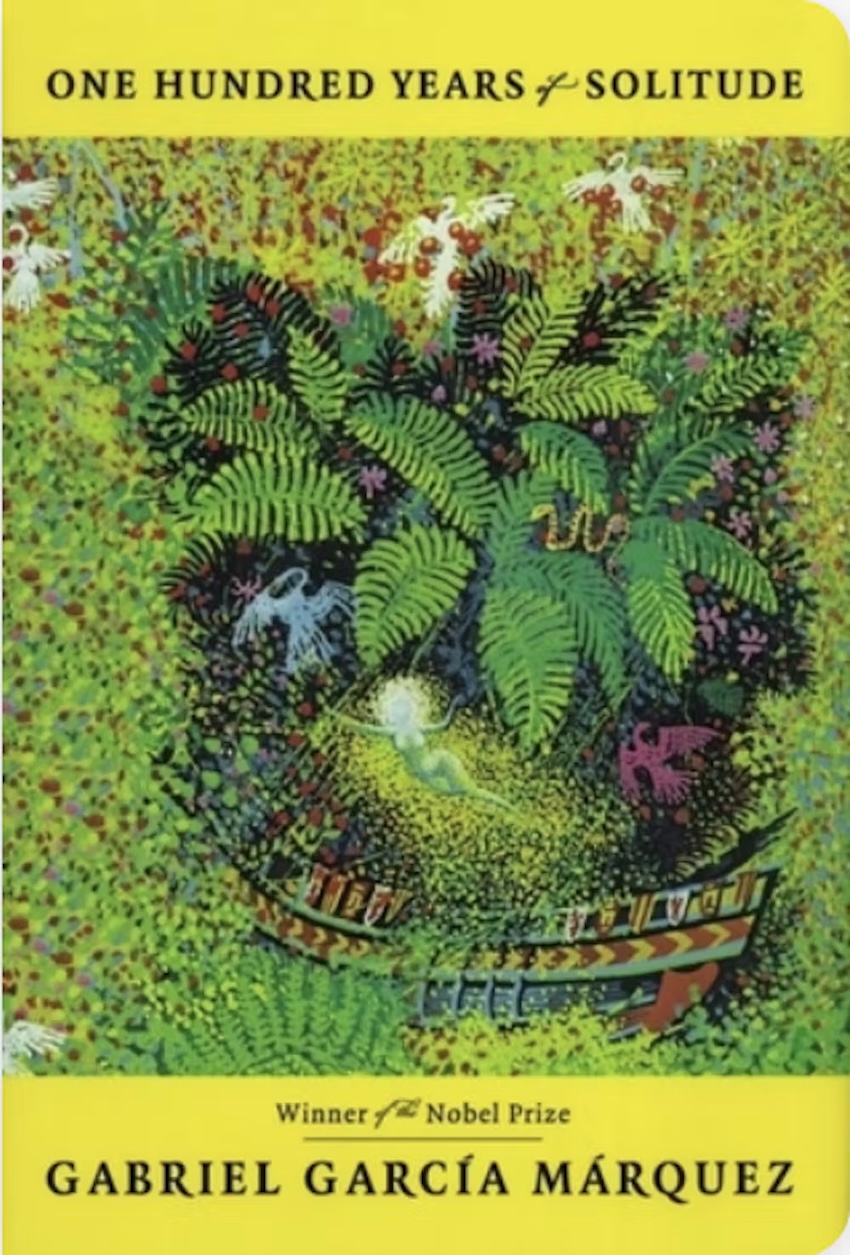
What made Márquez so special? I believe it was his unique ability to make readers feel not just as witnesses to a story, but as if they were living within it, where reality and wonder coexist. That spirit is present in the sculpture we inaugurate today. Joaquín Restrepo created The Embrace of the Yellow Butterflies as part of his “Parallel Histories” project, through which he places related sculpture groups in different parts of the world, thus building bridges between countries through shared cultural reference points. The inspiration comes from One Hundred Years of Solitude, where yellow butterflies appear as a powerful motif of love and memory. In Greco-Roman mythology, the butterfly symbolizes the soul, the spirit and transformation, adding another layer of meaning to this artwork.
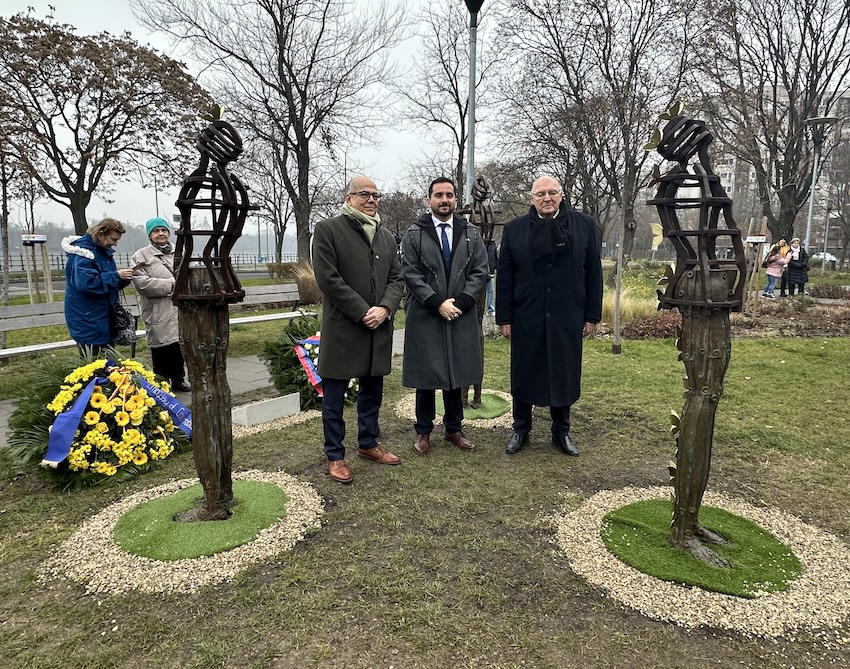
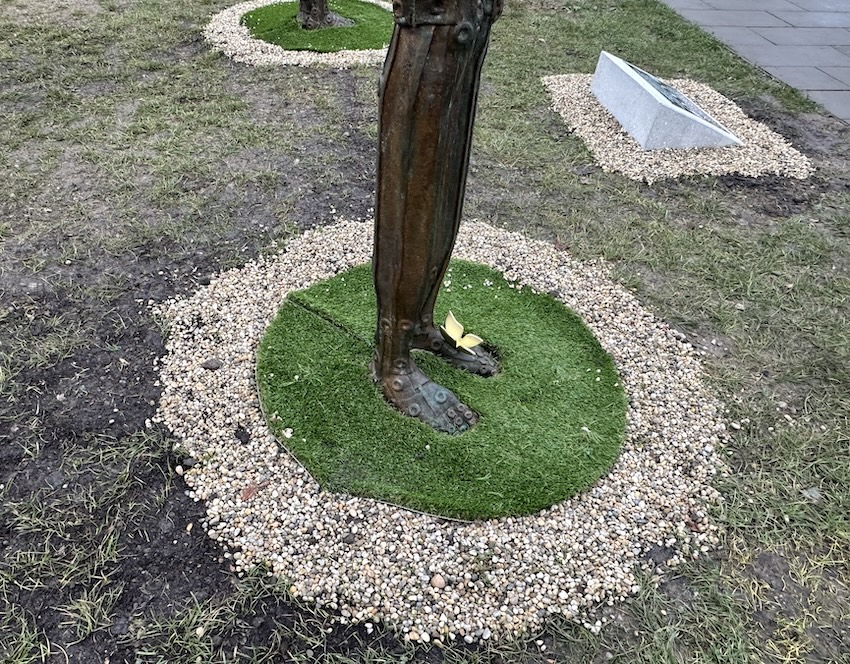
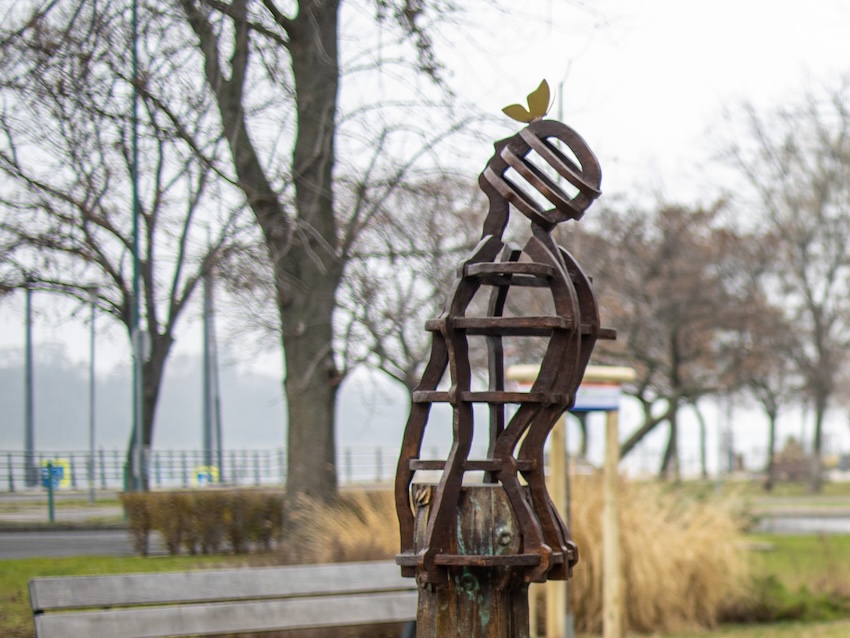
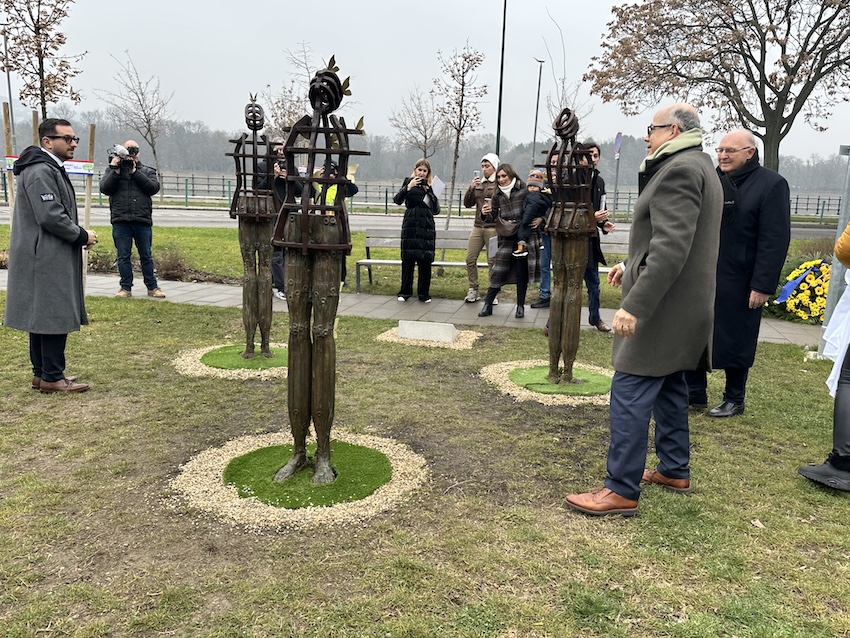
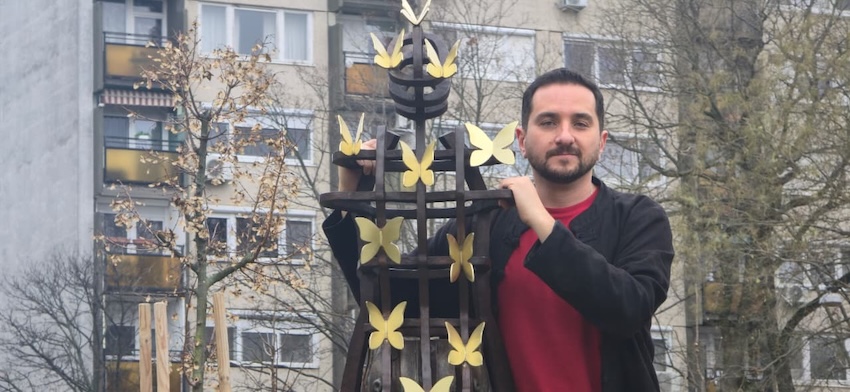
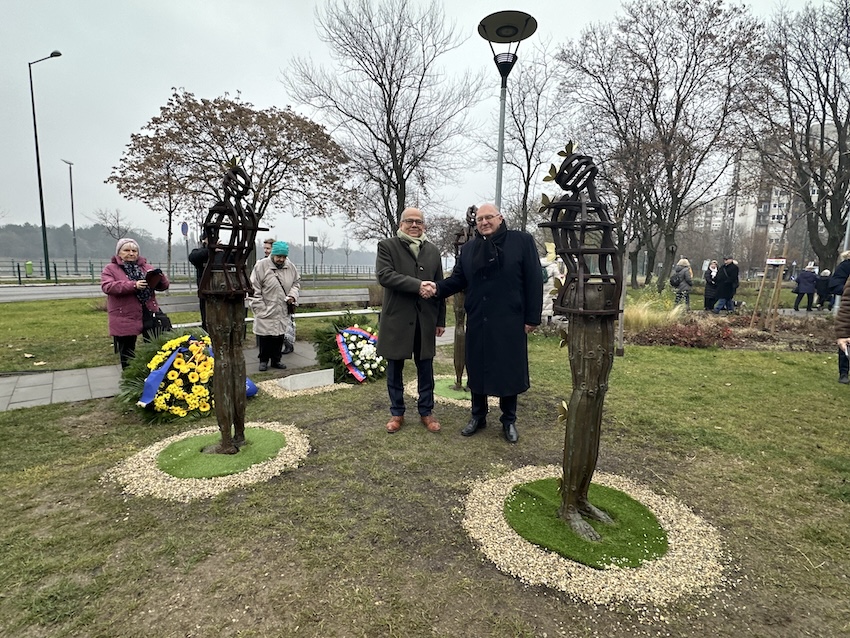
The three figures carry butterflies in increasing number: one at the feet, 19 on the back, and one on the head – 21 in total, a number often associated with change and the possibility of perfection. In the artist’s interpretation, the growing weight suggests the burdens of life, while the butterflies speak to transformation and renewal.
The figures gaze outward, opening up space and seeking horizons – an idea the artist connects to Budapest’s bridges. Over time, the surrounding trees will frame the sculpture in a gentle curve. As the plants grow, this place will become shadier and more intimate, and the site lighting will be completed next spring.
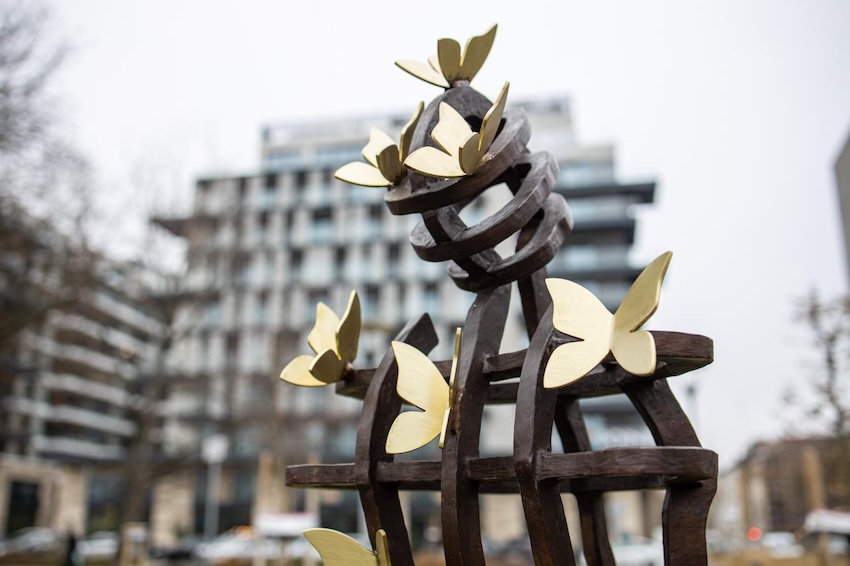
On behalf of the government of Budapest’s 13th District, I express our sincere gratitude for this generous donation, which symbolizes the cultural dialogue and strong relationship between Hungary and Colombia. This artwork resonates beautifully with the spirit of the park and enriches our public spaces as the 86th sculpture of our district.”
“With these thoughts, I hand over The Embrace of the Yellow Butterflies to the residents of the 13th District and to all the people of Budapest.”
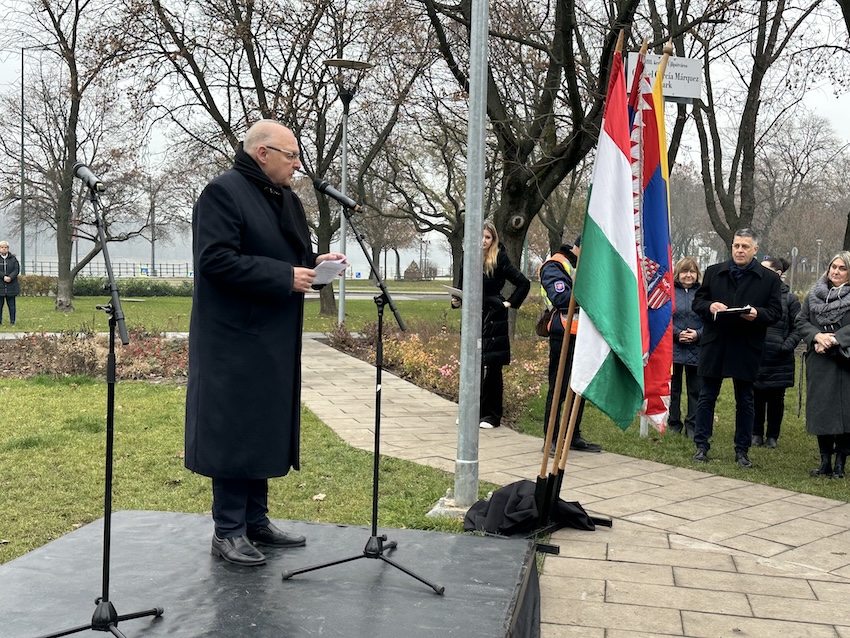
Following this, H.E. Ignacio Enrique Ruiz Perea, Ambassador of the Republic of Colombia to Hungary, delivered his speech:
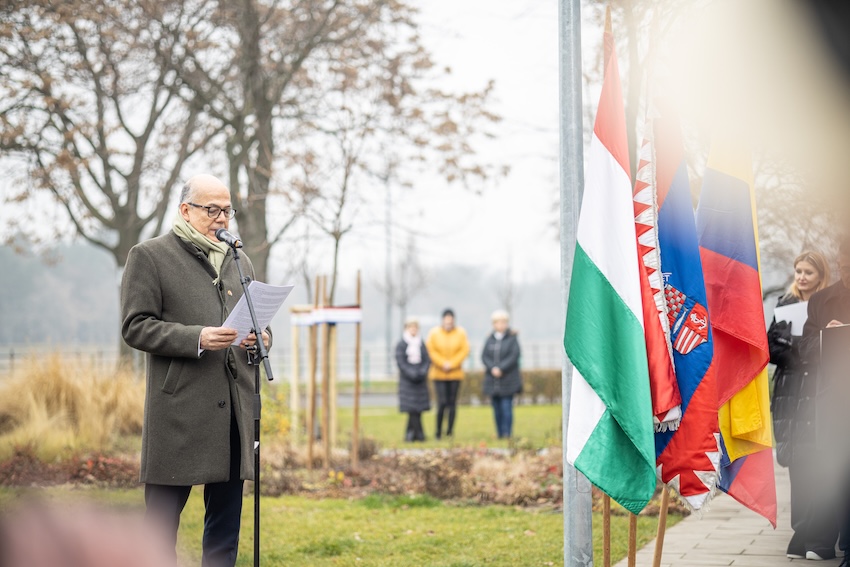
“It is my great pleasure to address you on a day we have been waiting for almost two years. When the idea first arose to place sculptures in honour of our Nobel Prize–winning author, Gabriel García Márquez, it felt like a bold thought, floating in our minds like the flapping of many yellow butterflies. It was not an easy journey to this day, when we can finally admire Joaquín Restrepo’s sculptural here, next to the Danube River. Even more challenging was securing the permanent placement of his work, The Embrace of the Yellow Butterflies, in Gabriel García Márquez Park in Budapest, the very city that the Colombian Nobel laureate explored in its most remote corners in the 1950s.
This idea was born when we saw the tree that our embassy planted here in 2019, along with the memorial plaque that still remains. Our Embassy reopened in 2018 and is located in Budapest’s 13th District. This meant that any sculptural initiative had to be – and indeed should be – developed in close partnership with the District Government. Therefore, in March 2024, the Embassy, together with its partners, celebrated the reopening of Gabriel García Márquez Park, which had existed since 2010.
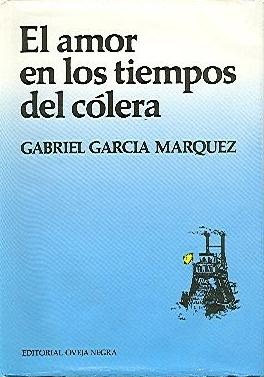
In his speech, Mayor Dr. József Tóth, just recalled that the green spaces in the district had increased significantly over the past twenty years. With the almond tree planted here – described by García Márquez in One Hundred Years of Solitude as a ‘symbol of permanence’ – the existing contact with Joaquín Restrepo, and the knowledge that 2025 marks the 40th anniversary of the publication of ‘Love in the Time of Cholera’, a novel I consider among García Márquez’s finest works, we began to believe that placing sculptures here might truly be possible.
The importance of this park in bringing our nations closer inspired us to hold numerous meetings with the District Government in order to make this project a reality. There were moments when the technical requirements of the district jury or budgetary constraints almost made us abandon the idea. Yet Joaquín, always on the other end of the phone line, tirelessly encouraged us to persevere.
Today we see that it was not impossible – that this idea could be a reality through the determination, empathy, and shared goals of all parties involved.
For this reason, I would like to express my sincere gratitude to Dr. József Tóth, Mayor of the 13th District and his entire team; to the jury that carefully examined the proposed work; to Joaquín Restrepo for his persistence; and to the entire team at the Embassy of Colombia in Hungary for their hard work and dedication throughout this process. Their collective efforts have led to the inauguration of El Abrazo de las Mariposas Amarillas (The Embrace of the Yellow Butterflies). Thank you all very much.
I conclude with a quote from Gabriel García Márquez that makes time stand still today, here in cold Budapest, and fills us with hopeful expectations for the future: Life is not what one lived, but what one remembers and how one remembers it in order to recount it.”
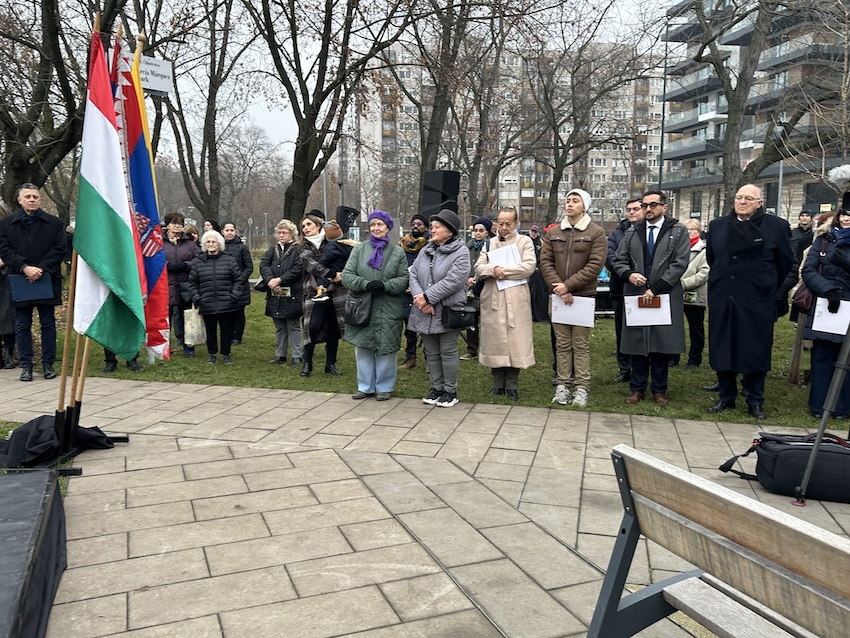
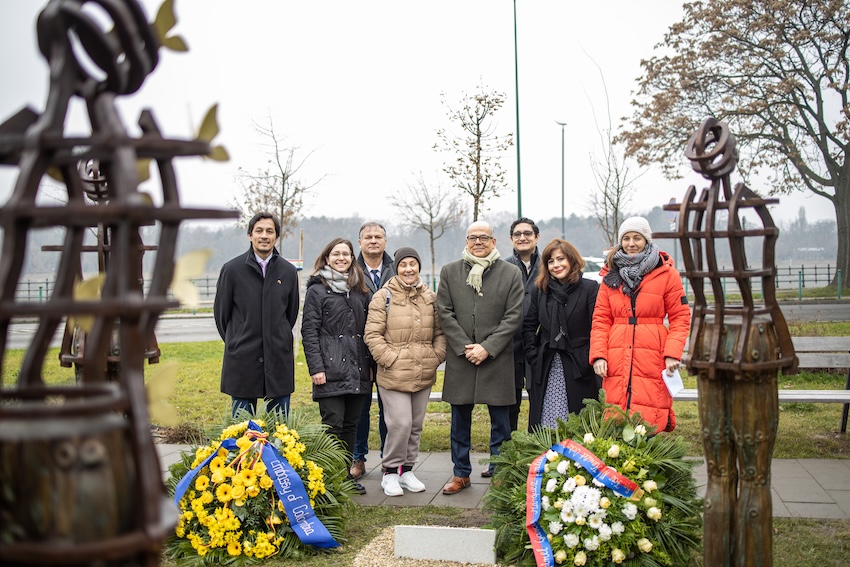
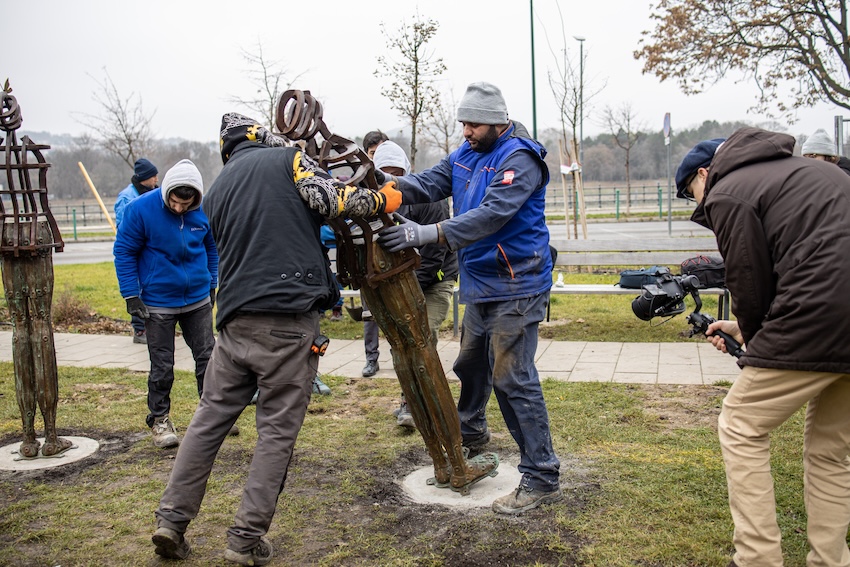
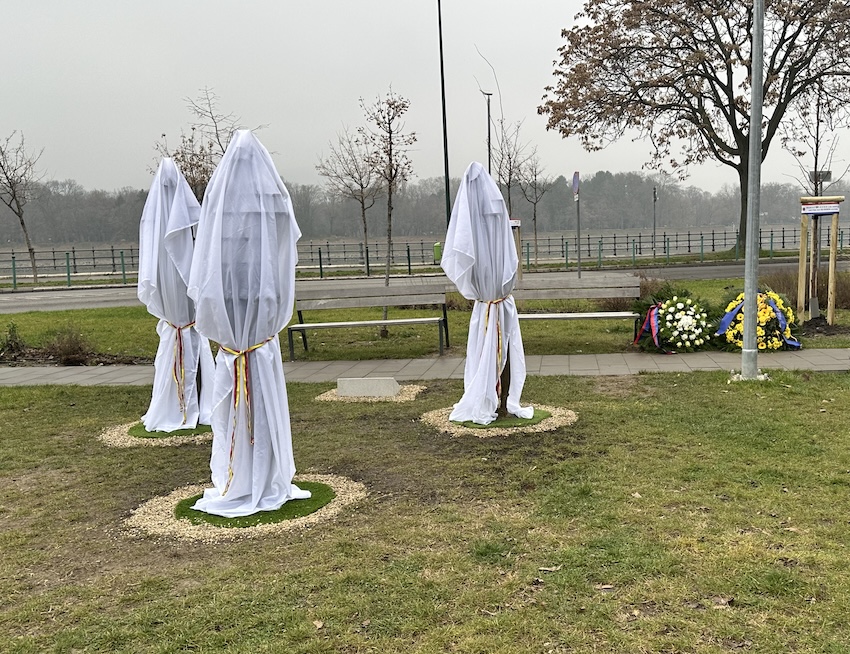
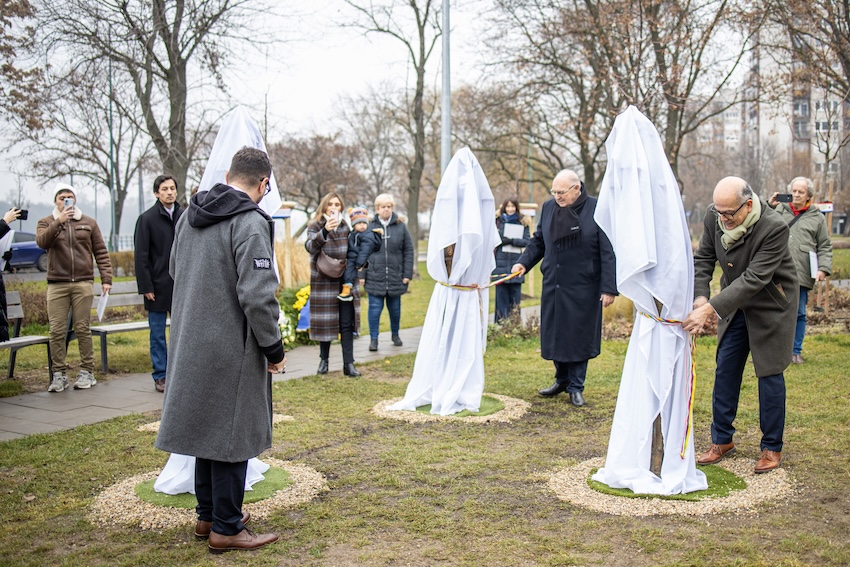
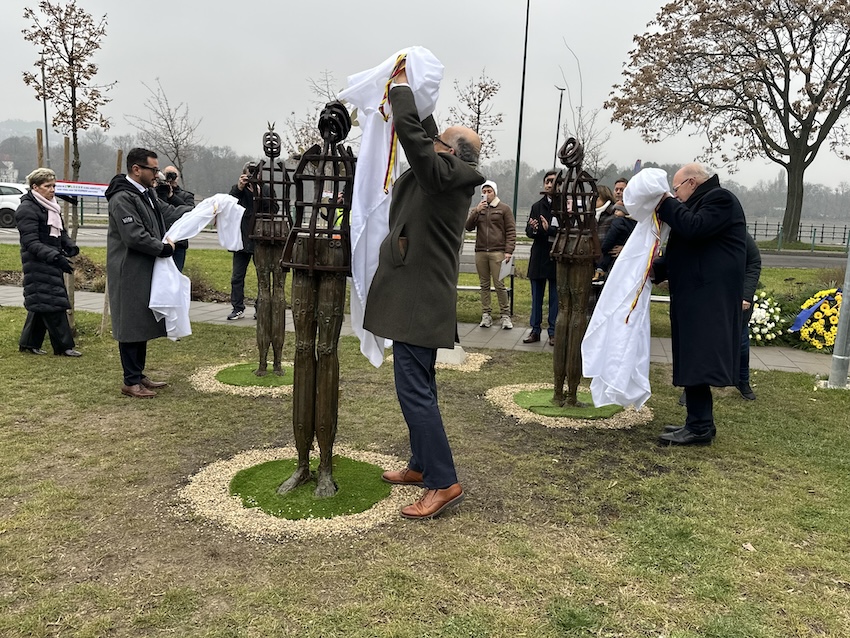
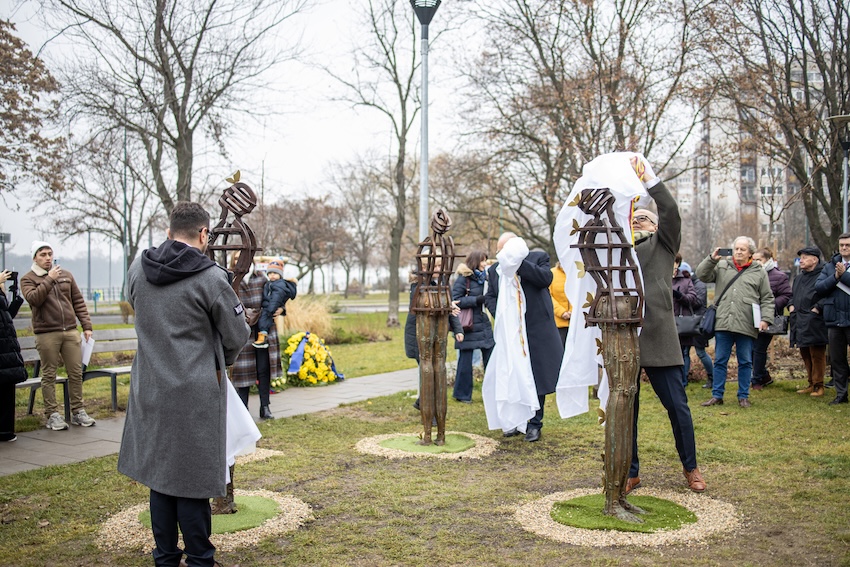
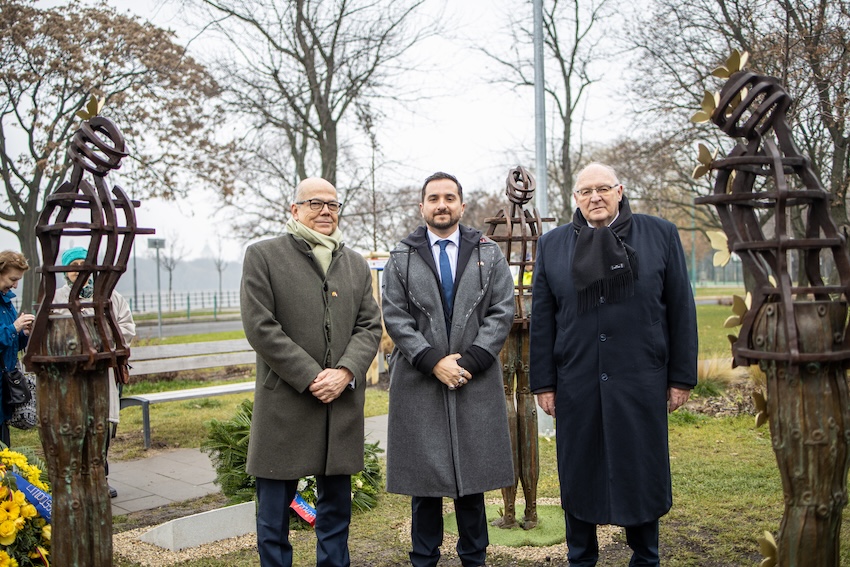
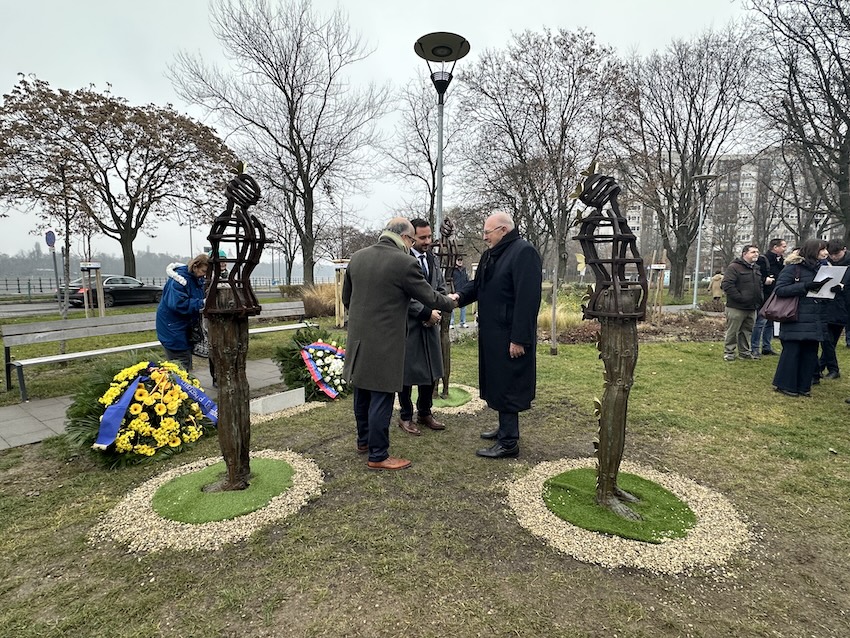
After the festive speeches, the moment finally arrived: the Ambassador, the Mayor, and the event’s protagonist – the Sculptor – jointly unveiled the statues, which had been hidden with white cloths. A large audience, visibly excited and curious, eagerly awaited the Colombian artist’s work. As the coverings fell away, applause and admiration erupted. Set within the park’s greenery and marked by the iconic yellow butterflies, the bronze figures formed a striking scene – individual yet unmistakably part of a whole – and rapidly became the stars of the day, drawing cameras and attention at every turn. The remarkable triangular composition pays homage to the great Colombian writer’s visit to Hungary and to the enduring power of his literary legacy across diverse geographies.
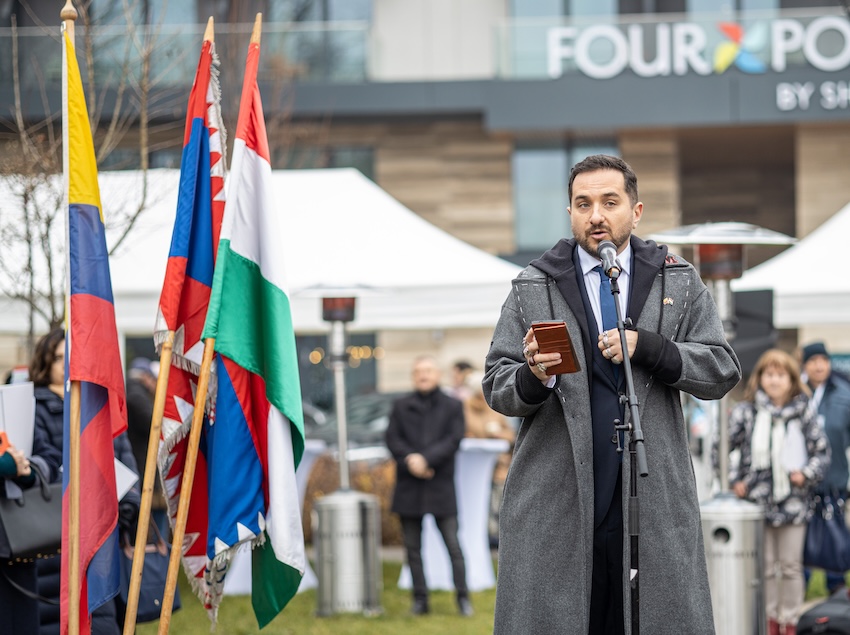
The artist of the statues, Joaquín Restrepo, also spoke, sharing his heartfelt reflections on the inspiration behind the work and the symbolic elements rooted in Márquez’s novel and in the deep sources of universal culture. He expressed his joy that the sculptures had found a new home here and conveyed sincere gratitude to everyone who had contributed to the project’s success, especially the Embassy of Colombia in Hungary, the Ministry of Foreign Affairs of the Republic of Colombia, and Budapest’s 13th District, the host of his work.
The artist was visibly moved and emotionally uplifted as he addressed the audience, explaining what the work meant to him, how something can begin existing only in the mind and on paper, and then, through imagination, creativity, and the act of creation, become tangible before our eyes.
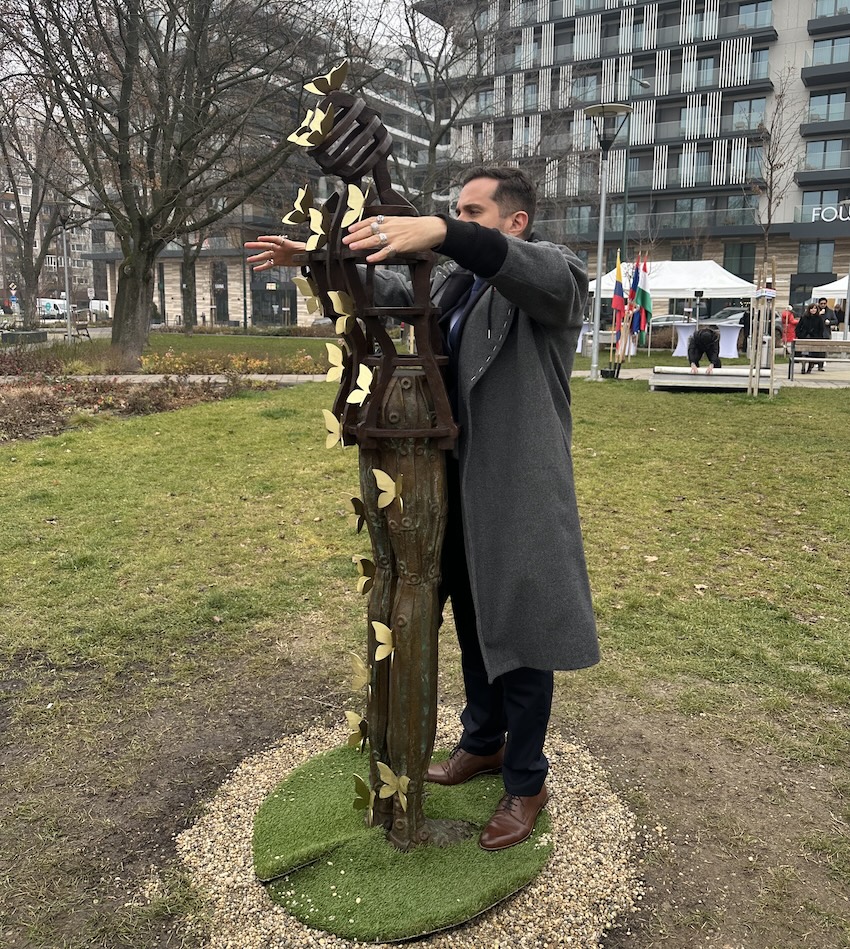
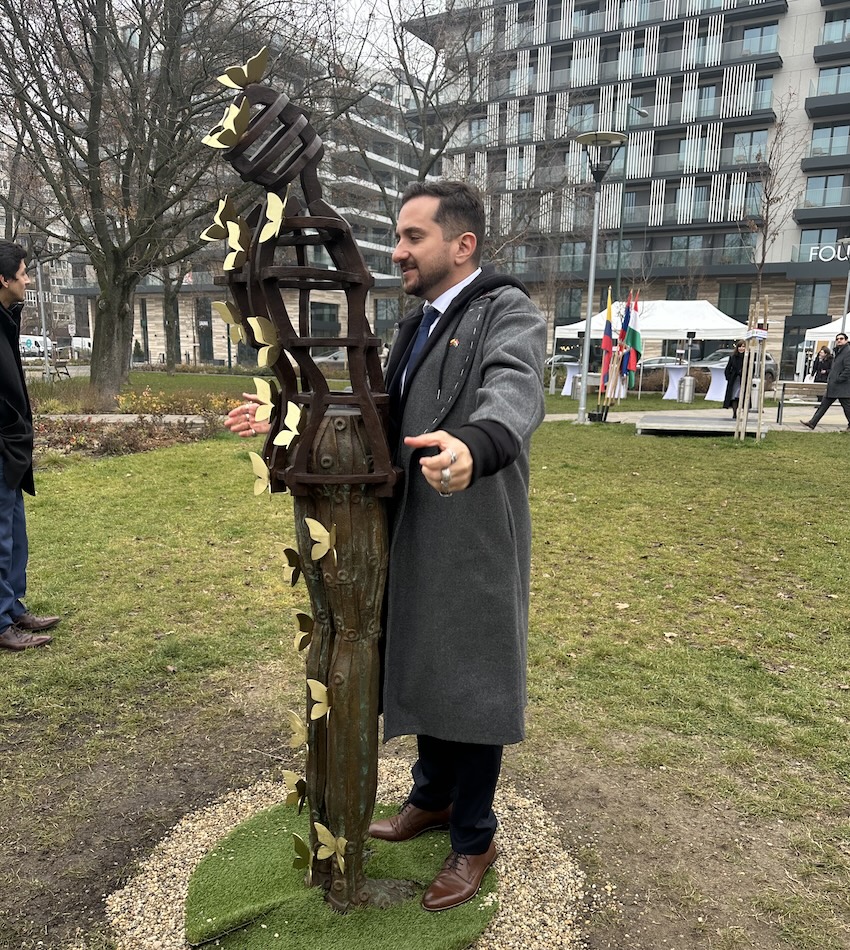
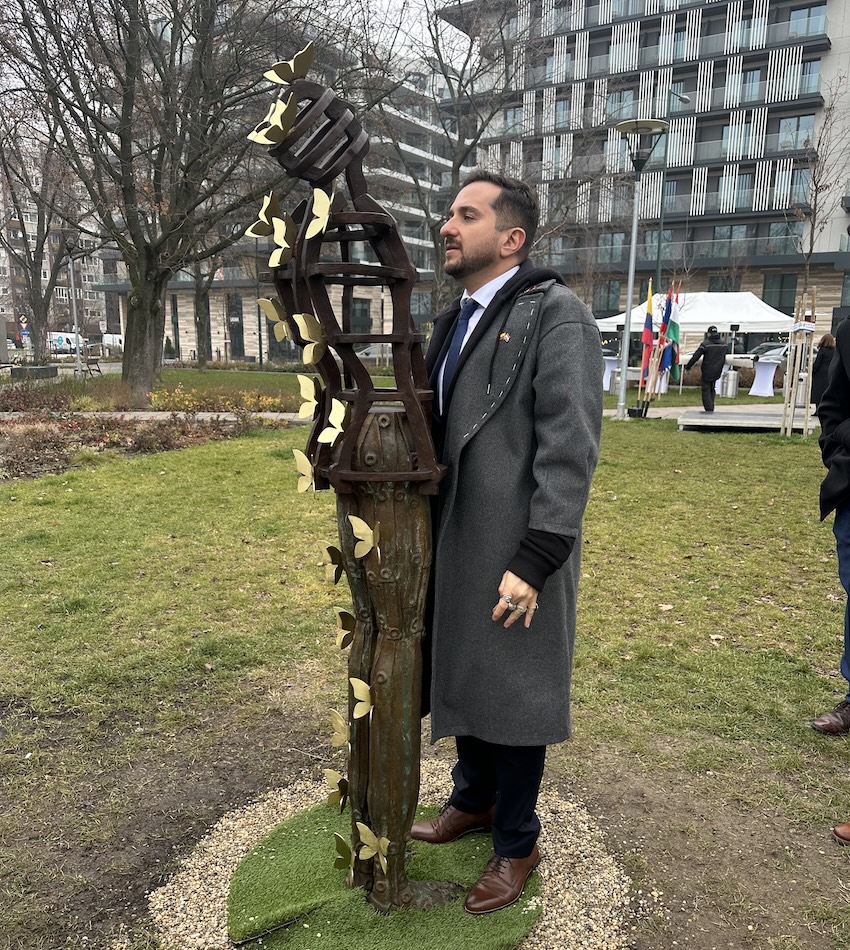
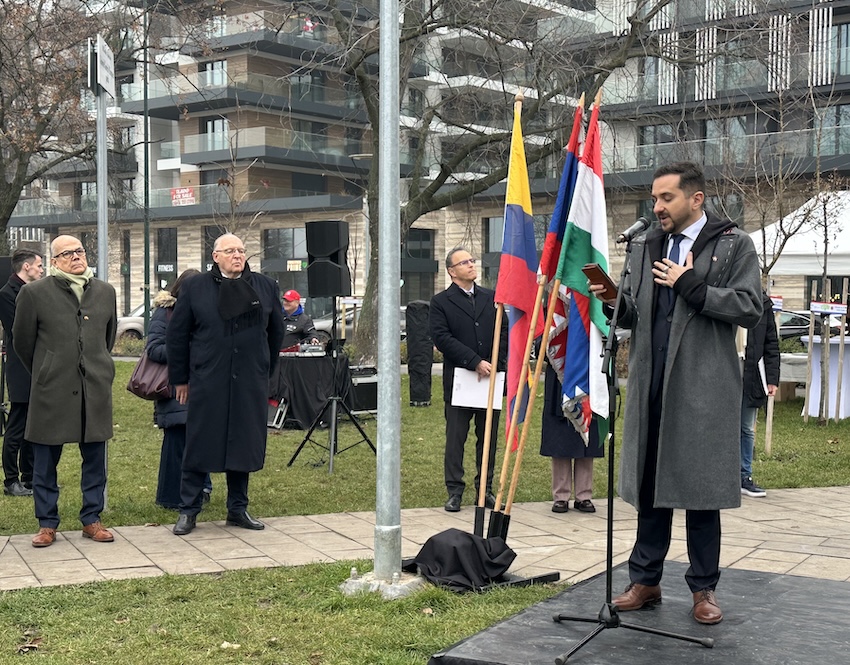
He said: “Thank you to everyone who joined us today. Your presence gives meaning to months of quiet work and to a very personal process. From the very beginning, there was a shared intention: to evoke Gabriel García Márquez without trying to contain him. And so the butterflies appeared. This work is called The Embrace of the Yellow Butterflies. It is composed of three figures, and at its heart speaks about rebuilding – about learning how to live with hardship with a certain lightness. Not by denying pain, not by escaping it, but by carrying it without being crushed by it.
At first, the butterflies were meant to visit the figures. But then something shifted. They stayed. They embraced them. They made them lighter. One figure carries the butterflies at its feet – that is the beginning, arrival, grounding. Another carries them on its back – that is the weight of the world. And the third carries a butterfly on its forehead, a reminder that dreaming is still possible. Two of the figures look towards the Danube; one refuses to do so. That tension matters to me, because sometimes we can face beauty directly, and sometimes we turn away from it. Interestingly, the one who turns away is the one who carries the most butterflies. Throughout this process, a sentence by García Márquez stayed with me. He wrote that the past was a lie, that memory has no return, and that even the wildest and most tenacious love is, in the end, an ephemeral truth.
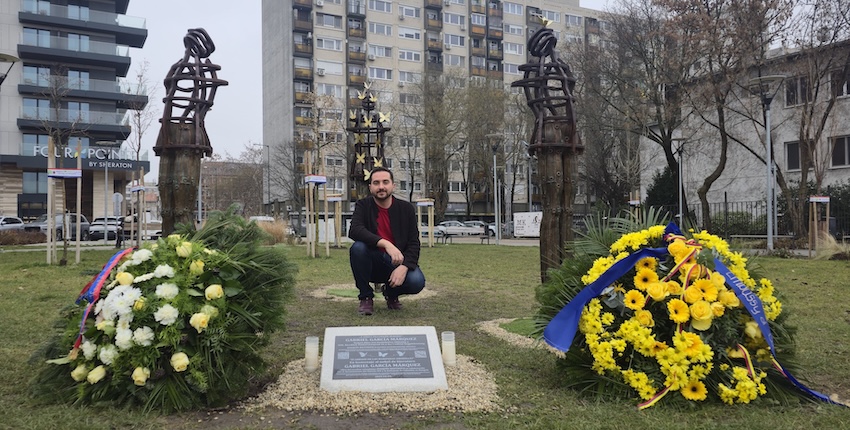
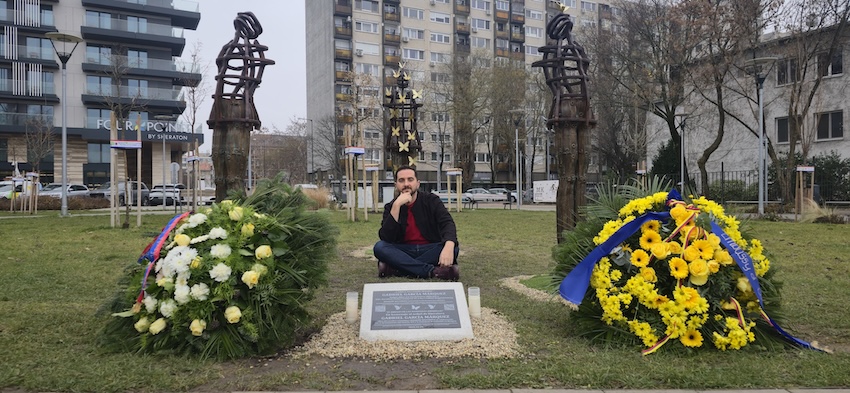
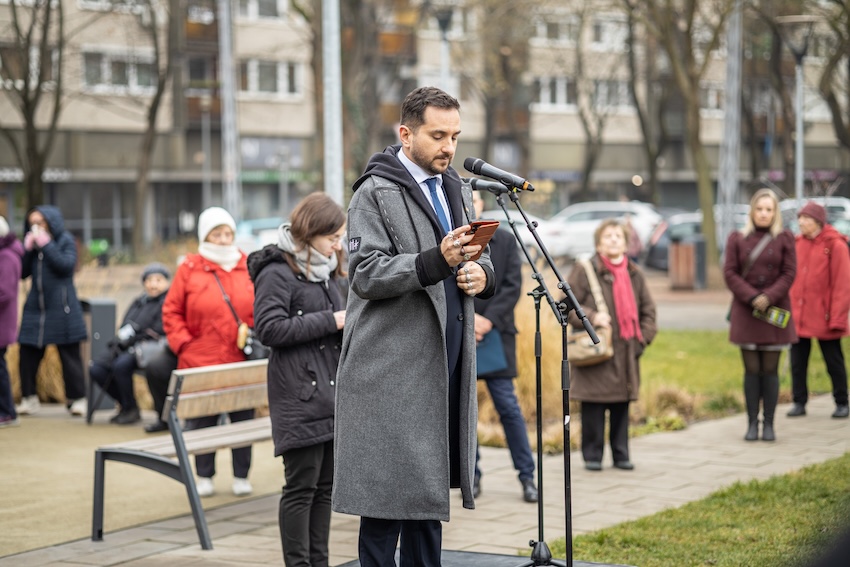
This sculpture lives in that space. It does not try to bring back the past. It accepts that it cannot return in the same form. But it also insists that something remains – a gesture, a trace, an embrace. Budapest is a city that understands this deeply: a city that knows how to rebuild, how to carry history without being trapped by it, how to stand between what was and what is still becoming. That is why this place felt right.
Thank you for allowing a piece of Latin American imagination, literature, fragility and love to live here – to stand as a witness, changing with the light, the seasons, and the people who walk through this park.”
As he spoke, we had a strong impression that something was being born in front of us, an idea turning into presence, a vision from the inner world was emerging into a shared experience.
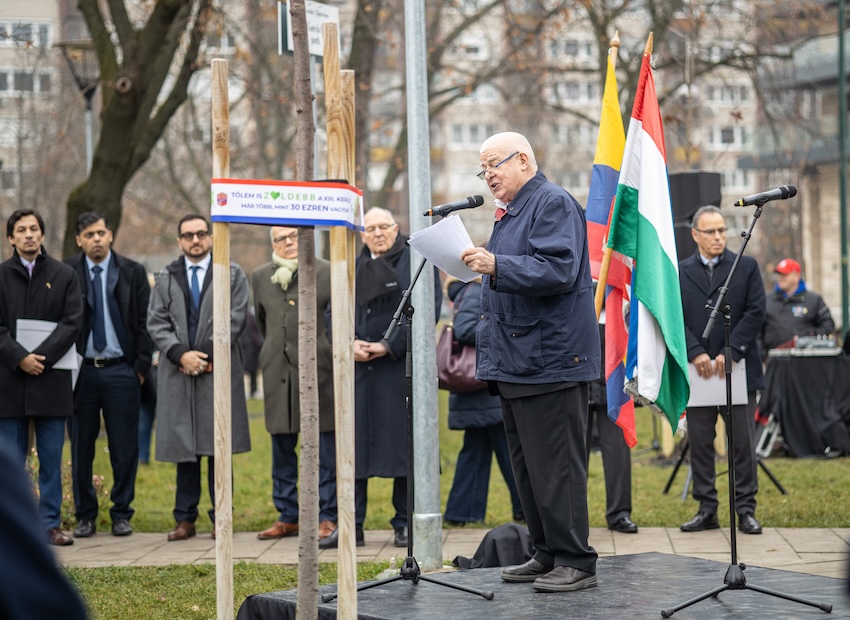
It was a particularly powerful moment to stand near the sculptures and witness a beautifully chosen excerpt from One Hundred Years of Solitude, in Hungarian translation, recited by Hungarian actor János Papp as part of the ceremony.
In Márquez’s world, the butterflies – the central motif of the statues – are visible signs that love and desire transcend the boundaries of everyday life.
It was a memorable cultural moment that leaves its mark, and a place in Budapest worth returning to.
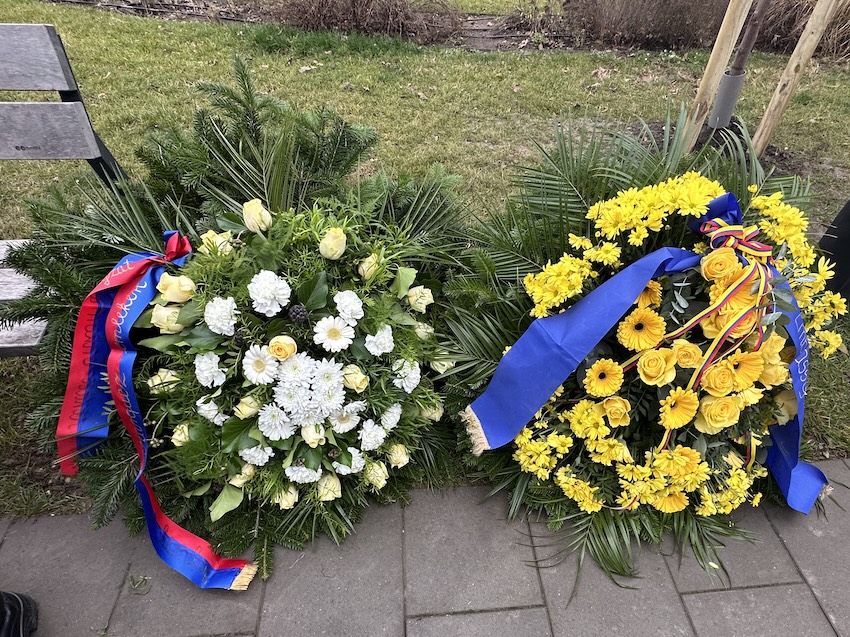
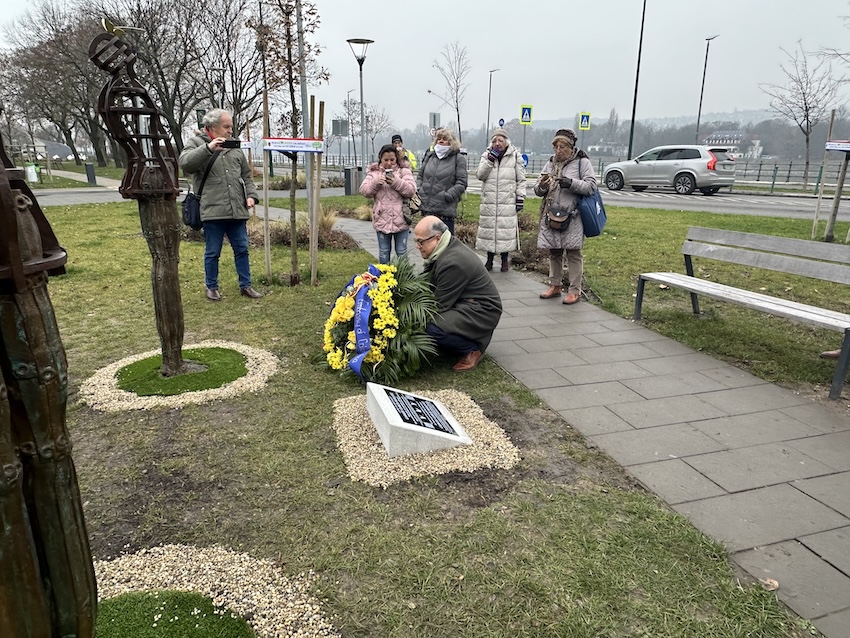
Source: Embassy of Colombia in Budapest
Photos from the Embassy of Colombia in Budapest, Diplomatic Press Agency and Joaquín Restrepo