



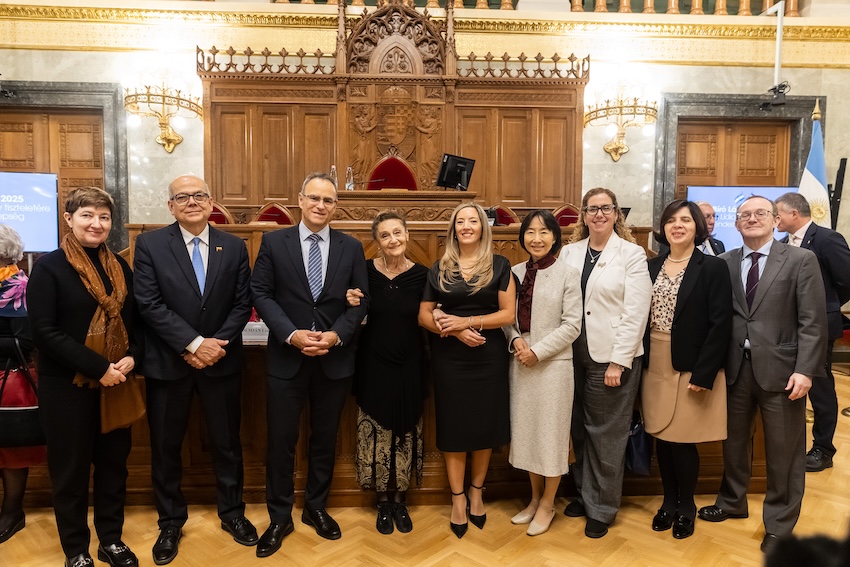
Culture, Friendship and Tango: Honouring Ms. Lídia Demján in the Hungarian Parliament
Edited by Anna Popper
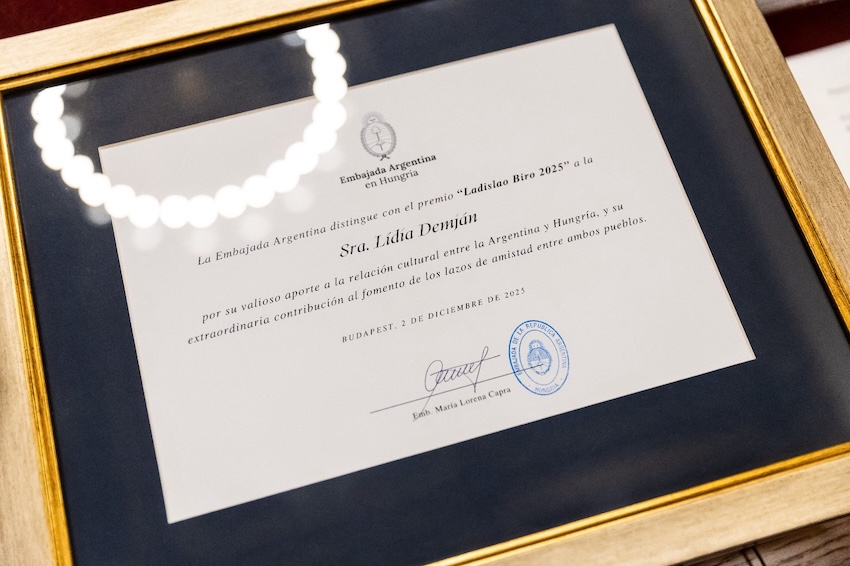
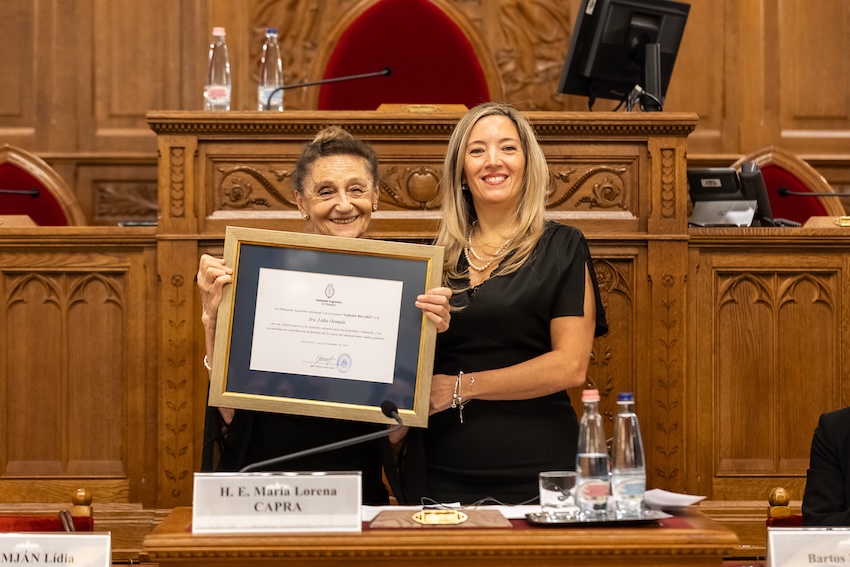
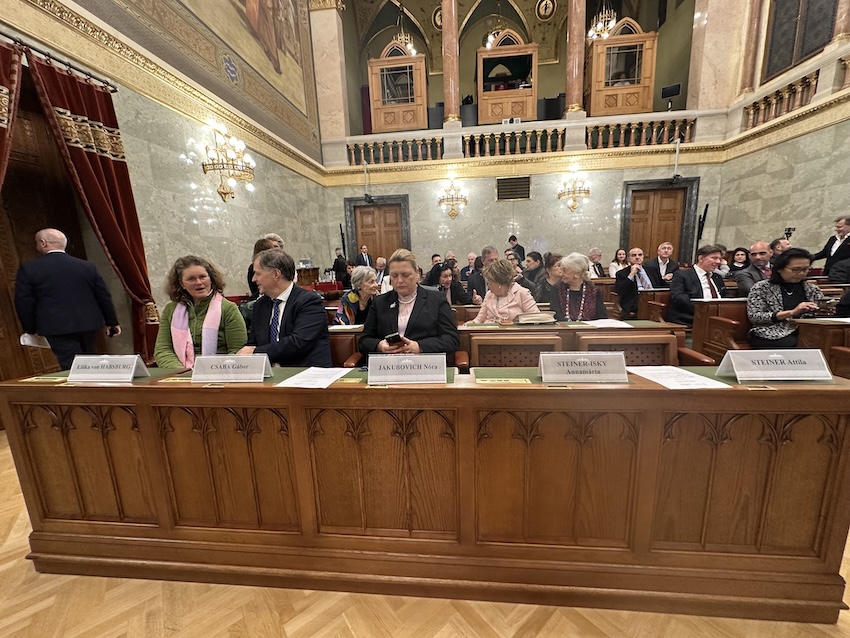
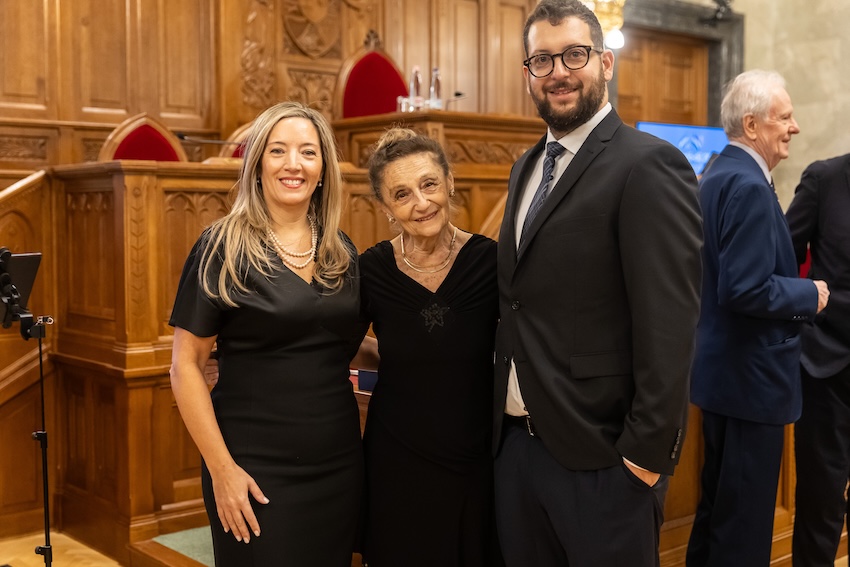
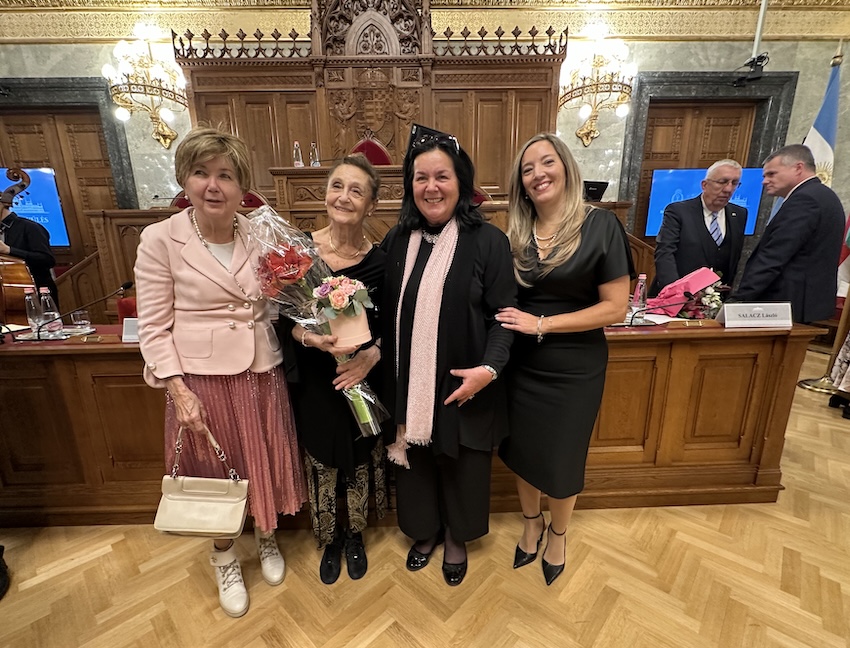
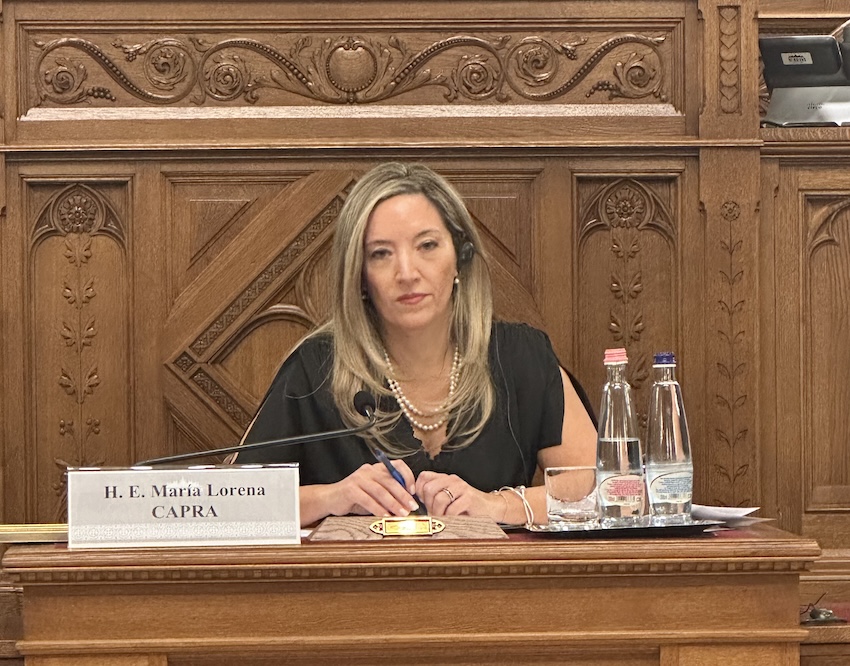
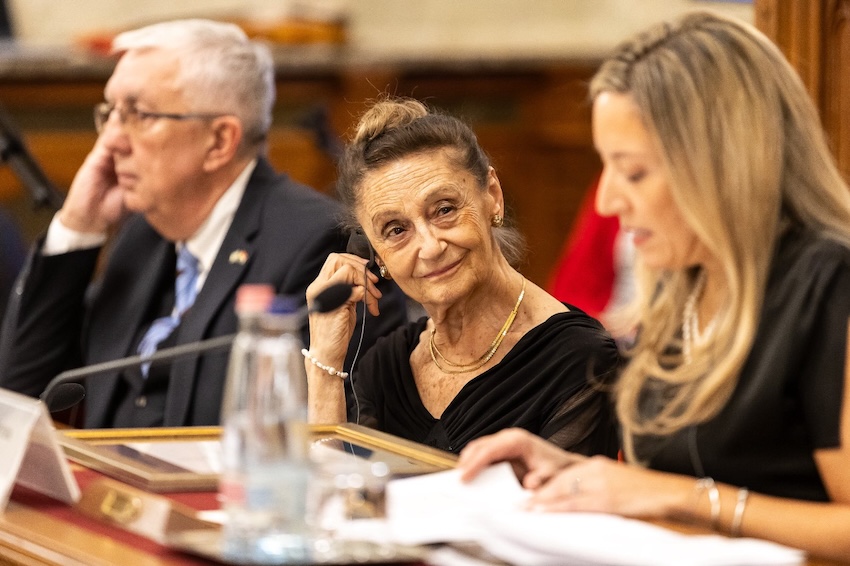
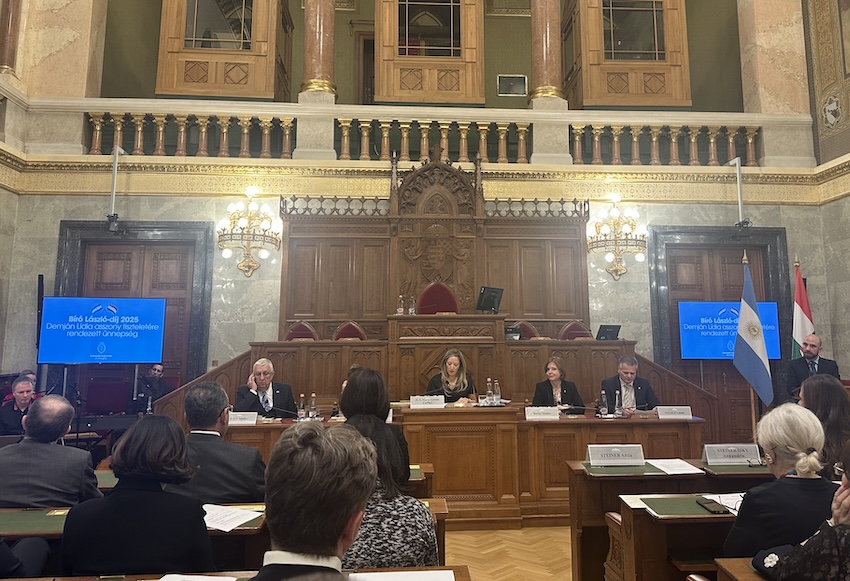
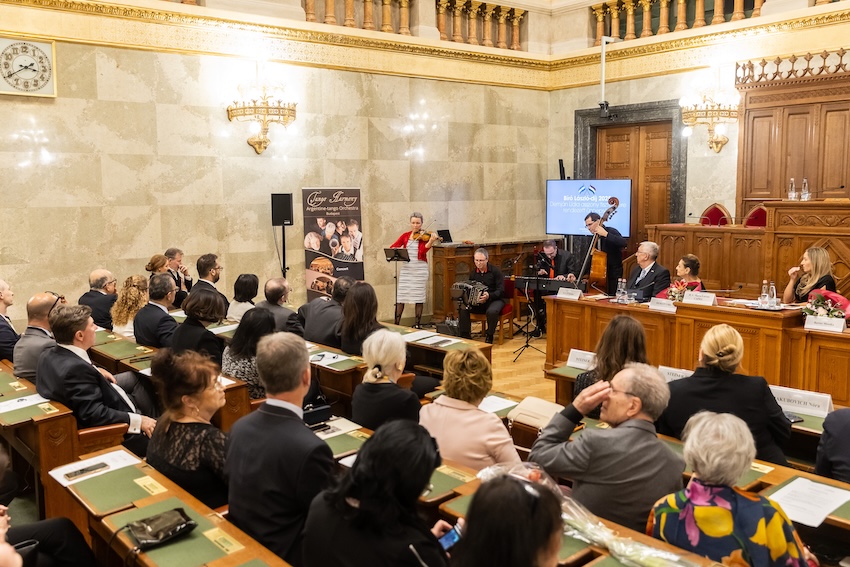
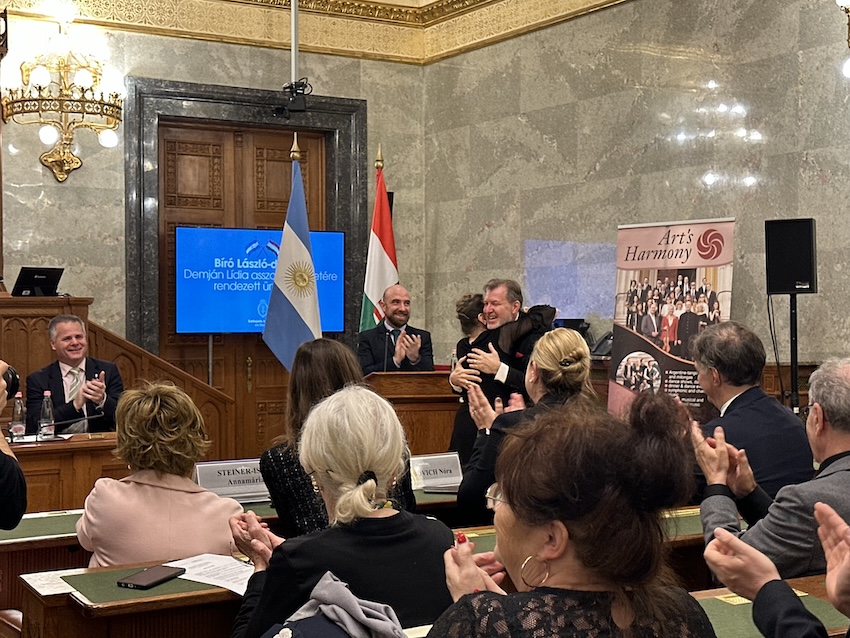
On 2 December 2025, the Hungarian Parliament became the setting of an exceptional celebration of culture, creativity, and international friendship. In the Delegation Hall of the Hungarian National Assembly, H.E. Ms. María Lorena Capra, Ambassador of the Argentine Republic to Hungary, together with the Co-Chairs of the Hungary–Argentina Friendship Group, Ms. Mónika Bartos and Mr. László Salacz, hosted a ceremony honouring Ms. Lídia Demján with the prestigious Premio Ladislao Biro 2025 – László Bíró 2025 Award.
The prize was presented in recognition of Ms. Demján’s outstanding contribution to strengthening cultural ties between Hungary and Argentina. Through her lifelong dedication to Argentine tango – her great passion – she has built a vibrant cultural bridge between the two nations, fostering mutual understanding, artistic exchange, and deep human connections.
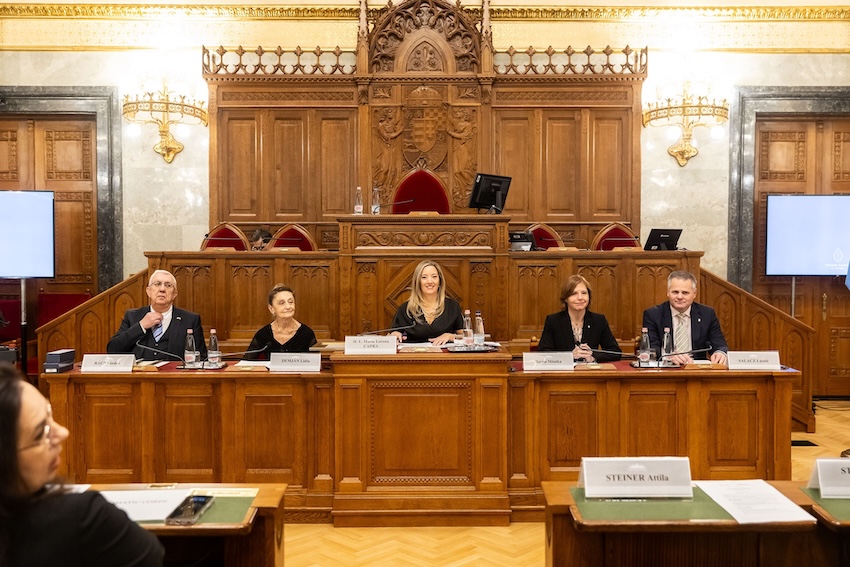
The ceremony was attended by distinguished guests, including Secretary of State Attila Steiner, Deputy State Secretaries Nóra Jakubovich and Csaba Gábor, members of the diplomatic corps, government officials, colleagues, friends, and relatives of the awardee.
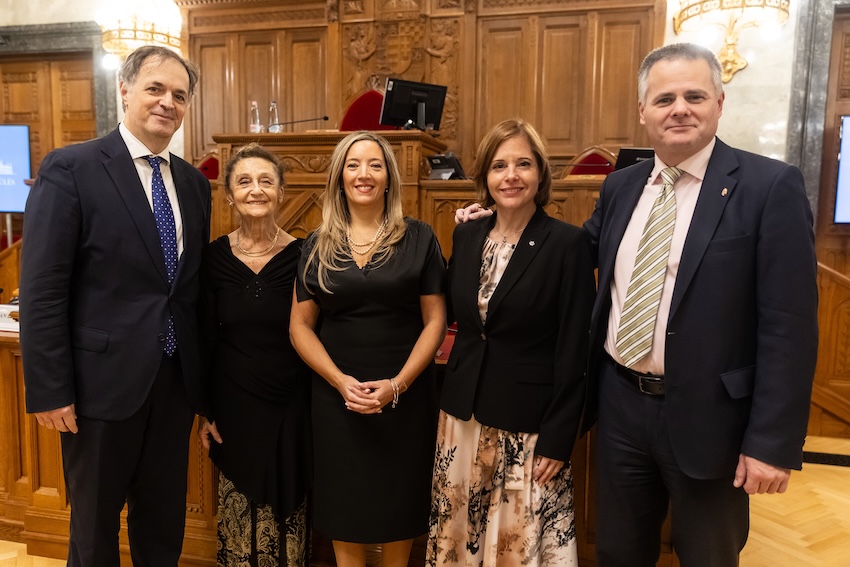
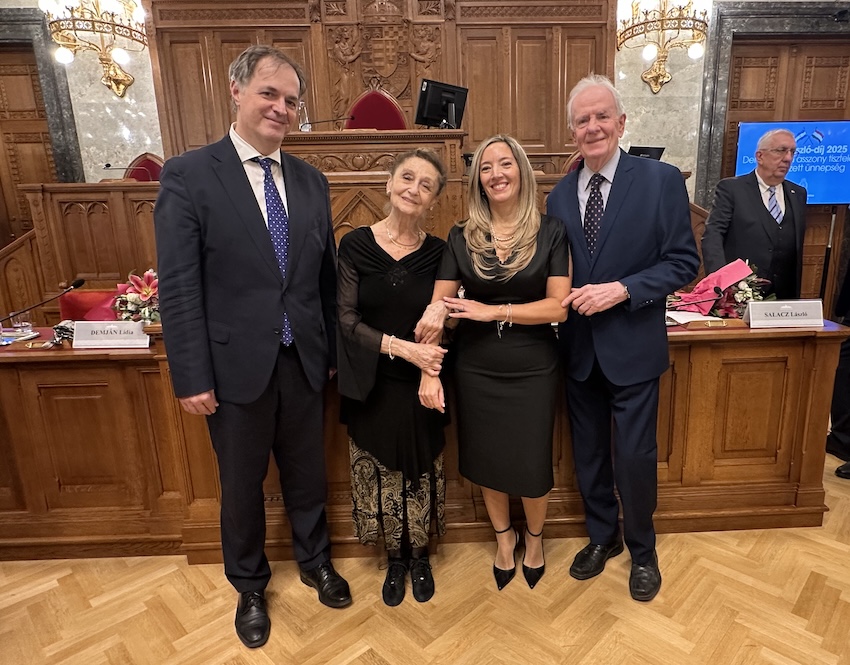
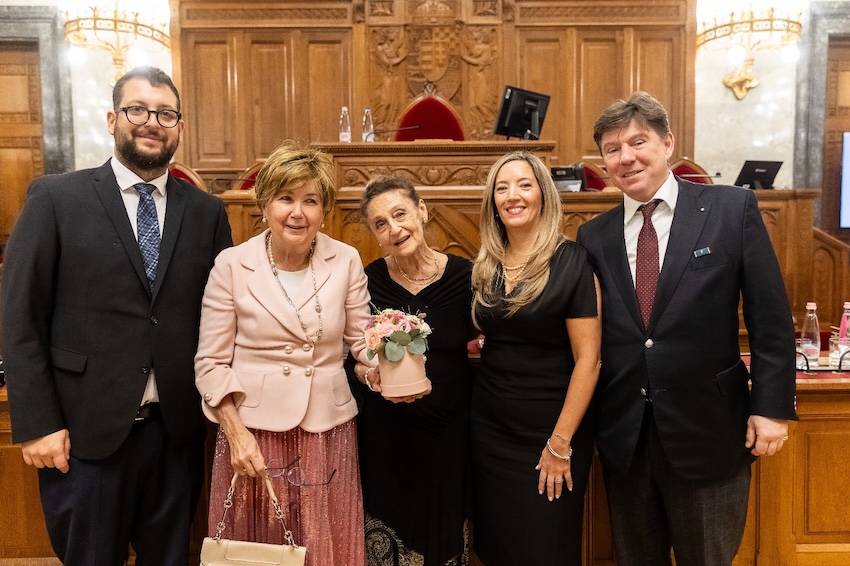
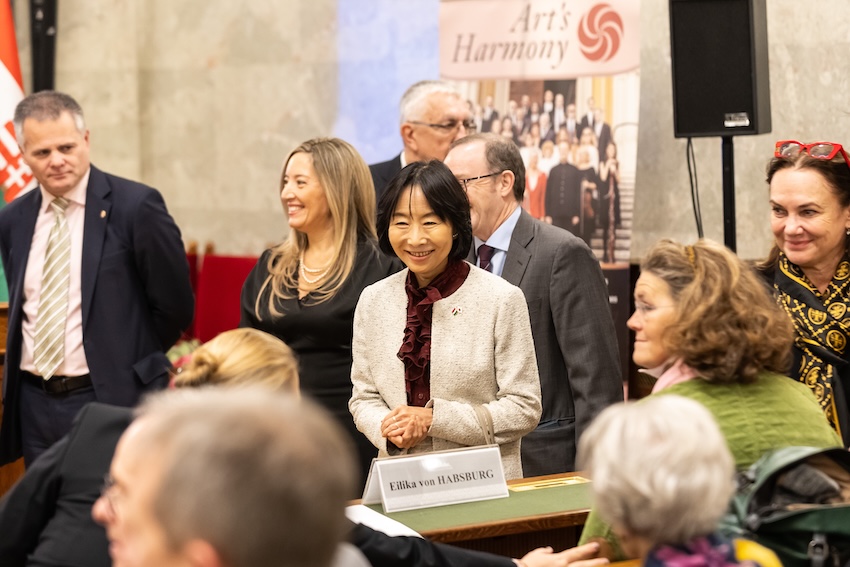
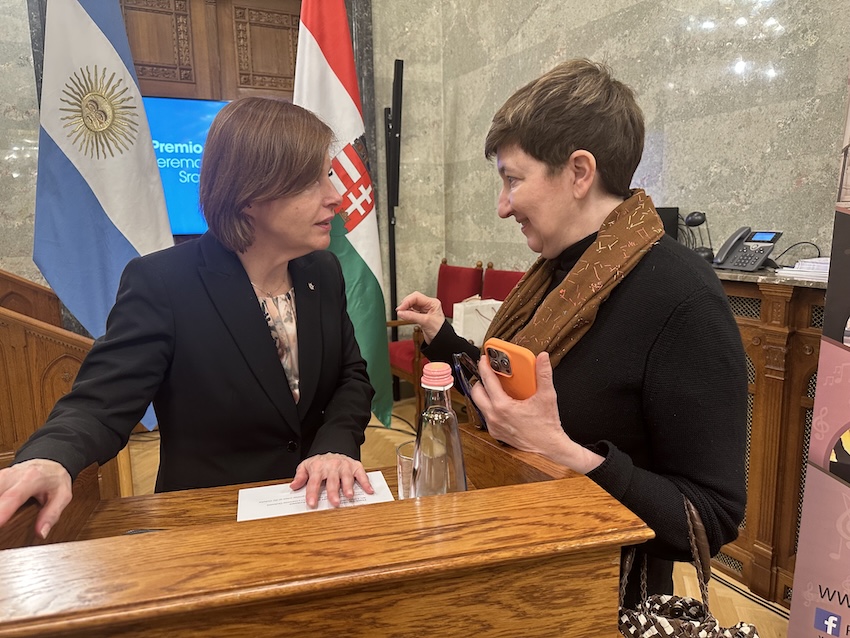
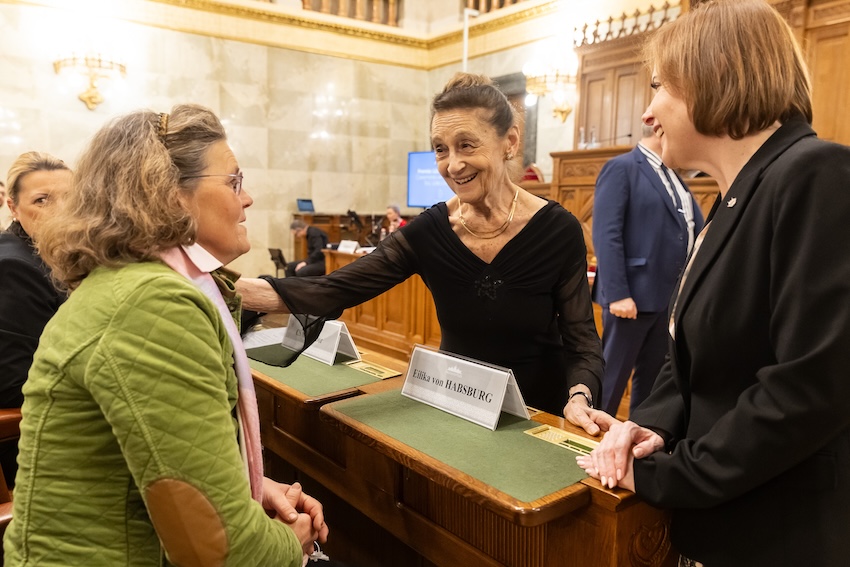
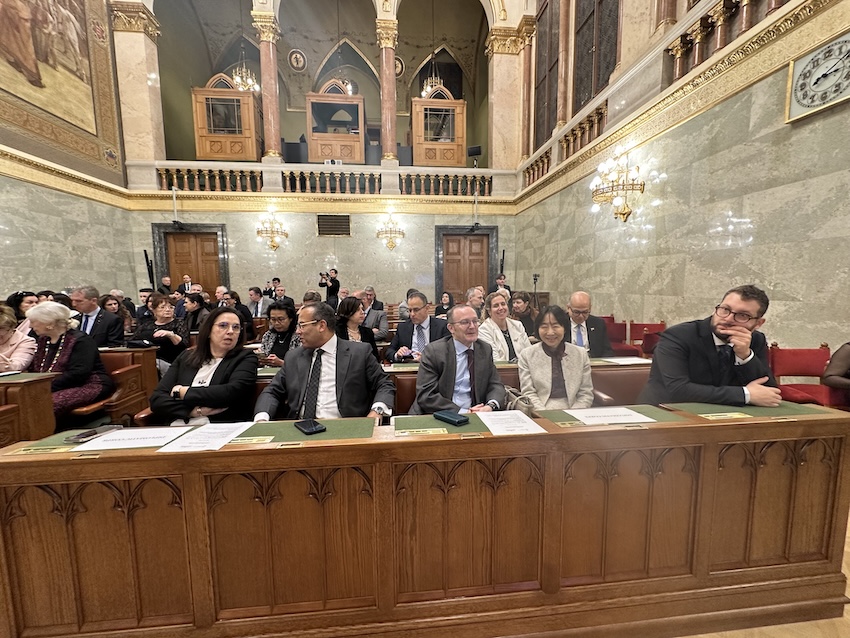
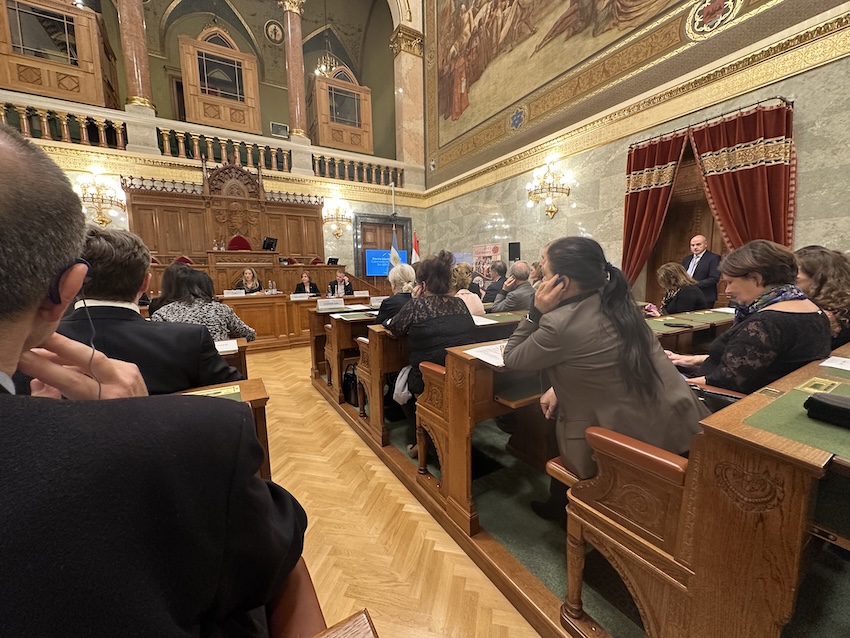
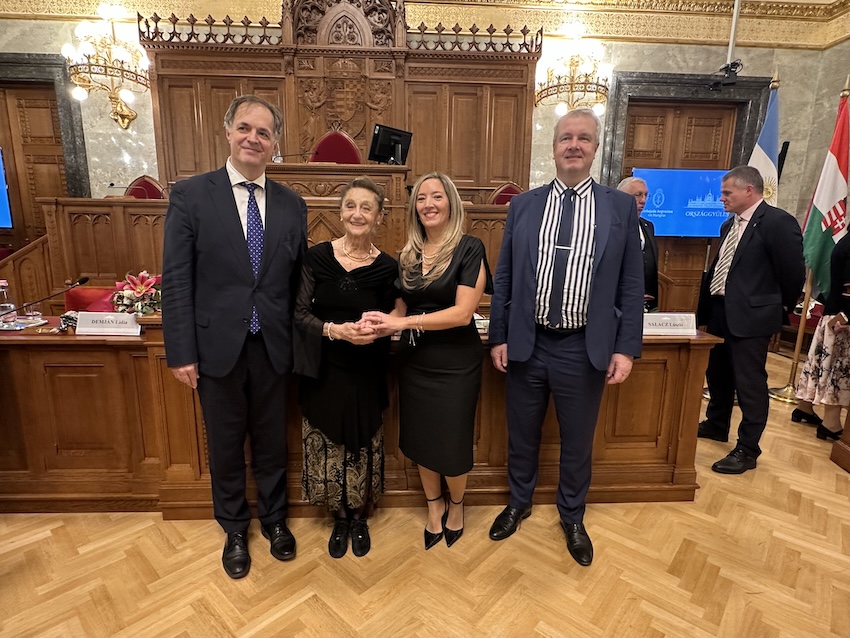
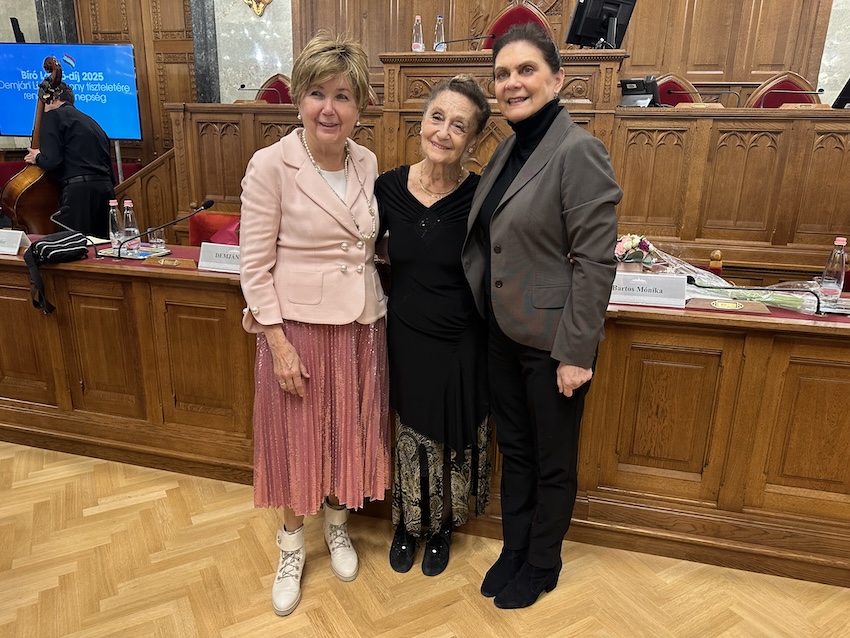
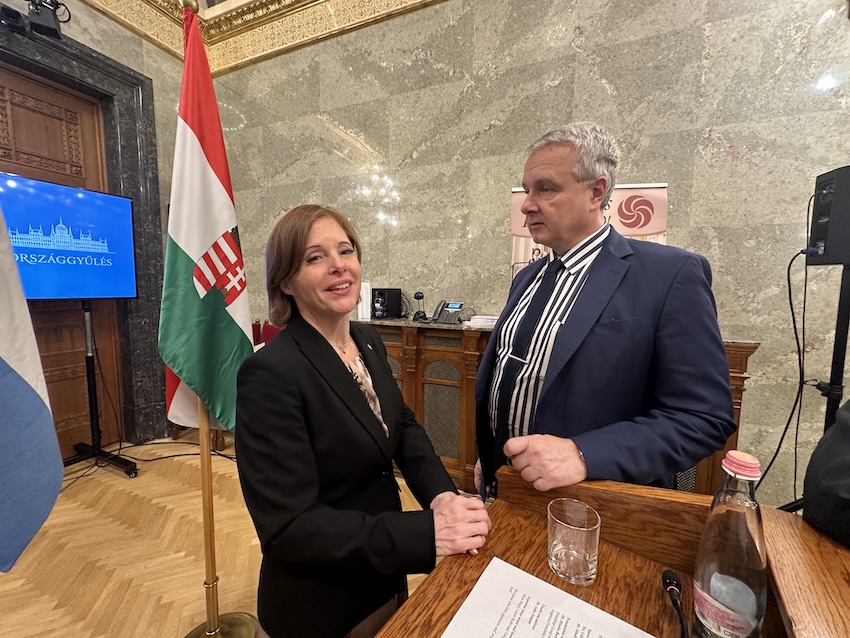
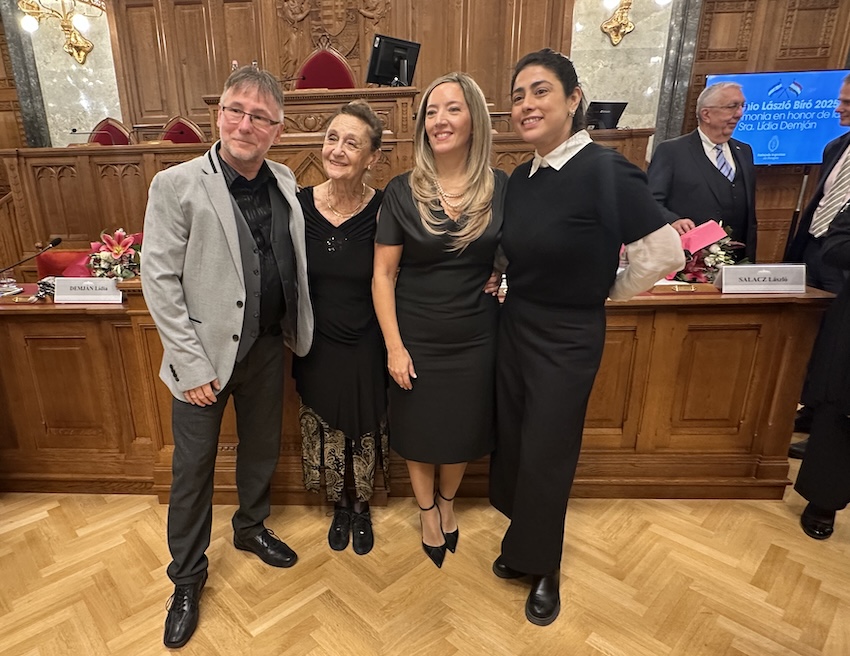
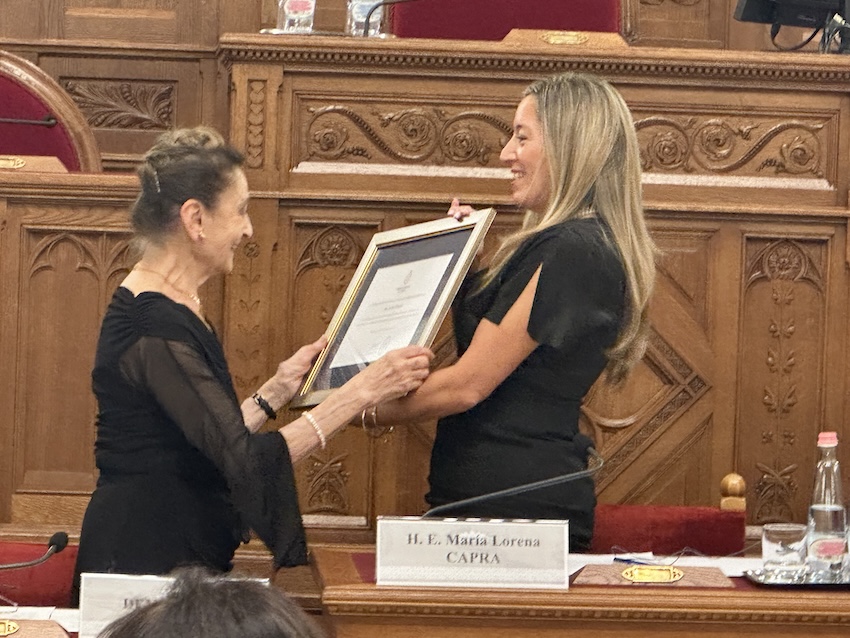
At the heart of the event was the laudatory speech by H.E. Ms. María Lorena Capra, who spoke with warmth and respect before presenting the diploma to Ms. Lídia Demján:
“Today is a very special day for the Argentine Embassy, as we gather in this historic hall to honour an outstanding Hungarian figure, and above all, a dear friend: Ms. Lídia Demján.
I would like to begin by noting that the László Bíró Award is the most important distinction granted by our Embassy. It bears the name of one of the most illustrious and renowned Hungarian-Argentine citizens, the brilliant and prolific inventor and artist who settled in Buenos Aires in 1942. In Argentina, László Bíró started a family and had a daughter, Marianna, who lovingly preserves her father’s immeasurable legacy. Today, she accompanies us with all her heart from Buenos Aires, even though she could not be physically present. Nonetheless, she has sent Lídia a special message for this occasion.
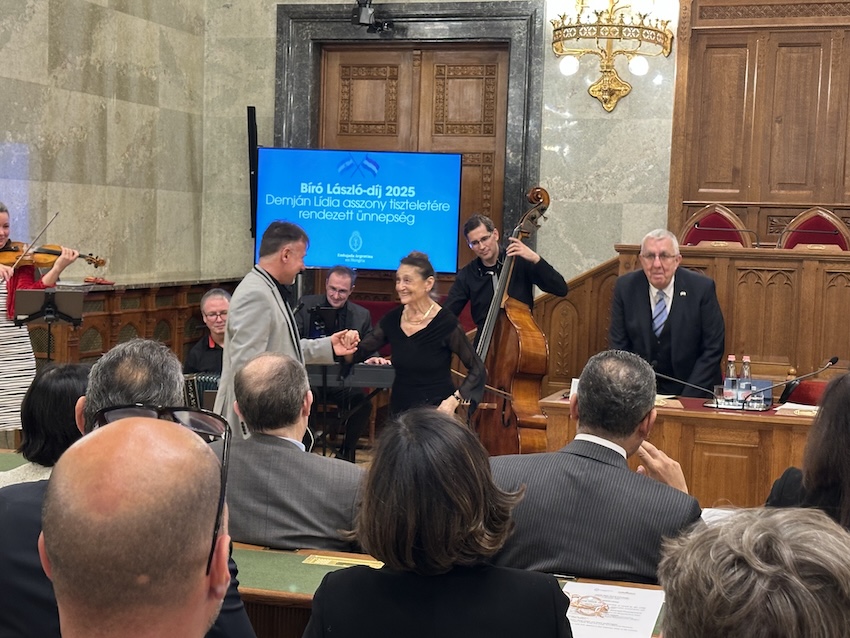
Not only will Marianna Bíró pay tribute to Lídia with her words, but also Mr. Sándor Rácz, and – especially today – she will be honoured in the way she loves most: by playing and dancing tango. That is why Maestra Katalin Bartha, the Tango Art Harmony Orchestra, and tango masters László Budai and Maja Hegyi perform today to celebrate Lídia.
The László Bíró Award was established in 2016 by Ambassador Maximiliano Gregorio- Cernadas and Ms. Mariana Bíró with the invaluable support of Mr. Sándor Rácz. It recognizes those who have made significant contributions to promoting cultural relations between Hungary and Argentina.
The award we present to Lídia today is an expression of our admiration and respect for her tireless work and enthusiastic, always warm support – support that has transcended borders and united hearts. Today, we honour a woman whose passion for tango has made Argentina a part of her life. Her devotion has manifested itself in concrete actions that have been crucial to the growth of tango culture in Hungary. Through Argentine music and dance, she has built lasting bonds between our countries.
Our dear Lídia is not only a passionate tango lover but also an exceptional dancer – and, as we say in Argentina, a true milonguera in her own right. Through her love for culture and for the social dimension of embrace and encounter that tango proposes, Lídia has promoted Argentine culture and strengthened the friendship between our nations. Her connection with tango began over 25 years ago when she discovered it on a trip to Buenos Aires. At a time when tango was experiencing a renaissance in Hungary, she began studying with teachers such as László Budai and András Szöllősi, dancing early styles like canyengue, rooted in the Argentine arrabal.

Together with her husband, Sándor Demján, Lídia has been involved in many emblematic cultural projects. Her passion is clearly evident in the Hölgyválasz Dance Studio and Tango School, founded over 20 years ago, where one of Budapest’s most traditional milongas takes place every Saturday.
Lídia embodies values that are dear to Argentines: friendship, solidarity, generosity, and joy. She is warm, energetic, always smiling, and ready to help. She embraces from the heart and is deeply loved by her family, friends, and community. She is a beacon of light in the Hungarian tango scene. Her enthusiasm has inspired countless dancers and musicians to discover tango not only as an art, but as a way of life.
I would like to thank Mónika Bartos, the authorities of the Hungarian Parliament, and the Embassy team for their continued support.
Dear Lídia, tango has shown us – through your work – that dance and music are universal languages. Tango is not only Argentine heritage, but also Hungarian, embraced with passion. The impact of your work will be remembered for generations.
On behalf of the Argentine Embassy, I thank you for your passion, dedication, and love for tango. May this award encourage you to continue your beautiful mission. Thank you very much.”
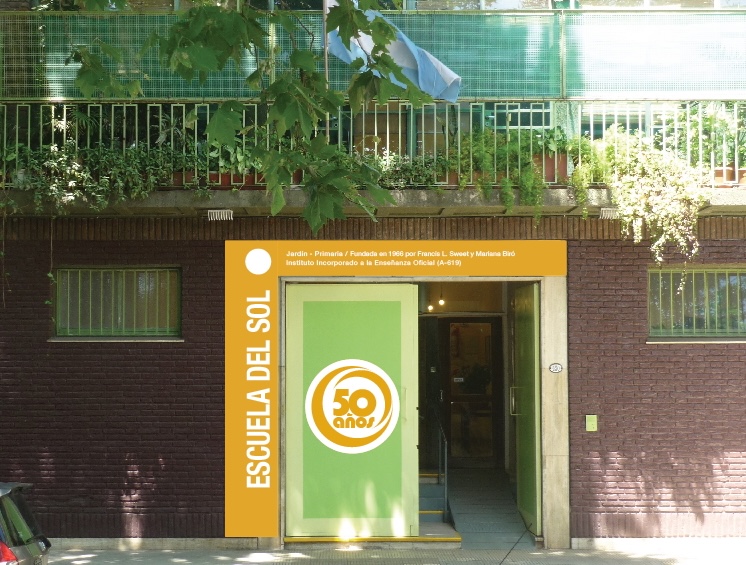
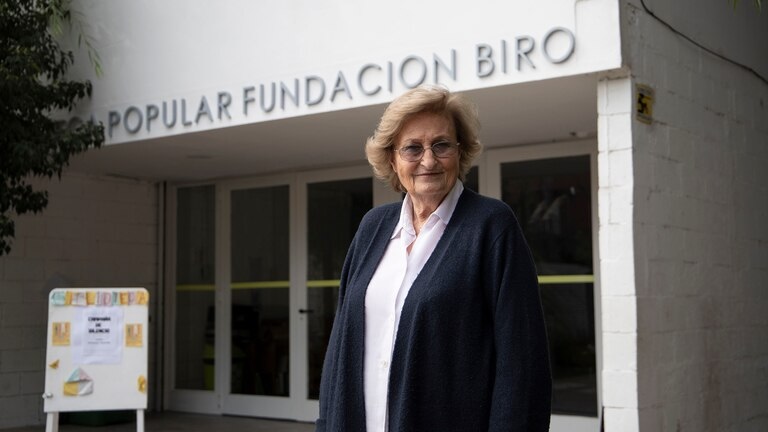
Following the Ambassador’s remarks, a message from Ms. Mariana Bíró, daughter of the renowned inventor, was shared. She warmly congratulated the awardee and expressed her regret at not being able to join the ceremony in Budapest on this occasion. She emphasized the importance of cultural exchange between the two countries. Ms. Bíró also spoke about her commitment to preserving her father’s legacy through the Escuela del Sol Foundation, which she established in 1966, and highlighted the value of presenting his father’s creative work in an engaging, experience-based way – one that can inspire and reach the inventors of tomorrow.
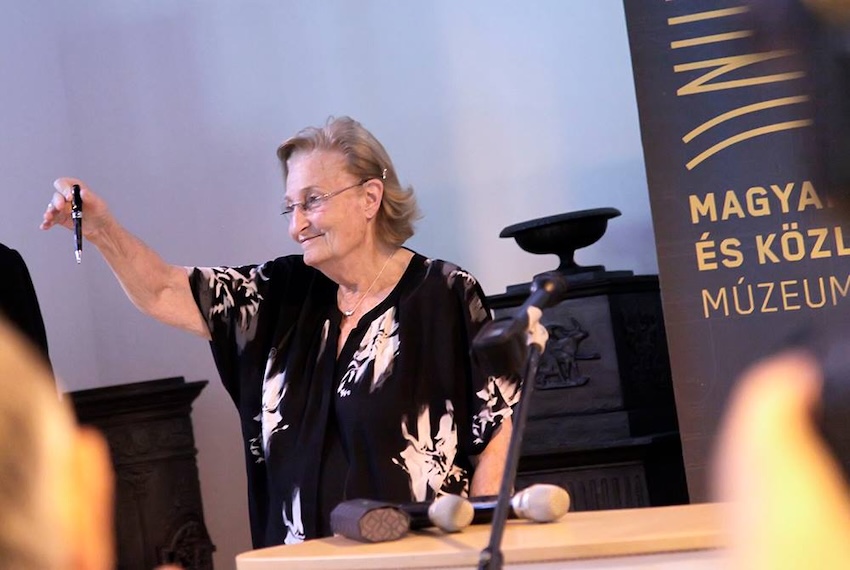
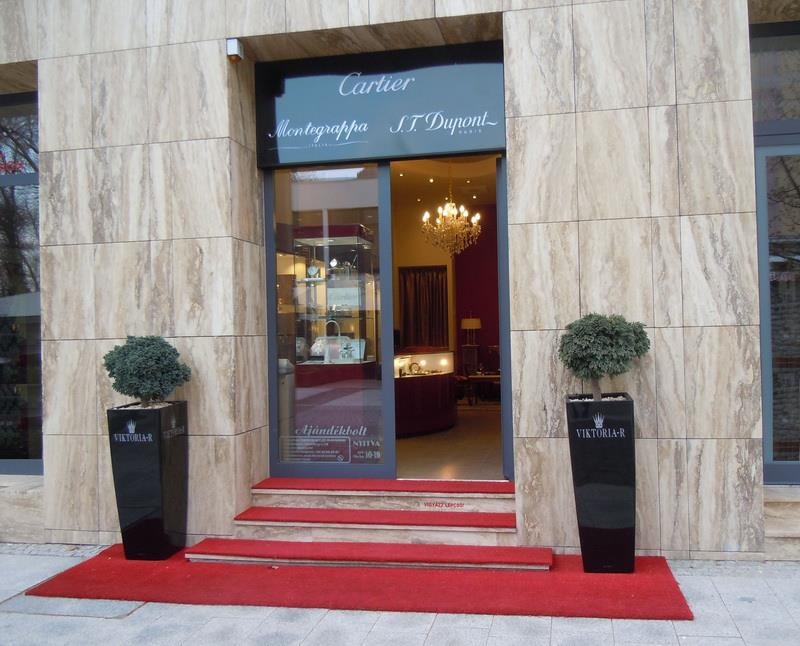
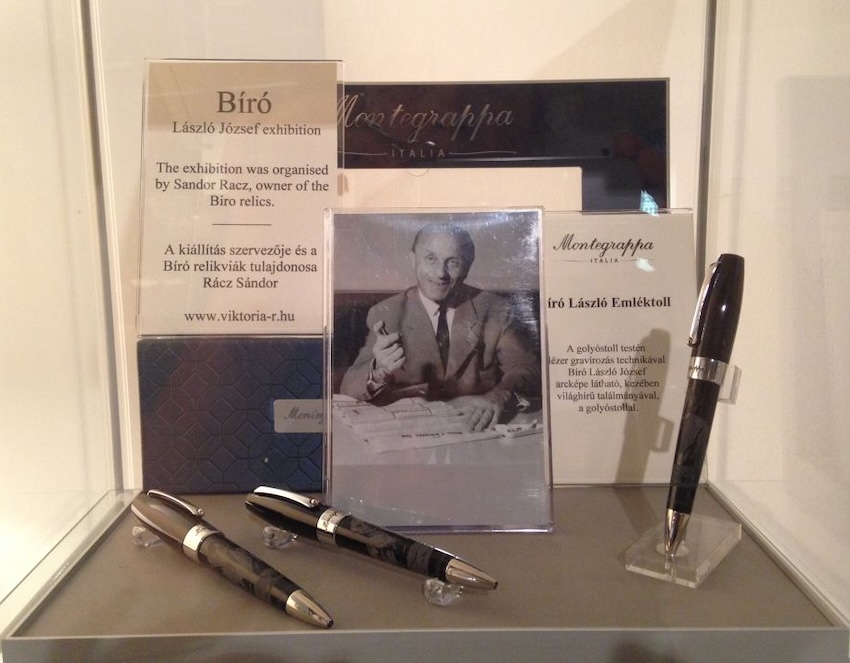
The ceremony continued with words of praise from Mr. Sándor Rácz, President of the Foundation for Hungarian Innovation and owner of the VIKTORIA-R company, who presented Ms. Demján with a specially created László József Bíró Memorial Pen.
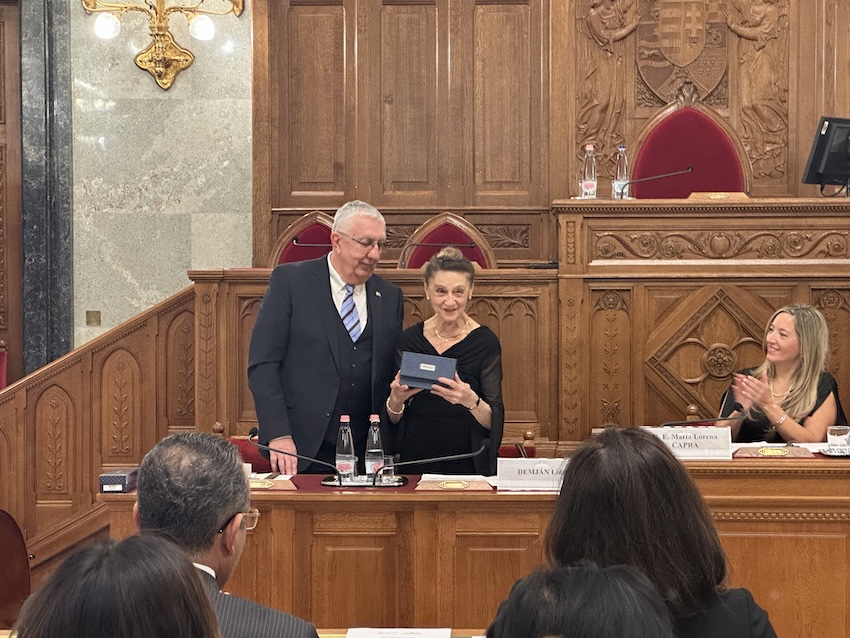
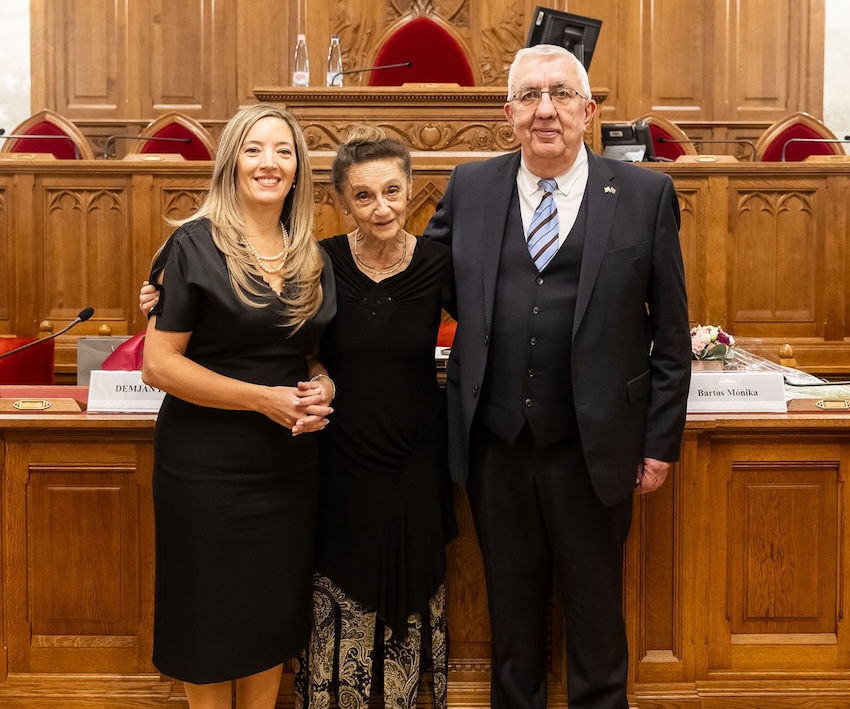
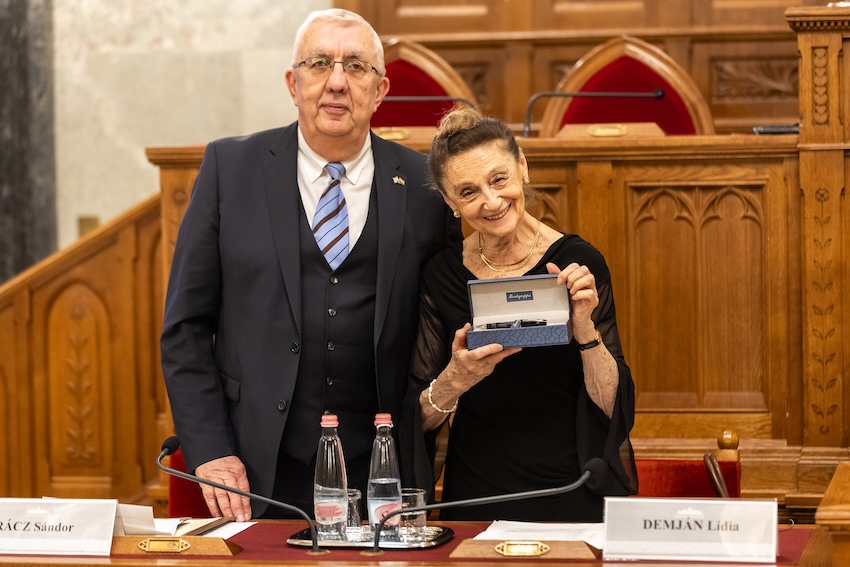
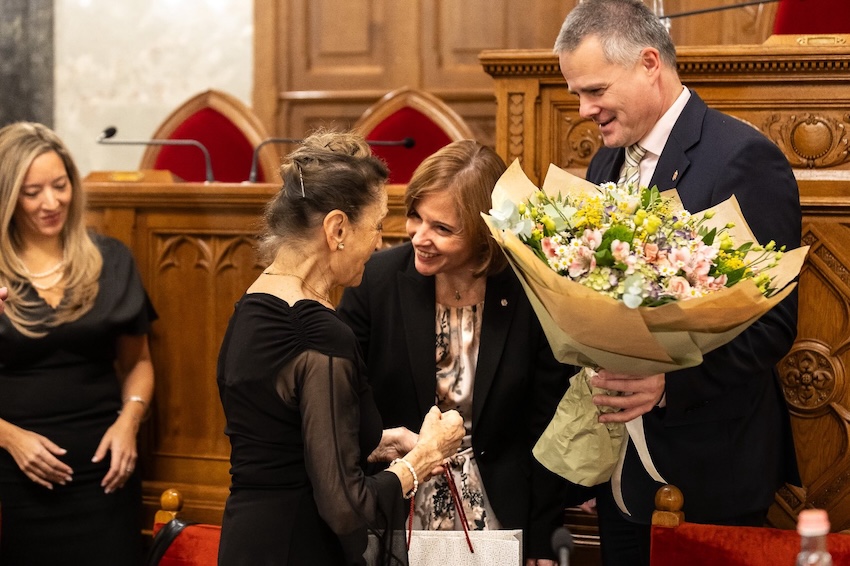
Following this, Ms. Mónika Bartos, President of the Hungary–Latin America Friendship Group, and Mr. László Salacz, President of the Hungary–Argentina Friendship Group, presented gifts and flowers.
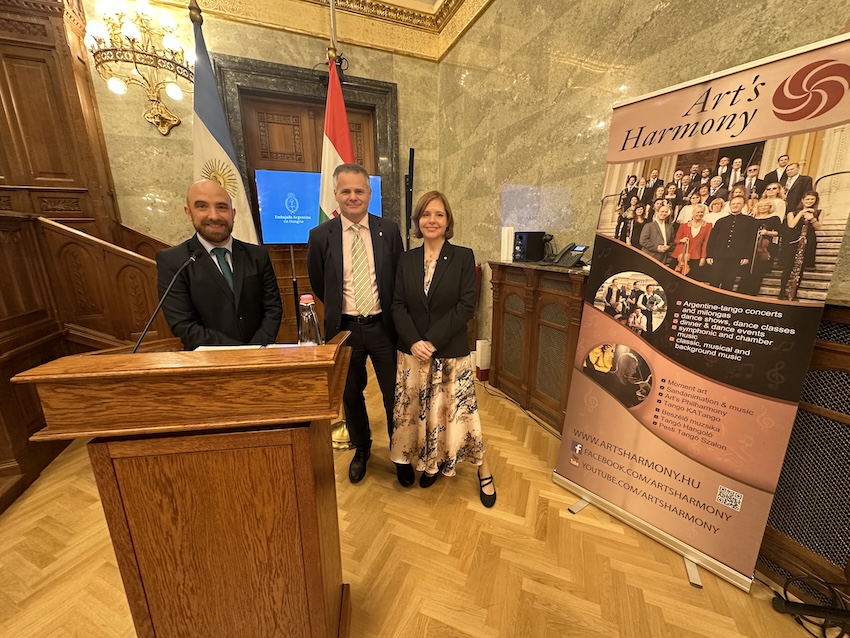
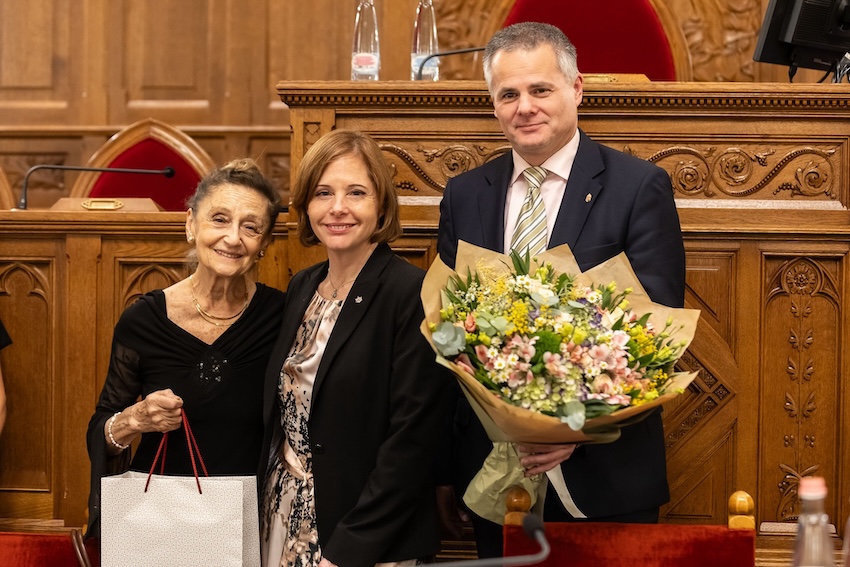
Ms. Lídia Demján then addressed the audience in a heartfelt, deeply emotional speech, offering moving words of gratitude as she thanked those who supported the initiative and reflected on what the moment – and the high recognition from Argentina presented in this setting, surrounded by her loved ones – meant to her. She also spoke about her passion for tango and remembered her husband, who had encouraged her to take up tango and who would now be very proud of her.
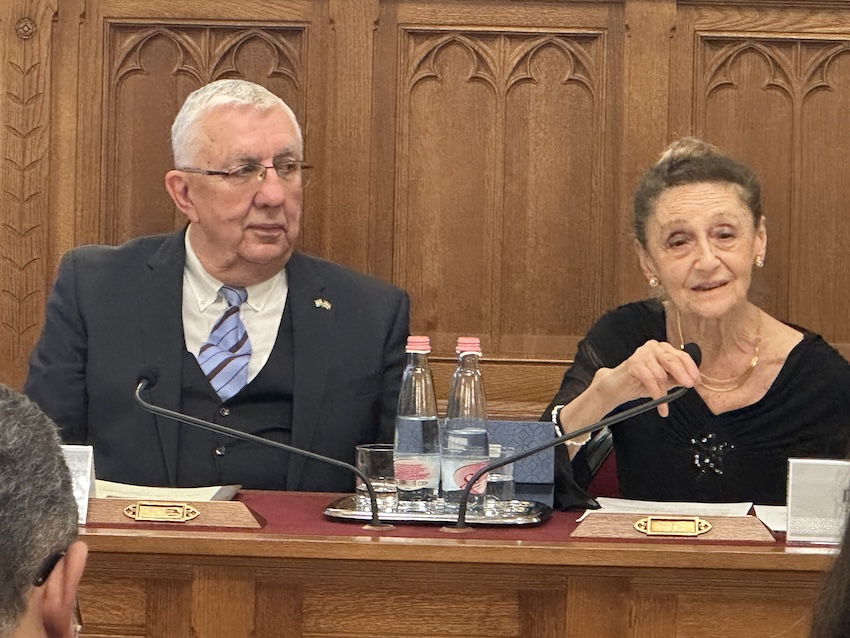
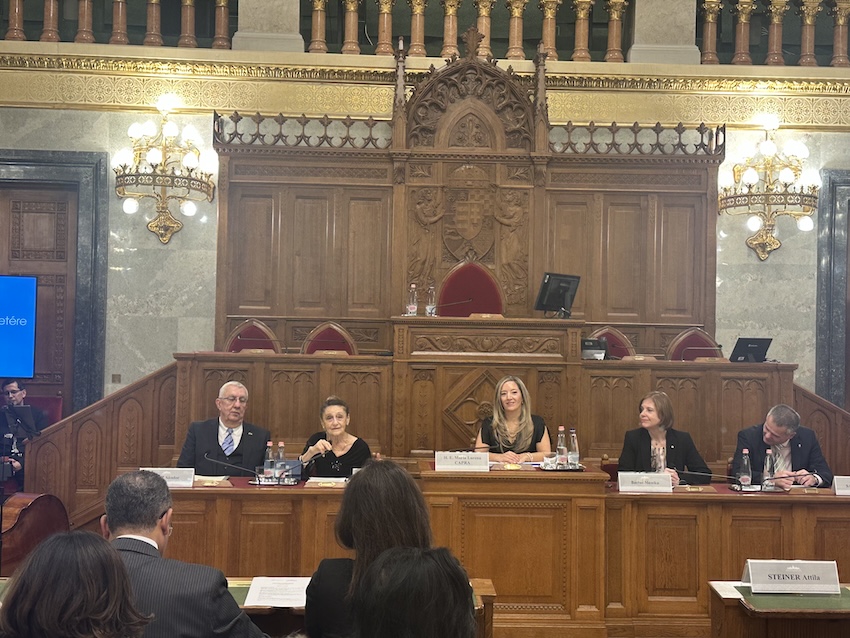
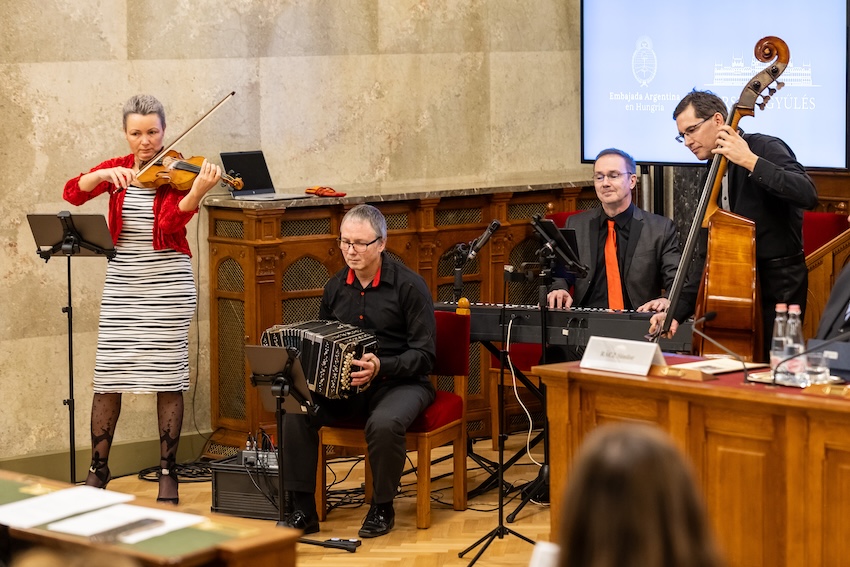
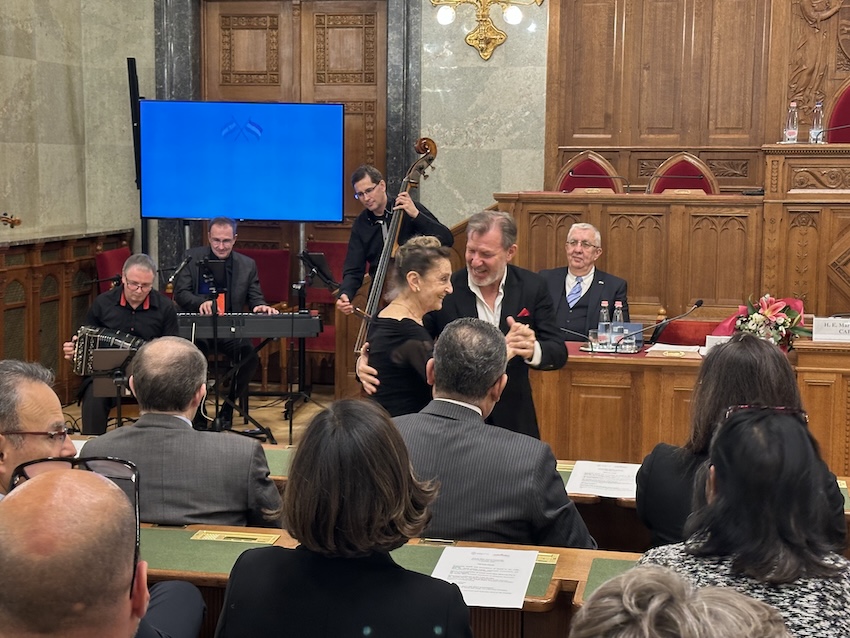
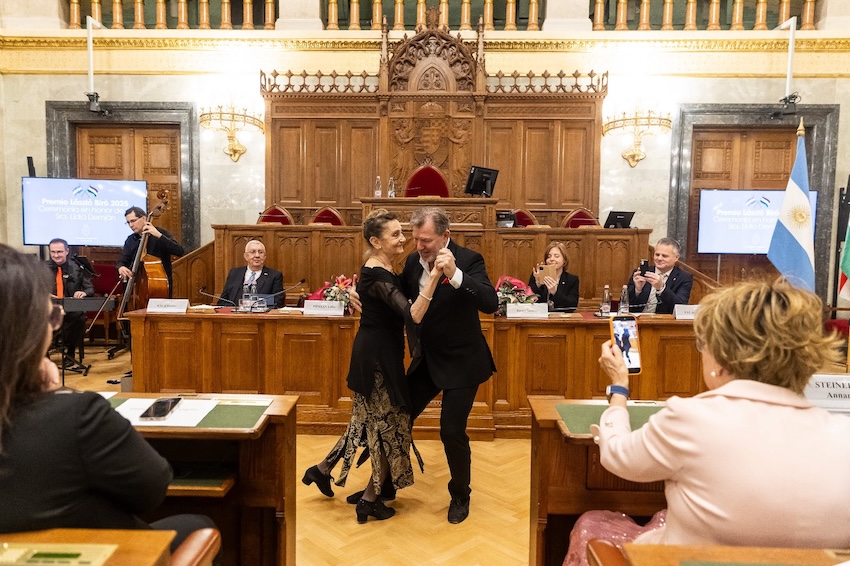
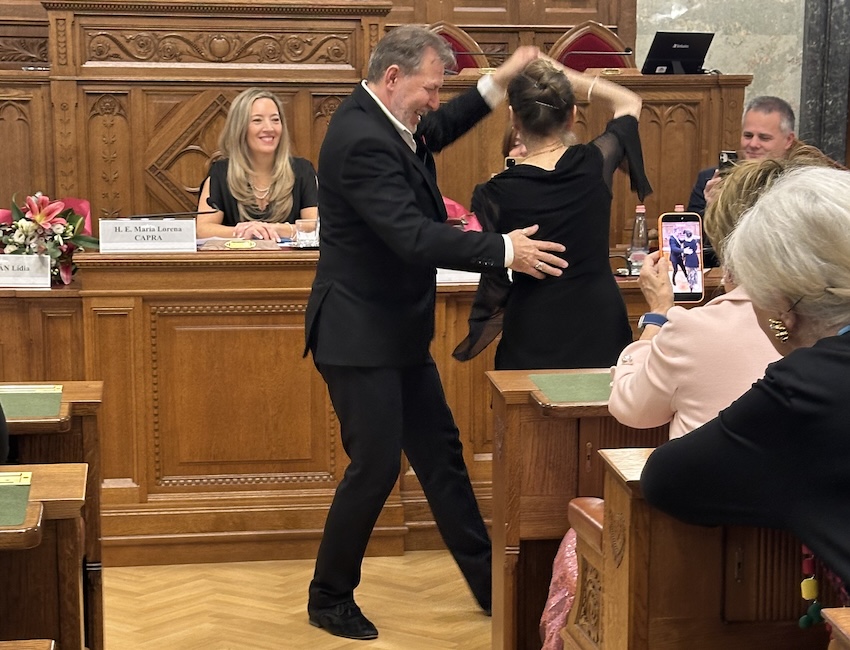
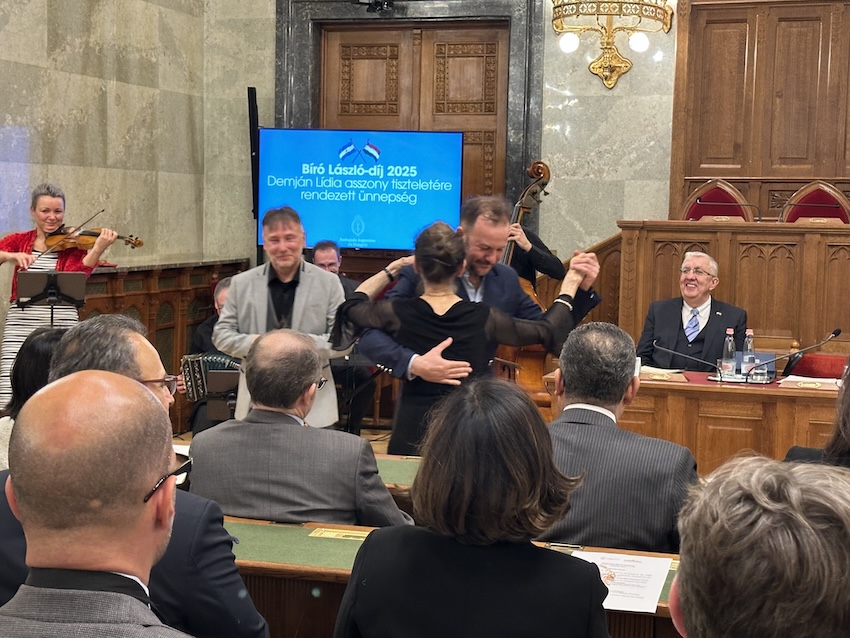
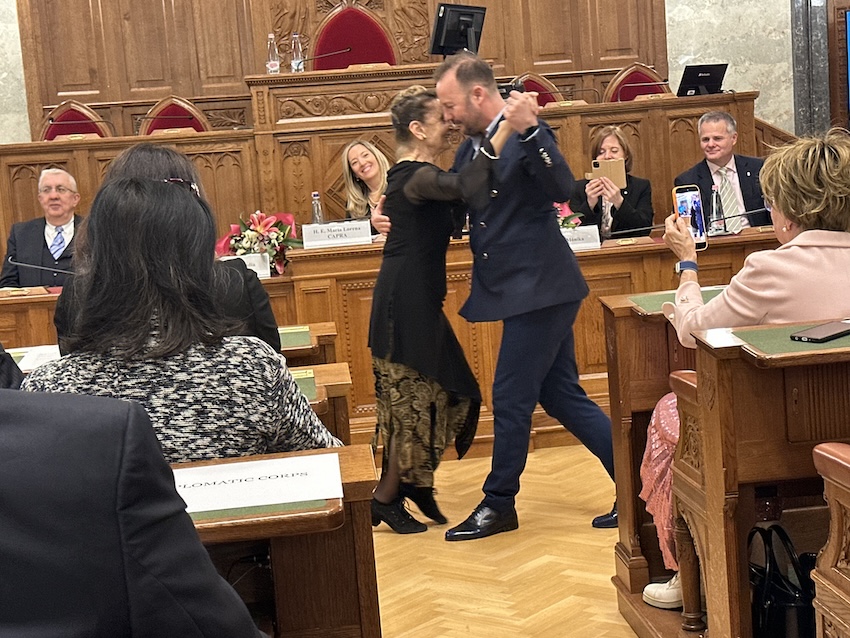
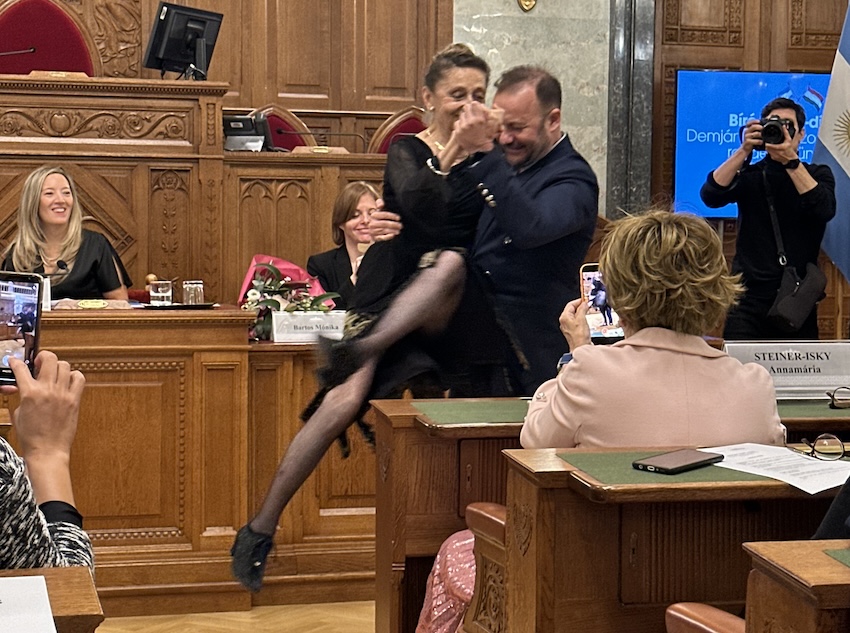
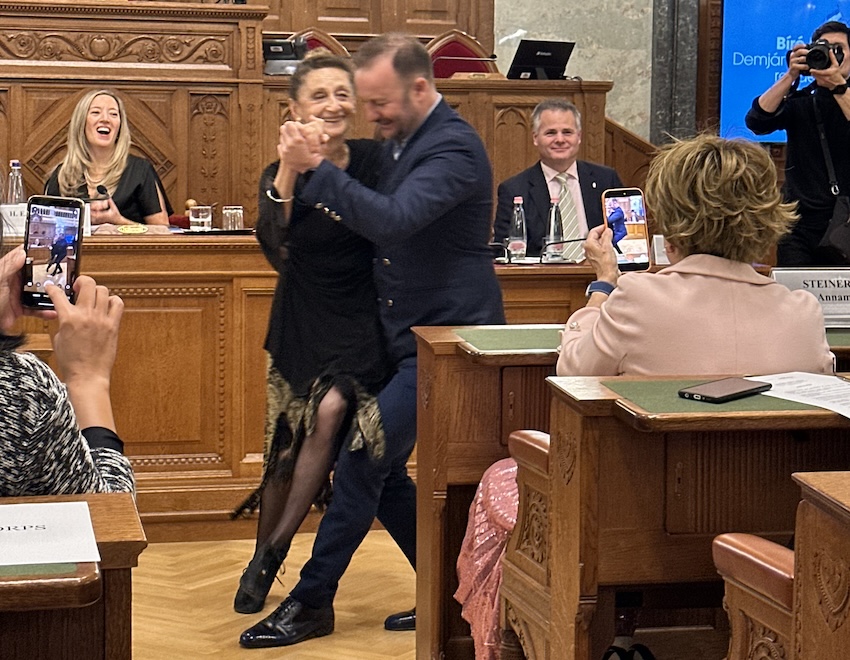
The artistic program transformed the Parliament into a unique and vibrant space. Maestra Katalin Bartha and the Tango Art Harmony Orchestra filled the hall with tango music, while László Budai and Maja Hegyi delivered an emotional performance.
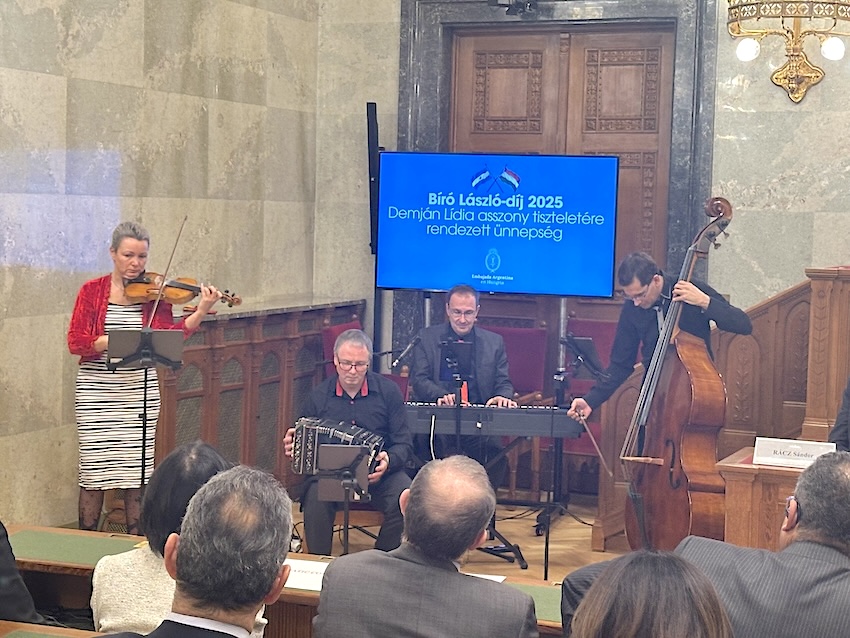
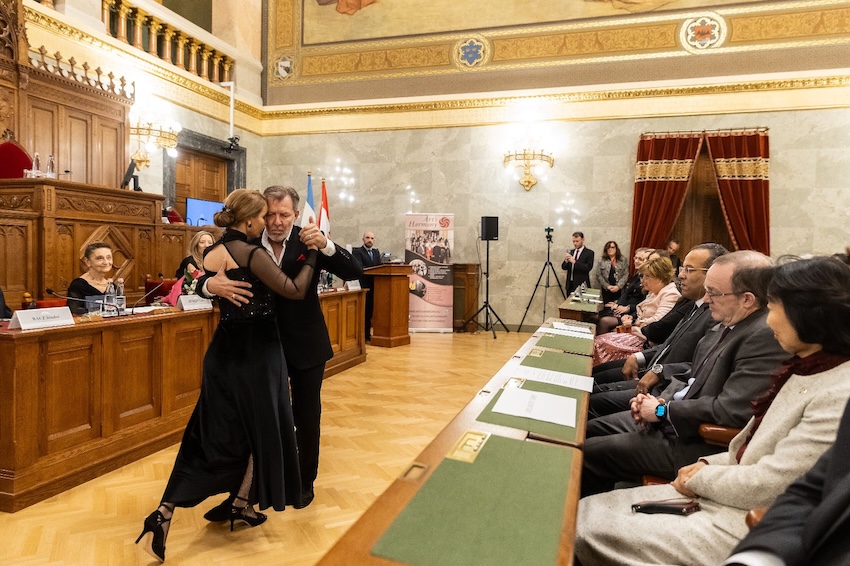
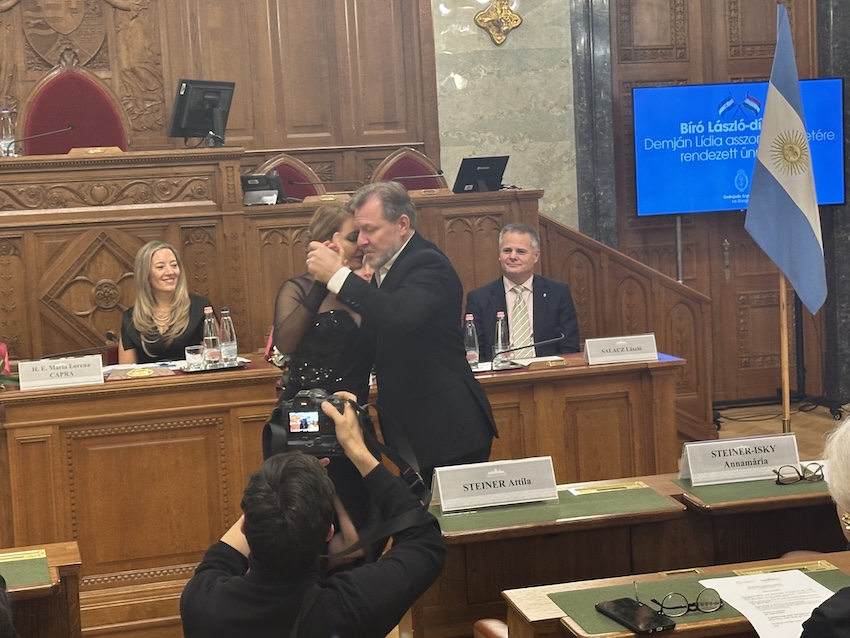
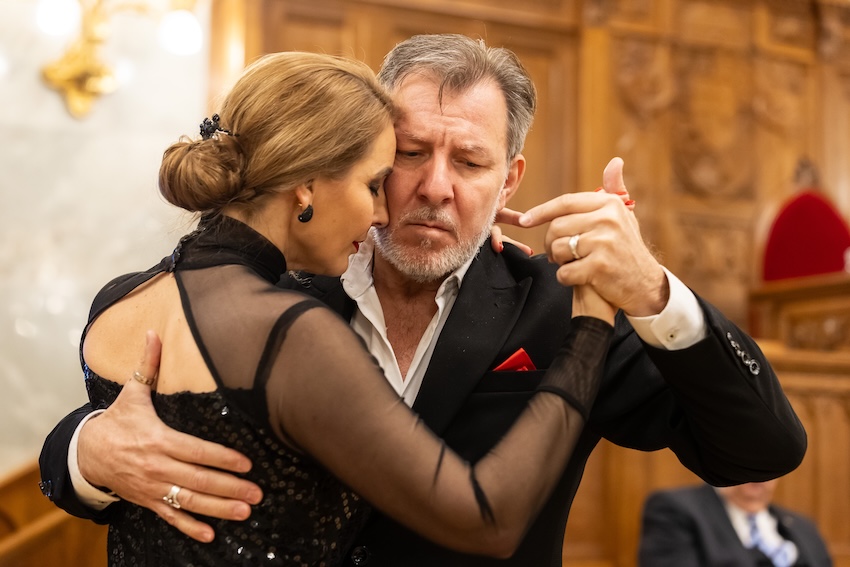
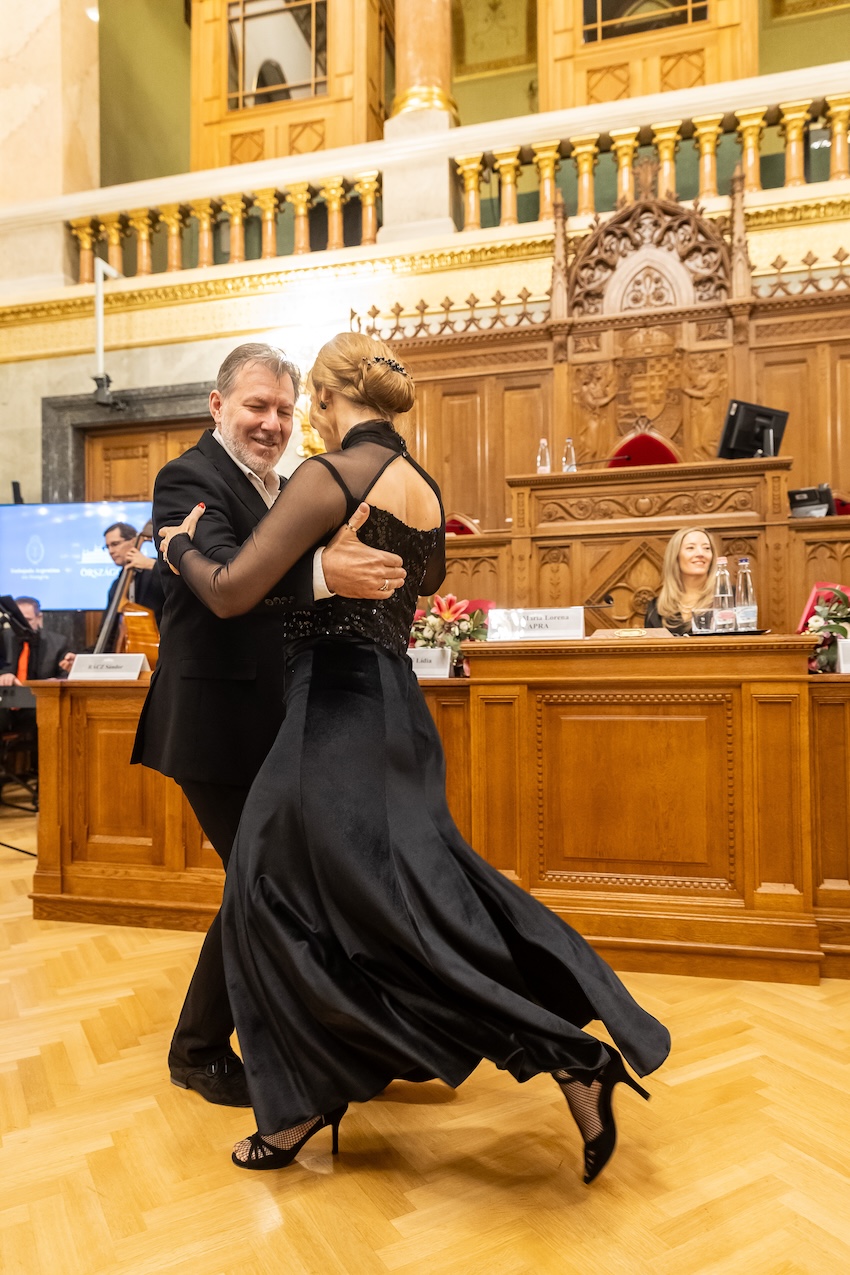
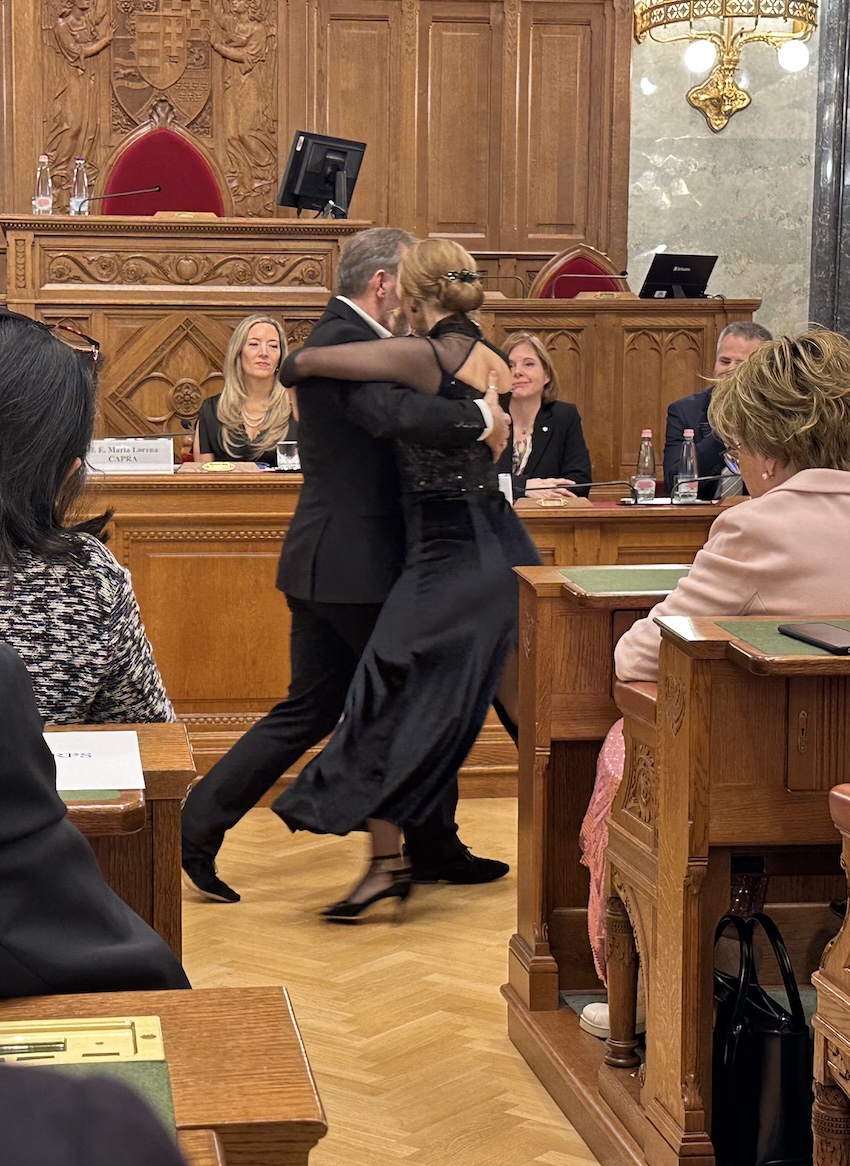
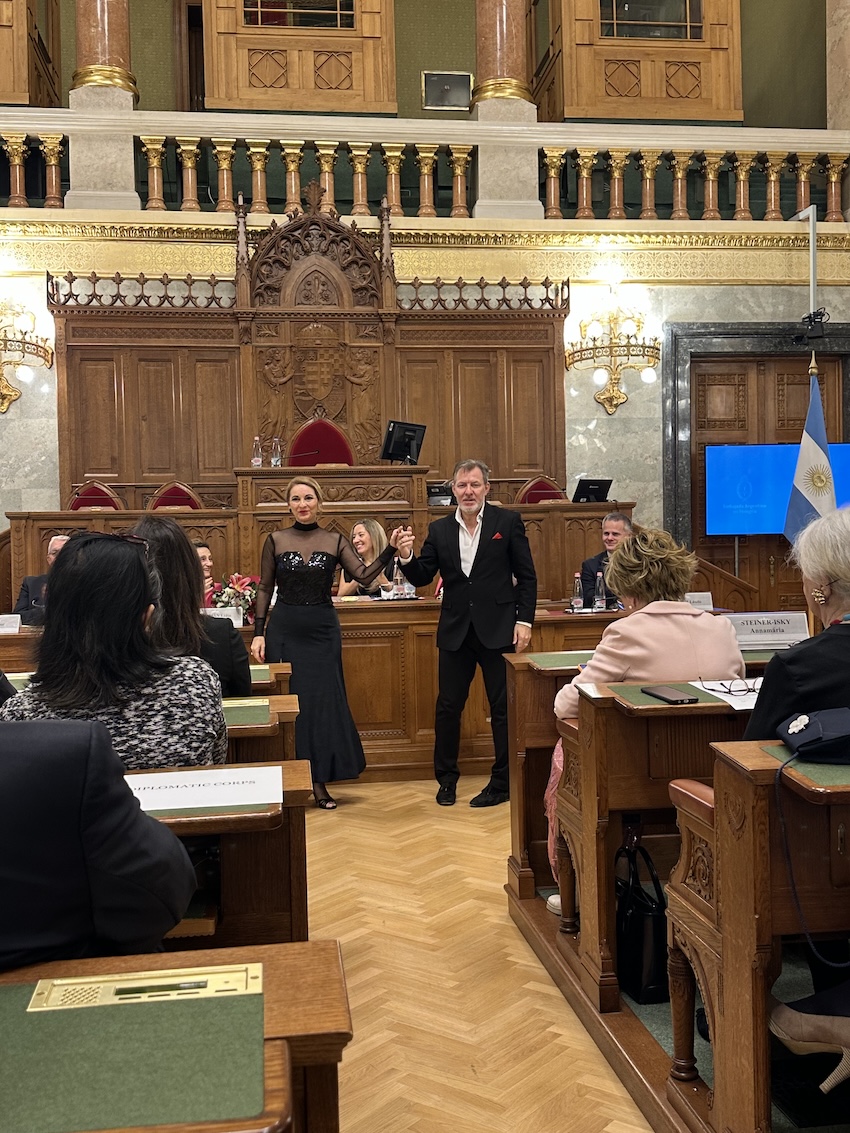
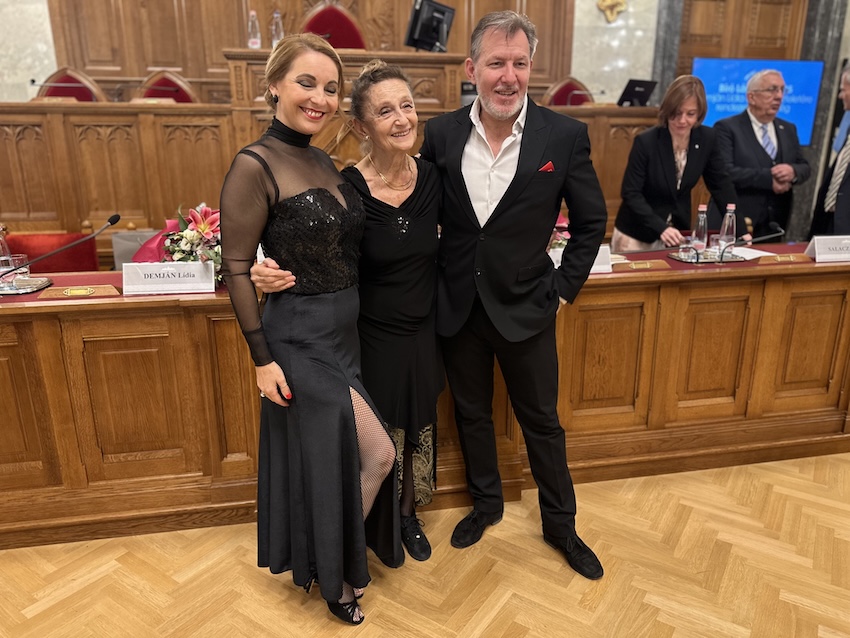
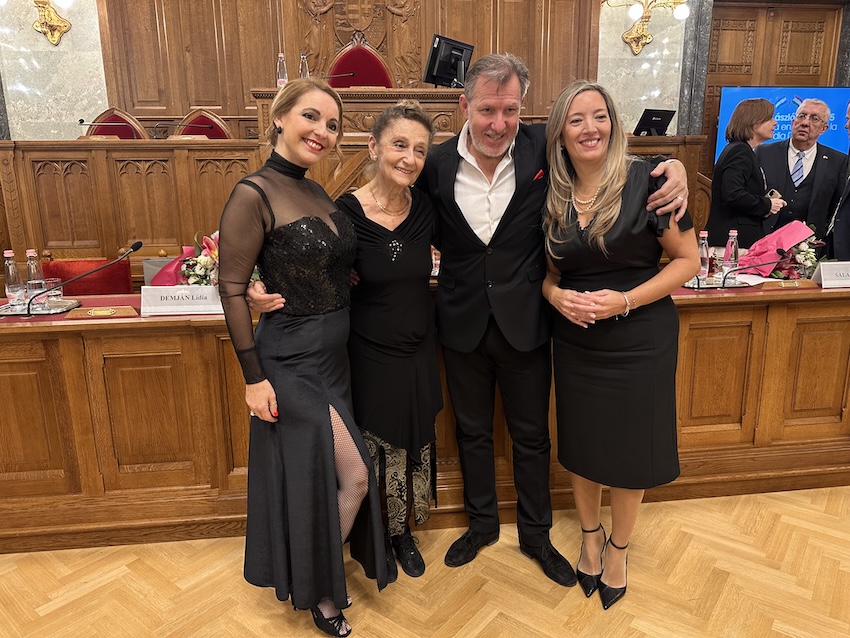
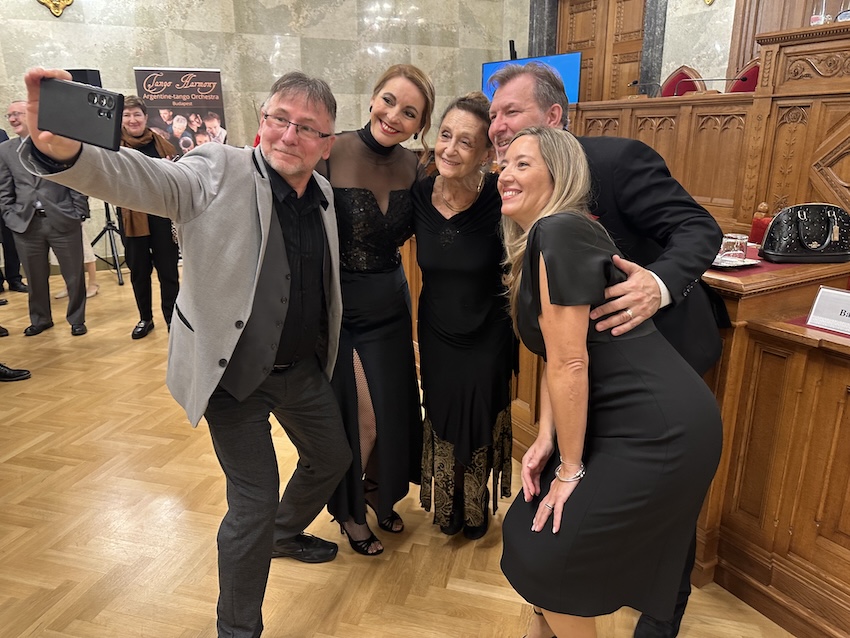
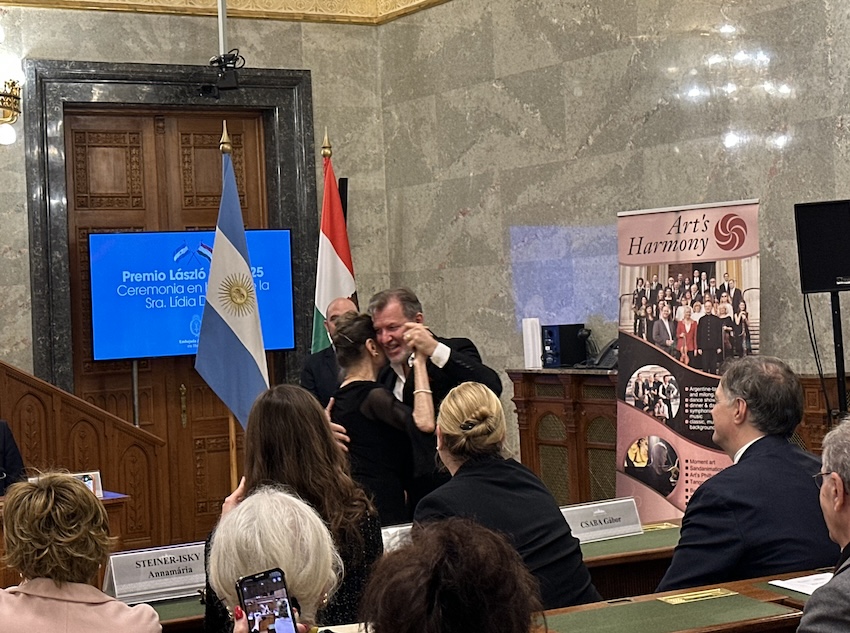
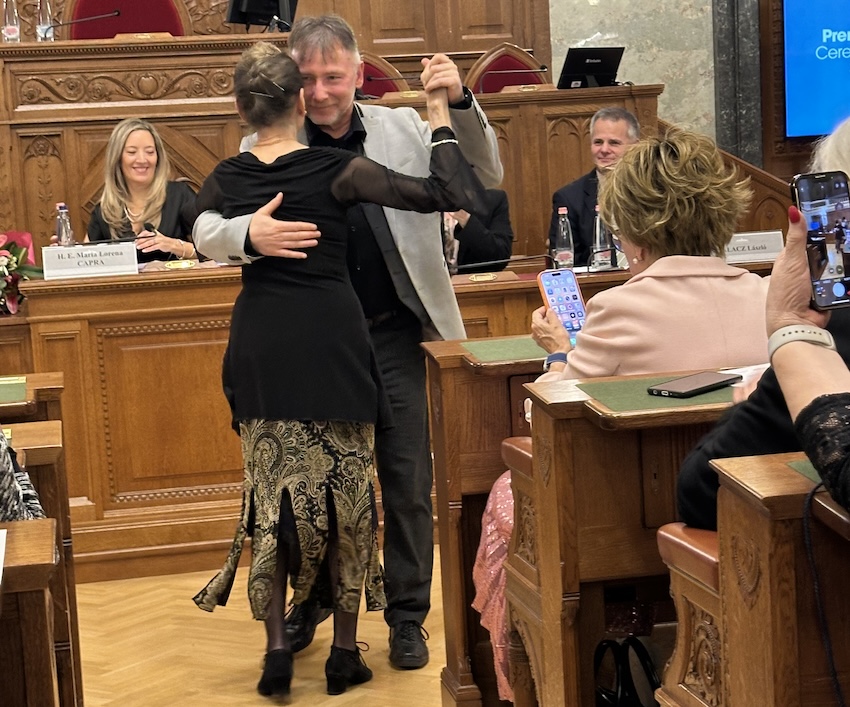
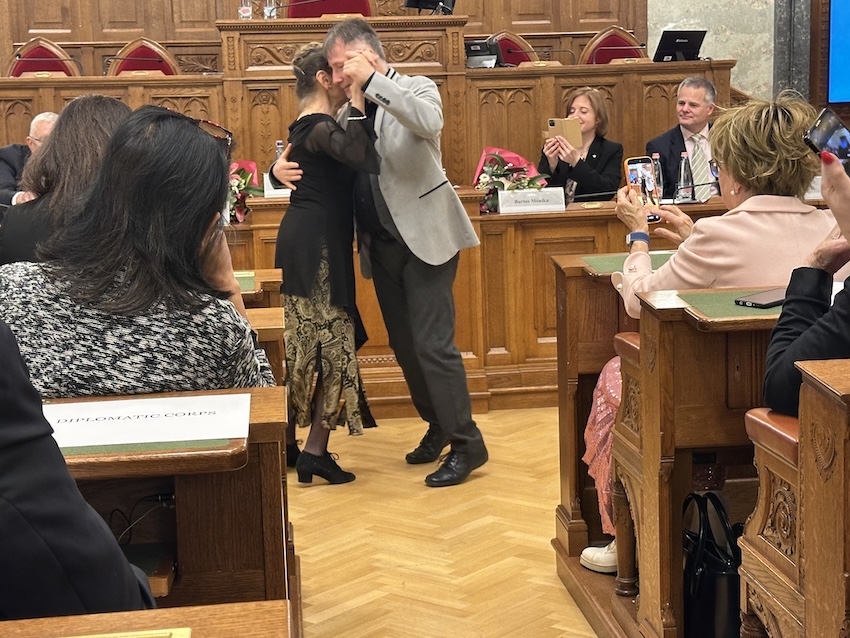
In a spontaneous and symbolic moment, the dancers invited Lídia herself to dance tango, to the delight of the audience.
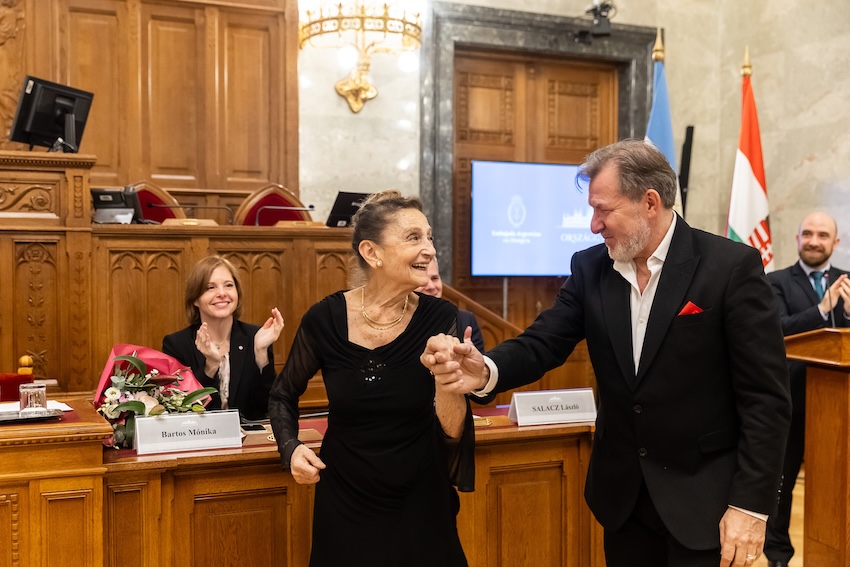
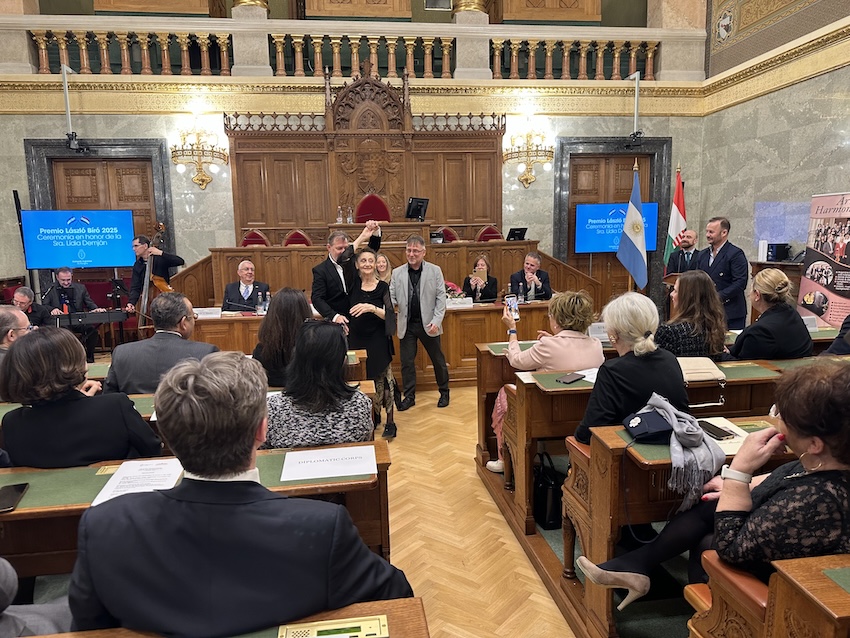
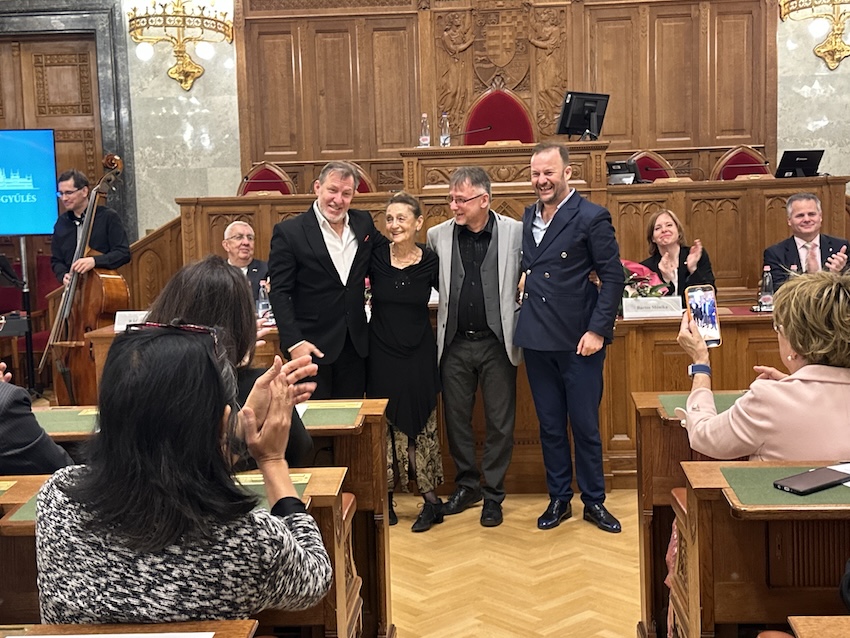
Afterwards, a reception featuring Argentine wines and appetizers was held in the Gobelin Hall. A particularly touching moment came when Lídia’s grandson spoke about his grandmother with love, pride, and admiration.
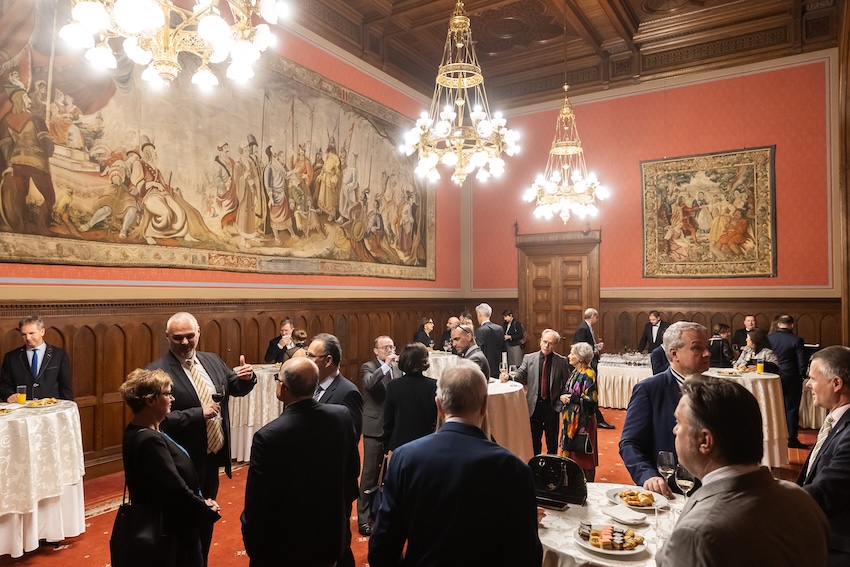
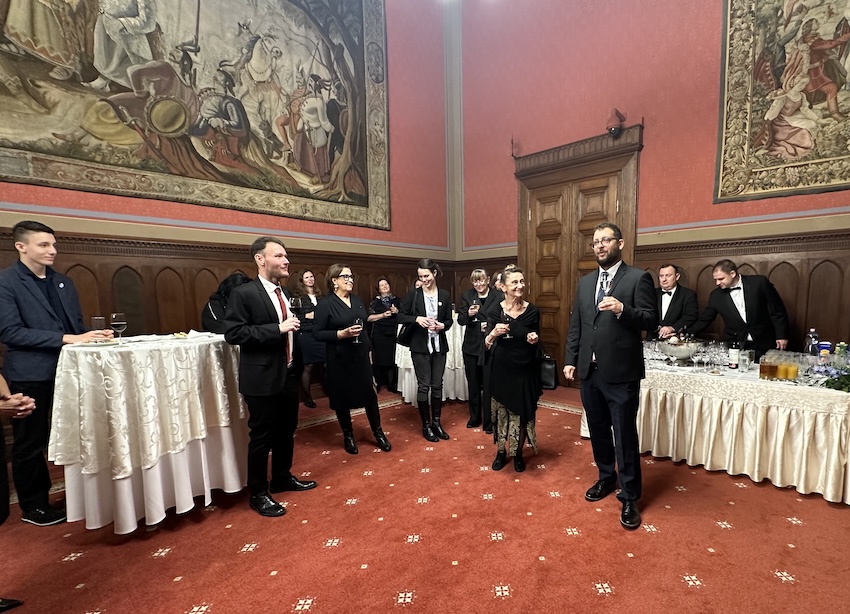
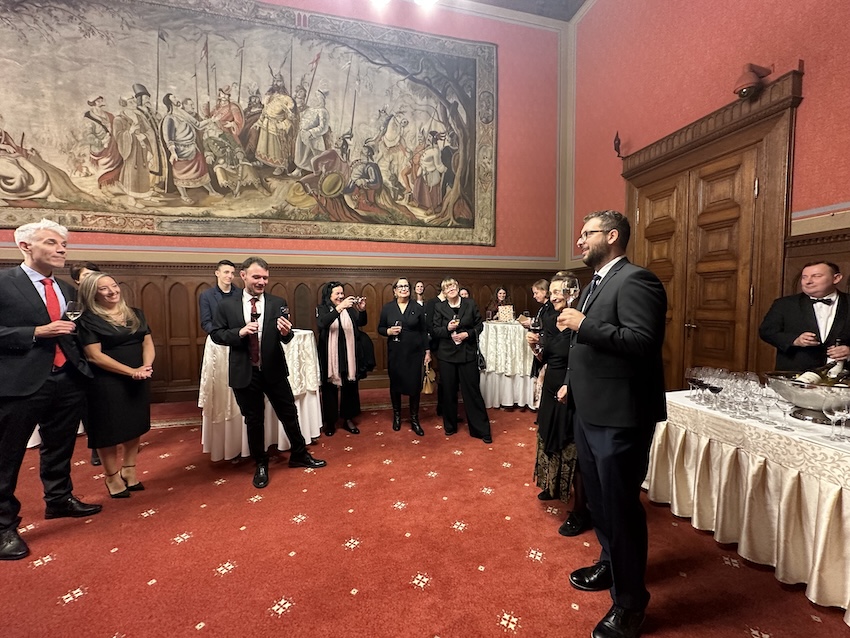
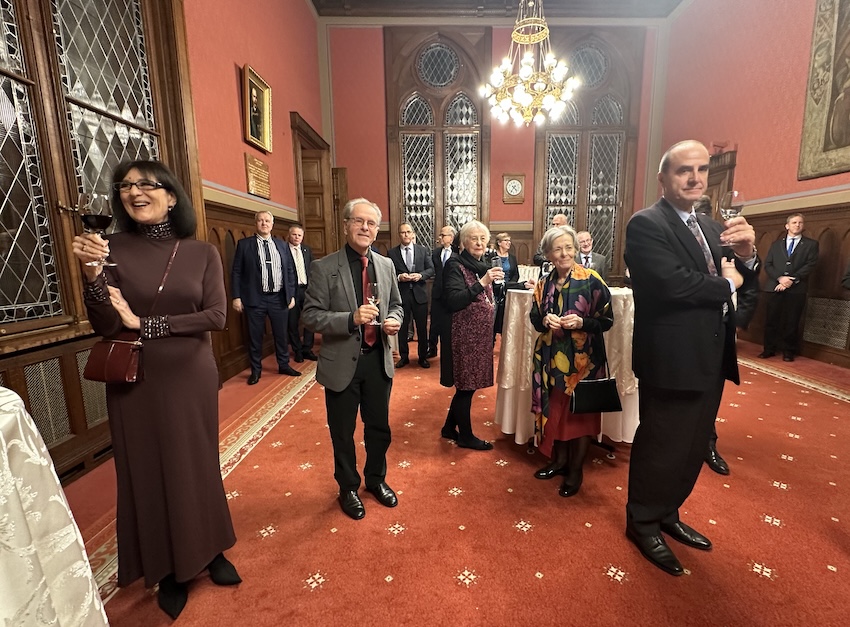
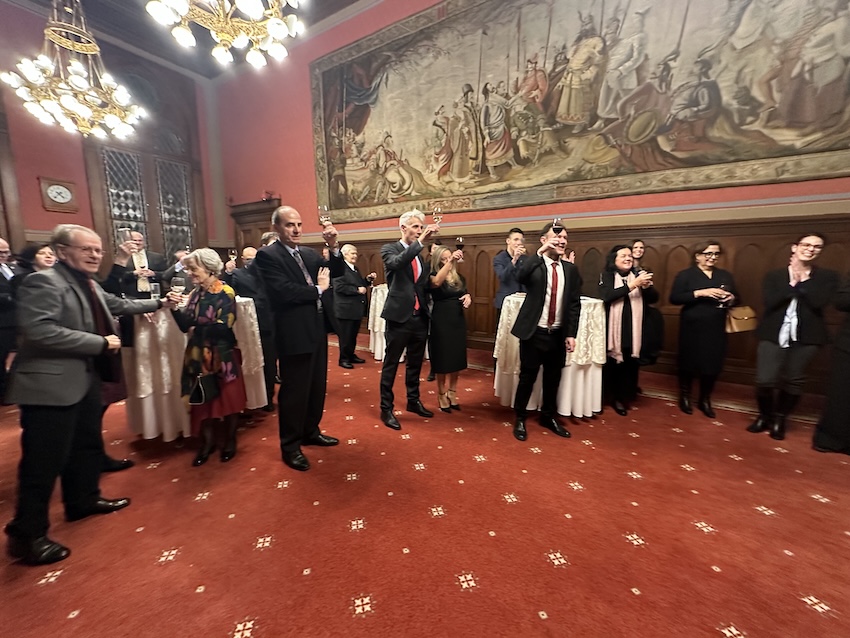
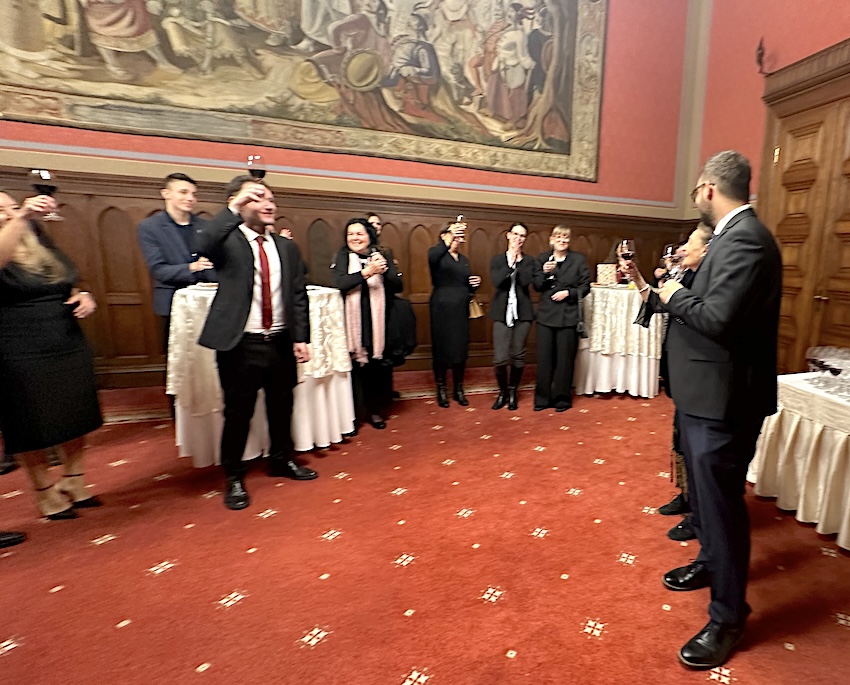
For many guests, the afternoon felt as if Buenos Aires had briefly arrived in Budapest. Tango music, dance, and joy resonated within the magnificent walls of the Parliament, and the Delegation Hall was transformed into a true milonga. The ceremony honoured not only the memory of László Bíró and his family, but also the living cultural bridge embodied by Ms. Lídia Demján, whose passion continues to unite Argentines and Hungarians through the universal language of embrace.
The Man Behind the Pen: László Bíró’s Journey from Hungary to Argentina
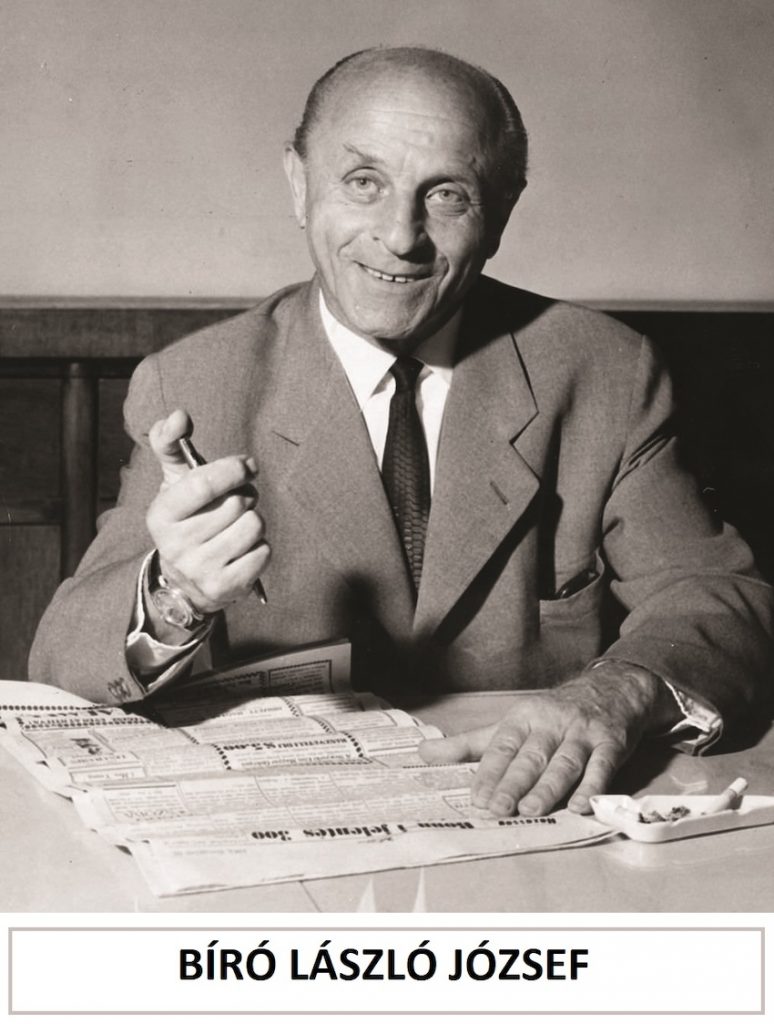
Few inventions have shaped everyday human life as profoundly as the ballpoint pen, an object that fundamentally changed the act of writing worldwide. Behind this modest yet universal instrument stood László József Bíró – known in Argentina as Ladislao José Biro – a Hungarian-born inventor and polymath whose creativity forged a lasting intellectual and cultural bridge between Hungary and Argentina.
Bíró was born on 29 September 1899, in Budapest into a Jewish family originally named Schweiger, which was changed to Bíró in 1905. From an early age, he displayed extraordinary intellectual versatility. He began his studies at the Hungarian Royal Grammar School on Markó Street in Budapest’s 5th District, where one of his classmates was Dénes Gábor, the future Nobel Prize–winning inventor of holography.
Throughout his life, Bíró pursued a wide range of interests and professions. He studied medicine, worked as a journalist, and distinguished himself as a painter and sculptor. He was also an accomplished race-car driver, famously piloting a red twelve-cylinder Bugatti. This rare combination of artistic sensibility, technical insight, and boundless curiosity defined his inventive spirit.
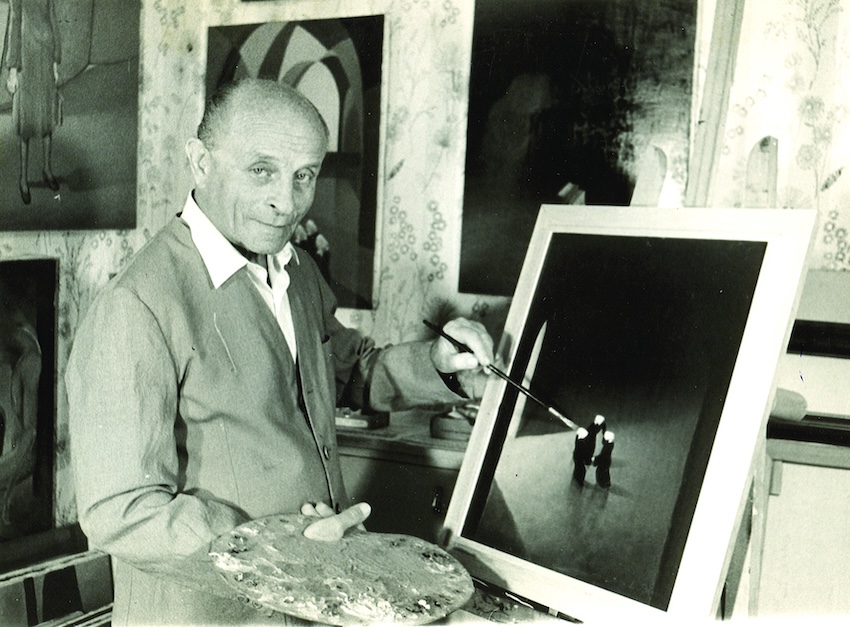
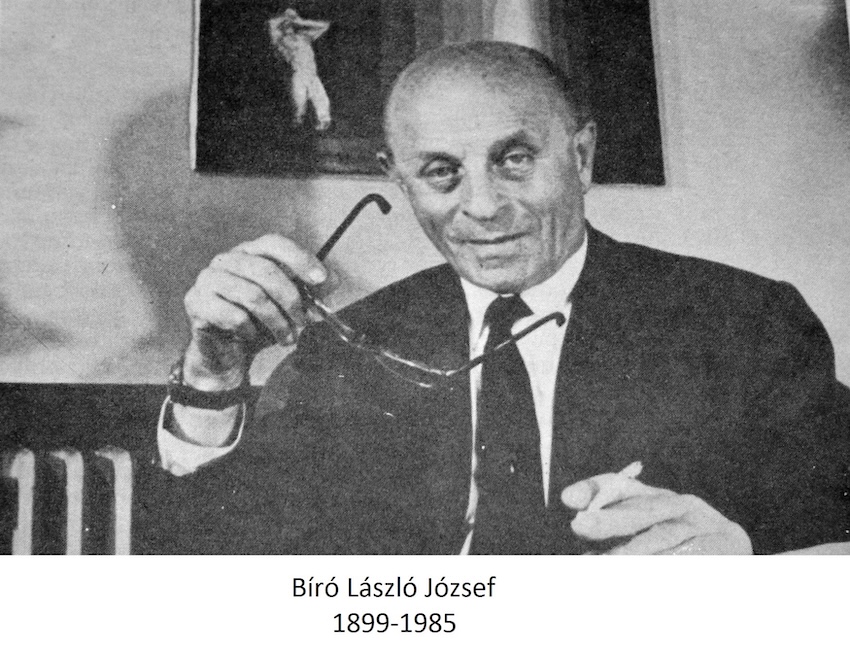
However, it was his work as a journalist that led to his most consequential insight. Fountain pens of the era were notoriously unreliable: their ink dried slowly, smudged easily, and frequently malfunctioned. Bíró’s inspiration emerged from an unexpected synthesis: he observed the fast-drying ink of printing presses and saw children rolling marbles through puddles, leaving even, controlled marks.
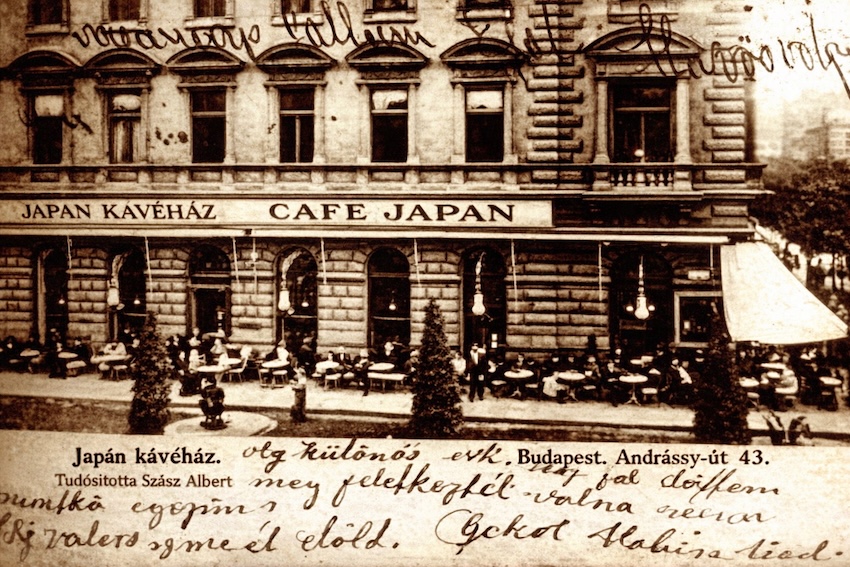
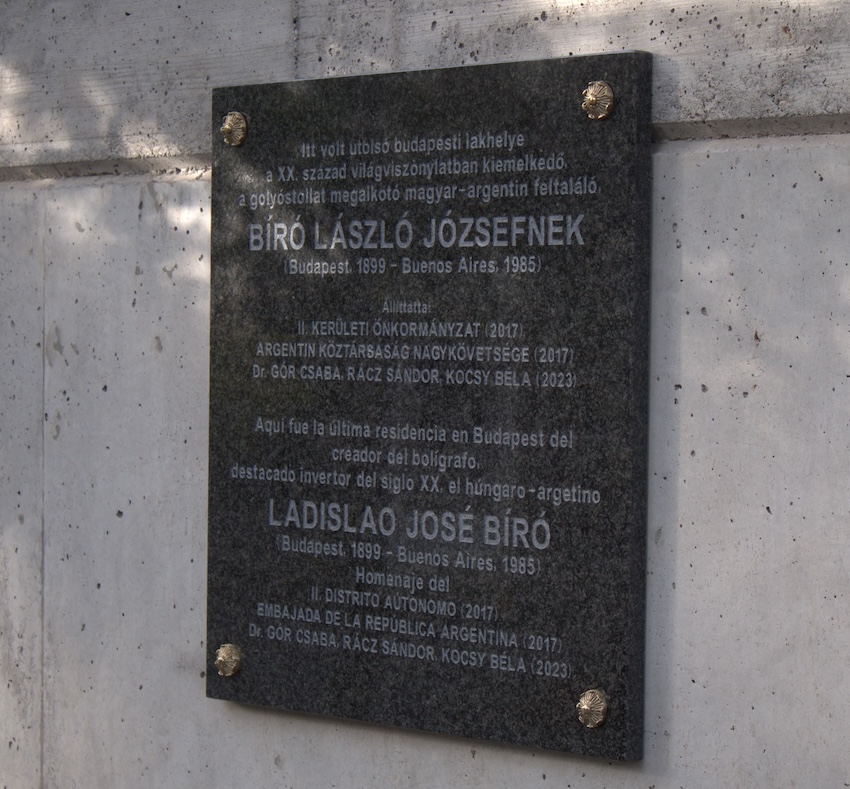
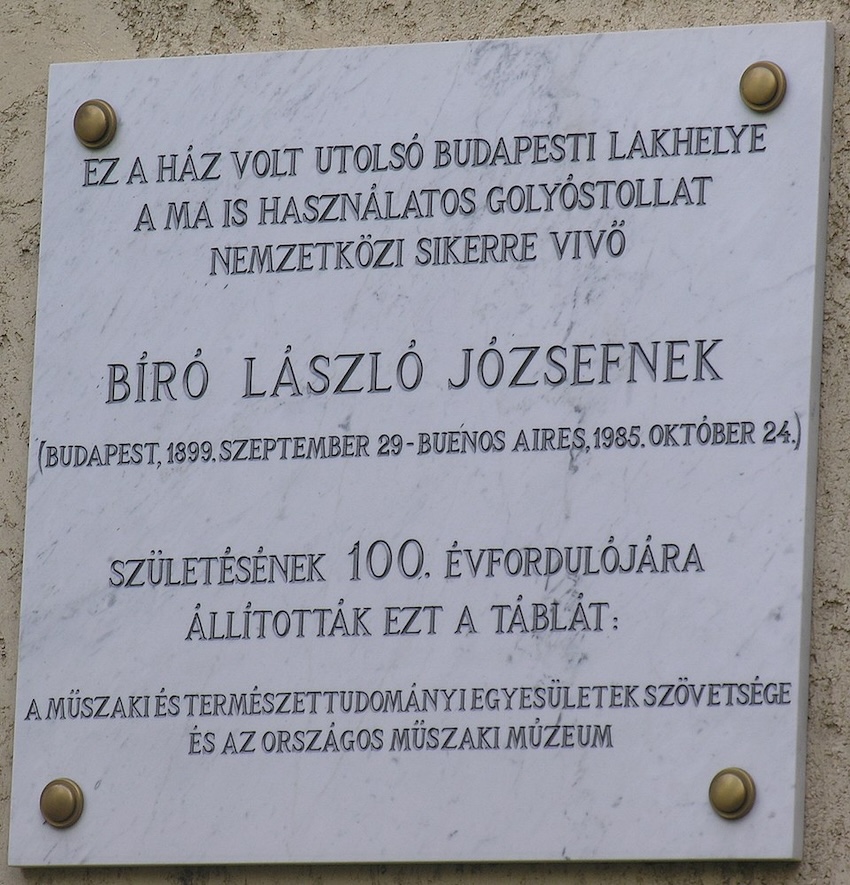
The decisive breakthrough came in 1936 in Budapest, at the legendary Japan Café, a renowned centre of the city’s vibrant intellectual life. The café, a regular gathering place for the greatest writers and artists along Andrássy Avenue – now home to the Írók Boltja bookstore – was frequented by Bíró alongside Hungarian intellectuals who would later gain international fame. Reflecting on his earlier faulty pens, Bíró realized that a writing instrument could be designed according to the same mechanical principle as a printing press.
Together with his older brother George Bíró, a dentist, chemist, and amateur inventor, he developed a revolutionary pen that used a tiny rolling ball to distribute ink evenly and reliably. In May 1938, after the enactment of Hungary’s First Anti-Jewish Law, Bíró lost his job as a journalist and fled to Paris, where he patented the first modern ballpoint pen. Faced with the growing threat of Nazism, Bíró – of Jewish origin – was forced to leave Europe entirely.
His escape in 1940 was made possible by the decisive assistance of Agustín P. Justo, former President of Argentina, whom Bíró had met by chance two years earlier in Slovenia, who was impressed by Bíró’s invention – an encounter that would later prove lifesaving. After several weeks of waiting in Barcelona, Bíró, his wife Elsa, and their 8-year-old daughter Mariana boarded the ship Ciudad de Sevilla bound for Argentina. According to Bíró’s own account, the captain was anxious, having never before navigated a ship across the Atlantic Ocean.
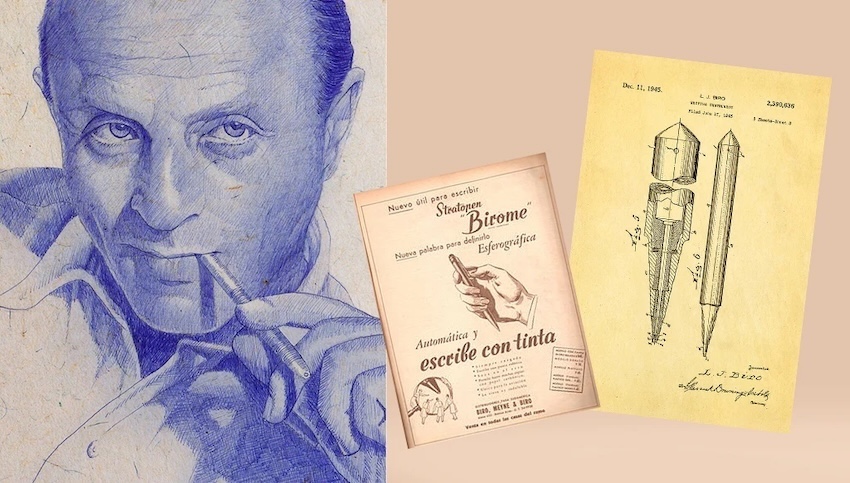
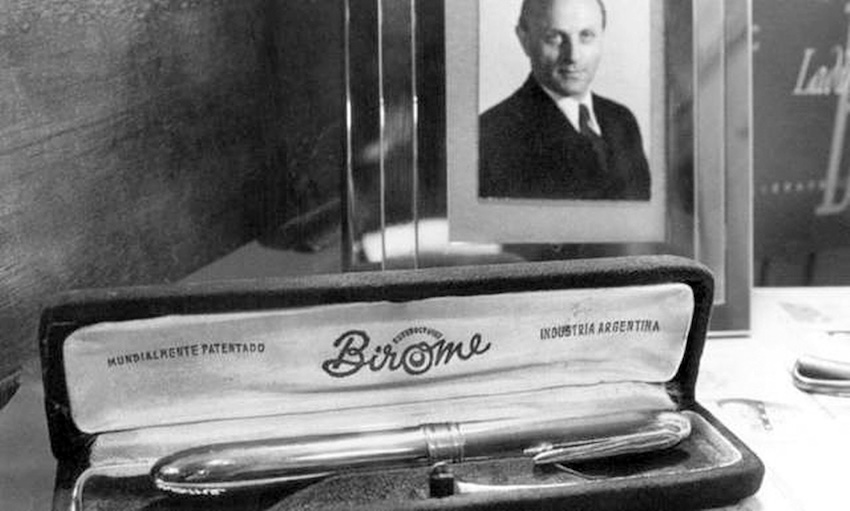
Upon arriving in Buenos Aires, the 40-year-old Bíró became an Argentine citizen and reshaped not only his career but also his identity, adopting the name Ladislao José Bíró. Argentina proved fertile ground for his genius. With the support of local investors and the Argentine government, he successfully patented and manufactured his pen. In 1943, the patented ballpoint pen went into mass production and was distributed worldwide. During World War II, the British Royal Air Force adopted the ballpoint pen because – unlike fountain pens whose ink leaked under pressure – it functioned reliably even at high altitudes.
In Argentina, the pen became known as the “Birome”, a linguistic tribute still used in everyday speech. Internationally, the writing instrument is often referred to as the Biro pen, Biron, or Birome, though millions of users are unaware that “Bíró” is the name of a Hungarian inventor. Ironically, in Hungary, the pen is known simply as the golyóstoll – the ballpoint pen – without bearing its inventor’s name.
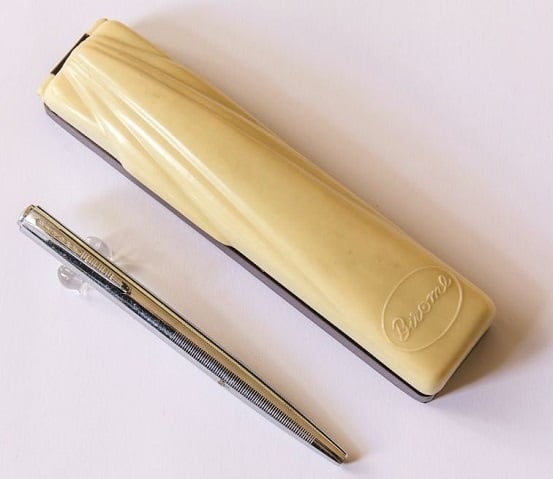
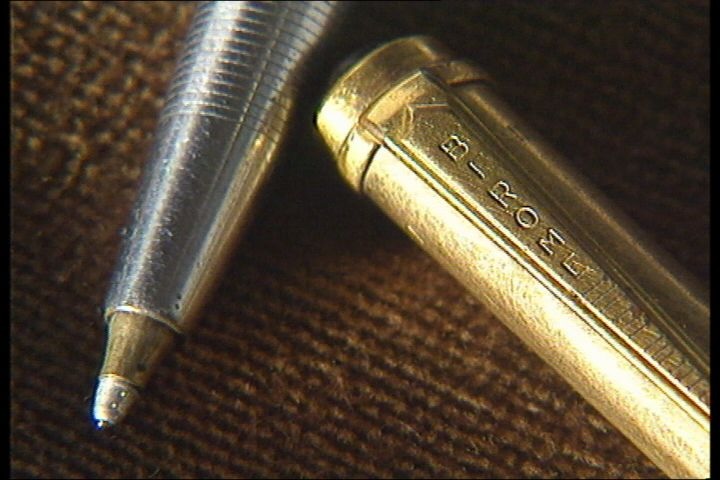
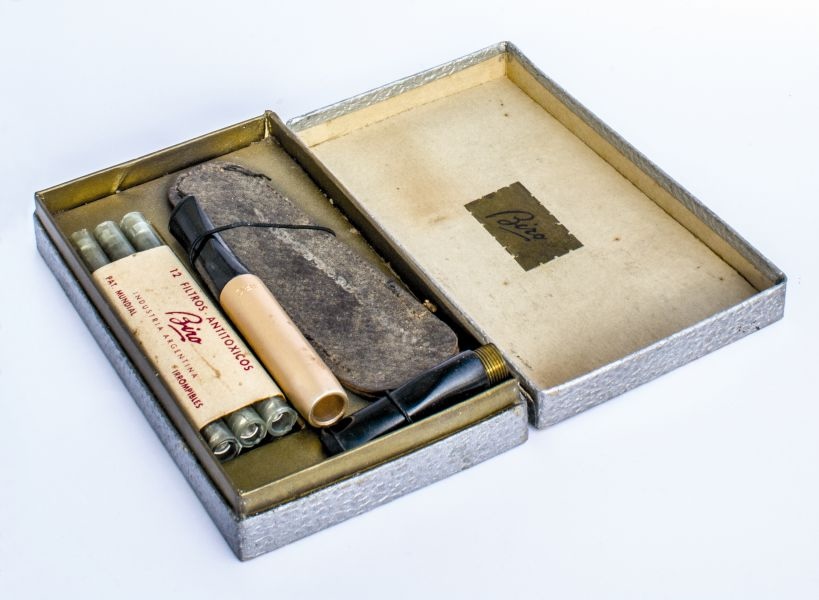
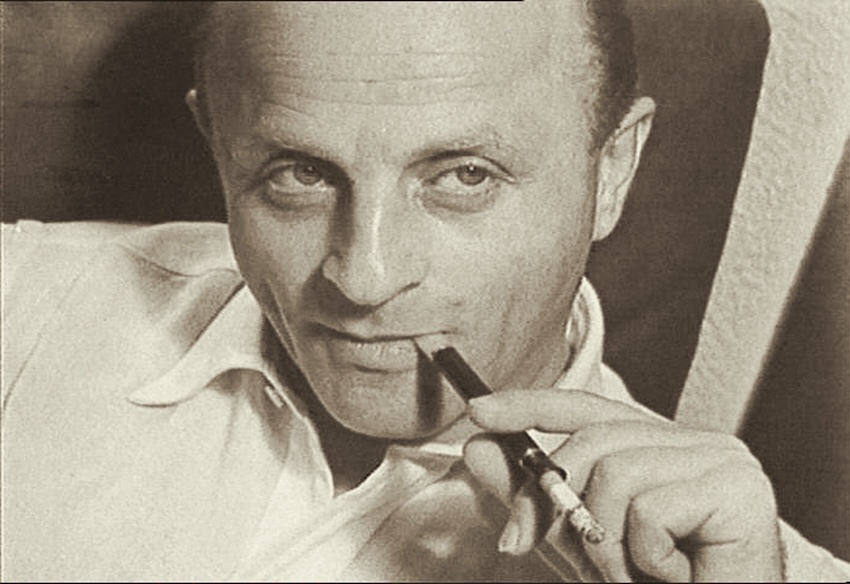
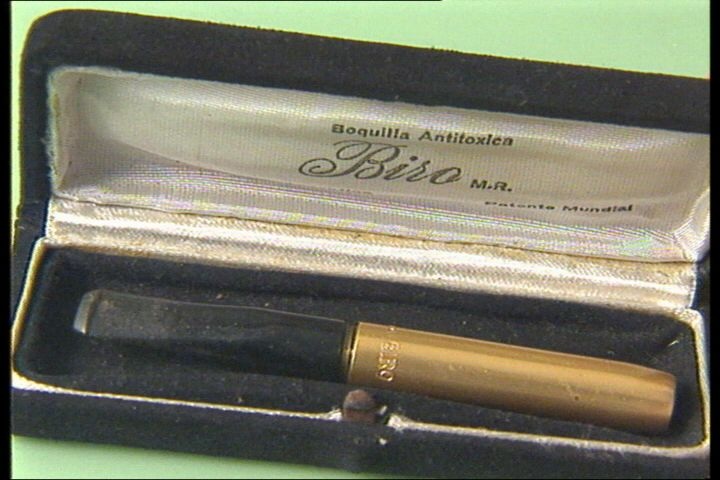
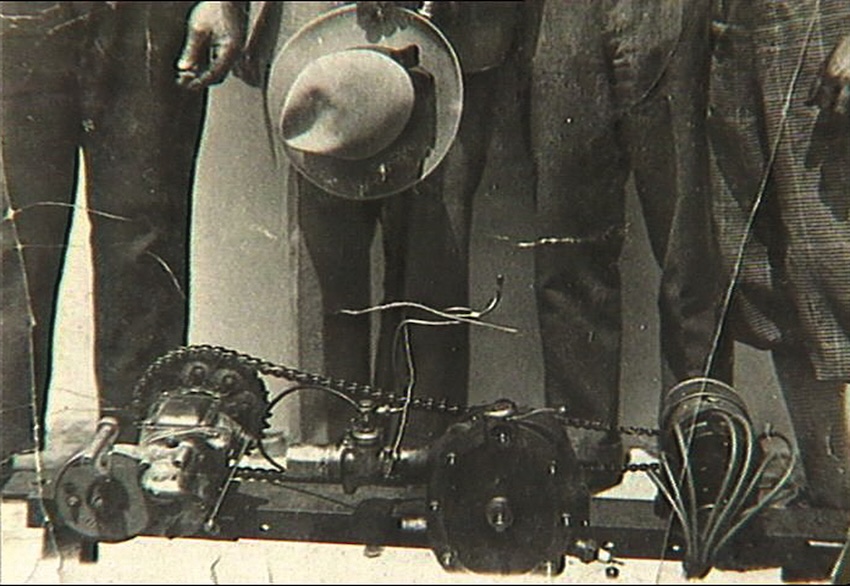
Bíró’s creativity extended far beyond the pen. Over the course of his life, he patented 28 of his 300 inventions, ranging from automatic transmissions, washing machines, and tamper-proof locks to concepts for electromagnetic transport that later inspired magnetic-levitation railway experiments in Japan. He applied the rolling-ball principle to everyday products such as roll-on perfume and roll-on deodorant, designed a cigarette holder intended to filter harmful substances from smoke, and in 1958 developed a device for generating energy from ocean waves. His final experimental work was carried out on behalf of the Argentine Atomic Energy Commission, though his very last invention remains unknown. When asked about his favourite invention, Bíró famously replied, “The next one”.
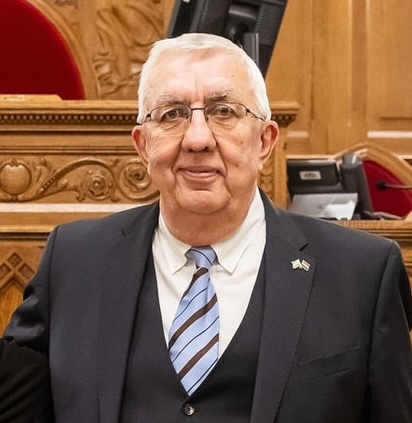
While Bíró is celebrated as a national figure in Argentina – where his birthday, 29 September, is observed as National Inventors’ Day – his legacy is comparatively less prominent in Hungary.
Mr. Sándor Rácz, a dedicated supporter, works tirelessly to preserve Bíró’s memory and legacy. As the owner of the Viktoria R Company, he partnered with the prestigious Italian pen manufacturer Montegrappa to create the Bíró Memorial Pen. This special writing instrument is presented to recipients of the Bíró Award, serving both as a tribute and a symbolic restoration of the inventor’s name to the object that revolutionised writing worldwide.
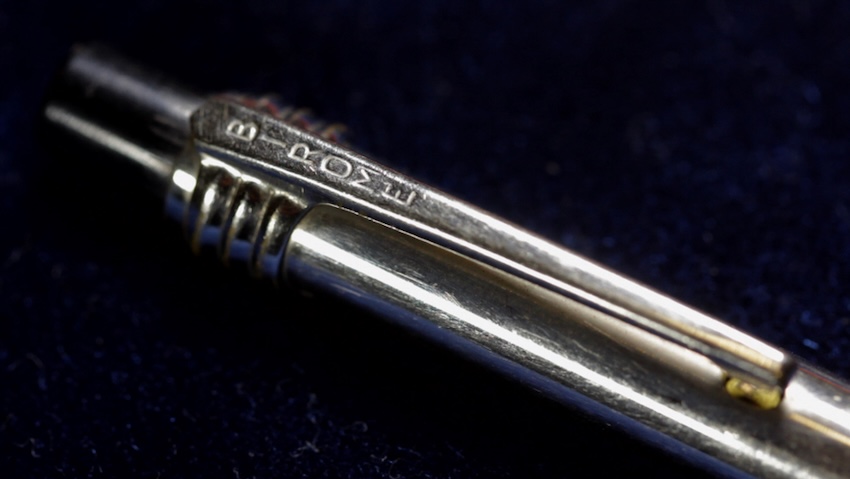
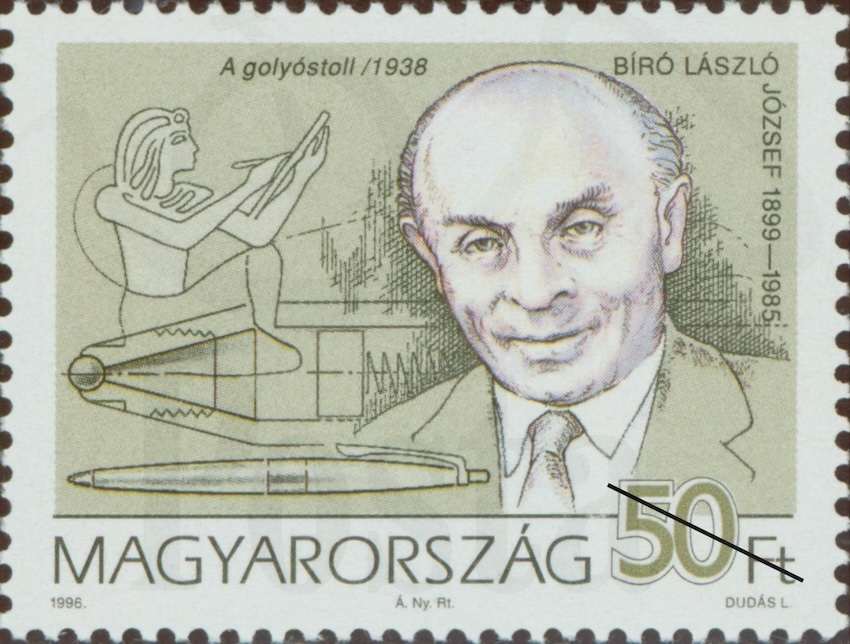
László József Bíró died on 24 October 1985, in Buenos Aires, Argentina. In 2025, the 40th anniversary of his death prompted renewed reflection on his extraordinary life and achievements. With a simple pen, Bíró built an invisible bridge between Hungary and Argentina – a bridge that endures with every word written.
His name also lives on in space: the minor planet (327512) Bíró (2006 BR26) was named in his honour.
Bíró’s autobiographical book was published in Spanish as: Ladislao José Biro – Una revolución silenciosa (A Silent Revolution) Buenos Aires, 1969.
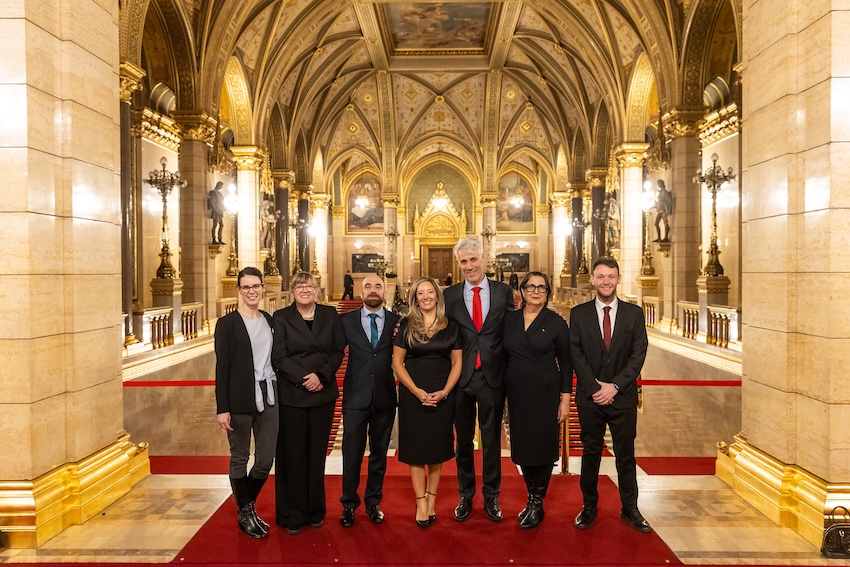
Source: Embassy of Argentina in Budapest
Photos from the Embassy of Argentina in Budapest, Facebook of Viktoria-R, and DPA